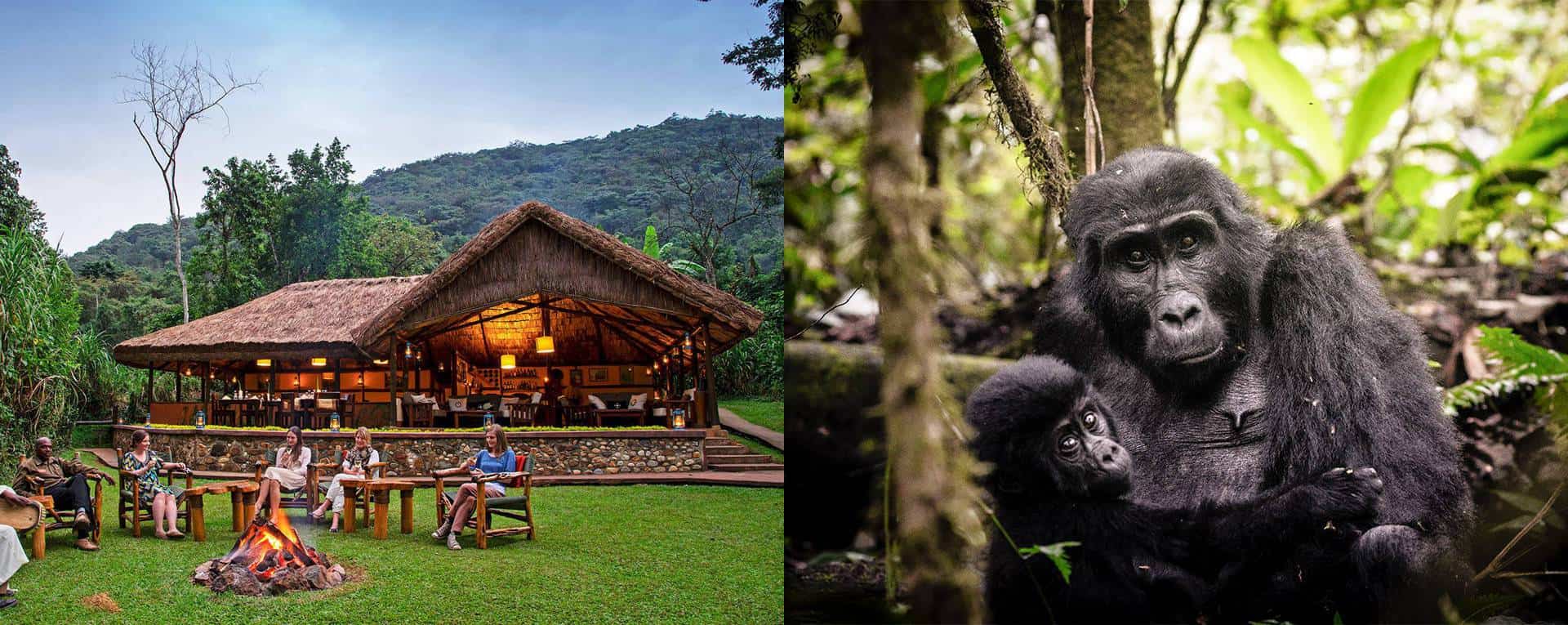
Uganda is known as the "Pearl of Africa" for its mix of dense tropical rainforests, sweeping savannas, and mountain ranges. The best places to go on safari in Uganda span primate hubs and big-game parks
2-days-best-chimpanzee-tracking-in-kibale-forest-park-tour-package
3-days-trips-to-queen-elizabeth-national-park-for-chimpanzee-tracking-in-kyambura-gorge
3-days-chimpanzee-tracking-to-kibale-forest-national-park
4-days-queen-elizabeth-national-park-and-kyambura-gorge-chimpanzee-tracking
4-days-kibale-forest-chimpanzee-tracking-and-queen-elizabeth-national-park
4-days-chimpanzee-tracking-in-lake-mburo-national-park-and-lake-mburo-safari
4-days-kibale-forest-chimpanzee-tracking-and-queen-elizabeth-national-park
4-days-murchison-falls-and-chimpanzee-tracking-in-budongo-forest
5-days-uganda-big-five-safari-and-chimpanzee-tracking-in-kibale-forest-park
6-days-jinja-white-water-rafting-gorilla-trekking-and-chimpanzee-tracking-adventure
6-days-budget-uganda-safari-and-gorilla-trekking
7-days-perfect-uganda-primate-safari-itinerary
8-days-exclusive-gorilla-trekking-chimpanzee-and-big-five
9-days-luxury-gorilla-and-uganda-safari-tour-package
Top Gorilla & Primate Destinations
Bwindi Impenetrable National Park
Bwindi Impenetrable National Park stands as a premier UNESCO World Heritage Site situated in southwestern Uganda. Spanning over 321 square kilometers of ancient montane rainforest, the sanctuary protects roughly half of the world's remaining endangered mountain gorilla population. The park features four designated tracking sectors—Buhoma, Ruhija, Rushaga, and Nkuringo—which house around 20 habituated gorilla families reserved for guided daily tracking. Beyond mountain gorillas, this biologically diverse ecosystem supports over 120 mammal species, including 10 distinct primate species such as chimpanzees, l'Hoest's monkeys, and black-and-white colobus monkeys. Furthermore, birdwatching enthusiasts can spot over 350 recorded bird species, with 23 species endemic to the Albertine Rift region. Topographically, altitudes range from 1,160 meters to 2,607 meters above sea level, providing a rugged landscape characterized by mist-covered hillsides and dense vegetative canopies. Visitors participate in eco-tours led by professional ranger guides from the Uganda Wildlife Authority, ensuring strict conservation protocols and visitor safety during every forest encounter.
Kibale National Park
Recognized globally as the Primate Capital of East Africa, Kibale National Park covers approximately 795 square kilometers of tropical rainforest in western Uganda. The reserve boasts the highest concentration and density of primates across the African continent, protecting 13 distinct primate species within its borders. Its most famous inhabitant is the eastern chimpanzee, with a population exceeding 1,500 individuals roaming the protected forest canopy. Guided chimpanzee tracking excursions and full-day chimpanzee habituation experiences depart daily from the Kanyanchu Visitor Centre. Alongside wild chimpanzees, the forest shelters significant populations of vulnerable red colobus monkeys, rare l'Hoest's monkeys, central African red-tailed monkeys, grey-cheeked mangabeys, and blue monkeys. The surrounding habitat comprises a continuous corridor of moist evergreen and semi-deciduous forest interspersed with woodland and swamp terrain. Kibale is also home to over 370 recorded bird species, numerous endemic butterfly species, and forest-dwelling mammals such as forest elephants, bushbucks, and giant forest hogs.
Mgahinga Gorilla National Park
Positioned along the extreme southwestern border of Uganda, Mgahinga Gorilla National Park is the country's smallest national park, covering just 33.7 square kilometers. The sanctuary encompasses three extinct Virunga volcanoes—Mount Muhavura, Mount Gahinga, and Mount Sabyinyo—forming part of the larger transboundary Virunga Conservation Area. Despite its compact size, Mgahinga plays a vital role in protecting endangered mountain gorillas and rare golden monkeys. The park hosts the habituated Nyakagezi gorilla group, known for its multiple coexisting silverbacks and high tracking accessibility within open bamboo zones. Additionally, Mgahinga is the only destination in Uganda where travelers can participate in golden monkey tracking, observing these striking, bamboo-dependent primates in their natural habitat. Beyond primate conservation, the park offers challenging volcano climbing trails, nature hikes through Sabyinyo Gorge, and cultural insights via the indigenous Batwa Trail. Elevations range from 2,227 meters up to 4,127 meters at the summit of Mount Sabyinyo, rewarding visitors with breathtaking scenic vistas across Uganda, Rwanda, and the Democratic Republic of Congo.
Top Savanna & Wildlife Parks
Queen Elizabeth National Park
Spanning 1,978 square kilometers across the rift valley floor, Queen Elizabeth National Park remains Uganda's most versatile game viewing destination. The sanctuary is globally renowned for the Ishasha Sector's tree-climbing lions, which habitually rest in the branches of sprawling fig trees during the heat of the afternoon. Furthermore, the 32-kilometer Kazinga Channel connects Lake George and Lake Edward, creating a natural waterway packed with massive hippopotamus pods, Nile crocodiles, and elephant herds coming down to drink. Guided boat cruises along this channel present unmatched photographic opportunities for observing aquatic wildlife at close range. Meanwhile, the northern Kasenyi Plains provide expansive open savanna where Uganda kobs gather on traditional lekking grounds, attracting predators like lions and leopards. Beyond big game, the park encompasses the lush Kyambura Gorge, a subterranean tropical forest inhabited by habituated wild chimpanzees. In addition, the crater lakes region displays dozens of dramatic volcanic basins surrounded by sweeping grasslands and acacia woodlands. With over 600 recorded bird species, Queen Elizabeth National Park serves as a crucial stopover for migratory waterfowl and resident raptors alike.
Murchison Falls National Park
Covering an expansive 3,840 square kilometers, Murchison Falls National Park is Uganda's largest protected wilderness area. The Victoria Nile bisects the reserve, culminating in a dramatic natural spectacle where the entire river forces its way through an 8-meter-wide rock gorge before plunging 43 meters into the churning Devil's Cauldron below. Scheduled launch trips travel upstream from Paraa toward the base of the falls, passing giant Nile crocodiles basking on sandy banks. Additionally, boat safaris downstream to the Victoria Nile delta at Lake Albert offer exceptional chances to spot the elusive shoebill stork alongside herds of buffaloes and waterbucks. North of the river, the open savanna grasslands host massive populations of Rothschild's giraffes, Jackson's hartebeests, oribis, and elephants. Guided game drives along the Buligi circuit deliver consistent predator sightings, including lions and elusive leopards patrolling the plains. Moreover, the southern section of the park encompasses Budongo Forest, which protects habituated chimpanzees and mahogany trees. Overall, the park blends riverine wildlife safaris with iconic dramatic landscapes.
Murchison Falls Game Park+ 1
Kidepo Valley National Park
Nestled in the extreme northern corner of Uganda near the borders of South Sudan and Kenya, Kidepo Valley National Park covers 1,442 square kilometers of rugged, semi-arid wilderness. The reserve features open savanna surrounded by the dramatic Napore mountain range and Mount Morungole, producing breathtaking visual landscapes. Furthermore, the park shelters two primary river systems—the Narus and Kidepo valleys—which dry up into sandy riverbeds during the dry season. Wildlife converges heavily around the permanent waterholes of the Narus Valley, enabling game drivers to spot large buffalo herds numbering in the hundreds alongside lions, cheetahs, and leopards. Notably, Kidepo is the only Ugandan national park home to specialized arid-adapted species such as the ostrich, bat-eared fox, caracal, and aardwolf. Beyond traditional game viewing, visitors engage in rich cultural encounters with the neighboring Karamojong pastoralists and the isolated Ik tribe living high on the slopes of Mount Morungole. The park's extreme remote location keeps visitor traffic low, delivering an uncrowded, raw wilderness experience for adventurous travelers seeking authentic African frontiers.
Ziwa Rhino and Wildlife Ranch
Situated in Nakasongola District along the main route between Kampala and Murchison Falls, Ziwa Rhino and Wildlife Ranch spans 70 square kilometers of protected savanna and woodland. Established in 2005 through a collaboration between the Uganda Wildlife Authority and conservation partners, the sanctuary serves as the exclusive breeding site for southern white rhinos in Uganda after wild populations were wiped out by historical poaching. Visitors participate in guided on-foot rhino tracking excursions led by armed rangers, walking through the bush to observe these megaherbivores at close range in their natural habitat. Additionally, the sanctuary shelters over 40 mammal species, including bushbucks, reedbucks, monkeys, and elusive pangolins roaming freely within the electric-fenced perimeter. The adjacent Lugogo Wetland provides an excellent venue for canoeing excursions and birdwatching, where visitors frequently spot the rare shoebill stork alongside turacos and kingfishers. Positioned roughly halfway to Murchison Falls, Ziwa offers an essential stopover that completes the classic Big Five safari experience in Uganda.
Mabamba Swamp
Located along the northern shores of Lake Victoria near Entebbe, Mabamba Swamp covers an extensive wetland ecosystem dominated by dense papyrus vegetation and open water channels. The wetland is globally recognized as an Important Bird Area (IBA) and a protected Ramsar site due to its vital role in avian conservation. Furthermore, Mabamba is widely considered one of the premier locations in East Africa for spotting the enigmatic, prehistoric-looking shoebill stork. Local guides navigate narrow channels using traditional wooden canoes, bringing birdwatchers into quiet marshy bays where shoebills hunt lungfish among floating vegetation. Alongside the iconic shoebill, the wetland supports over 260 recorded bird species, including the papyrus yellow warbler, blue-swallow, malachite kingfisher, and African jacana. Moreover, migratory waterbirds flock to the swamp during the northern winter, creating an incredible spectacle for bird enthusiasts. The proximity of Mabamba to Entebbe International Airport makes it an ideal, easily accessible morning or afternoon excursion for arriving or departing international travelers.
Lake Mburo National Park
Situated conveniently along the highway connecting Kampala to the gorilla tracking hubs of southwestern Uganda, Lake Mburo National Park spans 370 square kilometers of acacia woodland, open savanna, and rolling hills. The reserve centers around five inland lakes, with Lake Mburo serving as the largest water body within the park boundaries. Guided boat safaris on Lake Mburo provide reliable viewings of hippos, crocodiles, African fish eagles, and radiant kingfishers along the papyrus-lined fringes. Uniquely, Lake Mburo is the only national park in southern Uganda that protects wild plains zebras and impalas, alongside large herds of elands, topis, and bushbucks. Furthermore, the absence of elephants and lions makes the park a safe venue for guided walking safaris, horseback riding tours, and mountain biking excursions through the acacia groves. Night game drives regularly reveal nocturnal creatures such as leopards, porcupines, and white-tailed mongooses. Ultimately, Lake Mburo National Park acts as a tranquil, activity-rich bridge between urban Kampala and the dense mountain forests further west.
How does Bwindi Impenetrable National Park protect its endangered mountain gorilla population?
Bwindi Impenetrable National Park protects mountain gorillas through strictly managed habituation and daily conservation measures. The Uganda Wildlife Authority assigns professional ranger guides to accompany small tracking groups, maintaining safe observation distances and regulating visitation time to one hour. Furthermore, daily armed anti-poaching patrols sweep the montane rainforest to destroy illegal snares and safeguard forest boundaries. Revenue generated from tracking permits directly funds local community development projects, giving surrounding villages an economic incentive to support gorilla protection rather than encroaching on the park.
What unique primate experiences can travelers enjoy in Kibale National Park?
Kibale National Park offers immersive primate experiences centered around wild eastern chimpanzees. Visitors choose between standard chimpanzee tracking—spending an hour watching a habituated community—and full-day chimpanzee habituation experiences departing from Kanyanchu Visitor Centre. Additionally, guided nature walks through the tropical rainforest reveal 12 other primate species, including rare l'Hoest's monkeys, grey-cheeked mangabeys, and endangered red colobus monkeys. Expert trackers interpret vocalizations and feeding behaviors, allowing travelers to witness complex social interactions within the densest primate population in East Africa.
Why is Mgahinga Gorilla National Park significant for primate conservation in the Virungas?
Mgahinga Gorilla National Park forms part of the transboundary Virunga Conservation Area, providing a crucial protected corridor across Uganda, Rwanda, and the Democratic Republic of Congo. Despite its small size, it secures critical high-altitude bamboo habitats necessary for endangered mountain gorillas and rare golden monkeys. The park hosts the habituated Nyakagezi gorilla family, which frequently ranges across the slopes of Mount Sabyinyo, Mount Gahinga, and Mount Muhavura. Furthermore, Mgahinga is Uganda's exclusive habitat for guided golden monkey tracking, helping preserve these striking, bamboo-dependent primates.
What wildlife highlights make Queen Elizabeth National Park's Kazinga Channel famous?
The 32-kilometer Kazinga Channel in Queen Elizabeth National Park serves as a vital natural water source connecting Lake George and Lake Edward. Boat cruises along this channel bring travelers remarkably close to one of the world's highest concentrations of hippopotamuses and enormous Nile crocodiles resting along the shores. Furthermore, large elephant herds, buffaloes, and waterbucks frequently assemble along the riverbanks to drink and cool off during afternoon heat. The papyrus-lined fringes also support exceptional birdlife, including African fish eagles, pelicans, skimmers, and colorful kingfishers.
How does the Victoria Nile shape the safari experience in Murchison Falls National Park?
The Victoria Nile bisects Murchison Falls National Park, creating diverse riverine ecosystems and dramatic landscapes. The river forces its entire flow through a narrow 7-meter rock gorge before plunging 43 meters into the Devil's Cauldron. Scheduled boat cruises travel upstream to the base of the falls, passing basking crocodiles, hippos, and watering wildlife. Downstream boat safaris toward the Lake Albert delta offer prime opportunities to spot the rare shoebill stork. Game drives along the northern banks showcase immense giraffes and elephants thriving in the savanna nourished by the river system.
Why is Kidepo Valley National Park considered Uganda's ultimate remote wilderness destination?
Situated in Uganda's far northern frontier near South Sudan and Kenya, Kidepo Valley National Park remains untouched by heavy tourist traffic due to its distance from urban centers. The semi-arid landscape features vast savannas framed by Mount Morungole and the Napore mountain range. Seasonal rivers dry into sandy beds, forcing wildlife to gather around permanent waterholes in the Narus Valley. This enables uncrowded views of massive buffalo herds, cheetahs, and arid-adapted species like ostriches and caracals, combined with rich Karamojong and Ik cultural encounters.
What role does Ziwa Rhino and Wildlife Ranch play in Uganda's Big Five conservation?
Ziwa Rhino and Wildlife Ranch serves as the official breeding sanctuary for southern white rhinos in Uganda, acting as the sole location in the country where rhinos thrive in a protected habitat. Established after wild populations were wiped out by historical poaching, Ziwa allows visitors to participate in guided on-foot rhino tracking led by trained rangers. This experience completes the classic Big Five safari loop for travelers heading toward Murchison Falls, while safety fees and tourism revenues directly fund security patrols, veterinary care, and future reintroduction initiatives.
Why is Mabamba Swamp a globally important destination for birdwatching enthusiasts?
Mabamba Swamp is a recognized Ramsar site and Important Bird Area situated on the shores of Lake Victoria. Its extensive papyrus channels create an ideal habitat for the elusive, prehistoric-looking shoebill stork, which hunts lungfish in the shallow marshlands. Local guides navigate narrow channels using traditional wooden canoes, providing quiet approaches for minimal disturbance to the birds. Alongside the shoebill, Mabamba supports over 260 avian species, including papyrus yellow warblers, blue swallows, and malachite kingfishers, making it an accessible top-tier birding sanctuary near Entebbe.
What makes Lake Mburo National Park ideal for non-traditional safari activities?
Lake Mburo National Park's landscape of acacia woodlands and gentle savannas lacks large predator populations like lions, making it an exceptionally safe venue for active exploration. Travelers can embark on guided walking safaris, mountain biking excursions, and horseback riding tours alongside wild zebras, impalas, and elands. Furthermore, the central lake system accommodates peaceful boat safaris to view hippos and waterbirds. Positioned conveniently along the highway to southwestern Uganda, Lake Mburo provides an active, relaxing stopover between Kampala and Bwindi's gorilla forests.
How do Uganda's diverse ecosystems combine to create a complete safari itinerary?
Uganda’s varied topography seamlessly blends tropical rainforests, savanna plains, snow-capped ranges, and freshwater lakes into a compact geographic area. Travelers can track mountain gorillas in Bwindi's dense jungle and observe chimpanzees in Kibale before transitioning to savanna game drives in Queen Elizabeth or Murchison Falls for lions, elephants, and giraffes. Adding boat safaris along the Kazinga Channel, shoebill tracking in Mabamba Swamp, and white rhino tracking at Ziwa creates a well-rounded safari that combines primate trekking, traditional big game viewing, and birding within a single country.
When is the Best Time for a Safari in Uganda?
The ideal window for a safari in Uganda falls during the two dry seasons: December to February and June to September. During these months, trails through Bwindi Impenetrable and Kibale forests are firmer, making gorilla and chimpanzee tracking less demanding. Savanna parks like Queen Elizabeth and Murchison Falls also see wildlife congregate around rivers and waterholes, boosting game viewing visibility. While the wet seasons (March to May and October to November) bring mud and rain, they offer lower lodge rates, discounted primate permits, lush scenery, and phenomenal birdwatching as migratory species arrive.
What to Pack for a Safari in Uganda?
Packing effectively requires preparing for both dense tropical rainforests and open savanna plains. Essential gear includes sturdy, broken-in waterproof hiking boots, thick socks, lightweight long-sleeved shirts, and durable trousers to protect against sharp brush, stinging nettles, and insects. A breathable waterproof rain jacket is vital, as weather in the high-altitude jungles changes rapidly. Do not forget a wide-brimmed hat, UV sunglasses, high-SPF sunscreen, effective insect repellent, and lightweight gardening gloves for gripping muddy vines. Finally, pack a reliable 20-to-30-liter waterproof daypack, reusable water bottle, compact binoculars, and camera gear with spare batteries and memory cards.
Booking Your Safari in Uganda with Roads of Adventure Safaris
Partnering with Roads of Adventure Safaris ensures a seamless, expertly executed journey through East Africa. Operating with deep local expertise and over a decade of ground operations experience, our team crafts customized itineraries tailored to your schedule, budget, and travel preferences. We handle every operational detail—from securing scarce gorilla and chimpanzee permits to reserving hand-picked lodges and providing comfortable 4x4 safari Land Cruisers equipped with pop-up roofs. With our dedicated driver-guides leading the way, you enjoy an authentic, safe, and unforgettable wilderness experience. Contact Roads of Adventure Safaris today to begin planning your dream Uganda expedition.