20 Top activities to do in Lake Mburo national park on Uganda safari tour, Lake Mburo National Park is Uganda’s most accessible savannah park, located conveniently between Kampala and Queen Elizabeth National Park. Famous for its vast herds of zebra, impala, and unique landscapes, it offers intimate wildlife experiences, including superb walking safaris and horseback riding rarely found elsewhere in Uganda.
2-days-lake-mburo-national-park-uganda-safari-holiday
3-days-lake-mburo-national-park-cycling-game-drive-and-horseback-riding
3-days-queen-elizabeth-national-park-and-lake-mburo-national-park-safari
3-days-semuliki-national-park-and-hot-springs-uganda-safari-vacation
4-days-best-gorilla-trekking-and-safari-in-uganda-lake-mburo-national-park
4-days-chimpanzee-tracking-in-lake-mburo-national-park-and-lake-mburo-safari
🦒 Wildlife Viewing
1. Day Game Drives
A Uganda safari to Lake Mburo National Park is uniquely characterized by its vibrant landscape, which stands out as the best place in the country to see massive herds of herbivores. Day game drives are the classic way to explore this compact park, navigating a well-maintained network of tracks that cut through acacia woodlands, grassy valleys, and seasonal wetlands. As the morning sun clears the horizon, the savannah comes alive with movement, providing photographers and wildlife enthusiasts with clear, unobstructed viewing opportunities.
The park is famous for being the premier sanctuary for Burchell's zebras in western Uganda. You will see these beautifully striped animals everywhere, often grazing alongside the elegant impala, a slender antelope found nowhere else in western Uganda's national parks. Game drives also offer a high probability of encountering the eland, Africa’s largest antelope, which moves in cautious herds across the open plains. Looking closely among the acacia trees, you will spot the long-necked Rothschild’s giraffes, which were successfully reintroduced to the ecosystem to help manage the woody vegetation.
Alongside these iconic species, the tracks lead you past large groups of defassa waterbucks, recognizable by their shaggy coats, as well as territorial topis and massive Cape buffaloes. Because Lake Mburo lacks a resident population of lions, the herbivores are generally more relaxed, allowing safari vehicles to approach remarkably close. This makes day game drives an incredibly rewarding, low-stress wildlife viewing experience that perfectly introduces travelers to the rolling hills and diverse habitats of this beautiful ecosystem.
2. Night Game Drives
While the daytime savannah offers incredible scenery, the wilderness undergoes a complete transformation after dark. A guided night game drive in Lake Mburo National Park is a thrilling addition to any Uganda safari, providing a rare window into the secretive world of nocturnal creatures that remain completely invisible during daylight hours. Accompanied by an experienced Uganda Wildlife Authority ranger operating a powerful spotlight, visitors head out into the dark park after dinner to explore the shadows.
As the spotlight sweeps across the acacia bushes and open clearings, the reflecting eyes of the night pierce the darkness. The ultimate prize of a night drive here is spotting the elusive leopard. Because Lake Mburo has a high concentration of leopards relative to its size, and lacks competing lions, these apex predators are highly active at night, often seen stalking impalas or resting on thick tree branches.
The spotlights are also highly likely to catch spotted hyenas emerging from their dens, their eerie calls echoing through the cool night air. Moving through the undergrowth, you will spot side-striped jackals on the hunt, as well as white-tailed mongooses and secretive genets scurrying through the grass. Up in the tree branches, the light frequently catches the oversized, glowing eyes of bush babies (galagos) performing incredible acrobatic leaps between twigs. A night drive reveals the intense, high-stakes drama of the nocturnal African bush, making it an essential experience for travelers who want to see the complete lifecycle of the park's diverse wildlife.
3. Horseback Safaris
One of the most exclusive, eco-friendly, and exhilarating ways to experience the wilderness of Lake Mburo is on a guided horseback safari. Operated primarily by the luxury Mihingo Lodge, this activity allows travelers to step completely out of the traditional motorized safari vehicle and explore the open savannah plains on horseback. This approach completely changes the dynamic of wildlife viewing, offering a quiet, organic connection to nature that few other activities can match.
Because wild animals naturally associate the shape and scent of a domestic horse with regular non-threatening herbivores like zebras or elands, they do not exhibit the typical fear response they show toward vehicles or humans on foot. On horseback, you can ride directly into the middle of a grazing herd of Burchell's zebras, sit quietly as impalas leap gracefully just meters away, and watch topis observe you with calm curiosity. The silence of the ride allows you to hear the rustle of the wind through the gold grass, the crunch of wildlife feeding, and the distant calls of birds without the disruptive rumble of an engine.
Horseback safaris are carefully tailored to accommodate all experience levels, from absolute beginners who prefer a gentle, walking trek along the valley floors to advanced riders who want to gallop alongside herds of antelopes across the grassy ridges. Guided by highly professional equestrian experts and armed park rangers, this intimate trek offers an unforgettable perspective on the landscape, blending the romance of old-world exploration with modern wildlife conservation.
4. Cycling/Mountain Biking
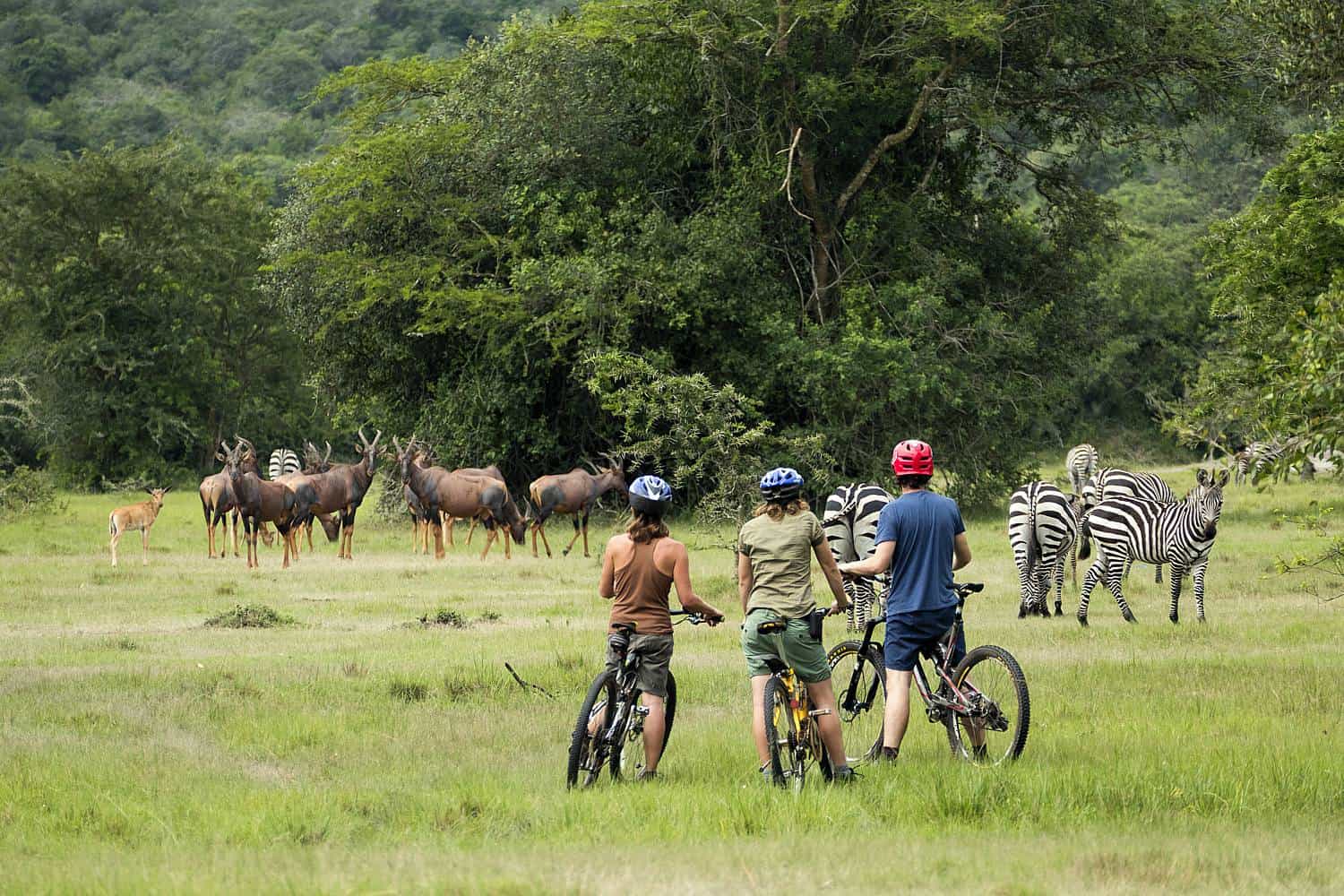
For active travelers who want to inject physical adventure into their Uganda safari, mountain biking through Lake Mburo National Park is a magnificent option. Lake Mburo is one of the very few national parks in Uganda where cycling is permitted inside the protected area, thanks to the absence of large predators like elephants and lions, which makes the terrain safe for open, self-powered exploration.
Renting a well-maintained mountain bike and heading out with an armed Uganda Wildlife Authority ranger guide allows you to experience the savannah with all your senses. You pedal along flat valley tracks, navigate gentle dirt ridges, and skim the edges of the park's seasonal swamps. The physical effort of riding is highly rewarded by the unique wildlife encounters along the way. Zebras, topis, and buffaloes will lift their heads to watch you pass, often allowing you to cycle within remarkably close proximity before they trot gently into the woodlands.
The ranger guide leads the way, sharing insights into the tracks left on the path, the varying plant species, and the complex ecology of the park. Cycling forces you to slow down and notice the smaller details of the bush, from the structural architecture of termite mounds to the vibrant butterflies fluttering across the path. Whether you opt for a leisurely one-hour ride along the flat terrain near the rest camps or a challenging half-day bike trek over the rocky hills, mountain biking offers a refreshing, health-conscious way to connect deeply with the African wilderness.
5. Sport Hunting
Sport hunting in the regions surrounding Lake Mburo National Park operates as a highly regulated, specific conservation tool designed to foster community-led wildlife protection. This activity does not take place within the boundaries of the national park itself, but rather within designated community conservation areas and private ranches that form a critical wildlife corridor around the park. This specialized program is managed under strict quotas enforced by the Uganda Wildlife Authority.
The philosophy behind sport hunting in this ecosystem is centered on sustainable community tourism. Historically, local pastoralists viewed wild animals like zebras and impalas as direct competitors for their cattle's grazing land, leading to significant human-wildlife conflict. By introducing permitted, high-value trophy hunting of specific older or non-breeding animals, the local communities receive substantial direct financial benefits from the hunting fees. This revenue is channeled directly into funding local schools, healthcare clinics, clean water infrastructure, and community roads.
Because the local people now derive a clear economic livelihood from the wildlife living on their private land, they have become fierce protectors of the animals, leading to a dramatic reduction in illegal poaching and a steady increase in wildlife populations across the entire ecosystem. For specific international travelers, participating in these strictly managed concessions offers a unique look at how controlled utilization can be integrated into broader African conservation strategies to benefit both native humans and wild ecosystems.
🛶 Water Activities & Exploration
6. Lake Mburo Boat Cruises
The aquatic heart of the park is Lake Mburo itself, a tranquil body of water fringed by extensive papyrus swamps and rich riverine woodlands. Taking a boat cruise on this lake is a peaceful experience that provides a fantastic contrast to land-based game tracks, making it a staple activity for any well-rounded Uganda safari itinerary.
As the motorized boat moves smoothly away from the jetty at Rwonyo, you are instantly introduced to a thriving aquatic ecosystem. The shores of the lake are heavily populated by massive pods of hippos that spend their days submerged in the cool water, grunting loudly and spraying water as they surface. Sharing the waterways are enormous Nile crocodiles, which can be seen basking lazily on the muddy banks with their mouths wide open to regulate their body temperature, or gliding silently through the ripples like ancient logs.
The boat cruise is also an exceptional opportunity for bird watching. The overhanging thickets and papyrus edges are home to the iconic African Finfoot, a shy water bird that is notoriously difficult to spot on land. You will also see vibrant Malachite kingfishers diving for small fish, majestic African fish eagles perched high on dead branches, and columns of pelicans floating on the open water. The gentle drift of the boat, combined with the golden light reflecting off the water against the backdrop of the park’s rolling green hills, makes the afternoon boat cruise a relaxing, deeply scenic wildlife viewing experience.
7. Sport Fishing
For travelers who enjoy angling, sport fishing on Lake Mburo offers an authentic and rewarding outdoor activity. The lake is rich in a variety of native fish species, making it an excellent location to cast a line while surrounded by the sights and sounds of an intact African wilderness.
The primary base for sport fishing is at the designated campsite at Mazinga. To participate, visitors need to secure a fishing permit from the Uganda Wildlife Authority and are generally encouraged to bring their own high-quality rods, reels, and bait. The experience is made incredibly special because travelers are often accompanied by local fishermen who have navigated these waters for generations. These local guides share their deep knowledge of the lake's hidden channels, underwater structures, and the best times of day to catch specific fish.
The most common catches in Lake Mburo are tilapia, a delicious and highly popular local fish, alongside massive mud catfish and lungfish. Sitting quietly in a small boat or casting from the secure shoreline structures while hippos grunt in the distance is an incredibly peaceful experience. It allows you to slow down and experience the natural rhythms of the lake ecosystem. Any fish caught can be prepared by your lodge chef or over a traditional campfire, providing a fresh, self-harvested meal that adds a memorable, hands-on highlight to your safari adventure.
8. Catch and Release Fishing
Catch and release fishing is a specialized variation of angling available on Lake Mburo that appeals heavily to conservation-minded sports enthusiasts. This practice emphasizes the thrill of the sport, the technical challenge of handling diverse fish species, and the absolute preservation of the lake’s delicate aquatic biodiversity.
Operating under the guiding principle of environmental sustainability, catch and release fishing requires anglers to use barbless hooks and specific handling techniques to ensure that any fish reeled in is kept safe from harm. Once a fish—such as a large tilapia or a powerful African catfish—is successfully hooked and brought to the boat or shoreline, it is quickly measured, photographed for bragging rights, and carefully revived in the water before being released completely unharmed back into its natural habitat.
This activity allows travelers to enjoy the competitive and meditative aspects of fishing without impacting the fish populations or disrupting the food chain that supports the park's apex predators, like Nile crocodiles and fish eagles. Spending an afternoon practicing catch and release fishing on the calm, golden waters of Lake Mburo, surrounded by overhanging papyrus reeds and the calls of kingfishers, offers a deeply relaxing, sustainable escape that aligns perfectly with modern eco-tourism values.
🥾 Walking & Hiking
9. Guided Nature Walks
Lake Mburo National Park is one of the premier destinations in East Africa for experiencing a foot safari. Because the park lacks large, aggressive predators like elephants and lions, visitors have the rare freedom to step out of their vehicles and explore the beautiful savannah landscapes entirely on foot, accompanied by an armed Uganda Wildlife Authority ranger guide.
A guided nature walk is an intimate sensory journey. Without the noise of a car engine, your ears adjust to the subtle sounds of the bush: the warning calls of birds, the rustle of lizards in the dry leaves, and the gentle wind passing through the acacia trees. Your ranger guide leads you along established animal trails, pointing out fresh tracks left by zebras, hyenas, or leopards, and teaching you how to determine how recently an animal passed by analyzing their droppings.
Walking on foot brings you surprisingly close to herds of impalas, zebras, and waterbucks, which look much grander and more imposing when viewed from ground level. You also gain a deep appreciation for the smaller details of the savannah ecosystem, from the complex architecture of giant termite mounds to the medicinal uses of local plants and trees. These walks are highly flexible, ranging from gentle morning strolls along the flat valley floors to more demanding hikes over the rocky ridges, providing a healthy, grounding experience that connects you directly to the African soil.
10. Rubanga Forest Walk
Hidden within the western side of Lake Mburo National Park lies the Rubanga Forest, a small but ecologically fascinating patch of closed-canopy tropical rainforest. This forest stands as a unique ecological anomaly within the park, providing a sharp and beautiful contrast to the surrounding dry acacia savannahs and open grasslands. Exploring Rubanga on foot is a must-do for serious birdwatchers and nature enthusiasts on a Uganda safari.
As you step beneath the dense canopy of Rubanga, the air becomes cool, crisp, and humid. The forest is characterized by towering trees, creeping vines, and a rich undergrowth that supports an entirely different array of wildlife compared to the open plains. Walking quietly along the shaded forest paths, you can spot unique primates, such as the acrobatic red-tailed monkey and the vocal grey-cheeked mangabey, swinging through the high branches.
For birders, Rubanga Forest is a true goldmine. It shelters rare forest specialist species that cannot be found anywhere else in the park, including the spectacular African Finfoot, the Schönwetter’s greenbul, the red-headed lovebird, and the rare double-toothed barbet. The forest is also home to a diverse array of colorful butterflies and unique fungi growing on fallen logs. A guided walk through this hidden jungle provides a peaceful, shaded retreat where you can immerse yourself in the rich, complex biodiversity of a closed forest ecosystem.
11. Top Hill Hiking
For travelers who want to stretch their legs and enjoy breathtaking aerial views of the landscape, top hill hiking in Lake Mburo is an exceptional activity. The park’s geography is defined by a series of ancient, undulating quartzite hills that rise prominently above the valley floors, offering excellent natural viewing platforms for those willing to make the climb.
The most popular route is the hike up to the summit of Kigambira Hill, one of the highest elevation points in the park. The trek takes you up a winding, rocky trail through scattered acacia bushes and wild wildflowers. As you ascend, the air becomes cooler and the views expand dramatically. Upon reaching the summit, you are rewarded with a stunning, 360-degree panoramic vista that showcases the true scale and beauty of the ecosystem.
From this high vantage point, you can look down over the park’s rolling green valleys, spotting distant herds of zebras and buffaloes moving across the plains like tiny dots. Most spectacularly, the summit reveals the interconnected nature of the region's water systems, allowing you to see nine of the fourteen surrounding lakes that form the extensive wetland system. Watching the sun cast long shadows across this magnificent landscape of hills, forests, and shimmering waters is an unforgettable visual experience that highlights the geological grandeur of western Uganda.
12. Salt Lick Viewings
Deep within the acacia woodlands of Lake Mburo lies a series of natural mineral deposits known as salt licks. These areas feature soils that are exceptionally rich in essential minerals, sodium, and calcium, making them a vital dietary supplement for the park’s numerous herbivorous animals. The Uganda Wildlife Authority has constructed a disguised wooden observation platform overlooking a major salt lick, creating a fantastic wildlife viewing location.
Visiting the salt lick is an exercise in patience and quiet observation. Travelers walk quietly to the hidden platform and sit silently, waiting for the animals to arrive. Throughout the day, a steady stream of diverse wildlife emerges from the surrounding bush to lick the mineral-rich mud. You can watch elegant impalas, pairs of topis, family groups of Burchell's zebras, and massive Cape buffaloes all congregating peacefully in one spot, driven by their shared biological need for minerals.
The observation platform allows you to watch these animals interact naturally without them realizing human presence. You can observe mothers teaching their young how to dig for the best minerals, young males engaging in playful head-butting, and the strict social hierarchies that dictate which animal gets to access the center of the lick first. The salt lick provides a unique, stationary wildlife viewing experience that yields incredible, close-up photographs and a fascinating look at animal behavior.
13. Kazinga Channel Foot Safaris
While the famous Kazinga Channel is geographically located within Queen Elizabeth National Park—roughly a three-hour drive west of Lake Mburo—integrating a foot safari along its banks is a common strategy for comprehensive regional itineraries. However, within Lake Mburo itself, the extensive network of walking trails that hug the meandering shorelines of Lake Mburo serves as the park's equivalent, providing a phenomenal terrestrial tracking experience.
Walking along the lake edges in Mburo allows hikers to safely track the movements of animals that depend heavily on the water. The muddy shoreline soils act as a giant ledger, recording the footprints of every creature that came down to drink during the night. Your expert ranger guide will help you decipher these prints, identifying the deep ruts of hippos, the sharp tracks of leopards, and the delicate hoofprints of bushbucks.
The trail winds through thick lake-edge vegetation, papyrus fringes, and open sand cleared by wallowing hippos. This path provides excellent opportunities to spot waterbucks resting in the shade and giant monitor lizards sunning themselves on rocks. The constant presence of water creates a highly active zone where land and aquatic ecosystems meet, making these shoreline walks an essential highlight for travelers who love tracking wildlife and understanding the fundamental link between water and survival in the African bush.
🐦 Birdwatching
14. Acacia Woodland Birding
Lake Mburo National Park is a premier destination for avid birdwatchers, boasting a diverse checklist of over 350 recorded avian species. One of the most productive habitats for birding within the park is the extensive acacia woodland ecosystem, which covers a significant portion of the rolling hills and valleys.
Wandering through the open acacia trees with binoculars and a spotting scope reveals a steady stream of colorful and vocal birds. The woodlands are home to the iconic Mosque Swallow, easily spotted darting through the air catching insects, and the striking Black-bellied Bustard moving slowly through the tall grasses below. You will also frequently encounter the Bare-faced Go-away Bird, a unique gray bird named for its distinct, nasal call that sounds exactly like it is telling visitors to "go away."
Other highly sought-after residents include the spectacular Ruppell's Griffon Vulture soaring high on thermals, the colorful Crested Francolin scurrying across the game tracks, and various species of bright weavers building intricate nests on the acacia thorns. The relatively open nature of the woodland canopy makes bird watching here highly rewarding, as it allows for clear, unobstructed views and excellent light for photography. Walking quietly with a specialized birding guide ensures you can identify the subtle calls and check off numerous endemic species from your life list.
15. Papyrus Swamp Birdwatching
The extensive wetland systems and papyrus swamps that fringe Lake Mburo and its connected water bodies represent a highly specialized habitat that draws serious birdwatchers from around the globe. These damp, reed-filled environments are home to unique papyrus endemic species that are highly adapted to life in the dense wetlands.
The ultimate prize for any birder exploring these swamps is the legendary Shoebill Stork. While more famous in places like Semuliki or Mabamba, the quiet papyrus channels of Lake Mburo offer a rare, exclusive setting to search for this massive, prehistoric-looking bird as it hunts for lungfish in the shallow waters. Even if the Shoebill remains hidden, the swamps are packed with other spectacular birds.
As you explore the swamp edges on foot or from a boat, look out for the vibrant Papyrus Gonolek, a striking bird with a brilliant red belly and a bright yellow crown that contrasts beautifully against the green reeds. You are also highly likely to check off the Papyrus Yellow Warbler, the shy White-winged Warbler, and the Blue-headed Coucal. The air is constantly filled with the chatter of kingfishers, including the Malachite and Pied Kingfishers, diving into the water for prey. Birdwatching in these wetlands requires patience and a sharp eye, but the reward of seeing these highly specialized, threatened species in their natural habitat is unmatched.
🥁 Cultural & Community Experiences
16. Ankole Long-Horned Cattle Experience
A Uganda safari to Lake Mburo offers far more than wildlife viewing; it provides a unique cultural gateway to experience the ancient lifestyle of the local pastoralist Bahima people. The Bahima have lived alongside the wildlife of this region for centuries, defined by their deep spiritual and economic connection to the magnificent Ankole long-horned cattle.
Participating in this community experience allows travelers to visit a traditional Bahima homestead, known as an kraal. The defining feature of these cattle is their massive, elegant, ivory-white horns, which can grow up to two meters long and act as a natural cooling system. During the experience, community elders teach you the art of herding, showing you how they use specific whistles and calls to guide hundreds of cattle across the pastures without fences.
You can try your hand at traditional hand-milking, using beautifully carved wooden milk pots called ebyanzi. Inside the traditional grass-roofed huts, local women demonstrate how they preserve the milk using smoke from specific aromatic woods and how they manually churn milk to produce local ghee (clarified butter). This experience offers a profound look at a lifestyle where human culture, domestic livestock, and wild animals have coexisted for generations, providing an authentic look at the human heritage of western Uganda.
17. Igongo Cultural Centre Visit
Located just outside the park boundaries along the main highway to Mbarara, the Igongo Cultural Centre is a world-class cultural institution that makes an excellent addition to any regional safari itinerary. This beautifully designed center serves as a major museum and research hub dedicated to preserving the rich history, art, and traditions of the various ethnic groups of western Uganda, primarily the Ankole kingdom.
The centerpiece of the complex is the Eryooko Museum, which houses a comprehensive collection of historical artifacts, ancient weapons, traditional clothing, and archaeological displays. Walking through the exhibitions with a knowledgeable local guide takes you on a journey through time, explaining the complex social structures, royal lineages, and ancient folklore of the region.
Outside the main museum building, the center features full-scale, historically accurate models of traditional homesteads, including a complete Bahima pastoralist hut and a Bakiga agricultural village. These models allow visitors to step inside and see how local people organized their living spaces, cooked meals, and stored tools centuries ago. The center also features a restaurant that specializes in serving traditional local dishes, such as matooke steamed in banana leaves and smoked Ankole beef, offering a delicious culinary journey that enriches your cultural understanding of Western Uganda.
18. Community Village Walks
To gain a genuine understanding of modern life around the protected areas of Uganda, taking a guided community village walk is an incredibly eye-opening activity. These walks take you into the local villages that border Lake Mburo National Park, providing a respectful and authentic look into the daily routines, challenges, and triumphs of the rural populations.
Accompanied by a local community guide, you walk along red-dirt paths lined with small gardens of matooke bananas, maize, and cassava. You have the opportunity to visit a local primary school, chat with teachers, and see how rural education is delivered. Along the way, you can stop at a village market to see the vibrant trade of fresh produce, colorful fabrics, and locally crafted household items.
The walk also highlights the incredible ingenuity of local artisans. You can sit with a group of village women and watch them transform wild sisal fibers and natural plant dyes into beautifully intricate baskets and mats, learning the specific patterns that carry cultural meanings. Visiting a local blacksmith or a traditional healer reveals how ancient practical skills are still utilized today to support community life. These walks ensure that your tourism footprint directly benefits the local economy while fostering meaningful, cross-cultural human connections.
19. Banana Beer/Wine Tasting
In western Uganda, the matooke (highland cooking banana) is not just a primary food staple; it is a fundamental cultural symbol that plays a major role in social gatherings, celebrations, and community bonding. Participating in a traditional banana beer and wine tasting experience offers a fun, interactive look into local agricultural practices and culinary arts.
The experience takes place in a local village garden, where community members walk you through the entire step-by-step process of traditional brewing, which has remained unchanged for centuries. First, specific varieties of sweet brewing bananas are harvested and buried in underground pits lined with dry banana leaves for several days to accelerate ripening. Once perfectly soft, the bananas are uncovered, placed into a massive, boat-shaped wooden trough, and mixed with clean spear grass.
Visitors are invited to roll up their sleeves and join the fun, using their feet to stomp and mash the bananas against the grass to extract the thick, sweet juice. This raw juice is then filtered, mixed with roasted sorghum flour to act as a natural yeast, and left to ferment in large clay pots or gourds for a few days. The result is tonto, a potent, traditional banana beer with a sweet and smoky flavor profile. Tasting this fresh brew while sitting under the shade of banana trees with the local community is a joyful, authentic celebration of Ugandan hospitality.
🛋️ Relaxation & Scenery
20. Sundowner Experiences
A classic African safari tradition, the sundowner experience in Lake Mburo National Park is the perfect way to conclude an action-packed day of wildlife viewing. As the intense heat of the afternoon begins to fade and the sky starts to shift into brilliant shades of orange, pink, and deep purple, travelers gather at designated elevated viewpoints or private lodge decks to toast the passing of another beautiful day in the bush.
Many of the top luxury lodges, such as Mihingo Lodge or Kigambira Safari Lodge, feature spectacular viewing platforms perched high on rocky kopjes that overlook the vast valleys below. Alternatively, park rangers can arrange a private sundowner setup at a scenic location inside the park, preparing a safari table complete with folding chairs, a selection of chilled drinks, and light snacks.
Sitting quietly with a cold beverage, you can watch the golden light paint the rolling hills and reflect off the calm surfaces of the distant lakes. This is when the savannah quietens down before the nocturnal animals emerge; you can listen to the gentle calls of doves, watch small herds of zebras making their way back to safety in the woodlands, and feel the cool evening breeze sweep across the plains. It is a deeply peaceful, meditative experience that allows you to absorb the majestic beauty of the Ugandan wilderness.
21. Picnicking
For travelers who want to maximize their time in the wild and enjoy a flexible schedule, packing a lunch and heading out for a private picnic is a delightful option. Lake Mburo features several safely designated, scenic picnic spots that allow you to enjoy a meal completely surrounded by the sights and sounds of nature.
The most popular location for a picnic is at the Rwonyo rest camp area or at designated wooden platforms overlooking the shores of Lake Mburo. Your lodge will prepare a high-quality picnic basket packed with fresh sandwiches, cold meats, tropical fruits, and refreshing juices. Sitting at a wooden table beneath the shade of giant acacia trees, you can eat your lunch while watching impalas graze just a few meters away and colorful superb starlings hop around the ground looking for crumbs.
Picnicking allows you to break up long game drives without needing to rush back to your lodge for lunch, giving you the freedom to sit quietly by a water hole and see what wildlife arrives during the heat of the day. It offers a relaxed, unhurried approach to tourism where you can slow down, breathe the clean wilderness air, and enjoy a peaceful meal in one of East Africa’s most scenic protected sanctuaries.
1. What are the top activities in Lake Mburo National Park?
A Uganda safari to Lake Mburo National Park offers an incredibly diverse array of activities that set it apart from many other protected areas in East Africa. Because the park lacks large, aggressive predators like elephants and lions, it has become Uganda's premier destination for active, self-powered, and close-contact wildlife encounters. Instead of being confined to a traditional 4x4 safari vehicle for your entire trip, you can experience the wilderness through an open-air adventure.
The top activities include classic day game drives along a network of scenic tracks that wind through acacia woodlands and grassy valleys. When the sun goes down, the park offers thrilling guided night game drives, which are widely considered some of the best in the country for spotting nocturnal predators. For an entirely different perspective, travelers can embark on exclusive horseback safaris, allowing you to ride directly alongside herds of plains game, or mountain biking safaris that challenge your fitness while keeping you close to the wildlife.
Water lovers can enjoy a tranquil afternoon boat cruise on Lake Mburo itself to view massive aquatic mammals and reptiles, while fishing enthusiasts can cast a line for native species during a peaceful sport fishing session. Furthermore, the park is an exceptional destination for guided nature walks and foot safaris, allowing you to track animals by foot alongside an armed ranger. Combined with premium birdwatching excursions and rich cultural community tours with the local pastoralists, Lake Mburo provides a comprehensive, action-packed travel itinerary that satisfies adventure seekers, nature lovers, and cultural travelers alike.
2. Can I see zebras and impalas here?
Yes, absolutely! In fact, seeing these two beautiful herbivores is one of the definitive highlights of a Uganda safari to Lake Mburo National Park. The park’s specific combination of open savannah valleys, structural acacia woodlands, and reliable water sources creates an absolutely perfect ecological habitat for plains game to thrive in large numbers.
Lake Mburo is celebrated for hosting the largest concentration of Burchell's zebras in Uganda. As soon as you pass through the park gates, you will see these beautifully striped animals everywhere. They graze peacefully in the open valleys, gather around natural salt licks, and trot across the dirt tracks right in front of your vehicle. Watching large family herds of zebras interact—with foals playing in the grass and adults grooming one another—is a constant and joyful feature of the landscape.
Even more uniquely, Lake Mburo is the only national park in western Uganda where you can see the impala (Aepyceros melampus). This slender, elegant antelope is famous for its incredible agility and its ability to perform spectacular, leaping bounds that can reach up to three meters high and ten meters long when startled. The park’s thriving impala population is so central to the area's identity that Uganda's capital city, Kampala, actually derives its name from these beautiful animals ("the hill of the impalas"). Because there are no resident lions to keep them hiding in fear, both the zebras and impalas are remarkably relaxed, allowing visitors to approach exceptionally close for stunning, up-close wildlife photography.
3. Are horseback safaris available?
Yes, horseback safaris are absolutely available, and they represent one of the most exclusive, environmentally sustainable, and magical ways to experience the African bush. Lake Mburo National Park is one of the very few protected wildlife sanctuaries in Uganda to offer horseback riding, providing an intimate and quiet alternative to the traditional motorized game drive.
This private experience is typically arranged through the luxury Mihingo Lodge, which maintains an excellent stable of well-trained, healthy horses and a team of professional equestrian guides. The magic of a horseback safari lies in how wild animals perceive you. Because horses are natural, non-threatening herbivores, wild animals like zebras, impalas, topis, and elands do not exhibit their usual fear or flight response. Instead of running away as they might from a rumbling diesel engine, the herds remain completely calm, allowing you to ride directly into the middle of their grazing groups.
Trotting silently through the golden grass while a herd of zebras grazes just an arm's length away is an unforgettable sensory experience. You can hear the crunch of the grass as the animals feed, the gentle snorts of your horse, and the beautiful chorus of savannah birds without any artificial noise pollution. These rides are carefully tailored to suit all experience levels, ranging from gentle, walking treks along the flat valley floors for absolute beginners to fast-paced, exhilarating canters across the open ridges for advanced riders, all conducted under the expert supervision of armed park rangers.
4. What will I see on a boat cruise?
A boat cruise on Lake Mburo is a deeply tranquil and visually rewarding water activity that offers a fantastic contrast to land-based game tracks. The two-hour boat launch operates smoothly across the calm, golden waters of the lake, which is beautifully fringed by extensive papyrus swamps, seasonal wetlands, and thick riverine woodlands, creating a thriving oasis for diverse wildlife.
As the boat drifts away from the jetty at Rwonyo, you will immediately find yourself surrounded by large schools of hippos. These massive aquatic mammals spend the heat of the day submerged in the deep channels, grunting loudly, yawning to display their impressive tusks, and spraying water from their nostrils as they surface. Sharing the banks and shallow waters are enormous Nile crocodiles, which can be seen basking lazily in the sun with their mouths wide open to regulate their body temperature, or gliding silently through the water like ancient, floating logs.
For birdwatchers, the boat cruise is a world-class excursion. The overhanging branches and thick papyrus edges provide a safe haven for the rare and highly sought-after African Finfoot, a shy waterbird that is notoriously difficult to spot from land. You will also get up-close views of majestic African Fish Eagles perched high on dead tree branches, vibrant Malachite and Pied Kingfishers hovering in the air before diving for fish, colorful bee-eaters, and columns of pelicans floating gracefully on the open water. The gentle movement of the boat provides an excellent, stable platform for wildlife photography, capturing the stunning scenery of rolling green hills reflecting off the water.
5. Are night game drives allowed?
Yes, guided night game drives are fully allowed in Lake Mburo National Park, and they stand out as a thrilling highlight of a well-rounded Uganda safari itinerary. While many national parks close their tracks at dusk, Lake Mburo’s compact size and unique predator-prey dynamics make it an absolute hotspot for exploring the wilderness under the cover of darkness.
Accompanied by an armed Uganda Wildlife Authority (UWA) park ranger operating a powerful spotlight, you venture out into the dark savannah after dinner. As the light scans the acacia bushes and open clearings, a completely different nocturnal ecosystem comes to life. The absolute crown jewel of a night drive here is the chance to spot the elusive leopard. Because Lake Mburo has a high density of leopards relative to its size and lacks competing lions, these stealthy apex predators are highly active at night, often seen actively stalking impalas or resting on horizontal tree branches.
The spotlights are also highly likely to catch spotted hyenas patrolling the tracks, their eerie, laughing calls echoing through the cool night air. Moving through the undergrowth, you can spot side-striped jackals, white-tailed mongooses, and secretive genets hunting for small rodents. Looking up into the branches of the acacia trees, the light frequently catches the oversized, glowing eyes of bushbabies (galagos) performing remarkable, acrobatic leaps between twigs. You might even encounter a nocturnal porcupine or a rare serval cat. A night drive offers a front-row seat to the high-stakes drama of the African night, providing an unforgettable adventure.
6. Can I go sport fishing?
Yes, you can absolutely go sport fishing on Lake Mburo, making it a fantastic destination for angling enthusiasts who want to enjoy their favorite sport in the middle of an authentic African wilderness. The lake contains a rich variety of native fish species, supported by a healthy aquatic food chain and protected wetland ecosystems.
The primary base for sport fishing activities is located at the designated campsite at Mazinga, a scenic and secure location along the shoreline. To participate, visitors need to obtain a sport fishing permit from the Uganda Wildlife Authority and are generally encouraged to bring their own high-quality rods, reels, and tackle. The experience is made incredibly special because you are often accompanied by local fishermen who know the lake's hidden channels, underwater structures, and feeding zones perfectly.
The lake holds six main species of fish, with the most common catches being tilapia—a delicious and highly popular local fish—alongside massive mud catfish, lungfish, and aggressive tigerfish. Spending a relaxing morning or afternoon casting your line from a small boat or a shoreline structure while hippos grunt in the distance and fish eagles call from the canopy is an incredibly peaceful experience. The park operates primarily on a sustainable catch-and-release philosophy to preserve the fish populations, but visitors can occasionally keep a catch to be freshly prepared by their lodge chef over an open campfire, adding a memorable, hands-on highlight to their safari travel adventure.
7. How do walking safaris work?
Guided walking safaris in Lake Mburo National Park are an exceptional way to experience the African bush on foot, offering an intimate, ground-level perspective that you simply cannot get from inside a closed safari vehicle. Because the park lacks aggressive heavyweights like elephants and lions, it is one of the safest and most liberating destinations in East Africa for foot-based exploration.
The process is straightforward but strictly managed for safety and conservation. Every nature walk must be booked through the park authorities and is accompanied by an armed Uganda Wildlife Authority (UWA) ranger guide. The walks typically begin early in the morning when the air is cool and wildlife is most active. Your ranger guide will lead you along established animal paths, teaching you how to read the "savannah newspaper" by analyzing fresh animal tracks, broken twigs, and dung to determine which animals passed through the area overnight.
The trails lead to several fascinating locations within the park. You can trek to the natural salt licks, where a wooden observation platform allows you to sit quietly and watch herds of zebras, impalas, and buffaloes lick the mineral-rich soils below. Other routes take you deep into the cool, shaded canopy of the Rubanga Forest to look for rare birds and primates, or up to the summit of Kigambira Hill, where you can climb to a panoramic viewing platform for a stunning view of the park's rolling hills and lakes. Walking on foot sharpens your senses, allowing you to smell the wild herbs, hear the wings of birds, and feel a deep connection to the African earth.
8. What is a cycling safari like?
A mountain biking safari in Lake Mburo National Park is an exhilarating, active adventure that perfectly combines physical exercise with world-class wildlife viewing. Lake Mburo is one of the very few national parks in Uganda where cycling is permitted inside the protected area, making it a highly sought-after activity for travelers looking for an eco-friendly alternative to traditional driving tours.
The cycling safari takes you out onto the park’s rough dirt terrain, single-track animal paths, and scenic ridges. Guided by a highly knowledgeable Uganda Wildlife Authority ranger who rides alongside you with a rifle slung over their back, you pedal through a dynamic landscape of open savannah and acacia woodlands. The physical effort of riding over the gentle hills is highly rewarded by the unique wildlife encounters along the trail. Because bicycles move silently and do not emit exhaust fumes, animals like Burchell's zebras, topis, and waterbucks allow you to cycle within remarkably close proximity before they trot gently into the woodlands.
Riding a mountain bike forces you to slow down and notice the intricate details of the bush that are easily missed from a car window. You can stop to examine giant termite mounds, watch colorful dung beetles at work, and enjoy the refreshing breeze as you cruise down the valleys. The trails can be customized to suit your fitness level, ranging from a gentle, flat one-hour ride near the rest camps to a challenging, half-day biking trek across the rocky ridges of the park, offering a memorable adventure.
9. Is the park good for birdwatching?
Yes, Lake Mburo National Park is an exceptional premier birding destination, boasting a diverse checklist of over 310 recorded avian species within its compact boundaries. The park's incredible birding reputation is a direct result of its varying habitats, which include dry acacia woodlands, open savannah grasslands, rocky hillsides, closed-canopy forests, and extensive papyrus swamps.
For birdwatchers on a Uganda safari, the park yields a steady stream of unique sightings. The dry acacia woodlands around the Rwonyo rest camp and the main game tracks are fantastic for locating acacia-associated specialties. Here, you can easily spot the iconic Mosque Swallow darting through the sky, the large Black-bellied Bustard walking through the grass, and the Bare-faced Go-away Bird, famous for its distinct vocalization. You will also see colorful Little Bee-eaters, Crested Francolins, and the spectacular Ruppell's Griffon Vulture soaring high on thermals.
The birding adventure transitions dramatically as you move toward the swampy areas and papyrus fringes of the lakes. This specialized wetland habitat shelters highly threatened papyrus endemic species. Birders can quietly track the brilliant Papyrus Gonolek, with its striking red belly and yellow crown, alongside the Papyrus Yellow Warbler, the White-winged Warbler, and the Blue-headed Coucal. The water's edge is always alive with Pied and Malachite Kingfishers diving for prey, while the rare African Finfoot hides in the overhanging thickets. Walking or boating with a specialized birding guide ensures you can identify the unique calls and check off numerous lifelist discoveries.
10. Do I need an armed ranger for walking, biking, or night drives?
Yes, absolutely. To ensure the highest level of personal safety and to maintain strict adherence to environmental conservation regulations, all walking safaris, mountain biking trips, and night game drives must be accompanied by an armed park ranger guide from the Uganda Wildlife Authority (UWA). This is a non-negotiable policy enforced across all of Uganda's national parks.
While Lake Mburo is famous for lacking massive, aggressive predators like elephants and lions—which is precisely what makes walking and cycling safe and practical—it is still a wild, untamed ecosystem. The park is home to a thriving population of leopards, spotted hyenas, side-striped jackals, and massive Cape buffaloes, which can be unpredictable and dangerous if surprised or cornered at close range. The armed ranger guides are highly trained professionals who possess an intimate, scientific understanding of animal behavior, territory boundaries, and safety protocols.
During a walking or biking safari, the ranger walks or rides at the front of the group, constantly scanning the bush, checking the wind direction, and ensuring you maintain a safe distance from the wildlife. During night game drives, the ranger operates the spotlight and uses their expert tracking skills to locate nocturnal animals safely. The rifle carried by the ranger is strictly a precautionary measure; in almost all encounters, the ranger's deep knowledge of animal warning signs and vocal commands is more than enough to safely manage a wildlife encounter. Having a ranger by your side also enriches your journey, as they act as expert interpreters of the wilderness.
11. Are there cultural experiences near the park?
Yes, rich and authentic cultural experiences are readily available and serve as a fantastic way to complement your wildlife viewing. The regions surrounding Lake Mburo National Park are the historical home of the Bahima pastoralists, a unique subgroup of the Ankole kingdom defined by their deep spiritual, cultural, and economic connection to their livestock.
Embarking on a community tour allows you to visit a traditional Bahima homestead, known as a kraal. Here, you can interact directly with local families and learn how they rear their magnificent Ankole long-horned cattle. These unique cows feature massive, elegant, ivory-white horns that can grow up to two meters long. You can try your hand at traditional hand-milking, learn the specific whistles used to herd hundreds of cattle across pastures, and see how local women smoke-clean wooden milk pots called ebyanzi. Inside their grass-roofed huts, they will demonstrate how they manually churn fresh milk to produce local ghee (clarified butter).
Additionally, travelers can stop by the world-class Igongo Cultural Centre, located just outside the park boundaries along the main highway. This impressive center features the Eryooko Museum, which houses an extensive collection of historical artifacts, traditional weapons, and clothing detailing the history of Western Uganda. The center also features full-scale models of ancient homesteads and a restaurant specializing in traditional local cuisine, such as matooke steamed in banana leaves and smoked beef, providing a profound, well-rounded look at the human heritage that shapes this beautiful landscape.
12. When is the best time to visit?
While Lake Mburo National Park can be visited comfortably all year round, the absolute best time to schedule your Uganda safari to this destination is during the dry seasons. The park experiences two distinct dry windows annually: the primary dry season runs from June to September, and a shorter dry spell occurs from January to February.
Choosing to travel during these dry months offers several major advantages for wildlife viewing and overall comfort. Firstly, rainfall is minimal, which means the dirt tracks, mountain biking trails, and nature walking paths remain completely dry, solid, and easy to navigate without the risk of getting stuck in thick mud. Secondly, the dry weather causes the park’s seasonal waterholes to dry up completely, forcing herbivores like zebras, impalas, topis, and buffaloes to migrate out of the thick woodlands and concentrate in massive numbers around the permanent lakes and marshes to drink, making them incredibly easy to locate.
Furthermore, the savannah grasses become short and dry during these months, which drastically improves visibility for spotting wildlife, especially camouflaged predators like leopards out on the prowl. Conversely, the wet seasons (March to May and October to November) turn the park into a lush, emerald-green paradise. While the scenery is breathtaking and beautiful for photography, the tall grass makes wildlife viewing more challenging, and heavy downpours can occasionally disrupt outdoor activities. However, the wet season is highly favored by birdwatchers, as it coincides with the arrival of migratory birds and the peak breeding season.
13. Where can I stay inside or near the park?
Accommodation options around Lake Mburo National Park cater perfectly to all categories of travelers, offering a fantastic selection of properties that range from high-end luxury lodges built on rocky hills to budget-friendly campsites deep in the forest, ensuring a comfortable base for your safari activities.
For luxury travelers seeking world-class comfort and stunning scenery, Mihingo Lodge is the premier choice. Perched high on a rocky granite kopje, this eco-friendly lodge features spacious luxury canvas tents elevated on wooden decks, each offering private verandas with breathtaking, panoramic views of the vast savannah valleys below. The lodge features an infinity swimming pool, fine dining, and operates the park's famous horseback safaris. Another excellent luxury to mid-range option is Kigambira Safari Lodge, nestled in a peaceful grove of trees near Lake Kigambira, offering a beautiful blend of modern architecture and natural African materials.
For mid-range travelers, options like Arcadia Cottages or Eagle’s Nest offer comfortable, self-contained rooms and safari tents perched on high ridges, providing excellent views and warm Ugandan hospitality at an affordable price point. If you are a budget-conscious traveler or backpacker, the Uganda Wildlife Authority (UWA) operates the Rwonyo Rest Camp directly inside the park. Rwonyo provides clean, simple budget bandas (cabins) and a designated campsite surrounded by grazing zebras, featuring shared bathroom facilities and an open campfire area where you can relax beneath the African stars while listening to the sounds of the night.
14. Are there dangerous predators in Lake Mburo?
This is a very common question for travelers planning a trip to this region. To give you an accurate picture of the ecosystem: Lake Mburo National Park is highly unique because it completely lacks heavyweights like lions and elephants. The historical absence of these large mammals has allowed the park's dense acacia woodlands and delicate riverine thickets to thrive beautifully without being pushed over or heavily deforested.
However, the complete absence of lions does not mean the park is completely devoid of predators. Lake Mburo is actually home to a thriving population of large carnivores, most notably the leopard (Panthera pardus). In fact, the park boasts one of the highest concentrations of leopards in Uganda relative to its compact size. Because there are no competing lions to steal their prey or threaten their cubs, leopards here are highly successful and exceptionally active, especially during the guided night game drives.
Alongside leopards, the park shelters spotted hyenas, side-striped jackals, and several smaller nocturnal hunters like serval cats and large large-spotted genets. The water bodies, including Lake Mburo itself, are heavily populated by massive Nile crocodiles, which are highly efficient apex predators in the aquatic zone. While walking or cycling safaris are perfectly safe when conducted along designated routes, it is vital to remember that you are exploring a wild environment. You must always listen to your Uganda Wildlife Authority ranger guide, stay on the established paths, and follow all safety instructions to ensure a safe wildlife viewing experience.
15. How do I get there from Kampala?
One of the greatest advantages of Lake Mburo National Park is its incredible accessibility compared to many of Uganda’s more remote wilderness reserves. It is the closest savannah national park to both Kampala and Entebbe International Airport, making it an incredibly easy and convenient addition to any travel itinerary.
The park is typically reached by a road trip, taking about a 4 to 5-hour drive from Kampala. The journey follows the well-maintained, fully tarmacked Kampala–Masaka–Mbarara highway, driving southwest through a beautiful landscape of rural towns, local markets, and rolling green agricultural hills. Along the way, almost all safaris make a popular stop at the Equator crossing line in Kayabwe for photographs and a fun water drainage experiment. Once you pass through Masaka town, you will approach the park boundaries, turning off the main highway at either the Sanga Gate or the Nshara Gate, both of which feature well-marked entry points that lead you onto the park's dirt roads.
For high-end travelers who prefer to minimize travel time or avoid road transport entirely, domestic charter flight options are readily available. You can book a private charter flight from Entebbe International Airport or Kajansi Airstrip to the nearby Mbarara Airstrip (also known as the Nyakisharara Airstrip). The flight takes only about 45 minutes, offering spectacular aerial views of Lake Victoria and the rolling hills of western Uganda. Upon landing in Mbarara, a safari vehicle will meet you for a brief, scenic 45-minute road transfer directly to your lodge inside the park.
Booking lake Mburo activities with us Roads of Adventure safaris
Booking Lake Mburo activities with Roads of Adventure Safaris is straightforward. They coordinate tailored itineraries, handle permits and Uganda Wildlife Authority logistics, and arrange specialized experiences like horseback riding
