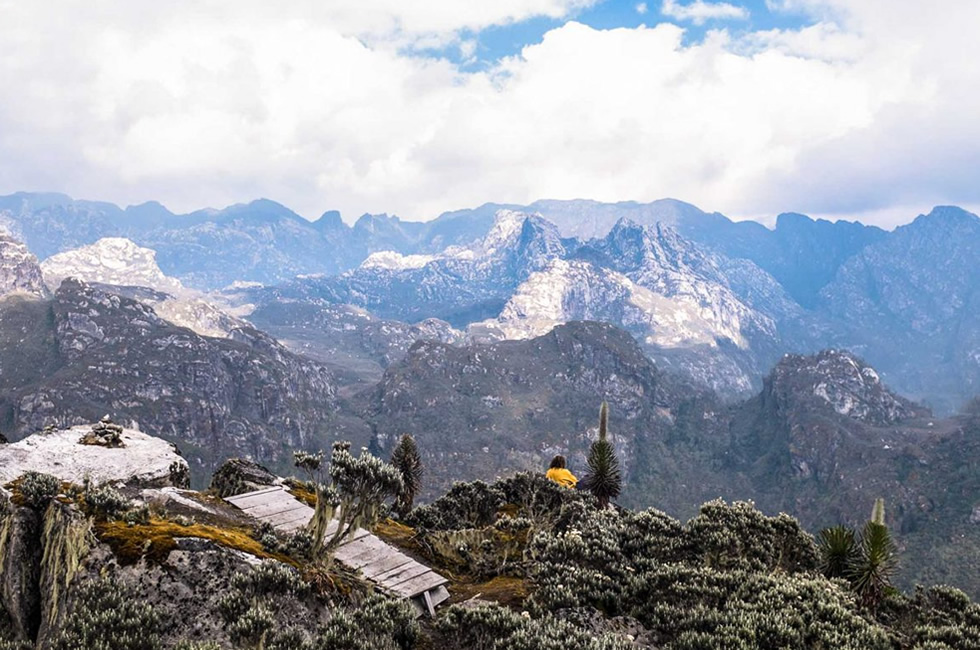
Imagine standing at the edge of a world where time seems to slow down, and nature speaks in its purest form. This is the magic awaiting you on a Mountain Rwenzori hike. Known affectionately as the "Mountains of the Moon," this UNESCO World Heritage site isn't just a destination for seasoned climbers; it’s a living, breathing sanctuary tucked away in southwestern Uganda.
What makes a Mountain Rwenzori hike so unforgettable isn't just the thrill of reaching the jagged, snow-capped peaks, but the incredible journey through its ever-changing landscapes. Reaching a majestic height of 5,109 meters (16,762 feet) at Margherita Peak, it proudly stands as the third-highest mountain in Africa, surpassed only by Kilimanjaro and Mount Kenya. Gazetted as a national park in 1991, this range acts as one of Africa’s most vital water catchment areas. As you trek through its misty forests, you walk alongside over 70 mammal species and 217 bird species. It’s a place where rugged adventure meets profound peace—a truly transformative experience
Some of the popular Mountain Rwenzori hiking trips
15-days-rwenzori-hiking-safari-and-mountain-gorilla-trekking-vacation
11-days-best-rwenzori-mountain-hike-to-margherita-peak
7-days-mountain-rwenzori-mountain-climbing-active-adventure-to-margherita-peak
5-days-rwenzori-hike-to-either-mountain-sepeke-baker-or-luig-di-savoia
2-days-rwenzori-trek-to-nyabitaba-camp
Africa's Third Highest
When you lace up your boots for a Mountain Rwenzori hike, you aren't just tackling any ordinary trail—you are stepping onto the slopes of Africa's third-highest peak. Nestled deep within Mount Stanley, Margherita Peak boldly reaches an astonishing 5,109 meters (16,762 feet) into the sky. While Mount Kilimanjaro in Tanzania stands tallest at 5,895 meters and Mount Kenya holds the second spot at 5,199 meters, the Rwenzori offers a completely different kind of wild majesty. It doesn't rise as a solitary volcanic cone; instead, it reveals itself as a massive, rugged, non-volcanic wall of block-faulted rock and ice that tests your resolve and captures your imagination.
Standing at the base and looking up, the sheer scale of the peak can feel incredibly humbling. Reaching the summit is a badge of honor for trekkers worldwide, demanding physical endurance, mental grit, and a deep respect for high-altitude environments. Every vertical meter gained rewards you with views that few human eyes ever witness. It is a place where the thin air carries a sense of pure triumph. For anyone serious about high-altitude trekking, conquering this giant is the ultimate African mountaineering milestone.
Legendary Origins
Long before modern maps and GPS tracking existed, ancient storytellers spoke of a mysterious, snow-capped mountain range in the heart of Africa that fed the mighty Nile. A Mountain Rwenzori hike allows you to walk through the pages of this living history. Back in 150 AD, the famous Greek geographer and astronomer Claudius Ptolemy documented these peaks, naming them the fabled Montes Lunae or "Mountains of the Moon." For centuries, Europeans dismissed the idea that snow could exist so close to the equator, viewing the accounts of the Greek merchant Diogenes—who claimed to have traveled inland from the East African coast—as nothing more than a myth.
When you trek through these misty valleys today, it is easy to understand why they inspired such grand legends. The heavy fog that routinely blankets the peaks gives them an elusive, ghostly presence, as if they are playing hide-and-seek with the rest of the world. Knowing that you are exploring the very source of the White Nile adds a profound layer of wonder to every step. You aren't just embarking on a physical challenge; you are connecting with an ancient mystery that captivated explorers for millennia.
Six Distinct Massifs
One of the most fascinating aspects of a Mountain Rwenzori hike is discovering that you aren't just climbing a single mountain. Instead, you are exploring an entire alpine world comprised of six distinct, independent massifs separated by breathtakingly deep gorges like the Bujuku Valley. These dramatic giants form a complex, interconnected labyrinth of rock and ice, topped by Mount Stanley, which towers over the entire range at a maximum elevation of 5,109 meters (16,762 feet). Close behind are Mount Speke, reaching an impressive 4,890 meters (16,043 feet), and Mount Baker, which rises sharply to 4,843 meters (15,889 feet). The remaining three giants—Mount Emin at 4,798 meters (15,741 feet), Mount Gessi at 4,715 meters (15,469 feet), and Mount Luigi di Savoia at 4,627 meters (15,180 feet)—complete this colossal block of ancient tectonic rock.
As you navigate the trails, the perspective changes constantly. One day you are staring up at the sheer rock faces of Mount Baker, and the next, you are catching a glimpse of Mount Speke through a break in the clouds. This multi-peak topography means the landscape never feels monotonous. Each massif possesses its own unique personality, weather patterns, and geological features, making the entire journey feel like an epic expedition through a series of hidden kingdoms rather than a straightforward march up a single peak.
Permanent Snow & Glaciers
It feels completely surreal to think about standing on a massive glacier while being located just 0°23′N of the equator, but that is exactly what a Mountain Rwenzori hike delivers. The upper elevations of this range are home to permanent snowfields and striking glaciers. These ancient ice formations cling to the rugged peaks, creating a stark, beautiful contrast against the dark rock faces and the tropical green valleys far below.
Sadly, these glaciers are retreating due to global climate changes, making the chance to witness them today incredibly precious. In 1906, scientific surveys recorded roughly 6.5 square kilometers of glacial ice across the massifs; today, that number has shrunken to less than 1 square kilometer. As you hike alongside these icy giants, you can hear the faint, constant drip of melting ice—a sound that feeds the crystal-clear alpine streams rushing down the valleys. These streams eventually merge to feed the great Nile River. Walking through this frozen equatorial paradise is a stark reminder of our planet's fragile beauty and a sight that will stay with you forever.
Technical Ascents
If you are looking for a casual stroll in the woods, the upper reaches of this range might surprise you. A Mountain Rwenzori hike to the very top is a serious, technical undertaking. While the lower trails offer spectacular trekking for anyone with good fitness, summiting Margherita Peak requires proper mountaineering skills. From the final assault base at Elena Hut (4,541 meters), trekkers must strap on 12-point crampons, tie into safety harnesses with static ropes, and wield ice axes to safely navigate the steep, slippery Margherita Glacier and exposed rock faces.
This technical challenge is exactly what draws true adventurers to the Rwenzoris. There is an unmatched rush of adrenaline when you are clipped into a safety line, carefully placing your boots on ancient ice while the wind howls around you. It turns the journey into a true expedition. You aren't just walking to a viewpoint; you are actively working with your guides, reading the terrain, and using specialized gear to earn every single inch of the summit.
Botanical Wonderland
As you move higher on a Mountain Rwenzori hike, the world around you transforms with astonishing speed. The range is celebrated for its five distinct vegetation zones, each feeling like a completely different planet.
- Afro-montane Forest Zone (1,600m – 2,500m): Characterized by dense, vibrant green canopies and towering trees.
- Bamboo Zone (2,500m – 3,000m): Where the stalks filter the sunlight into a soft, emerald glow.
- Heather Zone (3,000m – 4,000m): Dominated by massive shrubs and otherworldly mists.
- Afro-alpine Moorland Zone (4,000m – 4,500m): A prehistoric landscape filled with unique giant flora.
- Rocky/Glacial Zone (Above 4,500m): Stark, icy alpine desert where only the hardiest lichens survive.
The rapid shift in plant life is a feast for the senses. The air changes from warm and humid to crisp and icy, while the scents shift from rich, damp earth to the clean, sharp smell of high-altitude rock. It is like watching a time-lapse video of earth's evolutionary history unfold right before your eyes.
Giant Flora
Perhaps the most unforgettable visual memory of a Mountain Rwenzori hike is the encounter with the region's surreal, giant flora. In the upper moorland zones, the plants seem to have completely ignored the standard rules of nature due to a phenomenon known as "evolutionary gigantism." Here, you will walk among Giant Lobelias (Lobelia wollastonii) that shoot up like massive green pillars up to 6 meters (20 feet) high, and Giant Groundsels (Dendrosenecio adnivalis) reaching heights of 8 meters.
These plants look less like standard wilderness and more like something imagined for a science fiction movie. Walking through these fields of oversized, exotic vegetation wrapped in shifting mountain mist feels incredibly dreamlike. The scale of the flora distorts your sense of perspective, making you feel delightfully small. It is a bizarre, breathtaking landscape found in only a few precious corners of East Africa, offering an artistic masterpiece designed entirely by nature.
UNESCO Status
The extraordinary beauty and ecological importance of this region are globally recognized. In 1994, the 996-square-kilometer (approx. 1,000 sq km) Rwenzori Mountains National Park was officially designated as a UNESCO World Heritage Site. This prestigious title ensures that the pristine, untamed wilderness you experience during your Mountain Rwenzori hike is strictly protected for future generations to marvel at.
Knowing you are trekking through a globally protected sanctuary changes the way you interact with the environment. Every pristine stream, undisturbed patch of moss, and ancient tree is part of a delicate, thriving ecosystem that has been left to evolve naturally. The UNESCO status keeps commercial exploitation at bay, preserving a rare pocket of true, raw wilderness on our planet. When you walk these trails, you are stepping into an untouched world that looks exactly as it did hundreds of years ago.
Exclusive Trails
If you value solitude and a deep connection with nature, a Mountain Rwenzori hike is the ultimate escape. Unlike more famous African peaks like Mount Kilimanjaro, which sees upwards of 30,000 to 50,000 visitors crowding its trails every year, the Rwenzoris welcome fewer than 1,000 trekkers annually. This relative remoteness and physical challenge mean you will often have the immense valleys, misty ridges, and quiet campsites completely to yourself.
There are no long lines of tourists or crowded summits here. Instead, your expedition feels incredibly private, intimate, and authentic. You can sit by a rushing alpine stream or stand on a high ridge in absolute silence, listening only to the wind and the distance call of a bird. This exclusivity transforms the trek from a standard tourist itinerary into a deeply personal, spiritual journey through a hidden corner of the world.
Legendary "Rain Maker"
The local Bakonjo name for these mountains translates roughly to "Rain Maker" or "Water King," and it doesn't take long to find out why. A Mountain Rwenzori hike is famous for being consistently wet, with heavy mist, drizzle, and downpours totaling between 3,000 mm and 5,000 mm of annual rainfall. This abundant moisture is what feeds the roaring waterfalls and lush greenery, but it also creates the notoriously muddy and boggy trails the range is famous for.
Slogging through the iconic Bigo Bog—where hikers navigate a labyrinth of giant tussocks over deep mud—is a rite of passage for every Rwenzori trekker. It demands a good pair of rubber boots, a sense of humor, and a willingness to embrace the muck. While the wet conditions can be physically taxing, they are also what gives the mountains their mysterious, enchanting atmosphere. The way the mist dances through the giant trees and clings to the cliffs creates an incredibly moody, dramatic backdrop that makes every photograph look like a work of art.
Main Routes
Planning your Mountain Rwenzori hike means choosing the path that best fits your sense of adventure, with three primary routes available. The classic Central Circuit Trail is the oldest and most traditional path, managed by the local community-based Rwenzori Mountaineering Services (RMS). It offers a stunning, circular loop that takes you deep into the heart of the massifs, providing a wonderful mix of culture and classic mountain scenery over 7 to 8 days.
For those looking for a different perspective, the Kilembe Trail approaches the peaks from the southern flank. Managed by Rwenzori Trekking Services (RTS), it features steep ascents, dramatic valley views, and highly comfortable, well-constructed wooden cabins over a 7 to 9-day itinerary. Finally, the Bukurungu Trail appeals to the purest wilderness lovers, offering an un-spoilt, scenic camping route past beautiful alpine lakes like Lake Bukurungu. Whichever trail you choose, each route is fully supported by passionate local guides and porters who ensure you navigate the challenging terrain safely.
Rare Wildlife
While the dramatic peaks and unique plants get a lot of attention, a Mountain Rwenzori hike is also an incredible wildlife safari. The national park is home to a rich array of biodiversity, including 217 recorded bird species, with 19 species endemic to the Albertine Rift. If you keep your eyes peeled, you might spot the brilliant, multi-colored feathers of the Rwenzori Turaco or hear its distinct call echoing through the forest canopy.
The dense forest zones also shelter 70 mammal species. You might catch a glimpse of the striking L'hoest's monkey swinging through the bamboo, hear the distant rustle of chimpanzees, or even come across the tracks of elusive African forest elephants and three-horned chameleons. Because the park is so quiet and undisturbed, these animals live out their lives naturally. Encompassing everything from tiny, colorful creatures to massive forest mammals, the wildlife adds a thrilling layer of discovery to your daily trek.
Varying Hike Durations
One of the great things about planning a Mountain Rwenzori hike is that you don't necessarily have to commit to a massive, grueling expedition to experience its magic. The trails are highly adaptable, offering varying hike durations tailored to different fitness levels, timeframes, and personal goals. If you want the ultimate challenge, you can sign up for the full 9- to 12-day summit climb to stand on Margherita Peak, which allows for safe, gradual altitude acclimatization.
However, if you are short on time or prefer a less intense experience, shorter options are available. The 3-day Mahoma Loop trail or quick 2-day forest walks are beautiful alternatives. These gentler treks take you through the lush lower rainforests and stunning bamboo zones, offering gorgeous views of the distant peaks and tranquil lakes without the need for technical climbing gear. This flexibility ensures that whether you are an elite mountaineer or a casual nature lover, the "Mountains of the Moon" have a path waiting for you.
First Expedition
Every step you take on a Mountain Rwenzori hike follows in the footsteps of true mountaineering pioneers. While local Bakonjo communities lived alongside the range for generations, the massive, snow-capped peaks were first scientifically mapped and scaled in 1906. This historic expedition was led by the Italian explorer Prince Luigi Amedeo, the Duke of the Abruzzi, who brought a massive team that included the famed mountain photographer Vittorio Sella.
Sella’s stunning, historic black-and-white photographs captured the icy majesty of the range, introducing these mysterious mountains to a fascinated global audience. The team successfully summited the main peaks, naming them after British, Italian, and Belgian royalty and explorers. Today, as you look at the jagged ridges, it is incredible to imagine that early team mapping the routes without any modern synthetic gear. Tying your boots on these same trails connects you directly to that golden age of exploration.
Vital Water Source
Beyond its status as an adventure paradise, the range serves an incredibly vital ecological purpose. A Mountain Rwenzori hike takes you through one of the most critical water catchment areas on the entire African continent. The massive amounts of rainfall, combined with the slow melt of the high-altitude glaciers, feed an intricate network of rivers, including the
Mubuku, Nyamwamba, and Rwimi rivers.
This massive natural plumbing system supplies clean, fresh household water and supports the livelihoods of over 5 million people living in the surrounding regions of Kasese, Kabarole, and Bundibugyo, as well as eastern DRC. It sustains local agriculture, feeds lakes George and Edward, and keeps the regional economy thriving. Walking through these valleys, you quickly realize that the Rwenzoris aren't just an isolated wall of rock and ice; they are a vital, life-giving heart that pumps survival into the communities waiting below.
When is the best time for Rwenzori hike
Timing your trek perfectly makes all the difference when tackling the "Mountains of the Moon." The absolute best times for a Rwenzori Mountains National Park Click to open side panel for more information trek are during the dry seasons: from June to August, and from December to February. During these windows, the notorious mountain bogs dry out slightly, rainfall is less frequent, and the skies clear up to reveal stunning, unobstructed views of Margherita Peak. You will still encounter mist and occasional showers—after all, it is a rainforest ecosystem—but the trails are far more manageable. Hiking during the wet seasons of March to May or September to November is only recommended for hardened adventurers who do not mind navigating deep, freezing mud and heavy downpours. Planning for the dry months guarantees a much safer, clearer, and more enjoyable mountain experience.
Where to stay on Rwenzori hike
Accommodation during your expedition depends entirely on the route you choose, but rest assured, you will have a safe place to rest your head. If you choose the classic Central Circuit, you will be staying in basic, communal wooden huts maintained by local community associations. These huts provide basic wooden bunks with foam mattresses, requiring you to bring a warm sleeping bag. On the newer Kilembe Route, the infrastructure is more upgraded, featuring comfortable, fully enclosed wooden cabins with proper bunk beds and dining areas. For those taking the rugged Bukurungu wilderness trail, accommodation means wild wilderness camping in high-quality mountain tents. Before and after your trek, most hikers base themselves in comfortable safari lodges or cozy hotels in the nearby town of Kasese or around the trailhead villages like Nyakalengija, allowing you to clean up and relax.
What to pack for Rwenzori hike
Packing correctly for this expedition is a balancing act between preparing for humid tropical rainforests and freezing arctic summits. Your layer system is your best friend. Essential clothing includes sturdy, broken-in waterproof hiking boots, high-quality gaiters, and several pairs of thick wool socks. Because of the legendary mud, a pair of tall rubber boots is a mandatory addition for lower bog crossings. You will need a heavy, sub-zero sleeping bag, thermal base layers, a fleece jacket, and a reliable, breathable windproof and waterproof outer shell jacket. For the final technical push to the summit, essential mountaineering gear includes a climbing harness, crampons, a warm helmet, and an ice axe—though your guiding team can often provide these. Do not forget a headlamp, UV-protection sunglasses, strong sunscreen, and a durable 40-to-50-liter waterproof duffel bag for porters to carry.
How to get to Mountain Rwenzori on Mountain Rwenzori hike
Getting to the starting point of your Mountain Rwenzori hike is an adventure in itself, but thankfully, getting here is incredibly straightforward. If you love a good road trip, your best option is to drive west from Kampala. Taking the northern route via Fort Portal covers about 370 kilometers and takes roughly 6 to 7 hours, treating you to gorgeous views of lush tea plantations along the way. Alternatively, you can head south via Masaka and Mbarara, a slightly longer 450-kilometer journey that takes around 8 hours but rewards you with a scenic drive through Queen Elizabeth National Park's outskirts.
If you prefer to save your energy for the trails, you can skip the long drive entirely. Just hop on a quick, 1.5-hour scheduled charter flight from Entebbe International Airport straight into Kasese Airstrip. Once you land or arrive in Kasese town, the trailheads are practically on your doorstep. A quick, 1-hour taxi ride or an exciting local boda-boda (motorcycle taxi) trip will bring you right to the park gates, where your epic mountain journey truly begins.
Booking Rwenzori hike with us Roads of Adventure safaris
Embarking on an expedition of this scale requires seamless logistics, deep local knowledge, and an unwavering commitment to safety, which is exactly what we provide at Roads of Adventure Safaris. When you book your trek with us, we take care of every moving part so you can focus entirely on the journey. We handle your official park permits, arrange expert local guides who know every inch of the massifs, and coordinate a dedicated team of porters and mountain chefs to keep you energized. Our custom itineraries are carefully structured to allow for optimal altitude acclimatization, drastically increasing your chances of successfully standing on Margherita Peak. From private, comfortable transport from Kampala to providing top-tier safety support on the ice, we turn a challenging mountaineering expedition into a smooth, life-changing adventure. Let us help you conquer Africa's most beautiful peaks.
