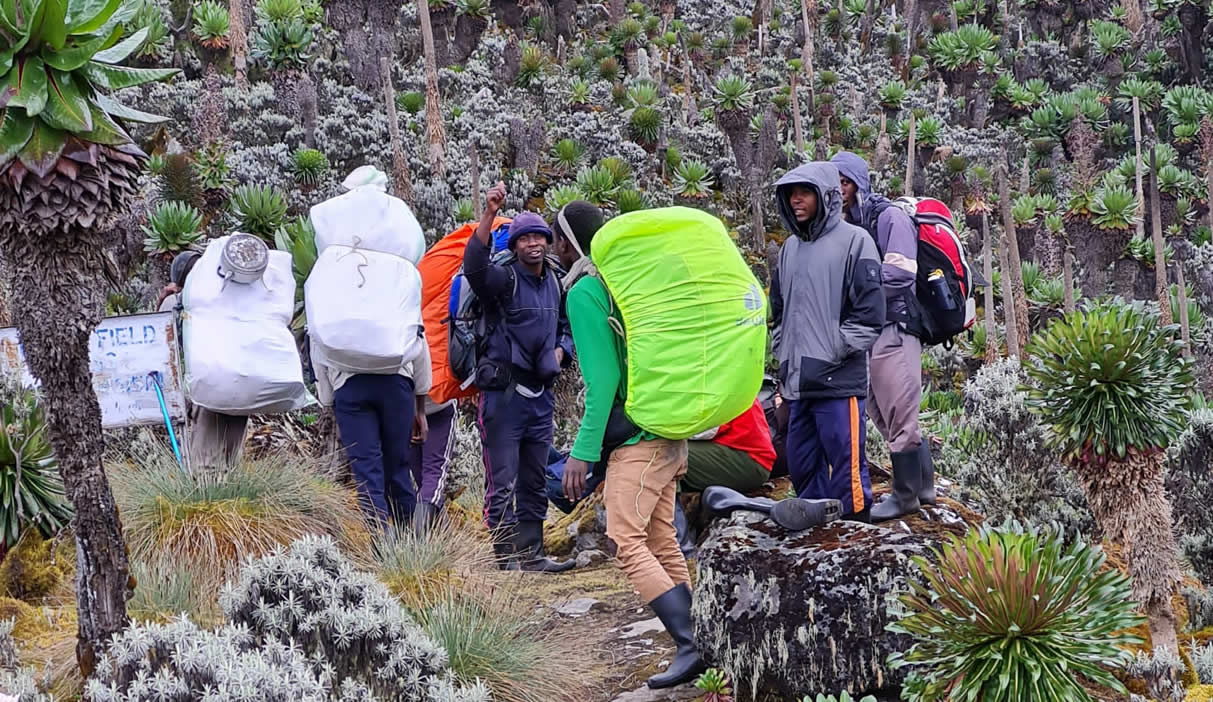
Packing for the Rwenzori Mountains requires specialized gear for extreme mud, rain, and freezing glacial peaks. Key essentials include sturdy waterproof hiking boots or rubber Wellington boots for the bogs, paired with neoprene socks. You also need a heavy down jacket, waterproof rain gear, crampons, and an ice axe
15-days-rwenzori-hiking-safari-and-mountain-gorilla-trekking-vacation
11-days-best-rwenzori-mountain-hike-to-margherita-peak
7-days-mountain-rwenzori-mountain-climbing-active-adventure-to-margherita-peak
7-days-rwenzori-trek-to-mountain-gessi-or-amin
6-days-rwenzori-trek-with-mountain-stanley-margherita-albert-or-alexander
5-days-rwenzori-hike-to-either-mountain-sepeke-baker-or-luig-di-savoia
5-days-mountain-rwenzori-trek-to-bujuku-camp-3977-m-high
2-days-rwenzori-trek-to-nyabitaba-camp
1. Footwear & Legwear
The ground underfoot during a Rwenzori hike defines the entire experience. Unlike typical mountain paths, the lower valleys feature massive, deep bogs that can easily swallow a hiker up to their knees. This makes a pair of high-quality rubber boots (wellies) an absolute priority. Expert local guides rely on them to navigate the thick, wet terrain smoothly without waterlogged feet. Once you ascend past the mud and approach the rocky, steep alpine zones, you will switch to supportive, waterproof hiking boots. Make sure these boots are thoroughly broken in beforehand to avoid painful blisters on the sharp inclines.
To keep comfortable inside those rubber wellies, you must wear thick neoprene socks. The mud inside the bogs is notoriously cold, and neoprene works like a wetsuit, trapping a thin layer of moisture that your body heat warms up to keep your feet cozy and insulated. Over your footwear, a solid pair of breathable trekking gaiters will keep out stray mud, rocks, and water from splashing over the tops of your boots. For your lower body, bring lightweight, quick-drying trekking pants for the humid forest sections, and pack comfortable fleece trousers to change into when temperatures plummet at the high mountain camps.
2. Outerwear & Layers
Weather in the Rwenzori’s notoriously fickle, with heavy downpours occurring even during the dry seasons. Managing your body temperature requires a smart, adaptable layering system. Your first defense against the mountain chill is a heavy down or fleece jacket. As you climb higher toward the chilly peaks, this layer becomes essential for keeping your core warm at night or when resting at camp. Directly against your skin, you will want high-quality thermal base layers, including moisture-wicking long-sleeve tops and long underwear. Avoid cotton entirely, as it holds sweat and can quickly lead to hypothermia in freezing alpine zones.
To protect yourself from the persistent rainfall that feeds the region's lush flora, a fully waterproof and windproof jacket is mandatory. Look for breathable fabrics like Gore-Tex that can handle hours of heavy tropical rain while letting your sweat escape as you hike. Pair this with durable waterproof pants that fit easily over your trekking trousers. Staying dry is the absolute secret to completing a successful Rwenzori hike, as the combination of damp clothes and bitter mountain winds can drain your energy faster than the steep trails themselves.
3. Technical Climbing Equipment
If your goal is to conquer Margherita Peak—the third-highest point in Africa, you will face permanent equatorial glaciers. This requires proper technical climbing hardware. To cross the steep, slick ice fields safely, you need steel crampons that clip firmly onto your mountaineering boots, alongside a reliable ice axe for balance and self-arrest. A sturdy climbing harness paired with locking carabiners is also required to secure yourself to the fixed ropes and safety lines managed by your guides across exposed rocky ledges and crevasse zones.
Even below the snowline, the terrain demands technical support. A pair of strong, adjustable trekking poles is incredibly helpful for navigating the undulating trails. They act like a second set of legs, relieving immense pressure on your knees and ankles during steep descents while offering vital stability when balancing on slippery boardwalks or testing the depth of the muddy bogs. Most local tour operators out of Kasese offer rentals for heavy technical gear, but ensuring your personal gear fits correctly beforehand makes all the difference.
4. Packs & Accessories
Your carrying system needs to keep your gear completely protected from the elements. Your main luggage should be a large, weather-resistant 70 to 90-liter waterproof duffel bag or rucksack. This bag holds your extra clothing and sleeping gear, which your porters will carry safely between camps. Because of the heavy rains, you should line the inside with heavy-duty dry bags or waterproof stuff sacks to guarantee your dry clothes stay dry. For your personal daily use, a comfortable 25 to 35-liter daypack with a built-in rain cover is ideal for carrying your water, snacks, camera, and rain gear.
For the long summit push, which typically begins in pitch darkness between 2 AM and 3 AM, a reliable headlamp with extra lithium batteries is mandatory to keep your hands free on the steep rock scrambles. Lastly, do not forget to protect your hands with a dual-glove system. Pack a lightweight pair of liner gloves for chilly mornings on the trail, and a heavy, insulated, waterproof pair of winter gloves to shield your fingers from frostbite while handling ice axes and cold steel ropes up on the high glaciers.
5. Health & Comfort
Taking care of your body in the wilderness is the key to enjoying your Rwenzori hike. Sleeping comfortably is paramount for muscle recovery, so bring a high-quality four-season sleeping bag rated down to at least $-10^\circ\text{C}$ or $-15^\circ\text{C}$. The high-altitude huts can get incredibly cold and damp after sunset. Because there is no treated water on the mountain, carry reliable water purification systems like iodine drops, chlorine dioxide tablets, or a portable water filter to ensure every sip from the mountain streams is safe and clean.
To keep your energy levels steady through the demanding 6 to 8-hour trekking days, pack plenty of high-energy snacks. Personal favorites like chocolate, nuts, dried fruits, and energy bars are fantastic for a quick blood sugar boost on the trail. Finally, keep a personalized medical kit within easy reach. This should include altitude sickness medication like Diamox to help your body adapt to the thinner air, anti-inflammatory pain relievers like ibuprofen, blister care plasters (such as Competed), and oral rehydration salts to replace vital electrolytes lost through sweat.
6. Personal Care
The final pieces of your packing puzzle focus on protecting your skin and maintaining personal hygiene in a wild, remote environment. High-altitude sun is deceptively intense; the thinner atmosphere means UV rays are incredibly strong. You must apply a high-SPF sunscreen and a protective lip balm regularly to prevent severe sunburns. This is especially true when walking across the glaciers, where the white snow reflects sunlight back up from the ground. To protect your eyes from glare and prevent snow blindness, a pair of polarized sunglasses with side shields is essential.
Because running water and hot showers are non-existent at the higher wilderness camps, personal hygiene relies entirely on what you carry. Bring several large packs of biodegradable wet wipes for quick daily "camp cleanups" to stay refreshed after a long day of sweating on the trails. Keep a travel-sized hand sanitizer handy for meals, and pack two rolls of toilet paper wrapped securely inside waterproof Ziploc bags so they remain completely dry and usable throughout your entire mountain expedition.
Why are rubber wellington boots recommended over regular hiking boots for the lower sections?
The lower valleys of the Rwenzori range feature massive, deep bogs that define the early days of the trek. While high-end leather hiking boots are excellent for firm trails, they will quickly fail when you are wading through thick, organic mud that can rise to your shins or knees. Regular boots get weighed down, waterlogged, and take days to dry in the humid mountain air. High-top rubber wellington boots provide an absolute waterproof barrier, letting you step confidently through the wet terrain without worrying about water spilling over the ankles.
Local guides and seasoned porters rely on rubber boots for the Bigo Bog and lower forest zones because they are easy to clean, completely impervious to standing water, and keep your primary leather boots bone dry for the steep, rocky, and icy zones higher up. Using wellies below ensures that your feet stay free from immersion trench foot and blisters caused by wet, soft skin rubbing against damp socks.
What exactly are neoprene socks, and why are they vital for a Rwenzori hike?
Neoprene socks are made from the same synthetic rubber material used to manufacture deep-sea wetsuits. Unlike traditional wool or cotton socks that absorb water and lose their insulation properties when soaked, neoprene works by trapping a very thin layer of moisture directly against your skin. Your natural body heat quickly warms this trapped water, creating a comfortable, insulated thermal barrier around your feet.
During a Rwenzori hike, the mud and water in the vast marshlands are surprisingly cold, fed by melting glacial runoff from the peaks above. Wearing standard socks inside rubber boots can lead to numb, cold feet because wellies offer no built-in insulation. Neoprene socks ensure that even if a bit of cold-water splashes over the top of your rubber boots, your feet remain warm, cushioned, and fully insulated against the freezing mountain muck.
Can I rent technical climbing gear like crampons and ice axes locally, or must I bring my own?
Yes, you can easily rent the necessary technical climbing gear directly from local operators at the park base offices in Kasese or the community-run trailheads before starting your Rwenzori hike. Because heavy items like steel crampons, ice axes, climbing harnesses, ropes, and helmet systems add considerable weight and bulk to international airline baggage, the vast majority of climbers choose to rent them on-site.
Local operators keep a reliable stock of hardware that is specifically selected to fit the rugged alpine conditions of Mount Stanley. However, if you possess specialized mountaineering boots or prefer a specific brand of technical harness that you know fits your body perfectly, bringing your own gear can provide peace of mind. If you choose to rent locally, always arrive a day early to carefully inspect the straps, buckles, and sharpness of the crampons to ensure they fit seamlessly over your broken-in boots before heading into the mountains.
How do I keep my gear completely dry when it rains almost every afternoon?
The Rwenzori mountains are a massive water catchment area, receiving over of rainfall annually. This means a heavy downpour is highly likely almost every single afternoon of your expedition. To keep your clothing and sleeping gear bone dry, you must implement a multi-layered waterproofing strategy within your luggage. Never rely solely on the exterior fabric of your duffel bag or rucksack.
The most effective method is to line the entire inside of your main duffel with a heavy-duty, waterproof dry bag or a thick commercial trash liner. Inside that main liner, pack your clothes into smaller, color-coded compression dry sacks. This double-layer system guarantees that even if a porter has to set your duffel down on a wet marshy trail during a tropical storm, your dry evening layers and sleeping bag remain perfectly safe. For your daily daypack, always use a fitted waterproof rain cover and keep electronic items like cameras and phones sealed inside individual Ziploc bags.
What temperature rating should my sleeping bag have for the high mountain camps?
Although the Rwenzori range sits directly on the equator, the high-altitude mountain huts are notoriously cold, damp, and drafty. As you ascend past the wooden huts at John Matte and Elena camps, night-time temperatures regularly plummet well below freezing, frequently dropping to between Therefore, you should pack a high-quality four-season sleeping bag with a certified comfort rating of at least
Choosing a bag with a down fill offers the best warmth-to-weight ratio, but because the air remains highly humid, you must take extra care to keep it sealed inside a dry sack during the day. To boost the warmth of your sleeping system and keep the interior of your bag clean from mountain dust and sweat, it is highly recommended to bring a fleece or silk sleeping bag liner, which can add an extra of crucial insulation.
What is the weight limit for the duffel bag carried by the porters on a Rwenzori hike?
To protect the health and well-being of the local mountain crews, the Uganda Wildlife Authority enforces a strict weight limit for the luggage assigned to porters. On a standard Rwenzori hike, your primary waterproof duffel bag must not exceed 20 kg to 22 kg (44 to 48 lbs). This weight limit includes your sleeping bag, extra footwear, heavy jackets, and all technical gear required for the upper peaks.
Before leaving the park headquarters at the start of your trek, your bag will be placed on a scale to ensure it complies with safety regulations. If your kit exceeds this limit, you will simply be required to hire an additional porter to carry the extra load. To maintain a lightweight and efficient pack, adhere to the philosophy that "less is more." Focus on packing highly compressible, multi-functional layers and eliminate heavy, non-essential luxury items that add dead weight to your porter's load.
What kind of gloves do I need to pack for the combination of rock scrambles and glaciers?
A single pair of gloves will not suffice for the diverse environments encountered during a comprehensive Rwenzori hike. You need a versatile two-layer glove system to handle everything from rough flora to frozen steel cables. First, pack a pair of lightweight, durable trail gloves—such as sturdy leather gardening gloves or synthetic climbing liners. These are essential for the middle days of the trek, where you will constantly be gripping wet rocks, mud banks, and rough giant heathers, protecting your palms from painful cuts and stinging nettles.
For the midnight summit push up the glacier toward Margherita Peak, you must transition to a heavy-duty pair of insulated, fully waterproof winter gloves or mountaineering mittens. These summit gloves must feature a windproof outer shell to protect your fingers from frostbite while handling freezing metal ice axes, cold ropes, and snow-slick ladders in sub-zero temperatures.
Why are polarized sunglasses with side shields mandatory for the summit day?
When you reach the top sections of Mount Stanley to traverse the spectacular glaciers, you are exposed to a double dose of solar radiation. Not only is the sun’s UV light exceptionally strong due to the thin atmosphere on the equator, but the pure white glacial ice acts like a giant mirror, reflecting those harsh rays back up at your face from all angles. Walking across the ice without specialized eye protection can cause a painful condition called photokeratitis, or snow blindness, which temporarily burns the cornea.
To prevent this, you must pack category 3 or category 4 polarized sunglasses that offer 100% UV protection. Regular fashion sunglasses are inadequate because they allow scattered light to leak in through the top and sides. True mountaineering glasses feature protective side shields made of leather or fabric, completely blocking out the ambient horizontal glare from the snow and ensuring your vision remains clear and safe.
How should I manage water purification along the trail?
One of the great joys of a Rwenzori hike is the abundance of natural water; the mountains are a pristine watershed filled with sparkling alpine streams and rushing rivers. Because of this constant supply, you do not need to carry heavy loads of bottled water from the base. However, despite looking crystal clear, the water flows past wild animal habitats and high-altitude camps, meaning it must be treated to prevent waterborne illnesses like giardia.
You should bring a combination of a fast-acting portable water filter (like a pump or squeeze system) for daily trail use, and chlorine dioxide or iodine purification tablets for treating larger batches of water at the evening huts. Avoid relying on boiling alone, as water boils at a lower temperature at high altitudes, which requires much more fuel and time to kill all pathogens effectively. Carrying two durable 1-liter wide-mouth Nalgene bottles allows you to treat one bottle while drinking from the other.
What kind of power banks and electronics preparation do I need for a multi-day trek?
The Rwenzori mountains are a remote wilderness with zero electricity infrastructure once you leave the park gate. Furthermore, the extreme cold at the higher camps drains lithium-ion batteries significantly faster than normal. To keep your camera, phone, and headlamp powered throughout a 7 to 9-day trek, you must pack a high-capacity, rugged power bank—ideally a 20,000 mAh to 30,000 mAh unit.
To maximize battery longevity, always store your electronics, phone, and spare camera batteries inside small woolen socks or insulated cases tucked deep within your daytime pack close to your body heat. At night, keep your power banks and headlamp inside your sleeping bag with you to protect them from the sub-zero ambient air. Finally, remember to bring a reliable headlamp with a high-lumen output and a lock feature, ensuring it cannot accidentally turn on and drain inside your bag before your 2 AM summit start.
Booking Mountain Rwenzori hike with us Roads of Adventure safaris
To book a Rwenzori Mountains trek with Roads of Adventure Safaris, you can select an option like their multi-day Central Circuit trip or a 6-day Margherita Peak ascent. Prices typically fall between $1,200 and $1,500 per person depending on group size and the specific trail
