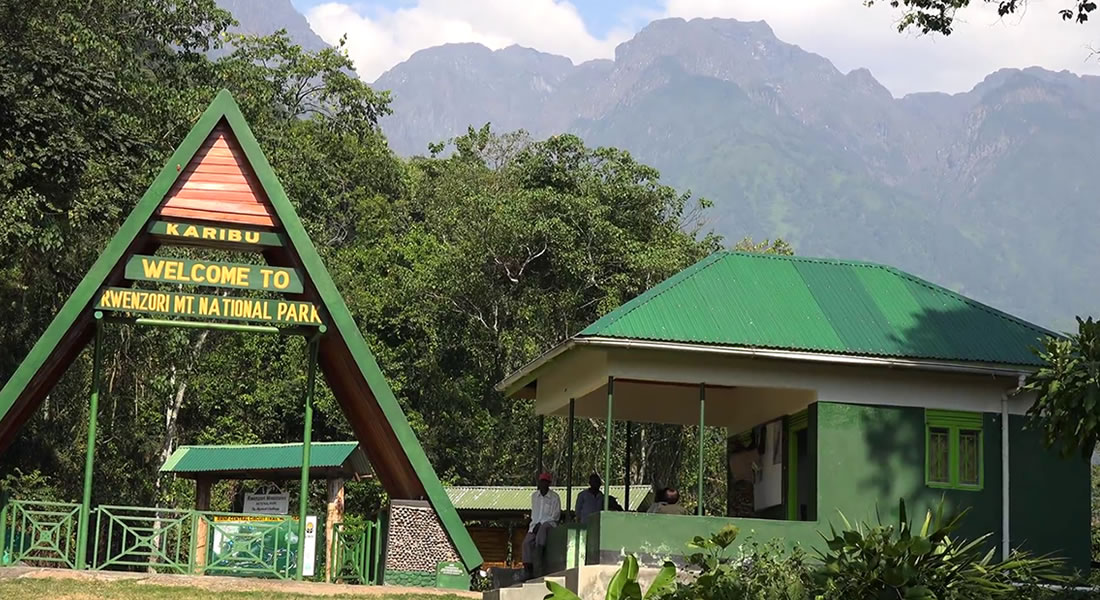
To get to Rwenzori Mountains National Park from Kampala, travel to the base town of Kasese in western Uganda via road or air. From Kasese, arrange a taxi, private transfer, or boda-boda (motorcycle) for the 25km (40-minute) drive to the main park headquarters and trailhead at Nyakalegija.
15-days-rwenzori-hiking-safari-and-mountain-gorilla-trekking-vacation
11-days-best-rwenzori-mountain-hike-to-margherita-peak
7-days-mountain-rwenzori-mountain-climbing-active-adventure-to-margherita-peak
5-days-rwenzori-hike-to-either-mountain-sepeke-baker-or-luig-di-savoia
2-days-rwenzori-trek-to-nyabitaba-camp
1. By Air (Fastest & Most Convenient)
For travelers where time is of the essence, or for those who simply wish to bypass the long, bumpy hours on the road, flying is the ultimate option. Taking a domestic flight offers unparalleled speed and convenience, transforming a grueling full-day road journey into a swift, scenic aerial excursion. The flight path takes you over Uganda’s changing landscapes, offering a bird's-eye view of lush tea plantations, crater lakes, and eventually, the dramatic rise of the Rwenzori Mountains.
How to Book and Fly
Your journey begins either at Entebbe International Airport (EBB), the country's primary aviation hub, or Kajjansi Airfield, a smaller airstrip located just outside Kampala that handles chartered and private flights. From either location, you will board a domestic light aircraft bound for Kasese Airstrip, which serves as the primary aviation gateway to the Rwenzori region and nearby Queen Elizabeth National Park.
- Duration: The flight typically takes only 1 to 1.5 hours, making it the absolute fastest way to reach the region.
- Key Operators: Aerolink Uganda is the primary scheduled commercial operator on this route, running daily flights. Other local charter companies operate on-demand services for private groups.
- Actionable Step: Because these aircraft are small (often carrying between 4 to 11 passengers) and have strict luggage limits (usually 15kg in soft-sided bags), it is crucial to check schedules and secure tickets well in advance directly on the Aerolink Uganda website or through a registered tour operator.
Reaching the Trailhead
Once you touch down at Kasese Airstrip, you are still a short distance away from the Rwenzori Mountains National Park headquarters. You will need to arrange a private 4×4 transfer or hire a local taxi from the airstrip to transport you the remaining distance to Nyakalegija (the central tourism hub and main trailhead), which takes roughly 40 minutes.
2. By Road (Scenic & Adventurous)
Traveling overland from Kampala to Kasese is an adventure in its own right, offering an authentic glimpse into the heart of Uganda’s rural landscapes, bustling roadside markets, and diverse topography. However, because western Uganda’s terrain includes steep hills, winding mountain passes, and occasional unpaved or potholed sections, self-driving or hiring a vehicle requires a robust 4×4 vehicle. A sturdy vehicle ensures you can comfortably handle the terrain, especially during the rainy seasons.
The Northern Route (via Fort Portal)
This is widely considered the shortest, smoothest, and most popular route for travelers heading directly to the Rwenzoris.
- The Path: You will travel roughly 375km from Kampala, passing through Mubende and arriving in the beautiful tourism city of Fort Portal. From Fort Portal, you head south along the base of the mountains to Kasese.
- Time & Highlights: The journey takes about 6 to 8 hours depending on traffic exiting Kampala. It features stunning scenery, including rolling hills covered in manicured green tea estates and views of the Kibale Forest edges.
The Southern Route (via Mbarara)
If you prefer a classic Ugandan safari experience en route, the Southern Route is an incredible alternative.
- The Path: This route spans approximately 350km to 450km depending on your exact detours, taking you along the main highway through Masaka, Mbarara, and right through the heart of Queen Elizabeth National Park.
- Time & Highlights: Taking roughly 6 to 7 hours of pure driving, this route is highly favored because it transitions directly into wildlife territory. As you drive through the savannah corridors of Queen Elizabeth National Park toward Kasese, it is common to spot elephants, baboons, buffaloes, and various antelope species right from the window of your vehicle.
3. By Public Bus
For budget-conscious backpackers, solo travelers, and those looking to experience Uganda exactly like the locals do, public buses are a highly affordable, reliable, and deeply cultural way to travel. Uganda has a robust intercity bus network, and buses heading toward western Uganda run around the clock, offering a raw and vibrant travel experience.
How it Works
The journey begins in central Kampala at the bustling Qualicel Bus Terminal or the Link Bus Terminal. Link Bus Services is the most prominent, reliable, and highly recommended carrier operating regular daily schedules between Kampala and Kasese.
- Cost: A one-way ticket is highly economical, costing approximately 50,000 UGX (roughly $13–$15 USD), making it a fraction of the cost of a private rental or a flight.
- Duration: The bus ride typically takes about 5 to 7 hours to reach Kasese town, largely depending on the number of stops made along the way to pick up and drop off passengers.
What to Expect and Next Steps
The ride is a sensory experience—expect lively chatter, local music, and vendors rushing to the windows at every major town stop to sell roasted plantains (gonja), skewered meat, and cold beverages. The buses are generally large coaches, but they do not have air conditioning or onboard restrooms, so plan accordingly.
The bus will drop you off at the main Kasese Bus Park in the center of Kasese town. Because the bus does not go all the way to the national park gates, you will need to navigate the final leg of the journey yourself. From the bus park, you can easily hire a local boda-boda (motorcycle taxi) for an exhilarating ride, or negotiate a fare for a private hire taxi car to take you the remaining 40-minute distance up the winding roads to the trailhead at Nyakalegija.
Should I travel to the park by road or book a charter flight?
Choosing between road travel and a charter flight comes down to balancing your budget against your time constraints. A domestic flight is ideal if you have a tight itinerary and want to maximize your time on the mountain, as it cuts travel time down to just over an hour. However, it is significantly more expensive and comes with strict luggage restrictions. On the other hand, traveling by road is highly recommended if you prefer a cost-effective journey that allows you to experience Uganda's changing landscapes, local cultures, and vibrant roadside markets. Traveling by road also helps you gradually adjust to the changing altitude before beginning your trek.
How long is the drive from Kampala to Kasese via Fort Portal compared to the longer southern route through Queen Elizabeth National Park?
The Northern Route via Fort Portal covers approximately 375 kilometers and typically takes about 6 to 8 hours. It is the shortest, smoothest, and most popular route for a direct journey to the mountains. In contrast, the Southern Route via Mbarara is geographically longer, spanning between 350 and 450 kilometers depending on your exact detours, and takes roughly 6 to 7 hours of pure driving. While the driving times are surprisingly similar due to different highway conditions, the Southern Route winds directly through the savannah corridors of Queen Elizabeth National Park, making it a slower-paced but wildlife-rich transit option where you can spot animals from your window.
Where do the domestic flights from Entebbe International Airport land when traveling to the Rwenzoris?
Domestic commercial and charter flights departing from Entebbe International Airport or Kajjansi Airfield land at the Kasese Airstrip. This airstrip acts as the central aviation gateway for the entire Rwenzori region, as well as the northern sectors of Queen Elizabeth National Park. Daily scheduled flights are operated by local carriers such as Aerolink Uganda, utilizing small, light aircraft to transport trekkers quickly from the lakeside aviation hubs directly to the base of the mountains.
What is the distance and travel time from the Kasese Airstrip to the park headquarters at Nyakalegija?
The distance from Kasese Airstrip to the main park headquarters at Nyakalegija is roughly 22 to 25 kilometers. Depending on the current condition of the dirt approach roads and local traffic, this drive takes approximately 40 to 50 minutes by vehicle. Because the airstrip does not have an on-site public transport terminal, travelers must arrange a private 4x4 transfer, hire a local taxi, or use a motorcycle taxi (boda-boda) ahead of time to cover this final mountain approach leg.
Are there public transport options, such as buses or shared taxis, that travel from Kampala to Kasese?
Yes, public transport is widely available and highly affordable. Large public buses, most notably Link Bus Services, depart frequently throughout the day from central Kampala terminals like the Qualicel Bus Terminal. Tickets cost around 50,000 UGX, and the trip to Kasese town takes about 5 to 7 hours. While shared commuter taxis (matatus) also operate along this highway, buses are generally preferred by travelers for long-distance journeys due to their extra space and comfort.
Which hiking trailheads (e.g., Central Circuit or Kilembe Trail) require different logistical arrangements to reach?
The two main routes up the mountains are run by completely different entities, meaning their logistical arrangements cannot be mixed. The Central Circuit starts at Nyakalegija, located 22 kilometers north of Kasese, where briefings and bookings are managed by Rwenzori Mountaineering Services at the main park gate. In contrast, the Kilembe Trail starts at the southern valley town of Kilembe, roughly 15 kilometers from Kasese. This route is privately managed by Rwenzori Trekking Services, requiring separate permits, entirely distinct mountain huts, and different guide teams.
What type of vehicle (e.g., 4x4 safari vehicle) is recommended for the final approach roads to the national park?
A robust 4x4 vehicle with good ground clearance, such as a Toyota Land Cruiser or a customized 4x4 Safari Omnibus, is highly recommended. While the main highways leading to Kasese and Fort Portal are well-paved, the final approach roads heading up to both the Nyakalegija and Kilembe trailheads consist of rough, steep, and unpaved mountain tracks. These secondary dirt roads can become incredibly muddy, rocky, and slippery during the rainy seasons, making a four-wheel-drive system essential to avoid getting stuck.
Can I combine my journey to the park with a visit to nearby wildlife reserves like Kibale Forest or Queen Elizabeth National Park?
Combining your mountain trek with nearby wildlife reserves is highly feasible and encouraged due to their close proximity. You can easily arrange to track chimpanzees in Kibale Forest National Park before heading south via Fort Portal to the Rwenzoris. Afterward, you can drive just a short distance south of Kasese to enjoy savannah game drives, lion tracking, and boat cruises along the Kazinga Channel in Queen Elizabeth National Park, creating a comprehensive primate and classic wildlife safari circuit.
What are the luggage and weight restrictions if I choose to take a domestic flight to Kasese?
Domestic carriers like Aerolink Uganda enforce strict weight limits due to the small size of light aircraft, such as Cessna Caravans. The standard allowance is 15 kilograms (33 pounds) per passenger, inclusive of hand luggage. Additionally, all luggage must be packed in soft-sided duffel bags. Hard-shell suitcases are generally not permitted on these bush flights because they cannot fit efficiently into the plane's compact belly cargo pods.
Is it possible to cross into the park from the Democratic Republic of Congo (DRC) side, and what are the border requirements?
While the Rwenzori range straddles the international border with the Democratic Republic of Congo (the Virunga National Park side), crossing directly over the high mountain peaks is strictly prohibited. Land crossings must go through official border posts like Mpondwe/Kasindi. Crossing requires a valid passport with at least six months of validity, an approved e-Visa for the destination country, and a mandatory Yellow Fever vaccination certificate. Because border operations can face sudden restrictions or temporary closures due to regional safety dynamics or health screenings, it is highly recommended to check real-time security directives before planning a crossing.
Booking Mountain Rwenzori hike with us Roads of Adventure safaris
To book a Rwenzori hike with Roads of Adventure Safaris, visit their Roads of Adventure Safaris site. They are a local, fully licensed tour operator offering multi-day expeditions up Margherita Peak (5,109m), with rates starting around $1,000 to $1,130 depending on your residency status.
