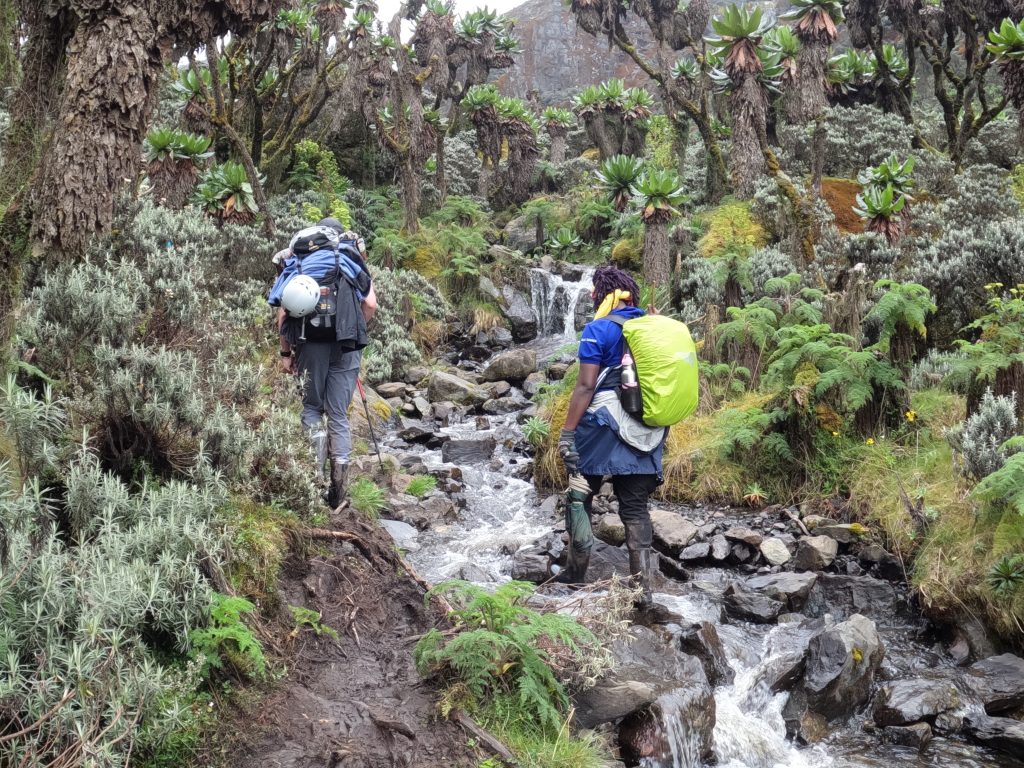
The best time to climb the Rwenzori Mountains is during the dry seasons from mid-December to early March and June to August. These months offer the driest trails, the clearest panoramic views of the alpine landscapes, and the safest conditions for summiting Margherita Peak.
The Rwenzoris straddle the equator and experience equatorial alpine weather, making them prone to rain at any time, but planning your trip during these specific windows provides the highest chance of favorable weather. A detailed breakdown of the seasons will help you plan your climb
15-days-rwenzori-hiking-safari-and-mountain-gorilla-trekking-vacation
11-days-best-rwenzori-mountain-hike-to-margherita-peak
7-days-mountain-rwenzori-mountain-climbing-active-adventure-to-margherita-peak
5-days-rwenzori-hike-to-either-mountain-sepeke-baker-or-luig-di-savoia
2-days-rwenzori-trek-to-nyabitaba-camp
1. The Dry Seasons (Peak Times)
December to Early March
This is widely considered the best overall time to trek. Following the short rains of November, the weather stabilizes, offering clear skies, crisp temperatures, and excellent visibility.
June to August
This is the longest continuous dry season and is the most popular time for mountaineers aiming for the ice caps on Margherita Peak. Trails are firmer and the risk of navigating muddy, slippery slopes is significantly reduced.
2. The Wet Seasons (Low Seasons)
March to May & Late September to November
These are the two primary rainy seasons. Heavy precipitation makes the trails notoriously muddy, boggy, and physically demanding. However, experienced hikers seeking solitude and fewer crowds sometimes take advantage of these months.
Typical Routes and Add-ons
Most multi-day expeditions, such as the Central Circuit Trail or the Kilembe Trail, require proper gear and prior trekking experience. Many hikers combine their Rwenzori expedition with wildlife and primate safaris in nearby Queen Elizabeth National Park or Bwindi Impenetrable National Park for gorilla trekking.
How tall is Mountain Rwenzori
Mountain Rwenzori stands as the highest block mountain range in Africa, rising dramatically along the equator on the border between Uganda and the Democratic Republic of Congo. The highest point of this non-volcanic, glaciated massif is Margherita Peak, which reaches an elevation of 5,109 meters (16,762 feet) above sea level. This impressive height establishes the Rwenzori as the third-highest mountain peak on the African continent, surpassed only by Mount Kilimanjaro in Tanzania and Mount Kenya. Unlike those isolated volcanic cones, the Rwenzori is a massive, fractured crustal block stretching roughly 120 kilometers long and 65 kilometers wide. It dramatically towers nearly 4,000 meters above the floor of the Western Albertine Rift Valley. Its extreme altitude supports permanent glaciers, snowfields, and unique alpine environments, earning it the historic title "Mountains of the Moon" and making it a premier destination for high-altitude trekking safaris.
What are the different peaks in Mountain Rwenzori
The Rwenzori range comprises six main glaciated massifs, each hosting multiple distinct peaks. Mount Stanley is the highest massif, featuring the ultimate summit, Margherita Peak (5,109m), alongside Alexandra Peak (5,091m) and Albert Peak (5,087m). Mount Speke is the second-highest massif, topped by Vittorio Emanuele Peak at 4,890 meters. Mount Baker stands as the third-highest at 4,843 meters, with Edward Peak as its primary summit. Moving further into the rugged range, Mount Emin reaches 4,798 meters with its twin summits, Umberto and Kraepelin, while Mount Gessi rises to 4,715 meters, showcasing the Iolanda and Bottego peaks. Finally, Mount Luigi di Savoia is the lowest of the core massifs at 4,627 meters, featuring Sella and Weismann peaks. Beyond these central giants, the range includes minor rugged sub-ranges like the Portal Peaks (4,391m), creating a spectacular, multi-peaked labyrinth for technical climbers and wilderness hikers alike.
What to see on Rwenzori climb and hiking safari
A Rwenzori hiking safari offers an extraordinary journey through five distinct, otherworldly vegetation zones. Trekkers walk through lush Afro-montane forests and dense bamboo zones, which gradually give way to giant heather forests draped in eerie Old Man’s Beard moss. Higher up, the Afro-alpine zone reveals surreal landscapes filled with prehistoric giant lobelias and groundsels that grow several meters tall. Wildlife sightings include the endemic Rwenzori three-horned chameleon, elegant Rwenzori turacos, and various primates like blue monkeys. The landscape features pristine alpine lakes, such as the picturesque Lake Bujuku and the twin Kitandara Lakes, framed by sheer rock walls. As you push toward the high altitudes, the scenery transforms into dramatic, rugged ridges, extensive rock slabs, and breathtaking equatorial glaciers. Standing on the snow-capped summits provides panoramic views over the vast Congolese wilderness and the Albertine Rift Valley below.
What to pack on Rwenzori climb and hiking safari
Packing for the Rwenzori requires preparation for extreme moisture, freezing temperatures, and rugged terrain. Essential gear includes sturdy, waterproof hiking boots, multiple pairs of thermal socks, and high-quality gaiters to navigate the famous boggy sections. Layering is crucial: pack moisture-wicking thermal base layers, fleece mid-layers, and a heavy down jacket for freezing nights. The outer shell must consist of a high-performance, fully waterproof jacket and trousers to withstand the frequent mountain deluges. A heavy-duty, sub-zero sleeping bag (rated to at least -5°C) is mandatory for the unheated huts. For those aiming for the highest glaciated summits like Margherita, technical climbing gear is indispensable, including a climbing harness, crampons, an ice axe, and a safety helmet. Do not forget UV-protection sunglasses, waterproof duffel bags for porters, trekking poles, a headlamp with extra batteries, and personal water purification tablets.
Where to sleep on Rwenzori climb and hiking safari
Accommodation options during a Rwenzori trekking safari depend entirely on your chosen route, transitioning from comfortable lowland lodges to rustic high-altitude shelters. At the base gates in Nyakalengija or Kilembe, hikers can relax at quality properties like Equator Snow Lodge, Hotel Margherita, or Trekkers Hostel. Once inside the national park, accommodation follows established trail systems. On the classic Central Circuit, managed by Rwenzori Mountaineering Services, hikers stay in wooden mountain huts built on stilts, such as Nyabitaba, John Matte, Bujuku, and the high-altitude Elena Hut (4,563m). On the Kilembe Trail, managed by Rwenzori Trekking Services, accommodation consists of structured wooden camps like Sine, Mutinda, and Bugata Camp. These mountain shelters are basic but robust, providing wooden bunk frames, foam mattresses, shared dry-pitch dining areas, and basic long-drop toilets, keeping trekkers dry and shielded from the harsh alpine cold.
How to get on Rwenzori climb and hiking safari
Reaching the Rwenzori Mountains National Park in western Uganda involves straightforward road or air travel from Kampala or Entebbe. By road, the scenic journey covers approximately 300 to 400 kilometers and takes between 5 to 7 hours, depending on the chosen route. The northern route travels via Mityana and Fort Portal, offering beautiful views of tea plantations, while the southern route goes via Masaka, Mbarara, and Kasese, crossing the equator and passing close to Queen Elizabeth National Park. For a faster alternative, travelers can book a scheduled domestic flight with AeroLink from Entebbe International Airport to Kasese Airstrip, which takes about one hour. From Kasese town, a short 45-minute drive in a 4x4 safari vehicle brings you directly to the primary trailheads at Nyakalengija or Kilembe, where your wilderness mountain expedition officially commences.
Booking Rwenzori climb and hiking safari with us Roads of Adventure safaris
Partnering with Roads of Adventure Safaris guarantees a seamless, expertly managed mountaineering expedition into Africa’s most challenging range. As professional East African safari specialists based locally in Kampala, we handle all the intricate logistics required for a successful, high-altitude climb. We secure necessary park entry permits, coordinate experienced local guides, and manage dedicated porter and cook crews who ensure safety and comfort on the trails. Our custom itineraries utilize reliable 4x4 Land Cruisers with pop-up roofs for your ground transfers, easily connecting your mountain trek with premium wildlife or primate safaris across Uganda. Whether you want to conquer the technical glaciers of Margherita Peak or enjoy a scenic, lower-altitude nature hike through the Afro-alpine moorlands, our team tailors every detail to your fitness level. Contact Roads of Adventure Safaris today to book your ultimate adventure.
