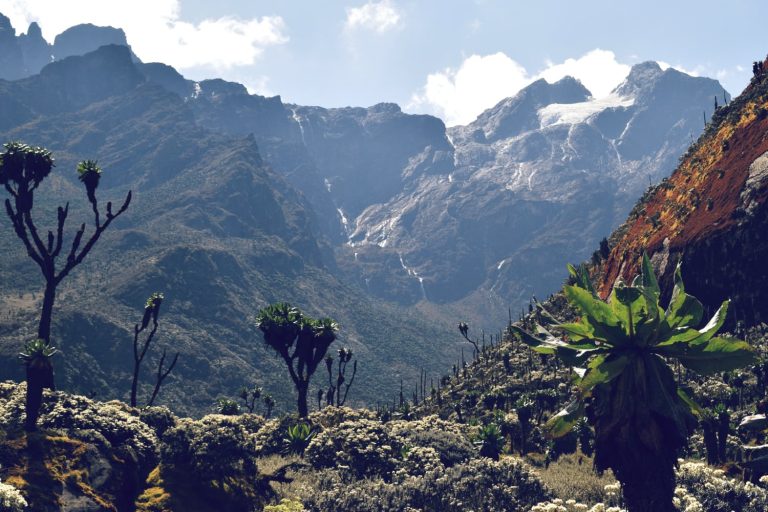
Mountain Rwenzori National Park is a premier UNESCO World Heritage site in southwestern Uganda, famous for its glacial peaks and otherworldly afro-alpine vegetation. Trekking here ranges from 2-day low-altitude forest walks to 7–12-day high-altitude expeditions culminating at Margherita Peak (5,109m)
15-days-rwenzori-hiking-safari-and-mountain-gorilla-trekking-vacation
11-days-best-rwenzori-mountain-hike-to-margherita-peak
7-days-mountain-rwenzori-mountain-climbing-active-adventure-to-margherita-peak
5-days-rwenzori-hike-to-either-mountain-sepeke-baker-or-luig-di-savoia
2-days-rwenzori-trek-to-nyabitaba-camp
Is Mountain Rwenzori also called the Mountains of the moon?
Yes, the Rwenzori Mountains are widely known as the "Mountains of the Moon". This legendary name dates back to 150 AD when the Greco-Roman geographer Claudius Ptolemy documented reports of a mysterious, snow-capped mountain range deep in Africa believed to be the source of the Nile River. When European explorers like Henry Morton Stanley later confirmed the range's existence along the Uganda–DRC border, it was linked to Ptolemy’s fabled description
How many peaks does Mountain Rwenzori have
The Rwenzori massif is composed of six major mountains, each featuring several distinct peaks. The highest and most famous of these is Mount Stanley, which holds Margherita Peak at 5,109 meters
Mount Stanley (5,109m)
Mount Stanley, the tallest of the six main peaks in the range, rises to about 5,109 meters and is located in the Rwenzori Mountains. It is especially famous for hosting Africa’s third-highest summit, Margherita Peak. This mountain complex is not a single peak but rather a group of high summits connected by ridgelines and glacier-filled valleys. Margherita Peak is the main objective for climbers seeking the highest point of Mount Stanley. Other prominent peaks in the massif include Alexandra, Albert, and Elena, each contributing to the dramatic, jagged skyline of the region. The climbing experience on Mount Stanley is typically challenging due to steep rocky sections, high altitude conditions, and changing weather. Despite its elevation, the area is also known for striking scenery—cloud layers, alpine vegetation at lower levels, and icy formations higher up. Because Mount Stanley sits in a frequently wet and cloud-prone environment, trekkers often need careful planning for gear and timing. Overall, it’s one of the most iconic mountains in the Rwenzori range.
Mount Speke (4,890m)
Mount Speke stands at about 4,890 meters, making it the second-highest mountain in the Rwenzori group. Like Mount Stanley, it is made up of several summits rather than a lone highest point, and it carries major historical significance as well as strong scenic appeal. The mountain features prominent peaks such as Vittorio Emanuele, Ensonga, and Johnston, which provide multiple routes and objectives for experienced hikers and mountaineers. The Speke massif is known for rugged ridges and narrow passages between peaks, often surrounded by glaciers and snowfields depending on the season. Climbers may experience altitude-related effects quickly, so acclimatization is a crucial part of any ascent. Weather can shift rapidly, with mist and rainfall reducing visibility and increasing difficulty on exposed sections. Despite these challenges, Mount Speke is highly rewarding, offering panoramic views across the Rwenzori range and toward surrounding valleys. Its combination of high elevation, technical terrain, and awe-inspiring landscapes makes it a major highlight for anyone trekking the Rwenzori Mountains. Many expeditions treat it as a central objective after initial acclimatization on lower routes.
Mount Baker (4,843m)
Mount Baker reaches roughly 4,843 meters and is one of the key summits within the Rwenzori Mountains. It includes several important sub-peaks, notably Edward, Semper, and Wollaston. Together, these peaks form a complex mountainous structure characterized by steep climbs, rocky edges, and the lingering presence of snow and ice on the higher ridges. The main attraction of Mount Baker is its combination of high altitude with varied terrain. Depending on the route, climbers may encounter glaciers or snow patches along with exposed rock faces, making careful footing essential. Weather conditions in the Rwenzori range can be unpredictable, and temperatures tend to drop quickly with elevation, especially near the summits. Cloud cover and rain can also obscure views and create slippery conditions on certain rock surfaces. Despite the difficulty, Mount Baker offers memorable panoramas of the surrounding mountain landscape, including neighboring massifs and deep valleys carved by ice and water. The sense of remoteness is another strong feature—this is not a casual hike but a challenging mountain environment. Overall, Mount Baker is a classic part of the Rwenzori climbing experience, appealing to those seeking altitude, technical terrain, and dramatic natural scenery.
Mount Emin (4,798m)
Mount Emin stands at approximately 4,798 meters and is known for its smaller but still significant high points within the Rwenzori Mountains. It is made up of two notable peaks: Umberto and Kraepelin. Although Mount Emin is slightly lower than Mount Baker and Mount Speke, it remains a major component of the overall six-mountain structure and a key target for mountaineers exploring the range. The massif is typically approached through rugged pathways and mountainous ridges that require endurance and good acclimatization. As with other Rwenzori summits, the higher elevations bring colder temperatures, thinner air, and quickly changing weather. Rain and mist can reduce visibility and make navigation difficult, especially in cloud-prone zones. Trails and rock surfaces may also become slick, requiring careful balance and secure footwork. What makes Mount Emin especially interesting is the way it complements the larger, more famous peaks nearby—climbers can experience different ridge profiles and summit atmospheres while still remaining within the same awe-inspiring mountain system. Views from Mount Emin can include dramatic glacier-like landscapes and a sweeping look across the surrounding mountains. In short, Mount Emin is a high-altitude challenge that rewards climbers with strong scenery and a distinct sense of exploration in a remote alpine environment.
Mount Gessi (4,715m)
Mount Gessi rises to about 4,715 meters and includes two prominent peaks: Iolanda and Bottego. While it may not be the highest summit among the six main mountains, it plays an important role in the overall geography of the Rwenzori Mountains. The Gessi massif is known for its alpine character, where ridges and steep slopes create a visually dramatic landscape. Like other peaks in the range, it can be affected by high-altitude weather patterns, with frequent cloud cover, mist, and occasional rain. Temperatures at this elevation are generally cold, and climbers can face strong winds, especially near exposed sections. The terrain often features rocky climbs and uneven ground, with the possibility of snow or ice depending on conditions and seasonal changes. Acclimatization remains essential, since altitude can affect breathing, energy levels, and overall safety. Mount Gessi is also valued for the variety it adds to an expedition. Climbers moving through the range can experience changes in landscape texture, ridge angles, and summit views from one massif to another. From Iolanda and Bottego peaks, hikers can typically enjoy wide-ranging views of neighboring mountains and valleys. Overall, Mount Gessi is a rewarding objective for those seeking a high summit experience that is both challenging and deeply scenic.
Mount Luigi di Savoia (4,627m)
Mount Luigi di Savoia, at around 4,627 meters, is the lowest of the six main mountains listed, yet it is still a major part of the Rwenzori Mountain massif and remains an impressive target for trekkers and climbers. This mountain includes Sella Peak and other high points within the area, forming a cluster of summits that offer different angles and route possibilities. While the elevation is lower than the other mountains, it does not mean the terrain is easy. The region’s weather can still bring cold temperatures, frequent cloud cover, and wet or misty conditions. The combination of altitude and steep slopes means travelers must maintain good pace and take adequate rest and acclimatization breaks. Mount Luigi di Savoia is often appreciated for its scenic beauty, with dramatic ridges and surrounding highlands shaping the landscape. The summit experience can also be rewarding because it provides broader context for the entire range—viewpoints can show how the higher massifs (like Stanley and Speke) dominate the skyline above. Routes involving Luigi di Savoia may appeal to climbers looking to combine exploration with a slightly more attainable high-altitude objective within the larger Rwenzori system. Overall, it’s a mountain that balances challenge and accessibility, offering rich scenery, memorable summit views, and an important contribution to the six-peak identity of the Rwenzori Mountains.
Top Rwenzori Trails
Central Circuit
The Central Circuit is the most historic, deeply traditional route within the Rwenzori Mountains National Park. It closely follows the legendary 1906 expedition path pioneered by the Duke of Abruzzi, the first European explorer to map these iconic "Mountains of the Moon." Typically organized as a 7- to 12-day loop, this classic trail approaches the massif from the east, starting at the Mihunga trailhead near Nyakalengija. It navigates the mountain in a reliable, clockwise direction, leading hikers up through the stunning Bujuku Valley. This route takes you past iconic, glass-like alpine lakes and through five distinct, incredibly vivid vegetation zones—ranging from thick tropical forest and dense bamboo belts to surreal afro-alpine moorlands dominated by giant lobelias draped in bearded lichens.
The Central Circuit is highly favored by purists because it provides a direct, highly scenic route to the high peaks, including Mount Baker, Mount Speke, and Mount Stanley. Along the trail, well-established, weather-tolerant wooden huts like Nyabitaba, John Matte, and Bujuku offer hikers a dry place to rest. However, this historic path is famous for its physical challenges, particularly the notorious lower and upper Bigo Bogs, where hikers previously trudged knee-deep through thick mud before the welcome installation of modern boardwalks. After climbing steeply to Elena Hut, summiters tackle the icy, glaciated terrain of Margherita Peak before descending via the breathtaking Scott-Elliot Pass to the beautiful twin lakes of Kitandara. The trail then winds over the Freshfield Pass into the Mubuku Valley, providing a complete, varied loop that ensures you never see the same landscape twice, offering a truly grand mountaineering experience.
Kilembe Trail
The Kilembe Trail, often referred to as the Southern Circuit, is a newer, exceptionally scenic route that approaches the Rwenzori massif from the south. Managed exclusively by Rwenzori Trekking Services since its opening in 2009, this trail is widely celebrated for offering a more exclusive, less-traveled wilderness experience. It is a longer, physically demanding southern route that requires a minimum of 7 to 10 days to complete a full summit expedition. The trail begins just outside Kasese at the Kyanjuki rangers post and climbs steeply through the spectacular, wide river valleys of the Nyamwamba, Kasusoni, and Nyamugasani rivers. Because it was closed to tourism for decades, the surrounding nature remains completely pristine, boasting arguably the most vibrant and untouched flora anywhere in the national park.
What sets the Kilembe Trail apart is its incredible, unhurried alpine traverse. As you push past the lower montane forests into the higher elevations, the route treats hikers to sublime, panoramic views of Mount Stanley, Mount Baker, and Weismann’s Peak that cannot be matched on other routes. The trail snakes through jaw-dropping glacial valleys, vast fields of giant groundsel, and deeply dramatic moss-draped heather forests. Hikers stay in high-quality, comfortable wooden cabins strategically spaced along the ascent, including Sine Hut, Mutinda Camp, and Bugata Camp. The route eventually links up with the high-altitude ridges at Margherita Camp, offering a thrilling and highly rewarding approach to the glaciers. Descending through the deep, vertical cliffs of the Kiharo Valley completes a physically rigorous but visually spectacular mountaineering masterpiece.
Short Treks
For travelers who want to experience the mystical atmosphere of the Rwenzori Mountains but lack the time or desire for a grueling, multi-day glacier climb, short low-altitude treks provide the perfect solution. Ranging from 1 to 4 days, these condensed itineraries focus entirely on the lower, hyper-biodiverse Afro-montane forest zones between 1,600 and 3,000 meters above sea level. The most popular short option is the 2-day trek along the southern Kilembe line to Sine Hut, sitting comfortably at 2,595 meters. This accessible hike completely bypasses the thin air and freezing temperatures of the high peaks, requiring no technical climbing skills or specialized winter gear, making it an ideal add-on safari option.
The trail to Sine Hut introduces hikers to the legendary sound ecology and dense beauty of the Rwenzori forests. You will walk beneath towering ancient trees, climb rustic wooden ladders, and cross crystal-clear mountain streams carpeted in thick moss and giant ferns. These lower slopes boast the highest concentration of wildlife in the park; hikers routinely spot active troops of black-and-white colobus monkeys, rare L’Hoest’s monkeys, and colorful three-horned chameleons. It is also an absolute paradise for birdwatchers, offering unmatched opportunities to view the spectacular Rwenzori Turaco and vibrant sunbirds up close. A major highlight of this trek is a short walk from camp to visit Enock’s Falls, a dramatic waterfall cascading through the primeval jungle. Other short alternatives, like the 3-day Mahoma Loop or the 4-day Mutinda Lookout trek, similarly deliver stunning alpine views and pristine waterfall circuits, proving that the magic of the Rwenzoris is fully accessible even on a brief schedule.
Is Mountain Rwenzori the third highest mountain in Africa
Yes, the Rwenzori Mountains (specifically Margherita Peak on Mount Stanley) are the third-highest in Africa. Rising to 5,109 meters, it trails only Mount Kilimanjaro in Tanzania (5,895 m) and Mount Kenya (5,199 m).
The Rwenzori Mountains National Park is located along the Uganda–DRC border. Unlike most other major African mountains which are volcanoes, the Rwenzoris are a massive block mountain range thrust up by tectonic activity within the [Albertine Rift] (0.5.6, 0.5.13).
The Best Time to Visit Mountain Rwenzori
The best conditions for trekking and scaling Margherita Peak are during the warmest and driest months: December to mid-March and mid-June to the end of October.
When does the Rwenzori Marathon usually happen
The Tusker Lite Mt. Rwenzori Marathon usually happens annually in August, typically on the third or fourth weekend of the month, in Kasese, Western Uganda.
Specific dates for recent and upcoming events include:
- 2026 Edition: Scheduled for August 22, 2026.
- 2025 Edition: Took place on August 23, 2025.
- 2027 Edition: Subscribe to our newsletter, we shall keep you updated the exact date in August
The race—which features a 42 km Full Marathon, a 21 km Half Marathon, a 10 km run, and a 5 km fun run—is known for traversing the Equator through Queen Elizabeth National Park and heading toward the foothills of the Rwenzori Mountains
Where is Mountain Rwenzori Park located in Uganda
Rwenzori Mountains National Park is located in Southwestern Uganda along the eastern border of the Democratic Republic of the Congo. The park spans across the Kasese, Kabarole, and Bundibugyo districts and is approximately 437 kilometers (260 miles) west of Kampala.
The main access point for trekking is the town of Kasese, which sits about 25 kilometers from the park's primary trailhead at Nyakalengija. The park is also situated near Queen Elizabeth National Park and Kibale Forest National Park
How to get to Mountain Rwenzori national park
By Air
For travelers looking to minimize transit time and maximize their hours spent in the field with binoculars in hand, traveling by air is the ultimate logistical solution. Scheduled domestic flights and private charter services operate daily out of Entebbe International Airport directly to the Kasese airstrip, located right at the base of the mountain range. Providers like AeroLink Uganda run a reliable daily morning flight that takes just 1 hour and 10 minutes, effortlessly bypassing hours of bumpy road transit. Upon touchdown in Kasese, the main mountaineering trailhead at Nyakalengija is a brief and straightforward 22-kilometer drive away, meaning you can realistically be stepping onto the forest trails by early afternoon. Flying is particularly advantageous for high-end safaris or international birdwatchers traveling with heavy, fragile camera bodies and spotting scopes, as it limits exposure to dusty roads and mechanical vibrations. While checking luggage constraints on light aircraft is essential due to strict weight limits for regional safety, air travel offers a fast, comfortable, and spectacularly scenic entry point that showcases breathtaking aerial views of Uganda’s western crater lakes and expanding rift valleys.
By Road
Embarking on a road trip from Uganda’s capital city, Kampala, to the Rwenzori gateway is an incredibly rewarding overland journey that highlights the shifting landscapes of the country. The drive typically spans 6 to 8 hours, navigating a well-maintained asphalt highway that snakes westward through central Uganda's rolling hills. The most popular and scenic route travels directly through Fort Portal, a clean, charming tourism city nestled in the shadow of the mountains. Along this drive, you will pass through a beautiful tapestry of rural villages, bustling local markets, and vast, undulating green tea plantations that blanket the landscape. Traveling by road serves as a fantastic, gradual introduction to the region's diverse birdlife, offering excellent opportunities to spot roadside raptors, hornbills, and weavers. Utilizing a robust, private 4x4 safari vehicle ensures your group has the flexibility to stop for spontaneous photographs, stretch at scenic viewpoints, or break up the trip with a quick nature walk. While the journey requires a full day of travel, it provides an authentic sense of place and scale that enriches your overall Ugandan safari experience.
Guides & Porters
Navigating the unique terrain of the Rwenzoris requires a fully supported ground operation, making local guides and porters an absolute necessity for any high-altitude trek. Park regulations strictly mandate that all hikers entering the national park must be accompanied by registered, local site guides who are expertly trained in mountain safety, trail logistics, and wilderness first aid. Additionally, a dedicated team of porters is assigned to every expedition to carry the heavy communal equipment, cooking gear, fresh food supplies, and your personal duffel bags. This invaluable support system allows you to hike unburdened, carrying only a lightweight daypack containing your essential water, rain gear, camera, and binoculars. Beyond the physical relief they provide, these teams are composed of individuals born and raised in the neighboring mountain communities, offering unmatched cultural insight and deep traditional knowledge of the valleys. When undertaking a specialized birdwatching safari, coordinating with these local teams ensures you have extra sets of highly trained eyes scanning the thick, mossy canopy, transforming a challenging alpine climb into a safe, collaborative, and highly successful scientific tracking expedition.
What are the popular entry get to Mountain Rwenzori Park
To get to Rwenzori Mountains National Park, travelers primarily use two main trailheads: the Nyakalengija Central Circuit (the most popular) and the Kilembe Trail. Both are located near Kasese town in western Uganda, about a 5–6-hour drive (350-437 km) from Kampala
What are the accommodations at Rwenzori Mountain Park
Accommodations at Rwenzori Mountains National Park range from luxury safari lodges at the base to basic alpine huts and campsites along the trekking trails. Overnight stays on the mountain are usually included in a guided trekking package
Mountain Huts and Campsites (Inside the Park)
Central Circuit Trail Huts
The historic Central Circuit Trail features a well-established network of permanent wooden cabins owned and managed by the Uganda Wildlife Authority (UWA). These rustic mountain huts—including Nyabitaba, John Matte, Bujuku, Elena, and Kitandara—are strategically spaced a day's trek apart along the classic loop. They offer hikers essential shelter from the park’s frequent torrential downpours and biting alpine winds. Inside, the arrangements are basic but functional, typically consisting of communal, dormitory-style rooms outfitted with wooden bunk beds and simple foam mattresses. You will need to bring your own warm sleeping bag and pillow liner. While the huts lack modern luxury, running water, or electricity, they provide a dry, companionable space where trekkers gather around candlelit tables in the evening to share stories and review their birding checklists. Dining takes place in separate cooking structures where your porters prepare hot meals. Sanitation is limited to shared outdoor long-drop latrines situated a short walk from the main sleeping quarters. Despite their simplicity, watching the mountain mist roll past these historic timber cabins offers a classic, deeply authentic mountaineering experience.
Kilembe Trail Camps
The southern Kilembe Trail, managed by Rwenzori Trekking Services, utilizes a premium network of purpose-built fixed camps that provide an elevated level of comfort in the wilderness. Spaced efficiently along the steep ascent, camps such as Sine, Mutinda, Bugata, Hunwicks, and Margherita consist of durable, heavy-duty wooden cabins designed to withstand extreme mountain weather. A standout feature of the Kilembe camps is the integration of modern eco-technologies; most locations are equipped with sustainable solar-powered lighting systems that illuminate the communal areas and sleeping quarters after dark. Furthermore, central dining cabins usually feature dedicated solar charging stations, allowing you to plug in and recharge your vital camera batteries, smartphones, and headlamps—an invaluable luxury for long-form wildlife photographers and birdwatchers. The bedding arrangements include comfortable bunk beds with thick mattresses, and the dining setups are highly organized, with dedicated kitchen staff preparing diverse, nutrient-rich meals. Sanitation is also upgraded here, featuring clean, well-maintained eco-toilets, making this trail an exceptional choice for trekkers seeking a fully supported, comfortable mountain expedition.
Bukurungu Wilderness Trail Campsites
For intrepid adventurers seeking absolute solitude and a raw, unvarnished connection to nature, the Bukurungu Wilderness Trail represents the ultimate backcountry route. Unlike the more developed paths, this rugged northern sector features absolutely no permanent cabins, solar grids, or established park structures. It is a pure-ground camping route where hikers must remain entirely self-sufficient, carrying or renting durable, four-season mountain tents capable of withstanding heavy rains and freezing alpine temperatures. Wilderness campsites are cleared clearings situated alongside pristine, mirroring alpine lakes and beneath towering, jagged ridges. This lack of infrastructure means you sleep in complete isolation, far from other trekking groups, enveloped by the profound silence of the afro-alpine moorlands. Your support team will set up a dedicated kitchen tent and a basic mess tent for meals, pitching your sleeping tents on solid ground surrounded by giant lobelias. While it demands a higher degree of physical resilience and preparation, camping out in the wild Bukurungu valley rewards you with unrivaled stargazing, pristine habitats for tracking rare birds, and an authentic, old-world expedition vibe.
Base and Gateway Lodges (Outside the Park)
Before or after your trek, several lodges and hostels near the park boundary offer hot showers, meals, and comfortable beds:
Luxury: Equator Snow Lodge
For travelers seeking high-end comfort and architectural elegance, Equator Snow Lodge—increasingly known as Snow Height Lodge—stands as the premier luxury accommodation at the mountains' edge. Located near the main park entrance at Nyakalengija, this exceptional lodge is a masterpiece of eco-luxury design, constructed primarily from indigenous river stones and sustainably sourced timber. Each spacious, upscale chalet features large glass windows that frame stunning, unobstructed views of the rugged mountain foothills and the rushing Mubuku River below. Inside, the design balances rustic wilderness charm with modern indulgence, boasting plush bedding, private stone fire pits to take the chill off damp mountain evenings, and elegant en-suite bathrooms equipped with deep bathtubs and reliable hot water showers. The main stone lounge and restaurant serve gourmet, multi-course meals prepared from fresh, locally sourced ingredients, providing a perfect culinary sanctuary. For discerning birdwatchers and mountaineers, this lodge serves as an ideal base camp, offering a peaceful environment to review your avian checklists or recover after a demanding alpine summit bid, all while surrounded by the sights and soothing sounds of the tropical forest canopy.
Mid-Range: Ihamba Lakeside Safari Lodge & Ruboni Community Camp
The mid-range accommodation tier features fantastic options that perfectly blend comfortable amenities with genuine local heritage. Ihamba Lakeside Safari Lodge, situated slightly further down along the serene shores of Lake George, features comfortable independent cabins with private decks, offering a peaceful waterfront escape ideal for waterbird enthusiasts. Closer to the mountain trailhead sits Ruboni Community Camp, a pioneering eco-tourism initiative owned and operated directly by the local Bakonzo people. Ruboni offers clean, comfortable mid-range stone and timber cabins equipped with hot showers and private verandas that overlook the lush forest valleys. Staying here provides travelers with a unique, firsthand opportunity to immerse themselves in Bakonzo culture through guided village walks, traditional dance performances, and storytelling around the evening campfire. The on-site restaurant serves up a delicious mix of international dishes and traditional Ugandan specialties. Both lodges offer an authentic, sustainable hospitality experience that keeps your travel investment directly within the neighboring communities, making them highly rewarding choices for socially conscious adventurers and wildlife watchers alike.
Budget: Trekkers Hostel
Trekkers Hostel, situated in the quiet village of Kyanjuki just outside Kasese, serves as the primary base camp and lively operational heart for the southern Kilembe Trail. Run by Rwenzori Trekking Services, this welcoming budget hostel is the ultimate gathering place for independent backpackers, serious mountaineers, and international birding groups preparing to ascend the peaks. The property offers a practical variety of flexible, low-cost sleeping arrangements, including clean shared dormitories, private twin rooms, and a grassy campground area for travelers pitching their own tents. After days of roughing it on the mountain, the hostel’s hot communal showers and reliable laundry services are a welcome relief. The bustling central bar and restaurant area serve hearty, home-cooked meals and ice-cold beers, creating a vibrant, social atmosphere where trekkers from across the globe gather to exchange trail tips and compare wildlife photos. With its friendly local staff, budget-friendly rates, and direct access to Kilembe route logistics, it provides an energetic, highly functional launchpad for any western Uganda wilderness expedition.
Essential Gear to Pack for Mountain Rwenzori hike
Warm, Waterproof, and Windproof Clothing
The Rwenzori Mountains are notorious for their highly unpredictable, volatile weather patterns, where warm tropical sunshine can transform into a freezing torrential downpour within minutes. Because you will pass through radically different microclimates, utilizing a strict technical layering system is the absolute key to staying dry and preventing hypothermia. Your base layers must consist of high-performance, moisture-wicking synthetic materials or merino wool that pull sweat away from your skin; cotton must be completely avoided as it holds moisture and chills the body. Over this, a heavy fleece or insulated down jacket is essential for trapping body heat during chilly evenings at the camps. The critical final layer is a heavy-duty, fully waterproof and windproof shell jacket and matching rain pants, preferably made of breathable fabrics like Gore-Tex. This outer layer protects you from the howling alpine winds and near-constant mountain mist that blankets the higher valleys. Additionally, do not forget to pack high-quality thermal gloves, a warm beanie that covers your ears, and several pairs of specialized thick wool trekking socks to ensure your extremities remain well-insulated when temperatures inevitably plunge below freezing at night.
Sturdy, Well-Broken-In Waterproof Hiking Boots
Your choice of footwear is arguably the single most critical gear decision for a successful Rwenzori expedition. The mountain trails are notoriously rugged, steep, and demanding, featuring slick wooden ladders, exposed tree roots, and vast fields of slick, moss-covered boulders. You must invest in high-quality, high-ankle hiking boots that provide exceptional ankle support and feature a deep, aggressive tread pattern for maximum traction on muddy slopes. Crucially, these boots must be fully waterproof to seal out the constant moisture of the lower wetlands and high-altitude bogs. Equally important is that your boots are thoroughly broken-in months before your departure date; attempting to tackle these demanding trails in a brand-new pair of stiff boots is a guaranteed recipe for severe blisters and foot pain that can easily ruin your entire trek. Pair your boots with rugged, waterproof gaiters that wrap around your lower legs. These gaiters prevent thick mud, muddy water, and debris from spilling over the top of your boots while navigating the notorious bogs, ensuring your feet stay dry, warm, and comfortable throughout your long days in the field.
Sleeping Bag (Rated for Freezing Temperatures)
After spending a long, physically demanding day tracking rare birds or navigating steep mountain ridges, a warm and restful night's sleep is absolutely vital for your body's muscle recovery and altitude acclimatization. While the wooden huts along the trekking circuits provide excellent shelter from the heavy rains and howling winds, they are uninsulated and get incredibly cold once the sun goes down. Temperatures at the higher camps, such as Elena Hut or Margherita Camp, routinely drop below freezing, frequently hovering between 0 and minus 5 degrees Celsius. Therefore, packing a high-quality, professional sleeping bag rated for freezing temperatures—ideally with a comfort rating of at least minus 10 degrees Celsius—is completely non-negotiable. Down-filled sleeping bags offer the absolute best warmth-to-weight ratio and compress easily into your duffel bag, though synthetic bags are a highly reliable alternative because they retain insulating properties even if they accidentally absorb ambient moisture. To further maximize your comfort, consider slipping a thermal fleece sleeping bag liner inside, which adds an extra layer of insulation and keeps your core warm through the coldest alpine nights.
Crampons, Ice Axes, and Ropes for the Glacial Summit
If your ultimate mountaineering goal is to stand atop the iconic Margherita Peak on Mount Stanley, you are transitioning from a standard wilderness hike into a serious, technical alpine mountaineering expedition. Reaching Africa’s third-highest point requires crossing the vast, ancient Margherita Glacier, a steep and shifting expanse of solid ice and hard-packed snow. To navigate this extreme environment safely, specialized technical mountaineering gear is absolutely mandatory. Heavy-duty, adjustable steel crampons must be securely fastened to your rigid boots to provide life-saving traction on the slick ice, preventing dangerous slips on steep inclines. A lightweight, technical ice axe is equally essential, serving as a vital balance aid as you climb and providing the means to execute a self-arrest in the unlikely event of a slip. Furthermore, all climbers must be securely harnessed and bound together using professional-grade, dynamic climbing ropes to safely mitigate the hidden danger of deep glacial crevasses. While premier ground operators like Roads of Adventure Safaris can arrange local rental gear, ensuring you are trained in their basic use guarantees a safe, successful summit bid.
Headlamp and Plenty of Extra Batteries
A reliable, high-performance headlamp is an absolute necessity for daily survival and navigation in the Rwenzoris, serving two vital functions during your expedition. First, there is absolutely no electricity available at any of the mountain camps or mountain huts along the trail circuits. Once darkness falls across the equator around 7:00 PM, a hands-free headlamp is essential for simple tasks like organizing your gear inside your duffel bag, navigating dark boardwalks to the camp longdrops, or reading your bird checklist by candlelight. Second, and most importantly, summit day begins in the dead of night. Teams typically wake up around 2:00 AM to start the final push to Margherita Peak, aiming to cross the glaciers and reach the summit by sunrise before heavy clouds roll in and ruin visibility. Navigating steep, rocky trails and exposed ridges in the pitch black requires a powerful, bright beam to illuminate the path ahead. Because extreme alpine cold drains battery life at twice the normal rate, you must pack a generous supply of extra lithium batteries, keeping them stored warm inside your inner jacket pockets close to your body heat.
What are the closes t national parks or attractions close to Mountain Rwenzori that are easy to combine with
These attractions and national parks perfectly complement a Rwenzori Mountains National Park trek, offering classic wildlife safaris and primate tracking all within a short drive.
1. Queen Elizabeth National Park
Queen Elizabeth National Park is one of Uganda’s most popular safari destinations and a perfect complement to your Rwenzori mountain experience. Located roughly 30 km south of the Rwenzori region—typically about a 1 to 2 hours’ drive—it offers an immediate change in scenery from high-altitude peaks to expansive lowland savannah. One of the main highlights is a cruise on the Kazinga Channel, where visitors can observe massive concentrations of hippos and many crocodiles along the waterline. The channel is also a strong birding area, with herons, egrets, and other water-associated species often visible from the boats. Another major attraction is the Ishasha Sector, especially renowned for its tree-climbing lions. During game drives, luck and timing can bring you close enough for unforgettable views of these unusual predators resting in the branches of fig trees. Combining Queen Elizabeth with a Rwenzori trek creates a well-rounded itinerary: you get alpine landscapes, glacial history, and mountain wildlife—followed by dramatic savannah scenery and thrilling predator sightings. It’s ideal if you want both adventure and variety, without excessive travel time.
2. Kibale National Park
Kibale National Park, about 60–70 km north-east of the Rwenzori (approximately 1.5 to 2 hours by road), is often described as the “Primate Capital of the World.” This reputation is well earned, as Kibale is home to an impressive diversity of primates, including chimpanzees—the park’s star attraction. Chimpanzee tracking is the core activity, where you join guided teams to follow signs like calls, movement in the canopy, and feeding activity until you locate a group. In addition to tracking, Kibale commonly offers habituation experiences, allowing visitors more time with chimpanzees and giving a deeper look at their behavior and social interactions. For wildlife lovers, the park also supports other primates such as red colobus, black-and-white colobus, and L’Hoest’s monkey, plus rich birdlife. The location near Fort Portal makes Kibale particularly convenient for travelers; it allows you to add a world-class primate experience without long-distance commuting. Pairing Kibale with a Rwenzori trek creates a balanced adventure: after hiking through misty mountain forests, you transition into lush mid-altitude greenery full of expressive primates. It’s an excellent way to experience Uganda’s forests in a different ecological setting.
3. Semuliki National Park
Semuliki National Park is situated on the remote western side of the Rwenzori region, about 50 km away via Bundibugyo, with travel time typically around 2 hours by road. This destination stands out because it offers a lowland tropical rainforest experience that feels very different from both mountain trekking and classic savannah safaris. Semuliki is famous for the bubbling Sempaya Hot Springs, where warm water emerges dramatically from the ground—an extraordinary relaxing and photographic highlight after days of more strenuous activity. Beyond the hot springs, the park is a strong destination for bird watching. Its Central African lowland rainforest environment supports diverse species, and the combination of lush vegetation and dense habitats makes sightings particularly rewarding for experienced birders and enthusiastic newcomers alike. Semuliki is also known for its relatively quieter atmosphere compared to more mainstream parks, which can make the experience feel more intimate and immersive. Why it pairs well with Rwenzori is simple: it expands your itinerary into a totally different ecosystem—moving from alpine conditions and cloud forest edges to true lowland rainforest life. If you want something unique, scenic, and ecologically varied without spending too long on transport, Semuliki offers a memorable final chapter to your Uganda journey.
Booking Mountain Rwenzori hike with us Roads of Adventure safaris
Book your Rwenzori expedition with Roads of Adventure Safaris by visiting their Contact Us page. You can customize various packages, such as the 3-Day John Matte Trek or the extensive 15-Day Rwenzori & Gorilla Trek. Our main office is located in Kampala-Entebbe Road in Lubowa-Seguku. You can directly reach our team to finalize your dates, pricing, and permits via WhatsApp at +256 701041637 or by emailing info@roadsofadventuresafaris.com
