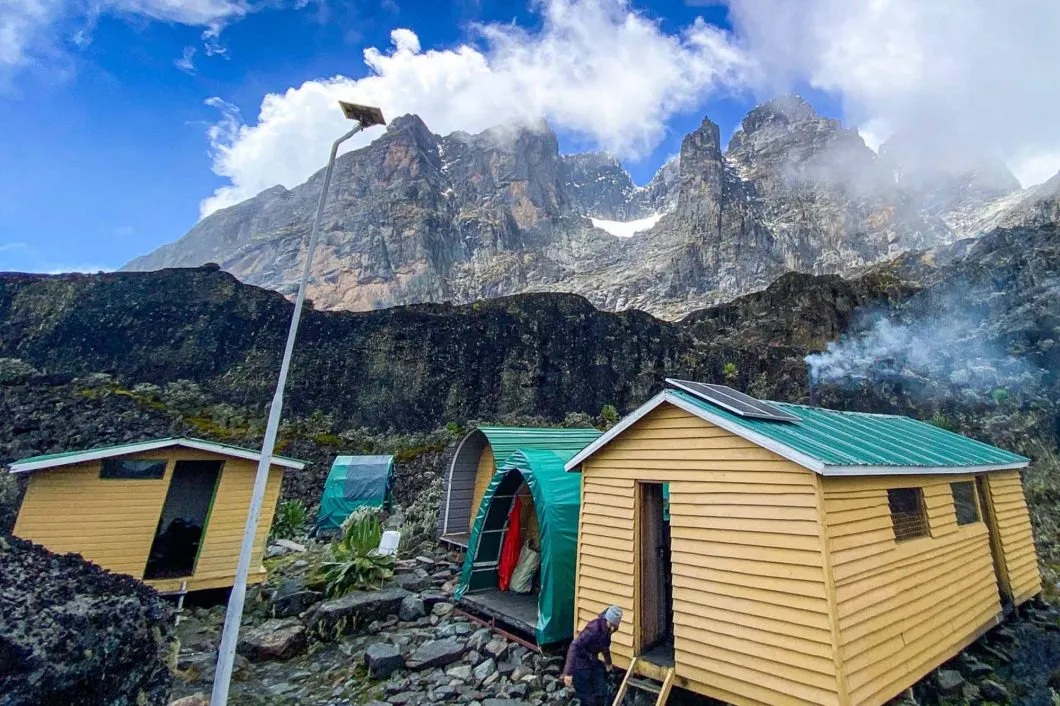
Accommodations for Mountain Rwenzori include luxury eco-lodges at the base and a system of basic mountain huts on the trekking trails. Popular options at the foothills include Geolodge Equator Snow Lodge, Ruboni Community Camp, and Rwenzori Trekkers Hostel. On the mountain, overnight stays are generally provided via guided expedition packages using designated trail huts
15-days-rwenzori-hiking-safari-and-mountain-gorilla-trekking-vacation
11-days-best-rwenzori-mountain-hike-to-margherita-peak
7-days-mountain-rwenzori-mountain-climbing-active-adventure-to-margherita-peak
5-days-rwenzori-hike-to-either-mountain-sepeke-baker-or-luig-di-savoia
2-days-rwenzori-trek-to-nyabitaba-camp
Foothills & Base Accommodations
Geolodge Equator Snow Lodge (Foothills & Base Accommodations)
Geolodge Equator Snow Lodge is a luxury eco-lodge located near the park gateway, making it an ideal base for travelers who want comfort, convenience, and breathtaking scenery. Designed with sustainability in mind, the lodge blends modern comfort with an eco-conscious approach, offering guests a relaxing retreat before or after their trek in the Rwenzori Mountains. Rooms and suites are built for comfort, with high-end amenities that appeal to couples, honeymooners, and visitors who prefer a higher level of service during their adventure. Many guests are attracted by the lodge’s excellent views—depending on the time of day and weather conditions, you can enjoy glimpses of the surrounding landscapes and dramatic mountain scenery.
Beyond accommodation, Geolodge Equator Snow Lodge supports both casual trekkers and serious climbers. For casual trekkers, it’s a calm and scenic place to rest, enjoy meals, and prepare for day routes with local guidance. For serious climbers, it offers a more structured atmosphere suited for those planning demanding routes, where comfort after a long day of hiking is just as important as the experience itself. The lodge can also serve as a staging point for organized activities, helping guests connect with guides and trekking plans.
Overall, this lodge is best for travelers who want a premium base with strong services, beautiful surroundings, and practical support for different trekking styles—whether you’re taking your time exploring or preparing for a more ambitious climb.
Ruboni Community Camp (Foothills & Base Accommodations)
Ruboni Community Camp is located in the foothills adjacent to the park entrance, offering a friendly and meaningful option for visitors who want to stay close to the start of their journey while also connecting with local culture. This camp is owned and managed by the Bakonzo community, which means guests aren’t just visiting a destination—they are supporting community-led hospitality and local livelihoods. Ruboni’s location makes it a practical base: you can easily access nearby activities and begin your trek with less traveling time, while still enjoying the calm environment of the foothills.
Accommodation at Ruboni Community Camp typically falls within budget to mid-range options, making it accessible for travelers with different financial plans. The camp provides a comfortable setting with the essentials you need after hiking or exploring. What makes it especially special, however, is the cultural experience and community involvement. Guests can enjoy guided village walks, where they learn about daily life, local traditions, and the relationship between the people and the land. These walks are often led by community members, giving visitors an authentic perspective that goes beyond typical tourist experiences.
Ruboni also offers an opportunity to experience Bakonzo culture in a respectful, educational, and welcoming way. Whether you’re interested in learning about local customs, meeting community leaders, or understanding how the area is managed, the camp creates a bridge between travelers and residents.
Ruboni Community Camp is ideal for travelers who value cultural immersion, community ownership, and a warm local atmosphere. It suits adventurers who want an affordable base, a sense of authenticity, and guided experiences that help them understand the region before stepping into the mountains.
Rwenzori Trekkers Hostel (Foothills & Base Accommodations)
Rwenzori Trekkers Hostel is positioned in Kyanjuki village (Kilembe), and it serves as a key starting point for travelers planning the Kilembe trail. For many trekkers, having a reliable base near trail access is essential, and this hostel offers exactly that—simple, practical accommodation that fits well with early starts, trekking schedules, and group travel. Because it is located in the village area, guests can experience a more local environment while still having the convenience of being close to the route network.
The hostel provides multiple accommodation options to suit different preferences and budgets. Guests can choose dormitories, which are especially helpful for solo travelers or friends traveling together, as well as camping options for those who prefer a more adventurous and cost-effective approach. For travelers who want extra privacy or more comfort after a long day on the trail, the hostel also offers single and double rooms. This variety makes Rwenzori Trekkers Hostel a flexible choice for both short-term hikers and longer expedition plans.
Staying here is convenient for trekking preparation. Since the hostel is closely connected to the trail starting area, guests can more easily coordinate with guides, porters, and local support for their trek. It’s also a good meeting point for travelers, where you can share schedules, exchange trekking tips, and build confidence before beginning the climb.
Overall, Rwenzori Trekkers Hostel is best for travelers who prioritize trail access, practicality, and affordability. It suits adventurers who want a straightforward base with clear accommodation options—whether you’re booking a bed in a dorm, sleeping under the stars, or choosing a single/double room for added comfort.
On-Mountain Huts (Trekking Trails)
If you are hiking the iconic Central Circuit Trail, you will sleep in a structured system of basic wooden mountain huts managed by Rwenzori Mountaineering Services (RMS). These feature dormitory-style bunk beds with foam mattresses and shared, rustic eco-toilets
Nyabitaba Hut (2,650 meters)
Nyabitaba Hut is the first stop on the Central Circuit Trail, making it a key place to begin adjusting to life in the Rwenzori Mountains. At around 2,650 meters, it is usually reached after the initial stage of hiking, when your body is still warming up to the altitude and the changing weather. The hut is managed through a structured system of fixed camps by Rwenzori Mountaineering Services (RMS), which helps trekkers stay organized and comfortable even in remote conditions. You can expect a basic but practical mountain setup: dormitory-style bunk beds with foam mattresses, and shared rustic eco-toilets designed to minimize environmental impact.
This hut is especially important because it sets the rhythm for the rest of the circuit. By sleeping here, you’re not only resting your legs—you’re also building confidence for longer days ahead. Many trekkers use the time at Nyabitaba to hydrate well, eat early, and mentally plan the next section of the trek. Weather can be unpredictable in the Rwenzoris, so the evenings often remind trekkers to prepare for cold temperatures, mist, or rain depending on the season.
Nyabitaba Hut is also a good introduction to the unique mountain environment of the Rwenzori—lush vegetation, cool air, and the feeling that you are truly moving deeper into the range. Overall, it is a welcoming first fixed-camp experience: simple, supportive, and designed for trekkers who want to follow a classic route with reliable camp infrastructure.
John Matte Hut (3,380 meters)
John Matte Hut sits at approximately 3,380 meters and is located within the giant heather zone, which makes the area around it feel distinct from lower sections of the trail. By the time you reach John Matte Hut, you’ve already spent time ascending, and your surroundings begin to shift into a cooler, more mysterious landscape where tall heather forms a thick, textured terrain. Staying in this hut helps you experience one of the Central Circuit’s signature ecological transitions.
Like the other RMS-managed camps, John Matte Hut provides structured accommodation. Expect dormitory-style bunk beds with foam mattresses and shared rustic eco-toilets. Even though the facilities are simple, they are carefully maintained to keep trekkers safe and rested while minimizing harm to the environment. The hut provides shelter and a consistent sleeping arrangement, which is particularly valuable when fog, wind, or light rain move in unexpectedly.
John Matte Hut is also a practical checkpoint. It marks the point where many trekkers feel the circuit becoming more serious—longer walking days, colder mornings, and a stronger need to stick to good pacing. In the evening, trekkers typically focus on recovery: drying clothes when possible, eating a hearty meal, and preparing for the next day’s climb or traverse through higher, colder zones.
Because it is located in the heather landscape, you may also notice how the route becomes quieter and more atmospheric. The hut’s setting gives it an almost “hidden” feeling, emphasizing the adventure and remoteness of the Rwenzori Mountains. Overall, John Matte Hut is an essential camp experience that combines reliable mountain shelter with a dramatic shift in scenery and climate.
Bujuku Hut (3,977 meters)
Bujuku Hut is located at about 3,977 meters and is known for being nestled near Lake Bujuku. By the time trekkers reach this camp, the air is noticeably colder, and the landscape feels more alpine—less forested, more rugged, and strongly shaped by the altitude. Sleeping at Bujuku Hut is a memorable part of the Central Circuit because it places you close to one of the most scenic and iconic areas on the route.
As with the other RMS huts, Bujuku Hut offers simple but functional accommodations for a safe trekking experience. You can expect dormitory-style bunk beds fitted with foam mattresses, plus shared rustic eco-toilets. These basic facilities help trekkers recover between challenging stages while ensuring the campsite remains environmentally responsible. Even with its simplicity, the hut can feel like a major comfort after a cold day outdoors. It offers a sheltered space for drying gear, resting, and preparing for the next stage in the circuit.
The location near Lake Bujuku also makes the hut especially atmospheric. Depending on the season and weather, you may experience panoramic views, misty mornings, or clear skies that reveal the dramatic mountain terrain. The air around the lake can feel crisp, and evenings may bring rapid temperature drops. This is often the point where trekkers become more focused on proper layering—keeping warm, staying hydrated, and ensuring that your equipment is ready for windy or wet conditions.
Bujuku Hut is ideal for trekkers who want their circuit experience to include both altitude challenges and memorable scenery. It helps you connect the physical effort of hiking with the emotional payoff of reaching a stunning natural highlight. Overall, it’s a vital mid-to-high camp that supports recovery while placing you near Lake Bujuku’s striking beauty.
Elena Hut (4,540 meters)
Elena Hut sits at approximately 4,540 meters, functioning as the cold, rocky final basecamp before summiting Margherita Peak. This makes it one of the most important and intense sleep stops on the entire Central Circuit Trail. By the time trekkers arrive, they are typically feeling the effects of altitude—reduced energy, colder nights, and a greater need to manage breathing, rest, and pace.
The Elena Hut accommodation system remains structured and consistent with RMS mountain huts. Expect dormitory-style bunk beds with foam mattresses and shared, rustic eco-toilets. However, what makes Elena different is the environment: the temperatures can be far more demanding, and the terrain around the hut is rougher and more exposed. Shelter becomes more than comfort—it is a critical part of keeping you safe and stable as you prepare for the final summit attempt.
Elena Hut is where trekkers usually transition from “trek mode” to “summit preparation mode.” In the evening, many groups focus on careful planning: confirming weather windows, organizing layers, checking gear, and ensuring everyone is ready to start early the next day. Sleep quality can vary because cold, altitude, and anxiety all play a role, but the hut’s dependable sleeping setup still provides a necessary foundation for recovery.
Because it’s the final basecamp, Elena Hut also carries emotional weight. Many trekkers feel a sense of achievement and anticipation here, knowing they’re close to the iconic Margherita Peak. Some may need extra pacing to conserve energy, while others focus on staying mentally calm.
Overall, Elena Hut is best understood as both a physical refuge and a strategic staging point. It is the last step before the summit, and it demands proper preparation, warmth, and rest so trekkers can face the rocky, cold challenge ahead with confidence.
Kitandara Lake Hut (4,027 meters)
Kitandara Lake Hut is located at around 4,027 meters and overlooks the twin lakes, creating a striking high-altitude scenery experience as part of the Central Circuit Trail. This camp stands out because it combines the realism of mountain trekking conditions with the reward of dramatic natural beauty. Reaching Kitandara means you’re deep into the higher stages of the circuit, where the environment becomes colder and more rugged, and where every day of trekking feels like a step closer to the summit zones.
Like other RMS-managed fixed camps, Kitandara Lake Hut offers basic wooden mountain-hut accommodation designed to support trekkers safely. You can expect dormitory-style bunk beds with foam mattresses, plus shared rustic eco-toilets. While the facilities are simple, they are dependable—allowing trekkers to recover after hiking and to manage their energy levels for the next stage of the trek. The hut also acts as a warm, sheltered space during the night, which is especially valuable at these elevations where temperatures can drop quickly.
The view toward the twin lakes makes Kitandara more than a “rest point.” It’s a place to pause and appreciate the scale of the Rwenzori landscape. Depending on weather and visibility, you may see mist drifting over the water, glacial-like surroundings, or clear skies that reveal the lakes as a highlight of the route. Such scenery can feel almost surreal, particularly after long walking days.
This camp also provides a good psychological boost. Many trekkers find that at Kitandara, they start feeling the circuit is truly becoming the summit journey—less about exploring and more about sustaining momentum, warmth, and focus. Even if you’re moving at a steady pace, the setting near the lakes encourages patience and careful recovery.
Overall, Kitandara Lake Hut is ideal for trekkers who want a memorable combination of altitude adaptation and natural beauty—sleeping in a high, scenic environment that supports both rest and determination.
Guy Yeoman Hut (3,260 meters)
Guy Yeoman Hut is situated at roughly 3,260 meters and is known as the final descent hut in the Mubuku Valley. This makes it an important camp for trekkers because it comes when many people are transitioning from climbing and high-altitude effort to the relief of descending. After spending time higher up the circuit and dealing with cold, fatigue, and altitude effects, a descent stage often feels both exciting and physically challenging in a different way. Descending can strain knees and legs, so recovery at Guy Yeoman Hut is essential.
The hut is part of the same structured RMS accommodation system, so trekkers can expect dormitory-style bunk beds with foam mattresses and shared rustic eco-toilets. Even though the altitude is lower than the highest sections, the environment can still be cold—especially at night. The hut provides shelter and a familiar routine that helps trekkers rest and prepare for the final trekking movement toward the trail’s end.
As a “final descent hut,” Guy Yeoman Hut often becomes a psychological milestone. It is a point where trekkers realize they are nearing completion of the Central Circuit Trail. That awareness can bring a sense of relief, pride, and readiness to finish strong. Many groups use the evening to focus on recovery: stretching, hydrating, eating well, and taking time to care for tired muscles. It’s also a moment to check any minor issues—like wet boots, chafing, or aches—before continuing the final stretch.
The Mubuku Valley setting can also feel different from higher zones, with vegetation and landscapes shifting as you move downward. The atmosphere can be more open and less exposed, which may make the hut feel like a safe return to ground-level comfort.
Overall, Guy Yeoman Hut is a key concluding experience: it offers reliable sleeping infrastructure and a calm place to recover as you descend out of the circuit. It helps trekkers wrap up their journey with energy, safety, and a strong sense of accomplishment.
Note on the Kilembe Trail & Bukurungu Trail (Fixed Camps vs. Ground Camping)
The Kilembe Trail, operated by Rwenzori Trekking Services, follows a similar concept of fixed camps to the Central Circuit. This means trekkers are supported by established lodging points along the route, which can make planning and overnight recovery easier—especially for those who want predictable sleeping arrangements. Some camps may also include practical amenities such as solar charging, allowing you to top up essential devices even in remote areas. The overall experience still involves challenging hiking and altitude adaptation, but the fixed camp structure helps reduce uncertainty during night stops.
In contrast, the remote Bukurungu Trail operates differently. Instead of relying on fixed hut camps, it requires strictly ground camping. That means trekkers must pitch and manage their own tents, and nights depend more directly on your preparedness—such as appropriate cold-weather camping gear, sleeping bags, and the ability to set up safely in rugged terrain. Because there are no standardized hut beds, comfort levels can vary greatly depending on weather conditions and the quality of your camping equipment.
This distinction is important when choosing a route. If you prefer sleeping in wooden huts and relying on structured accommodation, the Kilembe Trail’s fixed-camp system is closer to what you might experience on the Central Circuit. If you want a more adventurous, self-sufficient experience and are comfortable with full camping responsibilities, the Bukurungu Trail offers a more remote and demanding style of trekking.
In both cases, preparation matters: bring the right layers, water and food planning, and understand how each route’s overnight setup affects energy, comfort, and safety.
Can I see the 3-horned chameleon in Mountain Rwenzori Park?
Yes, it’s possible to see the three-horned chameleon in or around Mountain Rwenzori National Park, although wildlife sightings are never guaranteed. The “three-horned chameleon” refers to a highland chameleon species that is generally associated with the cooler, forested, and montane habitat zones where moisture and vegetation are abundant. Rwenzori’s unique altitude range creates changing ecosystems—from lower montane forests to giant-heather and moorland—so the best chance typically comes when you’re hiking through forested sections and shaded areas where such species can hide and hunt insects.
To improve your chances, keep a slow pace near vegetation, watch carefully along the trail and in damp, leafy microhabitats, and follow a guide who knows where wildlife is more likely to appear. The chameleon may be difficult to spot due to its camouflage and because it may remain still for long periods. Your best odds are often during times of day when temperatures and humidity are favorable—commonly earlier hours or after mist/light rain, depending on the season.
For the most reliable experience, focus on overall biodiversity: even if you don’t see the chameleon, you can still encounter many other birds, primates, and unique Rwenzori flora.
Besides the Rwenzori touraco, what other bird can I see in Mountain Rwenzori Park?
Mountain Rwenzori National Park is famous for its endemic and high-altitude birdlife, so besides the Rwenzori turaco (often highlighted because of its striking colors), you may see several other species during the trek. Common bird targets in Rwenzori include different types of sunbirds, forest and montane species, and birds adapted to cold, misty conditions as you climb. Depending on the exact route and season, you might also encounter species such as the blue-headed sunbird (in suitable zones), and other montane songbirds that move between forest edges and higher vegetation.
As you gain altitude, the bird community changes. Lower and mid-altitude forest zones can be richer in variety, while the higher heather and moorland areas tend to host birds that are specialized for those habitats. Your guide can also help you identify calls—often birds are easier to hear than to see, especially in dense vegetation or foggy weather.
Because Rwenzori’s ecosystems vary dramatically with height, a longer hike that passes through multiple altitude bands increases your chances of seeing more species. The best strategy is patience: birding in mountains often means spending time slowly scanning, listening, and being flexible with weather and visibility.
How many days are enough for the Mountain Rwenzori hike?
“How many days are enough” depends on which route you choose (Central Circuit via hut system, Kilembe Trail, or other options), your pace, and how much time you allow for acclimatization. For most trekkers, Rwenzori is not a “quick hike,” because altitude adaptation is a major part of staying safe and comfortable.
A common planning approach is:
- Shorter itineraries (about 7–9 days): Many people use these for a compact experience, but they still need careful pacing and a realistic acclimatization schedule. You may move more quickly and have fewer rest days.
- Typical comfort itineraries (about 9–12 days): This range is often preferred by many visitors because it allows better acclimatization and a fuller experience of the ecosystems and scenery.
- Longer, well-acclimatized itineraries (12–15+ days): Best for travelers who want slower pacing, more flexibility for weather changes, and extra comfort for recovery.
If you’re aiming for a summit attempt, you should expect that your highest and coldest days will require more preparation and energy management—so rushing usually isn’t ideal.
In general, the “enough days” answer is: choose a duration that lets you acclimatize properly and follow a route structure that supports gradual altitude gain. Your guide and operator can tailor the schedule to your fitness and goals.
How difficult is the Rwenzori hike?
The Rwenzori hike is considered challenging to very challenging, mainly because of altitude, steep and uneven terrain, and cold, wet conditions that can change quickly. Even experienced trekkers can find Rwenzori difficult because it combines several factors at once: sustained elevation gain, rocky scrambling in higher zones, and long walking days with early starts.
Difficulty also depends on your specific itinerary. Routes like the Central Circuit with fixed camps can feel more structured, but the overall effort is still intense due to distance and altitude exposure. The higher stages can involve colder temperatures, mist or rain, and fatigue from reduced oxygen levels. Some hikers may also need to cross boggy areas or uneven ground, where balance and traction become important.
The main risks aren’t only “legs tiredness”—they include altitude-related symptoms, weather hazards (wind, fog, rain), and exhaustion. This is why pacing and acclimatization matter as much as physical strength.
If you prepare well, use proper layers, keep a steady pace, and follow your guide’s recommendations, the hike becomes manageable for many fit travelers. But it’s not a casual trek; it requires respect for the mountain and a safety-first mindset.
Do I need to train for Rwenzori hike?
Yes—training is strongly recommended for the Rwenzori hike. You don’t necessarily need to be a professional athlete, but you do need fitness and endurance for long trekking hours, elevation changes, uneven paths, and cold-night recovery. Training helps you reduce the risk of injury and makes it easier to handle the trek without feeling overwhelmed by fatigue.
A good training plan usually focuses on:
- Cardiovascular endurance: brisk walking, jogging, cycling, or stair work to build stamina.
- Leg strength: squats, lunges, step-ups, and controlled uphill walking to handle steep sections.
- Hiking-specific stamina: practicing with a backpack similar to what you’ll carry (even if lighter).
- Balance and flexibility: especially for rocky or muddy terrain.
- Gradual progression: increasing intensity slowly so your body adapts.
Even if you’re already active, it’s important to be prepared for altitude and cold weather, which aren’t fixed by strength alone. Training should also include rest days and hydration habits.
If you tell your current fitness level and how many weeks you have before departure, we can suggest an approach for preparation. At minimum, plan to arrive with a strong baseline so you can enjoy the mountain instead of just surviving it.
What are the starting points for Mountain Rwenzori hike?
The starting points for a Mountain Rwenzori hike depend on the route you’re taking and the operator organizing your trek. In many itineraries, trekkers begin from community or park-adjacent areas connected to the main trail systems and trekking bases. From there, you move into the appropriate entry zone for your route, then ascend through different ecological bands.
For the Kilembe Trail, for example, trekkers typically start in the Kilembe/Kyanjuki area, which is commonly used as a trailhead region and staging point before beginning the ascent. There are also base areas in the foothills near park access points, where accommodation and pre-trek briefings occur before teams set off.
For other routes such as the Central Circuit, the starting point may involve entry through a gate area linked to Rwenzori Mountaineering Services (RMS) hut camps and organized overnight stops. Your route choice affects the exact trailhead and the sequence of camps.
Because park logistics, permissions, and daily trail schedules can vary, it’s best to confirm your exact starting location based on your itinerary. If you’re booking with a safari company, they can provide the specific starting point and the day-by-day outline from pickup to the first hiking day.
When is the best time for Rwenzori hike?
The best time to hike Mount Rwenzori is largely determined by weather and visibility, because Rwenzori conditions can shift quickly between mist, rain, and cold temperatures. In general, many visitors prefer seasons when rainfall is lower and trails are more manageable, which also improves your chances of clear views and safer trekking conditions.
While exact “best months” can vary year to year, a typical recommendation is to consider periods with more stable weather and reduced rainfall. During drier or relatively calmer periods, you may experience fewer heavy downpours, better trail conditions, and more consistent morning visibility for panoramic mountain views. Clear weather is also important for routes that include higher, colder camp zones.
However, even in better months, you should expect cold nights and occasional mist—Rwenzori is always a high-mountain environment. The smart planning approach is to choose a departure window that matches your comfort with weather variability and to pack properly for rain and cold.
It’s also worth noting that wildlife and bird activity can be excellent throughout the year, but bird visibility often depends on cloud cover and time of day.
If you tell me the month you’re considering, we can help you decide if it’s a good fit for your itinerary, and we can discuss what weather impacts to plan for.
Booking Rwenzori hike with us – Roads of Adventure Safaris
Booking your Rwenzori hike with Roads of Adventure Safaris means you get more than just a trekking itinerary—you get guided trip planning, safety-focused support, and a smoother experience from start to summit (or your route goal). We help you choose the right trek duration based on your fitness level and acclimatization needs. Because Rwenzori is not a “one-size-fits-all” destination, we tailor the journey so your daily walking time and camp schedule match your ability and your expectations.
Our team supports you with route planning, logistics, and coordination with trusted mountain operations so you know what to expect before you step onto the trail. We also help you understand what to pack—layers for cold conditions, rain protection, hiking boots, and gear needed for the hut or camping style of your chosen route. Training and health considerations are important too, so we can advise on realistic preparation and pacing strategies.
Whether you are interested in the iconic Central Circuit experience, wildlife and bird viewing opportunities, or a more customized Rwenzori adventure, we work with you to ensure your plan is safe, organized, and enjoyable.
