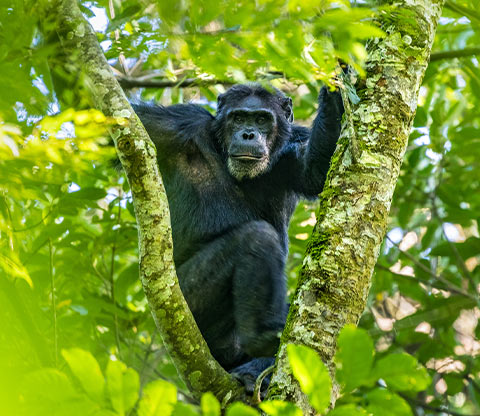
Chimpanzee habituation in Uganda is an immersive, full-day activity that trains wild chimps to tolerate human presence. Primarily centered in Kibale National Park, it allows visitors to spend up to 12 hours alongside researchers and guides, observing the apes' daily routines like feeding, grooming, and nesting
2-days-chimpanzee-tracking-sleeping-at-budongo-eco-lodge
2-days-best-chimpanzee-tracking-in-kibale-forest-park-tour-package
3-days-trips-to-queen-elizabeth-national-park-for-chimpanzee-tracking-in-kyambura-gorge
3-days-chimpanzee-tracking-to-kibale-forest-national-park
4-days-queen-elizabeth-national-park-and-kyambura-gorge-chimpanzee-tracking
4-days-kibale-forest-chimpanzee-tracking-and-queen-elizabeth-national-park
4-days-chimpanzee-tracking-in-lake-mburo-national-park-and-lake-mburo-safari
4-days-kibale-forest-chimpanzee-tracking-and-queen-elizabeth-national-park
4-days-murchison-falls-and-chimpanzee-tracking-in-budongo-forest
5-days-uganda-big-five-safari-and-chimpanzee-tracking-in-kibale-forest-park
6-days-jinja-white-water-rafting-gorilla-trekking-and-chimpanzee-tracking-adventure
6-days-budget-uganda-safari-and-gorilla-trekking
7-days-perfect-uganda-primate-safari-itinerary
What exactly is chimpanzee habituation in Uganda?
Chimpanzee habituation is an immersive, highly specialized wildlife conservation process where wild primates gradually become accustomed to human presence without changing their natural behaviors. Located primarily in Kibale National Park in southwestern Uganda—widely recognized as the Primate Capital of the World—this full-day activity contrasts with standard chimpanzee tracking. While standard tracking grants visitors just one hour of observation once the troop is located, the Chimpanzee Habituation Experience (CHEX) allows you to spend up to 12 full hours alongside Uganda Wildlife Authority (UWA) researchers, rangers, and trackers. You participate directly in the ongoing research process, starting before dawn when the chimps descend from their nests and ending at dusk when they construct new sleeping platforms in the canopy. Through chimpanzee habituation, visitors gain deep insight into primate research, observing complex social hierarchies, foraging behaviors, grooming rituals, and communication calls within Kibale's population of roughly 1,500 chimpanzees. Local ground operators like Roads of Adventure Safaris organize these full-day excursions, managing all ground logistics from Kampala or Entebbe.
How does chimpanzee habituation differ from standard chimpanzee tracking?
The main difference lies in time spent, group size, and the wildness of the primates. Standard tracking allows visitors one focused hour with fully habituated chimpanzee families, such as the Kanyanchu community in Kibale. In contrast, chimpanzee habituation lasts an entire day, offering up to 12 hours of field observation. During habituation, you follow semi-habituated groups—such as those near Kanyawara or Sebitoli—that are still learning to tolerate human observers. This means their movements can be faster and less predictable, often requiring active hiking through dense rainforest undergrowth. Group sizes are strictly limited: while standard tracking allows up to eight visitors per group, habituation limits participants to just six people per group alongside researchers. Furthermore, while standard tracking costs $250 for foreign non-residents in Kibale, chimpanzee habituation permits are priced at $300 for foreign non-residents, $250 for foreign residents, and 250,000 UGX for East African citizens (including daily park entry fees).
Where in Uganda can you participate in chimpanzee habituation?
While standard tracking happens across several Ugandan forests—including Budongo Forest near Murchison Falls, Karinzu Forest, and Kyambura Gorge in Queen Elizabeth National Park—Kibale National Park is the primary site for chimpanzee habituation. Spanning 795 square kilometers in southwestern Uganda near Fort Portal, Kibale houses one of the highest densities and diversities of primates in Africa, including 13 distinct species like the red colobus, L'Hoest's monkey, and grey-cheeked mangabey. Research groups operating out of the Makerere University Biological Field Station (MUBFS) at Kanyawara have pioneered habituation protocols here for decades. Additionally, seasonal chimpanzee habituation permits are sometimes available in the Busingiro or Kaniyo Pabidi sectors of Budongo Forest Reserve. Roads of Adventure Safaris structures travel itineraries that place guests in eco-lodges near Kanyanchu or Fort Portal, ensuring a quick 6:00 AM arrival at the park headquarters for the pre-trek briefing.
What is the conservation purpose behind chimpanzee habituation?
The primary goal of chimpanzee habituation is to support non-invasive research, ecological monitoring, and long-term wildlife protection. By training wild chimpanzee communities (Pan troglodytes scoloni) to tolerate peaceful human presence, researchers can study primate social dynamics, disease transmission, tool use, and nutritional habits without altering animal behavior. Once fully habituated—a process that typically takes two to five years of daily contact—a troop can be safely transitioned to sustainable eco-tourism or academic study. Revenue generated from habituation permits directly funds Uganda Wildlife Authority ranger patrols, anti-poaching snare removal teams, and community outreach programs around the park perimeter. Furthermore, 20% of all park entrance fees are reinvested into local Ugandan community projects, such as building schools and health centers in Kabarole and Kamwenge districts. Engaging in chimpanzee habituation directly supports habitat preservation and discourages human-wildlife conflict along forest borders.
What does a typical daily schedule look like during chimpanzee habituation?
A day dedicated to chimpanzee habituation starts well before sunrise. You arrive at the Kanyanchu Visitor Center in Kibale National Park by 6:00 AM for registration and a safety briefing from UWA rangers and researchers. By 6:30 AM, you trek into the forest toward the site where the chimpanzees built their leaf and branch nests the previous night. You arrive just as the primates awaken, stretch, and descend from the canopy around dawn. The morning involves following the troop as they forage for fruits, leaves, and figs, observing their complex vocal communications and ground movements. Midday often brings rest periods where chimps groom one another, take shade, or interact with juveniles, giving you time to observe subtle social behaviors and enjoy your packed lunch. The afternoon features further foraging and social activity until roughly 6:30 PM, when the chimps build new sleeping nests high in the trees, marking the conclusion of your full-day chimpanzee habituation field experience.
How difficult is the physical terrain during chimpanzee habituation?
The physical demand of chimpanzee habituation ranges from moderate to strenuous, requiring good physical fitness. Unlike standard tracking on established forest paths, habituation frequently requires off-trail trekking through thick undergrowth, tangled vines, muddy hollows, and moderate hills as you keep pace with semi-habituated chimpanzees. Kibale Forest sits at an elevation between 1,100 and 1,590 meters above sea level, featuring dense tropical rainforest conditions where damp soil and exposed tree roots require careful foot placement. Because chimps can cover significant ground when searching for food or patrolling territorial boundaries, you may walk anywhere from 8 to 15 kilometers over the course of 12 hours. Roads of Adventure Safaris advises guests to prepare with cardio conditioning prior to travel and recommends hiring a local Ugandan porter at the trailhead to carry heavy backpacks and assist across challenging terrain sections.
What specific chimpanzee behaviors will you observe during habituation?
Participating in chimpanzee habituation grants a rare, comprehensive look into the daily routine of our closest living relatives, who share roughly 98.8% of human DNA. In the early morning, you observe tree-descent and territorial calling, where males use loud "pant-hoots" and drum on the buttress roots of giant Entandrophragma trees to communicate across the canopy. Throughout the day, you witness complex foraging strategies, including feeding on wild figs (Ficus species), young leaves, stems, and occasional hunting for small mammals like red colobus monkeys. During afternoon rest hours, you observe social hierarchy interactions, such as mutual grooming, which strengthens social bonds and lowers stress levels within the community. You will also watch mothers nurse and play with young infants, juveniles practice climbing techniques, and dominant alpha males display strength. Witnessing these raw interactions throughout an entire day makes chimpanzee habituation a deeply rewarding field experience.
How close do you get to the wild primates during chimpanzee habituation?
During chimpanzee habituation, safety guidelines established by the Uganda Wildlife Authority require maintaining a strict minimum distance of 8 meters (about 25 feet) from the primates. This distance protects both human observers and chimpanzees from disease transmission, as chimps are highly susceptible to human respiratory illnesses. Because habituation troops are only semi-accustomed to people, they may naturally maintain a greater distance than fully habituated troops, sometimes staying high in the forest canopy or moving rapidly through dense cover. Rangers and MUBFS researchers constantly monitor the troop's stress indicators; if the alpha male displays signs of agitation—such as loud screaming, slapping ground roots, or charging—the team instructs visitors to step back quietly and give the animals space. Respecting these boundaries ensures that chimpanzee habituation remains a ethical, low-impact activity.
How much does a chimpanzee habituation permit cost in Uganda?
The cost of a chimpanzee habituation permit in Kibale National Park is fixed by the Uganda Wildlife Authority. As of official tariff schedules, the permit costs $300 for foreign non-residents, $250 for foreign residents holding valid East African work permits or residency visas, and 250,000 UGX for East African Community (EAC) citizens from Uganda, Kenya, Tanzania, Rwanda, Burundi, South Sudan, and the DRC. Importantly, this permit price includes the standard daily park entrance fee (which normally costs $40 per day for foreign non-residents), as well as the services of official UWA armed rangers and specialized researchers. When booking through a local tour operator like Roads of Adventure Safaris, total package pricing includes permit fees alongside private ground transport in 4x4 safari vehicles, regional transfers from Entebbe or Kampala, boutique lodge accommodations, and all daily meals.
How far in advance should you book chimpanzee habituation permits?
Securing your chimpanzee habituation permit 3 to 6 months in advance is essential due to strict daily participant limits. To minimize human impact and reduce stress on semi-habituated troops, UWA limits habituation groups to just six visitors per day per community. During peak travel seasons—specifically June through August and December through February—demand for primate permits across Uganda rises significantly. Failing to reserve early can result in missing out on your preferred dates. Local operators like Roads of Adventure Safaris purchase permits directly from the Uganda Wildlife Authority central booking office in Kampala on your behalf, locking in your trekking dates before organizing your surrounding lodge stays and ground transport across Kibale, Queen Elizabeth, or Bwindi.
What is the minimum age requirement for chimpanzee habituation?
The strict minimum age requirement for participating in chimpanzee habituation in Kibale National Park is 15 years old, enforced without exception by the Uganda Wildlife Authority. This age limit serves two primary purposes: disease mitigation and safety management. Children under 15 are statistically more prone to carrying common childhood viruses, colds, and communicable diseases that can transmit easily to wild chimpanzee populations. Furthermore, chimpanzee habituation requires sustained physical stamina, quiet patience, and strict adherence to ranger instructions during sudden animal displays or dense off-path hiking. For families traveling with younger children, local operators can arrange alternative activities around Fort Portal and Kibale, such as guided nature walks in the Bigodi Wetland Sanctuary or cultural village tours, while older family members complete the habituation trek.
What documents are required to obtain a chimpanzee habituation permit?
To purchase and validate a chimpanzee habituation permit with the Uganda Wildlife Authority, you must provide valid identification credentials. International travelers need a clear passport copy showing their full name, passport number, nationality, and date of birth, with the passport remaining valid for at least six months past the intended entry date into Uganda. Foreign residents working or living within East Africa must present a valid work permit, alien registration card, or diplomatic pass to qualify for the discounted $250 resident rate. Once issued, permits feature your name and passport details and are non-transferable. When arriving at the Kanyanchu Visitor Center in Kibale, rangers cross-check your physical passport against official booking manifests before clearance, making accurate record submission through your travel planner essential for a smooth start.
What clothing should you wear for a day of chimpanzee habituation?
Dressing correctly is vital for comfort and protection during full-day chimpanzee habituation. Wear lightweight, quick-drying long-sleeved shirts and long trousers made of synthetic materials to protect against sharp foliage, stinging nettles, and biting insects like safari ants. Choose neutral earth tones such as khaki, green, brown, or beige; bright colors can startle wild primates, while dark navy and black attract tsetse flies. Tuck your trousers into thick moisture-wicking wool socks to prevent insects from crawling up your legs. Bring a lightweight waterproof rain jacket or poncho in your daypack, as tropical rain showers occur frequently in Kibale Forest regardless of the dry season. Finally, a wide-brimmed hat shields your face from sun exposure and falling forest debris.
What footwear is best suited for chimpanzee habituation in Kibale?
Selecting appropriate footwear is one of the most important preparation steps for chimpanzee habituation. High-top, waterproof hiking boots with deep rubber lug soles are strongly recommended to provide traction on wet clay, steep inclines, and muddy forest slopes. Ankle support is crucial for traversing uneven terrain, hidden roots, and dense brush off main trails. Ensure your boots are well broken-in before arriving in Uganda to avoid painful blisters during a 12-hour trek. Pair your boots with gaiters to keep mud, small stones, and insects out of your shoes. Avoid lightweight sneakers, running shoes, or open sandals, as they lack water resistance, grip, and ankle stability needed for full-day off-trail tracking.
What gear and equipment should you pack in your daypack for chimpanzee habituation?
When heading out for chimpanzee habituation, carry a lightweight, comfortable 20-to-30-liter waterproof daypack to hold personal essentials. Key items include a minimum of two to three liters of drinking water in reusable bottles or a hydration bladder, as staying hydrated over 12 hours of field activity is critical. Pack a nutrient-dense lunch box provided by your lodge, alongside energy bars, dried fruit, and electrolyte powders. Include high-DEET insect repellent, sunblock, personal medication, hand sanitizer, wet wipes, and a basic blister kit. For photography, pack weather-sealed camera gear, spare batteries, and memory cards inside waterproof dry bags to protect against sudden downpours. A lightweight pair of compact binoculars helps spot chimps high in the forest canopy.
What food and water provisions are necessary for a 12-hour chimpanzee habituation trek?
Because chimpanzee habituation keeps you out in the forest from dawn until dusk, proper nourishment is essential. Your safari lodge—such as Kyaninga Lodge, Turaco Treetops, or Primate Lodge Kibale—will prepare a packed lunch box specifically designed for full-day forest treks. This typically includes sandwiches, boiled eggs, fresh fruit like Ugandan bananas or pineapples, cold chicken or savory pastries, and energy biscuits. Pack high-energy snacks like nuts, trail mix, and glucose tablets in your daypack for quick calorie boosts during long walks. You must carry at least two to three liters of clean drinking water per person. To protect the forest, all food wrappers, plastic bottles, and organic waste must be carried out of the park.
When is the best time of year to go for chimpanzee habituation in Kibale?
While chimpanzee habituation operates year-round in Kibale National Park, the dry seasons—from December to February and June to August—offer the easiest trekking conditions. During these months, trails are drier, forest floors are less muddy, and rainfall is less frequent, making 12 hours of outdoor hiking more comfortable. However, the wet seasons—from March to May and September to November—present unique advantages for primate observation. Abundant fruit ripening during rainy months means chimpanzees do not need to travel as far across the forest to find food, often allowing observers to spend longer periods with sedentary, feeding troops. Roads of Adventure Safaris operates habituation tours in every season, advising guests on seasonal gear preparations to match current weather patterns.
How does the rainy season affect chimpanzee habituation in Uganda?
Participating in chimpanzee habituation during the rainy season (March to May and September to November) requires extra preparation but rewards you with vibrant green forest scenery and fewer overall park visitors. Rain showers can be heavy and sudden, turning forest trails into slick, muddy pathways and making off-trail tracking physically demanding. Rain can also prompt chimpanzees to take shelter high in dense tree branches or move into thick understory growth, occasionally reducing visibility. However, because ripe fruits are abundant during wet months, chimps frequently gather in larger social sub-groups near major fruiting trees, leading to active social interactions once located. Carrying high-quality rain gear and waterproof camera covers ensures your trek remains successful regardless of weather conditions.
What are the typical daily temperature and weather patterns in Kibale Forest?
Kibale National Park features an equatorial highland climate due to its elevation of 1,100 to 1,590 meters above sea level. Temperatures remain comfortable year-round, with average daytime highs ranging between 20°C and 27°C (68°F to 80°F), while early mornings and nights drop to around 12°C to 15°C (54°F to 59°F). Early mornings during chimpanzee habituation briefings can feel cool and damp, often with morning mist hanging over the canopy. As the sun rises, temperatures warm up, creating humid rainforest conditions under the canopy. Rain can fall at any time of year, often as brief afternoon thunderstorms. Dressing in breathable, moisture-wicking layers allows you to adjust comfortably as temperatures shift throughout your 12-hour day in the forest.
How does fruit availability influence chimpanzee movement during habituation?
Fruit distribution is the main factor determining chimpanzee movement during chimpanzee habituation. Chimpanzees are primarily frugivorous, favoring sweet fruits from wild fig trees (Ficus mucuso and Ficus sur), Markhamia platycalyx, and Uvariopsis congensis. When favorite fruit trees are bearing in localized areas of Kibale, chimpanzee sub-groups aggregate in large, vocal gatherings called "fission-fusion" parties, spending hours feeding together in one place. During periods of fruit scarcity, these large groups split into smaller units of two to four individuals that travel extensive distances across territorial boundaries to forage for seeds, pith, bark, and leaves. During these low-fruit periods, tracking during chimpanzee habituation requires covering significantly more ground on foot to keep pace with searching primates.
What health restrictions apply to visitors doing chimpanzee habituation?
Because chimpanzees share nearly 99% of our genetic makeup, they are susceptible to human infectious diseases, including common colds, influenza, COVID-19, tuberculosis, and gastrointestinal infections. To protect wild populations, the Uganda Wildlife Authority enforces a strict health rule: any visitor exhibiting visible signs of illness—such as coughing, sneezing, fever, or flu symptoms—will be prohibited from participating in chimpanzee habituation. If you fall ill before your trek, report it to your guide or ranger team immediately. In many cases, park authorities and tour operators like Roads of Adventure Safaris can help reschedule your permit or shift your activity dates to prevent health risks to the primates. Wearing surgical face masks during close observations is also strongly encouraged or required by park staff.
What safety rules must be followed when near primates during habituation?
Safety during chimpanzee habituation depends on following all instructions given by your accompanying UWA rangers and researchers. Key regulations include keeping a minimum distance of 8 meters, keeping your voice low, and avoiding sudden gestures or pointed movements toward the animals. Eating, drinking, or smoking within 8 meters of the chimpanzees is strictly forbidden to prevent accidental disease transmission or food raiding. If a chimpanzee approaches you, step back slowly without making direct, prolonged eye contact, which male chimps can interpret as a territorial challenge or threat. Flash photography is strictly prohibited, as bright light flashes can startle primates and trigger aggressive defensive displays. Following these guidelines ensures a safe experience for both humans and wildlife.
What should you do if a wild chimpanzee displays aggressive behavior during habituation?
While chimpanzees in chimpanzee habituation programs are accustomed to human researchers, alpha males or defensive group members may occasionally perform intimidation displays—such as screaming, slapping tree trunks, swaying branches, or charging toward observers. If this occurs, remain calm and follow your ranger's instructions immediately. Do not run, scream, or make sudden movements, as running can trigger a chase response. Instead, lower your posture, crouch down slightly, look toward the ground to signal submission, and allow the rangers to handle the situation. UWA rangers are expertly trained in primate vocalizations and body language; they will speak in calm tones or gently position themselves between you and the animal until the displaying chimp calms down.
What sanitation and restroom facilities exist during full-day chimpanzee habituation?
There are no modern restroom facilities inside the deep rainforest of Kibale during chimpanzee habituation. Before leaving the Kanyanchu Visitor Center at 6:00 AM, use the flush toilets at park headquarters. During your 12-hour trek in the forest, if you need to relieve yourself, inform your UWA ranger. You will be instructed to step well away from trail areas and water sources. For solid waste, you must dig a hole at least 30 centimeters (1 foot) deep using a small trowel or stick provided by your ranger, and thoroughly bury all human waste and biodegradable toilet paper. All non-biodegradable sanitary products, wet wipes, and trash must be packed into sealed plastic bags inside your daypack and carried out of the park to keep the forest pristine.
How does Kibale compare to Budongo Forest for chimpanzee habituation?
Kibale National Park and Budongo Forest Reserve are Uganda’s top destinations for primate tracking, but they offer different environments for chimpanzee habituation. Kibale holds a larger total chimpanzee population (roughly 1,500 individuals) and higher primate density, supported by well-established research hubs like MUBFS and high-end lodge infrastructure around Fort Portal. Budongo Forest, located within the broader Murchison Falls conservation area, features the Kaniyo Pabidi and Busingiro blocks, housing roughly 800 chimpanzees amid mahogany trees. Budongo offers a flatter terrain that can be physically easier to navigate, along with slightly lower permit costs. However, Kibale offers more consistent permit availability, making it the preferred choice for comprehensive primate itineraries organized by Roads of Adventure Safaris.
Can you combine chimpanzee habituation with gorilla trekking in Uganda?
Combining chimpanzee habituation in Kibale National Park with mountain gorilla trekking in Bwindi Impenetrable National Park or Mgahinga Gorilla National Park is one of Africa’s premier primate adventures. Situated in southwestern Uganda, Kibale and Bwindi are separated by a scenic four-to-five-hour drive through Queen Elizabeth National Park. A structured multi-day itinerary arranged by Roads of Adventure Safaris typically begins with full-day habituation in Kibale, continues with game drives and Kazinga Channel boat cruises in Queen Elizabeth to see tree-climbing lions in Ishasha, and concludes with gorilla trekking in Bwindi’s forest sectors (Buhoma, Ruhija, Rushaga, or Nkuringo). This combination offers a complete view of Uganda’s rich primate life and varied ecosystems.
What other wildlife can you encounter during chimpanzee habituation in Kibale?
While chimpanzees are the main focus, a day of chimpanzee habituation in Kibale National Park introduces you to an exceptionally biodiverse ecosystem. Kibale is home to 12 other primate species, including central African red colobus, black-and-white colobus, L'Hoest's monkeys, blue monkeys, red-tailed monkeys, and grey-cheeked mangabeys. Look for forest mammals like forest elephants, bushbucks, bushpigs, Harvey's red duikers, and sitatungas. Kibale is also an exceptional birding destination, housing over 370 recorded species, including the elusive green-breasted pitta, African grey parrot, Great Blue Turaco, and yellow-spotted nicator. Your UWA ranger guide will point out mammal tracks, rare medicinal plants, giant hardwood trees, and colorful butterflies throughout your full-day walk.
How does chimpanzee habituation support local community development?
Chimpanzee habituation plays a vital role in supporting rural development around Kibale National Park. Under Ugandan revenue-sharing legislation, the Uganda Wildlife Authority allocates 20% of all park entrance fees directly to local government councils in districts bordering the park, including Kabarole, Kamwenge, and Kyenjojo. These funds help build primary schools, community health clinics, clean water boreholes, and roads. Additionally, habituation tourism creates direct employment opportunities for local Ugandans as park rangers, scientific research assistants, administrative staff, lodge managers, and porters. Supporting local community initiatives—such as the Bigodi Women's Group or local coffee farming projects—creates clear economic benefits for protecting forest habitats, turning former poachers into active conservation advocates.
What photography tips apply specifically to chimpanzee habituation?
Photographing primates during chimpanzee habituation requires flexible camera gear and techniques suitable for low-light rainforest environments. Because canopy foliage cuts down ambient sunlight, bring a camera capable of clean performance at high ISO settings (ISO 1600 to 6400) paired with a fast telephoto zoom lens (such as a 70-200mm or 100-400mm with an f/2.8 or f/4 aperture). Keep your camera inside a waterproof dry bag when moving between locations to protect against rain and humidity. Remember that flash photography is strictly banned by UWA to protect the primates' eyes and avoid startling the troop. Carry lens cleaning cloths to wipe off condensation, pack plenty of spare batteries, and bring large-capacity memory cards for your day in the field.
Why book your chimpanzee habituation safari with Roads of Adventure Safaris?
Booking your chimpanzee habituation journey with Roads of Adventure Safaris ensures a seamlessly organized travel experience supported by local Ugandan experts. Based in Uganda, Roads of Adventure Safaris handles every detail of your itinerary, including securing official UWA habituation permits, coordinating transfers in custom 4x4 Land Cruisers, and arranging boutique lodge stays near Kibale. Their professional driver-guides bring deep local knowledge of Uganda’s wildlife parks, culture, and road routes, ensuring comfortable and safe travel throughout your journey. Whether combining habituation with gorilla trekking in Bwindi or savannah game drives in Queen Elizabeth, Roads of Adventure Safaris delivers custom safari experiences tailored to your travel goals.
