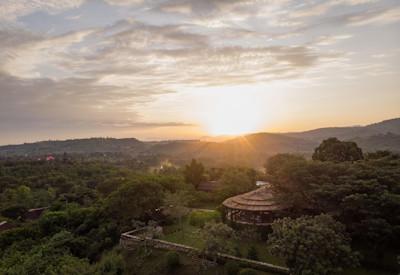
If you’re dreaming of an unforgettable chimpanzee tracking adventure, Kyambura Gorge Lodge feels less like a hotel and more like a front-row seat to magic. Perched right on the lip of Queen Elizabeth National Park, it offers breathtaking views of the lush, sunken rainforest below—a green world just waiting to be explored.
What makes it truly special is how effortlessly it connects you to nature. With just eight hand-built bandas, the vibe is deeply personal and intimate. After a thrilling day in the forest, you can wash off the dust in the swimming pool or unwind at the spa. The real luxury, though? Convenience. You can literally walk right out of your room and step straight onto the Fig Tree Trail to begin your trek. There’s no hectic morning commute—just you, the morning mist, and the exciting anticipation of hearing those first wild chimpanzee calls echoing through the canopy
4-days-queen-elizabeth-park-and-chimpanzee-tracking-in-kyambura-gorge
3-days-trips-to-queen-elizabeth-national-park-for-chimpanzee-tracking-in-kyambura-gorge
Kyambura Gorge Lodge
If your dream trip involves seamless, upscale comfort right on the edge of adventure, Kyambura Gorge Lodge is unmatched. Perched directly on the rim of the 100-meter-deep fissure, this property transforms an old local coffee storehouse into a stunning luxury hub.
The immediate proximity means your chimpanzee tracking expedition begins without a grueling morning commute. You can walk straight from your private, grass-thatched banda down the famous Fig Tree Trail to descend into the misty, sunken rainforest. The lodge features just 8 spacious, hand-built bandas, meaning you are sharing this slice of paradise with only a handful of other travelers. For example, after an intense 3-hour trek navigating the steep slopes to spot the "Lost Chimps of Kyambura," you can return to a complimentary post-trek foot massage at the spa or take a dip in the saltwater swimming pool. The figures speak for themselves: with over 600 bird species and 95 mammal species roaming the surrounding Queen Elizabeth National Park ecosystem, sitting on your private wooden deck with a butler-served drink provides a masterclass in African wilderness.
Kyambura Gorge Safari Lodge (andBeyond)
Nestled on the verdant hillsides just minutes from the primary trailheads, this property blends high-end hospitality with raw natural beauty. Designed to embrace the panoramic landscapes, it offers dramatic views that stretch across the savanna all the way to the snow-capped Rwenzori Mountains.
For primate lovers, this serves as a premier base for chimpanzee tracking. Because the lodge sits within easy walking distance of the Uganda Wildlife Authority (UWA) briefing points, you avoid the anxiety of missing the strict 8:00 AM tracking schedules. Consider the advantage of waking up to the sounds of the African bush, enjoying a freshly brewed espresso made from locally grown beans, and stepping out on foot to meet your rangers. After spending your morning watching a habituated chimp community groom, play, and swing through the ironwood canopy, the lodge welcomes you back to an elegant hillside banda. The open-air architecture relies heavily on natural rock detailing and re-imagined local artifacts, ensuring that your transition from the wild jungle to five-star luxury feels entirely organic.
Pumba Safari Lodge
If you are looking for a warm, intimate atmosphere that hits the sweet spot between budget-friendly pricing and unforgettable scenery, Pumba Safari Lodge (formerly Kyambura Safari Cottages) is a gem. Perched on the western rift valley rim, it looks out directly over the expansive savannah plains.
Its location is a major win for your budget, situated a mere 3.4 kilometers from the main gorge entry point. This means a quick 5-to-10-minute drive gets you to your chimpanzee tracking brief on time. Pumba offers 5 cozy, en-suite cottages built from local timber under traditional grass roofs. It is an entirely eco-conscious, 100% solar-powered property, proving that sustainable travel doesn’t mean sacrificing comfort. For instance, after a day in the forest, you can enjoy a hot shower heated by the African sun and sit out on the restaurant terrace. Guests frequently note a remarkable bonus: because the cottages overlook a natural wildlife corridor, it is common to sip a cold drink while watching wild elephants or buffaloes trek across the plains down to a distant watering hole below.
Mazike Valley Lodge
Rising from the valley slopes just outside the Kyambura Game Reserve boundary, Mazike Valley Lodge offers a tranquil, exclusive sanctuary. Affectionately named Mazike—the local Luganda word for "chimpanzee"—the property leans heavily into a classic 1920s safari aesthetic.
The lodge features 8 opulent, self-contained cottages spread across manicured wild gardens, creating an atmosphere of total privacy. When you head out for chimpanzee tracking, a short 30-minute drive brings you right to the trailhead, making it an incredibly convenient base. A stay here gives you the feeling of being an early explorer, with banana-fiber thatched roofs, deep sunken baths, and private butler service. For example, a typical day wraps up with a refreshing plunge in the discrete garden pool, followed by a dinner featuring fresh produce plucked from the lodge’s own gardens. As night falls, you can sit around a roaring campfire, listening to the distant, haunting calls of the valley's apes while traditional dancers perform under the stars.
Bulbul Safari Lodge & Buffalo Safari Lodge
For travelers who want a reliable, mid-range home base with great energy, Bulbul Safari Lodge and Buffalo Safari Lodge offer exceptional value. Situated just outside the official park boundaries, these sister properties specialize in seamless vehicle logistics and vibrant local hospitality.
Instead of paying premier rim-side prices, staying here means you allocate your budget directly into the experiences, while still enjoying easy vehicle access to the gorge's visitor center for chimpanzee tracking. For instance, a quick 15-minute morning drive via safari vehicle deposits you right at the ranger station, fresh and ready to trek. Buffalo Safari Lodge stands out with its larger capacity, deluxe cottages, and sprawling views near the Kazinga Channel, where massive pods of hippos can literally be heard grunting from the terrace. Meanwhile, Bulbul offers a smaller, more intimate retreat. Both lodges excel at packing customized, early-morning breakfast boxes so you can eat on the go, ensuring you are fueled up and sharp before plunging into the dense, wild undergrowth to track the park's famous primates 1. What makes chimpanzee tracking in Kyambura Gorge unique?
Unlike trekking through a traditional, flat forest, chimpanzee tracking in Kyambura Gorge is a dramatic journey into an underground world. Often called the "Valley of Apes," this spectacular site is a 100-meter-deep, 16-kilometer-long tear in the flat savanna floor. You start on the sunny plains of Queen Elizabeth National Park and suddenly descend steep cliff paths into a dark, humid, primeval rainforest canopy below. This isolated eco-island creates a completely unique microclimate.
The dramatic contrast makes the trek unforgettable. For instance, you could be watching elephants under the hot sun on the gorge rim, and thirty minutes later, you are crossing the muddy banks of the Kyambura River under towering ironwood trees. The physical experience of descending into the earth adds a thrilling sense of exploration that you simply won't find anywhere else in East Africa.
How much do tracking permits cost in Kyambura Gorge?
Securing a permit is your golden ticket to the gorge, and the pricing structure reflects a targeted effort to balance tourism with deep environmental care. For a foreign non-resident traveler, a chimpanzee tracking permit costs $200 USD per person. This is highly competitive compared to the $250 USD fee at Kibale National Park, making Kyambura an exceptionally budget-friendly alternative for primate lovers.
These fees are not just administrative costs; they actively fund local conservation infrastructure. Your permit dollars directly bankroll the Uganda Wildlife Authority (UWA) rangers who monitor the area daily, protect the habitat boundaries from human encroachment, and fund community outreach programs—such as planting chili crop-fences—to prevent local farmers from clashing with the foraging apes.
What is the success rate of spotting chimpanzees here?
Because the gorge is a dynamic, wild environment, the success rate for chimpanzee tracking sits around 60% to 70%. This is noticeably lower than the 95% certainty found in Kibale Forest, but it appeals deeply to travelers who crave an authentic, raw tracking challenge rather than a curated experience.
The lower success rate comes down to geography and mobility. The local habituated community consists of roughly 30 to 40 individuals. These highly intelligent primates are free-ranging and incredibly agile; if they decide to migrate across the steep terrain or temporarily venture into the connected Maramagambo Forest in search of seasonal figs, trackers must rely purely on instinct and ear-shattering vocalizations. If you do spot them, the victory feels entirely earned, providing an exclusive, intimate encounter with a resilient group often called the "lost chimps."
Are group sizes limited during the trek?
To keep the wild primates comfortable and minimize human impact on their sensitive habitat, the Uganda Wildlife Authority enforces strict group limits. A maximum of six people are allowed per chimpanzee tracking group, with only two sessions running daily—one starting at 8:00 AM and a second at 2:00 PM.
This strict limit is a massive blessing for travelers who dislike crowded tourist trails. With just six people in your group, you walk in a quiet, single-file line, moving seamlessly at a manageable pace with your armed UWA ranger guide. For example, instead of straining to see past a crowd of cameras, you get to sit quietly on the forest floor, listening clearly as your guide explains the group's hierarchy, subtle hand gestures, and specific facial expressions without any chaotic background noise.
How long does a typical tracking excursion last?
A standard chimpanzee tracking excursion in the gorge takes between three and four hours in total, depending completely on where the primate community decided to build their nests the previous evening. The adventure begins with an essential 20-minute safety and rule briefing at the visitor center before you begin the physical trek.
Once your expert guide tracks down the community by following broken branches, half-eaten fruit, and loud pant-hoots, your official timer begins. Per strict global primate conservation laws, you are permitted exactly one hour of direct face-to-face time with the chimpanzees. This sixty-minute window is carefully timed to prevent the apes from experiencing undue stress or behavioral changes, ensuring they remain completely wild while you capture your once-in-a-lifetime photos.
What other wildlife can you see in the gorge?
While your primary objective is chimpanzee tracking, descending into this sunken biosphere introduces you to an astounding variety of biodiversity that thrives away from the open savanna. The thick forest canopy is a bustling sanctuary for multiple primate species, including striking black-and-white colobus monkeys, red-tailed monkeys, and olive baboons.
Keep your eyes on the forest floor and riverbanks, too. The gorge is home to giant forest hogs, and hippos frequently wallow in the muddy waters of the river winding through the valley. Bird lovers are also in paradise here, as the gorge boasts over 100 specialized forest species. It is common to spot the radiant, iridescent feathers of the Great Blue Turaco or catch a rare glimpse of an African Finfoot paddling quietly along the river.
Is a high fitness level required for this trek?
Yes, a moderate-to-high level of physical fitness is highly recommended before tackling a chimpanzee tracking trip into the gorge. The terrain is notably more demanding than other tracking destinations because it requires navigating a steep 100-meter descent down the cliff face and a strenuous, muscle-burning climb back up at the end.
The forest floor itself presents natural obstacles. You will encounter slippery mud slopes, thick tangled roots, and log bridges across flowing water. For instance, if a sudden rain shower passes through, the earthen steps can become quite slick, requiring good balance and core strength. If you have severe knee issues or limited mobility, the steepness of the gorge walls can pose a serious and exhausting challenge.
What essential gear should you pack for tracking?
To ensure your chimpanzee tracking experience is comfortable rather than miserable, packing the right gear is essential. Sturdy, broken-in hiking boots with deep ankle support and excellent grip are non-negotiable for navigating the steep, muddy trails safely.
You should also dress in lightweight, long-sleeved shirts and long trousers to protect your skin from stinging nettles and sharp branches. Tucking your pants into long socks is a classic safari trick to keep biting safari ants from climbing up your legs. Don't forget to pack a lightweight rain jacket in your daypack—the gorge creates its own humid microclimate, and unexpected downpours are common. Finally, apply a high-quality insect repellent containing DEET to ward off persistent flies and mosquitoes under the canopy.
When is the best time of year to visit?
The absolute best time to plan a chimpanzee tracking safari to Kyambura Gorge is during Uganda’s two distinct dry seasons: from June to September and from December to February. During these months, the forest trails are significantly drier, less slippery, and much easier to navigate on foot.
Furthermore, the dry weather actually aids your chances of spotting the primates. When water and wild fruits become scarce on the surface, the chimpanzees tend to stay concentrated deep within the lush gorge basin near the permanent riverbed rather than scattering across the vast park boundaries. However, tracking runs year-round; even during the rainy months of April or October, the gorge turns a vibrant, emerald green that makes for spectacular, misty photography.
Can you combine tracking with a savanna safari?
One of the greatest advantages of chimpanzee tracking in Kyambura Gorge is its brilliant location directly within Queen Elizabeth National Park, allowing you to seamlessly combine two completely different worlds into a single day.
For example, you can spend your morning deep inside the misty, shaded gorge tracking wild primates through the dense vines. By lunchtime, you can be back on the open savanna plains, taking a classic game drive to spot herds of elephants, Ugandan kobs, and tree-climbing lions. In the afternoon, you can hop onto a boat cruise along the famous Kazinga Channel to watch massive pods of hippos and crocodiles. It offers the ultimate, all-in-one Ugandan safari itinerary without requiring hours of exhausting travel between parks.
.
Booking chimpanzee tracking in Kyambura gorge with us Roads of Adventure safaris
Planning your chimpanzee tracking adventure with Roads of Adventure Safaris makes the process entirely stress-free. Because the Uganda Wildlife Authority enforces a strict age limit of 15 years and only opens a few exclusive permits per morning and afternoon session, having an expert team handle the logistics is a lifesaver. We will secure your $200 permit and map out your perfect day. Beyond the gorge, we can easily weave in exhilarating savanna game drives or a relaxing boat cruise along the Kazinga Channel, crafting a seamless, deeply personal Ugandan journey you will never forget.
