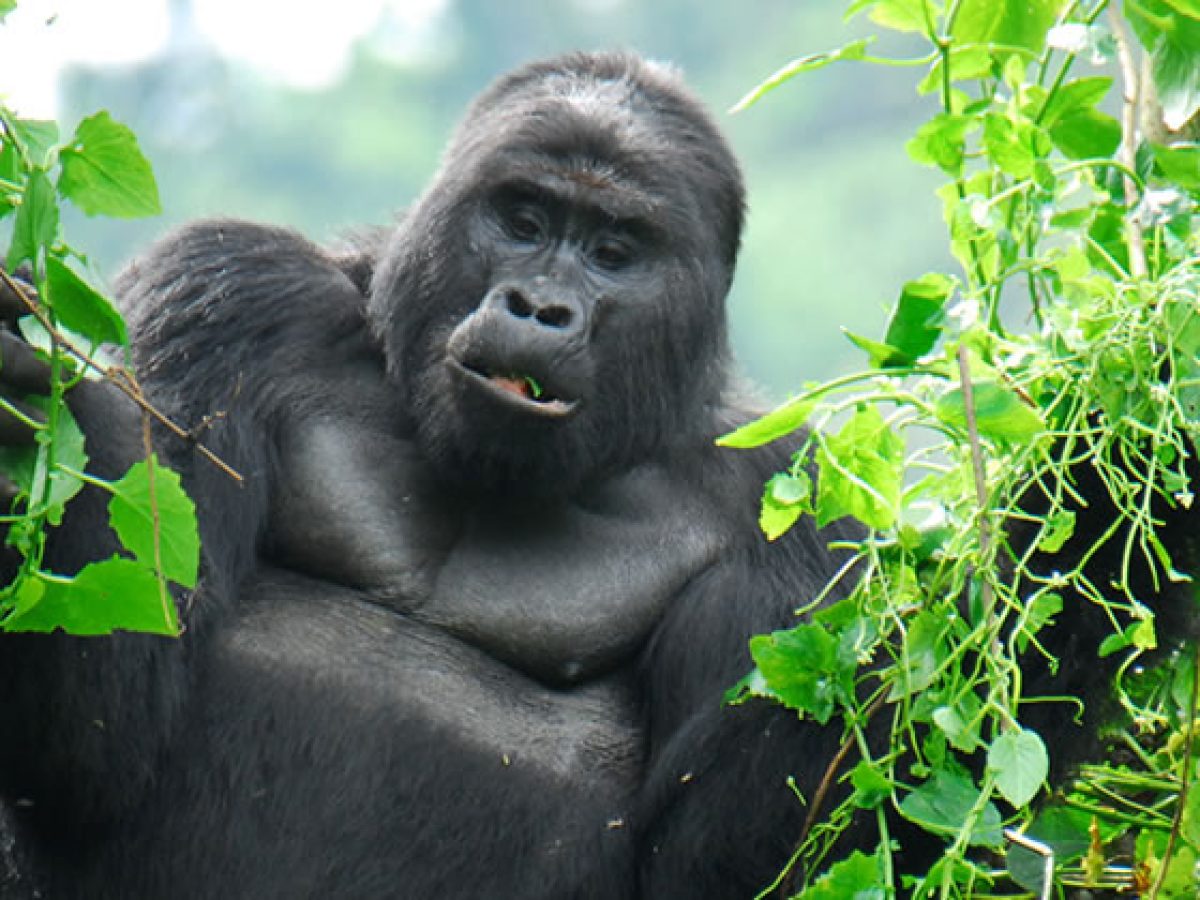
A 6-day Uganda safari typically combines top primate tracking (Gorillas and Chimpanzees) with savannah wildlife viewing in Queen Elizabeth or Murchison Falls National Park. Key highlights include trekking mountain gorillas in Bwindi Impenetrable National Park, boat cruises on the Kazinga Channel, and visiting the Equator.
6-days-best-of-murchison-and-kidepo-uganda-safari-via-ziwa
6-days-safari-in-uganda-gorilla-trekking-and-chimpanzee-tracking
6-days-classic-uganda-rwanda-primate-and-wildlife-safari
6-days-uganda-primate-safari-and-wildlife-experience
6-days-budget-uganda-wildlife-safari-holiday-vacation
6-days-double-gorilla-trekking-uganda-and-rwanda-side
Top Attractions & Experiences (6-Day Itinerary Highlights)
Gorilla Trekking (Bwindi Impenetrable National Park)
Bwindi Impenetrable National Park is the crown jewel of Uganda’s tourism. This ancient, mist-covered rainforest is home to roughly half of the world's remaining mountain gorillas. Trekking here is a profound experience that begins with a briefing at the park headquarters before you head into the dense undergrowth with expert rangers. The hike can be physically demanding, lasting anywhere from two to six hours depending on the gorillas' movement. However, the moment you encounter a troop, the fatigue vanishes. You are allowed one hour to observe these gentle giants. Watching a 400-pound silverback guard his family while juveniles play in the trees is often described as a life-changing spiritual connection. The "impenetrable" nature of the forest—thick with ferns, vines, and giant trees—adds a sense of prehistoric adventure to the encounter.
Chimpanzee Trekking (Kibale National Park)
Kibale Forest is widely considered the primate capital of the world, boasting 13 different species. While the forest is alive with the sounds of Red-tailed monkeys and Grey-cheeked mangabeys, the chimpanzees are the main event. Unlike the quiet observation of gorillas, chimp tracking is often fast-paced and vocal. You’ll follow the loud "pant-hoots" echoing through the canopy until you find a community feeding or grooming. Because chimpanzees share 98% of human DNA, their social behaviors—kissing, fighting, and complex communication—are strikingly familiar. For those on a tighter schedule, Kyambura Gorge in Queen Elizabeth National Park offers a "sunken forest" experience where you can track chimps in a dramatic underground river valley.
Wildlife Game Drives (Queen Elizabeth National Park)
Queen Elizabeth National Park (QENP) offers the quintessential African savannah experience. Most game drives take place in the Kasenyi Plains, a vast landscape framed by the Rwenzori Mountains. This area is a primary breeding ground for the Uganda kob, which in turn attracts large predators. During a morning drive, it is common to spot prides of lions camouflaged in the golden grass, solitary leopards draped over acacia branches, and massive herds of Cape buffalo and African elephants. The park’s diverse ecosystem, ranging from crater lakes to open plains, ensures that every drive feels different. The sight of an elephant silhouette against the backdrop of the "Mountains of the Moon" is one of the most iconic images of a Ugandan safari.
Tree-Climbing Lions (Ishasha Sector)
In the remote southern sector of QENP lies Ishasha, one of only two places in the world where lions regularly climb trees. Scientists believe they do this to escape the heat of the ground and avoid biting insects like tsetse flies. Seeing a 200kg lion lounging lazily on the limb of a broad-leafed fig tree is a surreal sight that defies typical feline behavior. Visitors often spend hours scanning the large branches of sycamore figs for a dangling tail or a paw. This sector is quieter and less crowded than the northern plains, providing a more intimate, "wild" feel to your safari as you search for these arboreal predators.
Boat Safari (Kazinga Channel)
The Kazinga Channel is a 32-kilometer natural waterway connecting Lake Edward and Lake George, and a boat safari here is arguably the best way to see wildlife without breaking a sweat. As the boat glides along the banks, you are treated to a permanent parade of animals coming to drink. The channel holds one of the world's highest concentrations of hippos—you will see hundreds of them huffing and splashing in the water. Nile crocodiles sun themselves on the banks with mouths agape, while elephants and buffaloes wade into the shallows to cool off. For birdwatchers, it is a paradise, featuring African fish eagles, kingfishers, and the prehistoric-looking shoebill stork if you are lucky.
Rhino Tracking (Ziwa Rhino Sanctuary)
Since rhinos are extinct in Uganda’s national parks due to past poaching, Ziwa Rhino Sanctuary is the only place in the country to see them in the wild. Located en route to the north, this sanctuary is home to a growing population of Southern White Rhinos. What makes this experience unique is that you track them on foot. Led by an armed ranger, you walk through the bush until you are just a few meters away from these armored behemoths. Being on the same ground level as a rhino provides a thrilling perspective on their size and power. It is a vital conservation success story and the perfect way to tick off the first of the "Big Five" on your journey.
Cultural Experiences
Uganda’s beauty isn't just in its animals, but in its people. A visit to the Igongo Cultural Center near Mbarara offers a deep dive into the history of the Ankole Kingdom, famous for its long-horned cattle. Here, you can enjoy a traditional lunch of matooke (steamed bananas) and eshabwe (ghee sauce). Alternatively, many Bwindi tours include a visit to the Batwa Pygmies, the original "keepers of the forest," who share their ancient hunter-gatherer traditions. Community walks through coffee plantations or banana farms allow you to see how locals live and work, turning a standard holiday into a rich, immersive cultural exchange that supports the local economy directly.
6 Days Uganda safari holiday vacation
Experience the "Pearl of Africa" on this breathtaking 6-day Uganda safari, a journey that seamlessly blends adrenaline-pumping wildlife encounters with serene landscapes. This expedition is meticulously designed for those who want to witness the country’s most iconic residents: the endangered mountain gorillas and the playful chimpanzees. From the lush, ancient canopy of Bwindi Impenetrable Forest to the sprawling savannahs of Queen Elizabeth National Park, you will explore diverse ecosystems teeming with life. Witness the rare phenomenon of tree-climbing lions in Ishasha, cruise the hippo-filled waters of the Kazinga Channel, and stand in awe of the dramatic Rwenzori mountain backdrop. Beyond the wildlife, this safari offers deep cultural immersion, connecting you with local communities and the warm hospitality of the Ugandan people. Whether you are trekking through misty jungles or enjoying a sunset over a crater lake, these six days promise an unforgettable adventure into the heart of the African wild.
Day 1: Arrival and Transfer to Kibale Forest
Your adventure begins with a scenic drive from Entebbe or Kampala toward Fort Portal, the gateway to the "Primate Capital." As you head west, the urban bustle fades into a lush landscape of tea plantations and rolling green hills. After a stop for a traditional Ugandan lunch, you will arrive at the edge of Kibale National Park. This vibrant tropical rainforest is home to the highest density of primates in Africa. Spend your evening checking into your lodge, surrounded by the sights and sounds of the jungle. The air here is fresh and filled with the calls of Turacos and Black-and-white colobus monkeys. Take a guided nature walk through the Bigodi Wetland Sanctuary nearby, a community-run project where you can spot rare birds and various monkey species, setting a perfect tone for the primate-filled days ahead.
Day 2: Chimpanzee Trekking and Queen Elizabeth NP
After an early breakfast, head to the Kanyanchu visitor center for a briefing before entering the forest in search of chimpanzees. Tracking these vocal primates is an exhilarating experience; you’ll follow their loud "pant-hoots" through the dense canopy until you find a community feeding or playing. You are allowed one hour to observe their strikingly human-like behaviors—grooming, social signaling, and acrobatic leaps. In the afternoon, drive south toward Queen Elizabeth National Park. The scenery shifts from thick forest to open savannah and crater lakes. Upon entering the park, keep your eyes peeled for your first sightings of African elephants and Cape buffalo. Settle into your lodge overlooking the park’s vast plains, enjoying a sundowner as the African sky turns brilliant shades of orange and purple, signaling the start of your savannah adventure.
Day 3: Game Drives and Kazinga Channel Boat Cruise
Start your day at dawn with a game drive across the Kasenyi Plains. This is the best time to catch predators like lions and leopards as they wrap up their nightly hunts. You’ll see herds of Uganda kob, waterbucks, and giant forest hogs roaming the plains. After a midday break, head to the Kazinga Channel for a legendary boat safari. This 32km waterway is a magnet for wildlife. You will glide past hundreds of hippos, massive Nile crocodiles, and thirsty elephants cooling off at the water’s edge. The birdlife is spectacular, with kingfishers and fish eagles frequently seen diving for prey. This boat trip offers a unique, eye-level perspective of the animals, making it one of the most relaxed yet high-yield wildlife viewing experiences in the park, perfect for capturing stunning photographs.
Day 4: Tree-Climbing Lions and Bwindi Forest
Leave the northern sector and head south to the Ishasha region, famous for its unique population of tree-climbing lions. While lions elsewhere stay on the ground, Ishasha’s prides are often found lounging in the branches of ancient fig trees to escape the heat and insects. Finding them requires a bit of luck and a sharp-eyed guide, but the sight of a lion dangling its paws from a branch is unforgettable. After the search, continue your journey toward Bwindi Impenetrable National Park. The terrain becomes mountainous as you climb toward the misty "gorilla highlands." The drive offers spectacular views of terraced hillsides and local villages. By evening, you will reach the edge of the ancient rainforest, feeling the drop in temperature and the rising anticipation for tomorrow’s life-changing gorilla encounter.
Day 5: The Ultimate Gorilla Trekking Experience
This is the highlight of your safari. After a 7:30 AM briefing, you will be assigned to a gorilla family and head into the thick, prehistoric forest with expert rangers. The trek can be challenging, involving steep slopes and tangled vines, but the reward is incomparable. When you finally find the gorillas, time stands still. For one hour, you will sit quietly just meters away from a massive silverback and his family. Watching them eat, play, and interact is a deeply moving experience that justifies every mile traveled. After the trek, return to the lodge for a well-deserved rest. If you have energy, visit the local Batwa community to learn about their ancient forest-dwelling culture and traditions. The day concludes with a celebratory dinner, sharing stories of the day's incredible encounter under the starlit sky.
Day 6: Return Drive to Kampala or Entebbe
On your final day, enjoy a leisurely breakfast before beginning the journey back to central Uganda. The route takes you through the beautiful "Switzerland of Africa" with its sharp turns and breathtaking valley views. You will pass through Mbarara town and stop at the Igongo Cultural Center for a glimpse into the history of the Ankole people. A mandatory stop at the Equator crossing in Kayabwe provides a fun opportunity for photos with one foot in the Northern Hemisphere and the other in the Southern. You can also browse the local craft markets for last-minute souvenirs like hand-woven baskets or wood carvings. Continue to Kampala or Entebbe for your evening flight home, carrying with you a camera full of photos and a lifetime of memories from the Pearl of Africa
1. What is the top highlight of a 6-day Uganda safari?
While Uganda offers a plethora of wildlife experiences, Mountain Gorilla trekking remains the undisputed crown jewel of any safari. Conducted in either Bwindi Impenetrable National Park or Mgahinga Gorilla National Park, this experience is often described as life-changing. Unlike a traditional game drive where you view animals from a distance in a vehicle, gorilla trekking is an intimate, raw encounter. You hike through ancient, mist-covered rainforests, guided by expert trackers who follow signs of broken bamboo and nests until you come face-to-face with a silverback and his family.
In a 6-day itinerary, including the gorillas requires careful planning because of the travel distance to the southwestern corner of Uganda. However, the one hour spent in the presence of these gentle giants—watching them groom, play, and eat just meters away—is a sensory overload. You hear their rhythmic chewing, see the incredible detail in their human-like hands, and feel the power of the silverback's gaze. Because there are only around 1,000 mountain gorillas left in the wild, this is more than just a sightseeing tour; it is a pilgrimage to see one of the rarest creatures on Earth, making it the definitive highlight of any Ugandan journey.
2. Can I see all the "Big Five" in 6 days?
Yes, you can check off the full "Big Five" list, but it requires a strategic route that includes the Ziwa Rhino Sanctuary. The "Big Five" (lion, leopard, elephant, buffalo, and rhino) were originally named by big-game hunters for being the most dangerous animals to hunt on foot. Today, they represent the ultimate "must-see" list for conservation-minded travelers. Since rhinos are not currently found in Uganda’s general national parks, a stop at Ziwa is essential. Here, you track southern white rhinos on foot with rangers, a thrilling experience that puts you within 10 to 30 meters of these prehistoric-looking behemoths.
After the rhinos, the remaining four are easily sought in Murchison Falls or Queen Elizabeth National Park. Elephants and buffaloes are ubiquitous, often seen in herds numbering in the hundreds. Lions are the stars of the savannah, frequently spotted during early morning game drives as they patrol their territories. The leopard is the "wildcard"—it is the most elusive of the five, requiring a keen-eyed guide and a bit of luck to spot one camouflaged in a sausage tree or moving through the tall grass at dusk. Seeing all five in six days provides a sense of completion that few other African destinations can offer in such a short timeframe.
3. Where can I see Chimpanzees in 6 days?
The premier destination for chimpanzee encounters is Kibale Forest National Park, widely recognized as the "Primate Capital of the World." This lush rainforest is home to the highest density and diversity of primates in Africa, with 13 different species residing within its borders. For a 6-day safari, Kibale is the most logical and rewarding stop because it offers a nearly 99% success rate for chimpanzee sightings. The habituated communities here are used to human presence, allowing you to witness their complex social hierarchies, high-speed canopy chases, and boisterous vocalizations.
If your 6-day route stays strictly within Queen Elizabeth National Park, you can also see chimpanzees in Kyambura Gorge, also known as the "Valley of Apes." This is a dramatic underground forest carved by a river into the savannah floor. While the success rate here is slightly lower (around 60-70%) and the trek is more physically demanding due to the steep terrain, the scenery is breathtaking. Whether in the vast expanse of Kibale or the hidden depths of Kyambura, seeing our closest living relatives (sharing about 98.8% of our DNA) is a profound experience that highlights the incredible evolutionary links between humans and the great apes.
4. What are tree-climbing lions?
Tree-climbing lions are one of the most peculiar and famous wildlife phenomena in Uganda. While most lions stay firmly on the ground, the population in the Ishasha sector of Queen Elizabeth National Park has developed the unique habit of climbing high into the ancient sycamore-fig and acacia trees. Scientists believe they do this for several reasons: to escape the heat of the ground, to catch a cool breeze, and to avoid the irritating bites of tsetse flies and other ground-dwelling insects.
For a safari-goer, seeing a 400-pound predator draped lazily over a tree branch like a common housecat is a surreal and highly photogenic sight. Ishasha is located in the southern part of Queen Elizabeth National Park, and a drive through this sector is a standard feature of 6-day trips heading toward the gorilla forests. Spotting them takes patience, as they can be hidden by thick foliage, but when you find a "pride in the sky," it becomes one of the most talked-about moments of the entire safari. It is a rare behavioral trait shared with only one other notable population in Manyara, Tanzania, making it a "bucket list" item for wildlife enthusiasts.
5. What is the best way to see water animals?
In Uganda, the best way to see "water animals" is undoubtedly via a boat safari. While game drives are great for cats and giraffes, the rivers and lakes are where the highest concentrations of life are found. On a 6-day safari, you will likely experience two iconic boat cruises: the Victoria Nile in Murchison Falls and the Kazinga Channel in Queen Elizabeth National Park. These cruises offer a "front-row seat" to a world that is inaccessible by car.
From the safety of the boat, you can get incredibly close to massive pods of hippos—Uganda has one of the highest hippo populations in the world—and enormous Nile crocodiles sunning themselves on the banks with their mouths agape. You will also see "land" animals like elephants and buffaloes coming down to the water to bathe and drink, often ignoring the boat entirely. For birders, the water’s edge is a paradise, home to kingfishers, fish eagles, and the rare shoebill stork. The perspective from the water is peaceful and offers some of the best unobstructed photography opportunities, as you don't have to worry about tall grass or thickets blocking your view of the animals.
6. Can I see giraffes in 6 days?
Yes, and you are likely to see them in impressive numbers. The specific species found here is the Rothschild’s giraffe (also known as the Baringo giraffe), which is one of the most endangered giraffe subspecies. The best place to see them during a 6-day trip is Murchison Falls National Park. The northern bank of the Nile is home to a massive population; it is not uncommon to see "journeys" of 30 or 40 giraffes moving gracefully across the savannah. Their towering silhouettes against the Borassus palm trees are the quintessential image of a Ugandan safari.
If your 6-day itinerary goes through the southern route, you might see them in Lake Mburo National Park. Giraffes were reintroduced here from Murchison Falls a few years ago to help manage the acacia regrowth, and the population is thriving. Seeing a giraffe in Lake Mburo is particularly special because you can often view them during a walking safari, providing a true sense of their immense height. Whether you see them in the north or the south, their gentle nature and awkward, elegant movements make them a favorite for travelers of all ages.
7. Are there white rhinos in Uganda?
Historically, both black and white rhinos roamed Uganda, but they were hunted to local extinction during the civil unrest of the 1970s and 80s. However, thanks to the efforts of the Rhino Fund Uganda, southern white rhinos are back. They are kept at the Ziwa Rhino Sanctuary, a 7,000-hectare walled ranch that serves as a breeding center with the eventual goal of reintroducing them into the national parks. For a 6-day visitor, this is a vital stop on the way to Murchison Falls.
What makes Ziwa unique is that it offers on-foot rhino tracking. Under the protection of an armed ranger, you leave your vehicle and hike through the bush to find where the rhinos are grazing. Because white rhinos are generally more docile than the aggressive black rhino, you can safely observe them from a relatively close distance. Being on the same ground as a multi-ton animal, hearing them huff and graze, is a humbling experience. It adds a crucial conservation success story to your safari, showing that through dedicated effort, vanished species can be brought back to their ancestral homes.
8. Is birdwatching good in Uganda?
Uganda is often called the best birding destination in Africa, and even if you aren't a "birder," the sheer variety and color of the avian life will captivate you. The country boasts over 1,080 confirmed species, which is about half of all bird species found in Africa. This incredible diversity is due to Uganda’s location at the convergence of the East African savannah, the West African rainforest, and the semi-desert of the north.
During a 6-day safari, you will see iconic species effortlessly. The Grey Crowned Crane (Uganda’s national bird) is frequently seen in wetlands, while the African Fish Eagle is the soundtrack of the Nile, with its haunting, melodic call. In the forests of Kibale, you might spot the Great Blue Turaco, a bird so colorful it looks hand-painted. For the "serious" birder, the ultimate prize is the Shoebill Stork, a prehistoric-looking bird that resembles a creature from a fantasy novel. Even without trying, you will likely spot 100+ species in six days, making Uganda a vibrant, fluttering masterpiece of nature.
9. What should I see at the Uganda Equator?
The Uganda Equator crossing at Kayabwe is one of the most popular landmarks in the country and a standard stop on any 6-day safari heading to or from the southern parks. It is marked by two large white circular monuments where you can stand with one foot in the Northern Hemisphere and the other in the Southern Hemisphere. It’s the ultimate "tourist photo" moment, but there is more to it than just a picture.
Local guides often perform the "coriolis effect" water experiment. They use a funnel and a piece of flower to show how water drains clockwise in the north, counter-clockwise in the south, and falls straight down exactly on the Equator line. While scientists debate the scale needed to see this effect, it remains a fascinating demonstration of the Earth's forces. Beyond the physics, the Equator is a hub for high-quality Ugandan crafts, drums, and textiles. It’s the perfect place to grab a cup of locally grown coffee and pick up handmade souvenirs while reflecting on the fact that you are at the literal center of the world.
10. What unique water feature is in Murchison Falls NP?
The defining feature of Murchison Falls National Park is the waterfall itself, which is arguably the most powerful surge of water in the world. At this point, the Victoria Nile—usually over 50 meters wide—is compressed into a tiny rocky gap just 7 meters wide. The resulting pressure is immense; the water thunders down 43 meters into the "Devil's Cauldron" below. The ground literally vibrates beneath your feet as you stand at the "Top of the Falls."
For the best experience, a 6-day safari usually includes a hike from the boat landing to the top. As you climb the trail, you are sprayed by a fine mist that creates permanent, shimmering rainbows. The sheer raw energy of the water is a reminder of nature's power. Below the falls, the river calms down, but the oxygenated water creates a nutrient-rich environment that supports a massive population of fish, which in turn attracts the crocodiles and hippos you see on the boat cruise. It is a spectacular geological bottleneck that shapes the entire ecosystem of the park.
11. What is special about Lake Bunyonyi?
Lake Bunyonyi, located in the southwestern highlands, is frequently called the "Switzerland of Africa" due to its terraced hills and cool, misty climate. "Bunyonyi" means "place of many little birds," and it lives up to its name. It is one of the deepest lakes in Africa and is uniquely free of bilharzia, hippos, and crocodiles, making it one of the few places in Uganda where you can safely swim.
For a 6-day traveler, Lake Bunyonyi is usually the place to relax after the physical exertion of gorilla trekking. The lake is dotted with 29 islands, each with its own story. For example, "Punishment Island" was historically where unmarried pregnant girls were left, while others house luxury resorts or local schools. Exploring the lake in a traditional dugout canoe as the morning mist lifts off the water is an incredibly peaceful experience. It provides a "scenic pause" in an otherwise action-packed itinerary, allowing you to soak in the beauty of the Kigezi highlands before the journey back to Entebbe.
12. Can I visit local communities?
A 6-day safari is not just about animals; it’s about the people who live alongside them. Most itineraries include a community visit to provide a holistic view of Uganda. One of the most poignant experiences is visiting the Batwa (pygmies) near Bwindi. The Batwa were the original inhabitants of the forest and were relocated when it became a national park. A visit to their community allows you to learn about their ancient hunting-and-gathering techniques, medicinal plants, and traditional dances.
In the central region, you might visit a local village near Bigodi or Queen Elizabeth. Here, you can see how coffee is grown and processed, visit a local school, or watch women weave intricate baskets. These interactions are vital because they show how community-led tourism supports conservation. When you visit these communities, your fees go directly toward building clinics and schools, ensuring that the local people see wildlife as an asset to be protected. These cultural exchanges often end up being as memorable as the wildlife sightings, providing a deep, human connection to the land.
13. What is golden monkey tracking?
If you visit Mgahinga Gorilla National Park during your 6-day trip, you have the opportunity to track the endangered golden monkeys. These beautiful primates are distinguished by their bright orange-gold fur and are found only in the bamboo forests of the Virunga Volcanoes. Unlike gorillas, which move slowly and spend a lot of time on the ground, golden monkeys are incredibly active, leaping through the bamboo canopy with startling agility.
Tracking them is generally less strenuous than gorilla trekking, as they tend to stay in the lower reaches of the forest. The experience is a photographer’s dream, as the "gold" of their fur contrasts beautifully with the green bamboo. Because they are habituated, they often go about their business—eating bamboo shoots and grooming each other—just a few meters from visitors. Adding golden monkeys to your 6-day safari provides a "full primate experience," complementing the chimpanzees and gorillas and highlighting the unique biodiversity of the Albertine Rift.
14. Are there any walking safaris?
While most African safaris are conducted from the seat of a 4x4, Uganda offers excellent opportunities for walking safaris, particularly in Lake Mburo National Park. Because Lake Mburo does not have elephants or lions in large numbers, it is safe to walk through the park accompanied by an armed UWA ranger. Walking on the same level as zebras, impalas, and elands changes your perspective entirely; you become part of the landscape rather than a spectator.
A walking safari allows you to focus on the "small things"—identifying animal tracks, learning about the medicinal properties of dung, and observing insects and birds that you would miss from a car. You can feel the wind, hear the crunch of the grass, and experience the thrill of approaching a herd of zebras on foot. It is a quiet, intimate way to connect with the African bush and is often a highlight for those who want to be more active during their 6-day journey.
15. What are the best places to take photos?
Uganda is a photographer's paradise, but three spots stand out as "must-captures" on a 6-day tour. First is the Top of Murchison Falls; the combination of the crashing white water, the dark rocks, and the inevitable rainbows offers a high-action landscape shot. Second is the Kazinga Channel during the afternoon boat cruise. Because the animals come to the water’s edge and the boat can get very close, you can capture stunning, eye-level portraits of hippos and elephants without needing a massive telephoto lens.
Finally, the misty hills of Bwindi or the crater lakes of Fort Portal provide incredible "atmospheric" shots. The "pearl of Africa" lighting is unique; the equatorial sun is bright, but the frequent afternoon clouds create a soft, diffused light that is perfect for wildlife photography. Whether you are using a professional DSLR or a smartphone, the sheer variety of colors—from the red earth and emerald forests to the vibrant blue of the Kingfishers—ensures that your 6-day safari will be documented in a stunning visual diary.
Booking 6 Days Uganda safari with us Roads of Adventure
Book a 6-day Uganda safari with Roads of Adventure Safaris to experience gorilla trekking in Bwindi, chimpanzee tracking in Kibale, and wildlife viewing in Queen Elizabeth National Park. Based in Kampala, they offer personalized, mid-range to luxury itineraries, 4x4 transport, and experienced guides, with a 30% deposit securing your booking
