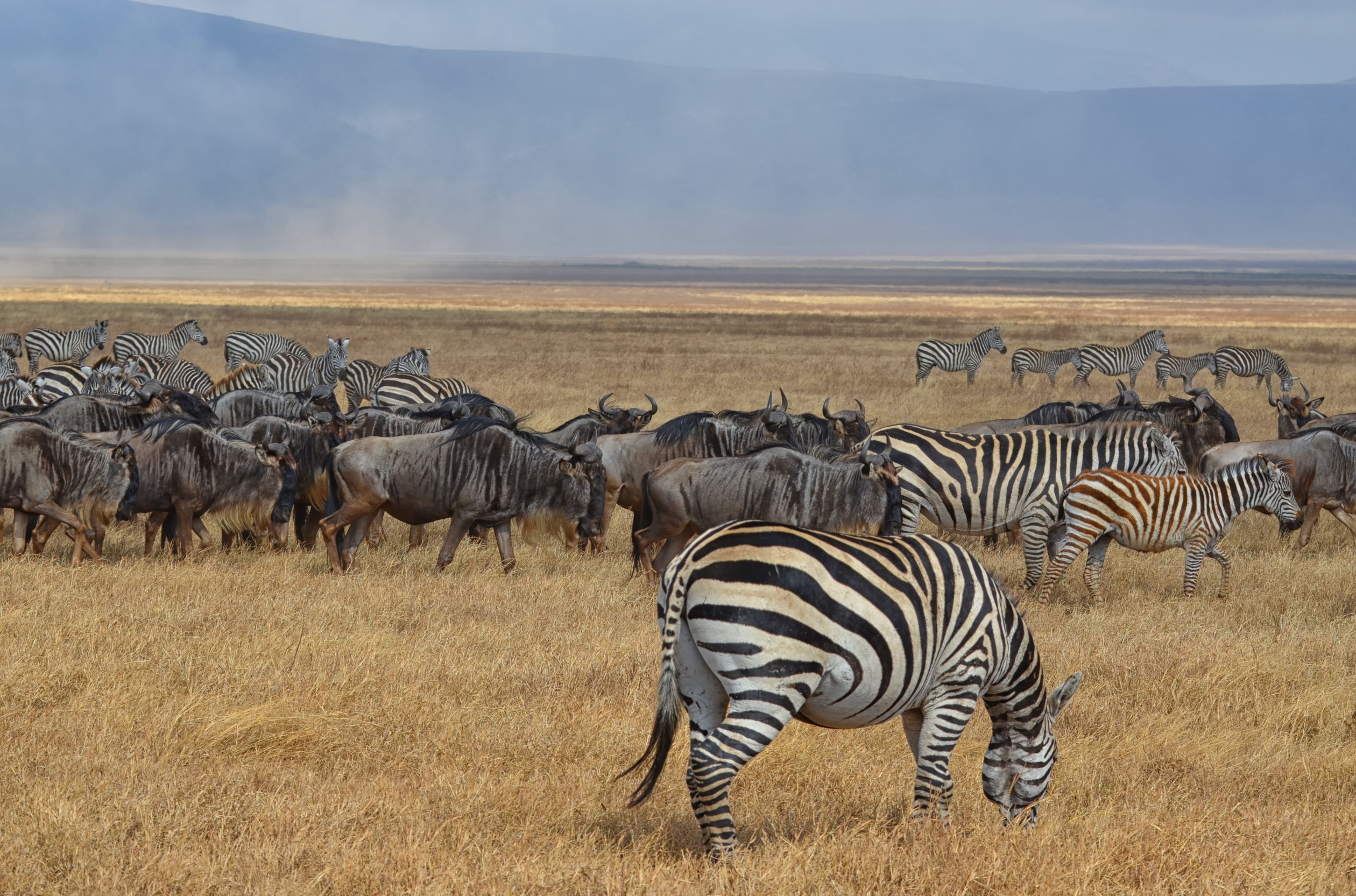
A 10-day Tanzania safari offers diverse experiences, typically combining the Northern Circuit (Serengeti, Ngorongoro, Tarangire, Manyara) with either cultural, adventure, or beach extensions. Popular options include focusing solely on premier wildlife parks or splitting time with Zanzibar beaches,
Popular 10 days Tanzania safari tour itineraries
10-days-perfect-tanzania-safari-itinerary
10-days-tanzania-wildlife-safari-and-optional-visit-to-masai-tribe-or-hadzabe
10-days-luxury-gorilla-trekking-masai-mara-serengeti-and-ngorongoro-crater
10-days-luxury-kenya-tanzania-safari-holiday-high-end-tour-package
10-days-best-tanzania-honeymoon-safari-with-3-days-zanzibar-beach-holidays
10-days-tanzania-safari-to-all-northern-circuit-safari-parks-expedition
10-days-best-tanzania-safari-tour-and-zanzibar-beach-holiday-itinerary
10-days-southern-tanzania-safari-to-nyerere-mikumi-ruaha-and-udzungwa-mountains
12-days-best-tanzania-and-kenya-safari-combo-itinerary
10-day Classic Northern Circuit and Zanzibar
This 10-day Classic Northern Circuit and Zanzibar safari is the definitive Tanzanian odyssey, seamlessly blending the raw adrenaline of the African savanna with the barefoot luxury of the Indian Ocean. Your journey begins in the heart of the "Safari Capital," Arusha, serving as the gateway to the world’s most iconic wilderness areas. You will traverse the baobab-studded landscapes of Tarangire, the emerald forests of Lake Manyara, and the endless plains of the Serengeti, before descending into the prehistoric amphitheater of the Ngorongoro Crater. This itinerary is meticulously designed to showcase the "Big Five" and the Great Migration in their most dramatic settings. After the dust of the bush, the adventure pivots to the spice-scented air and turquoise waters of Zanzibar. It is a journey of profound contrasts—from the thundering hooves of wildebeest to the rhythmic swaying of palms—offering a holistic Tanzanian experience that satisfies both the intrepid explorer and the soul seeking serenity.
Day 1: Arrival in Arusha and Safari Briefing
Your Tanzanian adventure begins in Arusha, the vibrant gateway nestled at the base of Mount Meru. Upon arrival at Kilimanjaro International Airport, you will be transferred to your boutique lodge, a tranquil sanctuary set amidst coffee plantations. The afternoon is dedicated to a comprehensive safari briefing with your expert driver-guide, who will outline the exciting days ahead and ensure your gear is ready for the bush. Depending on your arrival time, you may take a gentle stroll through the lush grounds or visit a local cultural center to admire Tanzanian art and craftsmanship. As the evening air cools, enjoy a farm-to-table welcome dinner, allowing you to acclimate to the "safari pace." The scent of blooming jasmine and the distant calls of tropical birds provide a serene backdrop as you prepare for tomorrow’s first foray into the wild.
Day 2: Tarangire National Park - The Land of Giants
After an early breakfast, you head toward Tarangire National Park, a landscape dominated by ancient, gnarled baobab trees and massive elephant herds. Tarangire is famous for having one of the highest concentrations of elephants in Africa, and you will likely see family groups congregating along the Tarangire River, the park’s primary lifeblood. As you traverse the golden savanna, keep an eye out for fringed-eared oryx and the long-necked gerenuk, species rarely found in other northern parks. The birdlife here is equally spectacular, with over 500 species recorded. Your afternoon game drive offers a chance to spot lions draped over tree branches or leopards hidden in the riverine forest. As sunset paints the sky in shades of amber, you will retreat to your lodge, falling asleep to the low trumpeting of elephants moving through the acacia woodland.
Day 3: Lake Manyara National Park - Forests and Flamingos
Today you explore Lake Manyara National Park, a gem often described as a "microcosm of the safari experience." The drive into the park begins through a lush groundwater forest, where baboons play in the road and blue monkeys leap through the mahogany trees. As the forest opens up, you reach the soda lake, its alkaline waters often shimmering with thousands of pink flamingos. Manyara is legendary for its tree-climbing lions, an unusual behavioral adaptation you will hope to witness in the ancient acacias. You will also see pods of hippos at the Simba River and large buffalo herds grazing on the floodplains. The park’s diverse habitats, ranging from steep escarpments to marshlands, ensure a high-density wildlife experience in a relatively small area, providing a visually stunning transition before heading toward the highlands of the Ngorongoro region.
Day 4: Into the Endless Plains of the Serengeti
Leaving the highlands behind, you descend toward the legendary Serengeti National Park, whose name means "Endless Plains" in the Maasai language. The drive itself is a spectacular transition, moving from the lush forest of the crater rim to the vast, short-grass plains of the south. Along the way, you may stop at a traditional Maasai Boma to learn about the ancient customs of these nomadic herders. As you enter the Serengeti through the Naabi Hill Gate, the horizon stretches infinitely, dotted only by granite kopjes (rock outcrops) that serve as lookout points for cheetahs and lions. This is the heart of the Great Migration territory; depending on the season, you may find yourself surrounded by hundreds of thousands of wildebeest and zebras. Your afternoon game drive is a masterclass in scale and biodiversity, concluding with a sunset over the African horizon.
Day 5: Full Day Exploration of the Serengeti
A full day in the Serengeti allows you to venture deeper into the central Seronera Valley or toward the river systems where wildlife is most abundant. This is the realm of the big cats; the Serengeti is perhaps the best place on Earth to witness a lion hunt or spot a leopard dragging its kill up a sausage tree. You will spend the morning tracking predators and the afternoon observing the intricate social behaviors of elephants and giraffes. For those seeking an unforgettable perspective, an optional dawn hot-air balloon safari offers a silent flight over the migrating herds as the sun rises. Whether watching a Nile crocodile bask on a riverbank or observing the frenetic energy of a hyena den, the day is an immersive dive into one of the most complex and pristine ecosystems remaining on our planet.
Day 6: Ngorongoro Crater - Africa’s "Eden"
At dawn, you depart the Serengeti for the final wildlife highlight: the Ngorongoro Crater. This collapsed caldera is a self-contained ecosystem housing over 25,000 large animals. You will descend 600 meters down the steep walls to the crater floor, where the density of wildlife is staggering. This is your best opportunity to see the endangered black rhino, completing your "Big Five" checklist. The crater floor features a soda lake teeming with flamingos, a fever tree forest, and open grasslands where lions and hyenas compete for prey. Because the walls act as a natural barrier, the animals here are less migratory, allowing for exceptional year-round sightings. After a picnic lunch on the crater floor, you will ascend the rim and drive toward a nearby lodge, reflecting on a world-class wildlife circuit before your transition to the island tomorrow.
Day 7: Flight to Zanzibar and Stone Town Heritage
Trade the dust of the savanna for the salt air of the Indian Ocean as you take a morning flight from the Seronera airstrip directly to Zanzibar. Upon arrival, you will be whisked away to Stone Town, a UNESCO World Heritage site and the cultural heart of the island. The afternoon is spent on a guided walking tour through its labyrinthine alleys, where the scent of cloves and cinnamon fills the air. You will marvel at the intricate carved wooden doors, visit the historic Slave Market, and see the House of Wonders. As the sun sets, Stone Town transforms; the Forodhani Gardens come alive with a night market offering fresh seafood skewers and Zanzibar pizzas. This evening is a rich immersion into the island's Swahili, Omani, and Indian heritage, providing a fascinating cultural prelude to your upcoming beach relaxation.
Day 8: Nungwi Beach and the Northern Coast
After a final breakfast in Stone Town, you will transfer north to the pristine shores of Nungwi. This region is famous for having some of the best beaches on the island, where the tide recedes only slightly, leaving the turquoise water accessible for swimming all day. Your afternoon is dedicated to pure relaxation on the powdery white sand. You can watch traditional dhow builders at work on the shore or visit the Baraka Natural Aquarium to see rescued sea turtles. As the evening approaches, the vibe in Nungwi becomes festive but laid-back. You might enjoy a cocktail at a beachfront bar as the sun sets over the ocean—a rare sight on the eastern coast of Africa—before a dinner of grilled lobster and tropical fruits under a canopy of stars. It is the quintessential tropical escape.
Day 9: Mnemba Atoll Snorkeling and Dhow Sailing
Today is an aquatic adventure as you board a traditional wooden dhow for a trip toward the Mnemba Atoll. This marine conservation area is renowned for its crystal-clear visibility and vibrant coral gardens. You will spend the morning snorkeling among schools of multicolored reef fish, and if luck is on your side, you may even spot wild dolphins playing in the waves. A fresh seafood lunch is served on the boat or a nearby sandbank, allowing you to soak in the stunning 360-degree views of the turquoise horizon. In the late afternoon, you sail back to Nungwi, the wind filling the lateen sail as you relax on deck. This day captures the essence of Zanzibar’s marine beauty, combining active exploration with the timeless, rhythmic pace of life on the Swahili Coast.
Day 10: Final Morning and Departure
On your final morning in paradise, enjoy a leisurely breakfast overlooking the ocean. Depending on your flight schedule, you may have time for one last dip in the warm waters of the Indian Ocean or a stroll along the beach to collect shells and memories. You will then be transferred back to Zanzibar International Airport for your departure flight. As you fly over the turquoise reefs and emerald islands of the archipelago, you carry with you the profound contrast of Tanzania: the raw, untamed power of the Serengeti plains and the tranquil, spice-scented elegance of Zanzibar. This 10-day journey concludes having offered the very best of East Africa’s natural and cultural wonders, leaving you with stories of lions and legends of the sea that will last a lifetime.
10-day "Best Of" Tanzania Highlights Safari
This 10-day "Best Of" Tanzania Highlights Safari is an intensive, deep-dive expedition into the most prolific wildlife sanctuaries on the planet. Designed for the serious naturalist and photographer, this circuit moves beyond the surface to explore the intricate ecosystems of the Northern Circuit. From the towering baobabs of Tarangire and the volcanic, flamingo-filled shores of Lake Natron to the prehistoric caldera of the Ngorongoro Crater, every day is a masterclass in biodiversity. The centerpiece of the journey is an extended, multi-day residency in the Serengeti, strategically positioned to track the thundering herds of the Great Migration wherever they may be. This is a journey of raw nature and unhurried observation, offering the time needed to witness predator-prey dynamics, rare avian species, and the majestic "Big Five." It is a high-impact, soul-stirring immersion into the untamed heart of East Africa, curated for those who believe that the best stories are found in the wild.
Day 1: Arrival and The Gateway to the Wild
Your Tanzanian odyssey begins in Arusha, the lush safari capital situated at the foot of Mount Meru. Upon arrival at Kilimanjaro International Airport, you will be met by your expert guide and transferred to your lodge. The first day is purposefully relaxed, allowing you to shake off the travel fatigue and acclimate to the African rhythm. In the afternoon, enjoy a detailed briefing where your guide will explain the migration’s current movement and fine-tune your tracking expectations. You may choose to visit a local coffee plantation or simply enjoy the birdlife in the lodge gardens. As the sun sets, a welcome dinner provides the perfect opportunity to discuss the days ahead. The crisp mountain air and the distant sounds of the bustling town fading into the night set the stage for your morning departure into the wilderness.
Day 2: Tarangire National Park - The Elephant Empire
After breakfast, you drive to Tarangire National Park, a rugged landscape dominated by ancient, gnarled baobab trees and the meandering Tarangire River. This park is world-renowned for its massive elephant herds, sometimes numbering in the hundreds. As you traverse the golden savanna, you will witness these "Gentle Giants" stripping bark from baobabs or bathing in the river. Tarangire is also a sanctuary for unique species like the fringe-eared oryx and the towering giraffes that browse the acacia canopies. Predators are never far away; lions and leopards often use the riverine forest for cover. The park’s birdlife is equally staggering, with over 500 species, including the colorful lilac-breasted roller. Your afternoon game drive concludes at a lodge overlooking the valley, where the sight of the sun setting behind prehistoric trees is truly iconic.
Day 3: Lake Manyara to the Rift Valley Escarpment
Today, you explore Lake Manyara National Park, a jewel nestled at the base of the Great Rift Valley escarpment. The park begins with a lush groundwater forest, home to playful baboon troops and blue monkeys. As you emerge onto the floodplains, the view opens to a shimmering alkaline lake often pink with thousands of flamingos. Manyara is legendary for its tree-climbing lions, which you will hunt for among the ancient umbrella acacias. You will also visit the hippo pool to watch these behemoths jostling for space. The park’s diverse habitats, from the steep escarpment to the hot springs (Maji Moto), ensure a high-density wildlife experience in a compact area. In the late afternoon, you ascend the escarpment to Karatu, enjoying panoramic views of the agricultural highlands and the forested rim of the Ngorongoro Conservation Area.
Day 4: Lake Natron - The Crimson Shoreline
Leaving the standard circuit behind, you head north through rugged, volcanic landscapes to the hauntingly beautiful Lake Natron. This is one of the most alkaline lakes in the world, situated at the base of Ol Doinyo Lengai, the "Mountain of God." Natron is the only regular breeding ground in East Africa for 2.5 million lesser flamingos, who thrive in the caustic environment. The sight of thousands of crimson-winged birds against the stark, salt-crusted mudflats is surreal. You will take a guided walk to the lake's edge and perhaps hike to the nearby Engare Sero waterfalls for a refreshing swim in a natural palm-fringed pool. The stark beauty and dramatic geology of this region offer a powerful contrast to the lush parks visited previously, highlighting the geological forces that shaped the Rift Valley.
Day 5: Journey to the Serengeti - The Great Plains
Today is a scenic transition as you drive toward the legendary Serengeti National Park. Entering through the less-traveled northeastern gates, you will witness the landscape transform into the "endless plains" that define the park’s name. This is an incredible day for spotting cheetahs, who favor the wide-open horizons for their high-speed hunts. As you reach the central Seronera region, the density of big cats increases significantly. Leopards are frequently found draped over the limbs of sausage trees along the Seronera River, while pride after pride of lions claim the granite kopjes as their lookout points. You will arrive at your luxury tented camp in the heart of the park by sunset, falling asleep to the distant, rhythmic "whoop" of hyenas and the rustle of the wind across the tall grass.
Day 6: Serengeti Deep Exploration - Tracking the Herds
This full day is dedicated to a deep exploration of the Serengeti’s wilderness. Depending on the time of year, your guide will navigate toward the "Migration Hub"—be it the southern calving grounds or the northern river crossings. Being in the presence of the Great Migration is a sensory overload; the air is thick with the sound of thousands of lowing wildebeest and the dust of their hooves. You will observe the complex social structures of the herds and the opportunistic predators that follow them. Beyond the migration, you will seek out the "Small Five" and the park’s diverse birdlife. Lunch is often a picnic under a lone acacia tree, allowing you to maximize your time in the field. Every turn of the trail offers a new drama, from a mother cheetah teaching her cubs to hunt to a massive elephant bull crossing your path.
Day 7: Serengeti - Predator and Prey Dynamics
Continuing your intensive focus on the Serengeti, today explores the predator-prey dynamics that make this park a world heritage site. You will head out at dawn, the best time to see lions returning from a night hunt or a leopard stealthily dragging its kill into the safety of a tree. The morning light provides perfect conditions for photography, highlighting the golden coats of the cats against the green and gold plains. You will visit different "kopjes"—the massive rock outcrops that act as islands of biodiversity in the sea of grass—which are often home to rock hyraxes and elusive caracals. The afternoon might be spent near the Mara or Grumeti rivers, observing hippos and crocodiles. The day is unhurried, allowing for long observations of animal behavior, ensuring you capture the true essence of life in the Serengeti.
Day 8: Serengeti to Ngorongoro Highlands
After a final morning game drive in the Serengeti, where you might catch a glimpse of a rare rhino or a pack of wild dogs, you begin your journey toward the Ngorongoro Highlands. The drive back toward the crater rim is a spectacular ascent, with the vegetation changing from dry savanna to lush montane forest. You will stop at the Olduvai Gorge, the "Cradle of Mankind," where the Leakey family discovered some of the earliest human remains. Standing on the edge of the gorge provides a profound sense of history and our place in the natural world. Arriving at the crater rim in the late afternoon, you will be treated to one of the most breathtaking views in Africa: the vast, circular floor of the caldera shimmering 600 meters below. The evening is spent in the cool, misty air of the highlands.
Day 9: The Ngorongoro Crater - Africa's Eden
At sunrise, you descend the steep walls into the Ngorongoro Crater, a collapsed volcano that now serves as a self-contained Eden. The density of wildlife here is unparalleled, with over 25,000 large mammals living within its walls. This is your best chance to spot the endangered black rhino, completing your "Big Five" list. You will explore the Magadi soda lake, home to flamingos, and the Lerai forest, where elephants with massive tusks wander through the fever trees. The crater’s lions are famously relaxed around vehicles, allowing for incredibly close encounters. After a picnic lunch on the crater floor near the hippo pool, you will spend the afternoon tracking the many hyena clans and golden jackals that roam the plains. As you ascend the rim in the late afternoon, you carry with you memories of the most concentrated wildlife viewing on earth.
Day 10: Final Morning and Return to Arusha
On your final day, you will enjoy a relaxed breakfast overlooking the lush highlands. Depending on your flight schedule, you may visit the Mto wa Mbu village for a cultural walk through the banana plantations and local markets, providing a glimpse into the diverse cultures of Tanzania’s many tribes. This is a great opportunity to pick up high-quality Tanzanian crafts or batik fabrics as souvenirs. You will then continue the drive back to Arusha, arriving in time for a farewell lunch. Your guide will transfer you to Kilimanjaro International Airport for your departure. As you fly over the majestic peaks of Mount Kilimanjaro, you look down upon the plains and craters you’ve explored, concluding an intensive 10-day journey that has revealed the absolute best of Tanzania’s natural heritage and untamed spirit.
10-day Northern Circuit Adventure and Culture
This 10-day Northern Circuit Adventure and Culture safari is a soul-stirring odyssey that transcends the typical wildlife viewing experience, weaving together the raw power of the Tanzanian wilderness with the vibrant heritage of its people. Starting in the "Safari Capital" of Arusha, this journey explores the iconic landscapes of Tarangire, Lake Manyara, and the legendary Serengeti. However, the true heartbeat of this itinerary lies in its cultural depth. You will move beyond the binocular lens to stand in a traditional Maasai Boma, walk the volcanic shores of the crimson Lake Natron, and engage with communities that have lived in harmony with the "Big Five" for centuries. This circuit is designed for the traveler who seeks a holistic connection to East Africa—where the thundering hooves of the Great Migration are balanced by the rhythmic chants of ancient tribes and the breathtaking geology of the Great Rift Valley. It is an immersive, high-impact adventure into the wild and the human spirit.
Day 1: Arrival in Arusha and Cultural Warm-up
Your Tanzanian journey begins in Arusha, the gateway to the northern safari circuit. Upon arrival at Kilimanjaro International Airport, you will be transferred to your boutique lodge, a tranquil oasis nestled within a lush coffee plantation. After a brief orientation, the afternoon is dedicated to a gentle cultural warm-up. You may choose to visit a local vibrant market or a community-run craft center where Tanzanian artisans create intricate beadwork and woodcarvings. This initial immersion provides a sensory introduction to the colors, scents, and hospitality of the region. As the sun sets over Mount Meru, enjoy a welcome dinner featuring locally sourced ingredients, allowing you to settle into the safari rhythm. The evening air, filled with the scent of blooming frangipani, sets a serene tone for the grand expedition that begins tomorrow morning.
Day 2: Tarangire’s Giants and Ancient Baobabs
Today you drive to Tarangire National Park, a rugged landscape dominated by prehistoric baobab trees and the meandering Tarangire River. This park is world-renowned for its massive elephant herds, and you will witness these "Gentle Giants" stripping bark from trees or bathing in the riverbeds. Beyond the wildlife, the afternoon includes a visit to a neighboring village to see how the local community coexists with these wandering titans. You will learn about innovative conservation projects, such as "bee-hive fences" used to deter elephants from crops. Back in the park, keep an eye out for tree-climbing pythons and the rare fringe-eared oryx. As the golden hour bathes the savanna, you will retreat to your tented camp, falling asleep to the distant trumpeting of elephants and the rustle of the dry acacia woodland.
Day 3: Lake Manyara and the Great Rift Valley
After breakfast, you explore Lake Manyara National Park, a jewel nestled at the foot of the dramatic Rift Valley escarpment. The day begins in a lush groundwater forest, home to playful baboons and blue monkeys. As the canopy opens, you reach the soda lake, shimmering with thousands of pink flamingos. Manyara is legendary for its tree-climbing lions, an unusual behavioral adaptation you will hope to witness in the ancient acacias. The park’s diverse habitats, from the marshlands to the hot springs, ensure a high-density wildlife experience. In the afternoon, you ascend the escarpment to the town of Mto wa Mbu. Here, you will take a guided cultural walk through local farms and milling stations, seeing how over 120 Tanzanian tribes live side-by-side in harmony, creating a unique melting pot of Swahili culture.
Day 4: Journey to the Crimson Shores of Lake Natron
Leaving the main safari trail, you head north through a striking volcanic landscape toward Lake Natron. This remote area, situated at the base of the active volcano Ol Doinyo Lengai, offers some of the most dramatic scenery in Africa. Lake Natron is the primary breeding ground for 2.5 million lesser flamingos, who thrive in its highly alkaline, caustic waters. The sight of thousands of crimson-winged birds against the salt-crusted mudflats is surreal and hauntingly beautiful. In the afternoon, you will take a guided walk to the lake's edge with a local guide who explains the unique geology and ecology of the region. You will also hike to the nearby Engare Sero waterfalls, where you can take a refreshing swim in natural pools, a perfect contrast to the stark, sun-baked beauty of the surrounding rift valley.
Day 5: Maasai Heritage at the Foot of the Volcano
Today is dedicated to deep cultural immersion with the Maasai people of the Natron region. Because of its remote location, the communities here have preserved many of their ancient traditions. You will spend the morning at a traditional Maasai Boma, participating in daily activities such as livestock herding and learning about the intricate social structures of the tribe. You may witness a traditional jumping dance or learn about the medicinal properties of local plants used by the elders. The afternoon offers a scenic walk across the plains, where the silhouette of Ol Doinyo Lengai, the "Mountain of God," dominates the horizon. This day provides a profound understanding of how the Maasai have adapted to one of the most extreme environments on Earth, maintaining a spiritual and practical bond with their ancestral lands.
Day 6: Into the Serengeti - The Endless Plains
You depart the volcanic north and head toward the legendary Serengeti National Park. Entering through the northeastern gate, you will see the landscape transform into the vast, short-grass plains that define the park’s name. This is an incredible day for spotting cheetahs, who favor the wide horizons for their high-speed hunts. As you reach the central Seronera region, the density of big cats increases; lions claim the granite kopjes as lookout points, while leopards draped over sausage trees watch the plains below. This is the heart of the Great Migration territory, and depending on the season, you may find yourself in the midst of thousands of wildebeest and zebras. You will arrive at your luxury tented camp by sunset, experiencing the raw, untamed essence of the African wilderness under a blanket of stars.
Day 7: Full Day Serengeti Exploration
A full day in the Serengeti allows you to venture deeper into the wilderness to track the Great Migration. Your expert guide will navigate the river systems and hidden valleys where wildlife is most abundant. You will witness the complex social behaviors of elephant families and the intense predator-prey dynamics that make the Serengeti a World Heritage site. Beyond the "Big Five," the park’s birdlife is staggering, with over 500 species recorded. For a truly unforgettable perspective, you may opt for a dawn hot-air balloon safari, gliding silently over the migrating herds as the sun rises. Whether watching a lion pride on a kill or observing a mother cheetah with her cubs, the day is an immersive dive into one of the most pristine and complex ecosystems remaining on our planet.
Day 8: Olduvai Gorge and the Ngorongoro Highlands
Leaving the Serengeti, you travel toward the Ngorongoro Highlands, stopping at the historic Olduvai Gorge. Known as the "Cradle of Mankind," this site is where the Leakey family discovered some of the earliest human remains, dating back millions of years. A visit to the onsite museum provides a profound look at human evolution and our origins in East Africa. From the gorge, the drive ascends into the lush, misty montane forest of the Ngorongoro Conservation Area. The air becomes crisp and the vegetation turns a deep, vibrant green. In the afternoon, you will visit a Maasai Boma situated on the crater rim. This encounter is unique because it highlights how the Maasai live within a protected conservation area, balancing their traditional pastoralist lifestyle with the proximity of world-class wildlife.
Day 9: The Ngorongoro Crater - Africa’s Eden
At dawn, you descend 600 meters into the Ngorongoro Crater, a collapsed caldera that now serves as a self-contained Eden. The density of wildlife here is unparalleled, with over 25,000 large mammals living within its natural walls. This is your best opportunity to spot the endangered black rhino, completing your "Big Five" checklist. You will explore the Magadi soda lake, home to flamingos, and the Lerai forest, where massive "tusker" elephants wander through the fever trees. The crater’s lions are famously relaxed, allowing for incredibly close encounters. After a picnic lunch on the crater floor near the hippo pool, you will spend the afternoon tracking hyenas and golden jackals. As you ascend the rim in the late afternoon, you carry with you memories of the most concentrated wildlife viewing on Earth.
Day 10: Karatu Markets and Return to Arusha
On your final day, you will enjoy a relaxed breakfast overlooking the lush agricultural highlands of Karatu. Before heading back to Arusha, you will visit the local Karatu market, a bustling hub where farmers sell fresh produce and colorful textiles. This is an excellent opportunity to pick up high-quality Tanzanian coffee or hand-woven baskets as souvenirs. The drive back to Arusha offers final views of the Rift Valley escarpment and the rolling hills of the north. You will arrive in Arusha for a farewell lunch, where you can reflect on your 10-day journey of wildlife and culture. Your guide will kemudian transfer you to the airport for your departure. As you fly over the majestic Mount Kilimanjaro, you conclude a journey that has touched both the wild heart of Africa and its ancient human heritage.
10-day Remote South and Wild Interior
This 10-day Remote South and Wild Interior safari is a sophisticated expedition into Tanzania’s least-trodden wilderness, where the scale of the landscape is matched only by the sense of absolute isolation. Shifting away from the crowded northern tracks, this journey plunges into the heart of the Southern Circuit—a realm of ancient baobabs, sand rivers, and palm-fringed lagoons. You will begin in the sprawling Nyerere National Park (formerly Selous), a UNESCO World Heritage site where the Rufiji River offers a rare theater for boat safaris among hippos and crocodiles. The adventure then pivots to the rugged, sun-baked terrain of Ruaha National Park, famous for its massive elephant populations and fierce predator-prey dynamics. This itinerary is curated for the "safari purist" who values the raw, unscripted beauty of the bush. It is an immersive experience where the silence is broken only by the roar of a lion or the splash of an oarsman, offering a profound connection to Africa’s last true frontiers.
Day 1: Arrival in Dar es Salaam and Coastal Transition
Your journey begins in the bustling coastal metropolis of Dar es Salaam, the gateway to the southern wilderness. Upon arrival at Julius Nyerere International Airport, you will be met and transferred to a quiet, beachfront hotel away from the city center. The afternoon is designed for transition; you can walk along the shores of the Indian Ocean or enjoy a fresh seafood dinner as the tropical breeze sets in. Your guide will provide a detailed briefing on the remote regions ahead, emphasizing the unique "fly-in" logistics of the Southern Circuit. The humid, salt-scented air and the rhythmic sound of the waves provide a relaxing prelude to the rugged interior. As you prepare for your bush flight tomorrow, the urban energy of Dar es Salaam fades, replaced by the anticipation of the vast, untamed horizons of the south.
Day 2: Fly into Nyerere National Park (Selous)
At dawn, you board a light aircraft for a scenic flight over the coastal forests and into the heart of Nyerere National Park. Spanning over 30,000 square kilometers, this is one of the largest protected areas in Africa. As you land on a bush airstrip, the scale of the wilderness becomes immediately apparent. You will be transferred to your luxury tented camp situated on the banks of the Rufiji River. After a refined lunch, you embark on your first game drive through the riverine woodlands. Unlike the open plains of the north, the terrain here is a mosaic of tall grass, Borassus palms, and dense thickets. You might spot your first pride of lions or a herd of Giraffes moving gracefully through the palms before returning to camp for a sundowner overlooking the water.
Day 3: Boat Safari on the Great Rufiji River
Today offers one of the most unique experiences in Tanzania: a boat safari. Navigating the intricate channels and lagoons of the Rufiji River allows you to see wildlife from a completely different perspective. You will drift past massive pods of hippos and enormous Nile crocodiles basking on the sandbanks. The river is a magnet for life; elephants often come down to the water’s edge to drink and bathe, seemingly indifferent to the boat. For birdwatchers, the river is a paradise, featuring African Skimmers, Kingfishers, and the elusive Pel's Fishing Owl. The quiet movement of the boat ensures an intimate connection with the aquatic ecosystem. In the afternoon, a walking safari led by an armed ranger provides a thrilling chance to track wildlife on foot, learning the subtle art of reading tracks and dung.
Day 4: Deep Exploration of the Beho Beho Area
You head inland today to explore the Beho Beho region, an area characterized by open grasslands and volcanic hot springs. This region is famous for its high concentration of predators, particularly lions and the rare African Wild Dog. Nyerere National Park remains one of the last strongholds for these highly social "painted wolves," and tracking them through the bush is a highlight for any safari enthusiast. You will also visit the grave of Frederick Courtney Selous, the legendary explorer after whom the reserve was originally named. The landscape here is diverse, offering panoramic views of the Stiegler’s Gorge and the winding river below. Your guide will explain the complex ecology of the reserve, from the seasonal flooding patterns to the migratory habits of the local herbivores, concluding with a picnic lunch in the shade of a mahogany tree.
Day 5: Lake Tagalala and the Hot Springs
Today is a journey to Lake Tagalala, one of the many oxbow lakes that dot the landscape. The lake is a focal point for wildlife during the dry season, attracting large numbers of waterbuck, impala, and buffalo. After a morning game drive around the lake’s perimeter, you will take a short hike to the nearby natural hot springs. Hidden within a lush ravine, these thermal pools offer a therapeutic soak in crystal-clear water surrounded by the sounds of the forest. It is a surreal experience to relax in a hot spring in the middle of a wild game reserve. The afternoon is spent exploring the woodlands for leopards, which favor the dense branches of the trees lining the dry riverbeds. As evening falls, the "night chorus" of frogs and insects begins, echoing through the palms.
Day 6: Transition Flight to Ruaha National Park
You trade the lush riverine landscapes of Nyerere for the rugged, arid beauty of Ruaha National Park. After a final morning game drive and breakfast, you board a bush flight heading west. As the aircraft gains altitude, you witness the landscape change from the green Rufiji basin to the red soil and dramatic escarpments of the Great Rift Valley. Ruaha is a "transition zone" where Eastern and Southern African species overlap, creating a unique biodiversity. Upon arrival at the airstrip, you are met by a new team and driven to your camp. The air here is drier and the heat more intense, dominated by the iconic silhouettes of ancient baobab trees. Your evening game drive introduces you to the Great Ruaha River, the lifeblood of this harsh but beautiful interior.
Day 7: The Land of Baobabs and Elephants
Ruaha is famous for its staggering elephant population, and today you will witness these "architects of the landscape" in their thousands. The park is characterized by its massive, ancient baobab trees, many of which bear the scars of elephants searching for moisture in their bark. You will spend the day exploring the central river circuit, where the sand rivers (mbugas) provide a dramatic stage for wildlife. Because water is scarce, the concentration of animals along the remaining pools is incredible. You will see large herds of buffalo and the rare Greater and Lesser Kudu, species that are difficult to find in the northern parks. The scale of Ruaha is humbling; it is a park where you can drive for hours without seeing another vehicle, heightening the sense of a private, untamed Africa.
Day 8: Tracking the Super-Prides of Ruaha
Ruaha is home to some of the largest lion prides in Africa, sometimes numbering over 20 individuals. Today is dedicated to tracking these "super-prides" as they navigate the rocky outcrops and riverbeds. Because the buffalo herds are so large, the lions here have adapted to hunt in formidable groups. You will also keep a sharp eye out for leopards in the riverine forests and cheetahs on the open plains. The predator-prey dynamics in Ruaha are raw and visible; your guide will help you interpret the alarm calls of monkeys and birds to locate the cats. In the afternoon, you may visit a "hide" near a waterhole, allowing for silent, stationary observation as animals come to drink. The harsh, golden light of Ruaha provides a stunning palette for photographers seeking to capture the grit of the African bush.
Day 9: Walking Safari and the Mwagusi Sand River
At dawn, you step out of the vehicle for a guided walking safari along the Mwagusi Sand River. Walking in Ruaha is a sensory awakening; you feel the heat of the sand, smell the wild sage, and hear the crunch of dry leaves underfoot. Without the engine's noise, the bush becomes a textbook of small wonders—from ant lions to the intricate nests of weaver birds. Your armed ranger will teach you the safety protocols of walking in "big game" country. In the afternoon, you explore the seasonal marshes, which remain green long after the rains have stopped, attracting a variety of birdlife and grazers. This final full day in the interior is about unhurried observation, soaking in the silence and the vastness of a landscape that remains largely unchanged by the modern world.
Day 10: Final Sunrise and Flight to Dar es Salaam
On your final morning in the wild interior, you head out for a sunrise game drive. The early light catches the red dust and the silvery trunks of the baobabs, creating a hauntingly beautiful farewell. You might have one last encounter with a pride of lions or a solitary bull elephant before heading to the airstrip. The flight back to Dar es Salaam offers a last look at the Ruaha escarpment and the sprawling Nyerere wilderness from above. Upon arrival in the city, you will be transferred to the airport for your international departure or a day room to refresh. You leave the Southern Circuit with a sense of having witnessed Africa’s "best-kept secret"—a remote, wild, and deeply authentic safari experience that few travelers ever have the privilege to see.
10-day Chimpanzee and Plains Safari
This 10-day Chimpanzee and Plains Safari is a high-contrast expedition that bridges the gap between Africa’s most celebrated savanna and its most intimate forest laboratories. The journey begins on the vast, "endless plains" of the Serengeti and the prehistoric floor of the Ngorongoro Crater, where the sheer volume of "Big Five" wildlife provides a grand introduction to Tanzania’s natural power. However, the soul of this itinerary lies in its second act: a flight to the remote western frontier to visit Gombe Stream National Park. Here, on the shores of Lake Tanganyika, the perspective shifts from the vehicle to the forest floor as you trek in the footsteps of Jane Goodall. It is a rare opportunity to witness the complex social lives of chimpanzees in their ancestral home, offering a profound emotional connection that serves as the perfect, primate-focused counterpoint to the thundering herds of the Serengeti savanna.
Day 1: Arrival in Arusha and Safari Briefing
Your journey begins in Arusha, the "Safari Capital" located at the foot of Mount Meru. Upon arrival at Kilimanjaro International Airport, you will be transferred to your boutique lodge nestled within a lush coffee estate. After a refreshing afternoon, you will meet your expert guide for a detailed briefing. This is the time to discuss the logistics of transitioning from the savanna to the rainforest later in the week. Enjoy a quiet welcome dinner featuring local Tanzanian coffee and organic produce. The cool highland air and the distant calls of tropical birds provide a serene atmosphere as you prepare for tomorrow’s departure into the wild heart of the Northern Circuit. The excitement of the "Big Five" begins here, in the shadow of Tanzania’s second-highest peak.
Day 2: Tarangire National Park - The Land of Giants
After an early breakfast, you head toward Tarangire National Park, a landscape defined by ancient, gnarled baobab trees and massive elephant herds. Tarangire is world-renowned for its elephant density, and you will likely see family groups stripping bark from baobabs or congregating along the Tarangire River. As you traverse the golden savanna, look for the unique fringe-eared oryx and the long-necked gerenuk. Predators like lions and leopards often use the riverine thickets for cover. The park’s birdlife is equally staggering, with over 500 species recorded. Your afternoon game drive concludes at a lodge overlooking the valley, where the sight of the sun setting behind prehistoric silhouettes is truly iconic. This "Land of Giants" provides a powerful introduction to the raw scale of the Tanzanian wilderness.
Day 3: Ngorongoro Crater - Africa’s "Eden"
At dawn, you depart for the Ngorongoro Crater, a collapsed caldera that now serves as a self-contained ecosystem. You will descend 600 meters down the steep walls to the crater floor, where the density of wildlife is unparalleled. This is your best opportunity to spot the endangered black rhino, completing your "Big Five" checklist. The crater floor features a soda lake shimmering with flamingos, a fever tree forest, and open grasslands where lions and hyenas compete for prey. Because the walls act as a natural barrier, the animals here are less migratory, allowing for exceptional year-round sightings. After a picnic lunch on the crater floor near the hippo pool, you will ascend the rim and drive toward the Serengeti, reflecting on a world-class wildlife circuit before reaching the "Endless Plains."
Day 4: Into the Serengeti - The Great Migration
Leaving the highlands, you descend toward the legendary Serengeti National Park. The drive is a spectacular transition, moving from the lush forest of the crater rim to the vast, short-grass plains. As you enter through the Naabi Hill Gate, the horizon stretches infinitely, dotted only by granite kopjes that serve as lookout points for cheetahs. This is the heart of the Great Migration territory; depending on the season, you may find yourself surrounded by hundreds of thousands of wildebeest and zebras. Your afternoon game drive is a masterclass in scale and biodiversity. You will track predators following the herds and witness the relentless energy of the savanna. By sunset, you arrive at your luxury tented camp, falling asleep to the rhythmic "whoop" of hyenas across the plains.
Day 5: Full Day Serengeti Exploration
A full day in the Serengeti allows you to venture deeper into the central Seronera Valley or toward the river systems where wildlife is most abundant. This is the realm of the big cats; the Serengeti is arguably the best place on Earth to witness a lion hunt or spot a leopard dragging its kill up a sausage tree. You will spend the morning tracking predators and the afternoon observing the intricate social behaviors of elephants and giraffes. For an unforgettable perspective, you might opt for a dawn hot-air balloon safari, gliding silently over the migrating herds as the sun rises. Whether watching a Nile crocodile bask on a riverbank or observing the high-speed pursuit of a cheetah, the day is an immersive dive into the world’s most pristine ecosystem.
Day 6: Flight to Kigoma and Lake Tanganyika
Today, the pace of the safari shifts dramatically. You will take a morning flight from a Serengeti airstrip across the vast interior of Tanzania to Kigoma, a historic port town on the shores of Lake Tanganyika. This is one of the deepest and oldest lakes in the world, containing roughly 17% of the Earth's fresh water. Upon arrival, you will board a private boat for a scenic trip along the coast to Gombe Stream National Park. This park is famous as the site where Jane Goodall began her pioneering research on chimpanzees in 1960. You will check into your forest lodge, located right on the lakeshore. The evening is spent listening to the sounds of the forest meeting the water, a stark and beautiful contrast to the dry savanna.
Day 7: Chimpanzee Trekking in Gombe Stream
The day begins with a briefing from park rangers before you head into the steep, forested valleys of Gombe. The trek is physically demanding but incredibly rewarding as you track the "Kasekela" chimpanzee community. Unlike the distant viewing in the savanna, the forest offers intimate encounters; you will observe the chimps grooming, foraging, and interacting with a level of social complexity that is strikingly human. The rangers will help you identify individual chimpanzees and explain their social hierarchy. After the trek, you can visit "Jane’s Peak," where Goodall used to sit and observe the park. The afternoon offers a chance to cool off with a swim in the crystal-clear waters of Lake Tanganyika, surrounded by the towering mountains of the rift valley escarpment.
Day 8: Forest Biodiversity and Primates
While the chimpanzees are the primary draw, Gombe is a haven for other primates and forest wildlife. Today, you will explore the higher ridges and valley floors to spot Olive baboons, Red-tailed monkeys, and Blue monkeys. The birdlife here is also distinct from the savanna, featuring forest specialists like the Ross's turaco and the Peter's twinspot. Your guide will point out the unique flora of the park, including ancient medicinal plants used by both humans and primates. In the afternoon, you might take a boat trip to a neighboring fishing village to learn about the local "Ha" culture and the community conservation efforts that protect the park. The day concludes with a sunset dinner on the beach, reflecting on the profound connection between humans and our closest living relatives.
Day 9: Return to Kigoma and Cultural History
After a final morning forest walk to soak in the sights and sounds of the jungle, you will board the boat for the return journey to Kigoma. The afternoon is dedicated to exploring the history of this unique region. You will visit the Ujiji Cultural Center, the site of the famous 1871 meeting between Henry Morton Stanley and Dr. David Livingstone (marked by the legendary phrase, "Dr. Livingstone, I presume?"). The town’s blend of Swahili, Arab, and European history provides a fascinating cultural backdrop to the natural wonders you have seen. You will also see the traditional dhow-building yards along the shore. The evening is spent at a lakeside hotel, watching the "lights of the lake"—the lanterns of hundreds of small fishing boats that look like a floating city.
Day 10: Final Morning and Departure
On your final morning, you can enjoy a leisurely breakfast overlooking the vast expanse of Lake Tanganyika, perhaps spotting a few last monkeys in the trees near the hotel. Depending on your flight schedule, you might visit a local market to pick up unique western Tanzanian crafts or textiles. You will then be transferred to Kigoma Airport for your flight back to Dar es Salaam or Kilimanjaro for your international departure. As you fly back over the mountains and plains, you carry with you the ultimate Tanzanian contrast: the raw, epic power of the Serengeti’s "Big Five" and the intimate, life-changing experience of standing in the presence of the chimpanzees of Gombe. It is a dual perspective on the natural world that few travelers ever witness.
1. What are the top five 10-day itinerary ideas for a comprehensive Tanzania safari tour in 2026?
For a comprehensive experience in 2026, the top five 10-day itineraries focus on balancing diversity, depth, and the specific seasonal movements of wildlife. The first and most popular is the Classic Northern Circuit & Zanzibar, which splits time between the big game of the Serengeti/Ngorongoro and the white sands of the coast. The second is the Intensive Northern Circuit, a dedicated wildlife route that avoids the beach to spend more time in Tarangire, Lake Manyara, and both the Central and Northern Serengeti. This is ideal for photography enthusiasts who want to maximize "eyes-on-prey" time.
The third option is the Remote Southern Circuit, focusing on Nyerere National Park (formerly Selous) and Ruaha. This is the "connoisseur’s choice" for 2026, offering vast wilderness with far fewer vehicles than the north. Fourth is the Adventure & Culture Route, which integrates the Serengeti with Lake Natron and Lake Eyasi, providing a mix of volcanic scenery and encounters with the Hadzabe and Maasai tribes. Finally, the Western Frontier Expedition is a specialized route flying into Mahale or Gombe for chimpanzee trekking, combined with Katavi for raw, visceral savanna action.
In 2026, infrastructure improvements and new boutique lodges make these routes more accessible than ever. When choosing, consider that the "Classic" route provides the best "overview," while the "Remote Southern" route offers the most exclusivity. The "Western" route is the most expensive due to flight logistics but provides the most unique primate encounters. Regardless of the choice, a 10-day window is the perfect duration to move beyond a "rushed" schedule and actually immerse yourself in the rhythm of the African bush.
2. How should I structure a 10-day safari to balance Tarangire, Serengeti, and Ngorongoro Crater efficiently?
Efficiency on a 10-day safari is about "front-loading" the shorter drives and "deep-diving" into the remote areas. A highly efficient structure begins with one night in Arusha to recover from international travel. On Day 2, drive to Tarangire National Park for two nights. Starting here is smart because it’s the closest major park to Arusha and provides an immediate "wow" factor with its massive elephant herds and baobab trees.
On Day 4, move to Lake Manyara for a day or proceed directly to the Ngorongoro Highlands. Spend one night on the Crater Rim or in nearby Karatu. This allows you to descend into the Ngorongoro Crater at dawn on Day 5, beating the crowds and maximizing your chance to see black rhinos. After the crater tour, drive toward the Serengeti. By Day 6, you are in the heart of the Serengeti, where you should spend at least three to four nights.
To maximize efficiency, you should fly out of a Serengeti airstrip (like Seronera or Kogatende) back to Arusha or Zanzibar on Day 10. This "one-way" strategy saves you a grueling 8-hour return drive over bumpy roads, giving you an extra day of wildlife viewing instead of travel. By spending the bulk of your time in the Serengeti, you respect the scale of the park, while the earlier stops in Tarangire and Ngorongoro ensure you’ve checked off the "Big Five" before you even reach the endless plains.
3. Is it better to focus only on Tanzania or include Kenya for a 10-day itinerary?
For a 10-day window, it is almost always better to focus exclusively on Tanzania. While the prospect of "checking off" two countries is tempting, the logistical reality often detracts from the quality of the experience. Combining the two involves either a long road transfer through border crossings like Namanga or Isebania—which can take hours of administrative waiting—or expensive regional flights that eat into your mid-day game-viewing time.
Tanzania’s Northern Circuit (Serengeti, Ngorongoro, Tarangire) is vast enough that you could spend 20 days there and still feel you’ve missed something. By staying in one country, you reduce the time spent on visas, health checks, and airport transfers, allowing for a more "immersive" pace. You can spend four nights in the Serengeti rather than rushing through it in two nights to reach the Masai Mara. Furthermore, the Serengeti is actually seven times larger than the Masai Mara; focusing on Tanzania gives you access to a much wider variety of habitats and migration stages.
The only scenario where a split makes sense is if your 10-day trip falls during the August–September period and you want to see the Mara River crossings from both sides. However, even then, the Tanzanian side of the river (the Lamai Wedge) offers a spectacular view of the same event with fewer crowds. By focusing on Tanzania, you also simplify your "Park Fee" structure and keep your guide relationship consistent throughout the journey, which often leads to better wildlife tracking results.
4. What is the recommended route to minimize driving time on a 10-day Northern Tanzania circuit?
The "Golden Rule" for minimizing driving time in Northern Tanzania is the "Drive-In, Fly-Out" circuit. This route avoids the repetitive "back-tracking" that plagues many budget itineraries. Start your journey by driving from Arusha to Tarangire (approx. 2.5 hours). From Tarangire, it is a short 1-hour jump to the Lake Manyara region or Karatu.
The most efficient flow is: Arusha → Tarangire (2 nights) → Ngorongoro/Karatu (1 night) → Central Serengeti (3 nights) → Northern or Western Serengeti (3 nights) → Fly back to Arusha. By moving deeper into the Serengeti in stages, you ensure that no single drive exceeds 4 or 5 hours. Once you reach the far reaches of the Serengeti—where the best migration action often happens—you simply board a light aircraft at a local airstrip for a 1-hour flight back to Arusha’s domestic airport.
Another way to minimize time in the vehicle is to skip Lake Manyara if you are already doing Tarangire and Ngorongoro, as the latter two provide more reliable big-game sightings. This allows you to head straight to the Serengeti sooner. Additionally, choosing lodges located inside the park boundaries rather than at the gates can save up to 90 minutes of transit time per day. In the Serengeti, "mobile camps" that move with the migration are the most time-efficient, as they ensure the wildlife is literally on your doorstep, eliminating long "commutes" to find the herds.
5. How many nights should I spend in the Serengeti during a 10-day Tanzanian safari tour?
In a 10-day itinerary, you should ideally spend at least four to five nights in the Serengeti. The Serengeti is the centerpiece of the Tanzanian experience; it is a massive ecosystem where wildlife is spread out across different "sectors." Spending only two nights (a common mistake) results in a frantic pace where you spend more time driving between locations than actually observing animal behavior.
A four-night stay allows you to split your time between two different regions. For example, you could spend two nights in the Central Seronera area, which is famous for its high density of leopards and resident lion prides, and then move two nights to the North (Kogatende) or South (Ndutu) depending on where the Great Migration is located. This "dual-region" approach gives you a much better understanding of the park’s biodiversity and increases your chances of seeing different predator-prey dynamics.
The Serengeti is not just about the "Big Five"; it’s about the "Endless Plains" experience. With five nights, you have the luxury of "slow safari"—spending an hour watching a cheetah cub learn to hunt or waiting patiently by a riverbank for a potential crossing. It also allows for a "down-day" where you can enjoy a hot-air balloon safari or a guided nature walk without feeling like you are missing out on a game drive. In short, the Serengeti is the soul of the trip; the more time you give it, the more it reveals to you.
6. Are there specific 10-day safari itineraries that focus heavily on the Great Migration wildlife event?
Yes, specialized "Migration Tracking" itineraries are designed specifically to put you in the heart of the herds. Unlike standard tours, these itineraries are "location-flexible." For a 10-day 2026 trip, the route depends entirely on your month of travel. If traveling in February, the itinerary focuses on the Southern Serengeti and Ndutu, where the "Calving Season" sees 8,000 wildebeest born every day, attracting an incredible number of cheetahs and lions.
If traveling in July or August, a migration-focused 10-day trip will bypass the southern parks quickly to spend six or seven nights in the Northern Serengeti (Mara River area). The goal here is to witness the dramatic river crossings where wildebeest face off against Nile crocodiles. These itineraries often utilize "mobile tented camps" that are packed up and moved twice a year to ensure they remain within a short drive of the primary herds.
A typical 10-day migration-heavy flow would be: Arusha (1 night) → Ngorongoro (1 night) → Central Serengeti (2 nights) → Migration Hotspot (5 nights) → Fly out. By dedicating half the trip to the specific location of the herds, you move beyond "seeing the migration" to "living with it." These tours often include expert guides who specialize in migration patterns and predator behavior, providing a much deeper narrative than a general interest safari. In 2026, many operators are also using satellite tracking to help "find the front" of the migration, ensuring guests are always in the most active zones.
7. How does a 10-day safari compare to a 7-day safari in terms of wildlife experience and pace?
The difference between a 7-day and a 10-day safari is profound, affecting both the "depth" of the wildlife sightings and your personal exhaustion levels. A 7-day safari is essentially a "highlights reel." It usually covers Tarangire, Ngorongoro, and a brief two-night stint in the Serengeti. While you will likely see the "Big Five," the pace is grueling. You are often checking in and out of lodges daily, packing and unpacking, and spending 6–8 hours a day in a vehicle. It is a "spectator" experience where you tick boxes and move on.
A 10-day safari, by contrast, allows for an "immersive" experience. Those three extra days are usually placed in the Serengeti or a remote area like Lake Natron. This extra time changes the psychology of the trip. Instead of rushing to find a lion so you can move to the next park, you can afford to sit with a pride for two hours. You begin to notice the smaller details—the dung beetles, the bird calls, and the complex social hierarchy of an elephant troop.
Furthermore, a 10-day trip allows for "rest beats." You can have a morning where you sleep in and enjoy a late brunch overlooking the plains, or an afternoon spent at a Maasai boma without feeling that you've "lost" a game drive. In terms of wildlife, the longer duration increases your "luck window" for rare sightings like the serval, caracal, or a leopard hunt. Physically, you return home feeling rejuvenated by nature rather than exhausted by the logistics of travel.
8. Can I include a relaxing Zanzibar beach holiday at the end of my 10-day mainland safari?
While it is possible to "squeeze" Zanzibar into a 10-day total window, it usually results in a 6-day safari and a 4-day beach stay. If you want a comprehensive 10-day mainland safari, Zanzibar should be added as an extension, making the total trip 14 days. However, if your "hard limit" is 10 days and you want both, the "6+4" split is the standard recommendation.
In this "split" scenario, you would spend 6 days on a "high-impact" Northern Circuit (Tarangire, Ngorongoro, Serengeti) and then fly directly from a Serengeti airstrip to Zanzibar on Day 7. This flight is the "magic bullet" that makes the combination work; it takes about 2 hours and avoids the need to go back through Arusha or Dar es Salaam. You then have three full days of beach relaxation in Nungwi or Paje before flying home from Zanzibar International Airport on Day 10.
Zanzibar is the perfect "antidote" to the dust and early wake-up calls of the safari. The transition from the golden savanna to the turquoise Indian Ocean is one of the most visually stunning contrasts in travel. You can spend your final days snorkeling the Mnemba Atoll, exploring the labyrinthine alleys of Stone Town, or simply indulging in a "Spice Tour." For 2026, many luxury "bush-and-beach" packages offer seamless transfers, meaning your luggage is handled from the safari vehicle all the way to your beachfront villa, making the 10-day split feel much less frantic than it sounds.
9. What are the best luxury lodge options recommended for a 10-day Tanzania safari itinerary?
A "Premier" 10-day luxury itinerary in 2026 should feature lodges that offer not just comfort, but "architectural immersion" in the landscape. In Tarangire, the Mpingo Ridge or Tarangire Treetops are iconic, with the latter featuring rooms built into the boughs of ancient baobabs and marula trees. These lodges provide an immediate sense of "old world" safari elegance.
In the Ngorongoro region, the andBeyond Ngorongoro Crater Lodge remains the gold standard, often described as "Maasai-meets-Versailles" due to its opulent, stilted suites overlooking the crater floor. Alternatively, the Entamanu Ngorongoro offers a more "back-to-nature" luxury experience on the cooler, wilder side of the rim. In the Serengeti, the choice depends on the migration. For permanent luxury, the Four Seasons Safari Lodge (Central) offers a famous infinity pool overlooking an elephant watering hole. For a more intimate experience, Singita Sasakwa or Singita Faru Faru in the Grumeti Reserve offer unparalleled exclusivity and private concessions.
If you are tracking the migration in the North, Sayari Camp or andBeyond Sayari are spectacular choices near the Mara River. These lodges feature "glass-fronted" suites that allow you to watch the plains from your bed. The service standard in these 2026 luxury options includes private "sundowners" in the bush, multi-course fine dining under the stars, and expert-led night game drives. While expensive, these accommodations turn a 10-day safari into a sophisticated "glamping" experience where every detail is curated.
10. Is it realistic to visit Lake Natron and Lake Eyasi in a 10-day Northern circuit itinerary?
Yes, it is entirely realistic, but it changes the "nature" of the trip from a pure wildlife safari to a "Geology & Culture" adventure. Including both lakes works best if you are willing to trade one or two days of "big game" viewing for a more off-the-beaten-path experience. A 10-day "Lakes & Plains" route would typically look like: Arusha → Tarangire (2 nights) → Lake Eyasi (1 night) → Ngorongoro (1 night) → Serengeti (3 nights) → Lake Natron (2 nights) → Arusha.
Lake Eyasi is home to the Hadzabe Bushmen, one of the last true hunter-gatherer tribes on Earth. A visit here involves an early morning hunt with the tribe—a visceral, non-performative cultural experience. Lake Natron, situated at the base of the active volcano Ol Doinyo Lengai, offers a "Martian" landscape of crimson water and millions of flamingos. It is a hiker’s paradise, with treks to waterfalls and volcanic craters.
The challenge with this itinerary is the road conditions. The drive to Lake Natron is famously "bumpy" and takes you through remote, dusty tracks. You must use a sturdy 4x4 and have a guide who knows the region well. However, for travelers who have "already seen the lions" or who want to see a side of Tanzania that most tourists miss, these two lakes provide a profound sense of the Rift Valley’s power. In 2026, improved eco-camps at Lake Natron make the stay much more comfortable, but it remains a rugged, "soul-stirring" addition to a 10-day circuit.
11. Which 10-day itinerary is best for maximizing game drive time in the Serengeti National Park?
To maximize your time in the Serengeti, you must use the "Fly-In / Stay-Put" strategy. Rather than driving from Arusha through several other parks, you take a scheduled bush flight on Day 1 directly from Arusha (ARK) or Kilimanjaro (JRO) to a Serengeti airstrip. This puts you in the game-viewing seat within three hours of landing in the country.
A 10-day "Serengeti Intensive" itinerary would involve spending nine nights inside the park, split between three different ecological zones. You might spend three nights in the South (Ndutu) for the calving, three nights in the Central (Seronera) for the big cats, and three nights in the West (Grumeti) or North (Mara) for the migration crossings. By staying entirely within the Serengeti, you eliminate the 4–6 hour "inter-park" transit times.
This approach allows you to engage in "all-day" game drives with picnic breakfasts and lunches. You can leave at 6:00 AM and not return until 6:00 PM, covering vast distances and tracking individual animals over several days. You also get to experience the Serengeti at "the edges" of the day—the dawn and dusk—when the predators are most active. For a true wildlife "geek," this is the ultimate 2026 itinerary. It turns the safari into a deep-dive documentary experience, where the lack of travel "noise" allows the natural world to become your primary focus for the entire 10 days.
12. How does a 10-day Kenya and Tanzania safari package manage logistics between the two countries?
Managing a 10-day cross-border safari requires precise logistical "choreography." The most common method in 2026 is the "Dual-Country Fly-In" model. You typically start in Kenya (Nairobi) for 4 or 5 days and then fly from the Masai Mara to a border point like Migori (Kenya side). From there, you take a short ground transfer across the border to Tarime (Tanzania side) to clear customs and immigration. Once across, you board a Tanzanian light aircraft to fly into the Serengeti.
This "airstrip-to-airstrip" transfer avoids the chaotic 6-hour road journeys through dusty border towns. Another popular option is the Nairobi to Arusha flight or the Nairobi to Kilimanjaro flight. Your Kenya-based guide will hand you over to your Tanzania-based guide at the airport or border. Most reputable 10-day packages will use "partner agencies" so that the vehicle quality and guide expertise remain consistent across both countries.
The East African Tourist Visa ($101) is the essential "paperwork" that makes this possible, allowing you to move between Kenya, Tanzania, and Uganda on a single document. Logistically, you should expect to lose about four to five hours on the "transition day." Because of this, a 10-day split itinerary usually focuses on only two parks: the Masai Mara (Kenya) and the Serengeti/Ngorongoro (Tanzania). It is a "high-speed" safari that provides a fascinating comparison of the two nations' conservation styles, but it requires a significantly higher budget to cover the regional flights and double park fees.
13. Is it possible to drive from the Ngorongoro Crater to Kilimanjaro airport for a late flight?
Yes, it is entirely possible, but it requires a disciplined schedule. The drive from the Ngorongoro Crater (rim) to Kilimanjaro International Airport (JRO) typically takes about 4 to 5 hours under normal traffic conditions. If your flight is at 8:00 PM or later, you can have a very productive final day.
A typical "departure day" would involve an early 6:00 AM breakfast and a final "short" descent into the Crater for a 3-hour morning game drive. By 11:00 AM, you should be ascending the crater walls and heading toward the town of Karatu for a quick lunch. You would then pass through Mto wa Mbu and Arusha. It is highly recommended to plan to be in Arusha by 3:00 PM. This gives you a "buffer" for the final 1-hour leg to the airport, accounting for potential traffic congestion in Arusha or road construction.
For a more relaxed experience, many travelers use this drive to stop at Cultural Heritage in Arusha for last-minute souvenir shopping or a "day room" at a nearby lodge to shower and change before their long international flight. While the drive is paved and generally in good condition, you should always discuss the timing with your guide. If there has been heavy rain, some of the dirt roads leading off the crater rim can become slow. To be absolutely safe for a late flight, leaving the Ngorongoro area by 12:00 PM ensures you reach the airport with plenty of time for check-in and security.
14. What are the best accommodation choices for a 10-day trip offering a mix of luxury and value?
In 2026, the "Sweet Spot" for luxury-value accommodation is found in High-End Tented Camps. These offer the "romance" of traditional safari (canvas walls, sounds of the night) combined with "hotel" comforts like en-suite flushing toilets, hot showers, and king-sized beds. They are typically 30-40% cheaper than the stone-and-glass "super-lodges" while providing a more authentic atmosphere.
In Tarangire, the Sangaiwe Tented Lodge offers stunning views of Lake Burunge at a "mid-range-plus" price point. In the Ngorongoro region, staying in Karatu (just outside the park gate) at places like Ngorongoro Farm House or Baghayo Garden Suites provides "luxury farm living" with lush gardens and pools at a fraction of the cost of staying on the Crater Rim. You still have easy access to the Crater for day trips.
In the Serengeti, look for "Seasonal Mobile Camps" like those run by Kati Kati or Ang'ata. These camps move with the migration, ensuring you are near the wildlife without paying the "permanent structure" premium. For a final night of "value luxury" in Arusha, the Rivertrees Country Inn provides a charming, colonial-style garden setting that feels expensive but is very reasonably priced. This "mix-and-match" strategy—splurging on a mobile camp in the Serengeti but staying in high-quality "farm stays" in Karatu—allows you to enjoy a "luxury feel" throughout your 10 days without the $15,000 price tag of an ultra-premier circuit.
15. What are the best 10-day itinerary options that provide a mix of wildlife and local Tanzanian cultural experiences?
The best itinerary for balancing "the Big Five and the People" is the "Tribes and Trails" Northern Circuit. This 10-day route deliberately breaks up the game drives with immersive cultural stays. A sample structure would be: Arusha (1) → Tarangire (2) → Lake Eyasi (1) → Ngorongoro (1) → Serengeti (3) → Mto wa Mbu (2) → Arusha.
The Lake Eyasi segment is the cultural anchor. Here, you spend a day with the Hadzabe (Bushmen) and the Datoga (Blacksmiths). Unlike a "village tour," you can participate in a morning foraging walk or watch the Datoga melt brass to create arrowheads. This is followed by the wildlife-heavy Serengeti and Ngorongoro segments. The final cultural "beat" happens in Mto wa Mbu, a unique town where over 120 tribes live together. Here, you can take a "Tuk-Tuk" tour through rice paddies and banana plantations, visit a local brewery to try banana beer, and have a traditional "home-cooked" Tanzanian lunch in a family home.
Another option is to include a visit to a Maasai Boma near the Ngorongoro Conservation Area. To avoid the "tourist trap" versions, look for itineraries that support "authentic exchange" programs where the fees go directly to community schools or water projects. These 10-day routes are popular on social media platforms like Facebook's "Bonjour Sunset Tanzania" community because they offer "the best of both worlds"—the adrenaline of seeing a lion and the humility of learning a different way of life. In 2026, "responsible tourism" is a major theme, and these cultural itineraries are the best way to ensure your safari dollars have a positive impact on the local Tanzanian people.
Booking 10 Days Tanzania safari with us Roads of Adventure safaris
To book a 10-day Tanzania safari with Roads of Adventure Safaris, you can initiate the process through their official Enquiry Page or by contacting them directly via phone at +256 701 041637 or +256 773 796644. Although based in Uganda, the company is a well-regarded operator that handles extensive wildlife tours across East Africa, including Tanzania and Zanzibar
