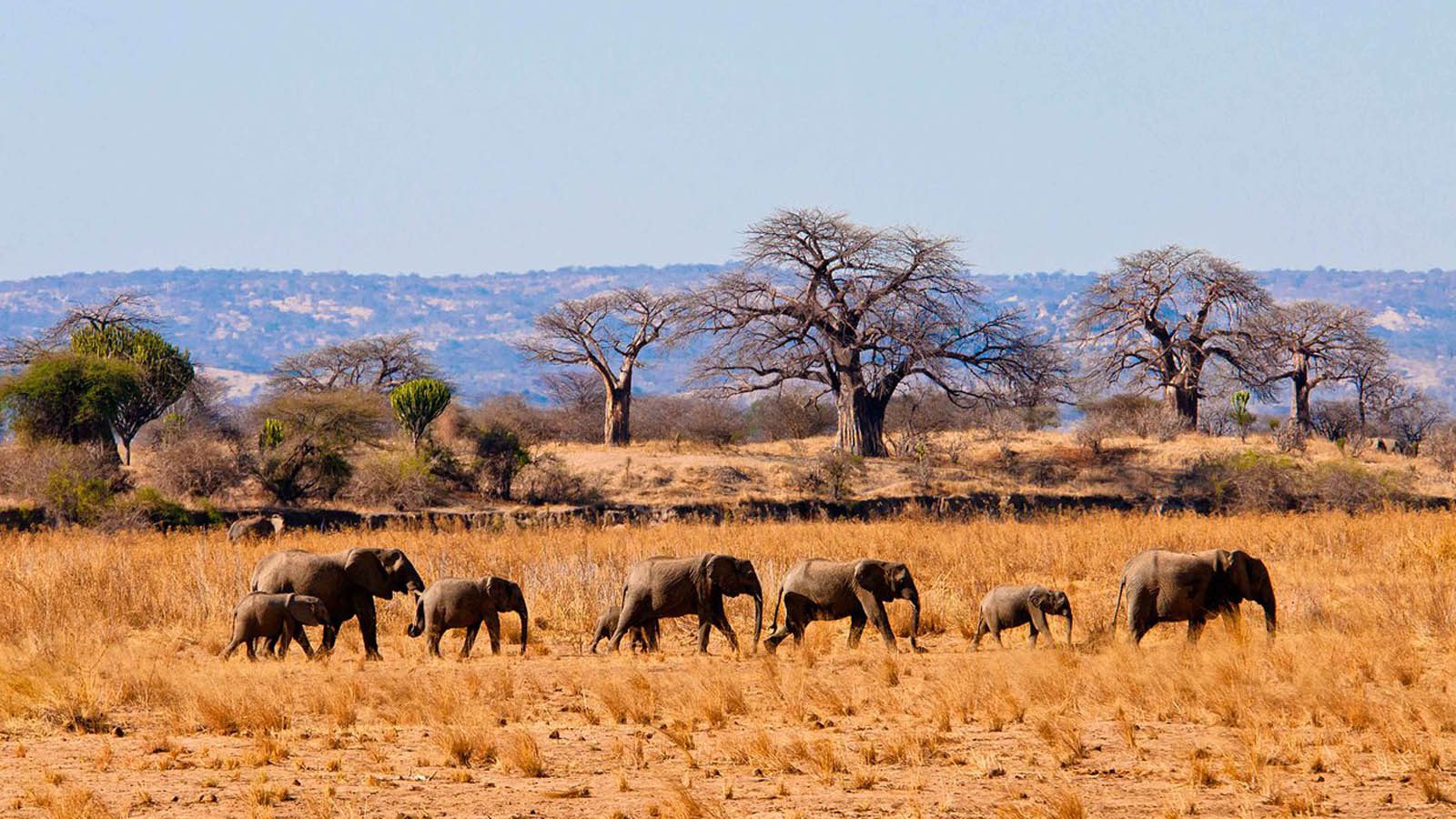
A 7-day Tanzania safari typically covers the "Northern Circuit"—Serengeti, Ngorongoro Crater, and Tarangire—offering high-density wildlife viewing, including the Big Five (lion, leopard, rhino, elephant, buffalo). Expect daily game drives in a 4x4, stunning landscapes, and accommodation ranging from luxury tented camps to lodges
7-days-best-great-wildebeest-migration-safari-in-tanzania
7-days-epic-africa-big-five-safari-in-tanzania-top-best-parks
7-days-budget-tanzania-safari-affordable-africa-budget-safari
7-days-kilimanjaro-climb-and-hiking-safari-ascent-to-peak
7-days-tanzania-wildlife-safari-africa-safari-tour-best-park-visits
7-days-best-southern-tanzania-safari-parks-nyerere-mikumi-ruaha-and-udzungwa
7-day-best-zanzibar-beach-holidays-combo-to-ruaha-and-mikumi-safari-parks
7-days-zanzibar-beach-activities-and-chimpanzee-tracking-in-mahale-mountains
7-days-amboseli-kenya-and-serengeti-fly-in-tanzania-safari
7-days-masai-mara-safari-tour-and-serengeti-safari-tour-in-kenya-and-tanzania
7-days-ultimate-budget-kenya-tanzania-safari-holiday-vacation
Top National Parks
Tanzania’s "Northern Circuit" is a collection of globally renowned ecosystems, each offering a distinct aesthetic and biological variety. Tarangire National Park is often the first stop, famous for its ancient, towering Baobab trees and the largest density of elephants in the country. During the dry season, the Tarangire River becomes a magnet for wildlife. Lake Manyara offers a lush, groundwater forest and a soda lake shimmering with pink flamingos; it is also one of the few places where lions are known to rest in the branches of mahogany trees. The Ngorongoro Crater is a natural wonder—a self-contained caldera 600 meters deep, harboring over 25,000 large mammals, including the rare black rhino, in a space of just 260 square kilometers. Finally, the Serengeti is the heart of the journey, an endless sea of grass that stretches toward the horizon, offering the most iconic safari imagery on Earth.
The Great Migration
The Great Wildebeest Migration is often described as "the greatest show on Earth." It is an ongoing, circular journey of over 1.5 million wildebeest, 200,000 zebras, and 300,000 gazelles across the Serengeti-Mara ecosystem. If you visit between June and October, you may witness the dramatic river crossings in the Northern Serengeti, where herds brave crocodile-infested waters to reach greener pastures. From January to March, the migration settles in the southern plains for calving season, where thousands of calves are born daily, attracting an intense concentration of predators. Witnessing this sheer mass of life is a sensory overload—the dust, the thundering hooves, and the constant vocalizations of the herds create a primordial atmosphere that is deeply humbling to experience in person.
Big Five & Predator Action
Tanzania is one of the premier locations for viewing Africa’s "Big Five" (lion, leopard, elephant, buffalo, and rhino). Because of the open savannah landscape, predator-prey interactions are more visible here than in the dense jungles of Rwanda. The Serengeti and Ngorongoro Crater boast some of the highest lion densities in the world, and it is common to see prides lounging on "kopjes" (granite rock outcrops). Leopards are more elusive but frequently spotted draped over the limbs of sausage trees in the Seronera Valley. For those interested in speed, the Serengeti’s flat plains provide the perfect hunting ground for cheetahs, the world's fastest land animals. In 2026, conservation efforts remain robust, ensuring that these apex predators continue to thrive in their natural habitats.
Cultural Experiences
While the wildlife is the primary draw, the human element of Tanzania is equally compelling. A visit to a Maasai Boma (village) offers a window into a semi-nomadic culture that has coexisted with wildlife for centuries. You can participate in traditional jumping dances, learn about their intricate beadwork, and see how they manage their livestock in the heart of the bush. Near the towns of Arusha and Karatu, local markets provide a sensory explosion of colors, smells, and sounds. Here, you can find hand-carved Makonde sculptures and vibrant Tingatinga paintings. For a deeper dive, some itineraries include a visit to the Hadzabe people near Lake Eyasi, one of the last remaining hunter-gatherer tribes in Africa, offering a rare look at a lifestyle that has remained largely unchanged for millennia.
Accommodation
The accommodation in Tanzania is designed to bridge the gap between luxury and the wild. Classic Tented Camps are the most sought-after experience; these are not "camping" in the traditional sense, but high-end canvas suites with en-suite bathrooms, king-sized beds, and private decks. They are often "mobile," moving with the migration to ensure you are always in the center of the action. Alternatively, Permanent Lodges offer more traditional structures, often built into the rims of craters or atop hills for panoramic views. These lodges frequently feature infinity pools, spas, and gourmet dining. Whether you are listening to the distant roar of a lion through a canvas wall or enjoying a sundowner from a stone balcony, the hospitality is warm, world-class, and deeply rooted in the concept of Karibu (welcome).
Optional Activities
To enhance the standard game drive, Tanzania offers several high-adventure add-ons. A Hot Air Balloon Safari over the Serengeti at dawn is a bucket-list item; drifting silently over the migration as the sun breaks the horizon is a perspective unlike any other, followed by a champagne breakfast in the bush. For those who want to feel the earth beneath their feet, Walking Safaris in Tarangire or designated Serengeti zones allow you to focus on the "Little Five" and learn about tracking and botany from an armed ranger. Some travelers also opt for Night Game Drives (where permitted), using spotlights to find nocturnal creatures like aardvarks, honey badgers, and hunting cats that are rarely seen during the day.
Logistics
Tanzania is a vast country, and the "Northern Circuit" involves significant travel. A typical 7-to-10-day itinerary requires several hours of driving between parks in a 4x4 safari vehicle with a pop-up roof. While the drives are beautiful—passing through various climatic zones and local villages—they can be bumpy and dusty (the "African Massage"). To maximize time, many modern itineraries utilize Bush Flights. Flying from a dirt airstrip in the Serengeti back to Arusha saves a full day of driving and provides a spectacular aerial view of the Rift Valley. In 2026, these internal flight networks are highly efficient, allowing travelers to spend less time on the road and more time in the presence of the wild.
7 Days Tanzania safari holiday
A 7 Days Tanzania safari holiday in 2026 is an immersion into the quintessential African wilderness, where the vast, cinematic scale of the "Northern Circuit" takes center stage. This masterfully curated journey transitions from the ancient, baobab-studded landscapes of Tarangire to the world-renowned Ngorongoro Crater and the endless plains of the Serengeti. Designed for those who seek both the "Big Five" and the thundering drama of the Great Migration, this itinerary offers unparalleled predator-prey sightings and iconic savannah vistas. Between game drives, you will experience the warm hospitality of classic tented camps and the vibrant culture of the Maasai people. Whether you are watching a pride of lions atop a granite kopje or drifting over the plains in a hot air balloon, these seven days provide a profound, high-energy exploration of Earth's most legendary wildlife sanctuary, delivering a sensory experience that defines the very soul of the African continent.
Day 1: Arrival in Arusha & Tarangire
Your Tanzanian chapter begins in Arusha, the gateway to the northern wilderness. After a briefing, you depart for Tarangire National Park, a land characterized by its massive, prehistoric Baobab trees and sprawling elephant herds. As you enter the park, you’ll immediately notice the high density of wildlife congregating near the Tarangire River, the region's primary water source. In addition to hundreds of elephants, the park is home to tree-climbing lions, dry-country antelopes like the fringe-eared oryx, and over 500 bird species. You will enjoy a late afternoon game drive as the sun casts long shadows over the golden savannah, creating a dramatic introduction to the wild. You’ll check into a tented lodge where the sounds of the African bush—from the hoot of an owl to the distant trumpet of an elephant—provide a rhythmic soundtrack to your first night.
Day 2: Tarangire to Lake Manyara
After a final morning game drive in Tarangire, you head toward Lake Manyara National Park, a scenic gem nestled at the base of the Great Rift Valley escarpment. The park’s diverse ecosystems range from lush groundwater forests to the alkaline waters of the lake itself. You’ll spend the afternoon searching for the park's famous tree-climbing lions and massive troops of baboons. The lake’s shores are often a shimmering carpet of pink, home to thousands of flamingos and other migratory waterbirds. In the mahogany and sausage trees, you may spot elusive leopards or ancient tuskers moving through the thickets. The day concludes with a drive up the escarpment to Karatu, offering spectacular views of the rift valley floor below, where you will rest in preparation for the volcanic wonders of the Ngorongoro Highlands tomorrow.
Day 3: Ngorongoro Crater Floor Safari
Today, you descend 600 meters into the Ngorongoro Crater, a self-contained Eden often referred to as the "Eighth Wonder of the World." This 260-square-kilometer caldera hosts one of the highest concentrations of wildlife on the planet. Within the crater floor, you have an exceptional chance to spot the rare black rhino, along with massive bull elephants, prides of lions, and spotted hyenas. The alkaline Lake Magadi in the center of the crater is a magnet for flamingos, while the Lerai Forest provides shade for leopards and monkeys. You will enjoy a picnic lunch near a hippo pool, surrounded by the dramatic walls of the caldera. The sheer density of animals in such a compact space makes for an intense, high-action game viewing experience before you ascend back to the rim for a sunset overlook that defies description.
Day 4: Transfer to Central Serengeti
Leaving the highlands, you head toward the "endless plains" of the Serengeti National Park. The journey takes you through the Ngorongoro Conservation Area, where you can stop at a Maasai Boma to learn about the traditional culture of these nomadic pastoralists. As you cross the Naabi Hill gate, the landscape opens into the vast, iconic grasslands that define the Serengeti. This central region, known as Seronera, is world-famous for its high concentration of big cats, particularly leopards and lions that favor the granite kopjes. You will enjoy an afternoon game drive en route to your camp, watching for cheetahs hunting in the short-grass plains. Your luxury tented camp brings you close to nature, allowing you to experience the raw, untamed heartbeat of the Serengeti as the night sky fills with a brilliant canopy of stars.
Day 5: Full Day in the Serengeti
A full day in the Serengeti allows for a deep dive into the rhythms of the migration and predator action. Depending on the month, you may witness the thundering herds of wildebeest and zebra moving in a prehistoric search for water and green grass. Morning and afternoon game drives focus on tracking the apex predators—lions, leopards, and cheetahs—as they shadow the herds. You might see a pride of lions strategizing a hunt or a leopard draped over a limb in a yellow-barked acacia tree. For a truly unforgettable experience, you can opt for a sunrise hot air balloon safari, drifting silently over the plains before a champagne breakfast in the bush. The sheer scale of the landscape and the abundance of life provide a humbling perspective on the natural world, ensuring every turn of the safari vehicle reveals something extraordinary.
Day 6: Serengeti to Olduvai Gorge & Karatu
After a final sunrise game drive in the Serengeti, you begin your journey back toward the Ngorongoro Highlands. Along the way, you stop at the Olduvai Gorge, the "Cradle of Mankind," where the Leakey family discovered some of the most important hominid fossils in history. A visit to the museum here provides a fascinating look at our evolutionary journey over millions of years. The drive continues back through the scenic highlands, offering one last look at the crater’s rim before descending into the lush green hills of Karatu. You’ll check into a lodge surrounded by coffee plantations, where the cooler mountain air provides a refreshing change from the heat of the plains. This evening is a time for reflection on the incredible biodiversity and ancient history you have witnessed over the past six days.
Day 7: Karatu to Arusha & Departure
On your final day, you enjoy a leisurely breakfast overlooking the coffee trees before heading back to Arusha. If time permits, you can stop at the Cultural Heritage Centre for high-quality Tanzanite gemstones and hand-carved Makonde sculptures, or visit a local market to pick up vibrant Tanzanian coffee and spices. After a final celebratory lunch in Arusha, your guide will transfer you to Kilimanjaro International Airport for your departure flight. As you fly over the jagged peaks of Mount Kilimanjaro, you’ll carry with you the thundering sounds of the migration, the golden light of the savannah, and the profound sense of wonder that only a week in the heart of Tanzania can provide. Your 7 Days Tanzania safari holiday concludes, leaving you with memories of a wild, ancient, and inspiring world.
Embarking on a 7 Days Tanzania safari holiday in 2026 is an immersion into the world’s most iconic wilderness. To help you prepare for this life-changing journey, here is a detailed breakdown of the logistical and experiential elements you can expect.
1. What are the key destinations?
The "Northern Circuit" is the gold standard for Tanzanian safaris, focusing on four distinct ecosystems. Tarangire National Park is the starting point, famous for its ancient Baobab trees and massive elephant herds. Lake Manyara National Park follows, offering a lush groundwater forest and a soda lake teeming with flamingos. The journey then reaches a crescendo at the Ngorongoro Crater, a self-contained caldera hosting the highest density of big game in Africa. Finally, you reach the Serengeti National Park, an "endless plain" that serves as the stage for the Great Migration. This route ensures you see a diverse range of landscapes, from volcanic highlands and soda lakes to golden savannahs and dense woodlands, providing a comprehensive overview of East Africa’s natural beauty.
2. What wildlife can I see?
Tanzania is arguably the best place on Earth to view the "Big Five": lions, leopards, elephants, buffaloes, and the rare black rhino. Beyond these, the sheer volume of wildlife is staggering. You will encounter massive herds of wildebeest and zebras, elegant giraffes browsing on acacia trees, and spotted hyenas prowling the plains. The Serengeti is also a premier location for cheetah sightings. For bird enthusiasts, the region is a paradise, with over 1,000 species ranging from the giant ostrich to the vibrant lilac-breasted roller. Because the animals are habituated to vehicles, you can often observe intimate behaviors—such as a lioness grooming her cubs or a leopard protecting its kill—at remarkably close range.
3. Will I witness the Great Migration?
Yes, but your location within the Serengeti will depend entirely on the month. From January to March, the herds are in the southern Ndutu region for calving season, an intense time for predator action. In June and July, the migration moves through the Western Corridor, braving the Grumeti River. From August to October, the dramatic Mara River crossings occur in the North. In 2026, expert guides use real-time tracking to ensure your itinerary places you in the heart of the action. Witnessing over a million animals on the move is a sensory experience of thundering hooves and rising dust that defines the very concept of a wild African safari.
4. What is the accommodation like?
Accommodation on a 7-day safari is designed to keep you close to nature without sacrificing comfort. Luxury Lodges are permanent structures, often built on crater rims or hillsides with infinity pools and fine dining. Mid-range Tented Camps are the "safari classic," featuring large canvas walk-in tents with king-sized beds, en-suite bathrooms with hot showers, and private decks. These camps are often "mobile," following the migration to ensure you are always near the wildlife. Even in the heart of the bush, you can expect 24/7 solar power, high-quality linens, and exceptional service, allowing you to listen to the sounds of the night—lions roaring or hyenas laughing—from the safety and luxury of your suite.
5. What kind of vehicle is used?
The workhorse of the Tanzanian safari is the custom-built 4x4 Toyota Land Cruiser. These vehicles are ruggedly designed to handle the "African massage" of bumpy, unpaved roads. They feature large windows and, most importantly, a pop-up roof that allows you to stand up for a 360-degree view of the landscape and unobstructed photography. In 2026, most vehicles are equipped with Wi-Fi, charging ports for your cameras, and a specialized fridge to keep your water and drinks cold throughout the day. Your vehicle is your mobile sanctuary, providing a safe, elevated vantage point as you navigate the vast plains of the Serengeti or the steep walls of the Ngorongoro Crater.
6. Are meals provided?
Yes, a 7-day safari is typically all-inclusive of meals. Lodges and camps provide a hot "English" or continental breakfast and a multi-course dinner featuring international and local Tanzanian flavors. For lunch, especially on full-day game drives, your lodge will provide a luxury picnic box. These are far from basic; they usually include gourmet sandwiches or wraps, roast chicken, fresh fruit, juice, and a treat. Dining in the bush—whether it’s a picnic under a Baobab tree or a candlelit dinner under the stars—is one of the most memorable aspects of the trip. Lodges in 2026 are highly adept at handling dietary requirements, including vegan, gluten-free, and Halal options.
7. What is the best time for a safari?
The dry season (June to October) is widely considered the best time for game viewing. As water sources dry up, animals congregate around rivers and waterholes, making them much easier to spot. The vegetation is also thinner, improving visibility for tracking predators. However, January to March is a spectacular time to see the calving season in the south. The "Green Season" (November to May) offers its own charms: the landscape is a vibrant emerald, the air is dust-free, and it is the best time for birdwatching and lower lodge rates. While there are short rains in November and longer rains in April/May, they rarely disrupt a well-planned 7-day itinerary.
8. How long are the daily game drives?
A typical day starts at sunrise, which is the most active time for wildlife. You might head out for a 3-to-4-hour morning drive, return for lunch, and head out again in the late afternoon. Alternatively, many travelers opt for full-day game drives, departing after breakfast with a picnic lunch and returning at sunset. This allows you to explore deeper into the Serengeti or spend a full 6 hours on the floor of the Ngorongoro Crater. While the time spent in the vehicle can be long, the constant discovery of new animals and landscapes ensures that the hours pass quickly. Your guide will always tailor the duration to your group's energy levels and interests.
9. Do I need a visa?
Most international travelers require a tourist visa for Tanzania. In 2026, the most efficient method is the E-Visa, which can be applied for online through the official immigration website at least two weeks before travel. The cost is typically $50 USD for most nationalities and $100 USD for US citizens (who receive a multi-entry visa). While visas can still be obtained upon arrival at Kilimanjaro International Airport (JRO), the E-Visa allows you to bypass long queues, getting you to your lodge and the start of your safari much faster. Always ensure your passport has at least six months of validity and two blank pages.
10. What should I pack?
Packing for a 7-day safari requires a "layering" strategy. Mornings and evenings in the Ngorongoro Highlands can be surprisingly cold (down to 10°C/50°F), while the afternoons in the Serengeti are hot. Bring lightweight, neutral-colored clothing (khaki, tan, olive) to blend into the environment and avoid attracting Tsetse flies (which love blue and black). Essential items include a wide-brimmed sun hat, high-SPF sunscreen, and quality binoculars—while your guide has them, having your own is a game-changer. Don't forget a sturdy pair of walking shoes and a "smart-casual" outfit for dinner at the lodges. A high-capacity power bank and extra memory cards for your camera are also vital for those long days in the bush.
11. Are the guides experienced?
Your driver-guide is the most important factor in the success of your safari. In Tanzania, professional guides undergo rigorous training in wildlife biology, botany, and history. They are experts at "reading the bush"—tracking a leopard by its paw prints in the dust or predicting a lion's movement by the alarm calls of a baboon. Beyond their tracking skills, they are licensed professionals who speak excellent English and are passionate about conservation. They act as your driver, mechanic, and storyteller, providing deep context to everything you see. In 2026, most guides are also trained in advanced first aid and photography assistance to help you capture that perfect shot.
12. Is it safe?
Tanzania is one of Africa’s most stable and welcoming countries. Within the national parks, your safety is the top priority of your guide and the park rangers. While you are in the presence of wild, dangerous animals, they generally view the safari vehicle as a non-threatening object. As long as you stay inside the vehicle and follow your guide’s instructions—such as not shouting or standing up too abruptly—you are in a very controlled and safe environment. At night, the camps and lodges have "Askari" (Maasai guards) who will escort you to and from your tent to ensure no wildlife is wandering through the camp, allowing you to relax and enjoy the wilderness with peace of mind.
13. What health precautions are needed?
For a 7-day safari, Malaria prophylaxis is strongly recommended. You should consult a travel clinic to find the right medication (like Malarone or Doxycycline) for your health profile. Additionally, while not always mandatory for entry from the US or Europe, a Yellow Fever vaccination certificate is required if you are traveling from or transiting through an endemic country (like Rwanda or Kenya). Use insect repellent with DEET, especially at dawn and dusk. It is also essential to only drink bottled or filtered water provided by your lodge. In 2026, most high-end operators include flying-doctor insurance in their packages, providing emergency aero-medical evacuation to Nairobi or Arusha if needed.
14. Is it suitable for children?
Tanzania is a fantastic destination for a family holiday, but a tailored itinerary is key. Many lodges have a minimum age (often 6 or 12), while others are fully family-friendly with interconnecting rooms and "Junior Ranger" programs. For children, the long drives can be tiring, so it’s often recommended to book a private vehicle to allow for shorter game drives and flexible bathroom breaks. Seeing "The Lion King" in real life is an unbeatable educational experience that fosters a lifelong love for conservation. However, it is worth noting that walking safaris usually have a strict minimum age of 12 or 15 for safety reasons.
15. Can I combine it with a beach vacation?
Absolutely. One of the most popular ways to conclude a 7-day "Dusty" safari is with a "Salty" beach extension. From the Serengeti or Arusha, you can take a direct bush flight to Zanzibar (roughly 1.5 to 2 hours). Here, you can transition from the golden savannah to the turquoise waters of the Indian Ocean. A 3-to-4-day stay in Stone Town or at a beach resort in Nungwi allows you to unwind, enjoy world-class snorkeling, and explore the spice markets. This "Bush and Beach" combination offers the perfect balance of high-adrenaline wildlife encounters and total tropical relaxation, making it the ultimate African holiday.
Booking 7 Days Tanzania safari holiday with us Roads of Adventure safaris
Book a 7-day Tanzania safari with Roads of Adventure Safaris to explore top parks like Serengeti, Tarangire, and Ngorongoro. Packages include mid-range wildlife tours, Big Five, and family adventures. Best travel times are June–October or January–February, with recommendations to book 6-12 months in advance
