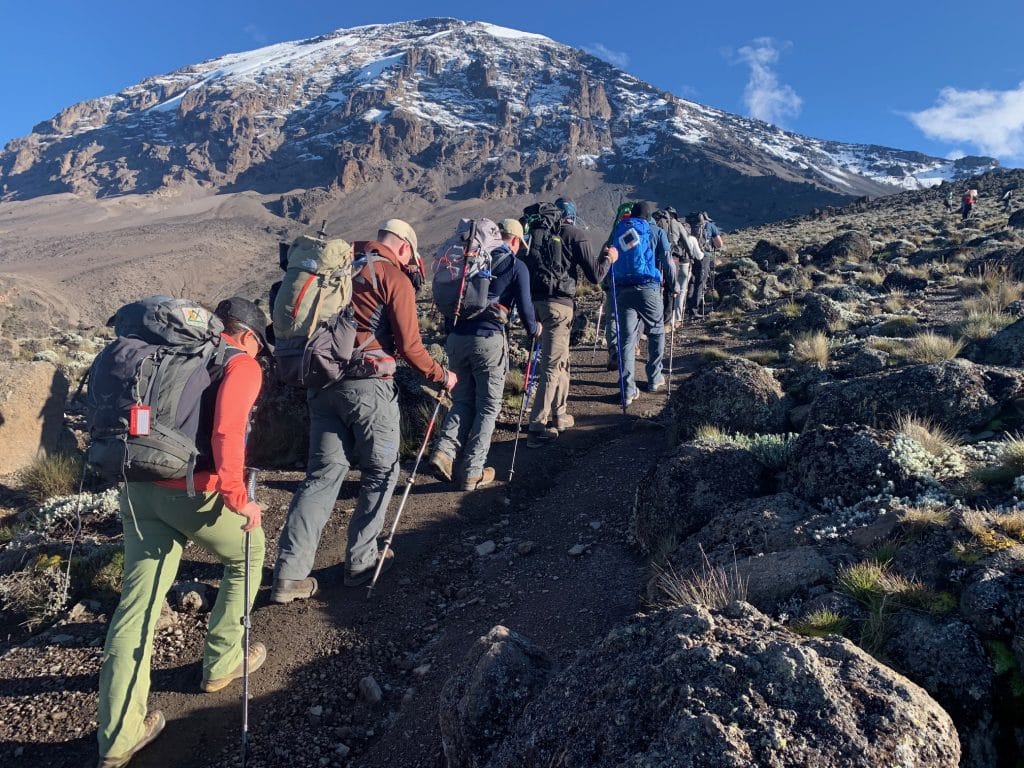
Conquering an iconic African peak is the ultimate dream for many trekkers, but the journey demands immense grit. Whether you are preparing for a Mountain Kilimanjaro hike or aiming for the roof of Africa on Mount Kilimanjaro, the physical and mental toll of high-altitude trekking is not to be underestimated. On Kilimanjaro, the true test begins as you push past the safety of lower elevations into the unforgiving, thin air.
Navigating extreme altitudes and enduring the grueling summit night stand as the ultimate barriers to reaching the  Uhuru Peak. This final, steep ascent is a battle against freezing temperatures, darkness, and rapidly dropping oxygen levels that frequently trigger severe altitude sickness. It is an intense test where physical fitness alone cannot guarantee success. From the cumulative fatigue of trekking through five distinct climate zones to tackling rugged terrain features like the Barranco Wall, preparation is everything. Understanding these core challenges is your first step toward standing on the summit.
Some of the popular Mountain Kilimanjaro hike tour packages
12-days-kilimanjaro-and-safari-in-northern-tanzania-safari-parks
10-days-best-kilimanjaro-hike-serengeti-safari-tour-and-ngorongoro-tour-combo
9-days-northern-circuit-kilimanjaro-climb-adventure
8-days-lemosho-route-kilimanjaro-climb
7-days-kilimanjaro-climb-and-hiking-safari-ascent-to-peak
6-days-best-kilimanjaro-climb-via-marangu-route
6-days-kilimanjaro-climb-via-umbwe-route
5-day-kilimanjaro-climb-marangu-route
Core Kilimanjaro Trekking Challenges Broken Down
1. Altitude and Acclimatization
Although the trek is mostly a strenuous hike requiring no advanced mountaineering skills, the altitude is the primary cause of summit failure. As you ascend past  , the oxygen levels decrease significantly. Your body must acclimatize to avoid severe altitude sickness, which can affect anyone regardless of their physical fitness level.
Example: On a Mountain Rwenzori hike, the elevation gain is highly compressed. When ascending via the Central Circuit, you climb from the Nyakalengija gate at  up to Nyabitaba Hut at
  on day one alone—a taxing
  vertical gain. By the time you push past the
  mark near Bujuku Hut, the effective oxygen level drops below
  of what it is at sea level. These sudden atmospheric thinning triggers acute mountain sickness (AMS) in unprepared hikers, resulting in severe throbbing headaches, nausea, and intense fatigue that can halt an expedition entirely if the pace is not kept slow.
2. Summit Night (The Final Push)
The climb to the roof of Africa typically starts around midnight. Climbers hike for  in the dark, battling freezing temperatures (often between
  and
and  ), strong winds, and thin air. This final push is highly taxing mentally and physically because the lack of oxygen severely saps your energy.
Example: The final push to Margherita Peak ( ) in the Rwenzoris launches from Elena Hut (
 ) in the dead of night. Trekkers must climb roughly
  over steep, slick rock slabs and massive glaciers in sub-zero alpine conditions. Navigating frozen, unyielding terrain with headlamps in a cutting
  wind chill means your water bottles will freeze solid within an hour. The oxygen deprivation makes every single upward step require maximum mental focus, turning a
  push into a grueling psychological battle against cold-induced exhaustion.
3. Cumulative Fatigue
You will be hiking for  with no rest days, all while sleeping in tents or rustic huts and enduring significant temperature fluctuations as you pass through five different climate zones. Carrying a daypack, even if porters are assisting with the bulk of your gear, takes a toll on your muscles and joints over consecutive days of trekking.
Example: A standard full-circuit expedition lasts  and covers a distance of more than
  across relentless terrain. By Day 4, your lower body faces the compounding stress of having waded through knee-deep mud and uneven bogs, all while transitioning from a hot,
  humid montane forest on Day 1 to a freezing, damp
  alpine desert. The constant exposure to moisture, combined with sleeping on basic wooden bunks or cold ground night after night, leaves your joints deeply fatigued well before the most taxing climbing sections even begin.
4. Route-Specific Challenges
While standard trails focus heavily on endurance, some paths present technical hurdles. For example, a steep scramble requires basic climbing maneuvers, while advanced trails present challenging rocky terrains, exposure, and glaciated crossings.
Example: Unlike a simple walk-up, a Mountain Rwenzori hike demands specialized mountaineering skills to safely reach the highest point. To conquer Margherita Peak from the Elena glacier, hikers cannot rely solely on trekking poles; they must strap on steel crampons, wear climbing harnesses, and tie into a team rope line to cross deep, open crevasses. The route also forces you to scramble up vertical rock faces utilizing fixed ropes and metallic ladders, requiring a "three points of contact" rule where a single slip over a steep drop can be incredibly hazardous.
When is the best time for Mountain Kilimanjaro hike
Choosing the perfect window for your Mountain Kilimanjaro hike is essential for a safe and rewarding summit. The mountain experiences two distinct dry seasons that offer the clearest skies and most stable trekking conditions. The premier window runs from January to March, characterized by slightly cooler temperatures and beautifully crisp, clear mornings. The second, more popular window spans from June to October, coinciding with summer holidays. During these months, the weather is consistently dry, though the trails see higher foot traffic.
While climbing is technically possible year-round, it is highly recommended to avoid the heavy rainy season of April and May, when torrential downpours turn trails into treacherous mud slips and cloud cover obscures the sweeping views. A shorter rainy period also occurs in November and December, often bringing brief afternoon showers. Timing your trek during the dry months maximizes your comfort, safety, and chances of standing on Uhuru Peak.
Where to stay on Mountain Kilimanjaro hike
Your accommodation during a Mountain Kilimanjaro hike depends entirely on the route you select, as lodging styles vary from rustic wilderness camping to permanent wooden shelters. If you opt for the popular Marangu Route, you will stay in communal, A-frame wooden huts equipped with basic mattresses, solar lighting, and shared dining halls. This route offers structural protection from the elements, making it a favorite for those wanting a roof over their heads.
For all other major paths—including the Machame, Lemosho, and Rongai routes—your home will be under the stars in high-altitude mountain camps. Roads of Adventure Safaris provides high-quality, four-season mountain tents, thick sleeping mattresses, and large, sturdy mess tents where you can gather for warm meals. Sleeping in tents offers an authentic, close-to-nature expedition vibe, allowing you to camp directly on the dramatic alpine ridges and witness breathtaking sunrises right outside your tent door.
What to pack on Mountain Kilimanjaro hike
Packing smartly for a Mountain Kilimanjaro hike requires preparing for extreme weather shifts, as you will journey from a humid rainforest to a freezing arctic zone. The golden rule is technical layering. Your base layers must consist of moisture-wicking synthetic or merino wool fabrics—never cotton. For insulation, pack a high-quality fleece jacket and a heavy, rated down jacket to withstand the brutal sub-zero summit night. A waterproof, windproof outer shell jacket and pants are non-negotiable protections against sudden mountain storms.
For your feet, invest in broken-in, waterproof hiking boots, paired with thermal socks and gaiters. Do not forget vital accessories like a warm beanie, UV-blocking sunglasses, heavy gloves, and a reliable  daypack to carry your daily essentials. Lastly, you will need a headlamp with extra batteries for the midnight summit push, trekking poles to save your knees on steep descents, and insulated water flasks to prevent your hydration from freezing solid.
Booking Mountain Kilimanjaro hike with us Roads of Adventure safaris
Embarking on a Mountain Kilimanjaro hike is a life-changing adventure, and booking with Roads of Adventure Safaris ensures your dream expedition is handled with absolute expertise. We pride ourselves on delivering top-tier safety standards, highly competitive pricing, and exceptional success rates on the mountain. Our wilderness guides are fully certified, highly experienced in altitude safety, and deeply passionate about sharing the natural wonders of East Africa with you.
When you book with us, we take care of all the complex logistics—from securing necessary park permits and organizing reliable mountain porters to providing nutritious, chef-prepared meals and high-quality camping gear. We tailor our itineraries to optimize your body's natural acclimatization, giving you the best possible support to reach the roof of Africa. Let our dedicated team manage the details while you focus on the physical and mental journey ahead. Contact us today to start planning your ultimate African trekking experience.
