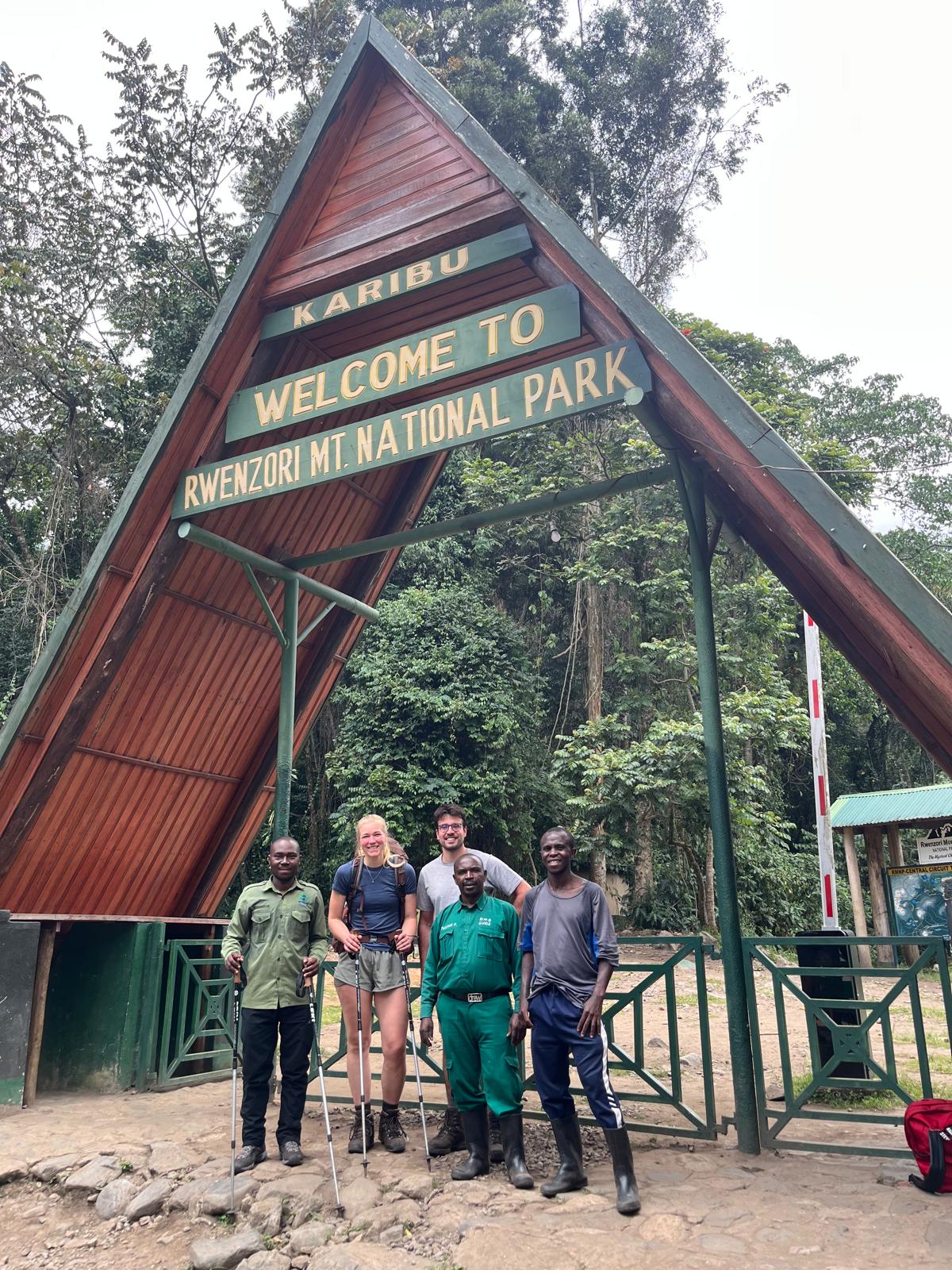
Hiking the Rwenzori Mountains typically costs between $450 and $2,000+ per person, depending on the duration and trail. A standard 7- to 8-day expedition to summit Margherita Peak costs around $1,695 per person. This includes mountain huts, guides, porters, meals, and park fees
15-days-rwenzori-hiking-safari-and-mountain-gorilla-trekking-vacation
11-days-best-rwenzori-mountain-hike-to-margherita-peak
7-days-mountain-rwenzori-mountain-climbing-active-adventure-to-margherita-peak
5-days-rwenzori-hike-to-either-mountain-sepeke-baker-or-luig-di-savoia
2-days-rwenzori-trek-to-nyabitaba-camp
Mountain Rwenzori hiking Rates for 2026
6-7 Days Central Circuit (with Mount Stanley)
This premier expedition targets the snow-capped crowns of Mount Stanley, including Africa’s third-highest point, Margherita Peak, as well as Albert and Alexander peaks. It is the ultimate challenge for fit mountaineers seeking technical glacial crossings. For Foreign Non-Residents (FNR), the comprehensive trek is priced at $1,365. Foreign Residents (FR) holding valid work permits receive a discounted rate of $1,150, while East African Citizens (EA) can embark on this iconic summit climb for $600. The package covers essential trail logistics, mountain guides, and hut accommodations, providing a solid foundation for an unforgettable high-altitude adventure.
5-6 Days Central Circuit (without Peak)
Designed for trekkers who want to experience the legendary scenery of the Rwenzori Central Circuit without the intense physical demands of a technical summit push, this route highlights the range’s unique biodiversity. Hikers traverse stunning valley systems, giant heather zones, and glacial lakes. Foreign Non-Residents can book this scenic high-altitude circuit for $1,130. The rate for Foreign Residents stands at $1,000, while East African Citizens can explore this breathtaking mountain trail for $550. It offers a perfect balance of deep wilderness immersion and manageable alpine trekking gradients.
4-5 Days Trek (Mount Speke, Baker, or Luigi di Savoia)
This specialized itinerary targets the secondary peaks of the Rwenzori range, offering a brilliant alternative for climbers looking to summit iconic peaks like Mount Speke, Baker, or Luigi di Savoia. These routes deliver dramatic ridge walks and spectacular panoramic views across the Albertine Rift. The trek is priced at $1,150 for Foreign Non-Residents. Foreign Residents can access these peak expeditions for $1,030, and East African Citizens are charged $520. It serves as an excellent option for experienced hikers seeking challenging, less-traveled alpine paths.
6-7 Days Trek (Mount Gessi or Amin)
Venturing into the deeper, more remote northern stretches of the Rwenzori range, this 6 to 7-day expedition targets the isolated peaks of Mount Gessi or Mount Amin. This route is ideal for wilderness purists seeking pristine trails away from the main trekking crowds. The package rate for Foreign Non-Residents is set at $1,250. Foreign Residents can undertake this rugged wilderness journey for $1,200, while the domestic rate for East African Citizens is highly accessible at $550. It promises an authentic, raw mountaineering experience.
4-5 Days Trek to Bujuku Camp (3,977m)
This mid-tier trek leads hikers deep into the spectacular Bujuku Valley, stopping at Bujuku Camp ( ). Positioned right in the shadow of Mount Stanley and Mount Baker, this location offers some of the most dramatic, giant-lobelia-framed photography viewpoints in the entire national park. Foreign non-residents can experience this stunning high-altitude valley trek for $925. The rate for Foreign Residents is established at $825, and East African Citizens can complete this rewarding wilderness acclimatization hike for $400.
3-4 Days Trek to John Maate Camp (3,505m)
Perfect for travelers seeking a substantial mountain experience within a shorter timeframe, this route pushes through lush montane forests and bamboo zones up to John Maate Camp ( ). It offers a fantastic introduction to the lower alpine bogs and unique flora of the Rwenzoris. The package costs $645 for Foreign Non-Residents looking to explore these lower valley trails. Foreign Residents can book the trek for $570, while East African Citizens enjoy a localized rate of $250 for this excellent short escape.
3-4 Days Trek (Mahoma Loop)
The Mahoma Loop is a highly popular, scenic lower-altitude trail that treats hikers to pristine mountain wilderness, winding past the tranquil waters of Lake Mahoma. It provides a true taste of the Rwenzori ridges without the grueling physical toll of the high peaks. Foreign non-residents can enjoy this beautiful, active recovery circuit for $645. Foreign Residents can experience the loop for $570, and East African Citizens can access the trail for $250, making it an ideal choice for a shorter combination safari.
2 Days Trek to Nyabitaba Camp
This quick weekend or short-break itinerary features an overnight stay at Nyabitaba Camp, serving as a brilliant introductory teaser to the "Mountains of the Moon." Hikers walk through vibrant forest zones, listening to monkeys and birds along the Mobuku River. For Foreign Non-Residents, this overnight mountain experience is priced at $254. The tariff for Foreign Residents is set at $220, while East African Citizens can enjoy a quick mountain getaway for a domestic rate of just $100.
A Day Trek (To and from)
Tailor-made for casual day-trippers and safari travelers with tight schedules, this single-day excursion offers a guided walk into the lower montane forest zone and back. It provides a brief but beautiful glimpse of the Rwenzori ecosystem, its unique birdlife, and rushing rivers. Foreign non-residents can enjoy this day trek for $135. The rate for Foreign Residents is fixed at $115, while East African Citizens can explore the foothills of this UNESCO World Heritage Site for an economical $20.
Extra Peaks and Extra Days
For climbers seeking to customize their expeditions, add extra peaks (like traversing multiple summits), or build in vital weather and acclimatization buffers, flexible daily add-on rates apply. For Foreign Non-Residents, an extra peak cost $150 and an extra day is $120. Foreign Residents are charged $130 per peak and $110 per day. East African Citizens can expand their alpine itineraries for a local rate of $70 per extra peak and $50 per additional day spent inside the park.
A breakdown of expenses to anticipate when planning your trek
1. Daily National Park Fees
The baseline financial foundation of any Ugandan mountaineering expedition is determined by the mandatory conservation tariffs established by the Uganda Wildlife Authority (UWA). These fees are structured strictly per person, per calendar day, meaning every 24-hour block or fraction thereof spent crossing the park boundaries is accounted for. For Foreign Non-Residents, the standard daily tariff is fixed at $35 USD per day. For expatriates holding legal residency permits or work visas within East Africa, a discounted tier of $25 USD per day applies, which requires physical verification of documentation at the primary park gates before entry.
East African Citizens—encompassing nationals from Uganda, Kenya, Tanzania, Rwanda, Burundi, South Sudan, and the Democratic Republic of Congo—are charged a domestic flat rate of 150,000 UGX per day. It is highly critical for travelers to recognize that these fees function entirely as an independent government levy designed to finance vital anti-poaching units, trail infrastructure maintenance, and community revenue-sharing programs around the park borders.
Consequently, these daily park entry fees are entirely separate from the baseline service packages quoted by private destination management companies or local tour operators. Depending on how your safari is contractually structured, these fees will either be cleanly itemized as a separate out-of-pocket disbursement at the Kilembe or Nyakalengija gates, or built directly into a comprehensive, pre-paid invoice for operational convenience. If your expedition faces unexpected alpine extensions due to severe summit weather or additional acclimatization days, each extra day spent within the park boundaries will incur additional fees, highlighting the absolute necessity of precise itinerary planning from the very beginning.
2. Standard Trekking Packages
The total financial commitment for a Rwenzori mountaineering expedition scale directly with the specific route chosen, the total duration of the itinerary, and the level of operational field support required. Standard commercial packages are typically categorized into three main tiers. Short treks and introductory waterfall circuits, spanning 3 to 4 days along low-altitude trails like the Lake Mahoma loop, generally range from $420 to $565 USD per person. These entry-level packages are highly inclusive of baseline mountain guiding fees, mandatory park entry allocations, and basic field rations, making them perfect for hikers who want a taste of the Afro-alpine landscape without tackling extreme vertical gradients.
For serious mountaineers targeting the ultimate prize, a full summit expedition via the classic 7 to 8-day Central Circuit or the rugged Kilembe Trail to Margherita Peak ranges between $1,450 and $1,695 USD per person. This mid-tier pricing covers a highly complex array of logistical moving parts, including professional technical guides, a large team of high-altitude porters, camp chefs, three daily meals, and basic rustic wooden A-frame hut accommodations along the trail.
Finally, comprehensive, premium expeditions lasting 9 to 12 days easily reach $1,500 to over $2,000+ USD per person. These advanced packages fluctuate depending on total group sizes and whether the itinerary targets multi-peak traverses, such as combining Mount Stanley with Mount Speke or Mount Baker. These elite tariffs reflect the intense staffing ratios required, the extensive food and fuel supply lines that must be manually carried up the mountain, and the higher operational risks involved in keeping climbers safe on permanent, moving glacial ice fields.
3. Excluded Costs & Extras
While comprehensive safari packages cover the fundamental necessities of life on the mountain, travelers must carefully plan for several critical out-of-pocket expenses that fall outside standard tour operators' quotes. The most prominent variable is specialized technical climbing gear. Conquering the permanent glacial ice fields on Mount Stanley requires heavy hardware, including ice axes, crampons, climbing harnesses, and safety ropes. If you do not wish to haul this heavy gear across international flights, these technical items can be rented locally at the base camp trailheads in Kasese, though they must be explicitly budgeted for on top of your main package cost.
Furthermore, personal clothing layers and individual sleeping gear are strictly the responsibility of the traveler. Navigating five distinct climate zones—ranging from hot, humid montane rainforests to sub-zero, freezing alpine summits—demands specialized, high-performance apparel. You must invest heavily in high-quality moisture-wicking thermal base layers, heavy polar fleece jackets, waterproof alpine hiking boots, rugged gaiters, and an extreme-weather sleeping bag rated down to at least  .
.
Beyond physical gear, regional ground transportation logistics represent another major budget line item. Standard mountain packages begin directly at the trailheads, meaning the private 4x4 safari transfers or chartered domestic flights connecting Entebbe International Airport or Kampala to the western town of Kasese must be added separately. Finally, custom dictates allocating additional funds for field tipping. Tipping your dedicated team of local guides, camp cooks, and porters is deeply customary at the end of the trek, serving as a vital direct economic driver for the local community surrounding the park.
What is included in the Rwenzori hiking rates
Park Permits & Fees
Your package takes complete care of the essential regulatory paperwork required by the Uganda Wildlife Authority. This includes all daily park entry permits, allowing you legal access through the conservation gates without out-of-pocket delays. Furthermore, it covers the mandatory Rwenzori National Park rescue fund levy, ensuring you are registered under the official wilderness safety net should emergency medical evacuation or search assistance be required on the high ridges. By bundling these statutory government fees into your upfront cost, the complex bureaucracy of park clearance is fully handled before you arrive at the trailhead.
Accommodation
Throughout your high-altitude trek, you will stay in the official, rustic mountain huts positioned at designated camps along the routes, such as those managed by the Central Circuit or Rwenzori Trekking Services. These wooden or metallic A-frame structures provide vital shelter from the range's intense evening rain, mud, and sub-zero summit temperatures. While accommodations in these remote alpine zones are communal and dormitory-style, they offer a sturdy bunk bed, mattress, and a dry communal dining space, serving as a welcome sanctuary to rest and recharge your body after a demanding day on the trail.
Meals on the Mountain
Surviving the intense cold and physical exertion of the mountains requires immense caloric fueling, which is why your package includes three hearty, freshly prepared meals every day. A dedicated camp chef and cooking team accompany you, waking up early to prepare hot breakfasts, packing nutritious trail lunches for the day's march, and cooking multi-course dinners featuring carbohydrates like pasta, rice, and potatoes. Most dietary preferences, including vegetarian, vegan, and gluten-free requirements, can be seamlessly accommodated by our team in the field with advanced notice before the expedition begins.
Guides
Safety and route navigation are handled by professional, English-speaking certified mountain guides who possess years of experience traversing the Albertine Rift. These expert guides are intimately familiar with the range's unpredictable weather patterns, technical glacial crossings, and the hidden hazards of deep alpine bogs. Trained in wilderness first aid and high-altitude safety management, they monitor your pacing, track your oxygen levels, and provide the technical expertise needed for ropes and crampons during summit pushes, ensuring you safely navigate every ecological zone from the foothills to the peak.
Porters
The true heroes of any Rwenzori expedition are the local professional porters who handle the intense physical heavy lifting. Your package includes a dedicated porter who will carry your primary duffel bag or backpack (typically up to a strict limit of 20 kg). Beyond your personal luggage, the porter team manually transports the entire group's collective camp infrastructure, including heavy food supplies, cooking gas, and kitchen utensils. Their incredible physical endurance leaves you completely free to hike with just a light daypack, drastically reducing muscle fatigue and optimizing your summit success.
What Is Excluded (Additional Costs to Budget For)
Pre- and Post-Trek Accommodation
Your standard trekking package covers nights spent on the mountain itself but excludes lodging before and after the expedition. You will need to budget separately for hotel stays in Entebbe or Kampala upon international arrival, as well as accommodation in Kasese or the Rwenzori foothills the night before your trek begins and the evening you descend. These basecamp nights are vital for conducting pre-trek briefings, sorting gear, and resting up. We can easily arrange these stays at partners like Equator Snow Lodge or cozy local hotels depending on your budget preferences.
Transfers
Ground and air transportation linking major hubs like Entebbe International Airport or Kampala to the trailhead base in Kasese is an additional cost. Unless you have booked an all-inclusive safari circuit that bundles your entire transport logistics upfront, you will need to account for private 4x4 vehicle transfers, shared public options, or domestic scheduled bush flights. Reliable, comfortable transport ensures you arrive relaxed and on time for your morning briefing, and guarantees a smooth transition to your next destination—like Bwindi for gorilla tracking—once you successfully clear the mountain gates.
Personal Gear
Specialized clothing and equipment required to survive the harsh alpine environment are strictly the climber's responsibility. Your baseline package does not include personal items such as heavy thermal layers, waterproof alpine boots, high-altitude sleeping bags, or hiking poles. Furthermore, technical mountaineering hardware required for glacial crossings—including crampons, climbing harnesses, ice axes, and helmets—is excluded. While travelers are encouraged to bring their own custom-fitted gear, these essential technical items can be rented separately at the Nyakalengija or Kilembe base camps for a reasonable daily fee.
Snacks and Beverages
While your package provides three substantial, calorie-dense meals a day on the trail, personal comfort items, specialized snacks, and beverages are excluded. Mountaineers typically require a personal stash of high-energy trail food—such as energy bars, gels, nuts, chocolates, and electrolyte powders—to sustain stamina between camps. Additionally, any carbonated sodas, bottled mineral water, or alcoholic beverages purchased at the park gates or lower community shops fall outside the standard package, meaning you should carry small-denomination local currency or US dollars to purchase these extras.
Tipping
Gratuities for your hard-working support crew are not factored into the baseline tour pricing and represent a traditional, separate out-of-pocket expense. Your dedicated team of English-speaking guides, camp chefs, and high-altitude porters perform grueling physical labor to ensure your safety and comfort in extreme environments. Tipping is a deeply ingrained custom within the East African mountaineering community and serves as a vital direct economic driver for the local villages. Tips are collected and distributed at the end of the trek during a traditional farewell celebration at basecamp.
What to pack for Rwenzori hike
Packing for the Rwenzori Mountains requires preparation for severe weather shifts, ranging from muddy tropical forests to freezing, glaciated peaks. For your feet, high-quality waterproof hiking boots with excellent ankle support are non-negotiable, paired with durable ankle gaiters and multiple pairs of thick thermal socks. Heavy rubber gumboots are also highly recommended for navigating the famous, deep alpine bogs.
Layering is key to managing the dropping temperatures: pack moisture-wicking polyester base layers, thick thermal fleece jackets, and a high-performance waterproof, windproof summit jacket. You will need a mummy-style sleeping bag rated down to at least to stay warm in the high-altitude huts. Additionally, pack a reliable headlamp with extra batteries, a microfiber towel, a personal first aid kit with altitude medication, high-energy snacks, UV-protective sunglasses, and sturdy climbing or gardening gloves to protect your hands on vertical trails.
Where to stay on Rwenzori hike
Your accommodation choices are split between the foundational basecamps before you start and the rustic mountain huts during the climb. At the base of the mountains near the trailheads, you can prepare for your expedition at premium options like Equator Snow Lodge, constructed from local river stones, or cozy community-run hubs like Ruboni Community Camp and Rwenzori Turaco View Campsite. For trails starting along the Kilembe route, Trekkers Hostel serves as the primary operational briefing point.
Once inside the national park, accommodation shifts to a network of established wooden and metallic mountain huts positioned a day's walk apart. If you follow the classic Central Circuit, you will sleep on dormitory bunk mattresses at camps like Nyabitaba, John Matte, and the scenic Bujuku Camp. The Kilembe Trail features its own reliable hut system—including Sine, Mutinda, and Bugata camps—many of which feature solar panels for device charging at high altitude.
When is the best time for Rwenzori hike
The absolute best time to embark on a Rwenzori mountaineering expedition is during the region's two primary dry seasons: from June to September and December to February. Choosing these dry windows is critical for safety, trail navigation, and overall success. During these months, the high peaks experience significantly less rainfall, resulting in clearer skies that reveal spectacular, unobstructed panoramic views across the Albertine Rift.
Crucially, dry weather makes the technical rock-climbing sections and glacial crossings toward Margherita Peak far safer and less slippery. Lower down the mountain, the trails are firmer, making the grueling muddy valleys and rising alpine bogs much more manageable. While mountain weather is notoriously unpredictable and can rain at any altitude year-round, booking within these designated dry seasons guarantees the most stable climbing conditions, better visibility for photography, and a far more comfortable, predictable wilderness experience.
Booking your Rwenzori hike with us Roads of Adventure safaris
Booking your mountaineering expedition with Roads of Adventure Safaris ensures a flawlessly executed, stress-free alpine journey from start to finish. Conquering Africa’s toughest mountain requires complex moving parts, and our deep local expertise guarantees every detail is perfectly managed. We handle all mandatory Uganda Wildlife Authority clearances, park daily entrance fees, and the rescue fund levy, while providing top-tier, certified mountain guides, camp chefs, and a dedicated team of professional porters to handle the heavy lifting.
We tailor our itineraries to match your fitness level and mountaineering goals, offering everything from short lower circuits to full technical summit climbs. Furthermore, our seamless ground logistics mean we effortlessly coordinate your private 4x4 safari transfers or domestic flights from Entebbe straight to the basecamps, allowing you to combine your rugged mountain trek with standard savanna safaris or gorilla tracking without losing any valuable travel momentum.
