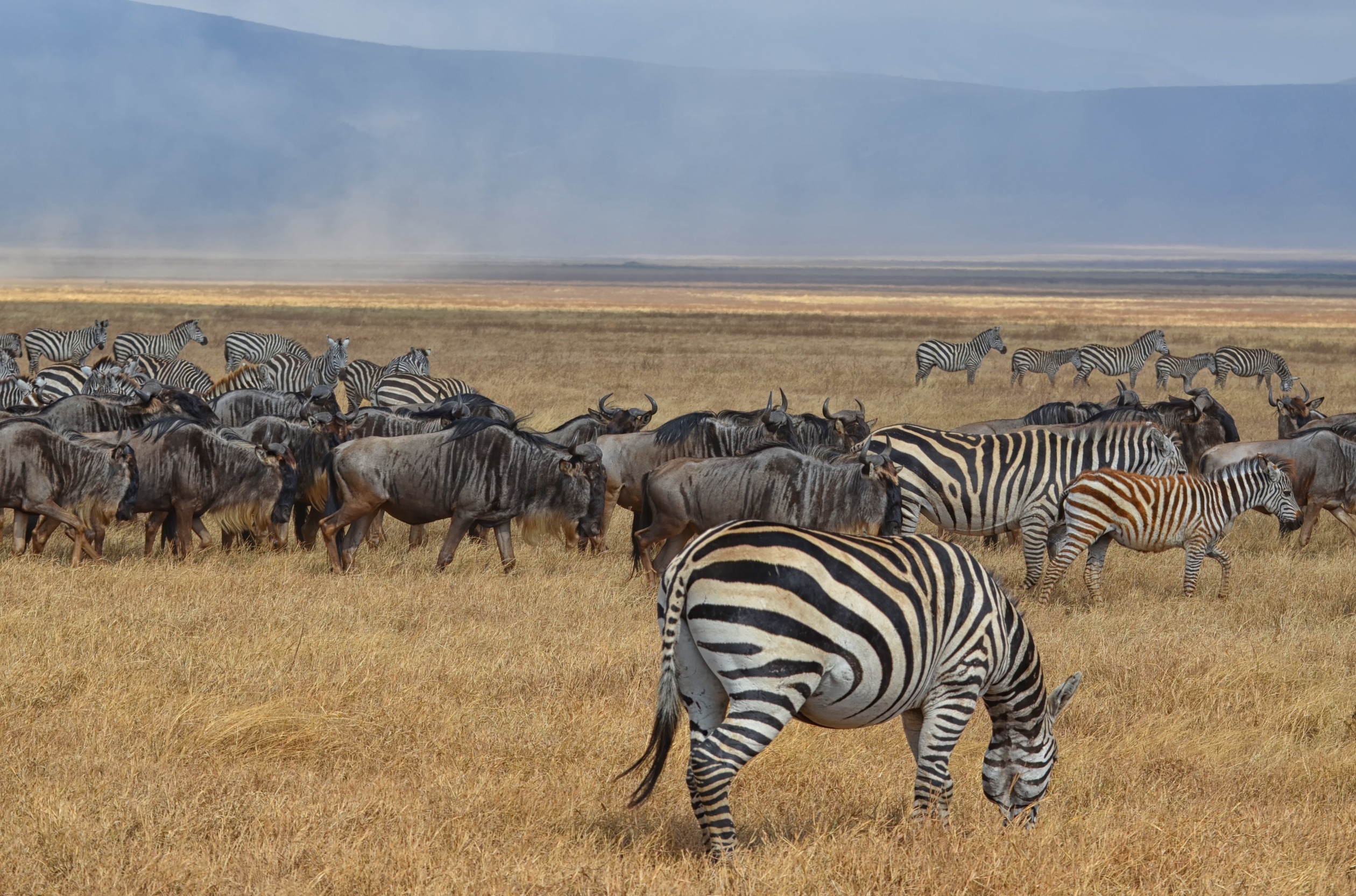
The Serengeti National Park is the biggest and most famous safari destination in Tanzania, renowned for the annual Wildebeest Migration, where over 1.5 million wildebeest and zebras cross its 14,763-square-kilometer savanna. It is part of the iconic Northern Circuit, offering top-tier wildlife viewing, including the Big Five and immense lion populations
10-days-tanzania-wildlife-safari-and-optional-visit-to-masai-tribe-or-hadzabe
8-days-perfect-materuni-waterfall-and-coffee-cultural-tour-in-tanzania
7-days-best-of-tanzania-safari-grumetimara-river-crossing-and-masai-warrior-homestay
10-days-perfect-tanzania-safari-itinerary
10-days-luxury-kenya-tanzania-safari-holiday-high-end-tour-package
10-days-tanzania-wildlife-safari-and-optional-visit-to-masai-tribe-or-hadzabe
10-days-luxury-gorilla-trekking-masai-mara-serengeti-and-ngorongoro-crater
14-days-best-tanzania-honeymoon-safari-and-zanzibar-for-couples
3-days-fly-in-and-out-tanzania-wildlife-safari-itinerary-to-nyerere-from-zanzibar
3-days-serengeti-safari-fly-in-ngorongoro-big-five-safari-from-zanzibar-island
10-days-best-tanzania-safari-tour-and-zanzibar-beach-holiday-itinerary
8-days-best-tanzania-wildlife-safari-to-zanzibar-beach-holiday-combined
7-day-best-zanzibar-beach-holidays-combo-to-ruaha-and-mikumi-safari-parks
Key Details About Serengeti National Park
The Primary Stage for the Great Migration
The Serengeti is globally synonymous with the Great Migration, the largest overland movement of mammals on earth. This is not a single event but a perpetual, circular journey of over 1.5 million wildebeest, 200,000 zebras, and 300,000 gazelles. Driven by ancient instincts and the rhythm of the rains, the herds traverse the vast ecosystem in search of green pastures and water. It is a perilous odyssey fraught with predators; lions, leopards, and hyenas shadow the herds across the plains, while massive Nile crocodiles lie in wait at the river crossings.
The scale of the migration is almost impossible to grasp from the ground. It is often described as a "theatre of life and death" where the sheer numbers provide safety for the species but guarantee loss for individuals. Beyond the raw drama of survival, the migration is essential for the ecosystem's health, as the animals graze the plains and provide vital nutrients to the soil. For any safari enthusiast, witnessing a horizon-to-horizon column of wildebeest, stretching for kilometres and filling the air with a low, resonant grunt, is the ultimate testament to the untamed power of nature.
Best Time to Visit
While the Serengeti is a year-round destination, timing your visit is crucial if you want to catch specific stages of the migration. From December to March, the herds congregate on the short-grass plains of the Southern Serengeti and Ndutu. This is the calving season, where roughly 8,000 calves are born daily. It is a period of incredible abundance and high predator activity, as big cats take advantage of the vulnerable young. The air is filled with the calls of mothers and newborns, and the emerald-green landscapes are at their most vibrant.
As the plains dry out in April and May, the herds begin their trek northwest toward the Western Corridor. By June and July, they encounter the Grumeti River, but the most iconic moment occurs from August to October in the Northern Serengeti. This is when the treacherous Mara River crossings take place. If you prefer a quieter experience with fewer crowds, the "emerald season" (November to early December) offers lush scenery and lower lodge rates. Regardless of the month, the Central Serengeti (Seronera) remains a "big cat capital" with resident wildlife that never leaves, ensuring spectacular sightings even outside the peak migration months.
Famous Activities
The quintessential Serengeti experience is the Game Drive. Typically conducted in custom-built 4x4 vehicles with pop-up roofs, these drives allow you to cover vast distances and track the migration as it shifts across the plains. Expert guides, often with an uncanny ability to spot a leopard tail flicking in a distant acacia, provide deep insights into animal behaviour. For those seeking a different perspective, Hot-Air Balloon Safaris offer a serene, bird's-eye view of the plains at dawn. Drifting silently above the herds as the sun breaks over the horizon is a majestic, once-in-a-lifetime experience that concludes with a traditional champagne breakfast in the bush.
For the more adventurous, Walking Safaris have gained popularity in private concessions and designated zones within the park. Walking through the Serengeti allows you to appreciate the "micro-wildlife" and intricate details of the bush—identifying tracks, medicinal plants, and bird calls—that you would miss from a vehicle. Many lodges also offer Night Game Drives (where permitted) and cultural visits to local communities. These activities combined ensure that a visit to the Serengeti is not just about observing animals, but about a multi-sensory immersion into one of the world's last great wildernesses.
Area and Conservation Status
Covering a staggering 14,763 square kilometres, the Serengeti is one of Africa’s largest and oldest protected areas. Its name is derived from the Maasai word Siringet, meaning "the place where the land moves on forever." Established as a national park in 1951, it was one of the first of its kind in Tanzania and later became a UNESCO World Heritage Site. The park is part of a much larger ecosystem that includes the Ngorongoro Conservation Area in Tanzania and the Maasai Mara in Kenya, allowing for the free, unhindered movement of wildlife across international borders.
The Serengeti's conservation history is a story of resilience. In the mid-20th century, the park was famously championed by Bernhard Grzimek, whose documentary Serengeti Shall Not Die brought global attention to the need for its protection. Today, the park faces modern challenges such as poaching and the delicate management of human-wildlife conflict on its borders. However, through the efforts of the Tanzania National Parks (TANAPA) and international partners, the Serengeti remains a global model for successful conservation. Its vastness ensures that even with its immense popularity, you can still find corners of the park where the only sounds are the wind in the grass and the distant roar of a lion.
Other Highly Famous Tanzania Safari Locations
Ngorongoro Crater
The Ngorongoro Crater is a geographic masterpiece, often described as a "natural zoo" due to the high concentration of wildlife living within its 600-metre-deep walls. As the world’s largest inactive and intact volcanic caldera, it spans roughly 260 square kilometres of diverse habitats, including open grasslands, fever tree forests, and the soda waters of Lake Magadi. This UNESCO World Heritage site provides a unique sanctuary where approximately 25,000 large animals reside year-round. Because the animals are largely habituated to human presence and contained by the steep crater walls, it is widely considered the best location in Tanzania to witness the Big Five in a single day.
The crater is one of the few places in East Africa where you can reliably spot the critically endangered black rhino in its natural habitat. Beyond the rhinos, the caldera floor is home to massive "tusker" elephants, dense prides of lions, and large pods of hippos. The morning descent into the crater is a highlight for many; as the mist clears, the sheer scale of life below becomes visible. While the crater can be busy with safari vehicles, the quality of sightings—often just metres from the track—remains unparalleled. It is a place where the cycle of life, from cheetah hunts on the plains to hyenas scavenging at dusk, plays out in a spectacular, concentrated theatre.
Tarangire National Park
Tarangire is the land of giants and ancient silhouettes. Located slightly off the main northern safari circuit, it offers a more rugged and quiet atmosphere compared to the Serengeti. The park is defined by two primary features: its massive elephant herds, which can number in the hundreds, and the iconic Baobab trees. These ancient, "upside-down" trees dominate the horizon, some estimated to be over a thousand years old. During the dry season (June to October), the Tarangire River becomes the only permanent water source in the region, drawing thousands of animals—including wildebeest, zebra, and eland—from the surrounding Maasai Steppe.
The park is also a haven for bird enthusiasts, with over 550 recorded species, the highest density in Tanzania. Predators are well-represented here too; lions often lounge in the grass, and the park is known for its resident leopard population that hides in the riverine trees. One of Tarangire's unique offerings is the presence of dry-country antelopes like the fringe-eared oryx and the long-necked gerenuk, which are rarely seen in other northern parks. With its undulating hills and golden savannahs, Tarangire provides a textured, "old-world" African feel that captures the hearts of those seeking a deeper connection with the wilderness.
Nyerere National Park (Formerly Selous)
Nyerere National Park represents the wild, untamed soul of the Southern Circuit. Covering over 30,000 square kilometres, it is one of the largest faunal reserves in the world and remains significantly less crowded than the northern parks. The defining artery of the park is the Rufiji River, which creates a complex network of channels, lakes, and swamps. This water-rich environment allows for boat safaris, a refreshing and silent way to observe wildlife. From the water, you can watch hippos jostling for territory and crocodiles sunning on the banks, while elephants frequently come down to the shore to bathe and drink.
Nyerere is a critical stronghold for the African wild dog, one of the continent's rarest and most efficient social predators. The park’s vastness and remote location ensure an authentic "wilderness" experience where you can drive for hours without seeing another vehicle. Beyond vehicle and boat safaris, Nyerere is one of the few parks in Tanzania that permits walking safaris and fly-camping, allowing adventurous travellers to experience the African bush on foot. The landscape is a beautiful mix of miombo woodlands, open savannahs, and riverine forests, making it a premier choice for those who want to escape the beaten path and witness nature in its most raw and unscripted form.
What is the most famous safari in Tanzania?
Serengeti National Park is the undisputed crown jewel of Tanzanian tourism. Its name, derived from the Maasai word Siringet, literally means "the place where the land moves on forever," and it certainly lives up to the moniker. Spanning nearly 15,000 square kilometres, it is the quintessential African wilderness. It became a global household name largely through the work of conservationists like Bernhard Grzimek and countless nature documentaries that have showcased its prehistoric landscapes.
For most travellers, "going on safari" is synonymous with the Serengeti. It is the site of the world's most impressive terrestrial wildlife movement and contains some of the highest concentrations of large mammals on the planet. Whether you are a first-time visitor or a seasoned photographer, the park’s fame is anchored in its ability to deliver "National Geographic" moments daily. From the legendary granite kopjes where lions stand sentinel to the riverbanks where crocodiles lie in wait, it is the ultimate stage for the drama of the wild.
Why is the Serengeti considered the top safari in Tanzania?
The Serengeti holds the top spot because it offers a "triple threat" of wildlife viewing: the Great Migration, an immense predator population, and unrivalled scenery. While other parks might offer parts of this puzzle, the Serengeti is the only place where all these elements align on a massive scale. It is home to more than 3,000 lions and a dense population of leopards and cheetahs, ensuring that predator-prey interactions are a common sight rather than a rare lucky break.
Furthermore, the park’s geography is iconic. The "endless plains" are not just a marketing slogan; the southern and central regions offer vast, unobstructed views that make spotting wildlife easier and more dramatic. This open terrain provides a sense of freedom and scale that is rare in the more wooded parks of southern Africa. It is this combination of the sheer volume of animals and the cinematic backdrop that makes it the premier choice for any Tanzanian itinerary.
What is the best time for a Serengeti safari in Tanzania?
The "best" time depends entirely on what you wish to witness. For the dramatic Mara River crossings, the dry season from June to October is peak time. This is when the herds congregate in the north, providing heart-pounding action. The weather is also cooler and the vegetation thinner, which makes it easier to spot big cats. However, because it is the most popular time, the main transit routes can be busier with other safari vehicles.
Alternatively, January to March is the Calving Season in the southern Ndutu region. During this window, hundreds of thousands of wildebeest give birth simultaneously. The emerald-green plains are filled with newborns, which in turn attracts an incredible number of predators. This "Green Season" offers a different kind of beauty—lush landscapes, migratory birds, and lower lodge rates. Regardless of when you visit, the central Seronera region has resident wildlife that stays put year-round, making any month a viable time for a successful safari.
Can I see the Big Five on a safari in Tanzania?
Yes, but with a small caveat. While the Serengeti is home to all members of the Big Five (lion, leopard, elephant, buffalo, and rhino), the black rhino is notoriously elusive within the park's vastness. Because the Serengeti is so large, these rare creatures can hide in the dense thickets of the north or the Moru Kopjes. To "guarantee" the full set, most safaris combine the Serengeti with the Ngorongoro Crater, located just a few hours' drive away.
The Crater acts as a natural enclosure, and its resident black rhino population is much easier to spot against the short-grass floor. Lions and buffalo are ubiquitous in both locations, and the Serengeti’s Seronera Valley is arguably the best place in Africa to find leopards draped in acacia trees. By pairing these two UNESCO World Heritage sites, you maximise your chances of seeing all five iconic species in a single trip, often within just a few days of each other.
How long is a typical Serengeti safari in Tanzania?
A focused Serengeti safari typically requires 3 to 5 days to truly appreciate the different sectors of the park. Given the park’s immense size, a single night is never enough; you need time to drive from the central plains to the specific areas where the migration is currently located. A common 4-day "Classic North" itinerary might include two nights in the Central Serengeti and one or two nights in either the North (for river crossings) or the South (for calving), depending on the season.
Most travellers combine this with 1 or 2 days at the Ngorongoro Crater and perhaps a day in Tarangire National Park. This creates a 7-to-10-day "Northern Circuit" safari. If you are short on time, a 3-day fly-in safari from Arusha or Zanzibar directly into a Serengeti airstrip is a popular luxury option. This eliminates the long drive times and places you directly into the heart of the action, allowing for maximum game-viewing hours.
What is the Great Migration safari in Tanzania?
The Great Migration is the headline act of Tanzanian tourism. It is a perpetual, circular journey of over 1.5 million wildebeest, 200,000 zebras, and 300,000 gazelles across the Serengeti-Mara ecosystem. It is often called "the greatest show on Earth." The animals move in response to the rains, following the growth of fresh, nutrient-rich grass. A migration safari focuses on placing you in the right sector of the park at the right time to witness this mass movement.
Witnessing the migration is a sensory experience: the low, constant "gnu" grunting of the herds, the dust clouds kicked up by thousands of hooves, and the smell of the rain on the plains. It is a journey fraught with danger, as the herds must run the gauntlet of Africa’s most powerful predators. Whether you see the peaceful grazing of the southern plains or the chaotic river crossings of the north, the migration is a humbling reminder of the raw, cyclical power of the natural world.
What is the best safari in Tanzania for first-time visitors?
For a first-time visitor, the Northern Circuit is the definitive choice. This route typically includes Lake Manyara, Tarangire, the Ngorongoro Crater, and the Serengeti. The reason it is so popular is the sheer diversity of landscapes and the high "success rate" of sightings. Within a single week, you can transition from the groundwater forests of Manyara to the baobab-studded hills of Tarangire, and finally to the vast plains of the Serengeti.
This circuit is also the most well-supported in terms of infrastructure. The roads are well-mapped, the lodges are world-class, and the guides are among the most experienced in Africa. It provides the "classic" safari experience—Big Five sightings, luxury tented camps, and the Great Migration—without the logistical challenges of the more remote southern or western parks. For those looking for the “quintessential Africa”, they have seen in movies, the Northern Circuit delivers every time.
Do I need a guide for a safari in Tanzania?
While self-drive is technically possible in some parks, having a professional guide is highly recommended for several reasons. Firstly, the Serengeti is vast and navigation can be difficult; it is easy to get lost on the maze of dirt tracks. Secondly, guides are in constant radio contact with one another, sharing information about rare sightings like a leopard kill or a rhino sighting. Without a guide, you might drive right past a pride of lions hidden in the tall grass.
Beyond just finding animals, a good guide is an educator. They can explain the complex social structures of a baboon troop, identify hundreds of bird species, and interpret the "alarm calls" of the bush that signal a predator is nearby. They also handle the logistics of park entries, punctures, and navigating the often-challenging terrain. In Tanzania, your guide is not just a driver; they are the storyteller who brings the landscape to life, turning a "sightseeing" trip into a deep, educational journey.
Are hot air balloon rides available on a safari in Tanzania?
A hot air balloon safari is one of the most iconic highlights of the Serengeti. Most flights take place in the Central Serengeti or the North. The experience begins before dawn, watching the balloons inflate as the stars begin to fade. As you lift off at sunrise, the absolute silence of the flight—broken only by the occasional roar of the burner—provides a serene contrast to the ruggedness of a 4x4 game drive.
From the air, you get a bird’s-eye view of the Great Migration and the intricate network of "hippo pools" along the rivers. You can see the trails worn into the earth by generations of animals and spot predators returning from their nightly hunts. The flight typically lasts an hour and concludes with a "Bush Breakfast"—a full English breakfast served in the middle of the savannah with chilled champagne. It is a moment of pure, quiet luxury that many travellers describe as the single most memorable part of their entire Tanzanian adventure.
What is the best safari in Tanzania for photography?
For photography, the Serengeti is peerless. The combination of open plains and dramatic light creates a perfect canvas. Because the vegetation is often short, you have clear "line of sight" to the animals, allowing for those clean, minimalist shots of a lone cheetah on a mound or a giraffe against a distant horizon. The "Golden Hours"—the first and last hours of sunlight—are particularly magical here, casting a warm, glowing hue over the golden grass.
Serious photographers often book private vehicles to ensure they have the flexibility to stay at a sighting for as long as they need to get the "perfect shot" without worrying about other passengers. Many lodges also offer specialized photography vehicles with swivel seats and beanbag mounts. Whether you are aiming for high-action shots of the migration or intimate portraits of a lion pride, the Serengeti’s predictable wildlife and epic scale make it a top-tier global destination for both professionals and hobbyists.
How big is the top safari park in Tanzania?
The Serengeti National Park is immense, covering 14,763 square kilometres (roughly 5,700 square miles). To put that in perspective, it is larger than the state of Connecticut. This vastness is what allows the Great Migration to exist; the animals need this much space to find enough grazing to support such a massive population. The park is part of the even larger Serengeti-Mara ecosystem, which totals around 30,000 square kilometres.
Because of its size, the park is divided into several regions: the Central (Seronera), which is the heart of the park; the Western Corridor, famous for the Grumeti River; the North (Kogatende), where the Mara River crossings happen; and the South (Ndutu), the calving ground. Each area has a distinct character and "peak" season. Understanding the geography is key to a successful safari, as you want to ensure your lodge is located in the region where the wildlife activity is currently concentrated.
Is a walking safari available in Tanzania?
While the Serengeti is primarily a driving destination, specialized walking safaris are increasingly popular, especially in the Northern and Western "wilderness zones" and in private concessions. Unlike a game drive, a walking safari is about the "micro-details." Accompanied by an armed ranger and an expert guide, you’ll learn to track animals by their prints and dung, identify bird calls, and discover the traditional medicinal uses of local plants.
Walking through the Serengeti is a primal experience; it heightens your senses and makes you feel like a part of the landscape rather than a spectator. While you may still see large game like elephants or giraffes from a safe distance, the goal is not to get close to predators, but to understand the delicate balance of the ecosystem. It is a perfect activity for those who want to stretch their legs and experience the African bush with all five senses, providing a quiet, grounded contrast to the thrill of a vehicle-based safari.
What is the cost of a luxury safari in Tanzania?
A luxury safari in Tanzania is a premium investment, but it offers an unparalleled level of exclusivity and comfort. Prices can range from $800 to over $2,500 per person, per night, depending on the level of opulence. This usually includes stay in "exclusive tented camps"—which are not "tents" in the traditional sense, but permanent or semi-permanent suites with hardwood floors, en-suite bathrooms, and private decks overlooking the plains.
At this level, you can expect world-class cuisine, private guides, and personalized service. Some of the most famous luxury lodges, such as those owned by Singita or &Beyond, are located in private concessions where vehicle density is strictly limited, providing a very intimate viewing experience. While the cost is high, much of the fee goes toward conservation and community support. For those celebrating a milestone like a honeymoon or an anniversary, a luxury Serengeti safari provides a "once-in-a-lifetime" level of magic and seclusion.
Is it safe to go on a safari in Tanzania?
Yes, a safari in Tanzania is very safe, provided you follow the guidance of your professional guides and the rules of the national parks. The parks are highly regulated by the Tanzania National Parks Authority (TANAPA). While you are in the presence of wild and potentially dangerous animals, they are generally habituated to the presence of safari vehicles and do not view them as prey or a threat. The golden rule is to stay inside the vehicle unless your guide tells you otherwise.
Regarding health and general safety, Tanzania is a stable country with a well-developed tourism industry. Guides are trained in first aid and are in constant radio contact with their base. Most luxury camps and lodges also have "night guards" (often Maasai warriors) who escort you to and from your tent after dark to ensure no wandering wildlife is nearby. By using reputable operators and exercising common sense, a safari is one of the most secure ways to experience the raw wilderness of Africa.
What accommodation types are available on a safari in Tanzania?
Tanzania offers a wide range of accommodation to suit different styles. Luxury Lodges are permanent structures with all the amenities of a five-star hotel. Tented Camps are the most popular "authentic" option; they range from "glamping" suites with air conditioning and plunge pools to more rustic, eco-friendly setups. These camps place you right in the heart of the bush, where you can hear the nightly chorus of hyenas and lions from your bed.
There are also Mobile Tented Camps that move two or three times a year to follow the Great Migration, ensuring you are always close to the action. For the more budget-conscious, Public Campsites offer basic facilities for those on "camping safaris" with their own cook and gear. Finally, Boutique Hotels and converted farmhouses in the Ngorongoro Highlands (near Karatu) provide a beautiful, lush contrast to the savannah camps. Whether you want ultimate opulence or a "close-to-nature" experience, the Serengeti has an option that will make your stay unforgettable.
Booking safari in Tanzania with us Roads of Adventure safaris
Book an unforgettable Tanzania safari with Roads of Adventure Safaris, a trusted local operator specializing in tailored wildlife adventures. Explore iconic destinations like the Serengeti and Ngorongoro Crater with expert guides. We offer personalized, high-quality itineraries ranging from budget-friendly to luxury, focusing on Big Five sightings, cultural interactions, and unique experiences. As a verified partner, we ensure seamless planning, comfortable accommodation, and excellent customer service for families, groups, or solo travelers. Book your tailored Tanzanian adventure with Roads of Adventure Safaris today to create lifelong memories of Africa’s stunning landscapes and wildlife.
