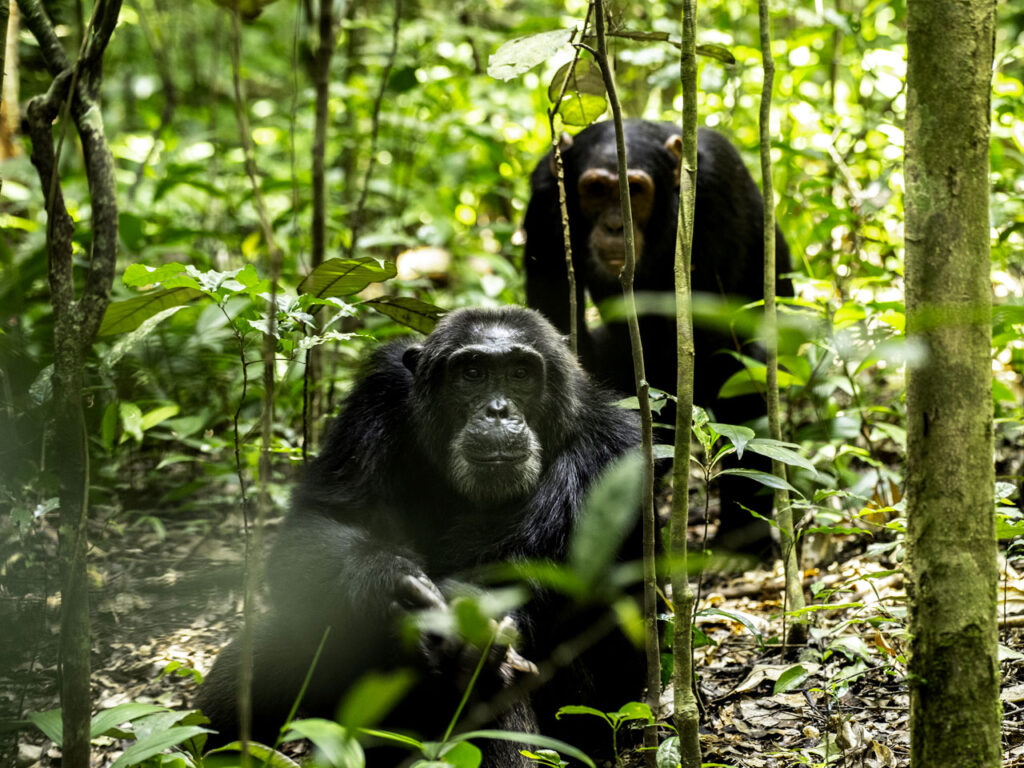
Chimpanzee tracking in Kalinzu Forest is unique for its high success rate (>90%) in locating over 50 habituated chimps within a pristine, less-crowded environment compared to Kibale. Offering a more intimate experience near Queen Elizabeth National Park, it boasts an affordable permit cost and high-quality viewing of over 300 total individuals
Kalinzu Forest Reserve is a hidden gem that offers a more raw and authentic primate experience compared to the larger national parks. It is a place where the forest feels ancient, and the wildlife encounters feel earned yet accessible.
14-days-uganda-and-rwanda-safari-tour-itinerary
14-days-luxury-uganda-primate-safari-holiday
14-days-uganda-primate-safari-and-jinja-white-water-rafting
14-days-classic-uganda-birding-safari-expedition
14-days-best-africa-big-five-safari-in-uganda-and-best-gorilla-trekking-adventure
20-days-uganda-birding-safari-wildlife-gorilla-and-chimpanzee-tracking
20-days-uganda-birding-safari-to-uganda-national-park
20-days-uganda-safari-holiday-tour-package-itinerary
19-days-best-photography-uganda-birding-safari-and-wildlife-adventure
19-days-incredible-uganda-safari-tour-big-five-chimpanzees-and-mountain-gorillas
18-days-best-of-uganda-safari-holiday-vacation-to-all-best-parks
17-days-uganda-honeymoon-safari-holiday-tour
17-days-uganda-birding-safari-itinerary
17-days-best-safari-in-uganda-ending-in-kigali-rwanda
16-days-ultimate-uganda-safari-to-rwanda-safari-tour-package-combo
16-days-best-of-uganda-birding-safari-holiday-extravaganza
7-day-ultimate-uganda-primate-safari-chimpanzees-and-game-drives
6-days-best-gorilla-trekking-and-safari-uganda-parks
1. Intimate Experience
One of the most significant advantages of Kalinzu Forest is its status as a "quieter" alternative to the more famous Kibale National Park. While Kibale is the premier primate destination, it can sometimes feel busy, with multiple groups moving through the forest simultaneously. In Kalinzu, the atmosphere is entirely different. Because it is managed by the National Forestry Authority (NFA) rather than the national park service, it sees fewer large tour groups.
This lack of crowds translates into a profoundly intimate interaction with nature. When you are tracking in Kalinzu, you often feel as though you have the entire rainforest to yourself. The silence is broken only by the rustle of the canopy or the distant "pant-hoot" of a chimpanzee. This tranquility allows for a deeper connection with the environment; you can stop to listen to the birds or examine a rare butterfly without feeling the pressure of other tourist groups waiting behind you. For the traveler seeking solitude and a sense of discovery, Kalinzu provides a "pioneer" feel that is increasingly rare in modern safari circuits.
2. High Probability of Sighting
While Kalinzu is a lush and dense forest, it boasts a remarkably high success rate for chimpanzee sightings, often exceeding 90%. The forest is home to a total population of over 300 chimpanzees, but the key to this reliability lies in the 50-plus individuals that have been fully habituated for tourism. These chimps have undergone a years-long process of becoming comfortable with human presence, meaning they continue their natural behaviors—grooming, fighting, and foraging—while you observe from a respectful distance.
The high probability of a sighting is also due to the expertise of the local trackers. Many of these rangers have worked in Kalinzu for decades and know the individual chimpanzees by sight and personality. They understand the "fruiting calendar" of the forest, knowing exactly which trees will be attracting the troop at different times of the year. Unlike some other forests where chimps may stay high in the emergent trees, Kalinzu’s habituated groups are frequently found on the ground or in the lower branches, providing excellent eye-level views and photographic opportunities that rival any other destination in East Africa.
3. Cost-Effective Permits
For budget-conscious travelers or those looking to maximize the value of their safari, Kalinzu is the most cost-effective primate tracking destination in Uganda. As of 2026, a chimpanzee permit in Kalinzu costs approximately $130 for foreign non-residents, which is significantly lower than the $250+ required in Kibale or the high costs associated with gorilla trekking.
This affordability does not imply a "budget" experience in terms of quality. The trackers are world-class, the forest is pristine, and the wildlife is abundant. The lower price point makes it an ideal choice for backpackers, families, or enthusiasts who want to track primates multiple times without breaking the bank. By choosing Kalinzu, travelers can often reallocate their savings toward other specialized activities, such as a boat cruise on the Kazinga Channel or an extra night in a luxury lodge, all while still enjoying a premier, Big Five-adjacent primate encounter that contributes directly to the conservation of this vital forest reserve.
4. Dual Timing Options
Flexibility is a major draw for Kalinzu, as it offers two distinct tracking sessions: the morning shift at 8:00 AM and the afternoon shift at 3:00 PM. This dual-timing structure is a rarity in primate tracking, where many parks offer only a single morning departure.
The morning session is generally the most popular, as the forest is cool and the chimpanzees are at their most vocal as they descend from their nests to forage. However, the afternoon session provides a unique alternative for travelers with tight itineraries. It allows visitors to drive from more distant locations like Lake Mburo or Mbarara in the morning and still participate in a full tracking experience the same day. The afternoon light in the forest is also softer and more "golden," which can be superior for photography. This flexibility ensures that no matter your travel schedule, you can fit a high-quality chimpanzee encounter into your Western Uganda circuit without having to sacrifice other key sightings.
5. High Biodiversity
Kalinzu is far more than just a chimpanzee sanctuary; it is a biodiversity powerhouse. The forest serves as a critical ecological corridor between the high-altitude forests and the rift valley floor. It boasts an incredible 379 bird species, including the iconic Great Blue Turaco and the rare Black-and-white-casqued Hornbill. For entomology enthusiasts, the forest is home to 261 species of butterflies and nearly 100 species of moths, which can be seen in dazzling displays in the sun-drenched clearings.
The botanical diversity is equally staggering, with 414 recorded tree species. This variety of flora supports a complex web of life, including six different primate species (including the L'Hoest's monkey and blue monkey), forest elephants, and even the occasional leopard. Walking through Kalinzu is a constant discovery; every layer of the forest, from the leaf-strewn floor to the emergent canopy, is occupied by specialized life forms. This high species count makes Kalinzu an "all-in-one" destination for nature lovers who want to see the "Big and Small" of the African rainforest in a single day.
6. Rich Flora
The flora of Kalinzu is as charismatic as its wildlife. The forest is defined by its ancient, towering hardwoods, but certain species stand out to every visitor. The Flame Tree (Erythrina abyssinica) is a highlight; during its flowering season, it erupts in brilliant, fiery red blossoms that provide a stunning contrast to the deep green of the forest. These trees are not only beautiful but are vital sources of nectar for the forest's many sunbirds.
Another botanical giant frequently pointed out by guides is the Dragon Tree (Dracaena). These prehistoric-looking trees can grow to immense heights and are often associated with local folklore and medicinal uses. The forest is also rich in strangler figs, which create intricate, hollow wooden structures that are a favorite playground for monkeys. Exploring the flora of Kalinzu is an education in resilience and competition; you will see how lianas climb hundreds of feet to reach the sun and how ferns carpet the moist, shaded valleys. For those interested in Ethnobotany, the forest acts as a living pharmacy, with guides explaining the traditional uses of bark, roots, and leaves to treat everything from malaria to vitality.
7. Easy Access
Logistically, Kalinzu is one of the most conveniently located forests in Uganda. It sits right on the edge of the Queen Elizabeth National Park (QENP), perched on the Kichwamba Escarpment. This "gateway" location makes it an effortless addition to any safari itinerary. Most travelers use it as a bridge between the savannah game drives of QENP and the mountain forests of Bwindi Impenetrable National Park.
The visitor center is located just off the main highway, meaning you don't need to navigate hours of rough "back-roads" to reach the start of your trek. You can spend the morning tracking chimpanzees in Kalinzu and be in the Ishasha sector looking for tree-climbing lions or on a boat cruise in Maramagambo Forest within an hour. This ease of access, combined with its proximity to high-end lodges and the cultural hub of Bushenyi, makes Kalinzu the most "user-friendly" forest for those who want to see the best of Uganda's wildlife without the logistical hurdles of more remote locations.
1. What makes chimpanzee tracking in Kalinzu Forest uniquely more intimate and less crowded than at Kibale National Park?
Kalinzu Forest Reserve offers a sense of solitude that is increasingly rare in the world of primate tourism. While Kibale National Park is the world’s premier chimpanzee destination, its popularity brings a level of infrastructure and foot traffic that can sometimes feel "industrial." In contrast, Kalinzu remains a hidden gem, largely because it is managed by the National Forestry Authority (NFA) rather than the standard national park system. This administrative distinction means that Kalinzu receives significantly fewer large group bookings and international marketing, preserving an "off-the-radar" atmosphere.
The intimacy of the experience is rooted in the limited number of permits issued per day. In Kalinzu, you are far less likely to encounter other groups while deep in the canopy. This silence allows for a much more profound connection with the forest’s "audio landscape"—the rustle of the leaves, the distant "pant-hoot" of the alpha male, and the chorus of forest birds. Without the pressure of dozens of other tourists waiting at the trailhead, the rangers can afford to spend more time explaining the subtle nuances of the ecosystem. For the traveler, this means that when you finally locate the chimpanzees, the encounter feels like a private discovery rather than a scheduled viewing. It is this raw, unscripted quality that defines Kalinzu, making it the preferred choice for purists who value silence and personal space over luxury visitor centers.
2. How do the lower costs of chimpanzee permits in Kalinzu Forest offer better value for budget-conscious visitors in 2026?
In 2026, the cost of wildlife permits continues to rise as conservation demands increase. However, Kalinzu Forest remains one of the most economically accessible primate destinations in East Africa. Currently, a permit in Kalinzu is approximately $130 for foreign non-residents, which is roughly half the price of a permit in Kibale National Park and a small fraction of the cost of mountain gorilla trekking. For budget-conscious travelers, this price point is transformative, allowing them to include a high-quality primate encounter in an itinerary that might otherwise have been restricted to savannah game drives.
The "value" here is not just about the lower price, but the quality-to-cost ratio. Despite the lower fee, the success rate for sightings remains incredibly high, and the expertise of the guides is world-class. Choosing Kalinzu allows travelers to reallocate their budget toward other essential experiences, such as an extra night on safari or a boat cruise on the Kazinga Channel. Furthermore, because the permits are less expensive, some enthusiasts choose to track on two consecutive days, providing a deeper understanding of the chimpanzees' social dynamics—an opportunity that would be financially prohibitive in more expensive parks. This affordability democratizes conservation tourism, ensuring that a wider range of people can contribute to the protection of these endangered apes.
3. Is it true that Kalinzu Forest boasts a 95% success rate for spotting chimpanzees during the organized, guided treks?
While no wildlife encounter in a natural habitat can be "guaranteed," Kalinzu Forest consistently reports a success rate for chimpanzee sightings that hovers around 90% to 95%. This remarkable reliability is the result of a highly successful, long-term habituation program that began decades ago with the assistance of Japanese researchers. Today, the forest has multiple habituated communities, meaning the chimpanzees are accustomed to human presence and do not flee when approached by rangers and tourists.
The high success rate is also a testament to the skill of the local trackers. These rangers head into the forest as early as 5:00 AM, using their knowledge of the previous night’s nesting sites and the current "fruiting calendar" to locate the troops before the tourists even arrive at the visitor center. Because Kalinzu is a montane forest with a high density of fig trees and other preferred food sources, the chimps often stay within a relatively predictable range. Even when the troop is on the move, the rangers' ability to interpret "pant-hoots" and the sound of drumming on buttress roots ensures that most groups make contact within the first two hours of their trek. This consistency makes Kalinzu a "safe bet" for travelers who have limited time but want a high-impact wildlife experience.
4. How does the dense, biodiversity-rich environment of Kalinzu Forest enhance the overall trekking experience compared to other locations?
Trekking in Kalinzu is a multi-sensory immersion into one of Africa’s most diverse "green lungs." Unlike the more open forests or savannah-edge habitats found elsewhere, Kalinzu is a medium-altitude moist evergreen forest. This creates a "vertical safari" environment where life exists in every layer—from the leaf-strewn floor to the emergent giants reaching 50 meters into the sky. The sheer density of the vegetation means that the forest remains cool and humid, providing a comfortable microclimate even during the heat of the afternoon.
This biodiversity enhances the trek by ensuring there is never a "dull" moment. While you are searching for chimpanzees, you are constantly surrounded by an overwhelming variety of life. You might pass through a stand of ancient tree ferns, encounter a vibrant carpet of forest butterflies, or spot a rare orchid clinging to a liana. The forest is home to 414 species of trees and six different primates, meaning that even if the chimps are playing "hard to get," the trek remains a fascinating botanical and zoological expedition. This "filler" biodiversity—the things you see while looking for something else—makes the experience feel more holistic and educational, providing a broader perspective on why these forest corridors are so critical for the survival of the planet.
5. What is the unique advantage of tracking the over 70 habituated chimpanzees located in the Kalinzu Forest Reserve?
The primary advantage of having a large pool of over 70 habituated chimpanzees is the stability and quality of the observation. Habituation is a delicate, years-long process where researchers spend daily time with a troop until the animals accept humans as a neutral part of their environment. With over 70 individuals across two main communities, Kalinzu offers a "cushion" that ensures sightings even if one group is particularly mobile or secretive on a given day.
This high number also allows for a more diverse look at chimpanzee social life. In a smaller troop, you might only see a few individuals, but in Kalinzu’s larger communities, you are more likely to witness complex social interactions—a territorial dispute, a coordinated hunt, or a large grooming party involving multiple generations. Having a large habituated population also means that the "tourist pressure" is spread out. Rangers can rotate which groups are visited, ensuring that no single family becomes overstressed by human presence. For the visitor, this translates to seeing chimps that are relaxed and acting naturally—nursing infants, playing, and squabbling—giving you a true "fly-on-the-wall" perspective into their lives.
6. How does tracking in Kalinzu provide a unique "off-the-beaten-path" experience for those seeking raw, uncommercialized nature?
For many travelers, the modern safari experience can sometimes feel overly curated, with paved roads and crowded viewpoints. Kalinzu Forest provides the antidote to this commercialization. It remains a Forest Reserve, which carries a different "vibe" than a high-profile national park. The visitor center is modest, the trails are often narrow paths cut through thick undergrowth, and the signage is minimal. This "raw" infrastructure appeals to the adventurous spirit of those who want to feel like they are exploring a frontier.
The uncommercialized nature of Kalinzu means that the encounters feel more authentic. You aren't watching animals through a fence or from a line of twenty safari vehicles; you are walking on the same ground as the primates, ducking under the same vines, and feeling the same damp forest air. The guides are often local men who have grown up on the forest’s edge, and their stories are rooted in personal history and folklore rather than a rehearsed script. This lack of "polish" is precisely what makes Kalinzu special. It is a place for the traveler who wants to get their boots muddy and who values the sound of the wind in the mahogany trees over the amenities of a luxury lodge.
7. Is it true that Kalinzu Forest offers the unique opportunity to combine chimpanzee tracking with viewing tea plantations?
Yes, one of the most visually striking aspects of Kalinzu is its dramatic "green-on-green" boundary. The forest is surrounded by rolling, emerald-colored tea plantations that carpet the hills of the Bushenyi district. As you drive toward the visitor center, you pass through miles of these manicured tea estates, which provide a sharp, geometric contrast to the wild, tangled chaos of the ancient rainforest.
This proximity offers a unique "dual-landscape" experience. Many visitors take time before or after their trek to walk through the tea fields, which are a photographer's dream, especially when the local pickers are at work in their colorful clothing. From certain viewpoints within the forest, such as the Kishunja Hill, you can look out and see the "battle line" where the dark forest canopy meets the bright, neon-green tea bushes. This combination allows travelers to engage with both Uganda’s natural heritage and its agricultural heart. It provides a rare opportunity to learn about the local economy and the challenges of "edge-effect" conservation—where human industry and wild nature must coexist in a delicate balance.
8. What role does the proximity of Kalinzu Forest to Queen Elizabeth National Park play in enhancing a safari itinerary?
Kalinzu Forest’s location is its greatest logistical asset. It sits on the Kichwamba Escarpment, overlooking the vast savannah plains of Queen Elizabeth National Park (QENP). This proximity—a mere 15-minute drive from the park’s main gate—allows for an incredibly efficient and diverse safari itinerary. In most other parts of Africa, transitioning from a tropical rainforest to an open savannah would require a full day of travel. In the Kalinzu-QENP corridor, you can do both in a single morning.
This proximity allows for a "seamless" wildlife experience. You can spend the morning in the cool, shaded world of the chimpanzees and be on a boat cruise along the Kazinga Channel to see hippos and elephants by the afternoon. It also simplifies accommodation logistics; many travelers stay in the lodges perched on the rift valley escarpment, which offer views of both the forest and the park. For those on a tight schedule, Kalinzu acts as the "missing piece" of the puzzle, providing a primate encounter that perfectly rounds out the big-game experience of the plains. It turns a standard savannah safari into a comprehensive "Pearl of Africa" journey with minimal transit time.
9. How do experienced local guides at Kalinzu increase the uniqueness of the tracking experience by educating visitors on ecology?
The guides at Kalinzu are the forest’s greatest ambassadors. Many are from the surrounding communities and have an intuitive, deep-seated connection to the land that goes far beyond academic training. Their presence turns a simple "animal hunt" into a masterclass in tropical ecology. As you walk, they don't just look for chimps; they read the forest like a book, identifying the "mother trees" that support the canopy and explaining the intricate relationship between the pollinators and the plants.
These guides increase the uniqueness of the experience by sharing local folklore and ethnobotanical knowledge. They might show you which leaves can be used as forest "soap" or which bark is traditionally used to treat a stomach ache. Their ability to mimic primate vocalizations or bird calls is often uncanny, and they can identify a species of monkey just by the way a branch shakes in the distance. This personalized education makes the trek a two-way conversation. By the time you leave the forest, you haven't just seen a chimpanzee; you've gained an understanding of the forest as a living, breathing entity that supports human life as much as it does the primates.
10. What unique primate species, besides chimpanzees, can trackers look forward to spotting while trekking through Kalinzu Forest?
While the chimpanzees are the undisputed headliners, Kalinzu is a sanctuary for a supporting cast of five other primate species, making it a "Primate Capital" in its own right. The most common sighting is the Black-and-white Colobus, which can be seen performing spectacular, long-distance leaps through the canopy. Their flowing white fur and shaggy tails make them one of the most photogenic animals in the forest.
Trackers can also look forward to seeing the Red-tailed Monkey, easily identified by its copper-colored tail and distinct white, heart-shaped nose. The Blue Monkey (which is actually a beautiful slate-grey) and the semi-terrestrial L'Hoest's Monkey are also frequently encountered. For those who opt for a night walk, the forest reveals its nocturnal residents: the wide-eyed Pottos and Galagos (Bushbabies), whose haunting cries are a staple of the African night. This diversity means that your binoculars are always in use; even when the chimpanzees are resting, the forest remains alive with the social squabbles and acrobatic displays of their primate cousins, providing a constant stream of wildlife activity.
11. How do the four distinct trails in Kalinzu Forest offer unique perspectives of the biodiversity during the tracking journey?
Kalinzu’s trail system is cleverly designed to showcase the forest’s different "micro-habitats," ensuring that every trek feels like a new exploration. The River Trail (2.5km) follows a stream through lush, riverine vegetation, providing the best opportunities to see water-dependent birds and primates seeking the succulent fruits that grow near the water. It is a peaceful, relatively flat walk that highlights the forest's cooling hydrology.
The Palm Trail (5km) is a botanical journey, showcasing the majestic Raphia palms and a variety of specialized tree species. It provides a different "texture" to the trek, with more open sunlight and a different set of bird species. The Valley Trail (3.5km) focuses on the steep ridges and deep ravines of the escarpment, offering a physical challenge and a "canopy-level" view of the forest as you walk along the ridge tops. Finally, the Waterfall Trail (11km) is the most ambitious, leading deep into the heart of the reserve to the Kilyantama falls. This trail offers the most "pristine" forest experience, passing through areas that feel completely untouched by time. By offering these diverse routes, Kalinzu ensures that the trek is tailored to the visitor's interests—whether they want a quick stroll or a half-day jungle odyssey.
12. Is it possible to experience the rare opportunity of bird watching in a paradise with 378 bird species after tracking?
Yes, Kalinzu is an undisputed paradise for birders, and the transition from primate tracking to bird watching is seamless. With 378 species recorded, the forest boasts one of the highest avian species counts in the region. Because the forest acts as a bridge between the savannah of Queen Elizabeth National Park and the montane forests of the ridges, it attracts a "best-of-both-worlds" list of species.
After you’ve spent your hour with the chimpanzees, you can spend the rest of your afternoon on a dedicated birding walk. The most famous resident is the Great Blue Turaco, a massive, stunning bird with turquoise plumage and a yellow beak that is often seen hopping between fruit trees. Serious birders can also search for the African Green Broadbill, a rare Albertine Rift endemic, or the Black-and-white-casqued Hornbill. The forest is also a haven for sunbirds, kingfishers, and various raptors. Because birding is a slower, quieter activity, it provides a perfect "cool down" after the high-energy excitement of the chimp trek, allowing you to appreciate the intricate colors and songs that define the forest’s auditory landscape.
13. What makes the morning and afternoon tracking sessions in Kalinzu uniquely flexible for tourists with busy itineraries?
Flexibility is a rare commodity in primate trekking, where most parks have a rigid "morning-only" schedule. Kalinzu is unique in that it offers both a morning session (8:00 AM) and an afternoon session (3:00 PM). This dual-timing is a major advantage for modern travelers who are often trying to balance multiple activities within a single safari circuit.
The morning session is the traditional choice, allowing you to see the forest wake up. However, the afternoon session is a "game-changer" for logistics. It allows travelers to spend their morning on a game drive or boat cruise in Queen Elizabeth National Park and still complete a full chimpanzee trek the same day. For those driving from Kampala or Lake Mburo, the afternoon session means they don't have to miss a day of wildlife viewing just for transit. The afternoon light in the forest is also softer and more diffused, which can be much better for photography in the dense canopy. This flexibility ensures that Kalinzu can fit into almost any itinerary, making it the most "user-friendly" forest for busy tourists.
14. How do the unique, less strenuous forest conditions in Kalinzu provide a more comfortable, yet rewarding, experience for all visitors?
While primate trekking is inherently physical, Kalinzu is often considered more "approachable" than the steep, high-altitude terrain of the gorilla parks or the vast, sprawling distances of Kibale. The forest is situated on a relatively stable plateau and escarpment, and while there are hills and ravines, many of the primary trails follow the natural contours of the land. This makes the trek moderately strenuous rather than exhausting, making it accessible to a wider range of ages and fitness levels.
The comfort of the experience is also enhanced by the forest's microclimate. Because it is a moist evergreen forest, it remains significantly cooler than the surrounding savannah, providing a refreshing break from the heat of the plains. The presence of well-maintained trails means that you aren't always "bushwhacking," which allows you to keep your head up and enjoy the scenery. This "manageable challenge" means that you finish the trek feeling invigorated rather than depleted, allowing you to enjoy the rest of your day’s activities. It is the perfect "introductory" trek for those who want the thrill of the jungle without the extreme physical toll of a multi-day mountain climb.
15. What unique botanical features, such as the famous "Viagra tree," can hikers discover while tracking in Kalinzu Forest?
Kalinzu is a living museum of ethnobotany, and its trees are just as famous as its animals. The most talked-about botanical feature is the Mutragyne rubrostipuleta, popularly known as the "Viagra tree." Local guides will point out this species, explaining its traditional use in boosting vitality and treating various health ailments. It is a fantastic example of how the forest has served as a "pharmacy" for the local communities for centuries.
Hikers will also discover the "Flame Tree" (Erythrina abyssinica), which produces brilliant red flowers that look like tongues of fire against the green canopy. The forest is also home to the "Dragon Tree" (Dracaena), which has prehistoric origins and a unique, branching structure. Guides also point out the "Strangler Fig," which starts as a tiny seed in the canopy and eventually grows roots that encase and "strangle" its host tree, creating a hollow, lattice-like trunk that serves as a home for bats and birds. These botanical features provide a narrative to the trek, turning the walk into a story of competition, survival, and traditional wisdom, ensuring that you leave the forest with a deeper appreciation for the "green" life that makes all primate survival possible.
Booking Chimpanzee tracking with us Roads of Adventure safaris
Book your chimpanzee tracking experience with Roads of Adventure Safaris for a seamless, tailor-made adventure in Uganda, typically featuring Kibale National Park. They handle all logistics, including securing permits, private 4x4 transport, and comfortable lodges. Bookings, which often include expert guides, require a 30% deposit
