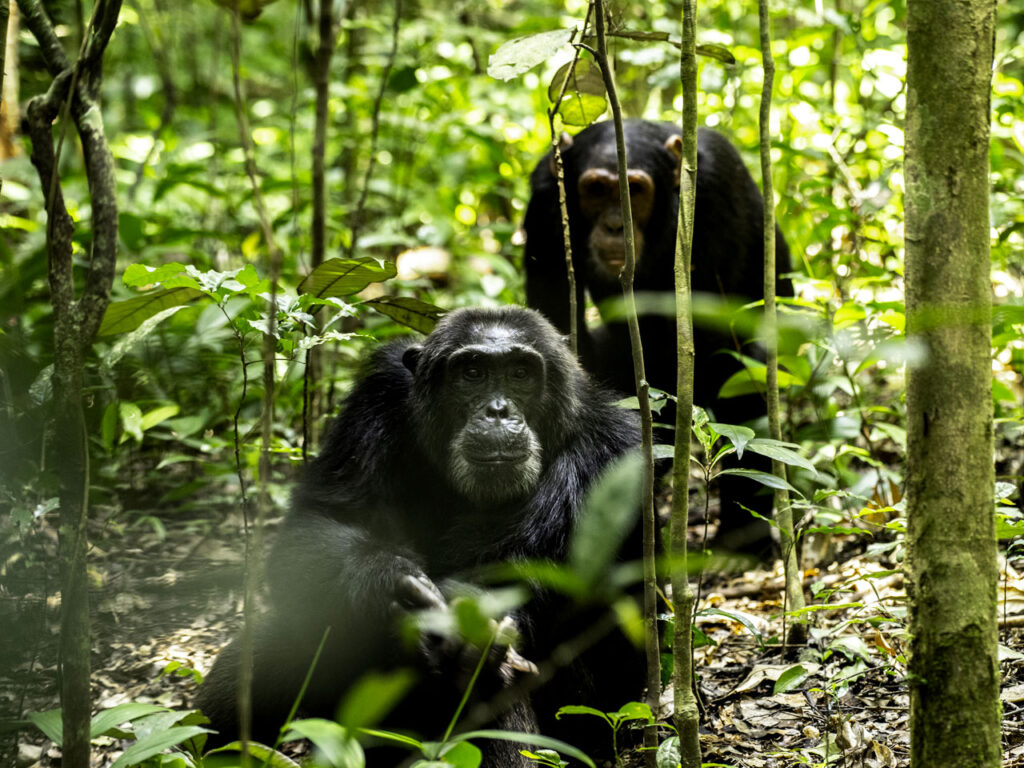
Yes, you can absolutely combine chimpanzee tracking with birding in Kalinzu Forest. The forest is a hotspot with over 375 bird species and 320+ chimpanzees, allowing you to enjoy a 2–3-hour (or up to 4 hours) trek to see chimpanzees and birdwatching on the same trip, often during the same forest walk.
14-days-uganda-and-rwanda-safari-tour-itinerary
14-days-luxury-uganda-primate-safari-holiday
14-days-uganda-primate-safari-and-jinja-white-water-rafting
14-days-classic-uganda-birding-safari-expedition
14-days-best-africa-big-five-safari-in-uganda-and-best-gorilla-trekking-adventure
20-days-uganda-birding-safari-wildlife-gorilla-and-chimpanzee-tracking
20-days-uganda-birding-safari-to-uganda-national-park
20-days-uganda-safari-holiday-tour-package-itinerary
19-days-best-photography-uganda-birding-safari-and-wildlife-adventure
19-days-incredible-uganda-safari-tour-big-five-chimpanzees-and-mountain-gorillas
18-days-best-of-uganda-safari-holiday-vacation-to-all-best-parks
17-days-uganda-honeymoon-safari-holiday-tour
17-days-uganda-birding-safari-itinerary
17-days-best-safari-in-uganda-ending-in-kigali-rwanda
16-days-ultimate-uganda-safari-to-rwanda-safari-tour-package-combo
16-days-best-of-uganda-birding-safari-holiday-extravaganza
7-day-ultimate-uganda-primate-safari-chimpanzees-and-game-drives
6-days-best-gorilla-trekking-and-safari-uganda-parks
1. Best Time to Visit
Kalinzu is a tropical rainforest, meaning that precipitation is a factor regardless of the month. however, for those combining trekking with a savannah safari, timing is crucial. The long dry season (June to August) and the short dry season (December to February) are widely considered the optimal windows for visiting. During these months, the forest trails—which can be steep and clay-heavy—are significantly less muddy and more stable. This makes the physical act of trekking more comfortable and less draining, allowing you to focus on the canopy rather than your footing.
In the dry season, the thinning of the undergrowth also improves visibility for spotting primates and birds. Furthermore, since Kalinzu is often paired with Queen Elizabeth National Park, the dry season coincides with the best time for game drives; animals congregate around permanent water sources like the Kazinga Channel, making them easier to locate. If you visit during the wetter months (March to May and October to November), you will find a lush, vibrant green forest and fewer tourists, but you should be prepared with high-quality waterproof gear and a spirit of adventure for the slippery terrain.
2. Birding and Nature Walks
Kalinzu is a biodiversity "bridge," linking the rift valley floor to the higher ridges, which creates an extraordinary environment for nature walks. While chimpanzees are the primary goal for many, the forest is a high-density habitat for several other primates. On any given walk, it is common to see Red-tailed Monkeys with their distinct heart-shaped noses, Blue Monkeys, and L'Hoest's Monkeys. Unlike the forest interior, the edges of Kalinzu near the tea estates are frequently visited by Olive Baboons and Vervet Monkeys, providing a complete primate spectrum.
For birders, the forest is nothing short of a sanctuary, with over 378 recorded species. The nature walks are often paced slower for birding enthusiasts to spot the Great Blue Turaco, whose massive blue-and-yellow form is a staple of the forest canopy. You might also hear the rhythmic "honk" of the Black-and-white-casqued Hornbill. The forest trails, such as the Waterfall or Palm trails, allow for a multi-sensory experience where you can appreciate the intricate butterflies, rare moths, and prehistoric tree ferns that make this ecosystem so ancient and unique.
3. Chimpanzee Permits
To track the habituated chimpanzee troops in Kalinzu, a permit is mandatory. As of 2026, these permits cost approximately $110, though prices can fluctuate slightly based on residency status and updated conservation tariffs. This fee represents exceptional value; for comparison, permits in nearby Kibale National Park can cost more than double this amount. The permit includes the park entrance fee and the services of a professional ranger-guide who is essential for navigating the forest and interpreting chimp behavior.
It is highly recommended to book these permits in advance, especially during the peak dry seasons. While Kalinzu is often more accessible for "last-minute" bookings than the gorilla parks, the limit of six people per group means that slots can fill up quickly. The revenue from these permits is a critical component of the forest's survival. It funds the anti-poaching patrols that protect the 70+ habituated chimps and supports the community initiatives that ensure local residents benefit from conservation tourism. By securing a permit, you are directly investing in the continued existence of one of Uganda's most vital chimpanzee refuges.
4. Location
Kalinzu's greatest logistical advantage is its location. It sits on the southeastern escarpment of the Great Rift Valley, perched just above the plains of Queen Elizabeth National Park (QENP). This proximity allows for a "seamless safari" where you can track chimpanzees in the morning and be on a boat cruise along the Kazinga Channel by the afternoon. The transition from the cool, misty rainforest of Kalinzu to the warm, acacia-dotted savannah of QENP takes less than 20 minutes by car.
This strategic positioning makes it easy to integrate diverse activities. Many travelers stay in lodges located in the Bushenyi or Kasese districts, using Kalinzu as a half-day excursion before heading into the Ishasha sector to look for tree-climbing lions. The forest serves as a perfect "green lung" between the long drives across the savannah. Because it is situated along the main highway connecting Mbarara to the western border, it is an ideal stopover for those traveling between Lake Mburo and the gorilla forests of Bwindi, acting as a centerpiece for the "Western Uganda Circuit."
5. Safety
Safety is a top priority in Kalinzu, and the forest is exceptionally well-managed for tourism. Every trek is led by armed park rangers who are employees of the National Forestry Authority or the Uganda Wildlife Authority. While the forest is generally peaceful, the rangers carry firearms as a standard safety precaution—primarily to scare off large animals like forest elephants or buffalo with a "warning shot" if they become too curious or territorial, and to ensure the group is protected in the remote wilderness.
Beyond wildlife safety, the rangers are expertly trained in first aid and forest navigation. They maintain constant radio contact with the base station, ensuring that help is available should a trekker experience any difficulty. The forest itself is a safe environment for visitors, provided that the park rules—such as staying with the group and following the guide's instructions—are respected. For booking and up-to-date safety details, visitors can coordinate through the Kalinzu Forest Visitor Center or licensed tour operators. This professional oversight allows travelers to immerse themselves in the primordial beauty of the rainforest with total peace of mind.
1. Can I do birding and chimpanzee trekking on the same day in Kalinzu?
Yes, combining birding and chimpanzee trekking on the same day is not only possible but highly recommended. Because Kalinzu Forest is a multi-layered ecosystem, the two activities naturally overlap. Chimpanzee trekking typically begins with an 8:00 AM briefing, and while you are hiking through the forest to locate the primates, you are simultaneously traversing one of the most bird-rich habitats in Uganda. Many visitors find that the "pursuit" phase of the chimp trek doubles as an excellent birding session, as your ranger-guide will point out vocalizations and sightings along the way.
To maximize the experience, most travelers opt for a "full-day" forest immersion. You can dedicate the morning to the high-energy task of locating the chimpanzees and spending your allocated hour with them. Once the chimp trek is completed, you can transition into a more focused birding walk in the afternoon, perhaps along a different trail like the Waterfall or River Trail. The forest’s proximity to Queen Elizabeth National Park means that the birding list includes both forest specialists and some savannah-edge species. Doing both on the same day allows you to experience the forest's transition from the noisy, social activity of primates in the morning to the specialized, often quieter observation of rare avian species in the afternoon light.
2. How many hours does it take for both birding and chimpanzee tracking?
A combined day of birding and chimpanzee tracking typically requires between 6 to 8 hours of active forest time. The chimpanzee trekking component is the most variable variable; depending on the movement of the habituated troops, it can take anywhere from 2 to 5 hours (including the mandatory one hour of direct interaction). Because chimps are mobile, you may cover several kilometers of terrain before finding them, which often consumes the bulk of your morning energy.
If you add a dedicated birding session, you should plan for an additional 2 to 3 hours. Birding is inherently slower-paced, as it involves frequent stops to scan the canopy with binoculars and wait for specific calls. For example, a morning chimp trek starting at 8:00 AM might conclude around noon. After a short lunch break at the visitor center or a forest clearing, an afternoon birding walk from 2:00 PM to 5:00 PM would round out the day. This schedule ensures you catch the "dawn chorus" during the start of your trek and the "afternoon activity peak" for birds before dusk. While it is a physically demanding day, the overlap in trails means you aren't wasting time on transit, making it a very efficient use of a single day in the reserve.
3. Are there specific guided tours that combine both birding and tracking together?
While there isn't always a "pre-packaged" combo tour sold under a single name, the rangers at the Kalinzu Visitor Center are expertly trained to facilitate both activities simultaneously. When you book your chimpanzee permit, you can request a guide with a specific interest or expertise in ornithology. Most Kalinzu rangers are dual-specialists; they are tasked with tracking primates but are also highly proficient in identifying the 378+ bird species by both sight and sound.
For a more formal combined experience, it is best to coordinate with a licensed tour operator who can arrange a "Specialist Birding and Primate Safari." In this setup, your guide will prioritize the chimpanzees to ensure you get your sighting, but will intentionally slow the pace of the hike to allow for bird identification. They will carry bird field guides and high-quality binoculars to help you spot the Great Blue Turaco or the Black-and-white-casqued Hornbill. Because the group size for chimp tracking is limited to six people, if you are part of a private group or a group of birding enthusiasts, the ranger can easily tailor the entire 4-to-5-hour forest excursion to satisfy both interests without needing to book two separate tours.
4. Can I see other primates while birding in the Kalinzu Forest Reserve?
Absolutely. Birding in Kalinzu is often interrupted by the acrobatic displays of the forest’s other primate residents. Because you are moving slowly and quietly to observe birds, you are much more likely to encounter the more secretive monkeys that a faster-paced chimp trek might bypass. The Black-and-white Colobus is a frequent sight; they often occupy the same high-canopy fruit trees favored by large birds like hornbills and turacos.
As you scan the mid-canopy for sunbirds or flycatchers, you will likely spot Red-tailed Monkeys with their distinct copper-colored tails and Blue Monkeys (which are actually a dark grey-blue). The forest is also home to L'Hoest's Monkeys, which are semi-terrestrial and often seen scampering across the trails as you look for ground-dwelling birds like the forest francolin. Even the Olive Baboons that patrol the forest edges and the Vervet Monkeys near the visitor center are part of the daily scenery. The presence of these primates actually aids birders; monkeys often drop fruit or disturb insects as they move, attracting "follower" bird species that feed on the leftovers or the flushed-out bugs.
5. What is the best time of year to combine tracking and birding?
The best time to combine these activities is during the Dry Seasons, specifically June to September and December to February. For tracking, the dry season is ideal because the trails are less slippery and the chimpanzees are often easier to locate as they congregate near permanent water sources and specific fruiting trees. For birders, the dry weather provides better lighting and clearer views through the canopy, as there is less mist and rain to obscure your binoculars.
However, there is a "sweet spot" for birders during the short rains (October to November) and the start of the long rains (March). This is when many forest birds are in their breeding plumage and are most vocal as they establish territories. Furthermore, this period coincides with the arrival of migratory bird species from Europe and northern Africa, significantly swelling the park’s species count. If your primary goal is the "Big Five" primates and easy hiking, stick to the peak dry months. If you are a serious birder willing to brave some mud for rare sightings and migratory species, the shoulder seasons offer a much higher diversity of avian life. Regardless of the month, the early morning remains the "golden hour" for both birds and chimps.
6. Are there different permits required for both trekking and bird watching activities?
Yes, the administrative requirements for these activities are distinct. To track the chimpanzees, you must purchase a Chimpanzee Trekking Permit, which currently costs approximately $130 for foreign non-residents. This permit is specific to the primate encounter and grants you the mandatory ranger-guide and exactly one hour of time with the habituated troop. Because this is a regulated activity with limited daily slots (six people per group), the permit is the most essential document to secure in advance.
For focused bird watching or general nature walks that do not involve "tracking" a habituated primate group, you typically only need to pay the Park Entrance Fee or a Nature Walk Fee, which is significantly cheaper (usually around $30–$40). However, if you are birding while on your chimp trek, the chimp permit covers your entry. If you plan to stay in the forest for a dedicated birding session after your chimp trek is over, you may be asked to pay the standard nature walk fee for the additional guide time. It is always best to clarify your full-day plan at the visitor center in the morning; often, if you have already paid for a chimp permit, the rangers are flexible about allowing continued birding on the main trails for a small additional guide tip or a nominal forest walk fee.
7. How far is Kalinzu Forest from Queen Elizabeth National Park for travelers?
Kalinzu Forest Reserve is exceptionally well-located for travelers, sitting right on the edge of the Queen Elizabeth National Park (QENP) ecosystem. The distance from the Kalinzu Visitor Center to the main highway entrance of QENP (near the Kazinga Channel) is only about 10 to 15 kilometers, which translates to a short 20-to-30-minute drive. This proximity is what makes Kalinzu such a popular alternative to Kibale for chimp trekking.
Many travelers stay in lodges located within the Queen Elizabeth "corridor" or in the nearby town of Bushenyi. Because the forest sits on the escarpment overlooking the park, the transit is seamless. You can literally leave your savannah lodge at 7:30 AM, arrive at Kalinzu for the 8:00 AM briefing, finish your trek by midday, and be back in QENP for a 3:00 PM boat cruise on the Kazinga Channel. This geographical convenience allows you to experience two completely different biomes—tropical rainforest and acacia savannah—within the same afternoon, making it a cornerstone of the Western Uganda safari circuit.
8. Do I need a separate guide for the birding activity in Kalinzu?
While you don't strictly need a separate person, you do need a ranger-guide provided by the forest station for any activity inside the reserve. For the chimpanzee trek, a guide is mandatory for safety and tracking. If you want to do a dedicated birding tour after your chimp trek, you will typically be assigned a guide who specializes in ornithology. While the chimp guide can certainly point out birds, a "birding guide" will have a more profound knowledge of specific nesting sites, migratory patterns, and call mimicry.
If you are a casual birder, the guide who takes you for the chimpanzees is usually more than sufficient. They are all trained in general forest biodiversity. However, if you are a "twitcher" looking for specific rarities like the African Green Broadbill, it is worth requesting a specialist at the visitor center. This might involve a small additional fee for their specialized time, but it ensures you are with someone who can distinguish between the dozens of similar-looking "Little Greenbuls" or sunbirds. In short: for a general experience, one guide can do it all; for a professional birding checklist, a specialist guide is a worthwhile investment.
9. Is birding in Kalinzu possible before or after the morning chimp trek?
Yes, and both timings offer different advantages. Birding before the trek usually happens around the visitor center and the forest edges from 7:00 AM to 8:00 AM while you wait for your briefing. This is the "dawn chorus" period when birds are most active and vocal. You can often tick off several species, like the Black-and-white-casqued Hornbill or various weavers, right from the parking area.
Birding after the trek (from noon onwards) is often more productive for deep-forest species. Once the high-energy "chase" for the chimpanzees is over, you can walk back at a much slower pace or explore a different trail like the Palm Trail or River Trail. Afternoon birding is excellent for raptors soaring over the ridges and for spotting birds that prefer the heat of the day, such as certain sunbirds and honeyguides. Most birders prefer to stay in the forest for a few hours after the chimp trek, as the "one hour" with the chimps often passes so quickly that you'll want the extra time to appreciate the quieter, avian side of Kalinzu's biodiversity.
10. What unique bird species can I find while birding in Kalinzu Forest?
Kalinzu is famous for harboring several "specialties" that are difficult to find in the more open savannahs. The most iconic is the Great Blue Turaco, a massive, stunning bird with a turquoise body and a yellow-and-red beak. Seeing a group of these "clumsy" beauties hopping through the canopy is a highlight for any visitor. Another key sighting is the Black-and-white-casqued Hornbill, which is frequently seen and heard throughout the forest.
For those with a keen eye, the forest is home to the African Green Broadbill, a rare Albertine Rift endemic. You can also find the Chocolate-backed Kingfisher, which, unlike its water-loving cousins, lives deep in the forest undergrowth. Other unique finds include the White-naped Pigeon, the Grey Parrot, and various Sunbirds (like the Regal and Blue-throated). The forest's intersection with the rift valley also means you might see the Ross's Turaco and the Crowned Eagle, one of Africa's most powerful raptors. The diversity is so high that even a short walk can yield a list of 40–50 species for an experienced birder.
11. Are there designated trails for birding that are separate from tracking trails?
While all trails in Kalinzu can be used for birding, certain routes are better suited for it than others. The chimpanzee tracking usually follows the most direct path to the habituated troops, which can change daily and often involves some "off-trail" bushwhacking. This isn't always ideal for stable bird observation.
In contrast, the Waterfall Trail (11km) and the River Trail (2km) are excellent designated birding routes. The Waterfall Trail takes you through various forest elevations, providing a broader range of species, while the River Trail offers sightings of water-dependent birds and those that prefer the thick riverine vegetation. The Palm Trail is also a favorite for birders because it is relatively flat and clear, allowing you to keep your eyes on the canopy rather than your feet. While you will likely see birds on any trail, these designated walking trails offer the tranquility and consistent habitat needed for a professional birding experience, away from the groups focused solely on primates.
12. How much extra time does birding take after the hour with chimps?
If you want a satisfying birding experience after your hour with the chimpanzees, you should plan for at least an additional 2 to 3 hours. While the walk back from the chimps to the visitor center can be used for birding, it is often better to head back, have a snack, and then set out on a dedicated birding loop.
The extra time allows you to focus on "specialty" spots, such as a fruiting fig tree where multiple species might be congregating or a known nesting site for a specific raptor. Birding is a game of patience; you might spend 20 minutes standing under one tree just to get a clear look at a small, fast-moving warbler. Therefore, a "quick" birding add-on usually doesn't do the forest justice. Most birders find that staying until the late afternoon (around 4:00 PM or 5:00 PM) provides the best results, as the birds become more active again as the temperature cools. If you are combining it with a drive back to a lodge in Queen Elizabeth National Park, adding 3 hours to your morning trek ensures you get back just in time for a sundowner.
13. Is it possible to see elephants while birding in the Kalinzu forest?
Yes, it is possible, though forest elephants are notoriously elusive. Unlike the large, visible herds of the savannah, forest elephants are smaller, have straighter tusks, and are masters of disappearing into the thick undergrowth. While birding along the River Trail (often called the "Elephant Waterway"), you might see signs of their presence—freshly stripped bark, large footprints in the mud, or massive piles of dung.
Seeing one is a rare and thrilling event. They usually gather near the river or in the deeper, quieter parts of the forest where human activity is minimal. Because birders move quietly and slowly, they actually have a better chance of "surprising" a forest elephant than the louder, faster-moving chimp trekking groups. If you do encounter one, your ranger will ensure you keep a safe distance, as forest elephants can be more territorial than their savannah cousins. The mere possibility of encountering a "mega-herbivore" while looking for a tiny sunbird adds a layer of prehistoric excitement to any birding walk in Kalinzu.
14. What are the recommended items to carry for a combined birding trek?
A combined trek requires a mix of wildlife gear and hiking essentials.
- Binoculars: This is the most critical item. A pair of 8x42 or 10x42 binoculars is ideal for the forest canopy.
- Bird Field Guide: Carrying a physical or digital copy of "Birds of East Africa" helps you and your guide confirm sightings.
- Camera: A camera with a good zoom lens (at least 300mm–400mm) is necessary for bird photography in the low light of the forest.
- Footwear: Waterproof hiking boots with good ankle support are essential for the hilly, often muddy terrain.
- Clothing: Wear long-sleeved shirts and long trousers (tucked into socks) to protect against stinging nettles and ants. Neutral colors (green, tan, or brown) help you blend into the forest.
- Backpack: A small, waterproof daypack to carry at least 2 liters of water, energy-dense snacks, and a lightweight rain poncho.
- Notepad: To record your "lifelist" of sightings. Finally, don't forget insect repellent and a hat. Since you will be in the forest for several hours, being prepared for sudden rain and humidity will keep the experience enjoyable.
15. Do I need to book a guided birding tour in advance for Kalinzu?
For a general nature walk or casual birding, you can often turn up at the visitor center and request a guide on the spot. However, if you want a specialized birding guide or if you are planning to combine it with a chimpanzee trek, advance booking is highly recommended.
Chimpanzee permits are limited to 36–48 slots per day (across all groups), and these can sell out weeks in advance during the peak dry seasons (June–August). By booking your chimp trek in advance and specifying that you are a birding enthusiast, the park management can ensure they pair you with the most knowledgeable ornithological ranger. If you show up without a booking, you might still get into the forest for a walk, but you risk missing out on the chimpanzees, which would be a shame given how closely the two activities are linked. For the best experience, coordinate with a tour operator or contact the National Forestry Authority office in advance to secure your spot and request your specialist guide.
Booking chimpanzee tracking with us Roads of Adventure safaris
Book your chimpanzee tracking experience with Roads of Adventure Safaris to explore Kibale National Park, with options for 4-day to 17-day itineraries, including primate tracking, gorilla trekking, and wildlife safaris. We handle all logistics, such as securing permits, comfortable lodging, and private 4x4 transport
