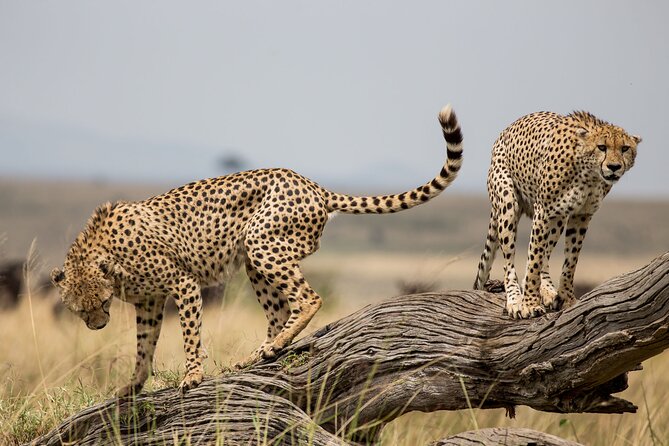
A 10-day Kenya wildlife safari typically covers a "Grand Circuit" of premier national parks, focusing on the Big Five, the Great Migration in the Masai Mara, and diverse ecosystems. Key destinations include the Masai Mara, Amboseli, Lake Nakuru/Naivasha, and often Samburu or Tsavo, featuring game drives, boat safaris, and cultural encounters, starting and ending in Nairobi.
10-days-samburu-amboseli-nakuru-naivasha-maasai-mara-safari-tour
10-days-luxury-kenya-safari-holiday-vacation
10-days-best-maasai-mara-lake-nakuru-and-amboseli-safari-and-diani-beach-holiday-escape
10-day-luxury-kenya-wildlife-safari-holiday
10-days-kenya-wildlife-safari-diani-beach-holiday-round-trip-to-all-best-parks-in-kenya
10-days-ultimate-budget-kenya-tanzania-wildlife-safari-holiday-tour-package
10-days-perfect-kenya-tanzania-photographic-safari-tour
10-days-best-kenya-tanzania-safari-itinerary-tour
10-days-best-kenya-tanzania-honeymoon-safari-with-zanzibar-beach-holidays
10-days-kenya-wildlife-safari-and-gorilla-safari-in-uganda
10-days-kenya-safari-to-mombasa-beach-escape
10-day Kenya wildlife safari itinerary
Embarking on a 10-day Kenya wildlife safari itinerary is the ultimate way to experience the rhythmic heart of East Africa, a journey that seamlessly blends rugged adventure with sophisticated conservation. This expansive circuit is designed for those who wish to witness the full spectrum of Kenya’s ecological diversity, moving from the urban sanctuary of Nairobi to the arid northern frontiers and down to the legendary golden plains of the south. Throughout this 10-day Kenya wildlife safari itinerary, you will navigate the dramatic landscapes of the Great Rift Valley, stand in the monumental shadow of Mount Kilimanjaro, and immerse yourself in the high-stakes predator territory of the Maasai Mara. It is a logistical masterpiece that prioritizes maximum wildlife exposure, ensuring that every sunrise brings a new opportunity to encounter the "Big Five." Whether you are a photographer, a birder, or a first-time explorer, this 10-day Kenya wildlife safari itinerary offers a profound, life-altering connection to the natural world.
Days 1–2: Nairobi and Regional Exploration
Your 10-day Kenya wildlife safari itinerary begins in the "Green City in the Sun." Upon arrival, you’ll visit the Sheldrick Wildlife Trust to see orphaned elephants and the Giraffe Centre for an up-close encounter with endangered Rothschild’s giraffes. These urban sanctuaries provide essential context for the conservation efforts you will witness throughout your trip. On day two, you depart for the northern frontier or the rugged plains of Tsavo West. If heading north to Samburu, the landscape shifts into an arid, beautiful wilderness dominated by the Ewaso Nyiro River. Here, you’ll search for the "Special Five"—unique species like the reticulated giraffe and the long-necked gerenuk. This initial leg of your 10-day Kenya wildlife safari itinerary introduces the dramatic geographical shifts that make Kenya a world-class destination, balancing educational city tours with the raw energy of the northern wild.
Days 3–4: Amboseli National Park
The next phase of your 10-day Kenya wildlife safari itinerary takes you south to the iconic Amboseli National Park. Known as the best place in the world to get close to free-ranging elephants, Amboseli is defined by its seasonal swamps and the towering presence of Mount Kilimanjaro. As you traverse the park, you’ll see massive "tusker" elephants silhouetted against Africa's highest peak—a quintessential image of the savanna. Beyond elephants, the park is home to lions, cheetahs, and over 400 species of birds. The contrast between the dry, salty lake beds and the lush green marshes creates a unique ecosystem where wildlife is highly concentrated and easily spotted. These two days are a highlight of any 10-day Kenya wildlife safari itinerary, offering some of the most spectacular photographic backdrops found anywhere on the continent.
Days 5–6: Great Rift Valley Lakes
Your 10-day Kenya wildlife safari itinerary continues as you descend into the Great Rift Valley, a geological wonder visible from space. First, you’ll explore Lake Nakuru National Park, a premier sanctuary for both black and white rhinoceroses. The park’s fever-tree forests and soda lake shores offer a haven for leopards and flamingos. Next, you move to Lake Naivasha, a freshwater lake where the safari takes to the water. A boat ride here allows you to glide past pods of hippos and watch African fish eagles hunt. You may also enjoy a walking safari on Crescent Island, where you can walk among giraffes and zebras without the confines of a vehicle. This segment of the 10-day Kenya wildlife safari itinerary provides a refreshing aquatic perspective and a high probability of ticking the rhino off your Big Five list.
Days 7–9: Maasai Mara National Reserve
The crescendo of your 10-day Kenya wildlife safari itinerary is the legendary Maasai Mara. This is the stage for the Great Wildebeest Migration (seasonal) and boasts one of the highest predator densities on Earth. Over three intensive days, you will track prides of lions, solitary leopards, and high-speed cheetahs across the rolling grasslands. Your guide will navigate the Mara River, where crocodiles wait for crossing herds, and the open plains where the drama of life and death unfolds daily. You’ll also have the chance to visit a Maasai village, gaining insight into the ancient culture that has coexisted with these predators for centuries. Whether witnessing a hunt or enjoying a sundowner overlooking the vast horizon, these days in the Mara represent the emotional heart of your 10-day Kenya wildlife safari itinerary.
Day 10: Return to Nairobi
The final day of your 10-day Kenya wildlife safari itinerary begins with a sunrise game drive, offering one last chance to spot a leopard in the morning mist or a cheetah on a termite mound. After a hearty bush breakfast, you begin the scenic drive back to Nairobi, climbing out of the Rift Valley with stops at viewpoints overlooking the dramatic escarpment. Back in the capital, you can enjoy a farewell dinner at a local landmark like the Carnivore Restaurant, reflecting on the incredible biodiversity you’ve witnessed. This journey concludes where it began, but you leave with a transformed perspective on nature. As you head to the airport, the memories of the savanna and the people you met during your 10-day Kenya wildlife safari itinerary will remain with you as a testament to the enduring magic of the Kenyan wild.
1. Main Destinations in a 10-day Kenya Wildlife Safari
A standard 10-day circuit is designed to showcase the geographic diversity of the country. It almost always begins and ends in Nairobi, the regional hub. From the capital, the route typically heads north or south. A classic itinerary includes the Maasai Mara National Reserve, world-famous for its high predator density and the Great Migration. To the south, Amoseli National Park provides the iconic backdrop of Mount Kilimanjaro and is the best place in Africa to see massive elephant herds.
The "central" portion of the trip usually focuses on the Great Rift Valley, specifically Lake Nakuru (for rhinos) or Lake Naivasha (for boat safaris and birdlife). For those seeking a more rugged experience, the arid north of Samburu National Reserve is often included to see species not found elsewhere. Alternatively, travelers seeking vast, ancient landscapes might head to Tsavo East or West, known for its "red elephants" and dramatic volcanic features like the Shetani lava flows.
2. Parks for the Best Big Five Sightings
The "Big Five" (Lion, Leopard, Elephant, Buffalo, and Rhino) are the primary targets for most safari-goers. The Maasai Mara is arguably the best place on earth for the "Big Three" cats: lions, leopards, and cheetahs. The open plains make tracking these predators relatively straightforward for experienced guides. For Elephants, Amboseli is unrivaled; the park’s swamps attract hundreds of elephants daily, allowing for sightings of famous "tuskers" at close range.
The Rhino is the most elusive of the Five. To see them, a 10-day itinerary will typically include Lake Nakuru National Park or the private Ol Pejeta Conservancy. Ol Pejeta is particularly significant as it is a sanctuary for the world's last remaining northern white rhinos and has a very high density of black rhinos. Buffaloes are ubiquitous throughout all major parks, often seen in massive, protective herds. By combining the Mara with Nakuru and Amboseli, travelers have a nearly 100% success rate for the full Big Five.
3. Including the Wildebeest Migration
The Great Migration is a seasonal event, and a 10-day safari provides the perfect window to witness it if timed correctly. The migration typically reaches the Maasai Mara between August and October. During these months, over 1.5 million wildebeest, accompanied by hundreds of thousands of zebras and gazelles, cross the Mara River from the Serengeti.
A 10-day itinerary allows you to spend 3 or 4 days specifically in the Mara, which is necessary to catch a "crossing"—the dramatic moment animals brave crocodile-infested waters. Even if you don't witness a crossing, the sheer volume of animals on the plains is staggering. Because this is peak season, booking a 10-day trip during this window requires planning at least a year in advance, as the best lodges overlooking the river sell out quickly.
4. Time Spent in the Maasai Mara
On a 10-day trip, the Maasai Mara is the "anchor" destination. Most experts recommend allocating at least 3 to 4 full days here. This isn't just because of the wildlife density, but because of the vastness of the reserve. The Mara is divided into the main National Reserve and several surrounding private conservancies.
Spending four days allows you to explore different sectors: the riverbanks for hippos and crocodiles, the Musiara Marsh for prides of lions, and the open plains for cheetahs. It also provides a "buffer" for optional activities like a hot air balloon safari, which takes place at dawn. With four days, the pace becomes less about "checking boxes" and more about observing animal behavior, such as a hunt, a birth, or the complex social interactions of a hyena clan.
5. Wildlife in Samburu: The "Special Five"
If your 10-day itinerary heads north to Samburu National Reserve, the wildlife shifts significantly. Because Samburu is more arid and sits at a lower altitude, it hosts the "Samburu Special Five"—species that have adapted to the drier climate and are not found in the southern parks.
- Reticulated Giraffe: Known for its striking, brick-red geometric patterns.
- Grevy’s Zebra: Larger than common zebras, with narrower stripes and round ears.
- Somali Ostrich: Distinct for the blue-gray neck and thighs of the male.
- Beisa Oryx: A majestic antelope with long, straight horns.
- Gerenuk: Also known as the "giraffe-gazelle," it is famous for standing on its hind legs to reach high acacia leaves.
Seeing these specialists provides a technical depth to the safari that a "savanna-only" trip lacks, making Samburu a favorite for seasoned travelers and photographers.
6. Bird Watching Opportunities
Kenya is a world-class birding destination with over 1,000 species recorded. A 10-day safari naturally incorporates several birding hotspots, particularly the Great Rift Valley lakes. Lake Nakuru and Lake Bogoria are famous for their seasonal populations of Lesser and Greater Flamingos, which can turn the shoreline into a shimmering pink carpet.
Lake Naivasha is excellent for water birds; a boat safari allows you to see African Fish Eagles, Giant Kingfishers, and various herons. In the savanna, you will encounter heavyweights like the Kori Bustard (the world's heaviest flying bird) and the Secretary Bird. The diversity is so high that even non-birders often find themselves captivated by the vibrant Lilac-breasted Rollers and the architectural nests of Weaver birds that hang from acacia branches.
7. Visiting a Maasai Village
Cultural immersion is a pillar of the Kenyan safari experience. Most 10-day itineraries include a visit to a Maasai Manyatta (village) near the Mara or Amboseli. These visits are designed to be educational, allowing you to meet the community that has coexisted with wildlife for centuries.
During a visit, you will see traditional jumping dances (Adumu), learn about their nomadic pastoralist lifestyle, and see how they construct their homes from mud, sticks, and cow dung. You’ll gain insight into their beadwork, which is a sophisticated visual language representing age-sets and social status. While these visits are tourist-oriented, the fees often go directly toward community projects, such as local schools or water boreholes, providing a vital link between tourism and local development.
8. Distances and Transport Logistics
Kenya is a large country, and the distance between parks can be significant. On a standard 10-day road safari, you will travel in a 4x4 Land Cruiser with a pop-up roof. Drives between destinations like Nairobi to Amboseli or Lake Nakuru to the Maasai Mara can take 4 to 6 hours. While the roads are generally paved, the "last mile" into the parks is often rugged and dusty.
To maximize time, "Fly-in Safaris" are a popular but more expensive option. These itineraries use light aircraft to fly from Nairobi’s Wilson Airport directly to bush airstrips in the parks, turning a 6-hour drive into a 45-minute scenic flight. Many travelers choose a hybrid model: driving to the closer parks like Nakuru and Naivasha, but flying into the Maasai Mara to avoid the long, bumpy road known as the "African Massage."
9. Types of Accommodation
Accommodation on a 10-day safari is part of the adventure. Luxury Tented Camps are the gold standard. These are not "camping" in the traditional sense; they feature permanent wooden floors, king-sized beds, en-suite bathrooms with hot showers, and private decks overlooking the savanna or a river.
Safari Lodges are more traditional stone-and-wood structures, often larger and featuring amenities like swimming pools and expansive dining halls. For those on a budget, tented guesthouses or public campsites are available, but most 10-day packages focus on "mid-range" to "luxury" options to ensure comfort after a long day of game viewing. Many of these properties are unfenced, meaning you might see zebras or impalas grazing right outside your tent, providing a 24/7 wildlife experience.
10. Hot Air Balloon Safaris
The Hot Air Balloon Safari over the Maasai Mara is considered the ultimate "bucket list" item. This is typically an optional extra (costing approx. $450–$500 per person) that takes place at dawn. The balloon drifts silently over the plains, allowing you to see the sunrise over the horizon and observe wildlife from a unique, vertical perspective without the noise of an engine.
The flight usually lasts about an hour and concludes with a Champagne Bush Breakfast—a full cooked meal set up in the middle of the savanna. It is an extraordinary way to see the scale of the Great Migration or to spot prides of lions before they settle into the shade for the day. Because it is weather-dependent and highly popular, it is best to book this at the same time you book your 10-day safari.
11. Hiking and Walking Safaris
While most of a safari is spent in a vehicle, there are opportunities to get out on foot. Hells Gate National Park, near Lake Naivasha, is unique because it allows for cycling and hiking among giraffes, buffaloes, and zebras, as there are no large predators. The dramatic gorges and towering cliffs make it a favorite for active travelers.
In private conservancies adjacent to the Maasai Mara, guided bush walks are common. Led by armed rangers and Maasai trackers, these walks focus on the "little five" (ant lion, rhino beetle, elephant shrew, leopard tortoise, and buffalo weaver) and teach you how to read tracks, identify dung, and understand the medicinal uses of local plants. It is a sensory experience that brings you closer to the ground-level details of the African bush.
12. Best Time of Year for a Safari
Kenya’s climate is dominated by two dry seasons and two rainy seasons. The Long Dry Season (July to October) is the most popular. The grass is short, making animals easier to spot, and water sources are scarce, forcing wildlife to congregate around predictable rivers and waterholes. This also coincides with the Great Migration.
The Short Dry Season (January to March) is also excellent. The weather is hot and dry, and it is the "birthing season" for many herbivores, which leads to high predator activity. The "Green Season" (April to June) brings heavy rains; while some roads become difficult and some camps close, it is the best time for birding and offers the lowest prices and fewest crowds. For a first-time 10-day safari, the dry seasons are generally recommended for the most consistent wildlife sightings.
13. Traveling with Children
Kenya is very family-friendly, and a 10-day safari can be a life-changing education for children. Most lodges accept children of all ages, though some private conservancies have a minimum age of 6 or 12 for specific activities like walking safaris or night game drives for safety reasons.
Many lodges offer "Junior Explorer" programs, where kids learn animal tracking, butterfly identification, and traditional beadwork from Maasai guides. It is important to remember that game drives involve long periods of sitting still and being quiet, so a 10-day trip is best suited for children who can handle 4–5 hours in a vehicle. Many families opt for a "private" safari vehicle to allow for more flexibility with bathroom breaks and snack stops.
14. Packing Essentials
Packing for a 10-day safari requires a "less is more" approach, especially if taking internal flights with strict weight limits (usually 15kg).
- Clothing: Stick to neutral colors (khaki, olive, tan). Avoid dark blue or black as they attract tsetse flies. Pack layers—mornings on the savanna can be surprisingly cold (around 10°C), while middays can be hot (30°C).
- Gear: A high-quality pair of binoculars is essential. Bring a camera with a good zoom lens (at least 300mm).
- Health: Sun protection (hat, SPF 50) is vital. Most importantly, consult your doctor about malaria prophylactics, as most of Kenya is a malaria zone. Bring a small personal first-aid kit with rehydration salts and basic medications.
15. Combining Safari with the Beach
A popular way to end a 10-day trip is to split the time between the bush and the beach. A typical variation is a 7-day safari covering the Mara, Nakuru, and Amboseli, followed by 3 days on the Kenyan Coast.
Destinations like Diani Beach or Watamu offer white sands and the turquoise waters of the Indian Ocean. This provides a perfect contrast to the dusty, early-morning routine of the safari. You can fly directly from the Maasai Mara to Diani (Ukunda Airstrip) in about two hours. This allows you to go from watching lions in the morning to sipping cocktails by the ocean in the afternoon, providing a balanced and relaxing end to your Kenyan holiday.
Booking 10 days Kenya wildlife safari with us Roads of Adventure safaris
Book a 10-day Kenya wildlife safari with Roads of Adventure Safaris for a curated experience featuring Masai Mara, Amboseli, and Lake Nakuru. Packages include professional guides, 4x4 transport, and tailored accommodation options ranging from luxury lodges to budget camps. Contact them via info@roadsofadventure.com
