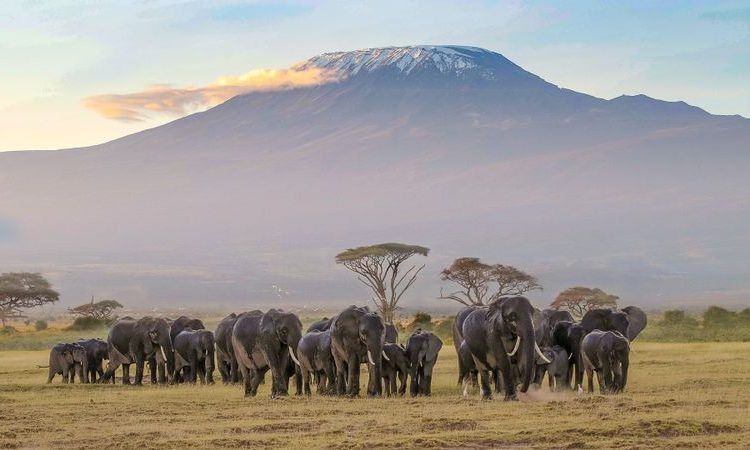
Amboseli National Park is world-famous for offering the most iconic, postcard-perfect backdrop in Africa: sweeping savannahs framed by the snow-capped peak of Mount Kilimanjaro, the continent's tallest mountain. Located in southern Kenya near the Tanzanian border, it is famously referred to as the "Land of Giants." This title stems from its massive free-ranging elephant populations, making it one of the absolute best places on Earth to observe and photograph these majestic creatures up close
3-days-best-amboseli-tour-package
4-days-luxury-amboseli-national-park-from-nairobi
2-days-best-amboseli-safari-in-kenya
5-days-amboseli-tsavo-west-and-tsavo-east-kenya-wildlife-safari-tour
5-days-masai-mara-lake-nakuru-and-amboseli-national-park-kenya-vacation
5-days-best-of-kenya-wildlife-safari-to-masai-mara-lake-nakuru-and-amboseli-national-park
4-days-amboseli-and-tsavo-salt-lick-lodge-keny-safari-from-the-coast
What Makes an Amboseli Safari Famous?
Mount Kilimanjaro Views: The Ultimate African Backdrop
Amboseli National Park is globally iconic primarily because of its visual relationship with Mount Kilimanjaro, the highest free-standing mountain on Earth. Though the mountain sits across the border in Tanzania, Amboseli offers the single best unobstructed view of its grand, snow-capped volcanic cone. The visual dynamic here is a striking study in contrasts. In the foreground, the low, arid, and shimmering Amboseli plains stretch out in dust-blown whites and parched yellows. Suddenly, the terrain gives way to the massive vertical wall of Kilimanjaro, rising a colossal 5,895 meters into the atmosphere. For wildlife photographers and travelers, this geographical layout creates a legendary canvas: the classic silhouette of an African elephant walking beneath a snow-covered peak. The viewing experience is highly dictated by daily weather patterns. During the heat of the day, cloud cover and thermal haze routinely swallow the mountain whole, making it completely vanish from sight. However, at dawn and dusk, the clouds part cleanly, revealing the jagged glaciers illuminated in dramatic shades of pink, orange, and deep gold. This unique positioning turns every game drive into a scenic expedition, providing a cinematic, high-contrast background that frames every single wildlife encounter.
Unparalleled Elephant Encounters: Giants of the Swamps
Amboseli is a world-class sanctuary for African bush elephants, harboring some of the most genetically robust and stable populations remaining on the continent. What makes these herds exceptional is their longevity and historical significance; they have been studied continuously for over fifty years through the Amboseli Elephant Research Project, founded by Dr. Cynthia Moss. Because they have enjoyed decades of consistent, intensive protection from poaching, these elephants exhibit a remarkable level of habituation around safari vehicles. They do not flee or show aggression; instead, they continue their daily behaviors undisturbed, allowing vehicles to sit safely within feet of passing families. The park is especially famous for its "big tuskers"—mature bulls carrying immense ivory that scrapes the ground, a genetic trait that has vanished across most of Africa. The viewing dynamic is highly centered around the park's lush swamps. Every morning, massive family columns move in slow, rhythmic lines from the dry woodlands, cutting straight through the dusty plains to plunge into the deep green marshes. Watching fifty giants wade chest-deep through bright green papyrus, spraying water over their backs with their trunks against the open sky, is an intimate and emotionally profound wildlife experience.
Observation Hill: A 360-Degree Panoramic Vantage Point
Observation Hill is the premier architectural landmark within the flat topography of Amboseli. Formed by ancient volcanic activity related to the Kilimanjaro system, this solitary, pyramid-shaped hill rises cleanly above the plains, providing the only location in the park where visitors are permitted to step out of their vehicles and explore on foot. A winding, stone-paved staircase leads travelers to an elevated summit equipped with a shaded viewing shelter. From this high vantage point, the entire layout of the Amboseli ecosystem is laid bare in a stunning 360-degree panorama. Looking northward, you see the vast, bone-dry expanse of Lake Amboseli, a parched pleistocene lake bed that creates dramatic, dancing heat mirages. Turn south, and the massive wall of Kilimanjaro dominates the horizon. Directly below the hill lies the vibrant green expanse of the Enkongo Narok and Ol Okenya swamps. Through binoculars, visitors can track the movements of the entire park simultaneously: lines of elephants navigating the marsh channels, pods of hippos submerged in open pools, and herds of buffalos, zebras, and wildebeests grazing on the fertile banks, making it a vital stop for understanding the spatial dynamics of the landscape.
Thriving Birdlife: An Avian Haven in the Arid Plains
Despite its small geographic footprint and overall arid surroundings, Amboseli is a certified paradise for birdwatchers, boasting a species list that exceeds 400 recorded varieties. The secret to this immense avian diversity lies in the park’s contrasting hydrological zones. While the surrounding plains are dry and dusty, they are interrupted by massive, permanent freshwater swamps fed by underground meltwater streams filtering directly down from Kilimanjaro's glaciers. These lush wetlands create a concentrated magnet for water-associated birdlife. The open waters and muddy shores are alive with tens of thousands of lesser and greater flamingos, turning the shorelines into ribbons of vibrant pink. Massive white pelicans glide in synchronized formations across the channels, while elegant grey crowned cranes perform complex mating dances on the grassy fringes. For dedicated birders, the dense reed beds and papyrus stands offer rewarding sightings of localized specialists, including malachite kingfishers darting after fish, long-toed lapwings navigating floating vegetation, and a seasonal influx of migratory raptors like Eurasian marsh harriers, making the avian tracking just as dynamic as the large mammal viewing.
Rich Biodiversity: Life on the Shimmering Savannas
While elephants and birdlife dominate the narrative, Amboseli supports a highly diverse and dense biomass of classic African megafauna within its 392 square kilometers. The open, flat terrain makes game tracking remarkably efficient compared to bushier parks. Vast herds of plains game—including common zebras, blue wildebeests, Grant's and Thomson's gazelles, and massive cape buffalos—rely on the permanent swamps during the dry season, creating a predictable pattern of movement. This concentrated prey base naturally supports a healthy population of apex predators. Lion prides are resident and heavily utilize the tall swamp grasses for ambush camouflage, while spotted hyenas roam the open flats. Cheetahs are specialized to hunt across the dry, flat lake beds, using the open spaces to exploit their high-speed hunting tactics. In the patches of dry acacia woodland, visitors can track elegant Masai giraffes browsing the canopy, along with impalas, waterbucks, and common warthogs. The compact nature of the park ensures that a single game drive can transition rapidly from a herd of buffalos wallowing in the mud to a pride of lions resting under an acacia tree.
Maasai Culture: Living Alongside the Wilderness
An Amboseli safari is completely inseparable from the rich cultural heritage of the Maasai people, the traditional pastoralist guardians who have inhabited this region for centuries. The park itself is embedded within a matrix of community-owned group ranches, meaning that wildlife moves fluidly between the protected park boundaries and ancestral Maasai lands. A visit to Amboseli often features an immersive opportunity to engage directly with a local Manyatta (a traditional, circular mud-and-stick village layout). This cultural exchange offers travelers a raw, authentic window into a pastoralist way of life that has resisted modernization. Visitors can witness the iconic Adumu (the jumping dance performed by young warriors), learn about the complex social structure governed by elders, and see how the community constructs their eco-friendly homesteads. More importantly, it highlights modern conservation partnerships. Because the Maasai now receive a direct share of tourism revenue and participate as rangers and guides, they play a critical role in protecting wildlife corridors outside the park, offering travelers a profound lesson in how indigenous communities and wild ecosystems can successfully coexist in the 21st century.
1. Why is Mount Kilimanjaro the most famous backdrop in African safari history?
Mount Kilimanjaro is the defining visual signature of an Amboseli safari. Although the mountain itself is physically located across the border in Tanzania, Amboseli sits directly at its northern base, offering the most structurally pristine, unobstructed panoramic views of its snow-capped, 5,895-meter volcanic cone. The flat, low-lying topography of Amboseli creates a dramatic vertical contrast that exists nowhere else on the continent: a vast, dust-blown, heat-shimmering plain positioned immediately against the largest free-standing mountain on Earth. This unique spatial relationship allows photographers to frame large African mammals directly against glistening glaciers. The view is dynamic; daily thermal changes cause clouds to completely swallow the mountain by mid-morning, only for the ice caps to reveal themselves crisply at dawn and dusk, glowing in brilliant shades of amber, violet, and gold.
2. What makes Amboseli's elephant population uniquely famous worldwide?
Amboseli is globally famous for its highly habituated, structurally stable, and multi-generational elephant herds, currently numbering over 1,600 individuals. These elephants are the most intensely and longest-studied wild population on earth, courtesy of the Amboseli Elephant Research Project, established in 1972 by Dr. Cynthia Moss. Because these families have experienced over five decades of constant, non-invasive scientific presence and rigorous anti-poaching protection, they exhibit an extraordinary level of comfort around open safari vehicles. They do not display the defensive flight-or-fight behaviors seen in more remote reserves. This unparalleled habituation allows travelers to park directly along their migration paths and watch complex, intimate social interactions—such as subtle calf-rearing, maternal bonding, and playful greeting rituals—from a distance of just a few meters.
3. Why is Amboseli celebrated as one of the last sanctuaries for genuine "Big Tuskers"?
An Amboseli safari is highly sought after by wildlife purists because it remains one of the final strongholds in Africa for "big tuskers"—mature bull elephants carrying massive, symmetrical ivory where each tusk weighs in excess of 100 pounds ($45\text{ kg}$) and physically scrapes the dry earth as they walk. While ivory poaching has systematically wiped out these genetic giants across most of the continent, Amboseli's tight, swamp-centric geography and highly successful community-policing initiatives have preserved these magnificent lineages. Encountering legendary old bulls like Craig or those of the "T" and "A" elephant families wandering across the open lake basins offers travelers a rare, living portal into what the African continent looked like centuries ago before modern exploitation.
4. How does the unique topography of Observation Hill enhance the guest experience?
Observation Hill (known natively as Nomatior by the Maasai, meaning "the place of pottery") is an iconic volcanic pyramid that interrupts the flat, lake-basin terrain of central Amboseli. It is universally famous because it is one of the very few designated zones within a premier Kenyan national park where visitors are legally permitted to exit their vehicles and explore on foot. A stone staircase winds up to a shaded summit lookout. From this elevated platform, the entire ecosystem is revealed in a 360-degree matrix. Guests can visually track multiple wildlife events simultaneously: herds of elephants wading through the marshes below, hippos lounging in open pools, dust storms rolling across the dry lake beds, and predators stalking plains game on the savanna fringes.
5. Why do the permanent freshwater swamps create a unique wildlife viewing dynamic?
Amboseli’s flat landscape is an arid semi-desert, yet its center is home to massive, permanent, hyper-vibrant green freshwater oases: the Enkongo Narok and Ol Okenya swamps. These wetlands are entirely famous because they are sustained by a hidden hydrological link to Mount Kilimanjaro; millions of gallons of volcanic glacial meltwater filter through porous subterranean lava rock for years before bubbling up as crystal-clear, nutrient-rich artesian springs in the heart of the park. During the dry season, when the outer rangelands dry to dust, these swamps become an absolute ecological magnet. Every morning, thousands of animals migrate inward, forcing elephants to wade chest-deep to graze on papyrus, while cape buffalos and hippos submerge alongside them, creating an incredibly dense, concentrated, and reliable wildlife spectacle.
6. What makes the dry bed of Lake Amboseli famous for photographic mirages?
The northwestern sector of the park is occupied by Lake Amboseli, a massive, dry, prehistoric pleistocene lake bed that remains completely bone-dry and covered in alkaline salt dust for the vast majority of the year. This sector is famous among cinematic filmmakers and landscape photographers for its dramatic, disorienting heat mirages. The intense midday sun baking the white alkaline crust creates shimmering optical illusions where herds of zebras, wildebeests, and ostriches appear to float suspended in mid-air above non-existent lakes of water. This surreal, minimalist landscape provides a striking aesthetic contrast to the lush green swamps nearby, offering an eerie, beautifully desolate space where wildlife silhouettes are captured with clinical, sharp graphic isolation.
7. How does the park's compact size impact game viewing efficiency?
Amboseli is a remarkably compact protected area, covering a core zone of just 392 square kilometers. This small geographical footprint is highly famous among safari operators because it translates to maximum game-viewing efficiency with near-zero transit fatigue. Unlike massive expanses like the Serengeti or Tsavo, where drivers must travel for hours through dense bush to locate game, Amboseli’s open, tree-scarce terrain allows guides to spot wildlife columns from kilometers away. A single two-hour morning game drive can easily and reliably check off massive elephant herds, lion prides, wallowing hippos, scanning cheetahs, and giant towers of Maasai giraffes, making it an exceptionally high-yield destination for short itineraries.
8. Why is Amboseli recognized globally as an Important Bird Area (IBA)?
Amboseli is globally celebrated as a premier birdwatching destination, formally recognized as an Important Bird Area (IBA) with over 400 recorded avian species. Its fame lies in the explosive density of its waterbirds, which pack the Kilimanjaro-fed marshes. The shallow, alkaline edges of the temporary lake areas attract thousands of greater and lesser flamingos, forming bright pink borders along the water. Concurrently, the fresh marshes host massive white pelicans, elegant grey crowned cranes, goliath herons, and African jacanas. Furthermore, the park is famous for its high concentration of apex avian predators, harboring over 40 species of raptors—including martial eagles and long-crested eagles—which use the open thermals to hunt across the clear plains.
9. What is the historical significance of Amboseli's "Ol Tukai" fever tree forests?
The center of Amboseli is punctuated by an iconic, shady oasis known as Ol Tukai (the Maasai word for the local doum palms). This specific zone is famous for its hauntingly beautiful forests of yellow-barked acacia trees (Vachellia xanthophloea), commonly called "fever trees" by early European explorers who mistakenly linked them to malaria. These forests provide a vital micro-climate within the park, casting cool shadows and providing essential browse for giraffes and elephants. Historically, Ol Tukai has been the emotional heart of the park's luxury tourism infrastructure and serves as a primary resting zone for resident lion prides, which use the pale, yellow-green bark and low branches as perfect camouflage for daytime naps and ambushes.
10. How does the integration of Maasai culture enrich the Amboseli safari?
Amboseli is completely famous for its seamless integration of wildlife conservation and authentic Maasai cultural heritage. The national park does not exist as an isolated island; it is entirely encircled by community-owned Maasai group ranches (such as Kimana and Selenkay). The native Maasai people have lived nomadically alongside these wildlife populations for centuries, and their traditional, pastoralist livestock lifestyle has been fundamental in preserving the ecosystem from agricultural destruction. Safaris here are famous for offering direct, non-exploitative interactions within authentic Manyattas (homesteads), where warriors demonstrate ancestral tracking skills and elders explain how indigenous communities actively partner with modern conservation bodies to protect vital wildlife migration corridors.
11. Why is Amboseli considered an absolute haven for cheetah photography?
While the Masai Mara is famed for large predator numbers, Amboseli holds a unique reputation as a specialized haven for high-end cheetah photography. Cheetahs are evolutionarily designed for high-speed hunting, requiring completely flat, unobstructed spaces to run down prey without tripping or losing sight of targets. The wide, hard-packed alkaline pans of the dry Lake Amboseli basin provide the absolute perfect hunting ground. Because there is virtually no thick bush or high brush to obscure the camera's line of sight, photographers can capture the entire sequence of a cheetah stalk, chase, and kill with pristine clarity, free from distracting environmental clutter.
12. How does the park’s underground water system prevent seasonal die-offs?
Amboseli is hydro-geologically famous for its resilience during severe East African droughts. In many savanna ecosystems, an extended dry season triggers massive wildlife mortality as water holes vanish. In Amboseli, because the central swamps are fed by the deep, internal volcanic aquifers of Mount Kilimanjaro, the water supply never stops flowing, regardless of surface rainfall failures. This reliable, year-round water security ensures that the park acts as a permanent regional sanctuary, keeping thousands of zebras, wildebeests, and buffalos alive during harsh periods and providing travelers with guaranteed, high-density wildlife viewing when neighboring areas are dry and barren.
13. What makes the Amboseli ecosystem a model for UNESCO Biosphere Reserves?
Amboseli is internationally famous in conservation science, having been designated a UNESCO Man and the Biosphere Reserve. This status is celebrated because Amboseli pioneered the concept of "community-based conservation" in East Africa. Rather than using heavy-handed military tactics to exclude local people from the park, Amboseli's management structure distributes park entry fees directly back to the surrounding Maasai communities. This economic integration transforms local pastoralists into active wildlife guardians, ensuring that elephants migrating out of the park boundaries onto communal lands are protected rather than hunted, making it a world-renowned case study in human-wildlife coexistence.
14. What are the distinct logistical advantages of Amboseli's accessibility?
From a logistical standpoint, Amboseli is highly famous for its effortless connectivity to Kenya’s primary travel hubs. Located roughly 240 kilometers southeast of Nairobi, the park can be accessed via a comfortable, fully paved four-hour overland drive, bypassing the punishing dirt tracks that characterize routes to other remote reserves. For high-end luxury travelers, the park features a well-maintained, tarmacked airstrip (the Kimana Airstrip), allowing scheduled 35-minute bush flights from Nairobi’s Wilson Airport to land directly in the park center, making it one of the most accessible, low-friction safari destinations in East Africa.
15. How does the emotional "vibe" of Amboseli differ from other Kenyan parks?
The ultimate fame of Amboseli rests in its highly distinctive emotional atmosphere, which blends serene, ancient stillness with dramatic, raw wildlife interactions. While the Masai Mara feels vast, fast-paced, and endlessly rolling, Amboseli feels intensely focused, cinematic, and ancient. The overriding presence of Mount Kilimanjaro creates a profound sense of scale, reminding travelers of the earth's grand geological history. Sitting silently in an open vehicle while a wall of fifty wild elephants slowly files past your bumper, their heavy footsteps muffled by the soft alkaline dust, all under the silent, white watch of Africa’s highest mountain, delivers a deeply grounding safari experience.
Booking Amboseli safari with us Roads of Adventure safaris
Booking your Amboseli National Park safari through Roads of Adventure Safaris offers a direct route to experiencing Kenya's iconic free-ranging elephant herds against the backdrop of Mount Kilimanjaro
