Nyungwe National Park stands as one of Africa’s oldest and most vital montane rainforests. It serves as a cornerstone of Rwanda's "three-park" safari circuit alongside Volcanoes and Akagera. Spanning 1,019 km² in southwestern Rwanda, the park was designated a UNESCO World Heritage Site. It operates under a long-term management partnership with African Parks. For the 2026, 2027, and 2028 travel seasons, major infrastructure upgrades, new eco-lodges, and thrills like the Canopy Zipline have transformed Nyungwe into a premier adventure and primate safari destination
Popular Rwanda primate safaris and tour packages to Nyungwe forest Park
2-days-chimpanzee-tracking-in-nyungwe-rwanda-vacation
3-day-chimpanzee-trekking-tour-package-canopy-and-lake-kivu
4-days-rwanda-primates-safari-gorilla-trekking-and-chimpanzee-all-inclusive-package
5-days-best-chimpanzee-tracking-golden-monkey-tracking-and-visit-to-lake-kivu
5-days-rwanda-chimpanzee-tracking-and-lake-kivu-relaxation-tour-package
5-days-uganda-gorilla-trekking-chimps-and-rwanda-golden-monkey-tracking-combo
6-days-rwanda-safari-to-akagera-and-nyungwe-chimpanzee-tracking
9-days-rwanda-gorilla-trekking-and-adventure-activities-and-relaxation
Key Infrastructure Updates for Nyungwe forest national park (2026–2028)
Munazi Eco Lodge
An Immersive, Unfenced Sanctuary Built for Sustainable Luxury
Nestled under the lush canopy of ancient trees just a short distance from the Uwinka Visitors Centre, Munazi Eco Lodge represents a massive leap forward for sustainable tourism during a Rwanda safari. The lodge features nine beautifully crafted, en-suite A-frame wooden cottages—including family options and an executive unit—connected to a main lodge area by a series of winding wooden boardwalks. To protect the surrounding ecosystem, the entire property remains completely unfenced, allowing the wilderness to flow naturally around your living space. This unique design creates an intimate, raw connection with nature where guests routinely wake up to the morning calls of colorful turacos, acrobatic colobus monkeys, and rare Albertine Rift endemic birds right outside their windows.
What truly makes Munazi Eco Lodge a standout infrastructure addition is its profound commitment to eco-friendly engineering and community development. The lodge and its custom furniture were meticulously hand-built by local artisans and construction teams working alongside park engineers. Impressively, they utilized exotic, non-native timber cut directly from the national park as part of an active habitat management program designed to allow native flora to naturally regenerate. The structural design of the cabins balances form and function perfectly, utilizing steep roofs to easily shed Nyungwe’s high annual rainfall while offering wide, north-facing windows that bathe the interiors in natural light. On exceptionally clear days, guests can even catch sweeping views of a distant valley stretching out toward Lake Kivu. Operated in partnership with African Parks, 100% of the tourism revenue generated by your stay at Munazi is funneled straight back into local community development and wildlife conservation, making it the premier choice for conscious luxury travelers.
Canopy Zipline & Rope Course
High-Adrenaline Aerial Adventures Above the Ancient Forest Floor
For travelers seeking a thrilling rush of adrenaline to complement the reflective peace of a standard Rwanda safari, the newly introduced treetop canopy ziplines and the Gisakura Rope Course are phenomenal additions. Spanning a jaw-dropping 1,935 meters in total length, Nyungwe’s zipline stands proud as one of the longest and most spectacular aerial runways anywhere on the African continent. This fully guided, high-flying adventure is cleverly split into three distinct, heart-pounding phases. The journey begins with an initial 335-meter launch near the Uwinka Visitors Centre, escalates into a breathtaking 580-meter midsection soaring over mist-draped valleys, and culminates in a staggering 1,020-meter final stretch that sends you gliding right past the iconic, pre-existing 160-meter-long suspended canopy bridge.
Complementing this mega-zipline is the newly engineered Gisakura Rope Course, situated closer to the western edge of the park. Spanning 280 meters in length, this forest-edge obstacle park features 20 distinct climbing elements hung high up within the trees, including four of its own mini-ziplines, hanging nets, swinging cargo logs, and suspended tires designed to test your balance, strength, and bravery. The entire course has been built to world-class safety standards using highly durable gum poles, heavy steel cables, and weather-resistant synthetic ropes. Guests are safely hooked into an advanced continuous belay system utilizing rolling trolleys, ensuring that you remain securely locked into the safety line from the exact moment you leave the ground platform until your feet touch down at the end. It offers an unparalleled, bird's-eye perspective of the rainforest ecosystem that was once completely inaccessible to casual vacationers.
New Hiking Infrastructure
Multi-Day Wilderness Trails and Backcountry Trekking Expansions
Nyungwe National Park has vastly broadened its appeal to avid trekkers and backpackers on a Rwanda safari by heavily investing in its wilderness trail networks. The absolute crown jewel of this expansion is the magnificent Cyinzobe Trail, a fully catered, three-day hiking odyssey that takes you deep into the undisturbed interior of the montane rainforest. The journey kicks off at the main Uwinka gate and carefully guides hikers down steep ridges and across burbling river valleys before skirting the mysterious, bowl-shaped depression of the 13-square-kilometer Kamiranzovu Swamp. Hikers are treated to spectacular, misty views of roaring waterfalls and pristine bamboo forests, elements that showcase the park's immense biodiversity.
Rather than forcing hikers to rush back before sundown, the Cyinzobe Trail features premium, newly constructed backcountry infrastructure. Hikers spend their nights in rustic, comfortable wooden cabins built at the absolute best viewpoints along the path, allowing them to witness magical forest sunrets and fall asleep to the unique acoustic symphony of nocturnal wildlife like tree hyraxes and galagos. In tandem with this multi-day trek, the park has rolled out the massive 100-kilometer Nshili-Gisovu Trail network. This sprawling spiderweb of interconnected wilderness paths provides a much wider playground for visitors, linking various distant ranger stations and remote tea estates. These well-maintained trails require travelers to hike alongside an expert park guide, offering a highly educational window into ethnobotany, primate behavior, and the critical role Nyungwe plays as a major water catchment area feeding both the Nile and Congo rivers.
Traffic Reduction Initiatives
Mitigating Environmental Impact to Protect a Pristine Biosphere
Because the main paved Kigali-Rusizi highway slices directly through the heart of Nyungwe National Park, heavy commercial vehicles have long posed a substantial ecological threat to this ancient forest ecosystem. To counter this, aggressive traffic reduction initiatives are currently underway to permanently reroute heavy public buses, cross-border cargo trucks, and industrial vehicles away from the park's central highway corridors. For a modern Rwanda safari, this environmental shift is incredibly positive news, as it directly aims to reduce vehicular noise pollution, minimize carbon emissions within a highly sensitive climate zone, and significantly lower the tragic rate of animal roadkill incidents involving low-flying birds and endangered primates.
Historically, animals like the L'Hoest's monkey and various baboon troops became dangerously habituated to congregating right along the asphalt highway, begging for food scraps from passing motorists and occasionally being struck by fast-moving vehicles. By actively diverting non-tourism cargo traffic toward alternative regional bypass routes surrounding the outer edges of the park boundaries, conservation managers are restoring the natural silence and wilderness integrity of the forest. For eco-tourists, this infrastructure shift transforms the main highway into a much quieter, peaceful parkway, making it significantly safer and more rewarding to spot roadside wildlife. It stands as a powerful testament to how Rwanda continues to successfully balance essential nationwide economic development with world-class, proactive wilderness conservation efforts.
Signature Activities & Wilderness Adventures
Chimpanzee Trekking
A High-Energy Wilderness Pursuit of Our Closest Primate Relatives
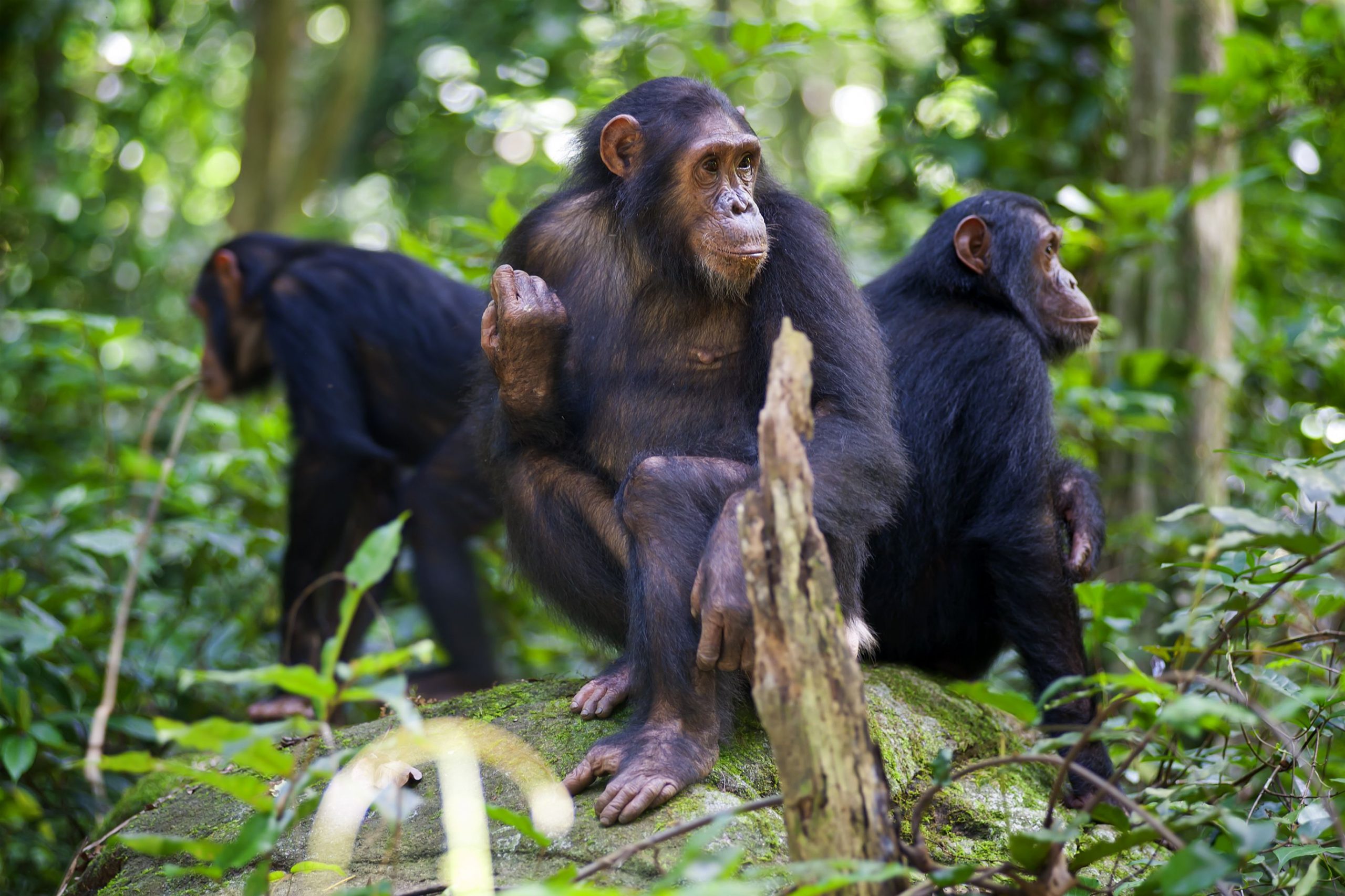
Embarking on a chimpanzee trekking adventure is arguably the most thrilling wildlife encounter you can experience during a Rwanda safari. Nyungwe National Park is home to two main habituated communities of these fascinating great apes, totaling around 90 individuals. The trekking experience requires an exceptionally early wake-up call, with briefings starting around 4:30 AM at either the Uwinka or Gisakura reception centers. From there, depending on where the chimps nested the previous night, your group of up to eight people will drive to a trailhead and head into the thick, misty undergrowth. Alternatively, your trek may take you to the Cyamudongo Forest, a small, isolated fragment of ancestral forest situated about an hour’s drive away. Cyamudongo is completely surrounded by terraced tea estates and houses a highly visible, tightly knit community of about 30 chimpanzees.
Because chimpanzees are largely arboreal and highly mobile, tracking them is a dynamic, fast-paced challenge. Unlike mountain gorillas, who tend to lounge lazily on the ground, chimps spend much of their time swinging through the high branches of wild fig trees, screeching, and foraging. You will follow expert park rangers who hack away paths through the dense brush while communicating via radio with advance trackers. The terrain can be steep, muddy, and demanding, but the reward is unforgettable. Once you catch up with the troop, you are granted exactly one hour to observe them. Standing on the damp forest floor, you will watch them groom each other, play, flash expressive facial expressions, and erupt into choruses of deafening pant-hoots that shake the very canopy above you. It is a raw, captivating window into a world shared with our closest evolutionary cousins.
The Canopy Walkway
A Thrilling Treetop Suspension Bridge High Above the Forest Floor
For an unparalleled perspective of the ancient montane rainforest, the Canopy Walkway is an absolute must-do highlight of any Rwanda safari. Suspended a staggering 70 meters above a deep, lush river valley, this metallic suspension bridge spans 160 meters in length and is divided into three distinct structural sections. The walkway is accessed via the 2.1-kilometer Igishigishigi Trail, a scenic hiking loop that starts at the Uwinka Visitor Center. The hike to the bridge serves as an excellent introduction to the forest, winding through giant tree ferns and hardwood trees draped in moss and wild orchids, with several steep inclines that are easily manageable for travelers of average physical fitness.
Stepping out onto the narrow, swinging platform takes a bit of courage, but the absolute reward is a breathtaking, 360-degree panoramic view of the majestic Albertine Rift. From this dizzying vantage point, you are quite literally walking alongside the upper canopy layer, placing you at eye level with an entirely different world of biodiversity. You will peer straight down into a sea of emerald green, watching the tops of massive mahogany trees wave gently in the mountain breeze. The walkway offers an exceptional opportunity to spot colorful butterflies, rare orchids, and unique wildlife that rarely descends to the dark forest floor below. It is common to witness troops of monkeys bounding effortlessly through the branches just a few meters away, or to watch vibrant tropical birds perched directly on the heavy steel support cables. The entire loop takes roughly two hours, offering a perfectly safe yet utterly exhilarating aerial adventure.
Colobus Monkey Tracking
Witnessing Africa’s Largest Shimmering Waterfall of Primate Movement
Colobus monkey tracking in Nyungwe National Park delivers one of the most visually spectacular and energetic primates encounters anywhere on the African continent. Setting off from the Uwinka Park Headquarters, this activity invites you to track an unbelievable "super troop" consisting of more than 400 Angolan black-and-white colobus monkeys. While standard colobus troops across Africa usually max out at about 20 individuals, Nyungwe’s unique ecosystem has allowed multiple family groups to merge into a single, massive mega-community. This unusual social structure creates a fascinating spectacle for anyone on a Rwanda safari, turning a standard nature walk into an immersive wildlife phenomenon.
The trek to find the colobus troop can take anywhere from 30 minutes to two hours, guiding you through a well-maintained network of ridge lines and valleys. Because these monkeys are incredibly vocal and highly social, you will often hear them long before you see them. When you finally catch up to the troop, the sheer scale of the community is jaw-dropping. The surrounding trees come alive with hundreds of monkeys moving simultaneously, creating what looks like a cascading black-and-white waterfall of fur sliding effortlessly through the emerald canopy. Adults leap up to 15 meters between branches, their long, snowy-white tails and elegant mantle hair catching the sunlight filtering through the leaves. As you stand beneath them for your allocated hour, you will be surrounded by a spectacular forest soundscape of deep, guttural roaring calls used by the dominant males to defend their territory. It is a highly energetic, intensely rewarding encounter that beautifully showcases Nyungwe's status as a premier primate haven.
Waterfall Hikes & Birding
Trekking Pristine Ravines in an Unrivaled Avian Paradise
For hiking enthusiasts and dedicated birdwatchers, the southwestern edge of the park offers an elite backcountry experience centered around the iconic Isumo Waterfall trail. This 10.6-kilometer round-trip hike departs from the Gisakura side of the park and takes between three and five hours to complete. The trail begins with a beautiful walk-through sprawling, bright green tea plantations before plunging into one of Nyungwe's deepest, steepest, and most heavily forested rainforest ravines. As you descend, the humid air becomes thick and misty, nourishing a vibrant undergrowth of delicate lichens, mosses, and massive tree ferns. The trail ultimately leads to a spectacular 25-meter-high waterfall that thunders into a rocky amphitheater, shooting cool plumes of spray that keep the surrounding wildflower benches permanently damp.
Beyond the raw beauty of the roaring cascade, this trail serves as a premier corridor for specialized birding excursions. Nyungwe is globally celebrated as an Important Bird Area, harboring over 300 distinct bird species, including 30 coveted Albertine Rift endemics that cannot be found anywhere else on earth. Walking under the guidance of expert park birders—armed with high-powered binoculars and a deep knowledge of local calls—transforms your trek into an educational treasure hunt. As you step along the damp paths, your guide will help you decipher the rich acoustic symphony of the jungle. You will scan the misty mid-canopy for the striking crimson and deep-blue feathers of the Rwenzori Turaco, listen for the high-pitched call of the rare Red-Collared Mountain Babbler, and search the dense foliage for the handsome Handsome Francolin or the elusive Grauer's Swamp Warbler. It is an essential, immersive journey for any nature lover wanting to explore the intricate, smaller wonders of a Rwanda safari.
When is the Best Time to Visit Nyungwe Forest National Park?
Timing Your Primate Encounters Across the Changing Seasons
When planning your Rwanda safari to Nyungwe National Park, timing your visit around the region’s distinct weather patterns is crucial. The park experiences two main dry seasons and two wet seasons, each offering unique advantages for wilderness exploration. The long dry season runs from June to August, while a shorter dry spell occurs from December to February. These dry windows are widely considered the ideal times for hiking and tracking. During these months, the forest trails are significantly less muddy, the steep ridges are easier to conquer, and the risk of sudden downpours disrupting your canopy walk or colobus monkey tracking is greatly minimized. Furthermore, the reduced humidity makes long treks through the montane forest much more physically comfortable.
Conversely, the wet seasons—spanning from September to November and March to May—provide a completely different but equally rewarding experience, particularly for chimpanzee trekking. When the rains arrive, the rainforest erupts in a flush of fresh vegetation, and wild fruits ripen abundantly on the lower branches. Because food is plentiful right downstairs, Nyungwe’s chimpanzee communities do not have to travel far or climb to high altitudes to forage. They tend to settle in lower, more accessible canopy layers, making them much easier for park rangers to locate and track. Additionally, the wet season is a dream come true for dedicated birdwatchers. Migratory bird species from Europe and northern Africa arrive in large numbers, joining the park's resident Albertine Rift endemics to create an extraordinary avian spectacle. Whichever season you choose, packing a high-quality raincoat, sturdy waterproof hiking boots, and warm layers is essential, as Nyungwe’s high-altitude tropical climate means a sudden shower can happen at any time of year.
Where to Stay in Nyungwe Forest National Park?
From Conscious Eco-Luxury to Immersive Wilderness Retorts
Finding the perfect base camp is essential for a rewarding Rwanda safari, and Nyungwe’s growing hospitality sector offers excellent choices tailored to every style and budget. For travelers seeking an uncompromised blend of ultra-luxury and environmental sustainability, One&Only Nyungwe House stands as the absolute pinnacle. Nestled gracefully on the fringes of the working Gisakura Tea Estate, this stunning resort features exceptionally private, elevated wooden suites that extend directly over the forest canopy. Guests are treated to top-tier amenities, including open-air spa treatments, fine dining centered around local ingredients, and jaw-dropping views of misty ridges, making it a perfect retreat after an exhausting day of chimpanzee tracking.
If you want a modern, deeply immersive forest experience, the newly launched Munazi Eco Lodge is a fantastic addition to the park's interior. Built entirely by local artisans using exotic, reclaimed timber, this completely unfenced lodge features nine intimate guest cottages connected by wooden boardwalks near the Uwinka Visitor Center. Staying here allows the wilderness to flow naturally around you, putting you within arm's reach of wild turacos and curious monkeys. For travelers searching for premium mid-range comfort, Nyungwe Top View Hotel sits majestically on a high hilltop outside the park, offering spectacular 360-degree panoramic views that stretch across the rolling tea plantations all the way to Lake Kivu. Finally, budget-conscious backpackers and self-guided adventurers can look to the cozy Gisakura Guest House, located just outside the western park gate, or choose to pitch a tent at the newly upgraded rustic backcountry campsites managed by park authorities along the multi-day Cyinzobe Trail network.
Booking a Trip to Nyungwe with Roads of Adventure Safaris
Seamlessly Designing Your Dream Primate and Wilderness Itinerary
Organizing an intricate wilderness expedition into southwestern Rwanda can be logistically challenging, which is why booking your Rwanda safari with a trusted, highly reputable ground operator like Roads of Adventure Safaris makes all the difference. Specializing in premium primate tracking, birding expeditions, and custom cross-border itineraries across East Africa, our expert team takes the stress completely out of your travel planning. We handle the entire booking pipeline from start to finish, from securing highly competitive chimpanzee trekking permits and canopy walk reservations with African Parks to mapping out your private transportation and luxury lodge accommodations.
When you journey with Roads of Adventure Safaris, you gain access to our custom fleet of reliable, air-conditioned 4x4 safari vehicles equipped with onboard fridges and charging stations, driven by highly knowledgeable local driver-guides. Our guides are passionate experts who understand the steep, misty curves of the southern highway, ensuring your safety while pointing out rare roadside wildlife and hidden cultural landmarks along the way. Whether you want to combine a thrilling helicopter flight to Kamembe Airport with a stay at Munazi Eco Lodge, design a 3-day backcountry hiking journey along the Cyinzobe Trail, or weave a Nyungwe primate trek into a multi-week safari featuring gorilla trekking in Volcanoes National Park, we tailor every detail to match your exact physical fitness and interests. Let Roads of Adventure Safaris handle the logistics while you focus on immersing yourself in the raw magic of Rwanda’s ancient rainforest.
