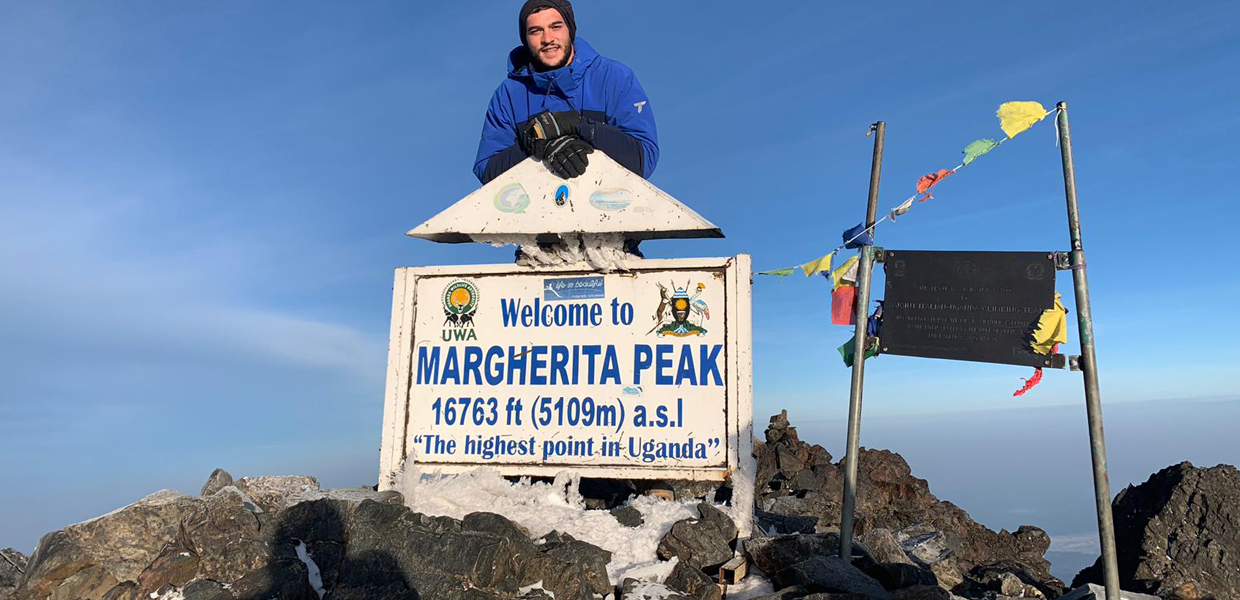
Tipping on a Rwenzori hike is a culturally expected practice, though amounts are completely at your discretion based on service quality. As a guideline, plan to tip your trekking crew $15 to $20 per day for the lead guide, $10 to $15 per day for assistant guides and chefs, and $5 to $10 per day for porters
15-days-rwenzori-hiking-safari-and-mountain-gorilla-trekking-vacation
11-days-best-rwenzori-mountain-hike-to-margherita-peak
7-days-mountain-rwenzori-mountain-climbing-active-adventure-to-margherita-peak
5-days-rwenzori-hike-to-either-mountain-sepeke-baker-or-luig-di-savoia
2-days-rwenzori-trek-to-nyabitaba-camp
Recommended tipping guidelines and how much is recommended tip
These suggested daily tips are evaluated on a per-climber, per-day basis and are traditionally pooled together to distribute to the crew at the end of the trek
Understanding the roles and contributions of your support team is an essential part of preparing for any trekking expedition. Tipping is a practical way to acknowledge the hard work and expertise that makes your journey safe and successful.
Lead / Senior Guide: $15 – $20 per day
The Lead or Senior Guide acts as the ultimate authority on the expedition, shouldering immense responsibility for your safety and success. They possess deep knowledge of the terrain, weather patterns, and mountain regulations. Beyond navigating the route, they manage the entire support team, make crucial decisions regarding pacing or health, and ensure the group remains motivated. Their calm demeanor under pressure is often the difference between success and failure. Providing a gratuity of $15 to $20 per day reflects the high level of trust, expertise, and leadership required to navigate you safely through the difficult challenges of the mountain trek.
Assistant Guide: $12 – $15 per day
Assistant Guides are indispensable partners who ensure every trekker receives individualized attention. They are often responsible for monitoring the health of group members, assisting those who struggle, and managing logistics alongside the Lead Guide. Their role is physically demanding and requires a high level of patience, empathy, and mountain expertise. Because they often walk with slower trekkers or check oxygen saturation levels, they are vital to the team's cohesion and safety. Tipping between $12 and $15 per day acknowledges their dedication to keeping you comfortable, informed, and motivated throughout the most challenging stretches of your rugged and demanding mountain adventure.
Chef / Cook: $10 – $12 per day
The Chef or Cook is the unsung hero of any multi-day trek, transforming basic ingredients into essential fuel in harsh, high-altitude environments. Cooking at elevation is notoriously difficult, yet they manage to prepare nutritious, hot meals that are vital for muscle recovery and energy levels. They work in confined spaces, often fighting cold or windy conditions to provide the sustenance required for your daily exertion. Without their skill and culinary creativity, the physical toll of the climb would be significantly harder to manage. A tip of $10 to $12 per day is a fitting reward for their effort and dedication.
Porter: $5 – $10 per day
Porters are truly the backbone of any expedition, performing the grueling labor required to move camp equipment, food supplies, and personal gear across demanding terrain. Their stamina and commitment allow trekkers to focus entirely on the journey, rather than the heavy lifting. They often hike ahead to set up tents and ensure everything is ready upon your arrival, working tirelessly despite the challenging conditions. Their physical contribution is absolutely essential to the success of your trek. Offering $5 to $10 per day is a small token of gratitude for their immense physical sacrifice and unwavering support on every single trail.
Important Tipping Practices and Logistics
Presentation
The final morning of your Rwenzori expedition is a deeply significant and celebratory occasion, usually marked by a traditional tipping ceremony held before descending to the final base or at a key staging point like Snow Heights Lodge. This ceremony is far more than a mere financial transaction; it is a vital cultural ritual of mutual respect and celebration between you and the crew who shared your grueling mountain journey. During this gathering, the entire team—guides, cooks, and porters—often comes together to sing traditional Bakonzo mountain songs, share stories, and celebrate the collective effort of the trek.
When it comes to the logistics of presentation, it is standard practice to hand the total tip pool to the Head or Senior Guide in a securely sealed envelope. To ensure transparency and maintain harmony among the crew, you should include a clearly written breakdown inside or on the front of the envelope, specifying exactly how much is allocated for each role (such as the guides, assistant guides, chefs, and porters). The lead guide, acting as the team manager, then takes responsibility for distributing the individual amounts to each member according to your precise instructions.
This organized presentation prevents confusion and ensures that every individual is recognized fairly for their physical sacrifices. Handing over the envelope during the ceremony allows you to publicly thank the team for their unwavering support, providing a sense of closure to a physically demanding adventure. It is an emotional and rewarding finale where your gratitude is tangible, reinforcing a sustainable tourism loop that directly supports the local communities living around the Rwenzori foothills.
Currency
Navigating the currency logistics for tipping requires a bit of advanced planning, as the remote mountain regions do not have access to banking infrastructure or ATMs. You can confidently use a mix of major international currencies—such as US Dollars (USD), British Pounds (GBP), or Euros (EUR)—as well as the local Ugandan Shilling (UGX). However, if you choose to tip in foreign currencies like USD, it is absolutely critical that the bills are clean, un-torn, and crisp. Most local banks in Uganda strictly reject any foreign currency notes that are dated before 2013, or bills that have even minor tears, stamps, or heavy folding, which makes it incredibly difficult for the crew to exchange them.
While international currencies are widely accepted by senior guides and operators who frequently travel to urban centers, tipping in local Ugandan Shillings (UGX) is often the absolute best and most highly appreciated approach, especially for the porters and camp cooks. Porters live and support families in the immediate rural communities surrounding the national park, where local shops, markets, and schools deal exclusively in Ugandan Shillings.
If a porter receives a US Dollar bill, they must sacrifice their limited time off and pay for transport to travel into a larger town like Kasese or Fort Portal just to find a foreign exchange bureau that will convert the cash. By taking the time to withdraw or exchange local currency in Kampala or Entebbe before your trek, you save your support crew from unnecessary exchange fees and travel logistics, ensuring they can utilize their hard-earned gratuities immediately for their families' needs.
Conditions
When determining the final amount for your tips, it is vital to base your evaluations on the professionalism, safety measures, attentiveness, and sheer hard work demonstrated by the crew throughout the expedition. Mountain trekking is an unpredictable endeavor, and your gratuity should never be contingent upon whether you successfully stood on the true summit of Margherita Peak. The Rwenzori range is notorious for its extreme weather, fast-moving alpine bogs, dense mists, and technical glacial passes. Factors such as sudden blizzards, heavy rainfall, safety risks, or an individual's susceptibility to acute mountain sickness (AMS) are entirely beyond the control of your guiding team.
In fact, a guide’s true expertise and professionalism are often most brilliantly displayed when things do not go according to plan. A decision to turn back just short of the peak due to dangerous weather or a client's deteriorating health requires exceptional courage, leadership, and a strict adherence to safety protocol. Similarly, the porters and chefs work just as hard—if not harder—to keep you warm, dry, and well-fed during a torrential downpour or a high-altitude storm, regardless of whether the summit is reached.
Rewarding the crew based on their daily commitment, emotional encouragement, and physical labor fosters an ethical trekking environment. It acknowledges that their primary duty is not to guarantee a peak, but to guide you through a challenging wilderness safely and return you to your family in one piece. This perspective aligns with sustainable, responsible travel principles, recognizing the crew as skilled professionals deserving of respect and fair appreciation.
How much should I tip the lead guide compared to porters?
The financial differentiation between tipping a Lead Guide and a porter reflects the vast gulf in professional responsibility and technical expertise. Lead Guides shoulder the ultimate accountability for your survival, navigation, medical evaluations, and emergency evacuations on the mountain, demanding a higher daily rate of $15 to $20 USD. Porters perform immense, grueling physical labor carrying equipment and gear through treacherous bogs and steep terrains, which is fairly acknowledged at $5 to $10 USD per day. Maintaining this tiered structure respects the hierarchy of command on the trail while ensuring that both physical endurance and technical leadership are justly rewarded.
What is the best currency to use for tips?
While both clean, unblemished U.S. Dollars (issued from 2013 onward) and Ugandan Shillings (UGX) are accepted, local currency is unequivocally the best option for the support crew. Porters and cooks live in rural communities flanking the park where international banking infrastructure is nonexistent, meaning they must spend their limited time off traveling to distant urban bureaus and paying steep exchange fees to convert USD. Supplying your tips in crisp, high-denomination UGX bills eliminate these logistical hurdles entirely, allowing the crew to instantly utilize their hard-earned money to support their households, purchase supplies, and pay local school fees.
Should I tip if I don't reach the summit?
Absolutely. Tipping is an evaluation of the crew's professionalism, endurance, and dedication, never a bonus conditional on reaching the summit of Margherita Peak. The physical exertion, camp preparation, and attentive service provided by your guides, cooks, and porters remain exactly the same—and are frequently much more taxing—during severe weather, sudden blizzards, or medical emergencies that force a retreat. A guide’s decision to abort a summit push due to dangerous conditions or acute mountain sickness is an display of elite safety leadership, which should be highly commended and fully rewarded, rather than financially penalized.
When and where is the best time to give the tips?
The optimal time to distribute tips is on the final morning of the expedition during a structured tipping ceremony at the last base camp or a descent hub like Snow Heights Lodge. This formalized gathering brings the entire crew together, transforming a financial transaction into a celebratory cultural ritual filled with traditional Bakonzo mountain songs and mutual appreciation. Handing over your gratuities at this specific juncture avoids distracting the team during active trekking days and ensures that everyone is present to witness the distribution, fostering transparency and a shared sense of accomplishment before parting ways.
Should I tip the UWA rangers/guides?
Yes, tipping Uganda Wildlife Authority (UWA) rangers who accompany your trek is highly customary and deeply appreciated. These rangers provide an essential layer of security, wildlife tracking expertise, and deep environmental knowledge of the park’s unique afro-alpine ecosystems. While they are government employees, they work under strenuous wilderness conditions to preserve the trail's integrity and keep trekkers safe from environmental hazards. Offering a daily gratuity of $5 to $10 USD per ranger is a fitting way to acknowledge their specialized public service and dedication to conservation tourism.
Should I tip individually or as a group?
If you are traveling as part of a larger trekking group, pooling your tips into a singular, collective fund is the most effective strategy. Group pooling prevents chaotic individual tipping dynamics, eliminates accidental under-tipping, and ensures that quiet or behind-the-scenes crew members—like the sanitation porters or cooks—are rewarded just as fairly as the front-facing guides. The group should calculate the grand total based on recommended daily rates, write down the exact allocation instructions for each role on a single sheet of paper, and present it collectively to maintain complete clarity and team equity.
Is it okay to give gear instead of cash?
High-quality mountain gear is extraordinarily valuable and serves as an excellent supplement to cash tips, though it should never entirely replace them. Specialized alpine equipment like waterproof hiking boots, technical jackets, thermal base layers, gloves, and durable backpacks are incredibly expensive and difficult to source within Uganda. Donating your gently used or extra gear at the end of the trek directly upgrades the safety and comfort of the porters and guides for their future expeditions. Always present these items transparently through the head guide to ensure they are distributed fairly based on merit and need.
Should I tip during the hike?
No, you should strictly avoid handing out cash tips day-by-day on the mountain trail. Distributing money mid-trek can disrupt the team's operational focus, create unnecessary friction or competition among the porters, and skew the motivation dynamics within the crew. Waiting until the very end of the expedition allows you to fully evaluate the comprehensive quality of service provided from start to finish. It also ensures your funds remain safe, dry, and organized until they can be distributed in an orderly, transparent fashion during the final camp ceremony.
Who manages the tip distribution if there are many porters?
The Head Guide is the operational manager of the entire expedition and is traditionally responsible for overseeing the fair distribution of pooled tip money. Because a large trek can utilize dozens of porters working in various shifts, the lead guide knows exactly who performed which duties and ensures that no one is left out. When you hand over the main envelope, enclosing a written manifest that specifies the exact amounts intended for the cooking staff, assistant guides, and porters guarantees that the leader executes your precise wishes with full accountability.
What should I do if a porter demands a higher tip?
Aggressive tip solicitation or demanding higher payouts directly violates established trekking company regulations and park guidelines. If a crew member corners you or demands more cash, maintain your boundaries, remain polite, and firmly state that all tipping matters are handled exclusively through the head guide and management at the end of the tour. Do not engage in a financial dispute on the mountain; instead, immediately report the individual’s name and the incident to your head guide and your booking agency so they can enforce standard professional disciplinary measures.
When is the best time for Mountain Rwenzori hike
The best time to hike the Rwenzori Mountains in Uganda is during the two primary dry seasons: mid-December to February and June to August. These months offer the most stable weather, clearer skies, and drier trails, which are crucial for a successful summit of Margherita Peak
While the Rwenzori range is notoriously wet and can experience rain at any time of year, timing your trek for these windows ensures a safer and significantly more comfortable climb.
Where to stay on Mountain Rwenzori hike
Hikers on the Rwenzori mountains stay in established wooden huts and camps managed by the Uganda Wildlife Authority along the main trails. Before and after your trek, comfortable lodges and hostels are available at the base of the mountains in towns like Kasese or Fort Portal
How to get to Mountain Rwenzori Park
To get to Rwenzori Mountains National Park from Kampala, take a 6–8-hour road trip (approx. 375 km) via Mubende to Fort Portal, or catch a 1-hour domestic flight from Entebbe to Kasese. The main trailhead at Nyakalegija is located 25 km north of Kasese town
What to pack for Mountain Rwenzori hike
Packing for the Rwenzori Mountains requires specialized gear to handle its infamous mud and extreme alpine climate. You will need a high-quality waterproof jacket, sturdy broken-in boots, thermal base layers, and a sub-zero sleeping bag. The majority of your gear can be carried by porters in a large duffel bag
Booking Mountain Rwenzori hike with us Roads of Adventure safaris
Booking a hike with Roads of Adventure Safaris can be done directly through their official site. Expeditions typically cost between $1,200 and $1,500 per person, covering guides, porters, and meals. Multi-peak 7 to 12-day treks require booking 3 to 12 months in advance
