In March, solo traveler Seri from the UAE completed a breathtaking 10-day photography safari in Uganda. Guided expertly by Balam, Seri traversed the Pearl of Africa to document its unmatched ecological diversity. The adventure covered, Mabamba, Ziwa, Murchison, Kibale, Bwindi, and Queen Elizabeth, Lake Buyonyi, and lake Mburo resulting in iconic captures of the Big Five. This bespoke 10 Days Uganda Photography safari was meticulously curated to traverse Uganda’s premier ecosystems, from the prehistoric wetlands of Mabamba to the mist-covered canopies of Bwindi. Throughout the journey, Balam’s intimate knowledge of animal behaviour and lighting conditions allowed Seri to secure world-class imagery, documenting everything from elusive leopards to the iconic mountain gorillas. "The sheer density of wildlife made every frame a masterpiece," Seri reflected. This recap chronicles their remarkable passage through savannahs and jungles, celebrating a successful expedition that saw the completion of the "Big Five." By the end of this 10 Days Uganda Photography safari, Seri had captured the essence of Uganda's wild heart, leaving with a portfolio that defines excellence in wildlife photography.
Tour highlights for 10 Days Uganda Photography safari
Shoebill in Mabamba Swamp
Ziwa rhino walking safari
Murchison Falls power views
Big Five game sightings
Rothschild giraffes in savannah
Chimpanzee tracking in Kibale
Rwenzori Mountain scenic drives
Kasenyi lions hunting prey
Ishasha tree climbing lions
Kigezi Highlands terraced hills
Bwindi Impenetrable Forest trek
Mountain gorilla family encounter
Lake Byonyi canoe
Lake Mburo walking safari
Zebras and elands grazing
African Fish Eagle flight
Sunset over calm waters
Uganda's wild heart captured
Day by day 10 Days Uganda Photography safari
Day 1: Mabamba Wetland
Seri arrived in Entebbe, greeted by Balam to commence the 10 Days Uganda Photography safari. They headed directly to the Mabamba Swamp, a Ramsar site famed for the prehistoric Shoebill stork. Paddling through narrow channels, the morning light provided the perfect backdrop for Seri’s initial shots. "Seeing a Shoebill standing motionless in the reeds was like stepping back into the Jurassic era," Seri remarked. Balam expertly navigated the swamp, positioning the boat to ensure Seri had clear, unobstructed views as the bird took flight, showcasing its massive wingspan. It was an adrenaline-filled start, setting a high standard for the biodiversity they would encounter. After a successful day of shooting, Seri retired for the night at the Via Via Guest House, where he reviewed his first day's files and prepared his gear for the long journey north.
Day 2: Ziwa Rhino Sanctuary and Murchison Falls
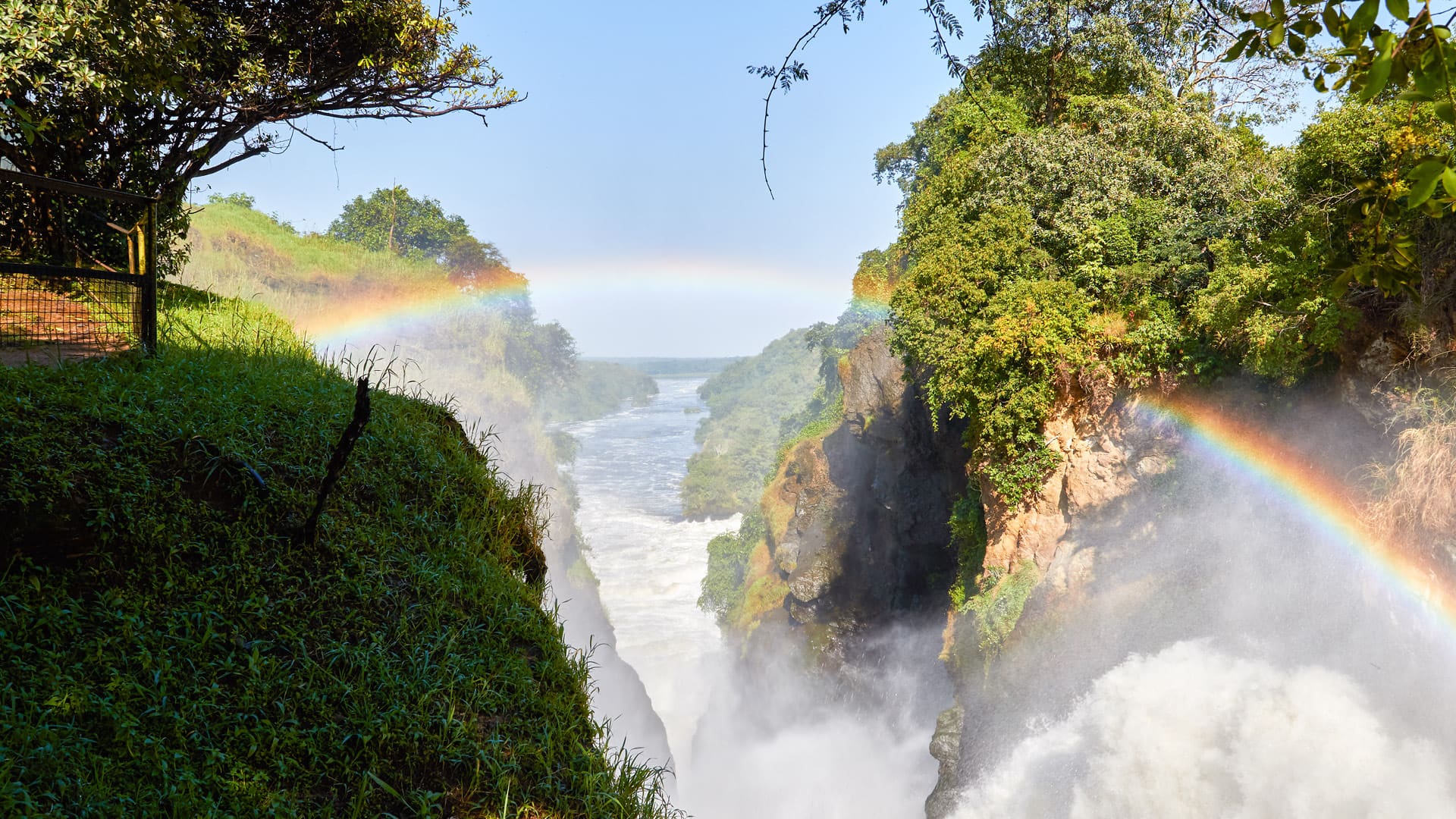
Leaving the capital, the pair travelled north to the Ziwa Rhino Sanctuary, the first milestone of this 10 Days Uganda Photography safari. Under Balam’s guidance, they tracked southern white rhinos on foot, with Seri capturing powerful portraits of these gentle giants. By afternoon, they reached Murchison Falls National Park, checking into the comfortable Pakuba Safari Lodge. Standing at the top of the falls, where the Nile forces its way through a narrow seven-metre gap, Seri marvelled at the raw power of the water. "The roar of the falls is visceral; it demands respect and careful framing," Seri noted. Balam pointed out the rainbows forming in the mist, allowing for dramatic long-exposure shots. The scale of the landscape was breathtaking as the golden hour illuminated the riverbank, offering glimpses of hippos and crocodiles resting in the cooling shallows.
Day 3: Murchison Falls Safari
The day began before dawn, with Balam steering the vehicle through the Buligi game tracks. Murchison did not disappoint; the morning light revealed large herds of elephants, Rothschild’s giraffes, and Jackson’s hartebeest. Seri was in his element, capturing action shots of a pride of lions stalking through the acacia scrub. Balam’s keen eye spotted a leopard camouflaged in a sausage tree, a highlight for any photographer. "Balam knows exactly where the shadows fall, which makes all the difference," Seri praised. In the afternoon, they took a boat cruise to the base of the falls, capturing birds of prey like the Fish Eagle. The density of wildlife was staggering, and Seri’s memory cards filled rapidly with high-quality images. It was a day where the natural world felt completely unscripted and vibrant, further proving why this 10 Days Uganda Photography safari was so highly anticipated.
Day 4: Transfer to Kibale Forest
The drive to Kibale Forest was a scenic transition from the rolling savannah to the lush, verdant western rift valley. Upon arrival, Seri checked into the Kibale Forest Lodge. Balam introduced him to the local ecology, and they headed to the Bigodi Wetland Sanctuary for an afternoon nature walk. Seri captured macro shots of unique forest insects, colourful butterflies, and rare bird species like the Great Blue Turaco. "The transition from the arid north to this green cathedral is profound," Seri noted. Balam adjusted their gear for the low-light conditions of the forest floor, ensuring Seri was prepared for the following day’s chimpanzee trekking. The anticipation for the primate encounter kept the mood high as they settled into the lodge, surrounded by the vibrant sounds of the equatorial forest as night fell over the canopy.
Day 5: Chimpanzee Trekking and Queen Elizabeth National Park
The morning in Kibale began with the rhythmic sounds of the forest. Tracking the chimpanzees was an intense physical experience, but Balam’s encouragement kept Seri focused. As they encountered a habituated community, Seri captured stunning images of them interacting in the canopy. "The intelligence in their eyes is uncanny," Seri observed. After the trek, they journeyed toward Queen Elizabeth National Park. The drive offered sweeping views of the Rwenzori Mountains. Upon entering the park, they spotted elephants and buffaloes grazing by the roadside. Balam navigated the Kasenyi plains as the sun dipped, providing a golden backdrop for the herbivores. It was a day of intense contrast—the intimate, high-speed movements of the primates followed by the expansive, serene vistas of the savannah, perfectly illustrating the diversity of this 10 Days Uganda Photography safari.
Day 6: Kasenyi Plains and Ishasha Sector
Focusing on the Kasenyi plains, Balam guided Seri to a pride of lions. Seri captured a spectacular series of shots documenting a lioness on the hunt. The interaction between predator and prey was a masterclass in wildlife photography. "You have to be patient, but Balam’s intuition on movement is impeccable," Seri stated. Later, they drove south to the Ishasha sector, famous for its tree-climbing lions. Balam successfully located a pride lounging in the branches of a fig tree, a rare and iconic sight. Seri worked tirelessly to get the perfect angle against the backdrop of the distant escarpments. The afternoon light in Ishasha was soft and flattering, emphasizing the texture of the lions' fur. By sunset, they had checked both lions and leopards off their list, moving closer to completing the Big Five collection, a crucial objective of the itinerary.
Day 7: Transfer to Bwindi Impenetrable Forest
The journey toward Bwindi was a breathtaking climb into the Kigezi Highlands. The road wound through terraced mountains, offering Seri endless opportunities for landscape photography. As they descended into the misty valley, the density of the vegetation was overwhelming. Seri checked into the Rushaga Havens Lodge, which offered stunning views of the forest edge. Balam shared stories of the local communities and the conservation efforts that protect the forest. "This forest is truly impenetrable; it holds secrets in every shadow," Seri remarked. They spent the evening refining their camera settings for the challenging, low-light environment of the mountain gorilla habitat. Balam provided a thorough briefing on the rules of engagement, emphasizing the importance of staying quiet and respecting the distance as they prepared for the most iconic encounter of the entire tour.
Day 8: Gorilla Trekking and Lake Bunyonyi
This was the pinnacle of the trip. Trekking through the thick vines of Bwindi, Seri and Balam finally encountered a mountain gorilla family. For one hour, Seri stood in awe as the silverback moved majestically through the forest. "Being in the presence of these gentle giants is a spiritual experience," Seri said later. After the trek, they visited a local Batwa community to document their fascinating forest culture. Following these activities, Balam drove directly to Lake Bunyonyi, where Seri checked into the serene Itambira Island Resort. The transition from the rugged, misty mountain slopes to the peaceful, terraced islands of Bunyonyi provided a tranquil end to an exhilarating day. Seri spent the evening downloading his gorilla images, knowing he had captured the absolute high point of this successful adventure.
Day 9: Lake Mburo National Park
The journey continued to Lake Mburo, a hidden gem known for its unique wildlife and tranquil atmosphere. Upon arrival, Seri checked into the charming Hyena Hill Lodge. Seri and Balam took a guided walking safari, allowing for a perspective that was impossible from the vehicle. They approached zebras, elands, and impalas on foot, capturing intimate portraits that showcased the grace of these animals. "Walking among them gives you a different sense of scale," Seri noted. Balam pointed out the birdlife along the lakeshore, including the African Fish Eagle, which provided excellent subjects for Seri’s long lenses. As the sun set over the lake, the water turned into a mirror, reflecting the acacia silhouettes. It was a peaceful conclusion to the intensive wildlife viewing, offering a moment of quiet reflection on the incredible biodiversity they had documented throughout this remarkable and expertly managed 10 Days Uganda Photography safari.
Day 10: Departure from Lake Mburo
On the final morning, Seri and Balam enjoyed a slow sunrise over Lake Mburo. They spent their last few hours capturing the park’s serene beauty, reflecting on the journey that had taken them across such varied landscapes. Having successfully tracked the Big Five, photographed rare primates, and captured the power of Murchison Falls, Seri was immensely satisfied. "This wasn't just a trip; it was a comprehensive study of Uganda’s wild heart," Seri concluded. Balam navigated the final drive back to Entebbe, discussing the highlights and the technical successes of the journey. They reached the airport in time for Seri’s flight, marking the end of a seamless and highly productive expedition. It was a trip of a lifetime, leaving Seri with a treasure trove of images and memories of the incredible wildlife and landscapes encountered during his unforgettable 10 Days Uganda Photography safari.
Which iconic national parks did the UAE clients visit for wildlife and landscape photography?
The photography expedition for the UAE clients was meticulously curated to cover Uganda's most visually diverse and iconic landscapes. The journey began at Murchison Falls National Park, a location renowned for the world’s most powerful waterfall. Here, the clients focused on the dramatic contrast between the roaring cascades of the Victoria Nile and the serene, bird-rich environment of the river delta. This park provided the perfect introduction to the grandeur of the African wilderness, offering sweeping vistas that demanded high-dynamic-range landscape techniques.
Next, the itinerary moved to Queen Elizabeth National Park, a biodiversity hotspot nestled between the Rwenzori Mountains and the Great Rift Valley. This park is a playground for wildlife photographers, offering everything from the volcanic crater lakes to the sprawling savannahs of the Ishasha sector. The clients specifically targeted this location for its famous tree-climbing lions, which provided a unique compositional challenge—capturing predators against the complex, textured background of ancient fig trees.
Finally, the expedition reached the dense, emerald depths of Bwindi Impenetrable National Park. As a UNESCO World Heritage site and the primary habitat for nearly half of the world's remaining mountain gorillas, Bwindi offered an experience defined by intimacy and atmospheric beauty. The contrast between the sun-drenched savannahs of the north and the dark, mist-laden canopy of the southern rainforests allowed the clients to compile a comprehensive portfolio of Uganda’s natural beauty. By hitting these three key locations, the clients were able to document a full spectrum of Ugandan wildlife and scenery, ranging from high-action river photography to the slow, meditative pace of forest portraiture. Each park served as a distinct chapter in their visual storytelling journey, ensuring that every frame captured was vastly different from the last.
What was the most challenging and rewarding shot during the mountain gorilla trekking experience in Bwindi Impenetrable Forest?
The most formidable photography challenge occurred deep within the heart of Bwindi Impenetrable Forest. Tracking a mountain gorilla family requires complete silence and a profound respect for the animals’ space. The most complex shot involved capturing a high-resolution portrait of a dominant silverback. This task was complicated by the thick, overlapping canopy foliage which acted as a natural filter, creating extremely low-light conditions. The environment was further darkened by the dense forest vegetation, which meant light levels were inconsistent and frequently shifted as the primates moved.
The technical constraint was absolute: the use of artificial flash was strictly prohibited, as it can agitate the gorillas and jeopardize the safety of both the guests and the animals. Consequently, the photographers had to rely on high-aperture lenses to pull in every available sliver of light. They were required to shoot in manual mode, constantly adjusting their ISO settings to balance image noise against the need for a fast enough shutter speed to freeze the subtle movements of the silverback.
This shot was deeply rewarding because it required more than just technical skill; it required patience and an intuitive understanding of the subject. The clients spent time observing the silverback’s rhythm, waiting for the precise moment he moved into a pocket of filtered light. When the silverback finally settled and turned his gaze directly toward the camera, the result was a breathtaking, intimate portrait. The image captured the rich textures of the gorilla’s silver hair and the profound intelligence in his eyes, all rendered in the natural, soft lighting of the forest floor. It was a victory of photographic perseverance over environmental limitations, serving as the definitive centerpiece of their expedition gallery—a reminder of the delicate, silent connection between human and ape.
How did the clients manage the extreme lighting contrasts during the Kazinga Channel boat cruise in Queen Elizabeth National Park?
The Kazinga Channel is a stunning 32-kilometer stretch of water that connects Lake Edward and Lake George. While it is undeniably one of the best places in Africa for wildlife photography, the harsh equatorial sun reflecting off the water creates extreme lighting contrasts. The brilliance of the sun on the water surface often leads to "blown-out" highlights, while the shadows cast by the riverbanks can obscure the details of wildlife hiding in the reeds.
To combat this, the photography guides taught the clients to use circular polarizing filters. By rotating the filter, the photographers were able to effectively eliminate the blinding glare off the water, revealing the hidden details of hippos submerged just below the surface and the rich colors of the waterbirds along the banks. This was essential for achieving high-clarity shots of the channel's teeming life.
Furthermore, the clients utilized continuous high-speed shooting modes. Wildlife in the Kazinga Channel—such as the African Fish Eagle diving for prey or a pod of hippos engaging in territorial disputes—is incredibly unpredictable. By shooting in bursts, the clients were able to capture the exact micro-second where the lighting and the action converged perfectly. The guides also instructed them on the use of "exposing to the right" (ETTR) to ensure they captured as much shadow detail as possible without overexposing the highlights. By mastering these technical adjustments, the clients were able to turn difficult lighting conditions into a creative advantage, resulting in vivid, high-contrast imagery that captured the kinetic energy and rich biodiversity of the channel. This disciplined approach meant that even in the middle of the day, their photographs retained the professional quality of images taken during the more forgiving golden hours.
What camera gear did the clients pack specifically for the chimpanzee trekking in Kibale National Park?
Chimpanzee trekking in Kibale National Park is widely considered one of the most physically demanding and technically challenging experiences for any photographer. The forest canopy in Kibale is exceptionally dense, blocking out the majority of direct sunlight and creating a permanent, moody gloom. To prepare for these conditions, the clients packed gear specifically optimized for low-light performance and fast-moving subjects.
The primary gear utilized for this trek consisted of fast telephoto lenses with a maximum aperture of f/2.8. A wide aperture was crucial here because it allowed the cameras to collect sufficient light even in the dark, shaded undergrowth. These lenses also provided the shallow depth of field necessary to separate the chimpanzees from the busy, tangled background of the forest. When paired with high-end DSLR or mirrorless camera bodies, these lenses enabled the clients to push their ISO settings—often up to 6400 or higher—without excessive grain or digital noise.
Because chimpanzees are notoriously fast, rarely staying in one place for more than a few minutes, the equipment had to be agile. The clients avoided bulky, cumbersome tripods, opting instead for lightweight, carbon-fiber monopods. This provided the necessary stabilization for the heavy f/2.8 glass while allowing the photographers to move quickly as they tracked the troop through the forest. Additionally, they carried backup batteries and large-capacity memory cards, as the erratic nature of the chimpanzee behavior meant shooting thousands of frames to secure a few perfect images. By prioritizing light-gathering glass and high-ISO sensitivity, the clients were able to capture the complex social dynamics and intense energy of the chimpanzees, turning the dark, dense forest into a dynamic stage for their photographic work.
Where did the UAE travelers stay to ensure optimal sunrise and sunset landscape photography opportunities?
For these photographers, location was not just about comfort; it was a strategic tactical advantage. To capture the best of Uganda’s light, they stayed in premium, eco-friendly lodges situated on the very edges of the protected parks. This eliminated the need for long pre-dawn drives, allowing the clients to be on-site and ready to shoot the moment the light became favorable.
In Murchison Falls, they stayed at Paraa Safari Lodge, which overlooks the winding River Nile. Its elevated position was instrumental, as it provided a wide, sweeping vantage point for capturing the sunrise as it touched the river’s mist. The golden hour lighting reflecting off the Nile provided the perfect atmosphere for serene landscape shots before the heat of the day began. By staying at the edge of the park, they were also able to access the river banks for sunset photography, capturing the silhouettes of wildlife against the deep, fiery colors of the Ugandan horizon.
In Bwindi, they chose Buhoma Lodge. Perched right on the border of the forest, the lodge offered an incredible perspective looking down into the canopy. This was crucial for sunset photography, as it allowed the photographers to capture the forest as the sun dipped behind the rolling hills of the Kigezi region. The transition from the warm, golden light of late afternoon to the deep, cool blues of twilight over the trees was captured flawlessly. These lodges served as the perfect home base for their expedition, ensuring that the clients were never far from the action. Being on-site during the most critical times of the day—dawn and dusk—was the secret to the stunning landscape photography they brought back home.
How did the clients document the white rhinos at the Ziwa Rhino Sanctuary on their way to Murchison Falls?
The visit to the Ziwa Rhino Sanctuary was a unique and vital stop on the clients' journey toward Murchison Falls. Unlike the drive-through game viewing experiences at the larger national parks, the tracking at Ziwa is done on foot. This provided an rare and intimate opportunity for the clients to document one of the world's most endangered species in an almost entirely natural setting.
The tracking excursion was guided by highly trained rangers who knew the individual rhinos' habits and movements. This level of expert supervision allowed the clients to get close enough to the white rhinos to capture truly stunning, high-detail imagery. Because they were on foot, the photographers could move around the subjects to find the most interesting angles, rather than being restricted to the fixed position of a safari vehicle. This freedom was crucial for their artistic vision.
They utilized a mix of wide-angle and telephoto lenses to capture different perspectives. The wide-angle lenses were used to capture the rhinos in the context of their environment—the tall savannah grasses and the open bush—which highlighted the scale and prehistoric nature of the animals. Meanwhile, the telephoto lenses allowed for tight, eye-level portraits that focused on the texture of the rhinos’ skin and the raw, stoic expressions in their eyes. This eye-level perspective was the highlight of the session; by crouching low, the photographers created a sense of empathy and presence that is impossible to achieve from a distance. The resulting photographs were not just documentation of wildlife, but a poignant testament to the success of the sanctuary’s conservation and protection efforts. It was one of the most rewarding photography sessions of the entire 10-day trip.
What specific drone rules did the clients have to follow for aerial photography in the national parks?
Aerial photography provides a stunning perspective on the African landscape, but it is also a heavily regulated activity in Uganda. The clients were fully briefed on these regulations before they even arrived in the country to ensure their expedition remained compliant and ethical.
The most important rule for the clients was the requirement for prior authorization. Using a drone in Uganda requires official permits from both the Uganda Civil Aviation Authority (UCAA), which manages airspace safety, and the Uganda Wildlife Authority (UWA), which manages the environmental impact on the parks. This ensures that every drone flight is pre-approved and documented, preventing any interference with commercial flights or localized park operations.
Furthermore, there was a strict, non-negotiable prohibition on using drones within gorilla habitats. The clients were taught that gorillas are highly sensitive animals; the buzzing sound and visual movement of a drone are foreign to them and can cause significant stress, potentially disrupting their natural social behavior or inducing defensive reactions. Protecting the primates was the top priority. The guides worked with the clients to identify specific "drone-safe" zones, typically in wide, open savannah areas where the aircraft could soar without coming into contact with sensitive wildlife. By following these rules, the clients demonstrated a high level of professionalism, proving that photography and conservation can go hand-in-hand. They were able to capture breathtaking, bird’s-eye views of the Ugandan wilderness, documenting the vast, rolling landscapes from the sky, while fully respecting the laws and the well-being of the animals they came to photograph.
How did they capture the tree-climbing lions in the Ishasha sector of Queen Elizabeth National Park?
The Ishasha sector of Queen Elizabeth National Park is famous for a behavior rarely seen elsewhere: lions climbing and lounging in giant fig trees. Capturing these majestic predators requires a blend of long-range optics and steady hands. Given the distance between the safari vehicles and the trees where the lions rest, the clients relied heavily on powerful 500mm telephoto lenses. This reach allowed them to zoom in on the finer details—the texture of the lion’s mane, the sharp focus in their eyes, and the way their bodies draped over the heavy branches.
The greatest technical challenge was stability. Even a small amount of movement at 500mm focal length can result in a blurry, unusable photo. To solve this, the clients used beanbags, which are the industry standard for safari photography. Unlike rigid tripods, which are cumbersome to set up inside a vehicle, a beanbag can be draped over the roof or door frame, molding perfectly to the car's shape. This provided a rock-solid, vibration-free base for their cameras.
The photography process required intense patience. The lions in Ishasha are often quite lethargic during the heat of the day, resting high in the trees to escape the biting flies in the grass below. The clients spent hours waiting for the perfect "portrait" moments—such as a lion waking up, stretching, or looking down toward the vehicle. By using the 500mm lens, they were able to compress the depth of the scene, making the lions look as if they were suspended against the lush, green canopy of the fig tree. The result was a set of sharp, professional-grade images that captured the lions in their unique, unconventional habitat, showcasing both the photographer's technical precision and the fascinating, adaptive behavior of the lions themselves.
What was the highlight of the cultural photography session near the parks?
While the wildlife of Uganda is breathtaking, the clients also sought to document the human story of the region. The highlight of their cultural photography session was a visit to the Batwa pygmy community. The Batwa were originally forest-dwelling people, and the session provided an incredibly moving opportunity to document their traditional heritage and their transition to modern life.
The photography was structured to be as natural and authentic as possible. Rather than posing the community, the clients observed and documented daily life as it unfolded. They captured stunning images of traditional hut construction, using the soft, natural light filtering through the trees to highlight the texture of the materials and the skill involved in the building process. The traditional dances were another highlight; these were high-energy events that required fast shutter speeds to capture the rhythm and movement of the performers. The vibrant colors of their traditional attire against the lush forest background made for some of the most visually striking shots of the entire expedition.
However, the most memorable part of the session was the portraiture. The clients spent time interacting with the community, allowing them to build a sense of rapport. By moving away from the "outsider looking in" approach, they were able to capture intimate, evocative portraits that told individual stories. These natural portraits highlighted the character, wisdom, and warmth of the people, resulting in images that felt deeply personal. It was a masterclass in human-interest photography. By focusing on the Batwa’s culture—their dances, their homes, and their daily lives—the clients added a vital, human layer to their portfolio, proving that the true essence of Uganda lies not just in the wildlife, but in the enduring spirit of its people.
What transport was arranged to facilitate a comfortable 10-day overland expedition from the UAE?
For a 10-day overland expedition covering hundreds of kilometers of diverse Ugandan terrain, the mode of transport had to be as professional as the photography gear itself. The clients utilized a custom-extended 4x4 Land Cruiser, a vehicle specifically modified to serve as a mobile studio. This choice was essential to ensure both the comfort of the travelers and the safety of their high-end photographic equipment throughout the long journey.
The vehicle was engineered with a pop-up roof, which served as the primary photography platform. This feature was crucial, as it offered an unobstructed, 360-degree view, allowing the photographers to pivot quickly to track moving subjects like birds or predators without needing to leave the vehicle. This agility was often the difference between getting the shot and missing it entirely. The extended body of the Land Cruiser also provided ample space, ensuring that the clients and their bulky camera bags, tripods, and lenses were arranged in an organized, easily accessible manner.
Perhaps the most critical modification for this specific group was the inclusion of onboard power inverters. Professional photography in the wild is power-intensive; between high-resolution cameras, drones, and laptops used for daily image back-ups and editing, the demand for electricity is constant. The inverters allowed the clients to charge their camera batteries and laptops while on the move, ensuring that they were never caught with a dead battery during a pivotal wildlife encounter. This mobile setup turned the long transit hours across Uganda into a seamless, productive, and comfortable extension of the creative process. It was a perfect blend of utility and luxury, allowing the clients to remain fully focused on their art while navigating the rugged beauty of the Ugandan countryside.
Booking same 10 Days Uganda photography safari that seri did with us Roads of Adventure safaris
To book the exact 10-day photography safari that Seri did, reach out directly to Roads of Adventure Safaris. The easiest way to secure this specific itinerary is to book the 10 Days Best Photography Uganda Wildlife Safari Holiday directly on their website.
