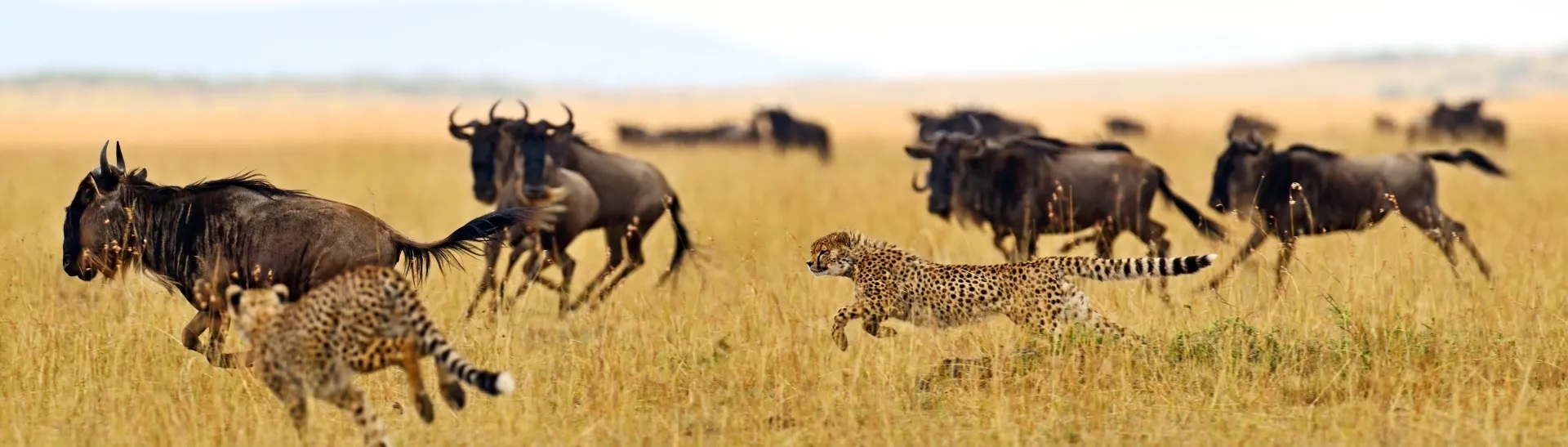
The Great Wildebeest Migration is a year-round, clockwise movement of over two million wildebeest, zebras, and gazelles across the Serengeti ecosystem (Tanzania) and Masai Mara National Reserve (Kenya). Driven by rains, they calve in the southern Serengeti (Jan-Mar), travel through the Western Corridor (Apr-Jun), and brave dramatic Mara River crossings into Kenya (July-Oct) before returning.
15-days-africa-big-cats-safari-kenya-tanzania-safari-and-zanzibar-beach-holidays
12-days-best-tanzania-and-kenya-safari-combo-itinerary
10-days-ultimate-budget-tanzania-safari-holiday-vacation
9-days-luxury-family-tanzania-safari-in-africa-holiday-vacation
8-days-7-nights-midrange-safari-in-tanzania-northern-circuit-parks
Wildebeest Migration in Masai Mara
The Masai Mara wildebeest migration is a dramatic, annual movement of over 1.5 million wildebeest, zebra, and gazelle from Tanzania's Serengeti to Kenya's Masai Mara, typically occurring from July to October. The spectacle is famous for dangerous Mara River crossings to escape crocodile-infested waters and predators. The best time to witness the herds in the Mara is from late July to October, with peak action usually in August.
Wildebeest Migration in Serengeti
The Wildebeest Migration is an annual, clockwise movement of over 1.5 million wildebeest, zebras, and gazelles across the Serengeti-Mara ecosystem, driven by rain and foraging for fresh grazing. Starting in southern Serengeti (January–March), the herd travels through Western Serengeti (May–June), northern Serengeti/Maasai Mara (July–September), and returns via the east.
Mara River crossing
The Mara River crossing is the dramatic, perilous climax of the annual Great Migration, typically occurring from July to September (with a return crossing in October/November) as over 1.5 million wildebeest and zebras move from Tanzania’s Serengeti to Kenya’s Maasai Mara. The animals brave dangerous currents, steep banks, and large Nile crocodiles
Grumet river crossing
The Grumeti River crossing is a dramatic, high-stakes segment of the Great Migration, occurring annually in the Western Corridor of Tanzania's Serengeti National Park between May and June. Hundreds of thousands of wildebeest and zebra brave crocodile-infested waters, offering intense predator action and a quieter alternative to the Mara River crossings.
Ndutu migration
The Ndutu migration, occurring from December to April in the Ngorongoro Conservation Area and Southern Serengeti, is the thrilling calving season of the Great Migration. Over two million wildebeest, zebras, and gazelles gather on short-grass plains, with calves born daily in January-February, attracting high predator activity.
1. What is the Great Wildebeest Migration?
The Great Wildebeest Migration is an extraordinary natural phenomenon that unfolds annually, characterized by the circular movement of over 1.5 million wildebeests, accompanied by hundreds of thousands of zebras and gazelles. This migration occurs as these animals traverse from the Serengeti National Park in Tanzania to the Masai Mara National Reserve in Kenya in search of fresh green pastures and water sources. The migration is primarily driven by the variations in rainfall patterns that dictate the availability of grass, which is essential for the survival of these herbivores.
This remarkable journey showcases the resilience and instinct of the wildebeest as they navigate vast landscapes, featuring grasslands, river crossings, and open savannas. The migration is a continuous cycle, filled with dramatic moments, including intense river crossings where animals face peril from crocodiles and rushing waters. The event attracts numerous predators, including lions, cheetahs, and hyenas, that follow the herds, adding an element of drama and survival to this natural spectacle. The Great Wildebeest Migration not only captures the essence of African wildlife but also represents the interconnectedness of ecosystems, making it a focal point for conservation efforts.
For wildlife enthusiasts, this migration presents unparalleled opportunities for observation and photography, making it one of the most sought-after experiences on the African continent. For many, witnessing the migration is a bucket-list adventure that paints a vivid picture of nature's raw power. With its breathtaking scenery, dynamic wildlife interactions, and profound natural rhythms, the Great Wildebeest Migration remains one of the most awe-inspiring events on Earth.
2. When is the Best Time to See the Migration?
While the Great Wildebeest Migration is a year-round phenomenon, the best time to witness its most dramatic aspects occurs between July and October, particularly known for the thrilling Mara River crossings. This peak season sees large herds of wildebeests and zebras congregating at the riverbanks, preparing for one of nature’s most dangerous and exhilarating moments as they attempt to cross into Kenya. Visitors during this period can observe not only the breathtaking migration but also the intense predator-prey dynamics that unfold in the wake of the movement.
In contrast, February stands out as the optimal time for witnessing the calving season in the southern Serengeti, where nearly 400,000 wildebeest calves are born. This period attracts a plethora of predators, making it a remarkable time for wildlife watchers. The southern Serengeti's vast grasslands provide rich grazing grounds for the pregnant females, creating a setting full of life and action.
Travelers should consider their interests when planning to see the migration. Those eager to see exhilarating river crossings should aim for the mid-year months, while those interested in calving and predator activity should target early in the year. Regardless of the timing, the migration offers a wealth of experiences, enriching every visit to this compelling landscape. Ensuring flexibility in plans can maximize the chances of witnessing these extraordinary moments while exploring the breathtaking beauty of the African savanna.
3. Where Does the Migration Start?
The Great Wildebeest Migration is a continuous cycle, but it often "starts" in the southern Serengeti region, specifically the Ndutu area, during the calving season, which typically occurs between January and March. This time marks a critical phase in the migration, as around 400,000 wildebeest calves are born during these months. The vast, nutrient-rich grasslands of the southern Serengeti and Ngorongoro Conservation Area provide ideal conditions for this birthing period, making it a crucial time for the herds.
From the Ndutu area, the migration takes shape as the herds begin to move in search of fresh pastures. After calving, the wildebeests gradually migrate northward, following the rains that nourish the grasslands. This instinctive movement is driven by the search for food and water, as the herds navigate through various terrains, including open savanna and wooded areas.
As they progress north, the wildebeests encounter challenges and predators, making their journey both perilous and exhilarating. The movement is characterized by complex social structures, with the herds working together to protect their young against the threats posed by predators. This initial phase of the migration sets the tone for the entire process, illustrating the intricate survival strategies that define this annual journey. By witnessing the migration starting in the southern Serengeti, visitors can appreciate not only the wonders of nature but also the resilience and adaptability of the animals involved.
4. How Long Does the Migration Last?
The Great Wildebeest Migration is not a singular event; it is a 12-month, continuous journey that happens every year, reflecting the cyclical nature of life on the African plains. This migration encompasses the constant search for fresh grazing grass and water sources, driven by the seasonal rains across the Serengeti and Masai Mara ecosystems. The vast distances covered by the herds represent an extraordinary aspect of wildlife behavior, characterized by their instinctual reliance on environmental cues.
The migration begins in the southern Serengeti, where calving occurs from January to March. After this period, the herds start moving northward, following the rains and grass growth toward the central and northern Serengeti. This movement culminates in the dramatic river crossings at the Mara River from late July to October as the herds enter Kenya's Masai Mara. The migration is a remarkable display of endurance and community, where hundreds of thousands of animals navigate critical terrain in pursuit of sustenance.
After spending time in the Masai Mara, the herds begin their return journey to the Serengeti around October or November as the rains return. This ongoing migration reflects the interconnectedness of life in this unique ecosystem and offers wildlife enthusiasts a chance to witness the beauty and complexity of nature. Understanding that it is a year-round phenomenon emphasizes the constant rhythms of life in the African wilderness, ensuring that there is always something incredible to observe throughout the year.
5. Which Country is Better for Seeing the Migration, Kenya or Tanzania?
When it comes to experiencing the Great Wildebeest Migration, both Kenya and Tanzania offer unique advantages, making the choice dependent on individual preferences and the timing of the visit. Tanzania's Serengeti is renowned for providing an extended viewing window across the majority of the year. This allows visitors to enjoy different aspects of the migration, including calving season and the challenges faced by the herds as they navigate the landscape in search of water and pasture.
On the other hand, Kenya's Masai Mara presents the culmination of the migration experience, particularly from July to October, when dramatic river crossings occur. During this peak season, thousands of wildebeests attempt to cross the Mara River, a high-stakes moment that attracts not just fellow travelers but also a variety of predators. The intense action and rich cultural experiences associated with the Maasai communities enhance the adventure during these months.
Ultimately, both countries provide valuable experiences for wildlife aficionados, with Tanzania offering a longer duration for migration observation while Kenya delivers concentrated, dramatic action during the crossing periods. Many travelers choose to explore both regions to maximize their opportunities for witnessing the full span of this natural marvel. Whether you prefer the ample time in Serengeti's varied landscapes or the excitement of the river crossings in the Mara, both destinations contribute significantly to the allure of the Great Wildebeest Migration.
6. When Do the Wildebeest Cross the Mara River?
The wildebeest typically cross the Mara River into Kenya from late July to October, making this period one of the most exhilarating times to witness the Great Wildebeest Migration. During these months, the herds gather at the riverbanks, preparing for one of nature's most dramatic events—the crossing. This moment is fraught with danger, as the animals face significant risks from powerful currents and lurking crocodiles waiting for unsuspecting victims.
While larger, more concentrated crossings usually occur during peak season, some smaller river crossings can happen earlier in the migration, often around June. These early crossings offer a less crowded experience, allowing travelers to appreciate the suspense and excitement of the herds as they navigate the challenges of the river.
Witnessing the Mara River crossings can be an unforgettable experience, but it requires patience and often several days of tracking the migration’s movements. Travelers may need to wait at strategic locations to catch the moment when the animals decide to plunge into the water. This captivating interplay of life, death, and survival highlights the raw beauty of the natural world. Whether you are an observer or a photographer, these moments create lasting memories, making the anticipation worthwhile.
7. Can I See River Crossings on a Short Safari?
While it's possible to see river crossings during a short safari, the chances of witnessing this iconic spectacle are not guaranteed. River crossings are dynamic events influenced by various factors such as weather, grazing availability, and the instincts of the animals themselves. As a result, seeing a river crossing often requires patience, timing, and sometimes several days dedicated to tracking the migration.
On a short safari—typically lasting 3 to 5 days—there is a limited window of opportunity to experience the full action surrounding the river crossings. To maximize the likelihood of witnessing this event, visitors should consider scheduling their trips during peak migration months, especially from late July to October, when the crossings are most concentrated. Additionally, staying in accommodations near the Mara River or strategically located lodges in the Masai Mara can increase the chances of catching the action.
For travelers with shorter itineraries, planning ahead and discussing expectations with their safari operators can enhance the experience. Short safaris still provide plenty of wildlife viewing opportunities, including encounters with predators and vast herds of wildebeest, but the river crossings may require more time and flexibility. Being prepared for the unpredictability of nature is key to enjoying this thrilling aspect of the Great Wildebeest Migration.
8. What Happens During the Calving Season?
The calving season, which occurs between January and March in the southern Serengeti and Ngorongoro Conservation Area, is one of the most remarkable phases of the Great Wildebeest Migration. During this critical time, nearly 400,000 wildebeest calves are born, presenting a spectacular sight as the plains come alive with new life. The nutrient-rich grasslands of the southern Serengeti provide an ideal environment for the expectant mothers, ensuring that the calves have a strong start in their early days.
The calving season attracts numerous predators, including lions, hyenas, and cheetahs, who are drawn to the high density of vulnerable calves. This creates a dynamic ecosystem where the survival instincts of the wildebeest are put to the test. Mothers are fiercely protective, forming tight-knit groups to watch over their young; meanwhile, predators scavenge for opportunities.
Visitors during the calving season can witness not only the birth of new wildebeests but also the intensity of predator-prey interactions. This period showcases the raw power of nature—the joyful moments of new births contrasted by the harsh realities faced by the wildebeests. For wildlife enthusiasts, the calving season provides an unparalleled opportunity to observe the cycle of life in its most vivid form, making it a cornerstone of the migration experience.
9. Why Do the Wildebeest Migrate?
The Great Wildebeest Migration is primarily driven by the search for fresh grazing grass and water, a natural instinct that compels these animals to move across vast distances. Following the seasonal rains, the wildebeests embark on their journey to find nutritious food sources, which are essential for their survival and reproductive health. This cyclical migration is not just about seeking sustenance; it is also about ensuring the survival of future generations.
During their travels, the wildebeests exhibit remarkable social behaviors, with the herds often working collectively to provide safety. Moving in large groups reduces individual risks from predators and ensures that the weaker animals, such as calves, can have better protection. The migration path is largely determined by environmental factors, as rainfall patterns influence grass growth and water availability.
Following instincts honed over millennia, the wildebeest navigate through various terrains, showcasing their resilience and adaptability. The challenges they encounter—such as river crossings fraught with danger from crocodiles and steep banks—illustrate the harsh realities of life in the wild. Ultimately, the wildebeest migration is a testament to nature's enduring rhythms, an incredible journey of survival, and an essential aspect of the greater ecological balance in the African savanna.
10. What Other Animals Can I See During the Migration?
During the Great Wildebeest Migration, visitors to the Serengeti and Masai Mara ecosystems can expect to encounter a rich diversity of wildlife alongside the wildebeests. Zebras commonly accompany the migration, traveling in large numbers and often forming mixed herds with the wildebeests. This alliance provides mutual benefits as they share grazing land and help each other stay vigilant against predators.
In addition to zebras, gazelles—particularly Thomson's and Grant's gazelles—also join the migration, making the typical sights even more dynamic. These nimble animals are adept at escaping predators and often contribute to the overall excitement and activity on the plains.
Predators are a significant part of the experience as well; lions, cheetahs, and hyenas take advantage of the high concentration of grazing animals. The presence of these apex predators creates thrilling moments for wildlife enthusiasts, as they observe hunts, which are often a part of the harsh realities of the migration.
Birdlife is also abundant, with species such as the African fish eagle, secretary bird, and numerous weavers enhancing the scenic beauty of the landscape. Altogether, the Great Wildebeest Migration provides a diverse array of wildlife experiences, showcasing the interconnectedness of species and the intricate balance of life on the African plains, making each safari a rich and fulfilling adventure.
11. Is the Migration Dangerous for the Animals?
Yes, the Great Wildebeest Migration is fraught with danger for the animals involved. As they journey across vast landscapes in search of fresh grazing areas, the wildebeests face multiple threats that challenge their survival. One of the most perilous moments occurs during river crossings, where herds attempt to navigate treacherous waters filled with strong currents and lurking crocodiles. These crossings can lead to drowning, injury, and attack by predators waiting at the river's edge.
Predators such as lions, hyenas, and crocodiles pose a constant threat throughout the migration. Predators strategically follow the herds, capitalizing on the vulnerability of the younger and weaker members of the group. The intense struggle for survival highlights the brutal realities of life in the wild, as predators hunt actively during this period to sustain their own lives.
Additionally, the stresses of migration—such as long distances and fierce competition for food and water—can weaken individual animals and make them more susceptible to disease and other threats. The migration exemplifies the natural balance of life and death, showcasing the tenacity and instinct of the wildebeests as they confront these challenges. Witnessing the dangers faced by the animals adds a layer of complexity and intensity to the migration experience, leaving an indelible mark on those fortunate enough to observe this remarkable event.
12. How Long Should I Plan for a Migration Safari?
When planning for a migration safari, a 7 to 10-day itinerary is ideal for fully experiencing the Great Wildebeest Migration and exploring the diverse landscapes of the Serengeti and Masai Mara. This duration allows travelers to cover sufficient ground, witness various phases of the migration, and engage in ample wildlife viewing opportunities. With a longer safari, visitors can maximize their chances of witnessing stunning river crossings, predator interactions, and the majestic scenery that both parks have to offer.
A 7-day safari allows for focused exploration, with the ability to track the herds across segmented entry points in either the Serengeti or Masai Mara. During this time, travelers can enjoy multiple game drives, making stops at key locations to spot wildlife and capture breathtaking photographs.
For those limited on time, a 4 to 7-day safari can still provide remarkable insights into the migration, but may require flexibility and efficient planning to ensure that travelers experience the most significant moments. Timed correctly, a shorter safari can be planned around the best times to see calving and river crossings. Overall, allowing ample time enhances not only the chances for animal sightings but also deepens the connection with Africa’s magnificent wildlife and its delicate ecosystems.
13. Do the Herds Return to the Serengeti?
Yes, after spending time grazing in the Masai Mara, the herds of wildebeest and zebras typically begin their return journey southward into the Serengeti around October or November, coinciding with the onset of the rainy season. This annual cycle reflects the migration's nature as a continuous, interconnected journey rather than a series of distinct events. The return to the Serengeti allows the herds to take advantage of the new grass growth that follows the rains, ensuring adequate nutrition for the animals.
As the herds make their way back south, they cross various landscapes, including open plains and wooded areas, facing different challenges along the route. The return journey may not be as dramatic as the river crossings into Kenya, but it plays a crucial role in the overall dynamics of the migration. Predators, such as lions and hyenas, often follow the herds closely during this phase as well, taking advantage of any weaknesses within the group.
This cyclical movement underscores the wildebeests' reliance on instinctual patterns, as they effectively navigate the terrain based on environmental cues. Witnessing both the outward migration into the Masai Mara and their return to the Serengeti offers wildlife enthusiasts a comprehensive view of the challenges and triumphs experienced by these majestic animals throughout the year. Observing these behaviors provides essential insights into the life cycles of the wildebeests and their role within the interconnected ecosystems of East Africa.
14. What Are the "Mobile Camps"?
Mobile camps are a unique and luxurious accommodation option designed for travelers wanting to experience the Great Wildebeest Migration up close. These camps are tented luxury lodges that move twice a year in pursuit of the migrating herds, ensuring guests are always near the action. Typically, mobile camps set up in strategic locations within the Seronera region in the early part of the year and shift to the northern Serengeti as the migration progresses.
The flexibility of mobile camps allows for a more immersive experience, as they adapt to the changing landscape and wildlife movements. Each camp is equipped with comfortable accommodations, including spacious tents, en-suite bathrooms, and common areas for dining and relaxation. The intimate atmosphere fosters a sense of camaraderie among guests, as they share unforgettable experiences while surrounded by nature.
Staying in a mobile camp enhances the safari experience, as guests have the opportunity to embark on guided game drives and witness the migration firsthand. Experienced guides provide insights and share knowledge about the wildlife and their natural behaviors, enriching the adventure. Furthermore, mobile camps ensure that guests enjoy both luxury and proximity to an extraordinary wildlife spectacle, making them an excellent choice for discerning travelers seeking to witness the iconic migration in a memorable way.
15. Is It Safe to Bring Children on a Migration Safari?
Bringing children on a migration safari can indeed be a rewarding experience for families, allowing them to engage with nature and wildlife in a unique setting. However, it's essential to consider several factors to ensure a safe and enjoyable outing. Generally, many safari lodges and camps cater to families and offer family-friendly environments. However, age restrictions may apply, often requiring children to be over 5 or 8 years old, especially for game drives and certain activities.
Long drives between game viewing locations can be tiring for younger children, so it is advisable to plan breaks and activities to keep them engaged. Some lodges may even provide family-oriented programs, allowing children to learn about wildlife conservation and participate in safe, supervised activities.
Safety is an ongoing consideration in the African wilderness. Parents should be vigilant regarding children’s movements, as wildlife is present in the area, and encounters can occur
Booking wildebeest migration safari with us Roads of Adventure safaris
Book your unforgettable Wildebeest Migration safari with Roads of Adventure Safaris to witness millions of wildebeest crossing the Serengeti and Masai Mara plains. We provide expertly guided game drives, allowing you to experience spectacular wildlife, including the Big Five, and custom itineraries for this annual, iconic spectacle. Our team ensures a safe, thrilling journey, from river crossings to calving seasons, offering a personalized touch for your dream African adventure. Contact us today to secure your front-row seat to one of nature’s greatest adventures.
