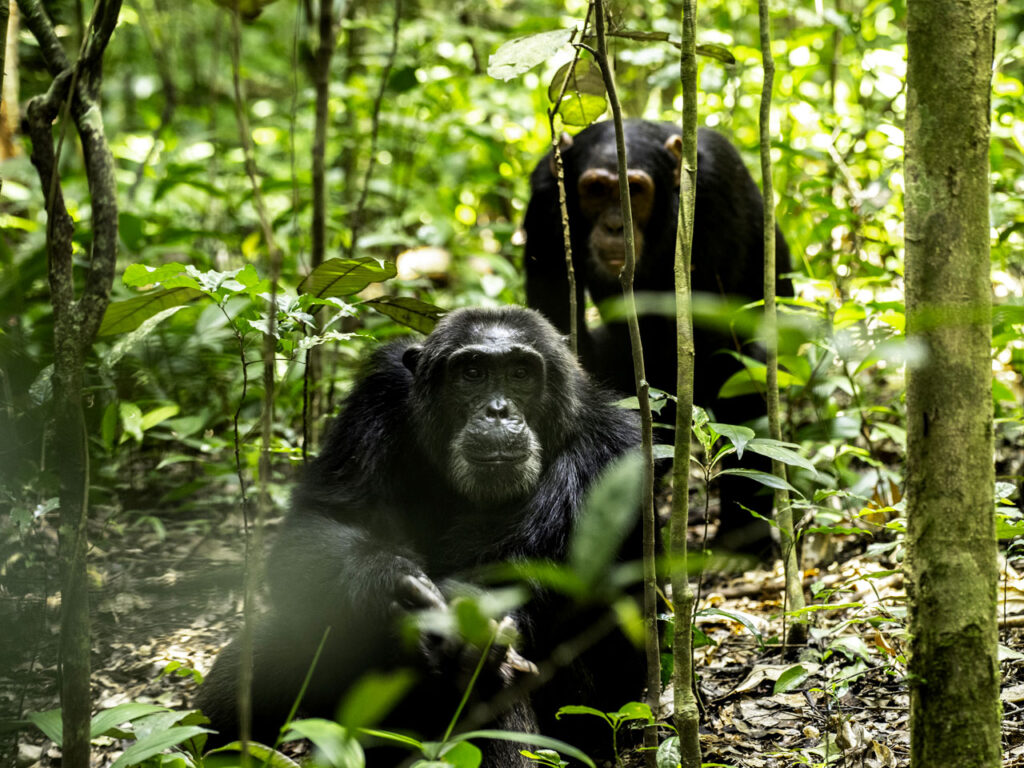
Beyond chimpanzee tracking, Kalinzu Forest offers excellent opportunities for bird watching (over 379 species), guided nature walks along four distinct trails, and hiking to the Kilyantama waterfalls or Kishunja Hill viewpoint. Visitors can also experience guided butterfly identification, primate spotting, and camping.
14-days-uganda-and-rwanda-safari-tour-itinerary
14-days-luxury-uganda-primate-safari-holiday
14-days-uganda-primate-safari-and-jinja-white-water-rafting
14-days-classic-uganda-birding-safari-expedition
14-days-best-africa-big-five-safari-in-uganda-and-best-gorilla-trekking-adventure
20-days-uganda-birding-safari-wildlife-gorilla-and-chimpanzee-tracking
20-days-uganda-birding-safari-to-uganda-national-park
20-days-uganda-safari-holiday-tour-package-itinerary
19-days-best-photography-uganda-birding-safari-and-wildlife-adventure
19-days-incredible-uganda-safari-tour-big-five-chimpanzees-and-mountain-gorillas
18-days-best-of-uganda-safari-holiday-vacation-to-all-best-parks
17-days-uganda-honeymoon-safari-holiday-tour
17-days-uganda-birding-safari-itinerary
17-days-best-safari-in-uganda-ending-in-kigali-rwanda
16-days-ultimate-uganda-safari-to-rwanda-safari-tour-package-combo
16-days-best-of-uganda-birding-safari-holiday-extravaganza
7-day-ultimate-uganda-primate-safari-chimpanzees-and-game-drives
6-days-best-gorilla-trekking-and-safari-uganda-parks
1. Guided Nature Walks
The trail system in Kalinzu is designed to cater to different fitness levels and interests, offering a deep dive into the forest's multi-layered ecosystem. The Waterfall Trail is perhaps the most popular, a moderately challenging three-hour hike that leads to the picturesque Kilyantama waterfalls. For those interested in the forest’s hydrology, the River Trail meanders near River Kajojo (the "Elephant River"), where forest elephants historically came to drink.
These walks are not just about the destination; they are about the "vertical safari" happening above your head. As you traverse the Valley or Palm Trails, your guide will help you spot the high-density primate population. It is common to see the shaggy Black-and-white Colobus performing daring leaps across the canopy, while the smaller Red-tailed monkeys and Blue monkeys dart through the lower branches. For a truly unique experience, guided night walks allow you to see the forest's nocturnal residents, such as the wide-eyed Bushbabies (Galagos) and Pottos, whose eyes reflect the torchlight like tiny diamonds in the dark.
2. Bird Watching
Kalinzu is an undisputed paradise for ornithologists, boasting a checklist of over 378 recorded species. The forest acts as a bridge between the savannah of the rift floor and the montane forests of the ridges, resulting in a staggering variety of avian life. The "star" of the forest is undoubtedly the Great Blue Turaco, a massive, vibrant bird with a distinct crest that is often seen clumsily hopping between fruit trees.
Birders can also expect to see the Black and White Casqued Hornbill, whose heavy wingbeats sound like a steam engine as they fly overhead. The forest is also home to various sunbirds, which flit like iridescent jewels around the flowering lianas. Because the forest has several distinct layers—from the dark leaf litter of the floor to the sun-drenched emergent trees—every 10 meters of elevation change brings a new set of species. Whether you are looking for the elusive Cuckoos or the rare African Grey Parrot, the sheer volume of birdsong in Kalinzu creates a constant, melodic backdrop to any forest excursion.
3. Hiking and Viewpoints
For those who want to see the "big picture," the hike to the Kishunja Hill Viewpoint is an essential activity. This trail takes you to one of the highest points in the reserve, offering a physical challenge that is rewarded with one of the most spectacular panoramas in Western Uganda.
From the summit of Kishunja, you can look out over a sea of broccoli-like forest canopy that stretches toward the horizon. On a clear day, the view expands to include the vast savannah plains of Queen Elizabeth National Park and the shimmering surface of the Kazinga Channel. If the weather is particularly favorable, the jagged, snow-capped peaks of the Rwenzori Mountains (the "Mountains of the Moon") are visible in the far distance. This viewpoint provides a geographical context that is hard to grasp from the forest floor, allowing you to see how the rainforest serves as a vital watershed and "green lung" for the surrounding agricultural and savannah landscapes.
4. Butterfly and Moth Identification
While many safari-goers focus on the "Big Five," Kalinzu invites you to focus on the "Small Five Thousand." The forest is home to an incredible 262 species of butterflies and 97 species of moths, making it one of the most important sites for entomology in the region. During the sunny intervals between rains, the forest clearings and mud puddles become "puddle-party" sites where hundreds of butterflies congregate to drink minerals.
Specialized guided tours focus on identifying these delicate creatures, from the massive Charaxes species to the delicate Acraeas. The forest's diverse flora provides specific host plants for a wide variety of caterpillars, leading to a constant cycle of metamorphosis. Moths, though more elusive, are equally fascinating; many species in Kalinzu have evolved intricate camouflages that mimic dead leaves or lichen. For macro-photographers, this activity is a dream, offering the chance to capture the iridescent scales and complex patterns of some of Africa’s most beautiful and overlooked insects.
5. Camping
For those who want to truly "sink" into the forest atmosphere, camping near the Nkombe Forest Station offers a raw and immersive wilderness experience. Unlike staying in a solid-walled lodge, sleeping in a tent allows you to hear the unfiltered sounds of the African night. The forest never truly sleeps; you will fall asleep to the rhythmic "tink-tink" of fruit bats and wake up to the thunderous dawn chorus of monkeys and birds.
The campsite is basic but strategically located to provide safety while maintaining a sense of isolation. Being "stationed" in the middle of the forest means you are already at the trailhead when the sun rises, giving you a head start on the morning chimpanzee treks. At night, gathered around a small campfire, the lack of light pollution reveals a sky thick with stars, framed by the dark, towering silhouettes of ancient hardwoods. It is an experience designed for the "purist" traveler who values the scent of woodsmoke and the damp, earthy smell of the rainforest over luxury amenities.
6. Medicinal Plant Study
Kalinzu is not just a collection of trees; it is a living pharmacy. For centuries, the communities surrounding the forest have relied on its botanical riches for health and healing. Guided walks specifically focused on Ethnobotany showcase the forest’s rich biodiversity through the lens of traditional medicine.
One of the most famous highlights of this study is the Mutragyne rubrostipuleta, locally known as the "Viagra tree." Traditional healers have long used its bark and roots to treat various ailments, including those related to fertility and vitality. Beyond this, you will learn about plants used to treat everything from malaria and stomach upsets to snake bites and skin infections. Your guide will explain how the forest's "socialist" network works—how certain trees protect others and how the "strangler fig" eventually consumes its host. This activity provides a profound cultural layer to the safari, showing that the forest is not just a place for animals, but a vital resource that has sustained human life for generations.
1. What types of guided nature walks are available for tourists visiting Kalinzu Forest reserve?
Kalinzu Forest Reserve is a sanctuary for those who prefer the quiet, rhythmic pace of a walking safari. The forest offers four primary trails, each meticulously designed to showcase a different facet of its complex ecology. The River Trail is a relatively short, one-hour loop that follows a stream where forest elephants were historically known to bathe. The Palm Trail is a 5-kilometer hike that introduces visitors to unique flora, including the majestic Raphia palms used in local crafts.
For those seeking more of a challenge, the Waterfall Trail is an 11-kilometer trek that leads to the thunderous Kilyantama Waterfall. This trail requires a half-day commitment but rewards hikers with some of the most pristine forest scenery in the reserve. Finally, the Valley Trail offers a moderate 3.5-kilometer route that focuses on the ridge-top views and the transition between different forest layers. Every walk is led by an expert ranger-guide who acts as a translator for the forest, interpreting the subtle signs of animal life and the complex relationships between the ancient trees and the creatures that inhabit them.
2. Can I go bird watching in Kalinzu Forest and what species am I likely to see?
Kalinzu is an undisputed heavyweight in the world of African birding, with a checklist that exceeds 370 species. The forest serves as a vital corridor between the savannah of Queen Elizabeth National Park and the high-altitude montane forests, attracting a diverse range of avian life. The most sought-after resident is the Great Blue Turaco, a massive, neon-blue bird with a distinct crest that is frequently seen hopping between fruiting trees in the mid-canopy.
For serious birders, the forest offers rarities like the African Green Broadbill, whose small size and cryptic coloring make it a prized find. You are also likely to encounter the Black-and-white-casqued Hornbill, identifiable by its heavy, rhythmic wingbeats and massive beak. The forest is also alive with various sunbirds, which flit like iridescent jewels around the flowering lianas. Because the forest has multiple layers—from the dark, moist floor to the sun-drenched emergent canopy—every hike is a multi-sensory experience. Whether you are at a viewpoint or deep in a valley, the constant symphony of bird calls ensures that there is never a silent moment in Kalinzu.
3. How can I visit the Kilyantama Waterfall during a day trip to the Kalinzu Forest?
Visiting the Kilyantama Waterfall is one of the most rewarding physical challenges in Kalinzu. To reach it, you must embark on the Waterfall Trail, an 11-kilometer guided hike that typically takes between 4 to 5 hours to complete. This trail is best suited for visitors with a moderate level of fitness, as it involves navigating some steep inclines and occasionally slippery sections of the forest floor.
The journey to the waterfall takes you through some of the deepest and most untouched parts of the reserve. Along the way, you pass through corridors of ancient hardwoods and giant tree ferns that make you feel as though you’ve stepped back into a prehistoric era. The "reward" at the end of the trail is the waterfall itself—a spectacular, roaring cascade that plunges into a rocky pool below. The sound of the water echoing through the trees provides a powerful contrast to the usual quiet of the forest. Because of the length of the hike, it is essential to start early in the morning and carry sufficient water and a packed lunch to enjoy by the falls.
4. Are there opportunities to view wildlife besides chimpanzees when walking through the dense Kalinzu Forest?
While the chimpanzees are the primary draw, Kalinzu is a vibrant "primate city" hosting several other species that are often easier to spot. As you walk, you are highly likely to see the Black-and-white Colobus, whose long, flowing white fur makes them look like skunks leaping through the emerald canopy. The smaller Red-tailed Monkeys and Blue Monkeys are also common residents, often seen playfully darting through the mid-layers of the forest.
Beyond primates, the forest floor and undergrowth are home to a variety of specialized wildlife. You may encounter Vervet Monkeys and Olive Baboons near the forest edges. For the keen-eyed observer, the forest also hides chameleons, various species of forest squirrels, and a staggering array of butterflies. Occasionally, lucky trekkers might cross paths with a Blue Duiker, a small forest antelope that is notoriously shy. The beauty of a walking safari in Kalinzu is that it allows you to focus on these "smaller" residents that are often missed during the high-energy pursuit of chimpanzees, providing a more comprehensive understanding of the forest’s biodiversity.
5. Is it possible to go butterfly identification in the Kalinzu Forest with a specialized guide?
Kalinzu is a dream destination for entomologists and macro-photographers, boasting over 260 species of butterflies and nearly 100 species of moths. The forest’s high moisture levels and diverse flora create the perfect breeding ground for these delicate insects. During a specialized guided tour, you can visit "puddle-party" sites—damp areas on the forest floor where dozens of butterflies congregate to drink essential minerals.
Your guide will help you identify the striking Charaxes, known for their powerful flight and bold patterns, as well as the delicate Acraeas. The forest is also home to the massive African Giant Swallowtail, one of the largest butterflies on the continent. These tours often focus on the lifecycle of the butterflies, showing you the specific host plants and caterpillars that eventually transform into the iridescent beauties fluttering above. For those interested in the nocturnal side of the forest, the moths of Kalinzu are equally fascinating, featuring incredible camouflages that mimic dead leaves, bark, and lichen to hide from predators during the day.
6. What is the experience like on the Kishunja Hill viewpoint in the Kalinzu Forest area?
The experience at the Kishunja Hill Viewpoint is one of the most breathtaking moments a traveler can have in Western Uganda. After a steady climb through the dense canopy, the forest suddenly opens up, revealing a panoramic vista that stretches for miles. From this elevated vantage point, you can look down upon the "broccoli-like" top of the ancient rainforest, seeing it as a vast, continuous green carpet.
To the west, the landscape drops away into the Great Rift Valley, where you can see the shimmering waters of the Kazinga Channel and the wide-open savannah plains of Queen Elizabeth National Park. On a clear day, the horizon is dominated by the jagged, snow-capped peaks of the Rwenzori Mountains, which provide a dramatic, icy backdrop to the tropical greenery below. It is a place for reflection and photography, offering a geographical "big picture" of how the forest interacts with the surrounding ecosystems. Standing on the hill, you truly feel the scale of the African continent and the vital role that Kalinzu plays as a watershed for the region.
7. Can I camp overnight at the Kalinzu Forest reserve, and what facilities are provided there?
Yes, Kalinzu offers a raw and authentic camping experience near the Nkombe Forest Station. This is not "glamping"; it is a back-to-basics wilderness experience designed for those who want to be fully immersed in the sounds and scents of the rainforest. The facilities are basic, typically consisting of a designated cleared area for tents and a simple pit latrine or basic shower area.
Because the facilities are minimal, campers must be entirely self-sufficient, bringing their own tents, sleeping bags, cooking equipment, and food. However, the "luxury" of this site is the location. Sleeping in a tent allows you to hear the unfiltered sounds of the night—the rhythmic calls of fruit bats, the distant grunts of nocturnal primates, and the overwhelming dawn chorus of birds. It is also a strategic choice for photographers and primate enthusiasts; being already inside the reserve means you can be the first on the trails at daybreak, catching the wildlife at its most active before the morning mist has even cleared.
8. What makes the Palm Trail in Kalinzu Forest a unique activity for tourists and researchers?
The Palm Trail is a 5-kilometer loop that is particularly prized for its botanical diversity. While many trails focus on wildlife, the Palm Trail is a deep dive into the "architecture" of the forest. As the name suggests, it highlights various palm species, most notably the Raphia Palms, which are essential to both the ecosystem and the local culture, where they are used for weaving and building.
One of the most famous stops on this trail is the "Fire Tree" (Erythrina abyssinica), recognizable by its striking red flowers that look like tongues of flame. For researchers, this trail is a living laboratory, showcasing how different tree species compete for light and nutrients in a crowded montane forest. The trail also passes through areas with a high density of ferns and epiphytes, plants that grow on other plants, creating a lush, multi-storied environment. For tourists, it is a relatively easy walk that provides an incredible education on the "green" side of the safari, explaining how the forest has sustained itself and the local human populations for thousands of years.
9. Are there guided tours that teach me about traditional medicinal uses of plants in Kalinzu?
Kalinzu is not just a collection of trees; it is a living pharmacy. Local guides, many of whom have grown up in the surrounding villages, offer specialized Ethnobotany tours that reveal the medicinal secrets hidden in the leaves, bark, and roots of the forest. These tours provide a fascinating cultural layer to the wildlife experience, connecting the natural world to human history and folklore.
During these walks, you will learn about the "Viagra tree" (Mutragyne rubrostipuleta), used traditionally for vitality, as well as plants that can treat everything from malaria and stomach upsets to snake bites. Your guide might show you a tree whose sap acts as a natural antiseptic or leaves that can be used as soap. These tours are also filled with local folklore, such as stories about which trees are believed to house spirits or protect the forest from storms. It is a humbling experience that shows the deep, intuitive knowledge that local communities have of their environment, highlighting the forest as a vital resource for health and spiritual well-being.
10. Can I see forest elephants, and where in Kalinzu Forest do they usually gather?
While seeing a forest elephant in Kalinzu is a rare and special event, it is certainly possible. These elephants are smaller and more elusive than their savannah cousins, with straighter tusks adapted for moving through thick vegetation. They primarily inhabit the deeper, more secluded parts of the reserve, away from the main human activity.
The best place to look for signs of them—such as fresh dung or stripped bark—is along the River Trail. This area is often referred to by guides as the "elephant waterway" because the elephants historically used the river as a corridor for drinking and moving between Kalinzu and the neighboring Queen Elizabeth National Park. While you are more likely to hear them or see their footprints than to have a clear visual sighting, the possibility adds a thrill to every corner you turn. The presence of these mega-herbivores is vital for the forest's health, as they act as "gardeners," dispersing seeds and creating clearings that allow new sunlight to reach the forest floor.
11. What is the "tree that baboons failed to climb" I can see in Kalinzu Forest?
On the forested trails of Kalinzu, guides often point out a botanical curiosity known locally as the "tree that baboons failed to climb." This is a specific species of tree, often identified by its exceptionally smooth, vertical, and slippery bark. In a forest where baboons are masters of acrobatics, this tree stands as a natural anomaly that even the most agile primates find impossible to grip.
The tree serves as a popular photographic stop and a great example of the forest's unique adaptations. Guides use the tree to tell local stories and riddles, adding a touch of humor and personality to the hike. From a biological perspective, the smooth bark may be an evolutionary defense mechanism to prevent primates from reaching its fruits or seeds, or to stop epiphytic plants from taking root on its trunk. Seeing it in person allows you to appreciate the subtle "battles" for survival that happen in the forest every day, where even the most skilled climbers are sometimes outmatched by a simple piece of timber.
12. Are there any exciting night experiences or nocturnal primate tracking activities offered in Kalinzu?
Yes, for those who want to see the "other half" of the forest’s life, Kalinzu offers specialized night walks. These excursions begin after dusk when the day-active animals have gone to sleep and the forest’s secretive nocturnal residents emerge. Armed with powerful spotlights, you and your guide head into the darkness to find the glowing eyes reflecting in the trees.
The primary targets for night walks are the Pottos and Galagos (Bushbabies). These primates have massive, light-capturing eyes and move with a ghostly silence. You might see a Bushbaby make a spectacular, spring-like leap between branches or spot a Potto moving slowly and deliberately along a limb. The night walk also reveals a different world of insects, amphibians, and owls. The atmosphere of the forest at night is entirely different—the temperature drops, the sounds change, and the sense of mystery is heightened. It is a thrilling way to round out a day of chimpanzee trekking, proving that the forest is a 24-hour ecosystem that never truly sleeps.
13. Can I take photos of the, "tree that failed to climb," in Kalinzu Forest?
Absolutely. Photographers frequently visit this specific spot to capture the unique texture and form of the "tree that baboons failed to climb." Because it is located along the established trail system, it is easily accessible during a standard guided tour. The smooth, often metallic-looking bark of the tree provides a striking contrast to the mossy, rough-barked trees that surround it, making for an interesting botanical study.
Beyond just the tree itself, the area surrounding it is usually a hotspot for general forest photography. The light filtering through the canopy onto the forest floor creates a "dappled" effect that can be very atmospheric. When photographing the tree, try to capture its height and the lack of low branches, which helps tell the story of why it's so difficult for primates to scale. It’s a great example of how "storytelling" can be integrated into wildlife photography, allowing you to bring home a piece of local Kalinzu legend along with your images of chimpanzees and birds.
14. How does the Valley Trail differ from other walking trails in the Kalinzu Forest Reserve?
The Valley Trail is often the preferred choice for visitors who have limited time but still want a deep-forest experience. At roughly 3.5 kilometers, it is a relatively short hike that can typically be completed in under two hours. Despite its shorter length, it doesn't compromise on biodiversity; it focuses on the steep ridges and deep valleys that give the reserve its name.
What makes the Valley Trail unique is the viewpoints it offers within the forest itself. Rather than looking at the forest from the outside, the trail takes you along the edges of deep ravines, allowing you to look across at the canopy of the opposite slope. This is excellent for spotting birds like the Great Blue Turaco, which often fly across these forest gaps. The trail is also a great place to see the transition between the tall primary forest trees and the denser secondary growth in the valleys. It is a "punchy" trail that delivers high visual rewards for a relatively low physical investment, making it perfect for an afternoon activity after a morning chimp trek.
15. Does the River Trail in Kalinzu provide good opportunities for seeing monkeys and chimpanzees?
Yes, the River Trail is one of the most productive routes for primate viewing, including chimpanzees. Because the trail follows the water, it passes through lush, fruit-rich vegetation that acts as a natural magnet for monkeys. The Black-and-white Colobus and Red-tailed Monkeys are particularly fond of the riverine trees, and their vocalizations often echo off the water.
The trail takes roughly one hour and is generally flat, making it an easy and relaxing walk. Its popularity stems from the fact that it is a high-traffic area for wildlife; animals must come toward the river for water, and the surrounding trees often remain green and productive even during the height of the dry season. For those interested in the "elephant waterway" history, the trail also offers a sense of connection to the forest's larger inhabitants. Whether you are looking for a quick morning stroll or a last-minute afternoon primate search, the River Trail offers a high probability of sightings within a beautiful and serene waterside setting.
Booking chimpanzee tracking with us Roads of Adventure safaris
Book your chimpanzee tracking experience with Roads of Adventure Safaris for a tailored, seamless adventure. As local experts, they manage all logistics, including securing, gorilla and chimp permit, private 4x4 transport, and comfortable lodges in areas like Kibale National Park.
