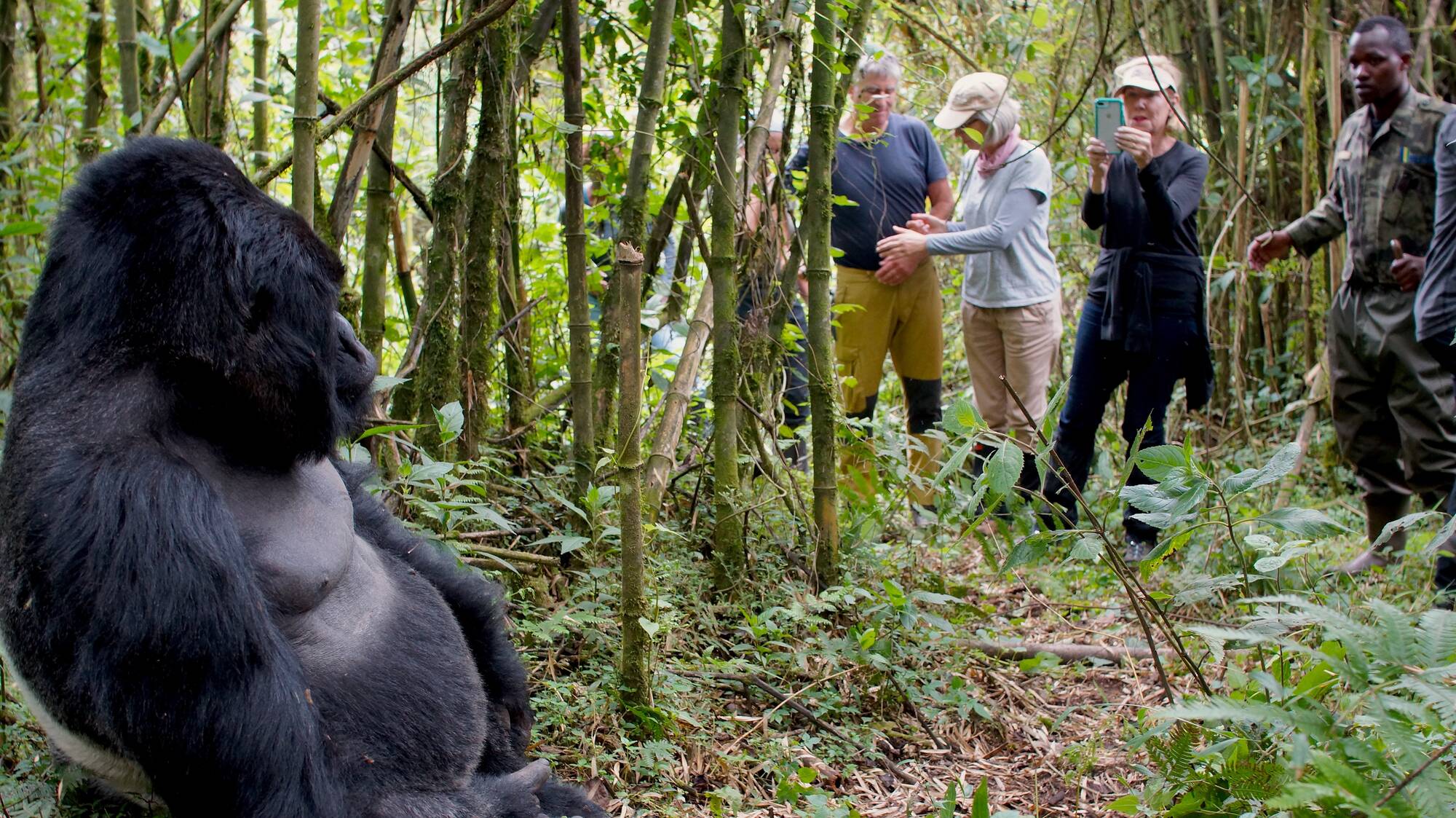
Looking for an unforgettable family adventure in East Africa? At Roads of Adventure Safaris, we specialize in designing seamless, tailor-made Uganda safaris that bring parents, teenagers, and young children closer to the wild. Traditional savannah game drives across Murchison Falls and Queen Elizabeth National Park, along with scenic boat cruises along the Kazinga Channel, welcome travelers of all ages with open arms.
However, if mountain gorilla trekking in Bwindi Impenetrable or Mgahinga Gorilla National Park is on your family's bucket list, it is important to plan ahead: the Uganda Wildlife Authority enforces a strict minimum age limit of 15 years old for gorilla permits to protect both the primates and young trekkers. Whether you are traveling with toddlers, young teens, or multi-generational family groups, our expert team is here to guide you through permit regulations, recommend child-friendly safari lodges, and structure rotation schedules and alternative activities so everyone in your family experiences the magic of Uganda.
3-days-affordable-uganda-budget-gorilla-trekking-via-kigali
3-day-budget-gorilla-trekking-safari-in-uganda
2-days-affordable-budget-uganda-safari-to-queen-elizabeth-national-park
2-days-budget-uganda-safari-to-murchison-falls-park
4-days-budget-queen-elizabeth-park-and-chimpanzee-tracking-in-kalinzu-forest
6-days-budget-uganda-safari-and-gorilla-trekking
7-days-budget-uganda-safari-tour-package
10-days-luxury-uganda-gorilla-trekking-safari-and-big-five-safari-vacation
9-days-luxury-gorilla-and-uganda-safari-tour-package
8-days-luxury-uganda-wildlife-safari-tour-package
4-days-luxury-gorilla-trekking-safari-in-bwindi-fly-in-all-inclusive-tour
4-days-luxury-murchison-falls-and-jinja-uganda-safari-vacation
🦍 Gorilla Trekking Age Limits & Exceptions
The baseline age limit for trekking mountain gorillas in Bwindi Impenetrable National Park and Mgahinga Gorilla National Park is 15 years old.
Why the Limit Exists
- Disease Transmission: Gorillas share roughly 98% of human DNA. Children frequently carry communicable illnesses like coughs and colds, which can be fatal to gorillas.
- Physical Demands: Treks last between 1 to 8 hours across steep, muddy, and thick volcanic rainforests. []
- Safety & Behavior: Wild gorillas may charge if provoked. Children are more likely to panic, scream, or run, triggering a dangerous defensive response from the animals.
Possible Exceptions
In rare cases, the UWA may grant an exception for children who are at least 12 to 14 years old. To attempt this:
Can children join traditional savannah safaris in Uganda?
Children of all ages are welcome to participate in traditional savannah safaris across Uganda’s classic national parks, including Queen Elizabeth, Murchison Falls, Lake Mburo, and Kidepo Valley. Unlike rainforest trekking activities that enforce age limits due to physical demands, vehicle-based game drives present no age restrictions. Viewing wildlife from closed or pop-up top 4x4 safari vehicles provides a safe and secure environment for young children to observe iconic species like lions, African elephants, Rothschild giraffes, and hippos without enduring physical exhaustion. Boat safaris along calm waterways like the Kazinga Channel or the Victoria Nile also accommodate families, equipped with life jackets for passengers of all sizes. To ensure a smooth experience, tour operators recommend private vehicle hires so families can tailor game drive durations, take flexible bathroom breaks, and adjust travel schedules around children's rest needs without impacting other travelers.
What is the strict minimum age limit for gorilla trekking in Uganda?
The official minimum age limit for mountain gorilla trekking in Uganda is strictly set at 15 years old by the Uganda Wildlife Authority. This regulation applies across all trekking sectors within Bwindi Impenetrable National Park and Mgahinga Gorilla National Park. Park officials enforce this rule rigidly during morning pre-trek briefings at park headquarters. Before any guest is assigned to a gorilla family, rangers inspect official original passports to verify date of birth details against confirmed permit documentation. If a traveler is under 15 years old on the date of the trek, they are denied access to the trail, and permit fees are non-refundable. The rule applies equally to international tourists, regional visitors, and citizens, ensuring uniform conservation standards and visitor safety across all primate trekking locations in Uganda.
Why is there a minimum age limit for gorilla trekking?
The 15-year minimum age limit exists primarily for disease control, wild animal safety, and human risk management. Mountain gorillas share over 98% of their genetic code with humans, making them highly vulnerable to human-borne communicable illnesses, particularly common childhood viral infections like colds, flu, and chickenpox. Additionally, gorilla trekking involves strenuous hiking through dense, unpaved tropical rainforests with steep inclines, muddy trails, and thick foliage at high altitudes. Young children may struggle to navigate these physical challenges or endure multi-hour hikes. Furthermore, wild silverbacks can execute sudden mock charges to assert dominance; children under 15 are statistically less likely to stay calm, crouch low, and remain silent as instructed by rangers, which could trigger a defensive reaction from the gorilla family.
Are there any exceptions to the 15-year gorilla trekking age limit?
Exceptions to Uganda’s 15-year gorilla trekking age limit are exceptionally rare and governed under strict administrative discretion by the Executive Director of the Uganda Wildlife Authority. An exception is generally only evaluated if a child is 14 years old and within a few weeks or months of their 15th birthday at the time of the scheduled trek. Parents must submit a formal written petition well in advance of the travel date, accompanying the application with copy of the child’s passport, recent physical fitness reports, and evidence of emotional maturity. Approvals are never granted at the park gates on the day of the trek; they must be officially authorized in writing from UWA headquarters in Kampala prior to issuing the permit voucher.
Can children under 15 participate in chimpanzee tracking?
Chimpanzee tracking in major forest reserves like Kibale National Park carries an official minimum age limit of 12 years old. While this is lower than the gorilla trekking age threshold, children under 12 are barred from standard forest tracking groups. Chimpanzees are highly active, vocal, and fast-moving primates that move through upper canopy layers and forest floors, requiring trekkers to maintain pace over uneven ground. For families traveling with younger kids, parks like Kibale offer alternative eco-educational activities. While parents participate in the main chimpanzee trek, kids under 12 can join guided children's forest walks led by trained ranger-guides, focusing on bird calls, insect identification, plant species, and gentle bush survival skills.
What activities are available for children under 15 in Bwindi while parents trek gorillas?
When parents or older siblings venture into Bwindi Impenetrable National Park for gorilla trekking, children under 15 have access to several organized, child-friendly activities near the park borders. Lodges collaborate with local guides to offer supervised village walks through neighboring communities, allowing kids to learn about local culture, visit primary schools, and see traditional tea or coffee preparation. Children can also participate in guided Batwa cultural experiences, where indigenous forest dwellers demonstrate traditional survival techniques, music, and craft-making in safe community settings. Additionally, gentle nature walks along cleared boundary trails offer younger travelers opportunities to spot colorful butterflies, forest birds, and small monkey species under professional guide supervision.
Is gorilla trekking physically safe for teenagers aged 15 and above?
Gorilla trekking is physically safe for teenagers aged 15 and older, provided they possess a moderate level of physical fitness and follow ranger instructions. Teenagers typically adapt well to the physical demands of rainforest hiking, which involves navigating mud, steep ridges, and tangled vines in Bwindi or Mgahinga. Safety is maintained through comprehensive morning briefings, constant escorting by armed Uganda Wildlife Authority rangers, and experienced forest trackers who clear paths. To enhance comfort and safety, families can hire local porters at the trailhead to assist teenagers with carrying daypacks and navigating slippery inclines. Teenagers who respect buffer distances (7 to 10 meters) and remain calm during wildlife encounters enjoy a secure, rewarding wilderness experience.
Do children receive discounted rates on Uganda gorilla trekking permits?
No, children do not receive discounted rates on Uganda mountain gorilla trekking permits. The Uganda Wildlife Authority maintains a fixed permit tariff structure regardless of the trekker's age. Every participant who meets the minimum age requirement of 15 years old pays the full standard fee, which is currently set at USD 800 for foreign non-residents, USD 700 for foreign residents, and UGX 300,000 for East African citizens. Permit revenues fund high-intensity conservation efforts, 24/7 ranger anti-poaching patrols, veterinary interventions, and community infrastructure projects surrounding the national parks, leaving no scope for age-based concessionary pricing.
Are park entry fees reduced for children on standard safaris?
Yes, the Uganda Wildlife Authority provides clear age-based discounts on general national park conservation entry fees for standard wildlife safaris. Across parks like Queen Elizabeth, Murchison Falls, Lake Mburo, and Kidepo Valley, children aged 5 to 15 years receive reduced entrance rates compared to adult tariffs (often roughly half the adult fee). Furthermore, young children under the age of 5 enter all Uganda national parks free of charge. These entry fee concessions make multi-day savannah safaris significantly more economical for families traveling with children, even though specialized activity permits (like primate tracking) maintain fixed single rates.
Which Uganda national park is most family-friendly for young children?
Lake Mburo National Park is widely recognized as Uganda's most family-friendly safari destination, particularly for families with young children. Located just 240 kilometers southwest of Kampala, it requires significantly less driving time compared to distant parks like Murchison Falls or Bwindi, reducing travel fatigue. Because Lake Mburo harbors no lions or elephants, it offers low-risk outdoor activities suitable for all ages, including calm boat safaris along the lake, guided walking safaris in safe park zones, horseback riding safaris, and mountain biking trails. Children can observe topis, zebras, impalas, and hippos at close range in a relaxed environment with mild temperatures and well-developed lodge facilities.
How do long driving distances in Uganda affect children on safari?
Overland driving distances between major tourist hubs in Uganda can be long, often ranging from 5 to 9 hours over a mix of paved highways and unpaved park roads. For children, extended road transfers can cause motion sickness, restlessness, and physical fatigue. Professional tour operators mitigate these challenges by incorporating structured rest stops at scenic locations—such as the Equator crossing in Kayabwe—and breaking up long transit legs with overnight stays at intermediate parks like Lake Mburo. Alternatively, families can book domestic scheduled or charter flights connecting Entebbe International Airport directly to airstrips like Kihihi, Kasese, or Pakuba, cutting driving times down to 1-hour flights.
Are safari lodges in Uganda equipped to host families with kids?
A large majority of mid-range and luxury safari lodges across Uganda are fully equipped to accommodate families traveling with children. Many properties feature dedicated multi-bedroom family cottages, interconnected rooms, and spacious canvas tents designed for shared occupancy. Lodges routinely offer amenities like swimming pools, spacious gardens, and evening campfires. Culinary teams cater to younger palates by providing custom child-friendly menus featuring familiar options like pasta, grilled chicken, fresh fruit, fries, and soups alongside international cuisine. Advanced notification allows lodges to arrange baby-sitting services or specialized kids' nature activities while parents relax.
What health precautions should parents take before bringing children on a Uganda safari?
Parents planning a Uganda safari with children must prioritize travel health preparations well in advance of departure. A Yellow Fever vaccination is mandatory for all travelers aged 9 months and older entering Uganda, with international certificate verification required at port-of-entry health desks. Parents should consult a travel medicine pediatrician regarding age-appropriate malaria prophylaxis medication, as malaria is endemic throughout East Africa. Additional recommendations include keeping routine childhood immunizations up to date, packing pediatrician-approved insect repellent containing appropriate DEET percentages, carrying oral rehydration salts, using high-SPF sunscreen, and ensuring children drink bottled or filtered water exclusively throughout the journey.
Can children participate in boat safaris in Uganda?
Children of all ages can safely join organized boat safaris in Uganda's key national parks. Popular launch trips—such as the Kazinga Channel boat cruise in Queen Elizabeth National Park or the Nile River cruise to the base of Murchison Falls—utilize sturdy double-decker passenger vessels equipped with guardrails, covered seating, and navigation safety equipment. Children can view dense concentrations of hippos, Nile crocodiles, bathing elephant herds, and diverse waterbirds from comfortable seats without walking long distances. Vessels maintain adult and child-sized life jackets on board, and smooth water conditions make boat safaris an engaging highlight for young travelers.
What is the minimum age for walking safaris in Uganda?
Guided bush walking safaris inside big-game national parks carry a general minimum age limit of 12 to 15 years old depending on the specific reserve and terrain. In parks with free-roaming dangerous megafauna like buffaloes, elephants, and lions, Uganda Wildlife Authority regulations mandate that participants be mature enough to follow immediate vocal instructions from armed rangers. However, low-risk, child-friendly nature walks are regularly conducted outside core predator zones—such as within lodge grounds, along forest edge trails in Kibale, or inside enclosed sanctuary areas—allowing younger kids to learn tracking skills, inspect plant life, and spot birds safely on foot.
Are there specialized family safari vehicles available in Uganda?
Tour operators routinely supply specialized family safari vehicles configured for comfort and clear game viewing. Long-wheelbase 4x4 Toyota Land Cruisers or customized safari vans feature popup roofs that allow every passenger to stand and view wildlife without obstruction. Private vehicle charters ensure families have exclusive use of the space, allowing children to move around freely, keep games and snacks within reach, and charge devices via built-in power outlets. Operators can provide child safety booster seats upon advance request, ensuring young travelers remain secure during off-road game drives across rough park terrain.
How can parents prepare teenagers mentally for a gorilla trek?
Parents can mentally prepare teenagers for gorilla trekking by reviewing official park etiquette and conservation guidelines prior to travel. Teenagers should understand that mountain gorillas are wild, powerful animals that require quiet, respectful observation. Parents should emphasize the necessity of maintaining a 7- to 10-meter safety buffer, avoiding direct prolonged eye contact with silverbacks (which can be interpreted as a challenge), keeping movement calm and deliberate, and refraining from flash photography. Preparing teens for the physical reality of muddy rainforest hiking, wearing proper gear, and accepting the 1-hour time limit helps set realistic expectations for a safe, awe-inspiring encounter.
What happens if an underage child is brought to the gorilla briefing station?
If a child under the age of 15 arrives at a gorilla trekking briefing station without a pre-authorized official written waiver from UWA management, park rangers will enforce regulations and refuse trail access. Rangers conduct mandatory passport verification for every trekker during the 7:30 AM morning briefing before assigning groups. If a child's passport reveals they are under 15, they will not be permitted to join the trek under any circumstances. Furthermore, the permit fee is forfeited without refund under UWA terms if the age limit is breached, making strict compliance essential during itinerary planning.
Can families hire private rangers for game drives with young children?
Families can easily hire a dedicated, private Uganda Wildlife Authority ranger guide to accompany their safari vehicle during game drives in national parks like Queen Elizabeth, Murchison Falls, and Lake Mburo. Hiring a private ranger is affordable and significantly enhances the safari experience for children. Rangers possess deep bush knowledge and adapt the drive to engage young minds—teaching kids how to identify animal tracks, recognize bird calls, spot camouflaged reptiles, and understand wildlife ecology. Having a dedicated guide also allows families to pause or end game drives whenever children grow tired.
Are domestic flights in Uganda suitable for families with children?
Domestic scheduled and charter flights operated by bush airlines like Aerolink Uganda offer a safe, convenient transit alternative for families. Flying out of Entebbe International Airport to regional airstrips near safari hubs—such as Kihihi or Kisoro for Bwindi, Pakuba for Murchison Falls, and Kasese for Queen Elizabeth—reduces 8-hour overland journeys down to 1-hour flights. Cessna Caravan aircraft used on these routes provide low-altitude aerial views of Uganda’s landscapes. Flying minimizes travel fatigue for young kids, preserves vacation time, and allows families to arrive fresh for safari activities.
What food options are available for selective child eaters on safari?
Safari lodges across Uganda cater thoughtfully to international guests and selective young eaters. Executive chefs at safari camps routinely prepare fresh, simple meals tailored to children's dietary preferences upon request. Common menu options include pasta dishes, grilled chicken breast, fresh fish fingers, homemade burgers, vegetable soups, french fries, and fresh tropical fruit platters featuring pineapple, mango, and bananas. Parents should communicate specific dietary restrictions, food allergies, or child meal preferences to their tour operator in advance so lodges can stock appropriate ingredients before the family arrives.
Is malaria a concern for children on safari in Uganda?
Malaria is present throughout Uganda, making preventive health measures essential for children on safari. Parents should consult a pediatrician or travel health clinic well before departure to obtain child-appropriate prophylactic antimalarial medication (such as pediatric formulations of Atovaquone/Proguanil). On safari, families should practice preventive habits: applying pediatrician-approved insect repellent to exposed skin, dressing children in lightweight, long-sleeved shirts and trousers during dawn and dusk hours, and ensuring children sleep under intact mosquito nets provided over beds at all safari lodges and tented camps.
Can children visit local schools or communities during a safari?
Cultural community visits provide enriching, educational experiences for children traveling through Uganda. Tour operators can organize visits to rural primary schools, community orphanages, or village development projects bordering national parks. These interactions allow children to meet local peers, observe classroom environments, participate in sports games, and gain broader global perspectives. To ensure ethical cultural engagement, operators coordinate visits through established community development organizations, encouraging families to support schools by donating educational supplies, books, or sports gear directly to school administrators rather than handing out individual items to children.
Are there age limits for seeing tree-climbing lions in Ishasha?
There are no age limits for viewing tree-climbing lions in the Ishasha Sector of Queen Elizabeth National Park. Because searching for tree-climbing lions takes place entirely from inside a 4x4 safari vehicle during game drives across the savanna, children of all ages can safely participate. Young travelers can look out through open-top pop-up roofs to view adult lions and cubs lounging on the broad branches of fig and acacia trees. Vehicle-based viewing ensures complete physical separation from big cats, making Ishasha accessible for multi-generational family safaris.
What packing gear is essential for teenagers on a gorilla trek?
Teenagers embarking on a gorilla trek in Bwindi or Mgahinga require practical forest hiking gear for comfort and safety. Essential items include sturdy, broken-in waterproof hiking boots with good ankle support and grip for slippery slopes. Long trousers tucked into thick socks and lightweight long-sleeved shirts protect against stinging nettles and insects. Gardening gloves are strongly recommended for gripping muddy vines during steep climbs. Additionally, teenagers should pack a waterproof rain jacket or poncho, a brimmed hat, insect repellent, a lightweight daypack, and reusable water containers holding at least two liters of water.
Can families with young kids do game drives in Murchison Falls?
Murchison Falls National Park is an exceptional destination for family game drives with young children. The park's northern bank features open, flat savanna tracks that allow for smooth vehicle navigation and high wildlife visibility. Children can view large numbers of Rothschild giraffes, African elephants, Jackson's hartebeests, buffaloes, and lion prides at comfortable viewing distances from inside pop-up roof safari vehicles. The open landscape keeps children engaged without long periods between wildlife sightings, and game drives can be seamlessly paired with gentle boat cruises along the Victoria Nile to see Murchison Falls itself.
How do tour operators manage split itineraries for families with kids under 15?
When families travel with children under the 15-year gorilla trekking age limit, tour operators structure flexible split itineraries to ensure every family member enjoys their time. While one parent treks mountain gorillas in Bwindi, the other parent remains with the children to enjoy lodge amenities, guided nature walks, or community cultural visits. On the following day, parents can swap roles so the second parent completes their gorilla trek. Alternatively, operators can coordinate accredited lodge childcare services, allowing parents to trek simultaneously while kids participate in supervised eco-activities at the lodge headquarters.
Are golden monkey tracking age limits the same as gorilla trekking?
Golden monkey tracking in Mgahinga Gorilla National Park carries a lower minimum age limit of 12 years old, compared to the 15-year requirement for gorilla trekking. This makes golden monkey tracking an accessible primate experience for young teenagers traveling with family. Golden monkeys inhabit the bamboo zones of the Virunga Volcanoes and are highly active, offering lively, close-range viewing as they leap through bamboo branches. The hikes to reach golden monkey troops are generally shorter and less physically demanding than gorilla treks, providing an ideal primate option for families with younger teens.
What is the best season for a family safari in Uganda?
The best seasons for a family safari in Uganda are the dry months of June to September and December to February. During these periods, rainfall is minimal, making unpaved safari roads easier to navigate and reducing the likelihood of game drives or hikes being interrupted by heavy downpours. Dry season conditions cause savanna vegetation to thin out and animals to concentrate around permanent water sources, resulting in easier wildlife spotting for children. Additionally, mosquito populations decrease during dry months, lowering malaria risks and making outdoor lodge activities more comfortable for families.
Why is Uganda a rewarding destination for a family wildlife vacation?
Uganda stands out as a rewarding family safari destination due to its rich biodiversity, varied landscapes, and diverse activity options. Families can combine traditional savannah game drives and boat cruises with unique primate tracking, scenic crater lake visits, and authentic cultural exchanges. The country's friendly hospitality, well-developed lodge infrastructure, and dedicated conservation framework ensure that multi-generational travelers experience safe, educational, and memorable wilderness encounters. From watching elephant herds along the Nile to learning about forest ecology from local guides, Uganda delivers a balanced African adventure for parents, teenagers, and young children.
Booking Uganda wildlife safaris with us Roads of Adventure safaris
You can book a custom wildlife tour in Uganda by contacting Roads of Adventure Safaris via email at info@roadsofadventuresafaris.com or by calling +256 701041637.
