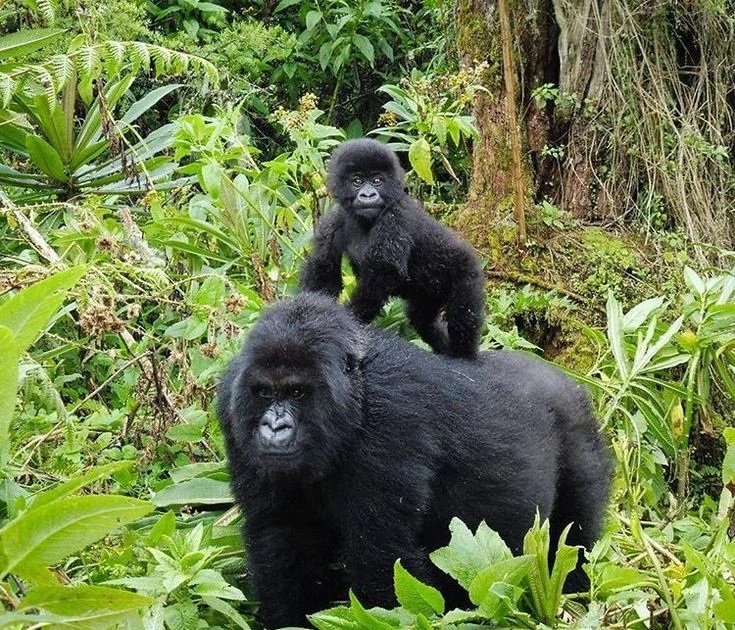
The best Rwanda primate safari packages focus on Volcanoes National Park for mountain gorillas and golden monkeys, and Nyungwe Forest for chimpanzees, with 3–7-day options being most popular. Top itineraries combine gorilla trekking ($1500 permit) with primate and cultural experiences, often starting from Kigali.
21-days-rwanda-primate-safari-culture-history-and-wildlife-holiday
20-days-complete-rwanda-uganda-safari-tour-combo
14-days-luxury-rwanda-primate-safari-and-uganda-safari-tour-combo
14-days-magical-rwanda-photography-safari
12-days-best-rwanda-wildlife-safari-and-rwanda-primate-safari-vacation
11-days-classic-uganda-rwanda-tour-combined-itinerary
10-days-9-nights-midrange-rwanda-gorilla-trekking-wildlife-and-culture
9-day-romantic-honeymoon-rwanda-wildlife-safari-itinerary
9-days-best-family-rwanda-safari-holiday-big-five-canopy-walk-and-chimpanzee
8-days-best-africa-big-five-rwanda-safari-and-gorilla-trekking
6-days-rwanda-gorilla-trekking-chimpanzee-tracking-and-birdwatching
1) 3-Day Rwanda Gorilla Trekking (Short & Intense) 🦍
This package is built for travelers who want the iconic Mountain Gorilla experience without a long, drawn-out journey across Rwanda. Typically, it starts with a streamlined transfer from Kigali to Volcanoes National Park, the country’s main gorilla trekking gateway. Because the itinerary is compact, your days are scheduled tightly: you’ll spend minimal time on transit and more time on the actual forest adventure. The “intense” element usually refers to the pace—early starts, quick departures, and a focus on maximizing key moments—rather than an extreme hike length.
During your trek, you’ll enter the rich montane forest were gorillas forage among bamboo and thick vegetation. Your guide and trackers will help you read the forest signs—fresh tracks, calls in the distance, and the ever-changing pace needed to find a group. Once the gorillas are located, you’ll have a limited, unforgettable window to observe them at close range: the moments of calm grooming, the social interactions, and the subtle power of these animals in their natural environment.
Even though it’s only three days, a well-designed itinerary often includes a primate-experience warm-up, park briefing time, and comfortable lodging near the trek zone. The advantage of this short format is that it’s accessible for people with limited vacation days, yet still delivers a genuine “bucket-list” outcome: face-to-face time with Mountain Gorillas. For many travelers, it’s the perfect blend of efficiency, wonder, and unforgettable wildlife storytelling—compressed into a journey that feels both urgent and rewarding.
2) 5-Day Gorillas & Chimps Safari (The Multi-Primate Balance) 🐒
A 5-day Rwanda itinerary combining gorillas and chimpanzees is often considered the best route for travelers who want variety without going all the way to a full 7–8 day circuit. The structure of this trip is powerful because it brings you into two very different environments that shape the behavior and social lives of the primates you’ll meet. Volcanoes National Park offers high-altitude forest conditions—cooler temperatures, bamboo stands, and dense, misty vegetation. Nyungwe National Park, by contrast, is known for its older, greener rainforest character, where chimps move with energy and sound through the canopy.
The journey itself becomes a “comparison safari.” On one side, gorillas tend to display complex but relatively composed group dynamics—calm grooming, steady leadership, and deliberate movement through the forest. On the other side, chimpanzees are frequently more vocal, curious, and highly interactive, leaving observers with the sense that the forest is alive around them. This contrast makes the experience feel educational, not just thrilling.
A strong 5-day plan typically includes at least one full gorilla trekking day in Volcanoes, a chimp-focused activity in Nyungwe (often centered on tracking and observation), and enough travel time to avoid fatigue. Many itineraries also add a guided cultural stop or light activities so you understand Rwanda’s conservation context, including the shift from older exploitation practices toward community-led guardianship.
If you’re choosing your “first Rwanda primate safari,” this option is a balanced entry point: it delivers two flagship primates, introduces Rwanda’s key ecosystems, and still keeps the overall schedule manageable. By the end of the trip, you don’t just have memories—you have a clearer understanding of how habitat, climate, and social structure influence behavior. That’s why this itinerary earns the “gold standard” label for many primate lovers.
3) 7-Day Ultimate Rwanda Primate Safari (The Full Circuit) 🗺️
The 7-day Ultimate Rwanda Primate Safari is designed for travelers who want a comprehensive Rwanda biodiversity experience—more time in the forests, more chances for wildlife encounters, and a greater sense of immersion. This “full circuit” approach typically includes Mountain Gorilla trekking in Volcanoes National Park, but it doesn’t stop there. It expands the journey to include Golden Monkey trekking, another signature activity that takes you deeper into the highland bamboo and forest edge zones where these energetic primates move quickly and socially.
A major highlight is Nyungwe National Park, often considered one of Rwanda’s most spectacular rainforest destinations. Depending on your package, you may have the opportunity to experience the Canopy Walk, which lets you view the forest from above—revealing layers of vegetation, hidden trails, and wildlife you might miss from ground level. From this elevated perspective, the forest feels vast, structured, and alive.
Because multiple days are spent trekking through steep, humid, and thick vegetation, recovery time becomes essential. That’s where the Lake Kivu “buffer” days (or lighter activity moments) come in. Lake Kivu provides a calmer contrast: lakeside relaxation, gentle pacing, and a chance to restore energy before another adventure day. This balance improves your overall experience because you’re not constantly pushing your body to the limit.
Beyond primates, this kind of itinerary often adds a broader conservation story. Rwanda’s parks are shaped by ranger monitoring, habitat protection, and community involvement, which helps protect both wildlife and the local culture that depends on the forest.
By the end of seven days, you’ll likely feel like you didn’t just “visit”—you traveled through multiple ecological worlds. You’ll remember gorilla strength, golden monkey playfulness, chimp energy, and the peaceful rhythm of Lake Kivu. In short, this itinerary is for travelers who want the most complete primate and nature journey Rwanda can offer.
4) 5-Day Best Rwanda Primates & Culture 🎭
The 5-day “Best Rwanda Primates & Culture” safari appeals to travelers who want more than a wildlife-focused itinerary—they want context, history, and a human connection to conservation. While many standard primate trips focus on gorilla trekking, chimp experiences, and forest time, this version places additional emphasis on cultural storytelling, especially through a visit to Iby’Iwacu Cultural Village.
The cultural element matters because it reframes what conservation really means. Rwanda’s forests are not only ecosystems; they are also homes and livelihoods for communities whose relationship with wildlife has evolved over time. In many areas, families have become active guardians of the forest, helping protect primates and reducing pressures linked to poaching. By including Iby’Iwacu Cultural Village, the itinerary helps visitors understand how heritage, education, and community leadership work together to support long-term protection.
On the wildlife side, you still get the heart of Rwanda’s primate experience: gorilla tracking in Volcanoes National Park and primate-focused exploration in the neighboring regions often connected to Nyungwe. The pacing is usually designed to keep the trip manageable—meaning trekking days are planned with enough recovery time, and travel logistics are organized to prevent you from feeling rushed all the time.
What makes this itinerary special is the way it connects observations in the forest to realities on the ground. When you watch gorillas or chimpanzees, you’re also thinking about the bigger system that makes these moments possible: local knowledge, ranger support, and community-driven change.
If you’re traveling with friends or family who may not be “pure primate lovers,” this itinerary also offers broader appeal. You’ll have cultural performances, guided explanations, and a richer overall narrative. By the end of the safari, you won’t just remember primates—you’ll understand how Rwanda’s communities became essential partners in protecting them. That’s a deeper, more meaningful journey.
5) 7-Day Primate Safari (Tiered Options) 💎
A 7-day primate safari with tiered accommodation options is ideal for travelers who want the same wildlife highlights—gorillas, chimps, and often additional forest experiences—but care deeply about comfort, service style, and the “feel” of where they stay. In this model, the itinerary structure remains similar, while the lodging and level of support vary based on the chosen tier (commonly categorized as Luxury, Deluxe, and Value).
The wildlife experience doesn’t change just because your bed is softer. You’ll still spend trekking days in Rwanda’s key primate regions, guided by trackers who help you locate gorilla groups and chimp activity areas. The differences typically show up in the atmosphere around those experiences: how early meals are served, how comfortable the rooms are, whether facilities are more private, and how much staff attention you receive during downtime. For example, higher tiers may offer more spacious eco-lodges, premium bedding, and added comfort features that make recovery after forest trekking smoother. Some luxury-level programs also provide a greater ratio of staff to guests, which can translate into faster service, more personalized planning, and more seamless day-to-day logistics.
Lower tiers can still be deeply rewarding—often with a more rustic charm, closer community connections, and a stronger sense of local life. Many Value experiences are centered on community-run camps or simpler accommodations that still prioritize safety and excellent guiding.
This tiered approach is helpful because it lets travelers choose what matters most to them: whether it’s maximizing comfort, focusing on value, or finding a middle ground. And since primates are the same at the core of the journey, you can be confident you’ll get the same once-in-a-lifetime animal encounters—just with a different level of hospitality wrapping around the adventure.
For budget-conscious travelers, this format reduces guesswork. For comfort seekers, it ensures you don’t have to compromise your experience. Overall, a tiered 7-day safari is a practical, flexible way to experience Rwanda’s primate world while tailoring the journey to your preferences.
1) Best time of year to visit Rwanda for primate safari tracking
The best time to visit Rwanda for primate safaris—especially gorilla trekking in Volcanoes National Park and chimp tracking in Nyungwe—is largely about choosing the driest conditions and the most comfortable trail conditions. Rwanda has two rainy seasons and two drier periods. In general, the most favorable months for hiking are June–September and December–January, when trails are usually less muddy and visibility can be better.
That said, “best” depends on what you prioritize. If you want cooler, generally drier trekking conditions, aim for the long dry season (June to September) or the short dry window (late December into January). If you’re traveling during wetter periods, primate tracking is still possible—gorillas and chimpanzees are not seasonal—but trails may be slick, vegetation thicker, and routes harder to navigate.
For gorillas specifically, rainfall can increase the challenge of navigating steep, forested terrain, particularly in places with slippery volcanic soil and dense undergrowth. Even in the “best” seasons, Rwanda’s weather can change quickly, so you should expect rain showers and humidity.
Finally, if you are flexible with dates, consider avoiding national holidays and peak school-travel periods, as demand for permits and lodges can rise sharply. A good strategy is to select a window with fewer days of sustained rain, then build in buffer time for weather-driven delays.
2) Gorilla trekking permit cost + online booking
Rwanda’s mountain gorilla trekking permits are typically priced as a fixed fee per person for each trekking day, and the cost can change over time depending on Rwanda Development Board / park pricing updates. To avoid outdated information, you should confirm the current permit price with an official Rwanda gorilla authority or a reputable booking partner before you pay.
In most recent years, permit pricing for Rwanda’s gorilla trekking has been in the several-hundred-USD range per person and is often comparable to other East African gorilla destinations, but the exact figure can vary by year and policy updates.
Can you book it online?
Yes—gorilla trekking permits are widely bookable online through authorized channels. Commonly, travelers reserve through:
- Official government/park-linked booking platforms, and
- Reputable tour operators that facilitate permit reservations (who may charge an additional service fee).
When booking online, you’ll usually provide:
- Full names (matching passports)
- Nationality and age (if relevant)
- Trekking date
- Number of permits
- Payment details and contact info
Best practice: after payment, ensure you receive a confirmation that clearly includes the trekking date and permit reference. If you booked via a tour operator, ask whether your permit is issued under your name directly or held as a “managed reservation” by the operator.
If you tell me your intended travel month and number of people (and children’ ages, if applicable), I can help you plan the right booking route and timeline.
3) Age restrictions for children for primate trekking in Rwandan national parks
Age rules for children participating in primate trekking in Rwanda depend on (1) the specific primate experience (gorillas vs. chimps vs. golden monkeys), (2) park guidelines, and (3) the trekking operator’s safety policies.
In many conservation areas, the key criteria are not only “minimum age,” but also whether a child can:
- handle long, physical hikes over uneven terrain,
- follow ranger instructions,
- tolerate dense vegetation, weather changes, and walking for hours, and
- remain calm and controlled near wildlife.
For gorilla trekking, some destinations have minimum age thresholds (for example, policies may exclude very young children). The logic is that gorilla trekking can involve steep and muddy trails, and the group often stays close to steep slopes and forest hazards. Additionally, there are strict “distance and behavior” rules that can be harder for very young children to consistently follow.
For chimpanzee tracking in Nyungwe and golden monkey tracking in Volcanoes, the requirements may be slightly different, but the same underlying safety concerns apply: walking duration, physical demands, and the ability to remain quiet and respectful in wildlife viewing zones.
Because policies can be updated and can vary by operator, you should treat minimum ages as a check-before-you-book item. If you share your child’s age(s), I can help you map likely constraints and what to ask your operator/park about (e.g., “minimum age,” “maximum pace tolerated,” “can the ranger slow the group,” and “is private guiding needed?”).
4) How many people per day for one habituated gorilla family
Rwanda’s gorilla trekking program is carefully regulated to protect gorillas and to keep the experience safe and meaningful. In practice, each habituated gorilla family is limited in the number of trackers allowed to visit on a given trekking day.
A common model across East African gorilla trekking programs is that each group is capped—often around 8–10 people per habituated family per day—to avoid overcrowding and minimize stress on the animals. In Rwanda, the number is determined by current park management rules and can be adjusted.
Your exact allotment can also depend on:
- how permits are allocated for that date,
- whether the trek is managed as one consolidated group or split sub-groups, and
- operational logistics like ranger capacity and trail conditions.
Even when the total “people per family per day” is capped, it’s important to note that groups trek in a structured way: you’ll follow rangers, stay within designated viewing guidelines, and keep appropriate distance. If more permits are sold for that family than the operational cap, it would conflict with policy—so legitimate bookings should always respect the cap.
If you want, tell me which month/year you plan to go and whether you’re willing to trek on any day or only specific dates. Then I can help you plan around permit availability and choose an itinerary that matches your preferred gorilla family/time window.
5) Physical fitness level required for trekking gorillas in Volcanoes National Park
Gorilla trekking in Volcanoes National Park is often described as physically demanding, primarily because of terrain, elevation, and forest conditions rather than extreme altitude like the mountains of the Himalayas. Fitness needs vary by weather, trail conditions, and where the gorilla family is that day.
What you should be prepared for:
- Uneven ground: volcanic soil, roots, slippery patches, and mud in rainy seasons.
- Steep inclines/declines: trails can involve repeated climbs and descents.
- Dense vegetation: you may push through undergrowth and walk slowly in thick forest.
- Variable distance/time: the hike can be short on some days and longer on others.
A practical fitness benchmark: if you can comfortably complete a challenging 60–90 minute hike on uneven ground (including moderate climbs), you’ll likely be in a good position. If your hiking routine is very light, consider preparing with:
- incline walking/stair climbing,
- longer walks on varied terrain, and
- strengthening your calves/quads and core.
That said, fitness isn’t only about endurance—it's also about balance and foot stability. Many injuries happen from slips, not from inability to hike.
If you have medical conditions (knee issues, asthma triggered by humidity, heart conditions), discuss them with your doctor and your trekking operator. You should also ask what accommodations are possible (e.g., slower pacing, extra guidance, or limiting participation).
6) Can you track both mountain gorillas and chimpanzees in a 5-day Rwanda itinerary?
Yes, it’s possible to combine mountain gorilla trekking (Volcanoes National Park) with chimpanzee tracking (commonly in Nyungwe Forest National Park) in a short 5-day itinerary—though it depends on your travel logistics, internal transfer times, and permit availability.
The main challenge isn’t that both experiences are impossible—it’s that Rwanda’s primate zones are in different regions:
- Volcanoes (gorillas): typically focused around the north-west.
- Nyungwe (chimpanzees): farther south and usually requires a longer transfer.
In a tight schedule, you’d usually structure your trip as:
- Day 1: arrive and settle near Volcanoes
- Day 2: gorilla trekking
- Day 3: travel toward Nyungwe (with possible stopovers)
- Day 4: chimp tracking
- Day 5: return / buffer / additional short forest walk
To make it work smoothly:
- Book permits as early as possible for the exact days you want.
- Choose a flight/transfer plan that minimizes downtime.
- Plan for weather-related trekking delays.
- Consider private transfers or a well-organized driver itinerary.
If you’d like to reduce stress, a more realistic “high-success probability” version is often 6–7 days, because it gives you a buffer day for permit changes. But for motivated travelers, 5 days can be done—especially with careful scheduling and pre-arranged transfers.
Tell me your departure city (or whether you’ll fly into Kigali only) and your preferred travel month, and I can propose a realistic 5-day routing.
7) Essential items to pack for a primate safari
Packing well can make a big difference in comfort and safety on Rwanda’s primate safaris. Here are practical essentials for gorilla trekking, chimp tracking, and monkey tracking:
Footwear & clothing
- Hiking boots with good grip (water-resistant or at least mud-ready).
- Moisture-wicking base layers (t-shirt/long sleeves).
- Long pants (to reduce scratches from vegetation).
- Light rain jacket or waterproof poncho (forest rain is common).
- Warm layer (mornings can feel cool; temperatures can drop under cloud cover).
- Hat + sunglasses.
Rain and trail protection
- Rain gear (waterproof jacket/poncho) and ideally waterproof sleeves/pants.
- Small daypack (comfortable straps).
- Waterproof bag or dry pouch for electronics and permits.
- Sunscreen and insect repellent.
Health & comfort
- Refillable water bottle (plus capacity for the day).
- Light snacks (not heavy meals), if allowed by your guide.
- Basic first-aid: blister care, antiseptic, bandages, pain relief.
- Hand sanitizer/wipes.
Gear
- Binoculars (sometimes useful; not always required for gorillas at close range).
- Camera with lens cloth (forest humidity can fog lenses).
- Headlamp/torch (if early starts or power outages occur).
- Cash/card for tips and extras.
Avoid overpacking. Your guide may carry extra items, but you should still plan to comfortably carry your own essentials. If you tell me whether you’re traveling in the rainy season, I can tailor the packing list.
8) How far in advance to secure permits + booking process
For primate trekking in Rwanda—especially gorilla trekking—you should plan to secure permits as early as possible. Demand can be high, and permits are limited by the number of people allowed per habituated family per day. In peak seasons, last-minute availability may be scarce.
A good rule of thumb:
- Start looking several months in advance, particularly if you’re traveling during June–September or December–January.
- For popular holidays or school breaks, plan even earlier.
Booking process (typical)
- Choose your dates and your preferred primate activity (gorillas, golden monkeys, or chimps).
- Check permit availability for that specific date.
- Book online via official/authorized sources or a reputable tour operator.
- Provide traveler details matching your passport (spelling accuracy matters).
- Pay the permit fee (and any service fees).
- Receive confirmation and itinerary details.
- Finalize logistics: transfers, lodge, and meeting times.
If you’re bundling with a safari package, many operators coordinate permits, guiding, and transport. However, confirm clearly:
- Are the permits issued under your name?
- What happens if weather causes a delay or if you must move your trek day?
- Is the permit cost separate or included?
For best outcomes, secure permits first, then lock lodging and transport around the trek date(s).
9) Differences between tracking golden monkeys and mountain gorillas in Volcanoes
Golden monkey tracking and mountain gorilla trekking both happen in Volcanoes National Park, but the experience differs significantly in behavior, timing, terrain, and viewing expectations.
Golden monkey tracking
- You’re tracking small, fast-moving primates that may travel through forest canopy and understory.
- The experience often involves hiking a shorter distance than many gorilla treks, though it can still be steep and muddy.
- Golden monkeys are usually observed in small groups moving through trees; sightings can be brief or require patience to locate them.
- You may have more “search-and-follow” dynamics, because monkeys can move quickly and are not necessarily stationary.
Mountain gorilla trekking
- You’re tracking large, ground-dwelling primates that move and then settle, sometimes for periods long enough for viewing and photography.
- Gorilla trekking is often more physically demanding due to terrain and the unpredictability of where the family has traveled that day.
- Once you reach the gorillas, viewing can be longer because the family may remain in one area, giving more time for close observation (while following strict distance rules).
Common ground
- Both require ranger guidance, silence/respectful behavior, and strict safety distance.
- Both are weather-affected in terms of trail conditions.
In summary: golden monkey tracking tends to feel like a lively forest search, while gorilla trekking feels like a rare arrival at a composed wildlife “moment.” If you want, I can suggest which to do first based on your fitness level and what kind of wildlife experience you prefer.
10) Safety precautions & strict rules near gorillas
Gorilla trekking comes with strict conservation and safety rules. Rangers enforce them to protect both people and gorillas. The rules can vary slightly by park policy, but you should expect the following core requirements:
- Do not approach gorillas beyond the ranger-set distance.
- Follow ranger instructions immediately—stop, move, and adjust position only when told.
- Maintain silence or low voices. Loud talking, shouting, or sudden movements can stress gorillas.
- No flash photography and often restrictions on camera use methods. Follow guidance on camera distance and behavior.
- Do not block the gorillas’ path. Keep to the route your group is directed to take.
- No eating or smoking near gorillas (and typically no littering).
- Hygiene rules: if you’re ill (especially with respiratory symptoms), you may be unable to trek. Hand sanitizing and health compliance are often emphasized.
- Stay within your group and do not separate from the designated trackers.
Rangers may also require:
- wearing appropriate clothing (long sleeves/pants, closed footwear),
- keeping still when gorillas move close, and
- avoiding direct “dominant” body language like running or charging.
The key mindset: gorillas are not “attraction displays.” You’re a respectful guest in their environment. By keeping calm, staying quiet, and following ranger instructions, you maximize both safety and the chance of a good viewing experience.
If you tell me your comfort level (e.g., “I’m nervous around wild animals”), I can offer a practical “what to do in the moment” checklist.
11) Combine a Rwanda primate safari with Akagera National Park wildlife viewing?
Yes—combining primate safari experiences in Volcanoes and/or Nyungwe with wildlife viewing in Akagera National Park is a common and excellent add-on. Akagera is Rwanda’s savannah wildlife destination, offering chances to see species more associated with classic African game viewing.
How the itinerary usually works:
- Spend part of your trip in Volcanoes for gorillas and/or golden monkeys.
- Then travel to Nyungwe for chimps (optional).
- Finally head to Akagera for game drives, typically focused on lions, antelopes, elephants (reintroduced/managed), and other savannah wildlife depending on current populations and sightings.
The main considerations are:
- Travel time across regions (so don’t over-pack the schedule).
- Permit timing (gorilla treks are date-specific).
- Seasonal conditions in Akagera (game drives are usually better when animals are active and roads are safe).
If you’re short on time, many travelers do Akagera as a 2–3 night extension. That gives enough time for at least one or two drives plus relaxation.
To plan well, match drive days with your lodge’s location near park gates and choose a package that handles transfers smoothly. If you share your trip length (e.g., 7 days or 10 days), I can outline an efficient routing that avoids backtracking.
12) Best luxury lodge options near Volcanoes National Park for primate viewing trips
Rwanda’s luxury lodge options near Volcanoes National Park generally aim to combine comfort with proximity to gorilla trailheads and scenic viewpoints. The “best” luxury lodge depends on what you value most: private deck views, full-board inclusions, spa services, or exceptional ranger-guided hospitality.
Common luxury-style options in the Volcanoes region often include lodges in or near areas such as Kinigi and other park-adjacent regions. Many high-end lodges offer:
- organized transfers to trekking briefing points,
- early-morning breakfast or grab-and-go meals for trek days,
- wildlife-friendly architecture and views of volcanic landscapes, and
- conservation-focused guides and staff who support primate tracking experiences.
When comparing luxury lodges, check these factors:
- Trekking logistics: how quickly you can reach the briefing area.
- Trek-day setup: whether they provide packed breakfasts, hot drinks, and fast organization.
- Inclusions: meals, beverages, laundry, and guided walks.
- Room comfort: hot showers, heating options in cool months, and good water pressure.
- Views and ambience: whether you want panoramic mountain scenery or a forest feel.
If you name your budget range per night and whether you prefer private villas or main-lodge suites, I can tailor suggestions and help you prioritize the best fit.
13) How long trekking takes + what happens if you don’t find the gorillas
The actual time you spend on a gorilla trekking day has two components: hiking time to locate the family and time spent observing once you find them. In Volcanoes National Park, the hiking portion can vary widely depending on where the gorilla family is that day. Many treks last a few hours total, but some experiences are shorter and others can take longer.
A typical flow:
- Morning briefing with rangers (rules, safety, and group arrangement).
- Trek begins—you follow ranger tracks and calls while moving through forest.
- Gorilla encounter—once located, you’re guided into the appropriate viewing area and allowed observation time.
If you don’t find the gorillas:
Park policy is designed to minimize “no encounter” outcomes, but conditions can change (weather, family movement, ranger tracking challenges). In many programs, if the gorillas can’t be found within a certain search window, you may be unable to complete the encounter that day. What you do next depends on the governing rules for that trek period—some systems allow rescheduling, while others may not.
Because policies can be updated, it’s essential to confirm with your permit issuer/operator what guarantee, reschedule window, or refund policy applies in the event of no encounter on the tracking day.
If you share your travel dates and operator type (self-booked vs package), I can help you list the exact questions to ask so there are no surprises.
14) Is it safe for solo travelers to book a tailored Rwanda primate safari package first time?
Yes—solo travelers can be safe and successful booking a tailored Rwanda primate safari package, especially when the itinerary is organized by experienced, licensed operators and includes practical logistics like transfers and lodge coordination. Rwanda is widely considered a safer travel destination than many people expect, and primate safaris rely heavily on professional guiding and structured day plans.
That said, safety for solo travelers mainly depends on:
- Choosing reputable operators that handle permits and transport properly,
- Staying in well-reviewed lodges with reliable pickup/drop-off arrangements,
- Planning predictable routes rather than ad-hoc driving, and
- Following local guidance on behavior, wildlife safety, and trekking rules.
A tailored package helps because:
- it reduces the risk of missing permits,
- ensures you have a guide and ranger support for primate days,
- gives you a clear schedule and backup plans for weather delays.
To stay extra safe, you should:
- keep emergency contacts and lodge details accessible,
- inform your lodge/guide of your movements when you’re outside planned activities,
- avoid walking alone late at night, and
- use secure transport and agreed pickup times.
If you tell me whether you’re planning to trek gorillas only, chimps, or also visit Akagera, I can outline what a “solo-safe” planning checklist looks like (especially for transfer logistics between regions).
15) Chances of seeing gorillas + how close you get
Your chances of seeing gorillas on a gorilla trekking permit day are generally high because the gorilla families are habituated, and rangers use tracking skills developed through consistent monitoring. However, the exact odds depend on factors like weather, where the gorilla family has moved, and the search window permitted for that day.
On most well-run trekking days, you will reach the gorillas if you continue within the organized search process. Still, it’s important to understand that wildlife movement is unpredictable and not 100% guaranteed.
How close can you get?
Typically, trekking rules allow you to be close enough for meaningful observation and photography but with an enforced safety distance. Rangers control the final distance and viewing position. You may also be required to maintain a specific “stay behind” boundary, and you must not attempt to close distance even if the gorillas approach the group.
In practice, “closeness” can range depending on:
- the gorillas’ behavior (calm, curious, moving away),
- terrain (slopes, vegetation), and
- ranger positioning that day.
To maximize your experience:
- follow ranger instructions quickly,
- stay quiet,
- avoid sudden movements, and
- keep your posture calm if the group gets closer.
If you share your group size and trekking date window, I can help you plan for the factors that most influence the trekking experience (notably season and trail conditions).
16) See gorillas and visit the Kigali Genocide Memorial center
Yes, it’s absolutely possible to combine gorilla trekking with a visit to the Kigali Genocide Memorial. Most itineraries start with arrival in Kigali, then travel onward to primate regions—most commonly Volcanoes National Park for gorillas. The memorial visit can be done either:
- on the day you arrive in Kigali (if you have time and your flight schedule allows), or
- on the day you return to Kigali at the end of your safari.
This combination is popular because it balances:
- the natural, wildlife-focused “once-in-a-lifetime” experience of gorilla trekking, and
- a powerful educational and historical visit that helps visitors understand Rwanda’s modern history.
Planning tips:
- The memorial usually requires time for guided/curated exhibits, so don’t rush it between transfers.
- Wear respectful attire and allow time for security checks.
- Consider booking a local guide or audio option if available through your operator to enrich the experience.
Also, consider pacing: gorilla trekking involves early starts and physical exertion, so schedule the memorial visit either on a lighter travel day or when you have energy to process and move comfortably.
If you tell me your total trip length and whether your gorilla trek is early or late, I can suggest the best “day placement” so it feels meaningful rather than rushed.
17) Difference between Rwanda gorilla trekking vs Uganda’s Bwindi
Rwanda’s gorilla trekking (often associated with Volcanoes National Park) and Uganda’s gorilla trekking (commonly associated with Bwindi Impenetrable Forest) differ in environment, trekking feel, logistics, and sometimes the overall pace.
Rwanda (Volcanoes National Park)
- Terrain can be steep and volcanic, often with different vegetation patterns and trail surfaces.
- Groups may experience forest tracks that feel more “open” in some areas but still require serious hiking skills.
- Volcanoes region can be more accessible via specific park entry points depending on lodge locations.
Uganda (Bwindi Impenetrable Forest)
- Bwindi is famously dense forest with steep hillsides and slippery, rooted terrain.
- Trekking can feel more rugged and “trail-limited,” with frequent changes in route as rangers track gorillas.
- The forest is often darker and thicker, which can affect visibility and trail conditions.
What remains similar
- You follow rangers, keep strict distance, and follow the conservation rules.
- Habituated gorilla groups allow close viewing once located.
- The permit system regulates numbers and helps protect gorillas.
Which is “better”?
It depends on your travel style:
- If you prefer volcanic landscape scenery and a specific regional route structure, Rwanda may feel ideal.
- If you want the iconic Bwindi forest character and its distinctive ecosystem, Uganda may be your match.
If you tell me your starting city and your fitness level, I can recommend which destination typically fits better for your specific constraints.
18) Are Rwanda primate trekking tours suitable for family vacations with young children?
They can be, but it depends heavily on the child’s age, health, and your expectations about physical activity and wildlife rules. Gorilla trekking and chimp tracking are not “easy stroller activities”—they involve forest terrain, early mornings, and strict behavior requirements near wildlife.
For families:
- Golden monkey tracking may be the most manageable primate option in some itineraries because viewing can be more dynamic and treks may be shorter than gorilla tracking (though not guaranteed).
- Gorilla trekking can be physically demanding; if children are very young, it may be challenging to keep them quiet and safe for the trek length and for the time near gorillas.
Key considerations:
- Whether your child meets the minimum age requirements set by the park/operator.
- Your child’s ability to walk for potentially hours on uneven ground.
- Whether you can keep your child within the group and follow ranger instructions.
- Your tolerance for weather discomfort (rain, mud, humidity).
Good family tour operators plan “family-aware” logistics:
- shorter hikes where possible,
- better lodge locations to reduce transfer time, and
- clear guidance on what clothing, footwear, and hydration are needed.
If you share your children’s ages and whether any have knee/asthma/mobility limitations, I can help you choose which primate activity is likely to be the best fit and suggest a family-friendly itinerary pacing.
19) Vaccinations and health precautions before a Rwanda primate tracking safari
Health precautions for Rwanda travel depend on your home country, current health status, and the activities you plan to do (jungle trekking, forested hikes, and time in wildlife areas). Because medical guidance is high-stakes and can vary by individual, you should consult a travel medicine clinic or your doctor 4–8 weeks before departure.
That said, many travelers are advised to consider:
- Routine vaccines (ensure you’re up to date).
- Hepatitis A (commonly recommended for many international destinations).
- Typhoid (often recommended where food/water exposure may be riskier).
- Malaria prevention (Rwanda can have malaria risk; medication may be recommended depending on season and specific region).
- Yellow fever requirements**:** some travelers need proof of vaccination if arriving from or transiting through certain countries (rules vary by itinerary).
Beyond vaccines, practical precautions matter:
- Use insect repellent (especially for mosquitoes).
- Carry oral rehydration salts and basic meds for stomach upset.
- Drink safe water (bottled or treated) and use hand sanitizer.
- Bring sunscreen and manage hydration during hikes.
If you’ll do gorilla/chimp trekking, follow your operator’s health rules: if you have flu-like symptoms, they may restrict participation to protect wildlife and reduce disease transmission risk.
If you tell me your nationality/home country and whether you’re traveling from a malaria-risk region, I can outline a personalized “questions to ask your travel clinic” checklist (without replacing professional medical advice).
20) Average cost of a 7-day Rwanda safari including primates + scenic cultural experiences
The average cost of a 7-day Rwanda safari that includes primate experiences (like gorilla trekking and/or chimp tracking and possibly golden monkeys) plus scenic and cultural activities depends on a few major factors:
- number of travelers,
- lodge category (mid-range vs luxury),
- whether internal flights are used,
- permit quantities and which primates you track,
- whether park fees, guides, and transfers are bundled in the package, and
- season (peak seasons cost more).
Because gorilla permits are one of the largest cost components, the biggest price swings usually come from:
- number of gorilla trekking permits you need (per person, per day), and
- how many “big primate” days you add.
A typical traveler budget can be anywhere from mid-range hundreds per day to several thousand per day per person in fully guided packages, with total 7-day trip costs often landing in the several-thousand-USD range per person when gorilla trekking permits are included. Luxury packages can push the total higher, while shared vehicles and mid-range lodges can reduce it.
To estimate more accurately, I need:
- Number of people
- Your approximate travel month
- Which primate activities (gorillas only? gorillas + chimps? add golden monkeys?)
- Lodge level (mid-range vs luxury)
- Cultural experiences you want (e.g., Kigali memorial, market visits, traditional dance, tea/sightseeing)
Booking Rwanda primate safari tour with us Roads of Adventure safaris
Book your tailored Rwanda primate safari with Roads of Adventure Safaris, specializing in gorilla trekking in Volcanoes National Park, chimpanzee tracking, and wildlife adventures. They provide expert-guided tours, secure permits, 4x4 transport, and mid-range to luxury lodges for a seamless experience. Contact them directly to customize your itinerary.
