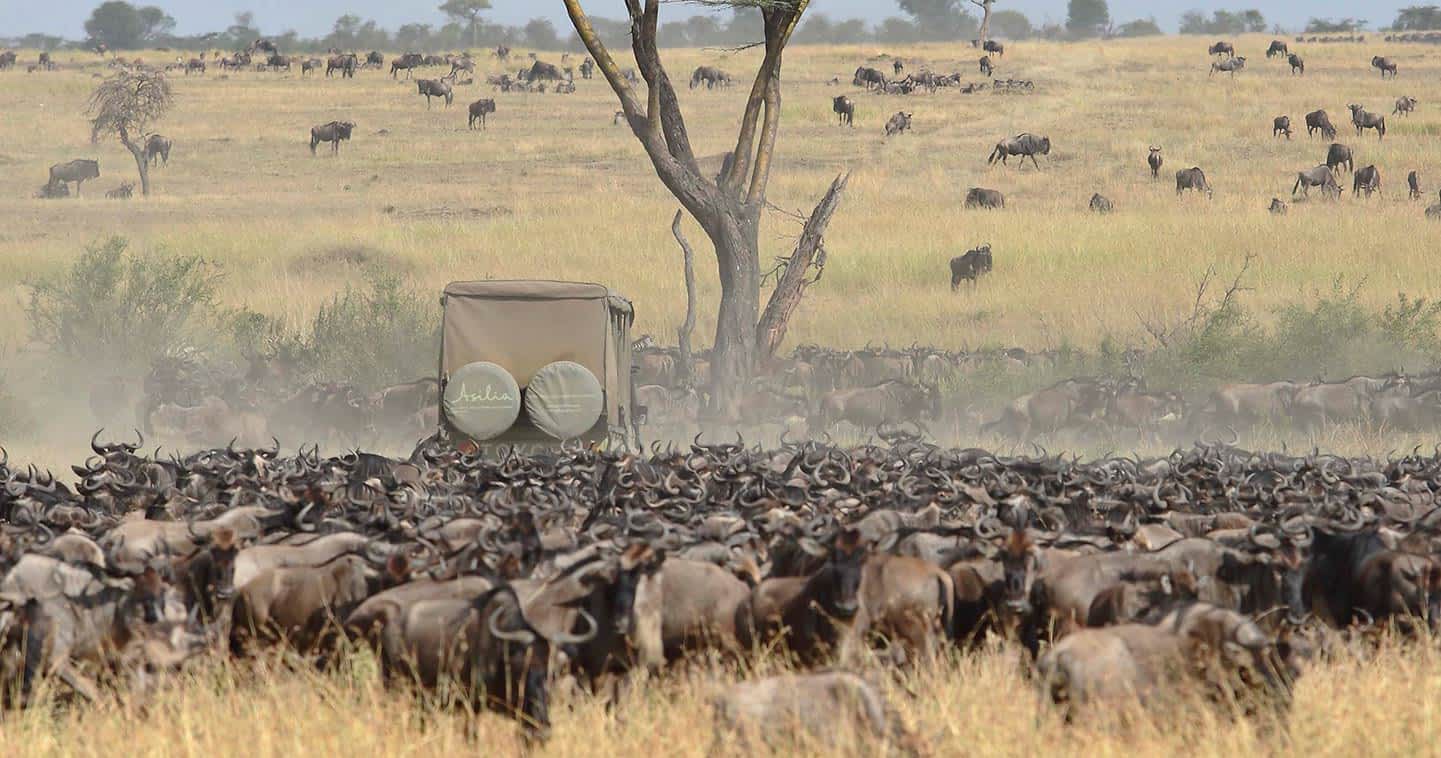
20 Most amazing activities to do in Serengeti on Tanzania wildlife safari, there is something fundamentally transformative about leaving the concrete world behind and stepping into a landscape that feels exactly as it did thousands of years ago. A Serengeti wildlife safari isn’t just a vacation; it’s an invitation to witness life at its most raw, vibrant, and uninterrupted. If you are traveling to Tanzania this year, you are stepping onto a stage where nature writes its own unscripted drama every single day. The magic of the Serengeti lies in how it makes you feel so wonderfully small.
Whether you are holding your breath as a million wildebeest thunder across the plains, drifting silently through the dawn sky in a hot air balloon, or sitting quietly by a crackling fire as a lion's roar vibrates through the night air, this place stays with you long after the dust has settled on your boots. It’s a journey that seamlessly blends adrenaline-pumping wildlife encounters with quiet, profound moments of human connection and untamed beauty.
Popular Serengeti safaris
7-days-best-great-wildebeest-migration-safari-in-tanzania
7-days-epic-africa-big-five-safari-in-tanzania-top-best-parks
7-days-budget-tanzania-safari-affordable-africa-budget-safari
7-days-kilimanjaro-climb-and-hiking-safari-ascent-to-peak
7-days-tanzania-wildlife-safari-africa-safari-tour-best-park-visits
7-days-best-southern-tanzania-safari-parks-nyerere-mikumi-ruaha-and-udzungwa
7-day-best-zanzibar-beach-holidays-combo-to-ruaha-and-mikumi-safari-parks
7-days-zanzibar-beach-activities-and-chimpanzee-tracking-in-mahale-mountains
4-days-best-tarangire-ngorongoro-and-serengeti-safari-itinerary
3-days-best-zanzibar-beach-holiday-tour-to-prison-island-and-stone-town
3 days-budget-Tanzania-to-safari-Serengeti-and-Ngorongoro
3-days-serengeti-safari-fly-in-ngorongoro-big-five-safari-from-zanzibar-island
3-days-serengeti-safari-fly-in-ngorongoro-big-five-safari-from-zanzibar-island
20 Most amazing activities to do in Serengeti on Tanzania wildlife safari
1. Witness the Great Migration
The Great Wildebeest Migration is the ultimate centerpiece of any Tanzania wildlife safari, representing the largest synchronized overland movement of mammals on the planet. Each year, over 1.5 million wildebeests, accompanied by hundreds of thousands of zebras and gazelles, trek in a continuous, rain-driven loop across the Serengeti ecosystem. This survival-driven journey is a relentless quest for fresh grazing pastures and water, forcing the herds to overcome immense geographic obstacles. The sheer scale of the migration is mind-boggling, transforming the endless plains into a moving sea of black and silver fur that stretches from horizon to horizon.
Witnessing this spectacle provides an raw look into natural selection. Depending on the time of year, travelers can watch the herds navigate different chapters of their journey. Between July and October, the action intensifies in the northern Serengeti, where the animals must brave the steep banks and crocodile-infested waters of the Mara River. The tension builds for hours as the herds mass along the riverbanks, pacing nervously until a single animal leap into the current, triggering a thundering cascade of thousands behind it.
Alternatively, visiting during the green season allows you to witness the dramatic calving pastures in the south. The soundscape of the migration is just as impactful as the visual—a constant, low rumble of grunting wildebeests and braying zebras that fills the air night and day. It is an unscripted wildlife drama that reveals the raw power, beauty, and unforgiving nature of the African bush, making it a bucket-list priority for travelers worldwide.
2. Hot Air Balloon Safari
Soaring above the vast savannah in a hot air balloon offers an entirely different perspective on a Tanzania wildlife safari, trading the rumbling engines of a 4x4 for the silent, majestic currents of the sky. The adventure begins in the chilly, pre-dawn darkness as you gather at the launch site. Guests watch in anticipation as the massive nylon envelopes are inflated by roaring bursts of flame from the gas burners, illuminating the night sky. Just as the first light breaks, you step into the sturdy wicker basket and gently lift off the ground, floating effortlessly into the morning air.
As the sun crests the horizon, it bathes the infinite plains of the Serengeti in a rich, golden light. From this elevated vantage point, the true vastness of the ecosystem becomes clear. You can look directly down onto the canopy tops of acacia trees, tracing the winding paths of river systems and tracking the movements of wildlife below. Long columns of migrating wildebeests look like lines of ants marching across the grass, while families of elephants glide gracefully through the brush. The flight is incredibly peaceful, interrupted only by the occasional blast of the burner.
The pilot can skillfully adjust the altitude, skimming just above the grass for close-up views of grazing gazelles before lifting higher to offer panoramic views of distant escarpments. After about an hour in the air, the balloon settles gently onto the open plains. The experience concludes with a time-honored safari tradition: a premium, white-linen champagne breakfast set up directly in the bush, allowing you to toast to your morning flight while surrounded by the sights and sounds of the wild.
3. The "Big Five" Game Drives
Classic day game drives form the bedrock of a Tanzania wildlife safari, offering travelers the quintessential experience of tracking Africa’s legendary Big Five: lions, leopards, African elephants, Cape buffaloes, and the critically endangered black rhinoceros. The term "Big Five" was originally coined by early big-game hunters to denote the five most dangerous animals to track on foot, but today it represents the ultimate wildlife viewing achievement. Exploring the Serengeti’s diverse terrains in a custom-built 4x4 vehicle allows you to cover vast distances while seeking out these magnificent creatures in their natural habitats.
Target Species
Preferred Habitat
Best Spotting Time
Lion
Open grasslands, granite kopjes
Early morning, late afternoon
Leopard
Riverine woodlands, sausage trees
Overcast days, twilight
African Elephant
Acacia woodlands, river valleys
Mid-day near water sources
Cape Buffalo
Well-watered savannas, marshes
Morning grazing hours
Black Rhino
Dense brush, remote kopjes
First light of dawn
The success of these drives relies on the deep expertise of local safari guides, who read the landscape like an open book. They scan the dust for fresh tracks, interpret the alarm calls of baboons or birds, and understand the subtle behavioral patterns of predators.
Morning drives depart at first light when the air is crisp and predators are active, while afternoon drives catch animals as they move toward water sources before dusk. Riding in a vehicle with a large pop-up roof ensures that everyone has an unobstructed, 360-degree view, allowing for safe, close-up encounters with a pride of lions resting in the shade or an elephant herd crossing the track right in front of your bumper.
4. Track Rhinos at Moru Kopjes
For travelers seeking a rare and exclusive wildlife encounter on their Tanzania wildlife safari, a journey to the remote Moru Kopjes is an absolute priority. Rising like giant, weathered stone islands from the flat southern plains, these ancient granite rock formations create a rugged, dramatic landscape. More importantly, Moru Kopjes serves as the primary sanctuary and last remaining stronghold for the Serengeti’s resident population of the critically endangered black rhinoceros. Due to intense historical poaching, these prehistoric-looking giants are incredibly rare, making any sighting an unforgettable milestone.
[Moru Kopjes Rhino Tracking Profile]
├── Terrain ────────► Dense acacia scrub, rugged granite rock islands, hidden valleys
├── Target Species ─► Diceros bicornis (Black Rhinoceros) - Browse-feeder, solitary
└── Key Strategy ───► Early morning tracking with specialized "Rhino Ranger" scouts
Tracking black rhinos in this sector requires immense patience, sharp eyes, and the guidance of specialized park rangers. Unlike the white rhinos found in other parts of Africa, black rhinos are solitary browse-feeders that prefer to conceal themselves within dense acacia thickets and thorny brush, making them exceptionally difficult to spot from a distance. Guides carefully scan the fringes of the rocks at first light, looking for the silhouette of a hooked upper lip feeding on low branches.
The Moru area is heavily patrolled by dedicated anti-poaching units and "Rhino Rangers" who monitor individual animals daily to ensure their safety. Visiting this sector not only increases your chances of completing your Big Five checklist but also offers a profound look at the intense conservation efforts required to protect Tanzania's natural heritage. Between tracking attempts, the stunning kopjes provide a spectacular backdrop for viewing resident lion prides, which love to use the high, smooth stones as elevated lookouts to scan the surrounding plains for prey.
5. Visit a Maasai Village
An authentic Tanzania wildlife safari is completely enriched by exploring the human history and cultural heritage woven into the landscape. The Maasai people are the iconic, semi-nomadic pastoralists who have coexisted with the region's apex predators and massive wildlife herds for centuries. Visiting an authentic Maasai village, locally known as a Boma or Manyatta, offers travelers an extraordinary opportunity for cultural exchange, shedding light on a lifestyle that has remained proudly resilient against the pressures of the modern world.
Upon arriving at the village, which is traditionally circular and protected by a thick wall of thorny acacia branches to deter lions, visitors are greeted with an explosion of color, rhythm, and song. The men perform the Adumu, the iconic Maasai jumping dance, where young warriors take turns entering the center of a circle to leap remarkably high into the air from a standing position, showcasing their strength and stamina. The women, adorned in intricate, colorful beaded collars that jingle rhythmically, sing traditional welcome songs that echo across the savanna.
During the tour, community members invite you inside their homes—low, windowless structures built by hand from sticks, grass, mud, and cow dung, creating an interior that remains naturally cool throughout the day. Elders share stories about their traditional cattle-centric economy, their deep understanding of tracking wildlife, and the intricate age-grade ceremonies that mark a young man's transition into a warrior (Moran). It is a humbling, eye-opening experience that connects you deeply to the human heartbeat of East Africa.
6. Night Game Drives
While night game drives are strictly prohibited within the core boundaries of the main Serengeti National Park to protect the natural behaviors of wildlife, they are a highlight of a Tanzania wildlife safari within the private concessions and community-led conservancies that border the park. When the sun dips below the horizon, a completely different ecosystem wakes up. As standard safari vehicles return to their lodges, night-safari vehicles venture out into the pitch-black darkness, equipped with powerful spotlights fitted with red filters to avoid blinding the animals or disrupting their vision.
[The Night Safari Experience]
├── Core National Park ──────► Closed at sunset to preserve natural predator hunting rhythms
└── Bordering Concessions ───► Open for night drives using specialized red-filtered spotlights
Exploring the savanna after dark is a thrilling sensory shift. The familiar daytime landscapes become mysterious, filled with the sounds of chirping crickets, calling owls, and the distant, chilling roars of lions. The red spotlight catches the glint of eyes hidden in the grass, allowing guides to track apex predators like lions and leopards as they utilize the cover of darkness to coordinate complex hunts, moving with a silent, lethal purpose that is rarely witnessed during the day.
A night drive also opens the door to spotting the Serengeti’s array of elusive, nocturnal creatures that sleep through the heat of the day. Travelers have the unique opportunity to spot:
- Genets and civets prowling through the branches of acacia trees.
- Honey badgers foraging aggressively through the undergrowth.
- Aardvarks and bat-eared foxes excavating termite mounds.
- White-tailed mongooses and bushbabies leaping through the canopy.
7. The Retina Hippo Pool
Located in the central Seronera sector where the Seronera and Orangi rivers merge, the Retina Hippo Pool is a fascinating, dynamic hotspot on a Tanzania wildlife safari. This deep, natural river pool serves as a primary social hub for one of the largest concentrations of hippopotamuses in the entire park. Unlike most areas of the Serengeti where visitors are strictly required to remain inside their safari vehicles, the Retina Hippo Pool features a safely designated, elevated viewing bank where guests can step out on foot to observe these massive mammals up close.
[Retina Hippo Pool Spotting Guide]
├── Population ──────► Approximately 100 to 200 resident hippos packed into a deep river bend
├── Key Behaviors ───► Territory disputes, loud grunting choruses, aggressive jaw-yawning
└── Safety Rule ─────► Remain on the elevated viewing bank; never approach the water's edge
Standing on the bank, the sheer sensory impact of the pool is immediate. Anywhere from 100 to 200 hippos are packed tightly into the deep bend of the river, wallowing in the water to keep their sensitive skin cool and protected from the intense tropical sun. The pool is an absolute hive of activity and noise; the air is filled with a constant chorus of deep, resonant grunts, wheezes, and splashes. You can watch massive bulls defend their territories, aggressively yawning to display their long, sharp canine tusks, while playful calves climb over the backs of their mothers.
The high concentration of hippos also creates a unique micro-ecosystem, attracting large numbers of massive Nile crocodiles that bask lazily on the surrounding mudbanks, waiting for an opportunity to scavenge. Expert park guides accompany visitors along the viewpoint, sharing insights into hippo biology, their surprising nocturnal foraging habits on land, and the complex social hierarchies that govern life inside this chaotic, bubbling pool.
8. Bird Watching
While the Serengeti is globally renowned for its massive mammals, it is also a world-class destination for avian enthusiasts on a Tanzania wildlife safari. The park features an extraordinary mosaic of distinct habitats—ranging from wide-open grasslands and thorny acacia scrub to riverine woodlands and swampy marshes. This rich environmental diversity supports over 500 recorded bird species, making it a vibrant paradise for bird watching. The population includes a mix of large raptors, colorful resident endemics, and millions of migratory birds arriving from Europe and Asia between November and April.
[Serengeti Avian Hotspots]
├── Open Grasslands ──────► Kori Bustards, Secretary Birds, Southern Ground Hornbills
├── Acacia Woodlands ─────► Lilac-breasted Rollers, Superb Starlings, Fischer's Lovebirds
└── Riverine Thickets ────► Grey-headed Kingfishers, Ross's Turacos, Saddle-billed Storks
An early morning birding drive with an expert ornithological guide reveals a multi-colored, highly vocal world. In the acacia branches, you will easily spot the striking lilac-breasted roller, with its brilliant pastel-blue and purple feathers, alongside flocks of bright green Fischer's lovebirds, an endemic treasure of Tanzania. Moving through the open grasslands, you can observe long-legged secretary birds marching deliberately through the grass to hunt snakes, and massive Kori bustards, celebrated as the world's heaviest flying bird, performing elaborate puff-necked mating displays.
The skies above are a theater for magnificent birds of prey. Martial eagles, bateleurs, and tawny eagles soar on thermal currents, keeping a sharp eye on the plains below. Near water sources and riverine thickets, you can spot elegant saddle-billed storks wading through the shallows and bright yellow weavers weaving intricate nests, adding a rich layer of detail to the landscape.
9. Photography Safaris
The Serengeti is universally recognized as an ultimate canvas for wildlife and landscape photography, drawing professionals and hobbyists alike to capture its timeless beauty on a Tanzania wildlife safari. The combination of flat, open horizons, dramatic weather fronts, and highly habituated animal populations creates unparalleled opportunities for capturing world-class portraits. Whether it’s a cheetah scanning the plains from a high termite mound or a golden lion pride framed by a dramatic thunderstorm, the visual storytelling potential here is endless.
To maximize these opportunities, many travelers join specialized photography safaris. These tours utilize custom-engineered 4x4 vehicles that feature lowered side panels, allowing photographers to shoot from a low-angle perspective. This lower vantage point creates an intimate, powerful connection, bringing the viewer eye-to-eye with the subject. Vehicles are also modified to carry fewer passengers, ensuring that every photographer has ample space to set up heavy telephoto lenses, complete with built-in swivel seats, mounting bars, and stabilizing beanbags.
[Photographer's Toolkit: Serengeti Edition]
1. Golden Hour Focus ──► Shoot during first and last 90 minutes of daylight for soft, warm tones.
2. Low-Angle Frames ──► Use lowered vehicle side panels to shoot at the animal's eye level.
3. Behavior Tracking ──► Stay with a single subject for hours to capture action, grooming, or hunts.
The true secret to Serengeti photography is understanding and mastering the light. The early morning and late afternoon hours—known as the "golden hours"—bathe the golden grass in a soft, low-contrast light that eliminates harsh shadows and beautifully highlights the textures of fur and feathers. Dust kicked up by moving herds can be used creatively to capture ethereal, backlit silhouettes against a deep orange sunset, turning a standard wildlife documentary photo into a stunning piece of art.
10. Sundowner Cocktails
Few traditions capture the romance and nostalgic charm of an African journey quite like the classic safari sundowner, a highly anticipated evening ritual on any premier Tanzania wildlife safari. Originating from the early days of 19th-century exploration, the sundowner marks the transition from the heat and excitement of the afternoon game drive to the cool, quiet calm of the African night, celebrating the day's wildlife discoveries in style.
As the sun begins its descent, painting the expansive sky in brilliant shades of amber, crimson, and deep violet, your safari guide will navigate to a carefully selected, scenic viewpoint. This might be an elevated ridge overlooking a vast valley, a peaceful clearing beneath a giant baobab tree, or a smooth granite outcrop inside a kopje. Once park rangers have secured the area for safety, a full bar is set up on folding tables or the hood of the 4x4 vehicle, stocked with premium spirits, local beers, wines, and fresh juices.
[The Safari Sundowner Experience]
├── Setting ────────► Elevated ridges, quiet river bends, or smooth granite kopjes at twilight
├── Refreshments ───► Craft cocktails, local Tanzanian beers, fine wines, and gourmet canapés
└── Atmosphere ─────► A crackling campfire, peaceful storytelling, and a transitioning dark sky
Guests step out of the vehicle to stretch their legs and relax, enjoying a classic gin and tonic or a custom cocktail paired with gourmet hors d'oeuvres and snacks. A small, crackling campfire is often lit, casting a warm glow as the twilight deepens. Standing out in the open wild, listening to the distant call of a nightjar or the deep grunt of a far-off lion while watching the silhouette of an acacia tree against the fading sun, creates a peaceful moment of reflection that defines the magic of the bush.
11. Guided Walking Safaris
A guided walking safari offers an incredibly intimate, sensory way to experience the East African wilderness, allowing you to leave the metal frame of your 4x4 vehicle behind and place your boots directly on the rich soil of the savanna. Walking through this ancient ecosystem completely changes your perspective, shifting your focus from tracking large mammals to discovering the intricate, smaller details of the bush that are entirely missed while driving by.
Because of strict wildlife safety regulations, walking safaris are conducted in specialized wilderness zones or within the private concessions bordering the park. Safety is the absolute priority; every walking expedition is led by an expert naturalist guide alongside an armed park ranger. Before taking a single step, guests receive a comprehensive safety briefing on how to walk quietly in a single-file line, read the wind direction, and respond correctly if large wildlife is encountered along the trail.
[Walking Safari Sensory Tracker]
├── Ground Level ────► Inspecting fresh animal tracks, beetle paths, and soil textures
├── Flora Studies ───► Discovering traditional Maasai medicinal plants and acacia defenses
└── Micro-Systems ───► Analyzing the complex structural engineering of termite mounds
On foot, your senses are sharp. You feel the crunch of dry grass underfoot, smell the distinct aroma of wild sage, and listen to the warning calls of birds. Your guide will teach you the art of bushcraft—showing you how to determine the freshness of an elephant footprint by its moisture level, identifying traditional plants used for centuries as medicine, and explaining the engineering behind a termite mound. Approaching a herd of giraffes or zebras on foot reveals their true, magnificent scale, providing a deep connection to nature.
12. Visit the Grumeti River
For travelers planning a Tanzania wildlife safari during the dry months of May and June, a journey to the Grumeti River in the Serengeti’s Western Corridor is an absolute highlight. The Grumeti River acts as the first major aquatic gauntlet for the migrating herds of the Great Migration as they push northwards. While often less publicized than the northern Mara River crossings, the Grumeti offers a raw, dramatic display of wilderness survival, with the added benefit of far fewer safari vehicles competing for views.
[Grumeti River Migration Dynamics]
├── Peak Months ──────► May to June (as the dry season intensifies in the Western Corridor)
├── Key Threat ───────► Enormous Nile crocodiles, deep muddy pools, and steep riverbanks
└── Resident Species ─► Colobus monkeys, leopards, hippos, and white-bearded wildebeests
The river itself is a beautiful, green ribbon of riverine forest twisting through the dry savanna, but beneath its surface lies a dangerous obstacle. The Grumeti is home to some of Africa’s largest Nile crocodiles. These ancient, massive reptiles can grow up to 16 feet in length and spend the entire year waiting patiently for this specific window of time when hundreds of thousands of wildebeests and zebras must cross the water to reach new grazing grounds.
Watching a crossing at the Grumeti is an intense, heart-pounding experience. The herds gather along the muddy banks for hours, building up their collective courage as pressure from the thousands arriving behind them forces them forward. When the first animals finally plunge into the deep pools, the water explodes into chaotic action. Between migration crossings, the lush forests surrounding the river provide an excellent year-round habitat for rare black-and-white colobus monkeys, leopards, and large pods of hippos, making it a rewarding region to explore in any season.
13. Explore the Seronera Valley
The Seronera Valley, located in the central region of the park, is widely celebrated as the vibrant heart of any Tanzania wildlife safari. Characterized by open plains, classic flat-topped acacia woodlands, and a network of permanent river loops, this unique geographic setup provides a year-round source of water and sweet grasses. Consequently, the Seronera Valley supports an astonishing density of resident plains game, making it one of the most reliable and high-yielding wildlife viewing destinations in all of Africa.
[Seronera Valley Predator Hotspot]
├── Habitat ────────► Permanent river loops, open savanna, yellow-barked acacia groves
├── Pride Density ──► Home to several of the largest, most successful lion prides in East Africa
└── Tree Dwellers ──► Famous for high concentrations of leopards resting in large sausage trees
Because plains game like impalas, zebras, waterbucks, and Thomson's gazelles remain here throughout the year, the Seronera Valley is an absolute paradise for apex predators. It is globally famous for its exceptional big cat sightings. The valley is home to several massive, highly successful lion prides that can frequently be seen resting in the shade of acacia trees or hunting in the river beds. It is also regarded as one of the premier locations to spot the elusive leopard, which loves to drape itself lazily over the horizontal limbs of large sausage trees along the Seronera River.
Cheetahs are also frequent visitors to the open fringes of the valley, utilizing the low ridges and termite mounds to scan for prey. The central location means it features a well-developed network of safari tracks, ensuring excellent access to wildlife loops. While it can become busy during the peak migration months, exploring the Seronera Valley during an early morning drive consistently delivers intense predator action that satisfies every traveler's safari dreams.
14. Stargazing
In our modern, brightly lit world, a truly dark night sky has become a rare luxury, and experiencing the celestial display on a Tanzania wildlife safari is an unforgettable highlight. Because the Serengeti is completely isolated from cities, highways, and industrial light pollution, it functions as a pristine dark-sky wilderness. When the sun goes down and the camp lanterns are dimmed, the night sky transforms into a dazzling canvas of brilliant silver, white, and blue stars that seem close enough to touch.
Stargazing is particularly magical from a mobile migration camp or luxury tented camp. After an exceptional dinner, guests gather around the crackling campfire—traditionally known as the "safari television"—with a warm drink or digestif. Looking upward, the sheer density of the stars is breathtaking. Because the Serengeti sits right along the equator, stargazers can view constellations from both the Northern and Southern Hemispheres simultaneously.
[Serengeti Night Sky Highlights]
├── Southern Cross ──► The iconic navigational constellation of the Southern Hemisphere
├── Milky Way ───────► A brilliant, thick ribbon of cosmic dust stretching across the sky
└── Satellites ──────► Clearly visible tracking across the deep, unpolluted dark sky
The Milky Way appears as a thick, brilliant band of cosmic stardust stretching from one horizon to the other. With the help of your guide, you can easily trace the iconic Southern Cross, locate Orion’s Belt, and spot shooting stars tracking across the deep sky. This silent, cosmic display is accompanied by the ambient sounds of the African night—the distant howl of a hyena or the deep, vibrating roar of a lion—creating a profoundly grounding experience that reminds you of Earth's place in the universe.
15. Fly-Camping
For adventure purists seeking the ultimate off-the-beaten-track experience on their Tanzania wildlife safari, fly-camping offers a thrilling return to the roots of early exploration. The term "fly-camping" dates back to the early days of safari travel when hunters and explorers would venture away from their base camps for a night, sleeping under nothing more than a basic, lightweight tent canvas or "fly-sheet." Today, it represents a premium, deeply immersive wilderness experience that removes all barriers between you and the wild.
The adventure begins in the afternoon as you leave your main luxury lodge or camp behind, packing light to trek or drive into a completely remote sector of a private concession. Here, a small team of rangers and camp crew sets up a temporary, low-impact camp. Accommodations usually consist of simple, lightweight mosquito-net tents that offer an entirely unobstructed view of the night sky while keeping you fully protected from insects.
[Fly-Camping Wilderness Blueprint]
├── Accommodations ──► Lightweight mosquito-net tents offering complete views of the stars
├── Dining ──────────► Fresh meals cooked over an open campfire, shared under the night sky
└── Security ────────► Continuous patrols by armed park rangers and expert safari guides
The experience is centered around simple, meaningful connection. Dinner is cooked over an open campfire and enjoyed under the stars, followed by hours of sharing stories around the embers. When you retire to your net tent, you are sleeping directly on the ground level of the savanna, with only a thin layer of netting between you and the African night. Falling asleep to the sound of footsteps grazing past your tent or the distant, raw call of a leopard provides an adrenaline-filled connection to the wild that standard lodges simply cannot match.
16. Visit Olduvai Gorge
A Tanzania wildlife safari offers a profound opportunity to travel back in time, not just to view ancient wildlife populations, but to explore our own evolutionary origins. Situated within the Great Rift Valley, just on the geographic boundaries between the Serengeti National Park and the Ngorongoro Conservation Area, lies Olduvai Gorge. Often referred to as the "Cradle of Mankind," this steep-sided, 30-mile-long ravine is recognized as one of the most important archaeological and paleoanthropological sites on earth.
[Olduvai Gorge Archaeological Profile]
├── Location ────────► Great Rift Valley, nestled between Serengeti and Ngorongoro Crater
├── Key Discoveries ─► Homo habilis and Paranthropus boisei fossils by the Leakey family
└── Core Attraction ─► Modern on-site museum, ongoing excavation sites, and geologic vistas
Taking a short, rewarding detour to Olduvai Gorge allows travelers to explore the dramatic layers of exposed volcanic ash and sediment that preserved fossilized remains for millions of years. It was here, beginning in the 1930s, that the world-renowned archaeologists Louis and Mary Leakey unearthed groundbreaking hominid fossils, including Paranthropus boisei and Homo habilis. These foundational discoveries fundamentally reshaped the global understanding of human evolution, proving that human origins began firmly in Africa.
Visitors can explore a modern, world-class on-site museum that sits on the edge of the gorge. The museum houses an exceptional collection of original stone tools, fossilized skeletal remains of extinct prehistoric animals, and replicas of the famous Laetoli hominid footprints. Listening to an expert resident guide explain the complex geology of the valley while looking out over the rugged landscape where our earliest ancestors walked millions of years ago is a deeply moving experience.
17. Explore Lake Natron
For travelers looking to add an extraordinary, surreal landscape to their Tanzania wildlife safari, a journey to the rugged terrain of Lake Natron is an exceptional choice. Located just northeast of the Serengeti ecosystem, at the base of Ol Doinyo Lengai (the active Maasai "Mountain of God"), Lake Natron is a striking, shallow salt lake. Because of high evaporation rates and unique volcanic minerals, the lake's waters are highly alkaline, often reaching a pH greater than 12 and temperatures up to 140°F, creating a harsh environment where few species can survive.
[Lake Natron Ecological Profile]
├── Water Chemistry ─► Highly alkaline, rich in sodium carbonate, bright red/pink coloration
├── Key Attraction ──► Global primary breeding ground for over 2 million Lesser Flamingos
└── Landscape ───────► Volcanic plains, geysers, and the active volcano Ol Doinyo Lengai
Despite its hostile chemistry, Lake Natron is the vital, exclusive lifeline for one of Africa’s most iconic avian spectacles. It serves as the primary global breeding ground for over two million lesser flamingos, representing roughly 75% of the world's population. The lake’s high alkalinity fosters a dense growth of spirulina, a red-pigmented cyanobacteria that cyanobacteria-loving flamingos consume, which gives them their iconic pink plumage. This harsh environment also creates a natural barrier against predators, protecting their fragile mud-nest islands.
The visual impact of Lake Natron is breathtaking. The water itself often glows in deep shades of crimson and pink due to salt-loving microorganisms, contrasted sharply against white salt crusts and grey volcanic ash. Standing on the shores of this glassy lake while watching a sea of pink flamingos feed against the backdrop of an active volcano feels like stepping onto another planet, making it a spectacular off-the-beaten-path safari destination.
18. Track Cheetahs on the Ndutu Plains
Located in the southernmost sector of the Serengeti ecosystem, where the park transitions into the Ngorongoro Conservation Area, the Ndutu Plains are a vital destination on a Tanzania wildlife safari. This expansive region of short-grass plains and alkaline lakes becomes a hive of wildlife activity between December and March, as the Great Migration settles here for the annual calving season. This rich abundance of young, vulnerable prey makes the Ndutu Plains one of the absolute premier locations in Africa for tracking and observing cheetahs.
[Ndutu Plains Cheetah Tracking]
├── Peak Months ──────► December to March (coinciding with the migration calving season)
├── Topography ───────► Wide-open, flat short-grass plains providing long-range visibility
└── Off-Road Rule ────► Off-road driving is permitted here, allowing close-up behavioral viewing
Cheetahs are built for explosive, high-speed chases rather than ambush, meaning they require wide-open spaces with short grass to hunt successfully. The flat landscape of Ndutu provides them with the perfect hunting theater. During a morning drive, trackers look for the slender, elegant silhouettes of cheetahs resting atop low termite mounds or fallen acacia trees, using the slight elevation to scan the horizon for herds of Thomson's gazelles.
A major advantage of exploring the Ndutu sector is that, unlike the core Serengeti National Park, off-road driving is permitted under strict regulations. This flexibility allows your safari vehicle to safely follow a hunting cheetah at a respectful distance, giving you a front-row seat to watch their incredible acceleration and hunting strategies. Witnessing a mother cheetah teaching her playful cubs how to stalk in the golden grass is a heartwarming, unforgettable experience that highlights the true spirit of a safari.
19. Discover the Engare Sero Footprints
Tanzania’s rich archaeological heritage extends far beyond fossilized bones, and a visit to the extraordinary Engare Sero footprint site offers a tangible connection to our ancient past. Situated near the southern shores of Lake Natron, just a rewarding drive from the eastern boundaries of the Serengeti, this unique archaeological site preserves a remarkable moment in human history: a collection of hundreds of ancient human footprints frozen in time within a hardened volcanic mudflow.
[Engare Sero Footprints Data]
├── Age Estimate ─────► Approximately 5,000 to 19,000 years old (Late Pleistocene epoch)
├── Total Prints ─────► Over 400 distinct human tracks preserved in hardened ash sediment
├── Social Structure ─► Reveals a foraging group consisting primarily of women and children
Dating back anywhere from 5,000 to 19,000 years ago during the Late Pleistocene epoch, the Engare Sero site contains more than 400 distinct human footprints. Scientists have deduced that these prints were made when a group of ancient hunter-gatherers walked across a wet layer of volcanic ash following an eruption of nearby Ol Doinyo Lengai. Shortly after, a separate mudflow filled in the tracks, sealing and preserving them like concrete for millennia until modern erosion uncovered them.
Walking along the protected wooden walkways with a local guide allows you to look directly down at the clear outlines of individual heels, arches, and toes pressed into the dark stone. By analyzing the stride lengths and patterns, researchers have reconstructed the ancient scene: a foraging group composed primarily of women and children traveling together across the volcanic plain. Standing next to these tracks provides a powerful reminder of the deep human roots woven into this landscape.
20. Unwind at Lake Masek
After days spent navigating dusty safari tracks in a 4x4, finding a peaceful sanctuary to relax is a welcome addition to any travel itinerary, and Lake Masek provides the perfect, serene conclusion. Situated in the southern Serengeti eco-zone near the Ndutu plains, Lake Masek is a beautiful, seasonal alkaline lake. Ringed by fever trees and doum palms, this tranquil water body offers a refreshing contrast to the vast, sun-baked grasslands of the open savanna.
[Lake Masek Safari Profile]
├── Setting ────────► Seasonal alkaline lake ringed by yellow-barked fever trees and palms
├── Avian Life ─────► Haven for aquatic birds including flamingos, pelicans, and fish eages
└── Mammal Visitors ► Elephant herds, giraffes, and migrating wildebeests during calving season
Lake Masek functions as a vital water source for resident wildlife and becomes a central hub of activity during the migration’s calving season from December to March. However, its true charm lies in its slow, peaceful pace. The lake is a haven for an abundance of aquatic birdlife; visitors can sit quietly along the shores to observe elegant pink flamingos filtering the shallows, massive white pelicans swimming in tight formations, and African fish eagles calling out from the tops of fever trees.
Large families of elephants frequently visit the lake to drink and bathe in the cool mud, providing exceptional, relaxed wildlife viewing from the comfort of lakeside lodge decks. Unwinding with a cold drink at twilight while watching a herd of giraffes walk gracefully past the glassy water, reflecting the soft pastel colors of an East African sunset, offers a peaceful moment of reflection that captures the true heart and soul of a Tanzania wildlife safari.
1. What is the best time to see the Great Wildebeest Migration in the Serengeti?
The Great Wildebeest Migration is not a single, isolated event but a continuous, year-round journey driven entirely by rainfall patterns and the search for fresh grazing pastures. Because the herds are always on the move across a massive ecosystem, the "best time" to visit depends entirely on which chapter of this epic wildlife drama you wish to witness. The migration can generally be divided into three major, distinct phases: the dramatic river crossings, the calving season, and the transitional trekking periods.
The Mara River Crossings (July to October)
For travelers seeking high-octane action and raw drama, the dry season months between July and October are unmatched. During this period, the herds accumulate in the northern Serengeti and must cross the treacherous Mara River to reach Kenya’s Maasai Mara.
This is the most iconic phase of the migration, characterized by immense tension as thousands of wildebeests mass on the steep riverbanks, pacing nervously. When a single brave animal finally plunges into the current, it triggers a thundering, chaotic stampede. The herds must navigate deep waters, strong currents, and a dense concentration of massive, hungry Nile crocodiles, creating a heart-pounding spectacle of survival.
The Calving Season (January to March)
Conversely, the green season between January and March offers a completely different but equally profound experience in the southern Serengeti and the Ndutu Plains. Nutritious volcanic soils produce short, mineral-rich grasses that draw the herds south.
During a synchronized three-week window in February, roughly 500,000 wildebeest calves are born, filling the sweeping plains with new life. This abundance of young, vulnerable prey naturally attracts an incredibly high concentration of apex predators. Lions, leopards, cheetahs, and hyenas capitalize on the calving season, resulting in exceptional predator-prey interactions and dramatic hunting sequences across the wide-open landscape.
2. Is a hot air balloon safari worth the cost?
A hot air balloon safari is widely considered one of the ultimate luxury additions to an East African itinerary, though it represents a significant financial investment. When evaluating whether the experience justifies the premium cost, it is helpful to look past the price tag and examine the unique operational mechanics, exclusive perspectives, and time-honored traditions that make this excursion an unforgettable highlight of a Tanzania wildlife safari.
[Pre-Dawn Flight Logistics]
├── 05:00 AM ──► Wake up & custom 4x4 transfer to the designated launch site
├── 06:00 AM ──► Inflation watch under roaring gas burners & safety briefing
└── 06:30 AM ──► Sunrise lift-off into silent, high-altitude wind currents
The true value of a balloon safari lies in the complete sensory shift it provides. Trading the rumbling engine and bumpy tracks of a traditional 4x4 for the silent, majestic currents of the upper air currents completely changes how you perceive the landscape. Drifting effortlessly above the Serengeti at sunrise allows you to comprehend the true, infinite scale of the ecosystem in a way that ground travel simply cannot match.
From an elevated vantage point, you look directly down onto the canopy tops of ancient acacia trees, tracing the winding paths of river systems and tracking wildlife behavior from a completely non-intrusive perspective. Long columns of migrating wildebeests look like intricate lines of ants marching across the grass, while families of elephants glide gracefully through the brush below.
The flight concludes with a classic safari tradition: a premium, white-linen champagne breakfast set up directly in the open bush. Toasting your morning flight with gourmet food while surrounded by the sights and sounds of the wild provides a flawless finish that leaves most travelers agreeing it is worth every single penny.
3. Will I be able to spot the Big Five?
Tanzania's Serengeti National Park is globally renowned for hosting exceptionally healthy populations of wildlife, making it one of the premier destinations on earth to pursue the ultimate wildlife viewing achievement: spotting the legendary "Big Five." Originally coined by historic big-game hunters to denote the five most dangerous animals to track on foot, the collective group includes the lion, leopard, African elephant, Cape buffalo, and the black rhinoceros. While sightings can never be fully guaranteed in a wild, unfenced ecosystem, your chances of checking off this iconic list are remarkably high due to the park's distinct habitats.
Target Species
Preferred Serengeti Habitat
Top Spotting Regions
Lion
Open grasslands, granite kopjes
Central Seronera, Southern Plains
Leopard
Riverine woodlands, sausage trees
Seronera River Valley
African Elephant
Acacia woodlands, river valleys
Northern Serengeti, Western Corridor
Cape Buffalo
Well-watered savannas, marshes
Throughout the park near water
Black Rhino
Dense acacia brush, remote valleys
Moru Kopjes Sanctuary
Lions and Cape buffaloes are highly abundant and frequently encountered across the park. Lions are often found lounging in large prides on smooth granite outcrops or resting under the shade of low bushes, while massive herds of buffalo move through the well-watered savannas. Elephants are equally visible, particularly in the northern regions and river valleys where they move gracefully in family groups.
Leopards require a sharper eye; these solitary, masterfully camouflaged cats love to drape themselves lazily over the horizontal limbs of large sausage trees along the Seronera River. The critically endangered black rhinoceros is the most elusive member of the group due to intense historical poaching. Today, their primary stronghold is the heavily protected Moru Kopjes sector, where specialized rangers monitor individual animals. Tracking rhinos here requires patience and early morning drives, but it provides a rewarding, complete look at Serengeti conservation.
4. What is a "kopje" and why is it important?
Pronounced "kop-ee" and derived from a Dutch word meaning "little head," a kopje is a weathered granite rock outcropping that rises abruptly like a giant stone island from the flat, endless grass plains of the Serengeti. Formed millions of years ago through intense volcanic activity and subsequent cooling, these ancient geological formations have been shaped by centuries of wind and rain erosion into smooth, stacked boulders. While they provide a dramatic visual contrast to the flat horizon, their true importance lies in the vital ecological micro-systems they create for the park's diverse wildlife.
[The Kopje Micro-Ecosystem]
├── Elevated Vantage ──► Predators scan plains for moving herds of plains game
├── Deep Rock Crevices ─► Thermal shelter from sun & reliable rainwater catchments
└── Thicker Vegetation ─► Dense scrub provides ideal camouflage for raising cubs
Kopjes act as crucial life-support hubs on the open savanna. The deep crevices between the massive rocks trap moisture, creating reliable, natural rainwater catchments and fostering thicker vegetation than the surrounding plains. This attracts a wide array of smaller creatures, including rock hyraxes, colorful agama lizards, and specialized birds, which utilize the rocks for shelter.
This abundance of resident prey, combined with the elevated vantage points, makes kopjes a primary staging ground for apex predators. Lions, leopards, and cheetahs routinely scale the smooth, high stones to utilize them as natural observation towers, scanning the surrounding grass for signs of grazing herbivores.
Furthermore, the dense brush and hidden caves within formations like the Moru Kopjes or Simba Kopjes provide ideal, protected nurseries where big cat mothers can safely conceal and raise their young cubs away from the dangers of the open plains. For safari travelers, a detour around these stone islands consistently delivers some of the most dramatic predator sightings in East Africa.
5. Can I take a night game drive in the Serengeti National Park?
To preserve the natural hunting rhythms of predators and protect the delicate nocturnal ecosystem from disturbance, standard night game drives are strictly prohibited within the core boundaries of the main Serengeti National Park. All standard safari vehicles operating inside the park are legally required to return to their designated lodges or public campsites by sunset. However, this does not mean you cannot experience the magic of the African savanna after dark on your Tanzania safari adventure.
To enjoy a night drive, you simply need to base yourself within the private concessions, community-led conservancies, or game reserves that share unfenced borders with the national park, such as the Grumeti Game Reserve or the Loliondo concession areas. Because these private zones are governed by more flexible management regulations, they can offer exclusive nocturnal expeditions that unlock an entirely different world.
When the sun dips below the horizon, a completely different ecosystem wakes up. Night-safari vehicles venture out into the pitch-black darkness, equipped with powerful spotlights fitted with specialized red filters to avoid blinding the animals or disrupting their low-light vision. The familiar daytime landscapes become mysterious, filled with the sounds of chirping crickets, calling owls, and the distant, chilling roars of territorial lions.
The red spotlight catches the bright glint of eyes hidden in the long grass, allowing expert local guides to track big cats like leopards and lions as they coordinate complex, silent hunts under the cover of darkness. A night drive also provides a unique opportunity to spot elusive, strictly nocturnal creatures that sleep through the heat of the day, including genets, civets, honey badgers, bat-eared foxes, and leaping bushbabies.
6. Are walking safaris available in the Serengeti?
Yes, guided walking safaris are available in the Serengeti ecosystem, offering an incredibly intimate, sensory way to experience the East African wilderness on foot. Leaving the protective metal frame of a custom 4x4 vehicle behind allows you to place your boots directly onto the rich soil of the savanna, instantly shifting your perspective from macro-level wildlife viewing to discovering the intricate micro-details of the bush that are entirely missed while driving by.
Because of strict wildlife safety regulations, walking safaris are not conducted at random; they are confined to designated wilderness zones within the national park or private concessions bordering the ecosystem. Safety is the absolute priority, meaning every walking expedition is led by an expert naturalist guide working alongside a highly trained, armed park ranger. Before taking a single step, guests receive a comprehensive safety briefing covering proper single-file walking techniques, reading wind direction, and responding correctly if large mammals are encountered along the trail.
[Walking Safari Sensory Tracker]
├── Ground Level ──► Inspecting fresh animal tracks, beetle paths, and soil textures
├── Flora Studies ─► Discovering traditional Maasai medicinal plants and acacia defenses
└── Micro-System ──► Analyzing the complex structural engineering of termite mounds
On foot, your senses are sharp. You feel the crunch of dry grass underfoot, smell the aroma of wild sage, and listen to the distinct warning calls of birds. Your guide will teach you the art of bushcraft—showing you how to determine the freshness of an elephant footprint by its moisture level, identifying traditional plants used for centuries as medicine, and explaining the engineering behind a termite mound. Approaching a herd of giraffes or zebras on foot reveals their true, magnificent scale, providing a deep connection to nature.
7. How many days do I need for a Serengeti safari?
When planning a journey to this iconic destination, allocating a minimum of 3 days specifically for the Serengeti National Park is highly recommended, provided you are flying directly into an airstrip within the park. If you are choosing a driving itinerary from the town of Arusha, you should plan for a minimum of 4 to 5 days to account for the transit times across the region. The Serengeti is an incredibly vast geographic ecosystem covering over 5,700 square miles, and rushing through it prevents you from truly experiencing its diverse regions.
A standard 3-day fly-in safari allows you to focus intensively on a single sector, such as the central Seronera Valley, maximizing your actual wildlife viewing time by eliminating long overland drives. However, for a more comprehensive and rewarding experience, many travelers opt for a 5 to 7-day Northern Circuit itinerary. This expanded timeframe allows you to combine the Serengeti with nearby ecological highlights, creating a well-rounded and diverse wildlife journey.
[The Classic Northern Circuit Route]
Arusha ──► Tarangire National Park ──► Ngorongoro Crater ──► Serengeti National Park
(Start) (Elephants & Baobabs) (Volcanic Caldera) (Endless Plains & Migration)
A longer itinerary typically begins with a stop at Tarangire National Park, famous for its massive elephant herds and towering baobab trees, followed by a visit to Lake Manyara. From there, you ascend into the Ngorongoro Conservation Area to descend into the breathtaking Ngorongoro Crater, a collapsed volcanic caldera that hosts a dense haven of resident wildlife.
Concluding your journey with 3 or 4 days split between different sectors of the Serengeti—such as tracking the migration in the north or west before exploring the central plains—ensures you experience the full spectrum of Tanzania's natural heritage without spending your entire vacation rushed inside a vehicle.
8. What is a bush meal, and how do I book one?
A bush meal is one of the most celebrated traditions of premium safari travel, transforming a standard breakfast, lunch, or dinner into an extraordinary culinary experience set directly in the open wilderness. Instead of dining within the structured walls of a traditional lodge or tented camp, a bush meal breaks down all barriers between you and the wild, allowing you to enjoy gourmet cuisine miles away from civilization while surrounded by the vast landscapes and ambient sounds of the African savanna.
The execution of a bush meal is a logistical art form managed seamlessly by your camp's hospitality team. For a bush breakfast, your guide will navigate to a scenic, pre-scouted location—such as an elevated ridge overlooking a river valley or a peaceful clearing beneath a giant acacia tree—just as the morning game drive concludes.
Once park rangers have secured the immediate area for safety, you step out of the vehicle to find a fully dressed table complete with fine linens, silverware, and a mobile kitchen station. Chefs prepare fresh, made-to-order omelets, fresh pastries, and hot coffee directly over an open wood fire while you watch grazing zebras or gazelles in the distance.
Booking this spectacular experience is straightforward but requires advance coordination. Because of the specialized equipment, fresh food transport, and dedicated staff required, bush meals are rarely arranged on the fly.
The best approach is to request a bush meal through your tour operator during the initial itinerary planning phase, or directly with the lodge manager upon arrival at your camp. Many premium luxury lodges include at least one bush dining experience as part of their standard all-inclusive packages, making it an absolute priority for travelers seeking romance and nostalgic charm.
9. Can I visit a Maasai village?
Yes, cultural visits to authentic Maasai communities are highly accessible and represent a deeply enriching addition to any Tanzania wildlife safari. The Maasai are an iconic, semi-nomadic pastoralist group who have coexisted alongside the region's apex predators and massive wildlife herds for centuries. Visiting a traditional Maasai village, locally known as a Boma or Manyatta, offers travelers an extraordinary opportunity for genuine cultural exchange, shedding light on a vibrant lifestyle that has remained resilient against modern pressures.
Upon arriving at the village, which is traditionally circular and protected by a thick, outer wall of thorny acacia branches to deter predators, visitors are typically greeted with an explosion of color, rhythm, and traditional song. The men perform the Adumu, the iconic Maasai jumping dance, where young warriors take turns entering the center of a circle to leap remarkably high into the air from a standing position, showcasing their physical strength and stamina. The women, adorned in intricate, colorful beaded collars that jingle rhythmically, perform traditional welcome songs that echo across the savanna.
[Maasai Village Cultural Etiquette]
├── Ask Before Filming ──► Always request permission before taking close-up portraits
├── Support Local Craft ─► Purchase authentic beadwork directly from the women's cooperative
└── Engage with Respect ─► Ask questions through your guide to learn about traditional customs
During the guided tour, community members invite you inside their homes—low, windowless structures built carefully by hand from sticks, grass, mud, and cow dung, creating an insulated interior that remains naturally cool throughout the heat of the day.
Elders share stories about their traditional cattle-centric economy, their deep understanding of tracking wildlife, and the complex ceremonies that mark a young man's transition into a warrior (Moran). It is a humbling, eye-opening experience that connects you deeply to the human heartbeat of East Africa.
10. When is the best time of year to visit the Serengeti?
While the Serengeti National Park is a world-class, year-round wildlife destination with resident animals visible in every season, the dry season—stretching from late June through October—is widely considered the absolute best time of year for classic wildlife viewing. During these months, the weather is characterized by clear blue skies, virtually no rainfall, and cooler, comfortable daytime temperatures, creating ideal conditions for both travelers and photography.
The primary reason the dry season delivers such exceptional wildlife viewing relies on two simple ecological factors: water availability and vegetation density. As the temporary waterholes dry up across the savanna, animals are forced to congregate in high numbers around permanent water sources, such as the Seronera and Mara rivers.
This predictable concentration makes tracking wildlife highly reliable for your safari guide. Furthermore, the intense sun causes the long, lush grasses of the green season to wither and dry down into short, golden stubble, removing the natural camouflage utilized by predators and making it significantly easier to spot elusive big cats like leopards and cheetahs.
[Serengeti Seasonal Overview]
├── Dry Season (Jun - Oct) ──► Peak wildlife viewing, easy predator spotting, river crossings
├── Short Rains (Nov - Dec) ─► Landscapes turn green, migratory birds arrive, lower crowds
└── Long Rains (Mar - May) ──► Heavy downpours, low tourist density, dramatic stormy skies
However, the "green season" months should not be overlooked. The short rains in November and December, followed by the longer rains from March to May, transform the golden plains into a vibrant, lush green paradise. While the thicker vegetation makes wildlife tracking slightly more challenging, the green season brings the annual calving pastures to the southern plains, welcomes millions of migratory birds from Europe and Asia, and offers lower tourist crowds, providing a peaceful and exclusive safari experience.
11. Is photography good in the Serengeti?
The Serengeti is universally recognized as one of the ultimate canvases for wildlife and landscape photography on earth, drawing professionals and hobbyists alike to capture its timeless beauty. The combination of flat, open horizons, dramatic weather fronts, and highly habituated animal populations creates unparalleled opportunities for visual storytelling. Whether it’s a cheetah scanning the plains from a high termite mound, a golden lion pride framed by a dramatic thunderstorm, or dust kicked up by moving herds backlit against a deep orange sunset, the creative potential is endless.
To maximize these opportunities, professional photographers often utilize specialized photography safaris. These customized tours employ modified 4x4 vehicles featuring lowered side panels or drop-down windows, allowing photographers to shoot from a low-angle perspective. This lower vantage point creates an intimate, powerful connection, bringing the viewer eye-to-eye with the subject rather than looking down from a high roof. Vehicles are also restricted to fewer passengers, ensuring ample physical space to set up heavy telephoto lenses, complete with built-in swivel seats, mounting bars, and stabilizing beanbags.
[Photographer's Toolkit: Serengeti Edition]
1. Golden Hour Focus ──► Shoot during first and last 90 minutes of daylight for soft, warm tones.
2. Low-Angle Frames ──► Use lowered vehicle side panels to shoot at the animal's eye level.
3. Behavior Tracking ──► Stay with a single subject for hours to capture action, grooming, or hunts.
The true secret to Serengeti photography is understanding and mastering the unique light. The early morning and late afternoon hours—known as the "golden hours"—bathe the savanna in a soft, low-contrast light that eliminates harsh shadows and highlights the textures of fur and feathers. Planning your shoots around these key hours ensures your photos capture the raw power, beauty, and emotional depth of the African bush.
12. Are there opportunities for birdwatching?
While the Serengeti is globally renowned for its massive mammal populations and apex predators, it is also a world-class destination for avian enthusiasts. The park features an extraordinary mosaic of distinct habitats—ranging from wide-open grasslands and thorny acacia scrub to riverine woodlands, swampy marshes, and alkaline lakes. This rich environmental diversity supports over 500 recorded bird species, making it a vibrant paradise for birdwatching year-round, with a massive influx of migratory birds arriving from Europe and Asia between November and April.
[Serengeti Avian Hotspots]
├── Open Grasslands ──────► Kori Bustards, Secretary Birds, Southern Ground Hornbills
├── Acacia Woodlands ─────► Lilac-breasted Rollers, Superb Starlings, Fischer's Lovebirds
└── Riverine Thickets ────► Grey-headed Kingfishers, Ross's Turacos, Saddle-billed Storks
An early morning birding drive with an expert ornithological guide reveals a multi-colored, highly vocal world. In the acacia branches, you will easily spot the striking lilac-breasted roller, displaying its brilliant pastel-blue and purple feathers, alongside flocks of bright green Fischer's lovebirds, an endemic treasure of Tanzania. Moving through the open grasslands, you can observe long-legged secretary birds marching deliberately through the grass to hunt snakes, and massive Kori bustards, celebrated as the world's heaviest flying bird, performing elaborate puff-necked mating displays.
The skies above function as a continuous theater for magnificent birds of prey. Martial eagles, bateleurs, and tawny eagles soar effortlessly on thermal currents, keeping a sharp eye on the plains below for small mammals. Near permanent water sources and riverine thickets, you can spot elegant saddle-billed storks wading through the shallows, bright yellow weavers weaving intricate hanging nests, and various species of vibrant sunbirds darting between flowering bushes, adding a rich, detailed layer to the landscape.
13. What should I pack for a Serengeti safari?
Packing for a Serengeti safari requires a careful balance between practical functionality, climate protection, and luggage weight constraints, particularly if your itinerary includes domestic light aircraft flights that strictly enforce a 33 lb (15 kg) soft-baggage limit. The golden rule of safari attire is comfort and environmental integration, trading bright fashion statements for practical, durable gear designed for long hours exploring the African bush.
[The Safari Packing Blueprint]
├── Clothing ─────► Neutral tones (khaki, olive green, beige); avoid blue, black, and white
├── Sun Defense ──► Wide-brimmed sun hat, polarized sunglasses, and reef-safe SPF 50+
└── Gear essentials ► High-quality 10x42 binoculars, camera with 300mm+ lens, warm fleece
Your wardrobe should focus on lightweight, breathable clothing that can be easily layered. Early morning game drives depart in the chilly, pre-dawn darkness, requiring a warm fleece jacket, windbreaker, and long pants. As the intense tropical sun emerges, temperatures rise rapidly, making zip-off cargo pants and layers essential.
Stick firmly to neutral colors like khaki, beige, tan, or olive green. Avoid wearing white clothing, which quickly becomes stained by red safari dust, and strictly avoid dark blue or black colors, as they actively attract biting tsetse flies.
For wildlife viewing, high-quality binoculars (such as 8x42 or 10x42 optics) are an absolute necessity for every traveler to spot distant leopards or rhinos. Pack a wide-brimmed sun hat, high-SPF sunscreen, and dependable insect repellent containing DEET.
For photography, ensure your camera kit includes a versatile telephoto zoom lens reaching at least 300mm to capture clear close-ups of animal behavior safely from the vehicle. Finally, include a sturdy pair of closed-toe trail shoes or lightweight walking boots for guided walking safaris and evenings around the campfire.
14. What are the Serengeti Hippo Pools?
The Serengeti Hippo Pools are fascinating, high-yield wildlife hotspots located along the park's permanent river systems. The most famous and dynamic of these locations is the Retina Hippo Pool, situated in the central Seronera sector where the Seronera and Orangi rivers merge. These deep, natural river bends and pools serve as the primary social and survival hubs for one of the largest concentrations of hippopotamuses (Hippopotamus amphibius) in the entire East African region, packing massive numbers of these heavy mammals into a concentrated space.
Unlike the vast majority of areas within the Serengeti National Park, where visitors are strictly required by park law to remain inside their closed safari vehicles at all times, the Retina Hippo Pool features a safely designated, elevated viewing bank. Here, under the close supervision of expert park guides, guests can step out on foot to observe these massive mammals up close. Standing on the bank, the sheer sensory impact of the pool is immediate and unforgettable.
[Retina Hippo Pool Spotting Profile]
├── Population ──────► Approximately 100 to 200 resident hippos packed into a deep river bend
├── Key Behaviors ───► Territory disputes, loud grunting choruses, aggressive jaw-yawning
└── Safety Rule ─────► Remain on the elevated viewing bank; never approach the water's edge
Anywhere from 100 to 200 hippos are packed tightly into the deep water, wallowing continuously to keep their sensitive skin cool and protected from the intense tropical sun. The pool is a constant hive of activity and noise; the air is filled with a loud chorus of deep, resonant grunts, wheezes, and massive splashes.
You can watch powerful dominant bulls defend their territories, aggressively yawning to display their long, sharp canine tusks, while playful calves climb over the slick backs of their mothers. The high organic concentration also creates a unique micro-ecosystem, attracting large numbers of massive Nile crocodiles that bask lazily on the surrounding mudbanks.
15. Are there different sectors of the Serengeti to explore?
Yes, the Serengeti National Park is a vast geographical landscape that is generally divided into four distinct geographic sectors: Central, Western, Northern, and Southern. Each region features its own unique terrain, river systems, and seasonal wildlife concentrations, making an understanding of these sectors essential for aligning your travel dates with your specific wildlife viewing goals.
[Northern Serengeti]
* Mara River Crossings
* July - October
│
▼
[Western Corridor] ◄───► [Central Serengeti]
* Grumeti River * Seronera Valley
* May - June * Year-Round Wildlife
▲
│
▼
[Southern Serengeti]
* Ndutu Calving Plains
* December - March
Central Serengeti (Seronera Valley)
Characterized by classic flat-topped acacia woodlands and permanent river loops, the Seronera Valley is the vibrant heart of the park. Because it features year-round water and sweet grasses, it supports an astonishing density of resident plains game like impalas and zebras, making it a permanent paradise for big cats. It is globally famous for exceptional, year-round lion and leopard sightings.
Western Corridor & Northern Serengeti
The Western Corridor stretches toward Lake Victoria along the Grumeti River, serving as the first major aquatic gauntlet for the Great Migration in May and June. The Northern Serengeti is a rugged, remote sector defined by rolling hills and riverine forests. Between July and October, this region becomes the main stage for the iconic Mara River crossings, where the herds brave steep banks and crocodile-infested waters.
Southern Serengeti
The Southern Serengeti consists of infinite, treeless short-grass plains that transition into the Ngorongoro Conservation Area. This sector becomes a hive of activity between December and March, when the Great Migration settles on the Ndutu plains for the annual calving season, drawing massive numbers of cheetahs and lions to hunt.
Booking Serengeti activities with us Roads of Adventure safaris
Booking Serengeti activities with Roads of Adventure Safaris ensures a personalized, seamless East African experience. Whether you are planning a standard wildlife tour or combining a Serengeti safari with gorilla trekking in Uganda, their expert team handles everything from local transportation to park permits
