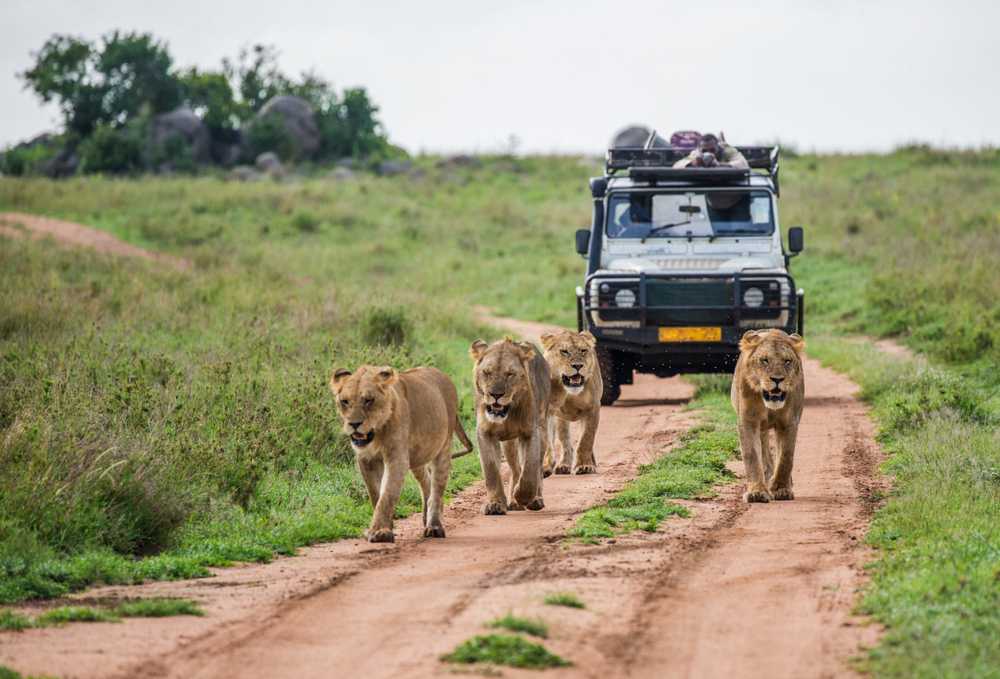
Tanzania offers unparalleled wildlife safaris, featuring the world’s highest animal population density, the Great Migration, and Ngorongoro Crater, the world’s largest intact volcanic caldera. It is home to unique tree-climbing lions, massive elephant herds in Tarangire, and the "Big Five," making it a premier, diverse safari destination.
12-days-budget-tanzania-safari-itinerary-visiting-tanzania-on-budget
12-days-tanzania-photography-safari-capturing-the-wild-with-lenses
12-days-tanzania-safari-and-culture-experience
12-days-budget-tanzania-safari-itinerary-visiting-tanzania-on-budget
12-days-perfect-tanzania-zanzibar-beach-holiday-tour-package
12-days-tanzania-photography-safari-capturing-the-wild-with-lenses
7-days-best-great-wildebeest-migration-safari-in-tanzania
7-days-epic-africa-big-five-safari-in-tanzania-top-best-parks
7-days-budget-tanzania-safari-affordable-africa-budget-safari
7-days-kilimanjaro-climb-and-hiking-safari-ascent-to-peak
7-days-tanzania-wildlife-safari-africa-safari-tour-best-park-visits
8-days-great-mara-river-crossing-hadzabe-tribe-and-optional-hot-air-balloon-tanzania-safari
8-days-lemosho-route-kilimanjaro-climb
8-days-best-tanzania-wildlife-safari-to-zanzibar-beach-holiday-combined
8-days-best-tanzania-wildlife-safari-to-zanzibar-beach-holiday-combined
Highest Density: Tanzania has the highest animal population density in the world, with more animals per square mile than anywhere else.
Tanzania’s mix of vast protected areas, abundant water sources and varied habitats concentrates wildlife across landscapes such as the Serengeti, Ngorongoro Conservation Area and Tarangire. High animal density results from a combination of factors: extensive grasslands that support large herbivore populations; seasonal rainfall patterns that concentrate grazing animals around rivers, lakes and permanent waterholes; and long‑standing conservation policies that created contiguous protected areas enabling free movement. The Ngorongoro Crater is a prime example—an enclosed caldera where animals are naturally concentrated, producing very high per‑square‑mile densities. Similarly, the Serengeti’s plains support huge populations of wildebeest, zebra and gazelle, which in turn sustain large predator communities. This density benefits ecological interactions—predation, scavenging and nutrient recycling are intensified—while also making Tanzania exceptional for wildlife viewing. However, high densities can pose management challenges: disease transmission risk, human‑wildlife conflict on park edges, and pressure on limited water resources during droughts. Tanzania’s conservation success depends on continued anti‑poaching efforts, community engagement through conservation‑based livelihoods, and adaptive management to balance wildlife health with ecosystem resilience. For travelers, these densities translate into frequent, high‑quality sightings and a strong chance of witnessing classic African wildlife behaviors.
The Great Migration: Over 1.5 million wildebeest and zebra migrate annually through the Serengeti.
The Great Migration is one of the planet’s most spectacular large‑mammal movements, driven by seasonal rains and pasture availability. Each year, roughly 1.5 million wildebeest, accompanied by hundreds of thousands of zebras and Thomson’s gazelles, move in a roughly circular pattern across the Serengeti‑Mara ecosystem. Calving peaks in the southern Serengeti during the short rains, then the herds progress northwest through central and western Serengeti toward the northern Mara in search of fresh grazing and water during the dry season. River crossings—especially of the Grumeti and Mara rivers—are dramatic highlights, where animals face steep banks, strong currents and crocodile predation. The migration influences predator behavior, scavenger abundance, and nutrient flows across the ecosystem; it’s also culturally and economically critical for Tanzanian and Kenyan tourism. Timing is variable year to year, depending on localized rains, so while months like June–October are commonly recommended for northern crossings, exact locations shift. Witnessing any phase—calving, river crossings, or concentrated herds—rewards observers with unforgettable wildlife spectacle and deep insight into how climate and vegetation shape animal movement.
Tree‑Climbing Lions: Lake Manyara National Park is famous for lions that lounge in trees to escape heat and flies.
Lake Manyara National Park is internationally noted for an unusual behavioral trait: a subset of its lion population frequently climbs and rests in trees. While tree‑climbing is more commonly associated with leopards, Manyara’s lions use branches to gain relief from ground‑level heat, escape biting flies and gain vantage points across the woodland and soda lake margins. Several adaptive explanations exist: trees provide escape from insects, cooler breezes at height, and possibly an anti‑parasitic benefit. The park’s dense acacia woodlands and relatively tame wildlife viewing culture (few vehicles per sighting) make it easier to observe these atypical behaviors than in busier parks. Tree‑climbing lions are not ubiquitous—behavior varies among prides and individuals—but their presence adds a quirky, photogenic element to Manyara visits and highlights behavioral plasticity among large carnivores. When visiting, expect intimate forested scenes and fewer wide‑open plains; drives often concentrate around the forest edge and escarpment where tree‑dwelling lions and other wildlife gather. Guides familiar with local prides greatly increase the chance of witnessing this memorable behavior.
Ngorongoro Crater: An inactive, intact, and unfilled volcanic caldera containing over 25,000 large animals.
Ngorongoro Crater is a singular ecological jewel: a vast, unfilled volcanic caldera formed when a large volcano collapsed roughly two to three million years ago. The caldera’s enclosed topography creates a natural amphitheater that concentrates wildlife and supports diverse habitats—grasslands, acacia woodlands, hippo pools and seasonal marshes. Because the crater floor is bounded by steep walls, resident populations of large mammals remain relatively contained year‑round, producing remarkably high animal densities. Estimates often cite more than 20,000–25,000 large animals within the crater, including significant numbers of buffaloes, zebras, wildebeest, warthogs, gazelles, elephants and predators such as lions and spotted hyenas. Ngorongoro is also home to endangered black rhino, protected within special zones. The crater’s combination of scenery, accessibility and dense wildlife makes it one of East Africa’s premier single‑site viewing experiences. Its cultural importance is also profound: Maasai inhabitants live on the crater rim and in surrounding highlands, practicing pastoralism and contributing to conservation governance through a long‑standing land‑use mosaic. Visitor regulations—vehicle limits, managed entry and conservation fees—help reduce pressure on the fragile caldera ecosystem while supporting anti‑poaching and community projects.
Big Five: Tanzania is one of the best places to see the Big Five (lion, leopard, elephant, buffalo, rhino).
Tanzania’s network of national parks, reserves and conservancies—most notably the Serengeti, Ngorongoro, Selous (Nyerere) and Tarangire—offers excellent opportunities to encounter the Big Five: lion, leopard, elephant, Cape buffalo and rhinoceros. Large, contiguous habitats support healthy populations of these iconic species; predators thrive where ungulate biomass is high, while elephants and buffaloes are common across miombo woodlands, floodplains and savannas. Black rhino sightings are less frequent due to their lower numbers and intensive protection needs, but they can be found in well‑guarded sanctuaries and specific reserves (e.g., Ngorongoro, and parts of northern conservation areas). Leopards remain elusive by nature and require patient, skilled guiding, often producing memorable rewards when spotted in trees or rocky kopjes. Elephants in Tarangire aggregate in some of Africa’s largest herds, offering dramatic encounters. The Big Five’s presence has fueled tourism and conservation funding, but it also places responsibility on management to prioritize anti‑poaching, habitat corridors, and community participation to sustain populations. For visitors aiming to tick the Big Five off their lists, Tanzania’s diversity and protected‑area design make it a top global destination—with the caveat that ethical, patient viewing and support for conservation initiatives are essential.
Largest Reserve: The Selous Game Reserve is one of the largest fauna reserves in the world.
The Selous Game Reserve—recently renamed Nyerere National Park in part of its area and still often broadly referred to as Selous—is among the planet’s largest protected wildlife areas, spanning an immense mosaic of miombo woodlands, riverine corridors and seasonal floodplains in southern Tanzania. Historically one of Africa’s least visited reserves because of its remoteness, Selous offers expansive, untamed landscapes where populations of elephants, wild dogs, hippos and diverse ungulates roam relatively undisturbed. Its scale presents unique conservation challenges and opportunities: maintaining effective anti‑poaching coverage across such a huge area demands significant resources, but the size also provides ecological resilience—ample space for wide‑ranging species and intact predator–prey dynamics. Selous’ lower tourism density compared with northern parks gives visitors a true sense of wilderness; activities include boat and walking safaris, photographic drives and fly‑camping experiences that emphasize remoteness and immersion. The reserve’s rivers and lakes support abundant birdlife and hippo pods, while open plains and woodlands harbor large mammals. For travelers seeking solitude and a less commercialized safari, Selous/Nyerere is an exceptional choice, though logistics (longer transfers, seasonal accessibility) require careful planning and often internal flights.
Massive Elephants: Tarangire National Park is renowned for having some of the largest elephant herds in Africa.
Tarangire National Park is famous for its elephant aggregations, particularly during the dry season when animals concentrate along the Tarangire River, the park’s lifeline. Its open plains, baobab‑studded landscapes and riparian corridors support substantial family groups and bull aggregations—sometimes forming large, multi‑family herds numbering in the hundreds. Tarangire’s combination of permanent water, diverse browse and seasonal flooding patterns drives elephant movements and congregation, making sightings reliably high quality. The presence of vast baobab trees and lightly wooded savanna creates dramatic photographic compositions with elephants as prominent foreground subjects. Tarangire’s elephant populations are also interesting from an ecological perspective: their browsing and feeding behaviors shape vegetation structure, influence tree recruitment and create microhabitats for other species. The park serves as an important seasonal refuge and corridor area in northern Tanzania’s broader ecosystem, linking with surrounding community lands and conservation initiatives. Visitors to Tarangire frequently combine the park with the Serengeti or Ngorongoro to experience contrasting landscapes: dense elephant activity and iconic baobabs in Tarangire, plus vast plains and migration dynamics elsewhere. Proper management and community engagement remain essential to balance growing tourism and long‑term elephant conservation.
Chimpanzee Trekking: Mahale Mountains National Park on Lake Tanganyika is a premier spot for tracking wild chimpanzees.
Mahale Mountains National Park occupies a dramatic stretch of forested escarpment along the eastern shore of Lake Tanganyika and is renowned for its habituated communities of wild chimpanzees. Trekking here offers a remote, intimate primate experience distinct from the savanna safaris of northern Tanzania. Dense montane and lowland forest, spiced with lush river valleys and steep ridges, provides prime chimpanzee habitat; trackers follow sign and vocalizations to locate family groups for short, regulated observation periods. Mahale’s chimp habituation research history has contributed significantly to primatology and conservation knowledge, making visits both scientifically and emotionally resonant. Logistics are more complex than for mainstream parks: access typically involves boat transfers across Lake Tanganyika or light aircraft to nearby airstrips, and accommodations are often simple, eco‑minded camps that prioritize low impact. Beyond chimpanzee encounters, Mahale offers scenic trekking, birding and freshwater biodiversity—Lake Tanganyika itself is one of the world’s oldest and most species‑rich lakes. Because Mahale is remote and visitation numbers are tightly controlled, the experience is both rewarding and conservation‑focused: fees and research partnerships support ongoing protection of chimpanzees and their forest home.
The "Endless Plains": The Serengeti National Park covers over 5,600 square miles.
The Serengeti’s famed “endless plains” are a vast continuum of grasslands, woodlands and kopjes stretching across northern Tanzania into Kenya’s Maasai Mara. Covering roughly 14,750 square kilometers (about 5,600 square miles), the Serengeti’s size supports enormous herbivore populations, wide predator territories, and the ecological processes underpinning the Great Migration. Its open plains create iconic safari imagery—broad horizons dotted with acacias, migrating hooves, and termite mounds—while koppies (rocky outcrops) provide vantage points for predators and birds. Ecologically, the Serengeti functions as a single, interconnected system where rainfall, fire and grazing shape vegetation patterns and animal movement; the park’s scale allows long‑distance migrations and predator–prey dynamics to play out with minimal fragmentation. For visitors, the Serengeti delivers classic African landscapes and high encounter rates across seasons, from calving in southern plains to river crossings in the north. Management of such a large park requires coordination among park authorities, neighboring conservancies, and cross‑border collaboration with Kenya’s Maasai Mara to ensure migratory corridors remain open and human‑wildlife conflict is minimized. The Serengeti’s vastness remains central to its global conservation and tourism significance.
Unique Giraffes: The Maasai giraffe, Tanzania’s national animal, is frequently spotted in the northern parks.
The Maasai giraffe (Giraffa tippelskirchi), recognized by its large, jagged, irregular patchwork, is one of several giraffe subspecies found across East Africa and serves as a cultural and natural emblem in Tanzania. Predominantly seen in northern circuit parks—Serengeti, Tarangire, and surrounding conservancies—the Maasai giraffe is notable for its tall, elegant profile against open plains and acacia‑dotted horizons. Giraffes play important ecological roles as browsers of high foliage, shaping woodland structure and creating feeding opportunities for other species through branch breakage. The Maasai giraffe’s distribution overlaps with key migratory and dry‑season grazing areas, making it a familiar sight for safari travelers. Conservation concerns for giraffes overall have risen in recent decades due to habitat loss, poaching and fragmentation; population trends vary regionally, so protected areas and community conservancies are vital for their persistence. Observing Maasai giraffe behaviors—necking (male competitive interactions), maternal care, and calf rearing—adds rich behavioral context to savanna visits. Safaris that include northern parks give travelers strong chances to see this distinctive subspecies, often paired with sightings of other charismatic megafauna.
Birthplace of "Safari": The word "safari" originates from Swahili, meaning "journey".
The term “safari” is derived from the Swahili word safari, itself borrowed from Arabic safar, meaning journey or voyage. Historically, Swahili functioned as a trade lingua franca along the East African coast, blending Bantu, Arabic and other linguistic elements. Over time, European explorers and colonial administrators adopted the word to describe organized hunting and later wildlife‑viewing expeditions into the interior. Today, “safari” has evolved globally to signify wildlife or nature tours in Africa, emphasizing observation and conservation rather than the earlier sport‑hunting associations. The linguistic origin underscores East Africa’s role as the cradle for modern wildlife tourism and the cultural interconnections between local language, trade routes, and the development of tourist economies.
Dung Beetle Navigators: Dung beetles in the Serengeti navigate using the Milky Way.
One of the more surprising natural discoveries about Serengeti dung beetles is their ability to navigate by starlight—specifically, by using the Milky Way as a celestial cue. Nocturnal dung beetles roll dung balls in straight lines away from the dung pile to avoid competition; researchers found that when the Milky Way was visible, beetles maintained straighter trajectories than under starlight alone. Experiments under controlled conditions showed that obscuring the Milky Way disrupted navigation, confirming these insects’ sophisticated use of celestial patterns. This remarkable behavior highlights the intricate adaptations of even small invertebrates in the African night and underscores the value of dark skies—both ecologically and scientifically.
Hyena Matriarchy: Spotted hyena clans are ruled by females, who are larger and more assertive than males.
Spotted hyenas exhibit an unusual social system among large carnivores: they are organized into female‑led societies where females are dominant, larger and more aggressive than males. Female hyenas possess high androgen levels, correlating with increased size and assertiveness; dominant females control access to food, den sites and mating opportunities. Rank is typically inherited, with offspring of high‑ranking females enjoying competitive advantages. The matriarchal structure affects feeding order—females and their cubs eat first—and cooperative hunting and territory defense. This social complexity challenges traditional stereotypes about hyenas and illustrates the diversity of mammalian social evolution.
Lion Sleep Patterns: Lions on safari are often seen sleeping, resting up to 20 hours a day to conserve energy for hunting.
Lions are energy‑conserving carnivores: they can rest or sleep for 16–20 hours daily, conserving calories between bursts of hunting, territorial patrols and social interactions. Their ambush‑based hunting strategy demands short, intense efforts of pursuit and attack, so prolonged rest minimizes metabolic costs. In protected areas where food can be abundant, pride members may spend large portions of daylight reclining in the shade, grooming, or engaging in social bonding. For safari guests, this behavior explains numerous photos of lions dozing—yet these quiet moments are integral to their survival strategy and can precede sudden, dramatic activity.
Flamingo Breeding: Lake Natron, an incredibly hot and alkaline lake, is the primary breeding site for 75% of the world’s lesser flamingos.
Lake Natron’s extreme conditions—high alkalinity and elevated temperatures—create a relatively predator‑free breeding environment for lesser flamingos. The lake’s unique mineral composition supports abundant cyanobacteria, the primary food source for flamingos. During favorable seasons, tens or hundreds of thousands of lesser flamingos gather to breed on soda flats and alkaline islands, making Natron globally significant for the species’ reproduction. The harshness of the habitat deters many predators, while the lake’s isolation helps protect nesting colonies. Conservation of Lake Natron is therefore critical to sustain global lesser flamingo populations.
Oldest Human Footprints: Olduvai Gorge, located in the Ngorongoro Conservation Area, is known as the "Cradle of Mankind," where early human fossils were found.
Olduvai Gorge is one of the world’s most important paleoanthropological sites. Excavations there—most famously by Louis and Mary Leakey—uncovered hominin fossils and stone tools spanning millions of years, providing pivotal evidence about early human ancestors’ morphology, behavior and tool use. Its stratified layers have yielded Homo habilis and other early hominins, earning the area the nickname “Cradle of Mankind.” Visitors to the Ngorongoro Conservation Area can explore the site, learn about human evolution, and appreciate how the region’s long human history intersects with its ecological diversity.
Baobab Giants: Tarangire is dotted with massive, ancient baobab trees, some of which are hundreds of years old.
Tarangire’s landscape is iconic for its giant baobab trees, whose massive, bottle‑shaped trunks and sparse crowns punctuate the savanna. Baobabs are ecological keystones: they store water in their trunks during dry periods, provide nesting and roosting sites for birds, and their hollow trunks can shelter animals and humans. Some baobabs in Tarangire are centuries old, weaving cultural stories and natural history into the park’s scenery. Their presence enhances photographic opportunities and signals long‑term ecological continuity across Tanzania’s dry woodlands.
Most Insect Species: Tanzania is home to roughly 60,000 insect species.
Tanzania’s varied climates and habitats—forests, savannas, wetlands and mountains—support immense insect diversity, estimated at around 60,000 species. This vast array includes pollinators, decomposers, predators and herbivores that underpin ecosystem processes such as pollination, nutrient cycling and food‑web dynamics. Insect diversity also provides resources for insectivorous birds, bats and reptiles. Documenting and conserving insect biodiversity is crucial, though many species remain under‑studied, offering rich opportunities for entomological research.
Birdwatcher's Paradise: With over 1,000 bird species, it is one of the top birding destinations in Africa.
Tanzania boasts exceptional avifauna—over 1,000 recorded species—due to habitat diversity: montane forests, Rift Valley lakes, coastal mangroves, miombo woodlands and arid scrublands. Iconic sites include Lake Manyara, Lake Natron, the Serengeti, and the Eastern Arc Mountains, each offering distinct assemblages and endemic species. Migratory pulses add seasonal variety. For birders, Tanzania delivers abundant lifers, spectacular congregations (flamingos, pelicans) and rare endemics, making it a premier African birding destination.
Active Volcano: Ol Doinyo Lengai, "Mountain of God," is an active volcano near Lake Natron that erupts carbonatite lava, which is cooler and blacker than typical lava.
Ol Doinyo Lengai, sacred to the Maasai and known as the “Mountain of God,” is unique geologically for erupting carbonatite lava—low in silica and relatively cool compared with typical basaltic lava. Fresh flows appear black and dark but quickly weather to white or gray due to sodium carbonate deposition. Its activity shapes local landscapes and influences the alkaline chemistry of nearby Lake Natron. Climbing and viewing Ol Doinyo Lengai offer both geological fascination and cultural significance, though volcanic activity and weather can affect access.
What is the best time for Tanzania wildlife safaris to see the Great Migration?
The Great Migration’s timing shifts annually with rainfall and pasture growth, but the most reliable window to witness the classic northern Serengeti/Maasai Mara river crossings—and therefore the spectacle many travelers seek—is broadly June through October. During this dry season, the migrating herds of wildebeest, zebra and gazelle concentrate as water becomes scarce in the south and central Serengeti and they push northwest toward the Mara ecosystem. June often sees large herds moving into western and northern Serengeti; July–September are prime for river crossings (Grumeti, Mara) and predator activity; October can show the initial southward dispersal as short rains begin. That said, the migration is a year‑round phenomenon: calving occurs in the southern Serengeti during the short rains (roughly February–March), attracting abundant predators and newborns; mid‑season movements through central Serengeti occur in other months. Choosing where to base your safari influences what phases you’ll likely witness — southern and central Serengeti are ideal for calving and predator interactions in earlier months; western and northern Serengueti plus adjacent Kenyan conservancies are best for crossings in the June–October corridor. For photographers and wildlife enthusiasts who want multiple migration experiences (calving, river crossings, predator interactions), a longer trip or a multi‑camp itinerary that follows the herds across zones increases chances. Weather variability matters: heavier-than‑average rains can delay northward movement, while earlier drought can accelerate it. Finally, conservancies bordering national parks often limit vehicle numbers and provide patient guiding, improving viewing quality. In short, plan June–October for the highest probability of iconic river crossings, but align camp locations and duration with the specific migration phase you most want to see.
Can I see the Big Five on Tanzania wildlife safaris in one day?
Yes—while seeing all Big Five species (lion, leopard, elephant, Cape buffalo, rhinoceros) in one day is uncommon on most circuits, Ngorongoro Crater offers the best single‑day odds in Tanzania due to its extraordinary wildlife density and compact geography. The crater’s enclosed caldera concentrates herbivores and predators within a relatively small area, allowing focused, efficient viewing without long drives between sightings. Visitors who start at first light and use the crater’s main tracks with an experienced guide can often encounter multiple Big Five species during a full‑day crater tour: elephants along drainage lines, buffalo herds grazing on the plains, lion prides on open grasslands or near water, and black rhino in protected sectors (access varies by permit and management). Leopards are secretive and nocturnal, so sighting them in a single day still requires luck and often relies on a guide who knows local trees and rocky kopjes where leopards rest. Outside Ngorongoro, seeing all Big Five in one day is less probable because species are spread across larger landscapes—rhinos, particularly black rhinos, tend to be restricted to well‑guarded sanctuaries and may require travel to specific reserves (e.g., parts of Selous/Nyerere, certain northern conservancies). For those intent on the Big Five in a narrow timeframe, plan a dedicated full day in Ngorongoro with an experienced local guide, secure necessary permits for rhino areas if required, and accept that leopard encounters are the least predictable. Responsible viewing practices and choosing operators that support anti‑poaching and community conservation will maximize both your chances and the long‑term protection of these species.
What makes the Serengeti special for Tanzania wildlife safaris?
The Serengeti’s global renown stems from a rare confluence of scale, ecological process and species density. Covering roughly 5,600 square miles (14,750 km²), the park’s “endless plains” accommodate massive herbivore populations and expansive predator territories, enabling dynamic interactions that are fundamental to the Great Migration and classic savanna ecology. The Serengeti’s seasonal patterns—periodic rainfall, fire regimes and grazing—drive the migration of more than a million hoofed mammals, creating phases of calving, concentration and dramatic river crossings that attract predators and scavengers in turn. For safari-goers, this produces consistent, high‑impact wildlife viewing year‑round: calving concentrations with vulnerable neonates and intense predator activity in the southern plains; bird and predator diversity in central regions; and the famed river crossings in western and northern zones. Beyond sheer numbers, the Serengeti’s diversity of habitats—open grassland, scattered acacia, kopjes (rocky outcrops), riverine corridors and woodlands—creates visual variety and supports species from cheetahs that favor open sprinting grounds to tree‑perching birds and secretive small carnivores. The park’s kopjes are natural observation platforms for predators and provide dramatic photographic compositions; termite mounds punctuate the plains for scale. Cross‑border continuity with Kenya’s Maasai Mara is also crucial: together they form a transboundary ecosystem that maintains migratory corridors. Management, scientific research and long‑term monitoring in the Serengeti have contributed substantially to conservation science, but challenges persist—poaching risk, habitat pressure and climate variability require constant attention. For travelers, the Serengeti delivers the quintessential Tanzanian safari experience: vastness, drama, biodiversity and the visceral spectacle of migration and predator–prey dynamics.
Are there special lions to see on Tanzania wildlife safaris?
Yes—Tanzania offers several distinctive lion‑viewing opportunities that differ by region and behavior. Lake Manyara National Park is world‑famous for its tree‑climbing lions: a behavioral oddity where lions regularly lounge in acacia and fig trees to escape flies and heat, offering highly photogenic and unusual sightings uncommon elsewhere. The Serengeti showcases large, active prides that hunt across open plains and kopjes; here you can witness cooperative hunting, territorial displays and cub rearing, particularly during migration season when prey is abundant. Ngorongoro Crater’s enclosed landscape supports high predator densities, producing frequent sightings of hunting and social interactions in relatively short distances—excellent for concentrated viewing. Tarangire and Selous/Nyerere also host resident prides adapted to their specific habitats, from baobab‑studded woodlands to riverine corridors. Behaviorally, Tanzanian lions demonstrate diversity: coalition male behaviors, pride dynamics, infanticide in rare cases, and varied hunting strategies (ambush vs. persistence hunting) depending on terrain and prey species. Guides trained in predator ecology can interpret subtle signs—calls, territorial scrapes, scent‑marking—that increase your chances of finding active prides. Leopards are rarer, but well‑placed guides can sometimes locate them in trees or rocky outcrops. Ethical viewing protocols—vehicle limits, minimum distances, and no interference with hunting—maximize both guest experience and lion welfare. With patient guiding and well‑chosen parks, Tanzanian safaris provide outstanding and sometimes unusual lion encounters.
What is the largest volcanic caldera seen on Tanzania wildlife safaris?
Ngorongoro Crater is the most famous and most visited intact volcanic caldera in Tanzania and is widely regarded as the world’s largest unbroken caldera accessible to safari visitors. Formed when a colossal volcano collapsed two to three million years ago, the result is a dramatic, bowl‑shaped amphitheater with steep walls and a floor that supports diverse habitats—grasslands, marshes, woodlands and soda lakes. Its geological formation created an enclosed ecosystem where animals are naturally concentrated, producing exceptionally high wildlife densities that make Ngorongoro a cornerstone of northern circuit safaris. The crater’s scale—about 260 square kilometers (100 square miles) enclosed by a rim rising over 600 meters from the floor—creates efficient game viewing: you can traverse short distances and encounter many species in a single day. Critically, the crater also supports endangered species like the black rhino in specially protected zones. The rim offers sweeping viewpoints at sunrise and sunset, and Maasai communities on the crater’s slopes add cultural context. Management of Ngorongoro balances conservation with human livelihoods and heavy tourism—regulated vehicle numbers, park fees and collaborative projects aim to sustain the caldera’s ecological integrity. For safari travelers seeking both geological awe and rich wildlife concentrations, Ngorongoro’s caldera is an unrivaled single‑site experience.
Are there many elephants to see on Tanzania wildlife safaris?
Yes—Tanzania hosts several regions with substantial elephant populations, and Tarangire National Park is especially notable for its seasonal aggregations. During the dry season, water becomes concentrated along the Tarangire River, drawing elephant families that can number in the hundreds into the park’s baobab‑studded landscape. These impressive herds, combined with dramatic baobabs and open savanna vistas, make Tarangire one of the most reliable parks for prolonged, close elephant viewing. Other strongholds include the Selous/Nyerere ecosystem in southern Tanzania, which—owing to its vastness and varied habitats—supports significant elephant populations and offers riverine boat safaris and remote game‑drive experiences. The northern parks and conservancies (Serengeti corridors, Lake Manyara, and parts of the Rift Valley) also host elephants, though densities vary seasonally with water and forage availability. Elephant ecology in Tanzania is important: these megaherbivores are ecosystem engineers—shaping vegetation structure, facilitating seed dispersal, and creating microhabitats that benefit numerous other species. Conservation challenges include poaching pressure and human‑elephant conflict on park borders, but many Tanzanian parks operate intensive anti‑poaching measures, community outreach and corridor protection programs. For safari guests, well‑timed visits in Tarangire and large‑scale reserves yield spectacular, often extended encounters with family groups and bull aggregations, and responsible operators ensure sightings occur with minimal disturbance.
How much of Tanzania is protected for wildlife?
Tanzania protects an impressive proportion of its land base for wildlife conservation: estimates typically place protected area coverage at roughly 25–30% of the country, including national parks, game reserves, wildlife management areas, marine parks and forest reserves. This extensive network—encompassing iconic sites such as Serengeti, Ngorongoro Conservation Area, Tarangire, Selous/Nyerere, Ruaha, and numerous coastal and marine reserves—supports rich biodiversity, large mammal migrations, and critical habitats for endemic and migratory species. The country’s conservation model is multifaceted: strictly protected national parks prioritize biodiversity and tourism; game reserves and wildlife management areas often balance human use, pastoralism and conservation; community conservancies and Wildlife Management Areas (WMAs) engage local populations in stewardship by sharing tourism and hunting revenues, thus creating economic incentives for habitat protection. Marine protected areas safeguard coral reefs, seagrass beds and marine megafauna along Tanzania’s Indian Ocean coast. Maintaining such a high percentage of protection is both an achievement and an ongoing challenge—effective management requires sustained funding for anti‑poaching, ranger patrols, scientific monitoring and community development to mitigate human‑wildlife conflict. For travelers, the extensive protected network translates into accessible, varied safari experiences and numerous opportunities to support conservation through tourist fees and community‑friendly operators.
Can I see chimpanzees on Tanzania wildlife safaris?
Yes—chimpanzee trekking is possible in Tanzania, but the experience differs from the savanna safaris most visitors imagine. The premier destinations for habituated chimpanzee encounters are Mahale Mountains National Park and Gombe Stream National Park, both situated on the shores of Lake Tanganyika in western Tanzania. Mahale is celebrated for its habituated chimp communities set against steep forested slopes, offering a remote and intimate trekking experience that often includes boat transfers, forest hikes and limited, regulated observation windows with research‑experienced guides. Gombe Stream, where Jane Goodall conducted her landmark studies, combines scientific heritage with excellent chimp viewing along rugged forest trails and river shoreline habitats. Logistics are more complex and typically more expensive than northern circuit safaris: access commonly involves light aircraft or boat transfers, simple eco‑lodge or tented accommodation, and strict visitor limits to minimize disturbance to the chimpanzees. Trekking protocols emphasize short, quiet observation periods (usually one hour) and minimum distances, guided by researchers or experienced trackers. The reward is high: close encounters with complex primate social behavior—tool use, grooming, vocalizations and coalitions—provide a unique complement to big‑game viewing. If you plan a chimpanzee component, book well in advance due to limited permits and remote access, and choose operators who support research and community conservation initiatives.
What bird species can I find on Tanzania wildlife safaris?
Tanzania is a birdwatcher’s dream, hosting over 1,100 recorded species across a wide variety of habitats—montane forests, Rift Valley lakes, miombo woodlands, coastal mangroves and arid scrub. On a typical Tanzania wildlife safari you can expect striking waterbird spectacle: vast flocks of lesser flamingos at Lake Natron and the Rift Valley lakes, pelicans and cormorants on freshwater systems, and large gatherings of waterfowl and waders in seasonal wetlands. Savanna and woodland species include ostriches, secretary birds, kori bustards, hornbills and a diversity of raptors (eagles, hawks and vultures). Forested highlands—Udzungwa Mountains and the Eastern Arc Mountains—harbor endemics and localized species such as the Udzungwa partridge, a suite of sunbirds, and various greenbul and warbler species. Coastal and marine birding around Dar es Salaam, Pemba and the Kilwa/Kisite areas produces tern, shearwater and tern assemblages, plus mangrove specialists like the mangrove kingfisher. Migratory pulses bring Palearctic species in winter months, increasing totals during October–April and the rainy seasons. Many lodges and conservancies offer specialist bird guides, early morning walks and checklists to help guests maximize sightings. For serious twitchers, targeted trips to combine Rift Valley lakes, Eastern Arc Mountain sites, coastal reserves and miombo woodlands can yield exceptionally long lifelists. Whether you’re a casual birder or a dedicated ornithologist, Tanzania’s habitat diversity ensures both iconic species and rewarding rarities on wildlife safaris.
Booking Tanzania wildlife safaris with us Roads of Adventure safaris
Book Tanzania wildlife safaris with Roads of Adventure Safaris for tailored experiences, featuring iconic locations like the Serengeti and Ngorongoro Crater. They provide diverse options including Big Five safaris, family trips, and luxurious camping. Expert guides ensure immersive, memorable adventures in Tanzania's national parks.
