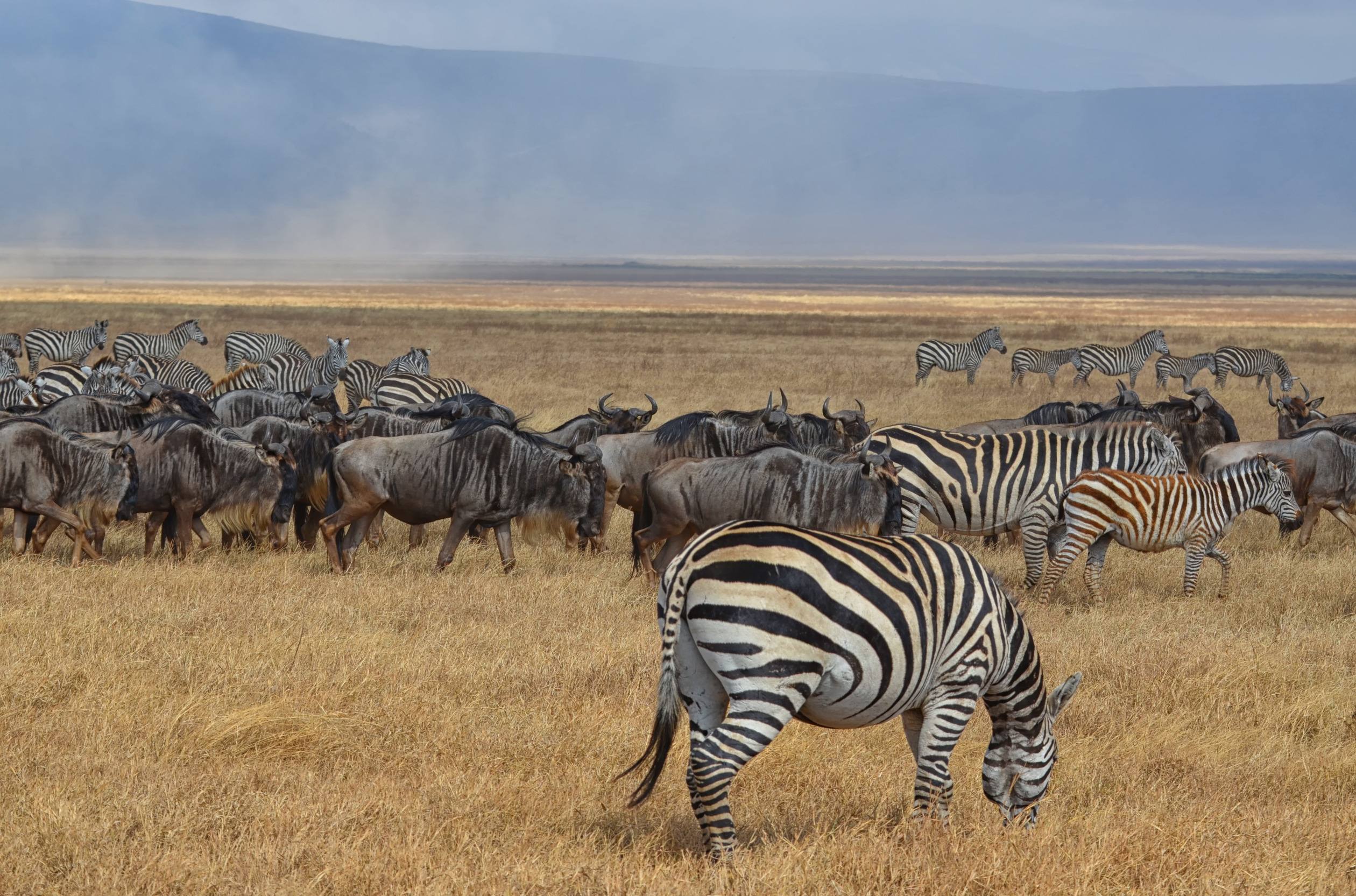
The "best" Tanzania safari depends on whether you want a first-time classic experience or a remote, off-the-beaten-path adventure. For most travelers, the Northern Safari Circuit—which includes the Serengeti and Ngorongoro Crater—is considered the premier choice due to its high density of wildlife and world-famous landscapes
10-days-tanzania-wildlife-safari-and-optional-visit-to-masai-tribe-or-hadzabe
8-days-perfect-materuni-waterfall-and-coffee-cultural-tour-in-tanzania
7-days-best-of-tanzania-safari-grumetimara-river-crossing-and-masai-warrior-homestay
10-days-perfect-tanzania-safari-itinerary
10-days-luxury-kenya-tanzania-safari-holiday-high-end-tour-package
10-days-tanzania-wildlife-safari-and-optional-visit-to-masai-tribe-or-hadzabe
10-days-luxury-gorilla-trekking-masai-mara-serengeti-and-ngorongoro-crater
14-days-best-tanzania-honeymoon-safari-and-zanzibar-for-couples
3-days-fly-in-and-out-tanzania-wildlife-safari-itinerary-to-nyerere-from-zanzibar
3-days-serengeti-safari-fly-in-ngorongoro-big-five-safari-from-zanzibar-island
10-days-best-tanzania-safari-tour-and-zanzibar-beach-holiday-itinerary
8-days-best-tanzania-wildlife-safari-to-zanzibar-beach-holiday-combined
7-day-best-zanzibar-beach-holidays-combo-to-ruaha-and-mikumi-safari-parks
Serengeti National Park: The Theater of the Wild
The Serengeti is the crown jewel of African safaris, offering a scale of wildlife activity that is practically unmatched globally. Spanning nearly 15,000 square kilometers, its name translates from Maasai as "Endless Plains." This vastness is the stage for the Great Wildebeest Migration, an annual loop where over 1.5 million wildebeest, zebras, and gazelles move in search of fresh grazing. Witnessing a Mara River crossing—where herds brave crocodile-infested waters—is often the "holy grail" for safari-goers.
Beyond the migration, the Serengeti is a predator stronghold. It boasts one of the largest lion populations in Africa, alongside frequent sightings of cheetahs on the open southern plains and leopards lounging in the sausage trees of the Seronera Valley. The park is divided into distinct regions: the Central (Seronera) is famous for year-round resident wildlife; the Western Corridor is known for the Grumeti River; and the North is the place to be from July to October. Whether you are taking a sunrise hot air balloon flight or a sunset game drive, the Serengeti provides that quintessential "Lion King" landscape that defines the African dream.
Ngorongoro Crater: Africa’s Garden of Eden
The Ngorongoro Crater is a geological marvel—the world’s largest inactive, intact, and unfilled volcanic caldera. Formed two million years ago when a massive volcano collapsed, it now serves as a self-contained natural enclosure for over 25,000 large animals. The 600-meter-deep walls create a unique ecosystem where wildlife thrives year-round, making it arguably the best place in Tanzania to see the Big Five in a single day. It is particularly famous for its population of endangered black rhinos, which are easier to spot here than almost anywhere else in East Africa.
Descending into the crater feels like entering a prehistoric world. The floor is a mosaic of open grasslands, Lerai fever tree forests, and the alkaline Lake Magadi, which is often tinted pink by thousands of flamingos. Because the animals don't migrate out of the crater, game viewing is superb regardless of the season. While it can be busier with vehicles than the Serengeti, the sheer density of lions, hyenas, and massive "tusker" elephants within such a compact space makes it an essential, high-impact stop on any northern circuit itinerary.
Tarangire National Park: The Land of Giants
Often overshadowed by its famous neighbors, Tarangire is a "hidden gem" defined by two things: elephants and baobabs. The landscape is strikingly different from the Serengeti; it is characterized by ancient, bulbous baobab trees that dot the rolling hills. During the dry season (June to October), the Tarangire River becomes the only permanent water source in the region, drawing enormous herds of up to 300 elephants at a time. This "mini-migration" also attracts wildebeest, zebras, and buffalo, followed closely by lions and leopards.
Tarangire offers a more rugged, intimate atmosphere. It is one of the few places in the north where you can spot the dry-country antelope like the fringe-eared oryx and the long-necked gerenuk. Birdwatchers also flock here, as the park’s swamps host over 550 species, the highest breeding number in a single habitat anywhere in the world. For travelers who want to escape the crowds of the Crater while still experiencing high-octane wildlife encounters, Tarangire provides a raw and beautiful alternative that feels truly wild.
Nyerere National Park (Selous): The Wild Waterworld
Formerly known as the Selous Game Reserve, Nyerere National Park is one of the largest faunal reserves in the world and the centerpiece of Tanzania’s Southern Circuit. Unlike the dusty plains of the north, Nyerere is defined by the mighty Rufiji River, which snakes through the park creating a network of lakes, lagoons, and channels. This abundance of water allows for boat safaris, a rare treat that lets you drift past pods of grunting hippos, massive Nile crocodiles, and thirsty elephants lining the banks.
The park is also a critical sanctuary for the African wild dog, one of the continent's most endangered predators. Because the park is so vast and sees far fewer tourists than the Serengeti, the experience is profoundly exclusive. You can go hours without seeing another vehicle. In addition to boat trips, Nyerere is famous for guided walking safaris, allowing you to track animals on foot and learn about the smaller intricacies of the bush. It is the perfect destination for those seeking "slow safari" vibes—blending luxury, solitude, and diverse landscapes.
Ruaha National Park: The Untamed Frontier
Ruaha is the ultimate destination for the safari purist. Located in the heart of Tanzania, it is remote, hot, and brilliantly wild. Its landscape is a transition zone between East African savanna and Southern African miombo woodland, resulting in a unique crossover of species; it is the only place you might see both Greater and Lesser Kudu in the same area. Ruaha is also a land of predators, holding roughly 10% of the world’s lion population, including massive prides that are known for hunting buffalo.
The Great Ruaha River is the lifeblood of the park, and during the dry season, the drama unfolds along its banks as predators lie in wait for prey. The scenery is spectacular, featuring dramatic escarpments and some of the largest baobab forests in Africa. Because of its remote location, most visitors fly in, keeping the crowds non-existent. It offers a sense of "Old Africa"—a place where the tracks you see in the sand are likely from a leopard rather than a Land Rover. For a rugged, high-reward adventure, Ruaha is unbeatable.
1. Which Tanzania safari is best for first-time visitors?
For those embarking on their maiden African voyage, the Northern Circuit is the definitive choice. This classic route typically encompasses Tarangire, Lake Manyara, the Ngorongoro Crater, and the Serengeti. The reason it remains the gold standard for first-timers is the sheer reliability of wildlife sightings. Within a single week, you are almost guaranteed to see the "Big Five" and a staggering variety of landscapes, from lush groundwater forests to the iconic "endless plains."
The infrastructure in the north is the most developed in East Africa, featuring world-class lodges and well-maintained tracks. This ensures a "soft landing" into the wilderness, where you can enjoy high-end comfort while witnessing the raw drama of nature. Furthermore, the proximity of the parks to one another reduces long travel days, allowing for a balanced pace that doesn't overwhelm. For anyone wanting to see the Africa they have seen in documentaries, the Northern Circuit delivers the most "bang for your buck" in a single trip.
2. Which Tanzania safari is best for seeing the Great Migration?
To witness the headline act of the natural world, a Serengeti Safari is non-negotiable. While the migration is a circular, year-round event, the window between June and October is widely considered the most dramatic. During these months, the herds move into the Northern Serengeti, where they face the ultimate test: the Mara River crossings. Watching thousands of wildebeest plunge into crocodile-infested waters is a heart-pounding experience that defines the "survival of the fittest."
If your goal is to see the migration in a different light, the Calving Season (January–March) in the southern Ndutu plains is equally spectacular. Here, half a million calves are born within a few weeks, attracting an incredible density of lions, cheetahs, and hyenas. Whether you prefer the high-octane river crossings or the predator-rich calving season, the Serengeti's vastness ensures that you are always in the centre of the most significant terrestrial mammal migration on Earth.
3. Which Tanzania safari is best to witness the Big Five?
The Ngorongoro Crater is the most successful location in Tanzania—and perhaps all of Africa—for spotting the Big Five (lion, leopard, elephant, buffalo, and rhino) in a single day. The crater’s unique topography acts as a natural enclosure, harbouring a resident population of roughly 25,000 large animals. Because the wildlife here is habituated to vehicles and the terrain is relatively open, sightings are incredibly intimate and frequent.
[Image: A black rhino standing on the floor of the Ngorongoro Crater]
Most importantly, the crater is the best sanctuary for the endangered black rhino. While they are notoriously difficult to find in the vast Serengeti, they are frequently seen against the short-grass floor of the caldera. When combined with the massive "tusker" elephants and the dense prides of lions that call the crater home, you have an almost "guaranteed" Big Five experience that is perfect for those with limited time who want to tick every box on their wildlife list.
4. Which Tanzania safari is best for spotting lions?
The Serengeti National Park is the undisputed "Lion King" territory. It is home to one of the largest lion populations in the world, estimated at over 3,000 individuals. The central Seronera Valley is particularly famous for its high pride density. Here, the abundant prey and the presence of "kopjes"—massive granite rock formations—provide the perfect hunting grounds and vantage points for these apex predators.
Lions in the Serengeti are often seen in large, stable prides, sometimes numbering over 20 members. You might see them lounging on rocks in the midday sun, guarding a kill from scavenging hyenas, or moving through the tall grass in a coordinated evening hunt. Because the park is so vast and the lions are apex predators, they are largely indifferent to safari vehicles, allowing for exceptional photographic opportunities. For anyone whose primary goal is to see "Simba" in the wild, the Serengeti offers the most consistent and dramatic encounters.
5. Which Tanzania safari is best for avoiding crowds?
If you seek a "private" Africa, look no further than the Southern Circuit, specifically Nyerere National Park (formerly Selous) and Ruaha. While the northern parks can become crowded during peak migration, the south remains a remote wilderness where you can drive for hours without encountering another vehicle. This exclusivity provides a sense of discovery that is increasingly rare in modern tourism.
Nyerere is a water-rich paradise where boat safaris allow you to drift past hippos and crocodiles in silence. Ruaha, on the other hand, is a rugged, baobab-studded landscape known for its massive buffalo herds and the lions that have learned to hunt them. The Southern Circuit is perfect for seasoned safari-goers or those who value solitude and an authentic, "unscripted" bush experience. It is a place where you can listen to the roar of a lion at night knowing yours is the only camp for miles.
6. Which Tanzania safari is best for families?
A specialized Northern Circuit Safari that includes Tarangire National Park is often the best fit for families, especially those with younger children. Tarangire is famous for its massive elephant herds and ancient baobab trees. Elephants are a "keystone" attraction for kids; they are easy to spot, highly social, and their playful interactions are endlessly entertaining. The park’s smaller size and high animal density mean less time spent searching and more time observing.
Furthermore, many lodges in the north now offer "Junior Ranger" programmes, cultural visits to Maasai villages, and fenced-in grounds with swimming pools, providing a safe environment for children to burn off energy between game drives. Short, 2-to-3-hour morning drives followed by a relaxing afternoon at a lodge help keep the pace manageable for younger travellers. This combination of "Big Five" excitement and family-friendly infrastructure makes the north the most accessible safari destination for all generations.
7. Which Tanzania safari is best for walking tours?
For the ultimate grounded experience, the southern parks of Nyerere and Ruaha offer the best walking safaris in the country. While walking is restricted in much of the Northern Circuit for safety and regulation reasons, the south has a long tradition of "foot safaris." Accompanied by an armed ranger and an expert guide, you leave the vehicle behind to engage with the wild using all five senses.
A walking safari is not about the distance covered, but the depth of the details. You’ll learn to identify "spoor" (tracks and dung), discover the medicinal properties of various trees, and understand the intricate "alarm calls" of birds. Feeling the African soil beneath your boots and being at eye-level with the landscape provides a thrilling, primal connection to nature. It is a humble and profound way to experience the bush, turning a "sightseeing" trip into a true wilderness education.
8. Which Tanzania safari is best for chimpanzee trekking?
Tanzania is one of the few places on Earth where you can combine a classic savannah safari with an intimate primate encounter. The Mahale Mountains and Gombe Stream National Park, situated on the crystal-clear shores of Lake Tanganyika, are the only options for tracking chimpanzees. These parks are remote and accessible only by boat, adding a layer of adventure to the journey.
Gombe is world-famous as the site of Jane Goodall’s research, while Mahale is often cited as the superior experience due to the larger population of chimps and the spectacular mountain scenery. Hiking through the lush forest to find a community of "habituated" chimps—watching them groom, play, and interact just metres away—is a deeply moving and human-like experience. After a morning trek, you can relax on the white-sand beaches of the lake, making this a unique "jungle-meets-beach" primate safari.
9. Which Tanzania safari is best for combining with a beach holiday?
The Northern Circuit is the most efficient choice for travellers who want to pair the "Bush" with the "Beach." Because the northern parks are close to Arusha, the safari capital, you have easy access to daily domestic flights that can whisk you away to Zanzibar in just over an hour. This allows you to go from a sunrise game drive in the Serengeti to a sunset dhow cruise on the Indian Ocean in a single day.
[Image: A map showing the flight route from Serengeti/Arusha to Zanzibar]
This "Bush-to-Beach" combination is the most popular holiday format in Tanzania. It allows for a high-energy, early-morning safari schedule for the first week, followed by a week of total relaxation in Zanzibar’s "Spice Island" paradise. Whether you want to explore the historic Stone Town or simply unwind on the turquoise shores of Nungwi, the logistical ease of connecting the Northern Circuit to the coast makes it the perfect dual-destination itinerary.
10. Which Tanzania safari is best for bird watching?
For bird enthusiasts, Lake Manyara and Tarangire are the crown jewels of the country. Lake Manyara is home to over 400 species, and its alkaline waters are often pink with thousands of migratory flamingos. The park’s groundwater forest, lake shore, and cliffs provide a staggering variety of niches, where you can spot everything from the Silvery-cheeked Hornbill to the elusive Narina Trogon.
Tarangire follows closely with over 550 recorded species, the highest density in Tanzania. During the dry season, the river attracts a vibrant array of waterbirds, while the baobab-studded savannahs are home to raptors like the Martial Eagle and the colourful Bateleur. Whether you are looking for "endemic" species like the Yellow-collared Lovebird or simply want to be dazzled by the iridescent plumage of sunbirds and rollers, these two parks offer a year-round "aviary" of the highest order.
11. Which Tanzania safari is best for luxury travelers?
For the traveller seeking "uncompromising opulence," a Northern Safari featuring private lodges in the Serengeti and the Ngorongoro Highlands is the pinnacle of African luxury. Brands like Singita and &Beyond operate exclusive lodges on private concessions where vehicle density is strictly limited. Here, you can enjoy private heated plunge pools, personalized butler service, and gourmet bush dinners under the stars.
Luxury in the north is about more than just fine linens; it is about exclusive access. Staying in a private concession in the Grumeti region of the Serengeti allows you to witness the migration without another vehicle in sight. These lodges often feature specialized photography vehicles, private guides, and even on-site spas. For those celebrating a honeymoon or a milestone, the Northern Circuit provides a seamless blend of high-octane wildlife drama and world-class, five-star indulgence.
12. Which Tanzania safari is best for budget travelers?
The most cost-effective way to experience the wonders of Tanzania is a Northern Circuit Camping Safari. By opting for public campsites instead of permanent lodges, you can significantly reduce the price of your trip while maintaining the same high-quality game drives. You’ll travel with a driver-guide and a professional cook who prepares fresh meals at your campsite every evening.
In 2026, many budget travellers also choose to visit during the Low Season (March–May). While this coincides with the "long rains," many lodges offer discounts of up to 50%, and the parks are lush and free of crowds. Camping allows you to fall asleep to the sounds of the African night—the distant roar of a lion or the laugh of a hyena—providing an "authentic" wilderness connection that is often lost in more pampered settings. It is the ultimate way to see the Big Five without breaking the bank.
13. Which Tanzania safari is best in terms of the best time to visit?
The Dry Season (June to October) is universally considered the best time for a safari in Tanzania. As the smaller waterholes dry up, animals are forced to congregate around permanent water sources like the Seronera River in the Serengeti or the Tarangire River. This makes wildlife incredibly easy to find, as you simply need to wait near the water for the "parade" to begin. The thinner vegetation also improves visibility for spotting well-camouflaged cats like leopards.
However, the "best" time is subjective. For birders and those who love lush landscapes, the "Green Season" (November to May) is stunning. This period includes the Short Rains in November/December and the Long Rains from March to May. While the grass is longer, this is when migratory birds arrive from Europe and the landscapes are a vibrant, photogenic emerald green. If you want the classic "Big Five" experience with maximum ease of viewing, stick to the dry months; for photography and quietude, the green months are hidden gems.
14. Which Tanzania safari vehicles are the best?
The undisputed king of the Tanzanian safari is the 4x4 Land Cruiser. Specifically, the "extended" version with a pop-up roof is the industry standard for the best game-viewing experience. These vehicles are rugged enough to handle the dusty, corrugated tracks of the Serengeti while providing every passenger with a "window seat." The pop-up roof allows you to stand up and enjoy a 360-degree, unobstructed view of the wildlife and scenery.
Most reputable operators equip their Land Cruisers with on-board Wi-Fi, charging points for cameras and phones, and a refrigerated cool-box stocked with water and drinks. In a country as vast as Tanzania, comfort in the vehicle is paramount, as you may spend several hours a day on the move. The high clearance and four-wheel-drive capability ensure that even in the rainy season, you can navigate the muddy sections of the parks safely. Always ensure your tour operator uses well-maintained, late-model vehicles for the best experience.
15. Which Tanzania safari accommodation type is the best?
For the "classic" African experience, Tented Camps are widely considered the best choice. These are not "tents" in the camping sense, but luxurious canvas suites built on wooden decks, often with en-suite bathrooms, king-sized beds, and private verandas. Because they are made of canvas, you remain acoustically connected to the wilderness. You’ll hear the wind in the acacia trees and the nocturnal calls of the bush, creating a multi-sensory immersion that permanent lodges cannot replicate.
Tented camps range from "mobile" camps that move with the migration to permanent, five-star luxury camps. They offer a unique "out of Africa" aesthetic that is both nostalgic and deeply comfortable. If you prefer more solid structures, Tanzania also boasts spectacular Lodges built from stone and wood, often perched on the rim of the Ngorongoro Crater or nestled in the Seronera hills. However, for the true safari purist, nothing beats the romance and authenticity of a night under canvas in the heart of the Serengeti.
Booking Tanzania safari is with us Roads of Adventure safaris
Book your unforgettable Tanzania safari with Roads of Adventure Safaris for expert-guided adventures. We specialize in customized itineraries, featuring thrilling game drives in Serengeti and Ngorongoro, cultural visits, and Zanzibar beach holidays. As a verified local operator, we offer personalized service, including luxury or budget accommodation. Follow the steps in our 3-day tour guide for a seamless booking process. Experience the best of Africa's wildlife with knowledgeable guides and reliable 4x4 vehicles. Contact Roads of Adventure Safaris today!
