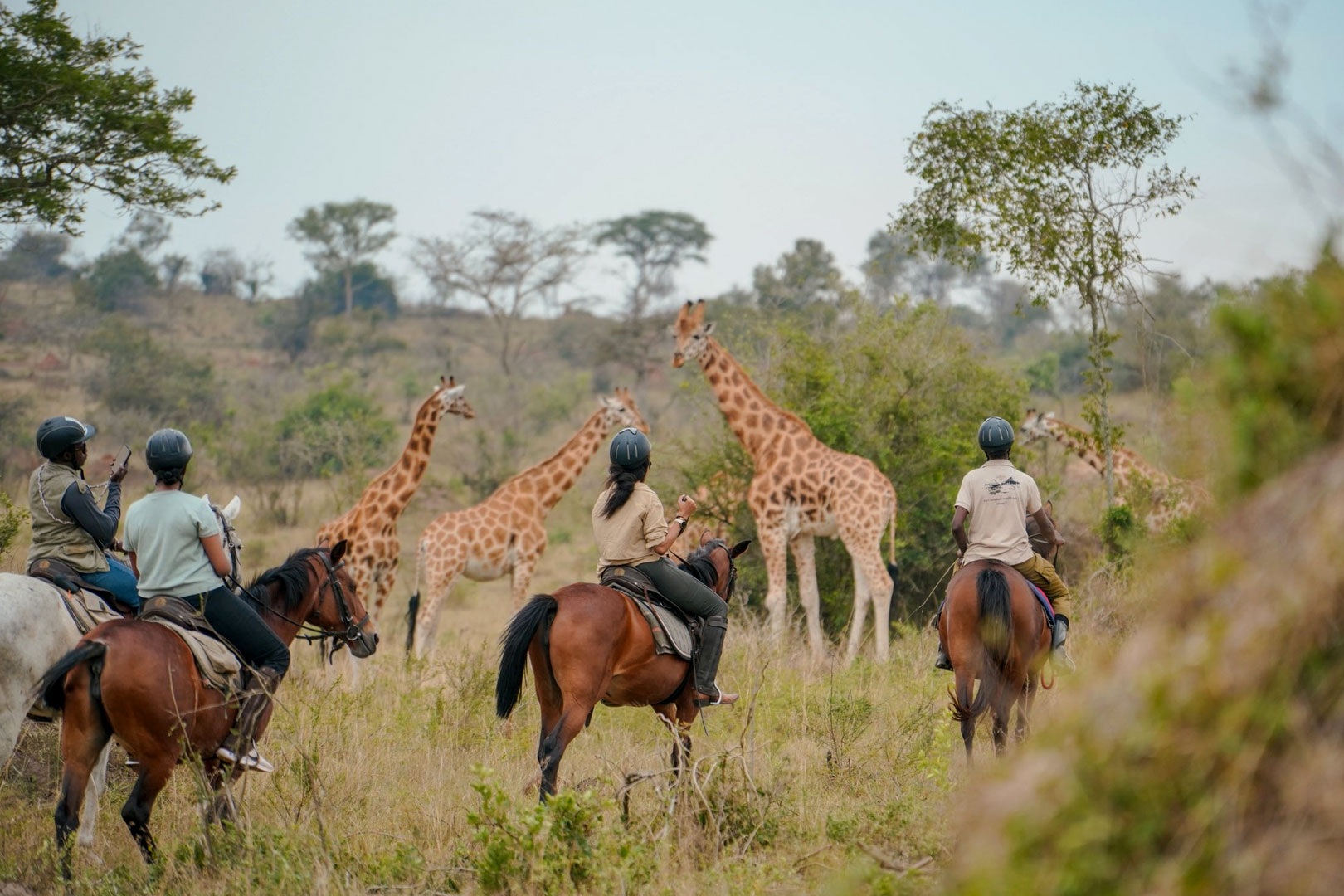
Lake Mburo National Park is Uganda’s hidden gem for active travelers—it is the only national park in the country where you can head out on both horseback and walking safaris. Because the open plains don't have lions or elephants roaming around, you get the rare freedom to step out of a safari vehicle and experience the African bush safely on your own two feet (or from the saddle).
2-days-lake-mburo-national-park-uganda-safari-holiday
3-days-lake-mburo-national-park-cycling-game-drive-and-horseback-riding
3-days-queen-elizabeth-national-park-and-lake-mburo-national-park-safari
3-days-semuliki-national-park-and-hot-springs-uganda-safari-vacation
4-days-best-gorilla-trekking-and-safari-in-uganda-lake-mburo-national-park
4-days-chimpanzee-tracking-in-lake-mburo-national-park-and-lake-mburo-safari
Why Lake Mburo Stands Out
· One-of-a-Kind Horseback Safaris: It’s the single park in Uganda that allows horseback riding, run through Mihingo Lodge. They offer everything from gentle short rides for beginners to overnight bush-camping trips for experienced riders, letting you trot right alongside wild herds without scaring them off.
· Up-Close Walking Safaris: Armed Uganda Wildlife Authority (UWA) rangers lead you on foot right into the animals' natural habitat. Without engine noise or a metal frame surrounding you, every rustle in the grass feels whole lot more exciting.
· Thriving Plains Wildlife: Animals here are surprisingly relaxed around people on foot or horse. You can quietly approach large groups of zebra, impala, eland, topi, Nubian giraffes, warthogs, and buffalo.
· Super Easy to Reach: Tucked away in western Uganda, it’s only a 3- to 4-hour drive from Kampala. That makes it the closest savanna park to the capital and the perfect place to stretch your legs on the way to gorilla tracking in Bwindi.
Practical Planning Details
· Best Time to Go: Aim for the dry seasons (December to February and June to September). The trails are much firmer, and wildlife clusters around the lake and waterholes, making them way easier to spot.
· Costs to Expect: Beyond the standard daily park entry fees ($40 for foreign non-residents, $30 for foreign residents, and UGX 20,000 for East African citizens), guided walking safaris usually run around $15–$30 per person. Horseback excursions generally start between $40 and $60 depending on how long you stay out.
Other Parks for Walking Safaris
While Lake Mburo holds the monopoly on horseback safaris, several other flagship parks give you a chance to lace up your boots and explore on foot:
· Murchison Falls National Park: Famous for its roaring waterfall where the Nile squeezes through a narrow gorge. Guided nature walks here take you along scenic riverbanks and through savanna woodlands teeming with birdlife.
· Queen Elizabeth National Park: Sets a classic backdrop with crater lakes and sprawling savannas. You can take guided walks through designated zones like the Kyambura Gorge or Maramagambo Forest.
· Kidepo Valley National Park: Tucked into the rugged, far-northeastern corner of the country. Guided walks through the open valley floor give you an untouched, raw wilderness experience far away from tourist crowds.
· Kibale National Park: The ultimate choice if you want dense rainforest. Instead of open plains, walking here means stepping beneath a deep canopy to track chimpanzees and spot a massive variety of primates.
Which Ugandan national park offers both horseback and walking safaris?
Lake Mburo National Park is the only national park in Uganda where you can enjoy both horseback safaris and walking safaris. Because it lacks lions and elephants on its open plains, exploring outside a vehicle feels safer and less disruptive to wildlife. Stepping onto the trails or riding through the savanna lets you connect with the bush at a slower, more personal pace. Instead of looking through tinted windows, you hear birds calling, grass brushing, and hooves or boots moving across open ground. For travelers who love active exploration, that combination makes Lake Mburo genuinely special and memorable.
Why does the absence of lions and elephants matter on foot or horseback?
Without resident lions or elephants roaming the open savanna, walking and horseback safaris in Lake Mburo National Park are much safer for visitors on foot or in the saddle. Large predators and massive elephants pose higher risks when encountered without a vehicle barrier. While wildlife still demands caution—especially around buffaloes, hippos, or large herds—the absence of lions and elephants makes close-range exploration far more relaxed. Guides can lead groups thoughtfully through grasslands and woodlands while keeping everyone safe. For travelers who want the thrill of being outside a car without constant high-danger tension, this balance gives real peace of mind.
Who operates the horseback safaris at Lake Mburo National Park?
Mihingo Lodge operates the horseback safaris in and around Lake Mburo National Park. Perched near the park on a rocky kopje, the lodge maintains horses and ponies used for guided rides across rolling hills, bushland, and open plains. Because the horses are accustomed to the local environment and wildlife, they help riders move quietly through the landscape. Booking ahead is smart since horse numbers and guide slots are limited. Having an experienced team handle the mounts and routes makes the ride smooth whether you are new to horses or already comfortable in the saddle.
What skill levels are welcome on horseback safaris?
Horseback safaris at Lake Mburo cater to a wide range of experience levels, from beginners to seasoned riders. Shorter rides suit newcomers and families looking for a gentle introduction, while longer excursions appeal to more confident riders ready for extended time in the saddle. Guides match riders to suitable horses based on experience, comfort, and weight limits. You do not need to be an expert equestrian to enjoy the calm rhythm of a guided ride. Clear instructions, helmets, and attentive guides help first-timers feel supported while giving experienced riders engaging terrain.
What makes walking safaris in Lake Mburo so engaging?
Walking safaris in Lake Mburo put you right inside the landscape with no engine hum or metal frame between you and nature. Armed Uganda Wildlife Authority rangers lead the walks, sharing insights on tracks, plants, and animal behavior along the way. Every sound in the tall grass or woodland feels closer and more immediate when you are moving on foot. You notice smaller details—fresh spoor, bird calls, and shifting breezes—that often pass by too fast during a drive. It is an unhurried, immersive way to feel the rhythm of the savanna.
Which wildlife species can you spot in Lake Mburo?
Lake Mburo is home to Burchell's zebras, impalas, elands, topis, Nubian giraffes, warthogs, and buffaloes. Moving quietly on foot or horseback often lets you observe these plains animals without startling them as easily as a loud vehicle might. Elands, the largest antelopes, and topis add great variety alongside sleek zebras and alert impalas. Giraffes tower over the acacia scrub, while warthogs trot off with tails up. Seeing these animals go about their day up close feels natural and rewarding.
How easy is it to reach Lake Mburo from Kampala?
Lake Mburo National Park is roughly a three- to four-hour drive from Kampala in western Uganda. That makes it the closest savanna park to the capital, saving you long transit days right at the start of a trip. Many travelers use it as an easy weekend escape or a natural stopover on the way to Bwindi Impenetrable Forest. Breaking up a long drive into western Uganda with savanna wildlife and fresh air feels refreshing. It lets you ease into your safari rhythm without spending an entire day on the road.
When is the best time to visit Lake Mburo?
The dry seasons—from December to February and June to September—are generally the best times to visit Lake Mburo. During these drier months, trails are firmer and easier to walk or ride, and animals often gather near lakes and waterholes. Clearer sightlines and thinner foliage also make spotting wildlife simpler. Rainy periods can still offer lush scenery and fewer crowds, though muddy paths and taller grass change the feel. Planning around the dry months gives you reliable footing and great wildlife viewing.
How much do park entry fees cost at Lake Mburo?
Standard daily park entry fees for Lake Mburo National Park are US$40 for foreign non-residents, US$30 for foreign residents, and UGX 20,000 for East African citizens. Entry fees are separate from extra activities like guided walks or horseback rides. Checking current Uganda Wildlife Authority tariffs before you travel is always wise in case rates update. Budgeting for entry fees upfront keeps your trip costs clear and predictable. Once inside, you can tailor your day around the activities that excite you most.
How much do walking and horseback safaris typically cost?
Guided walking safaris at Lake Mburo typically cost around US$15 to US$30 per person, on top of park entry fees. Horseback safaris generally start around US$40 to US$60 and can rise depending on ride length, route, and whether you stay at the operating lodge. Exact prices vary by duration, group size, and operator terms. Confirming rates in advance helps you avoid surprises and lock in your preferred slot. Compared with many big-ticket safaris, these active options offer strong value.
Can you do horseback safaris in other Ugandan national parks?
No other national park in Uganda offers horseback safaris, making Lake Mburo unique in that regard. If riding through wild African bush is high on your wish list, Lake Mburo is the place to go in Uganda. Other parks shine in different ways, from boat cruises to mountain and forest adventures. Knowing this up front helps you build a route that matches your priorities. If horseback riding matters most, plan your itinerary around Lake Mburo early.
What makes Murchison Falls National Park good for walking?
Murchison Falls National Park combines dramatic river and waterfall scenery with savanna and woodland habitats. Guided walks here let you explore scenic spots along the Nile and through grassy or wooded areas rich with birds. Hearing the powerful rush of water where the river forces through a narrow gorge adds unforgettable drama. Walking in a park known for big game and sweeping landscapes feels grand and adventurous. It pairs well with boat trips and game drives for a varied itinerary.
Where can you go on guided walks in Queen Elizabeth National Park?
Queen Elizabeth National Park offers guided walks in designated areas such as Kyambura Gorge and Maramagambo Forest. The park spans crater lakes, wetlands, and open savanna, giving walkers varied terrain and rich ecosystems. Exploring a sunken gorge or forest trail adds a different dimension to classic savanna views. Because the park hosts major wildlife like buffaloes, lions, and leopards, walks follow set rules and routes. It gives active travelers a chance to experience diverse habitats in one region.
Why choose Kidepo Valley National Park for a walking safari?
Kidepo Valley National Park sits in a remote, rugged corner of northeastern Uganda, offering sweeping valley views and quiet wilderness. Guided walks on the valley floor feel far removed from crowds and everyday busyness. The dramatic mountains and wide open spaces give every step a sense of frontier scale. Reaching Kidepo takes extra effort, which is part of its appeal for adventurous travelers. If you want raw scenery and solitude on foot, it stands out.
How is walking in Kibale National Park different from savanna walks?
Walking in Kibale National Park means stepping into a lush tropical rainforest rather than open savanna plains. Trails wind beneath a thick canopy where chimpanzee tracking and forest primate spotting take center stage. Instead of wide-angle views of grazing herds on open grass, you listen for calls in the trees and watch movement overhead. Cool shade, dense greenery, and rich primate life shape the entire experience. It is an ideal contrast if you want rainforest walks alongside savanna trips.
Booking horse back riding in lake Mburo with us Roads of Adventure safaris
To book an unforgettable horseback safari in Lake Mburo National Park, team up with Roads of Adventure Safaris. We coordinate your park entry, arrange seamless ground transport from Kampala, and secure your riding slots with Mihingo Lodge to match your experience level. Whether you want a gentle morning ride alongside zebras or an adventurous bush-camping trek, we craft a tailor-made itinerary for your journey. Contact Roads of Adventure Safaris today to lock in your African adventure!