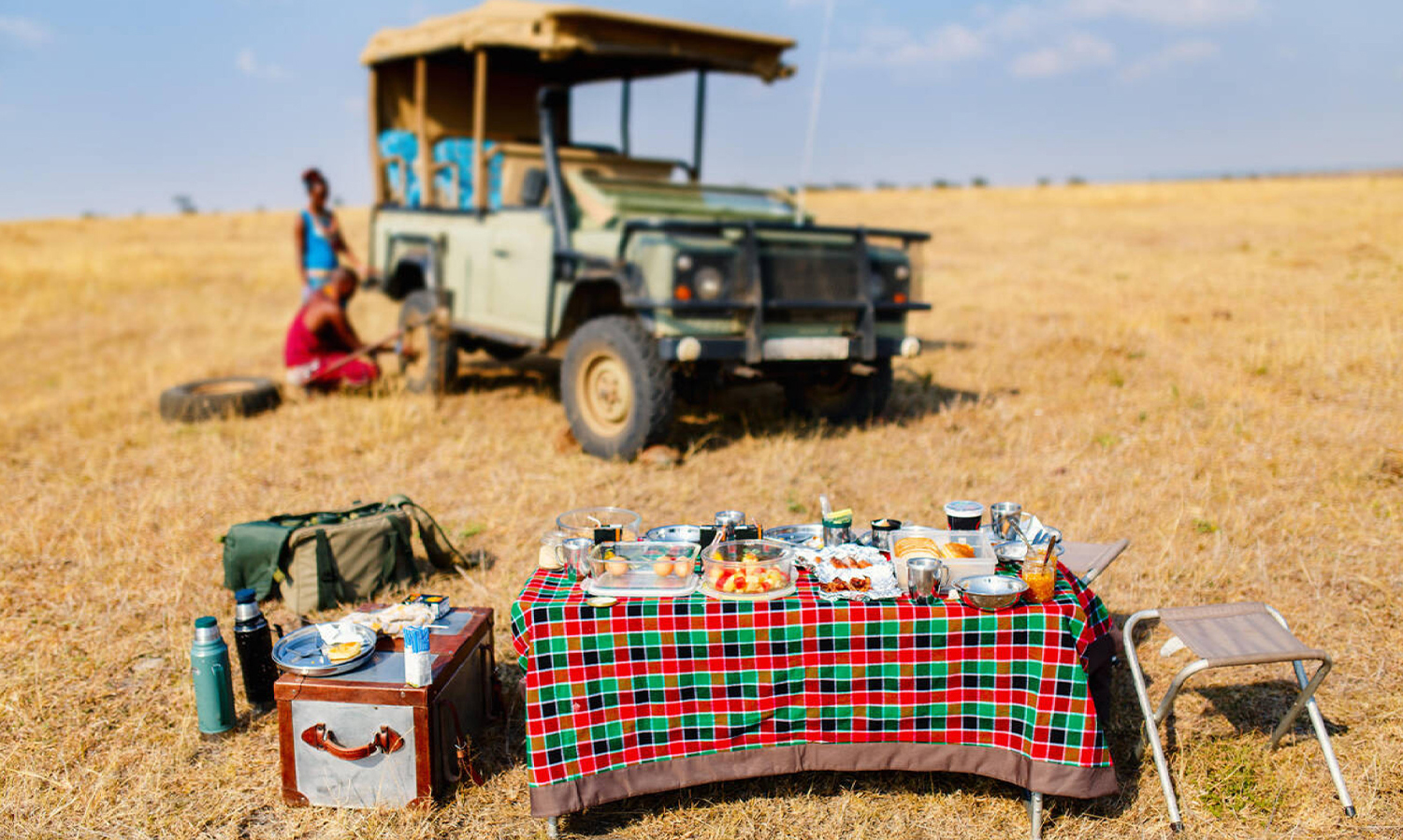
A six-day Kenya safari provides an immersive journey into distinct East African ecosystems. Standard itineraries typically combine three premier locations: Maasai Mara National Reserve, renowned for the Great Migration and dense predator populations; Amboseli National Park, famous for its free-ranging elephant herds set against the snow-capped peak of Mount Kilimanjaro; and Lake Nakuru National Park, which shelters endangered black and white rhinos alongside migrating flamingo flocks
12-days-lake-nakuru-masai-mara-central-serengeti-ngorongoro-crater-amboseli-kenya-tanzania-safari
11-days-ultimate-kenya-tanzania-safari-combined-tour
9-days-kenya-wildlife-safari-in-masai-mara-and-uganda-primate-safari-tour
9-days-photography-kenya-tanzania-safari-holiday-vacation
8-days-masai-mara-lake-nakuru-amboseli-and-mombasa-beach-holidays
7-days-perfect-kenya-wildlife-safari-and-optional-hot-air-balloon-safari
6-days-circuit-kenya-safari-to-masai-mara-lake-nakuru-and-amboseli-park
4-days-best-luxury-kenya-safari-to-lake-nakuru-and-masai-mara-safari-tour
Amboseli National Park (Days 1–2)
Situated at the base of Mount Kilimanjaro, Amboseli National Park covers approximately  of open savannahs, acacia woodlands, and wetland swamps. The park is world-renowned for its dense, free-ranging elephant population—home to over 1,600 individuals—often captured on camera with the snow-capped peak of Kilimanjaro as a backdrop.
During a two-day itinerary, game drives concentrate around the Enkongo Narok and Ol Okenya swamps, where subterranean snowmelt from the mountain creates permanent water sources. These wetlands attract large herds of buffaloes, hippos, and zebra families, while predators such as lions, cheetahs, and hyenas patrol the surrounding plains. Amboseli is also designated as an Important Bird Area (IBA), supporting over 400 species including pelicans, flamingos, and kingfishers. A visit to Observation Hill provides a 360-degree view across the marshes and seasonal lake bed. Cultural visits to neighboring Maasai manyattas (villages) are frequently integrated, offering insight into traditional pastoral lifestyles and local community conservation efforts.
Lake Nakuru National Park (Day 3)
Located in the Great Rift Valley, Lake Nakuru National Park spans roughly  surrounding a shallow alkaline soda lake. Long celebrated for the vast flocks of lesser and greater flamingos that line its shores, the park's algae levels fluctuate based on rainfall, drawing large concentrations of waterbirds, pelicans, and cormorants.
Beyond birdlife, Lake Nakuru is one of Kenya’s principal wildlife sanctuaries for endangered species. It serves as a fortress for both black and white rhinos, offering high-probability sightings within a secure, fenced sanctuary. The park’s euphorbia forests and acacia woods are prime habitat for the rare Rothschild's giraffe, tree-climbing lions, leopards, and large herds of Cape buffalo. A single day spent navigating the circuit around the lake includes vantage points such as Baboon Cliff and Lion Hill, as well as a stop at Makalia Falls. The compact nature of the park ensures high wildlife density and efficient game viewing before moving west toward the Mara.
Maasai Mara National Reserve (Days 4–6)
Spanning roughly  in southwestern Kenya, the Maasai Mara National Reserve forms the northern continuation of the Serengeti ecosystem. It is globally recognized for holding one of the highest concentrations of terrestrial wildlife and big cats on the continent.
Between July and October, the reserve hosts the Great Migration, where over 1.5 million wildebeest, zebras, and gazelles move across the Mara River in search of fresh grazing grounds. These river crossings present high-stakes predator-prey dynamics involving Nile crocodiles and waiting prides of lions. Over three days, morning and afternoon game drives traverse the reserve’s sweeping open grass plains and riverine woodlands. Visitors regularly spot all of the "Big Five" (lion, leopard, elephant, buffalo, and rhino) alongside cheetahs, spotted hyenas, and hippos. Hot-air balloon safaris at dawn and bush walks in adjacent conservancies provide varied perspectives of this iconic East African savannah
Alternative Southern Routes
Tsavo East National Park
Covering over  , Tsavo East is one of Kenya’s oldest and largest national parks, characterized by semi-arid plains, scrublands, and the vast Yatta Plateau—the world’s longest lava flow (
 ). The park is famous for its iconic "red elephants," which coat their skin in the region's oxide-rich red dust as a natural defense against parasites and intense solar heat.
Historically renowned for the legendary "Man-Eaters of Tsavo"—a pair of maneless lions that terrorized railway workers in 1898—the park remains a stronghold for large lion prides, cheetahs, leopards, and wild dogs. Key geographical features include the Galana River and Lugard Falls, where water carves through rock formations into rapids inhabited by crocodiles and hippos. The Aruba Dam, constructed across the Voi River, creates a central watering hole that concentrates massive herds of buffaloes, zebras, waterbucks, and fringe-eared oryx during dry spells.
Tsavo West National Park
Spanning approximately  , Tsavo West features a dramatically varied terrain of acacia woodlands, rocky ridges, volcanic cones, and recent lava beds. The landscape was shaped by geologically recent volcanic activity, most notably seen at the black basalt fields of the Shetani Lava Flows, which formed roughly 200 years ago.
A major highlight of Tsavo West is Mzima Springs, a series of natural freshwater springs refilled daily by tens of millions of gallons of water filtered through underground volcanic rock from the Chyulu Hills. An underwater glass viewing hide allows visitors to observe hippos, Nile crocodiles, and fish swimming in clear waters. The park also houses the Ngulia Rhino Sanctuary, a heavily guarded  fenced area dedicated to protecting the endangered black rhinoceros. Tsavo West's rugged topography offers superior landscape views and birdwatching, supporting over 500 recorded species.
Which national parks are typically included in a standard 6-day Kenya safari?
A standard 6-day Kenya safari generally covers three of the country's most iconic wildlife destinations: Amboseli National Park, Lake Nakuru National Park, and the Maasai Mara National Reserve. This route forms a circuit starting south from Nairobi toward the Tanzanian border, moving northwest into the Great Rift Valley, and concluding in the southwestern plains. Travelers spend two days in Amboseli exploring its swamp-fed ecosystems, one day at Lake Nakuru taking in its birdlife and rhino sanctuaries, and three days in the Maasai Mara pursuing big cats and plains game. Alternative routes starting from coastal hubs like Mombasa swap Nakuru and the Mara for Tsavo East and Tsavo West National Parks.
What makes Amboseli National Park's geography and ecosystem unique?
Amboseli National Park covers approximately within a semi-arid basin at the foot of Mount Kilimanjaro. Despite receiving minimal direct rainfall, the park thrives on subterranean snowmelt flowing underground from the mountain, which surfaces as permanent freshwater swamps like Enkongo Narok. These vibrant wetlands contrast sharply with the dry, dusty bed of Lake Amboseli, creating a diverse landscape of savannahs, acacia woodlands, and open marshes. This unique hydrology supports lush vegetation year-round, turning the park into a critical refuge for wildlife during dry seasons and creating one of Africa’s most visually striking ecosystems.
How large is Amboseli National Park, and where is it located?
Amboseli National Park spans an area of ( ) in southern Kenya's Kajiado County, sitting right along the border with Tanzania. It lies roughly
  (
( ) southeast of Nairobi. While the protected national park itself is compact, it serves as the core of a much broader
  cross-border ecosystem. This positioning at the northern base of Mount Kilimanjaro gives the park its famous geographical setting, making it accessible via a scenic four-to-five-hour drive or a short domestic flight from the capital.
What wildlife can visitors expect to see during two days in Amboseli?
Amboseli is globally renowned for its massive, free-ranging African elephant population, home to more than 1,600 habituated individuals. Beyond elephants, the park's permanent swamps draw dense populations of Cape buffaloes, hippos, Grant's and Thomson's gazelles, impalas, and zebras. Predators like lions, cheetahs, spotted hyenas, and black-backed jackals frequent the open plains and swamp edges looking for prey. The park is also a sanctuary for over 400 bird species, ranging from large waterbirds like pelicans and crowned cranes to birds of prey like African fish eagles.
Why are the Enkongo Narok and Ol Okenya swamps important to Amboseli?
The Enkongo Narok and Ol Okenya swamps act as the lifeblood of Amboseli National Park. Fed continuously by underground aquifers running down from Mount Kilimanjaro's ice caps, these wetlands provide green forage and fresh drinking water even during peak droughts. Because the surrounding plains can turn exceedingly dry, animals congregate around these two marshes in astonishing numbers. They serve as primary feeding grounds for elephants, wallowing spots for hippos and buffaloes, and prime hunting grounds for big cats that use the thick marsh vegetation as cover.
What cultural activities can be integrated into an Amboseli visit?
Visitors to Amboseli can enrich their safari by visiting local Maasai manyattas (traditional villages) located in the community conservancies bordering the park. These cultural visits offer direct interaction with the Maasai people, who have coexisted with local wildlife for generations. Guests are welcomed with traditional dancing and singing, shown inside semi-nomadic mud-and-timber homesteads, and introduced to ancient customs, beadwork crafts, and bush survival techniques. These visits also highlight modern community-based conservation initiatives, demonstrating how tourism revenue directly supports local schools and healthcare.
What makes Lake Nakuru National Park an essential safari stop?
Lake Nakuru National Park offers a completely different landscape compared to the open savannahs of Amboseli or the Mara. Nestled in the floor of the Great Rift Valley, it surrounds a shallow alkaline soda lake framed by steep escarpments, euphorbia forests, and acacia woodlands. Its relatively compact size () means wildlife is densely concentrated, making game viewing highly efficient. It serves as one of Kenya’s most successful conservation sanctuaries for endangered rhinos and Rothschild's giraffes, offering a tranquil, forested stopover that balances out a multi-day itinerary.
How large is Lake Nakuru National Park, and what is its setting?
Lake Nakuru National Park covers approximately ( ), with the lake itself taking up roughly a third of the total park area depending on seasonal water levels. It sits at an elevation of
  above sea level in Nakuru County, about
  northwest of Nairobi. The park is fully fenced to protect its high concentration of vulnerable wildlife from human encroachment and poaching, creating a controlled, sanctuary-like environment surrounded by dramatic Rift Valley topography. Why is Lake Nakuru famous for its birdlife and flamingos?
Lake Nakuru’s soda-rich water creates the ideal breeding environment for Spirulina platensis, a microscopic blue-green alga that serves as the primary food source for lesser flamingos. Historically, this abundant food source attracted millions of flamingos, painting the shoreline bright pink. While changing water chemistry and rising lake levels cause flamingo populations to fluctuate and spread out among neighboring Rift Valley lakes, Nakuru remains a world-class birding destination. It hosts over 400 species, including greater flamingos, pelicans, cormorants, and a wide variety of migratory waders.
What role does Lake Nakuru play in rhino conservation in Kenya?
Lake Nakuru National Park was designated as Kenya’s first national rhino sanctuary in 1984, playing a pivotal role in saving the species from near extinction. The park’s secure perimeter fence and dedicated anti-poaching patrols create a safe breeding haven for both the critically endangered black rhino and the southern white rhino. Today, Nakuru holds one of the highest densities of rhinos in East Africa. Visitors driving through the park’s fever-tree forests and lakefront grasslands enjoy a remarkably high probability of spotting these prehistoric mammals grazing in the open.
Which major animals besides birds and rhinos live in Lake Nakuru?
Beyond its birdlife and rhinos, Lake Nakuru supports a thriving population of large mammals. The park’s acacia woods provide a primary refuge for the endangered Rothschild's giraffe, re-introduced to protect the subspecies. Large herds of Cape buffalo roam the grasslands alongside waterbucks, impalas, zebras, and warthogs. Predators are well-represented too; the park is famous for its tree-climbing lions—which frequently rest on the lower branches of yellow-barked acacia trees—as well as leopards, spotted hyenas, and elusive python snakes around rocky outcrops.
What are the key scenic vantage points within Lake Nakuru National Park?
Lake Nakuru features several elevated lookouts that offer panoramic views of the entire Rift Valley basin. Baboon Cliff is the most famous, located along the western wall, where visitors can disembark from their vehicles to gaze down across the full expanse of the lake and observe resident baboon troops. Lion Hill provides sweeping views of the eastern shores and fever-tree woodlands. Near the southern boundary, Makalia Falls offers a serene spot where the Makalia River cascades over a rocky cliff face, providing a picturesque picnic backdrop during the wet season.
How large is the Maasai Mara National Reserve, and where is it located?
The Maasai Mara National Reserve covers approximately ( ) in Narok County, southwestern Kenya. It lies roughly
  southwest of Nairobi, taking about five to six hours by road or 45 minutes by air. The reserve sits within the northern portion of the larger Mara-Serengeti ecosystem, bounded by the Esoit Oloololo Escarpment to the west and bordering Tanzania’s Serengeti National Park directly to the south. Its sprawling terrain consists predominantly of open, rolling grasslands dotted with iconic flat-topped acacia trees.
What is the Great Migration, and when does it occur in the Maasai Mara?
The Great Migration is the world's largest overland wildlife movement, involving over 1.5 million wildebeest, 250,000 zebras, and hundreds of thousands of gazelles traveling in a continuous search for fresh pasture. The herds arrive in the Maasai Mara from Tanzania's Serengeti around July and remain in the reserve through October. This seasonal surge turns the Mara's plains into a bustling arena of activity, making it the prime time for safari-goers to witness massive herds grazing across the sweeping savannahs.
What makes the Mara River crossings during the migration so famous?
The Mara River crossings represent the most dramatic and high-stakes chapter of the Great Migration. To access the fresh green grass on the northern bank, the migrating herds must plunge into the deep, fast-flowing currents of the Mara River. Waiting beneath the surface are giant Nile crocodiles, while prides of lions and leopards lurk along the riverbanks. The sheer panic, stampedes down steep dirt cliffs, and raw survival dynamics create an intense natural spectacle that attracts wildlife photographers and documentary crews from across the globe.
What kind of predator sightings can visitors expect in the Maasai Mara?
The Maasai Mara boasts the highest concentration of big cats and terrestrial predators in Kenya. It is world-famous for its healthy, territorial lion prides, which are frequently seen hunting on the open plains or resting on granite kopjes. Cheetahs thrive in the short-grass environments, using their speed to hunt gazelles, while leopards inhabit the dense riverine forests along the Talek and Mara Rivers. Spotted hyenas, jackals, and wild dogs also patrol the reserve, leading to frequent predator interactions and scavengers competing over kills.
Can you spot all of the "Big Five" in the Maasai Mara?
Yes, the Maasai Mara is one of the best places in Africa to see all members of the "Big Five": the lion, leopard, African elephant, Cape buffalo, and black rhinoceros. Lions, elephants, and buffaloes are abundant and spotted on almost every game drive. Leopards are regularly tracked along forested riverbanks. The black rhino is the most elusive of the five, but small populations inhabit the southern sectors and the Mara Triangle near the Tanzanian border, offering patient visitors a chance to complete the full checklist.
What unique non-game-drive activities are available in the Mara?
Beyond traditional 4x4 game drives, the Maasai Mara offers extraordinary alternative ways to experience the wilderness. Early morning hot-air balloon safaris allow guests to float silently over the plains at sunrise, concluding with a champagne bush breakfast upon landing. In the private conservancies surrounding the main reserve, night game drives provide a rare look at nocturnal creatures like aardvarks, bushbabies, and hunting leopards. Guided walking safaris accompanied by armed Maasai warriors also offer an intimate, ground-level perspective on track identification and local flora.
How do private conservancies fit into the Maasai Mara ecosystem?
Surrounding the core Maasai Mara National Reserve are numerous community-owned private conservancies, such as Mara Naboisho, Olare Motorogi, and Ol Kinyei. These conservancies expand the protected wildlife habitat by over 100,000 hectares through land lease agreements with local Maasai landowners. They limit tourist and vehicle density, strictly regulate off-road driving, and reinvest safari revenues back into community development. Staying in a conservancy grants visitors exclusive access to pristine wildlife areas while directly funding local education, healthcare, and sustainable land management.
Where is Tsavo East National Park located, and how big is it?
Tsavo East National Park is situated in southern Kenya, roughly midway between Nairobi and the coastal city of Mombasa. Spanning a massive  (
( ), it holds the title of Kenya’s largest individual national park. Separated from Tsavo West by the main A109 highway and railway line, Tsavo East consists largely of vast, low-lying semi-arid plains and scrubland, offering an expansive wilderness feel that feels far removed from busier safari parks.
Why are the elephants in Tsavo East called "red elephants"?
The "red elephants" of Tsavo East are not a distinct subspecies, but rather standard African bush elephants that take on a striking reddish hue. The park's soil is exceptionally rich in volcanic iron oxide dust. To protect their sensitive skin from the scorching sun, insect bites, and heat, the elephants regularly wallow in muddy waterholes and dust-bathe by spraying this fine red soil over their bodies. Once the dust dries, it gives their skin an iconic, vibrant brick-red appearance unique to the region.
What is the historical legend of the "Man-Eaters of Tsavo"?
The legend of the "Man-Eaters of Tsavo" dates back to 1898 during the construction of the Uganda Railway over the Tsavo River. A pair of maneless male lions began raiding the workers' camps at night, dragging laborers from their tents and killing dozens of people over several months. The attacks halted construction until the chief engineer, Lieutenant-Colonel John Henry Patterson, eventually hunted and shot both lions. Today, the tale remains one of Tsavo's most famous historical chapters, celebrated in books, museum exhibits, and film adaptations.
What are the key geographic landmarks inside Tsavo East?
Tsavo East features several remarkable geological and water features. The Yatta Plateau, stretching over , stands as the world’s longest cooling lava flow, forming a imposing backdrop along the park's western horizon. The Galana River cuts through the arid plains, creating Lugard Falls—a series of white-water rapids where the river forces its way through narrow rock fissures into pools packed with crocodiles. Additionally, the man-made Aruba Dam along the Voi River acts as a critical watering hole that draws thousands of animals during dry spells.
Where is Tsavo West National Park located, and how does its size compare?
Tsavo West National Park lies adjacent to Tsavo East, stretching southwest toward the Tanzanian border and the Chyulu Hills. It covers approximately ( ), making it the second-largest national park in Kenya. While smaller than its eastern counterpart, Tsavo West features a much more rugged, hilly, and vegetated landscape, combining dense acacia scrub, granite outcrops, extinct volcanic cones, and ancient lava beds.
What caused the dramatic volcanic landscapes of Tsavo West?
The dramatic topography of Tsavo West was sculpted by geologically recent volcanic activity tied to the formation of the Great Rift Valley and the neighboring Chyulu Hills. Volcanic eruptions occurring over the last few centuries spewed ash and basaltic lava across the terrain, creating rolling black hills, cinder cones, and deep lava tubes. The most famous example is the Shetani Lava Flows—a vast, barren expanse of jagged black basalt rock formed roughly 200 years ago that remains largely uncolonized by vegetation today.
What makes Mzima Springs a unique feature within Tsavo West?
Mzima Springs is a natural oasis in the middle of Tsavo West’s dry scrubland, discharging over 250 million liters of crystal-clear water every day. The springs are fed by underground rivers flowing from the nearby Chyulu Hills, where rainwater filters down through porous volcanic ash before resurfacing here. Surrounded by lush date palms and raffia forests, Mzima Springs features a unique underwater glass viewing chamber. Visitors can walk down into the hide to observe hippos submerged in clear water, alongside Nile crocodiles and schools of barbel fish.
How does the Ngulia Rhino Sanctuary contribute to black rhino survival?
Located within Tsavo West, the Ngulia Rhino Sanctuary is a heavily fortified, fenced enclosure built to protect the endangered black rhinoceros from poaching. Established in the late 20th century when black rhino numbers plummeted across Africa, the sanctuary provides a safe, monitored breeding ground featuring natural browse, artificial waterholes, and 24-hour ranger patrols. As the population within the sanctuary thrives, young rhinos are periodically released back into the wider, un-fenced areas of Tsavo West to re-establish wild populations.
How do travel times and logistics differ between the Central and Southern safari routes?
The Classic Central Route (Amboseli–Nakuru–Mara) requires longer overland drives connecting distant regions across central and western Kenya, often involving five-to-six-hour road transfers between parks unless internal flights are booked. In contrast, the Southern Route (Tsavo East–Tsavo West–Amboseli) is logistically smoother for travelers starting or ending their trip at coastal beach resorts in Mombasa or Diani. The southern parks sit closer together along the Nairobi-Mombasa corridor, reducing overall transit times and allowing a seamless land transition from safari game drives to coastal relaxation.
How do wildlife sightings compare between the Classic Route and the Southern Route?
The Classic Route delivers high-density wildlife viewing and classic open-savannah visibility. The Maasai Mara offers unrivaled big cat numbers and the Great Migration, while Lake Nakuru guarantees sightings of rhinos and waterbirds. The Southern Route offers a wilder, more remote safari experience with lower tourist numbers. While animals in Tsavo East and West are spread across much larger, denser landscapes—requiring more patience to track—the route rewards travelers with unique sightings like red-dusted elephants, gerenuks, fringe-eared oryx, and specialized landscape features like lava flows and subterranean springs.
Which 6-day Kenya safari itinerary is best suited for different types of travelers?
The Classic Central Route is ideal for first-time safari visitors, photographers, and travelers determined to check off the "Big Five" and witness vast migratory herds across wide-open plains. Its high animal concentrations deliver constant action. On the other hand, the Southern Route is perfectly suited for return safari-goers, nature lovers who appreciate rugged volcanic scenery, and travelers combining a safari with a beach holiday on Kenya's coast. It offers a quieter, off-the-beaten-path feel with dramatic landscapes and deep historical charm.
Booking 6-day Kenya safari with us Roads of Adventure safaris
Booking a 6-day Kenya safari with Roads of Adventure Safaris provides a highly tailored, immersive wildlife experience. Roads of Adventure Safaris is a fully registered, top-rated tour operator that specializes in comprehensive East African itineraries, utilizing professional English-speaking guides and comfortable 4x4 pop-top safari cruisers.
