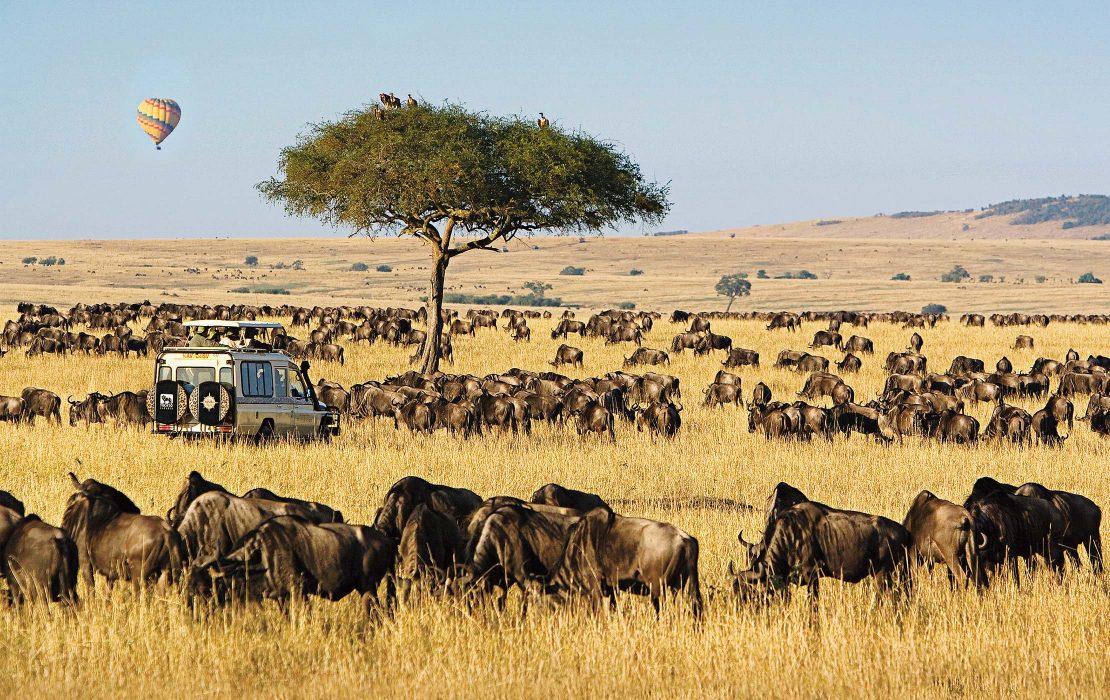
The Masai Mara isn’t just a destination on a map; it’s an living, unscripted wildlife spectacle that stays with you long after the dust settles. Spanning over 1,500 square kilometers of golden, undulating savannah in southwestern Kenya, this world-famous reserve offers front-row seats to nature’s greatest hits—from sleepy prides of lions basking under acacia shade to over 1.5 million wildebeest braving crocodile-infested rivers during the Great Migration. But how you choose to experience this raw wilderness makes all the difference. Whether you're gliding soundlessly over the plains at sunrise in a hot air balloon or tracking subtle leopard prints on foot alongside a local Maasai guide, every angle reveals a whole new layer of the bush. Ready to explore? Here is your complete guide to experiencing the legendary Masai Mara.
Popular Masai mara safari tour packages
15-days-luxury-kenya-safari-holiday-and-zanzibar-beach-holiday-combined-itinerary
14-days-best-of-kenya-safari-holiday-2-weeks-africa-kenya-safari-vacation
11-days-best-kenya-wildlife-safaris-and-kenya-beach-holiday-combo
9-days-luxury-africa-big-five-kenya-safari-itinerary
8-day-africa-safari-tour-to-masai-mara-safari-tour-serengeti-ngorongoro
7-days-masai-mara-safari-tour-and-serengeti-safari-tour-in-kenya-and-tanzania
6-days-kenya-safari-and-gorilla-tracking-vacation-in-rwanda
5-days-kenya-safari-holiday-to-diani-beach-kenya-beach-holiday
3-days-fly-in-masai-mara-safari-tour-package
4-days-masai-mara-and-lake-nakuru-kenya-safari-tour-package
1. 4x4 Game Drives (Morning, Full-Day, and Night)
Game drives form the core of any true Masai Mara safari, placing you right at eye level with the savannah's untamed drama. You’ll head out in specially adapted, heavy-duty 4x4 Toyota Land Cruisers or safari minivans outfitted with pop-up roofs that give you an unobstructed, 360-degree photography platform. The day usually kicks off before dawn around 6:00 AM, when the temperature hovers around a brisk  (
( ) and predators like lions and cheetahs are actively hunting. Morning and late-afternoon drives capture prime wildlife action, while full-day excursions wrap up with a packed picnic lunch enjoyed under the shade of an acacia tree right in the middle of the reserve.
While night drives are strictly forbidden inside the main National Reserve to protect wildlife, heading into adjacent private conservancies—such as Mara Naboisho or Olare Motorogi—unlocks an entirely different realm. Equipped with powerful red-filtered spotlights, a expert driver-guide and a local tracker help you hunt for secretive, nocturnal creatures like leopards, spotted hyenas, bat-eared foxes, and white-tailed mongooses. Navigating these rough trails across 12-hour game passes offers front-row seats to the raw, unscripted realities of the African bush.
2. Hot Air Balloon Safaris
Floating quietly above the vast Mara plains at sunrise is a bucket-list experience that transforms your entire perspective of the landscape. Your morning starts early with a 4:30 AM pick-up from your camp, delivering you to the launch site near sites like the Mara River or Little Governors' Camp while it’s still dark. As giant burners inflate the balloon canopy, you climb into the basket just as the eastern sky turns shades of pink and orange. Launching precisely at dawn, the balloon glides silently on thermal winds between 50 and 1,000 feet above the ground.
During the hour-long flight, you'll take in sweeping views of winding river courses, sleepy elephant herds, and thousands of wildebeest breaking into a gallop across the dew-dappled grass. The relative silence of the flight—broken only by the occasional roar of the burner—allows you to observe uninterrupted animal behavior from above. Upon landing gently on the open savannah, you are met by a ground crew setting up a white-linen bush breakfast complete with fresh tropical fruit, cooked-to-order eggs, and chilled champagne to toast a legendary morning.
3. Guided Walking Safaris
If game drives offer the blockbuster view of the Mara, a walking safari delivers an intimate, ground-level education in how the ecosystem truly functions. Stepping out on foot is prohibited within the state-managed National Reserve, so this experience is reserved for private conservancies bordering the main park. Led by an armed wildlife ranger and an expert local Maasai tracker, these slow-paced walks generally last 2 to 3 hours in the cool early morning air before the equatorial sun peaks.
Walking through the bush sharpens every sense. Without the shield of a vehicle, you learn to read the subtle signatures of the wild: identifying fresh lion tracks pressed into damp mud, interpreting the alarm calls of impalas, and discovering the medicinal uses of local plants like the tooth-brush bush (Salvadora persica). Your guide will decode termite mound architecture, explain the complex social dynamics of dung beetles, and teach you how to approach grazers while respecting their flight zones. It is a grounding, humbling activity that transforms you from a passive observer into an active participant in the wild landscape.
4. Maasai Cultural Village (Manyatta) Tours
A visit to a local Maasai village (Manyatta) brings a vital human connection to your safari, offering insight into a semi-nomadic pastoralist community that has coexisted alongside wild predators for centuries. Located just outside the reserve gates near Sekenani or Talek, these traditional homesteads are constructed in circular patterns enclosed by thick, thorny acacia fences (bomas) designed to keep livestock safe from lions and hyenas at night.
Upon arrival, villagers welcome you with the Adumu—the famous jumping dance performed by young Maasai warriors (Morans) singing rhythmic chants. Afterwards, a village host guides you inside a mud-and-thatch home (nkaji), crafted by Maasai women using earth, sticks, and cow dung, to discuss traditional life, cattle herding, and ancestral bush medicine. A typical visit lasts about 1 to 2 hours, with entry fees directly supporting local community development, water projects, and schools. Before departing, you can visit the central open market within the village to browse handmade beadwork, wooden carvings, and bright red shúkà blankets crafted by local women artisans.
5. Fly-In Safaris vs. Road Safaris
Choosing how you travel from Nairobi to the Masai Mara fundamentally shapes your trip budget, comfort, and timeline.
- Road Safaris: The overland route covers roughly 225 to 270 kilometers (140–170 miles) and takes about 5.5 to 6.5 hours depending on your destination gate. Departing Nairobi via the B3 highway, the drive winds down the dramatic escarpment of the Great Rift Valley—often stopping at a scenic viewpoint—before continuing through the regional hub of Narok Town. The final 70-kilometer stretch transitions to bumpy, unpaved dirt (murram) roads that provide a rugged, authentic taste of rural Kenya. It's the most budget-friendly choice and ideal if you enjoy scenic road trips.
- Fly-In Safaris: For those short on time or seeking convenience, bush flights depart from Nairobi’s Wilson Airport (WIL) and touch down at bush airstrips like Keekorok, Musiara, or Ol Kiombo in just 45 to 60 minutes. Flying cuts out hours of travel time, letting you land right in the middle of the action for an afternoon game drive. Just keep in mind that bush planes enforce a strict luggage cap of 15 kg (33 lbs) per person in soft-sided duffel bags.
What makes 4x4 game drives ideal for Mara safaris?
When you step into a custom 4x4 safari Land Cruiser, you are giving yourself the ultimate, versatile pass to the Masai Mara. These heavy-duty vehicles are built specifically to tackle the Mara’s rugged terrain, from deep rutted tracks to muddy river crossings around the Talek River. What really sets them apart is the pop-up roof design. Once you reach prime wildlife spots, the top lifts up, giving you a 360-degree, standing view for photography without any glass or metal obstructing your shot.
Game drives get you right down to eye level with Africa's apex predators. Whether you are tracking a pride of lions lounging near Lookout Hill or waiting patiently on the banks of the Mara River during the Great Migration, a 4x4 provides safety, comfort, and incredible range. Drivers carry two-way radios to communicate with other guides, meaning if a secretive leopard is spotted in a sausage tree five miles away, your driver can pivot instantly and get you there before the cat slips away into the thick brush.
How early do morning game drives start in the Mara?
Set your alarm clock early, because the magic of the Masai Mara happens at first light! Morning game drives typically launch right at 6:00 AM, just as the horizon begins to turn soft shades of amber and pink. The temperature is brisk—often hovering around ()—so wrapping yourself in a warm jacket or a traditional fleece blanket provided by your guide is a must.
This early start is intentionally timed to catch big cats while they are still active. Lions, cheetahs, and leopards prefer to hunt during the cool dawn hours before the intense equatorial sun bakes the plains. As you drive out across the dew-covered grass, you’ll catch predators returning from night hunts or patrolling their territories. Beyond the big cats, watching the savannah wake up—birds bursting into song from umbrella acacias and herds of gazelles shaking off the morning chill—is an unforgettable, peaceful experience that easily justifies the early wake-up call.
Can you do night game drives inside Masai Mara?
If you are staying strictly inside the main Masai Mara National Reserve, the simple answer is no—night drives are forbidden to protect wildlife and prevent human disturbance after dark. However, there is a fantastic loophole. If you base your stay in one of the private conservancies bordering the reserve, such as Mara Naboisho, Olare Motorogi, or Mara North, night game drives are fully permitted and highly recommended.
Stepping out into the savannah after the sun dips below the horizon reveals an entirely different world. Guided by a professional driver and a skilled Maasai tracker wielding a specialized, red-filtered spotlight, you'll scan the darkness for glowing eyes. Night drives give you a rare chance to see elusive nocturnal creatures that sleep through the day, including aardvarks, bat-eared foxes, white-tailed mongooses, and bushbabies. You might even stumble upon a lion pride actively stalking zebra under the stars or spot a leopard moving silently through the shadows—an edge-of-your-seat experience you simply can’t get during daylight hours.
What happens during a Mara hot air balloon safari?
A hot air balloon safari is the absolute crown jewel of aerial wilderness experiences. Your morning starts in the dark with a 4:30 AM transfer to the launch site near Little Governors' Camp or the Mara River. As the giant burners roar to life and inflate the balloon, you'll climb into the basket just in time for a dawn liftoff.
As you float upward, the world below quietly unfolds in sweeping panoramic beauty. Gliding silently on thermal winds anywhere from 50 to 1,000 feet up, you will watch giant herds of wildebeest and zebra streaming across the golden plains, elephants drinking at riverbends, and hippos returning to deep pools. The absolute tranquility—broken only by the occasional blast of the burner—offers a completely unique perspective on the scale of the ecosystem. After roughly an hour in the air, you land gently on the open savannah, where a attentive ground crew sets up a classic white-linen bush breakfast complete with tropical fruit, cooked-to-order eggs, and chilled champagne to toast your flight.
Where can you go on a guided walking safari?
To protect both tourists and wildlife, walking safaris are strictly prohibited within the boundaries of the main Masai Mara National Reserve. To experience the bush on foot, you need to base yourself at a camp located within the private conservancies surrounding the park, such as Mara Naboisho, Lemek, or Olare Motorogi.
Walking safaris are led by an armed Kenya Wildlife Service ranger alongside an expert local Maasai tracker who knows every inch of the terrain. Instead of rushing toward big game, these 2-to-3-hour morning walks slow the pace down dramatically. You'll focus on the fascinated finer details of the savannah that you completely miss from a vehicle: learning to read animal tracks in fresh dirt, identifying bird calls, discovering medicinal plants like the toothbrush bush (Salvadora persica), and understanding the incredible architecture of termite mounds. Walking through big game country sharpens your senses and creates a deeply grounding, intimate connection with the African wild.
What should you expect at a Maasai Manyatta tour?
A visit to a traditional Maasai village, known locally as a Manyatta, offers a meaningful window into a rich, semi-nomadic culture that has coexisted alongside wild predators for generations. Upon arriving at a village near the Sekenani or Talek gates, you are welcomed with traditional songs and the iconic Adumu—the famous jumping dance performed by young Maasai warriors (Morans).
A village host will guide you inside the thorny acacia perimeter fence (boma), built to protect livestock from lions at night. You’ll be invited inside a traditional mud-and-thatch home (nkaji) constructed by Maasai women using earth, sticks, and thatch. Here, you'll sit and chat about traditional pastoralist life, cattle herding customs, and age-old bush medicine. Visits generally last 1 to 2 hours, and the entry fee directly supports local village welfare, clean water initiatives, and schools. Before leaving, you can browse colorful handmade beadwork, jewelry, and bright red shúkà blankets crafted directly by the village women.
How long is the drive from Nairobi to Mara?
If you choose to travel overland, the road journey from central Nairobi to the Masai Mara covers roughly 225 to 270 kilometers (140 to 170 miles) and takes about 5.5 to 6.5 hours, depending on traffic and which entry gate you are heading to.
The route takes you out of the capital along the asphalt B3 highway, descending the dramatic escarpment of the Great Rift Valley where most drivers stop at a scenic viewpoint for photos. From there, you'll press on through the bustling town of Narok, which serves as the final major pitstop for fuel and snacks. The last 70 kilometers of the journey transition onto unpaved, dusty dirt roads (murram) that can make for a bumpy ride. While it is a long drive, traveling by road gives you a fantastic, authentic look at Kenya's changing rural landscapes, passing small farming villages, roadside markets, and Maasai herdsmen tending their cattle along the highway.
Why choose a fly-in safari to the Masai Mara?
For travelers short on time or looking to avoid hours of bumpy road transit, a fly-in safari is the ultimate convenience upgrade. Bush flights depart daily from Nairobi’s domestic hub, Wilson Airport (WIL), and land at small dirt airstrips inside the Mara—like Keekorok, Musiara, or Ol Kiombo—in just 45 to 60 minutes.
By flying, you effectively trade a half-day highway drive for an exhilarating short hop, soaring over the Great Rift Valley before touching down right in the middle of the wildlife action. Most luxury camps will have an open-sided 4x4 waiting at the airstrip, turning your transfer from the plane to the lodge into your very first mini-game drive. Flying maximizes every hour of your vacation, allowing you to easily squeeze in an afternoon game drive on the very day you arrive. Just keep in mind that small aircraft enforce a strict luggage limit of 15 kg (33 lbs) per person in soft duffel bags.
What wildlife will you see during full-day game drives?
Committing to a full-day game drive lets you venture far beyond the crowded central tracks into the quiet, remote corners of the reserve. Packing a picnic lunch inside your 4x4 allows you to stay out in the bush from morning until late afternoon without needing to return to camp for lunch.
This extended time gives you a front-row seat to the full diversity of the Mara's ecosystems. You can spend hours tracking big cats, following lion prides as they rest in the shade of sausage trees, or watching cheetahs scan the horizon from atop ancient termite mounds. Full-day drives are especially brilliant during the migration season, letting you post up near the Mara or Talek rivers to wait for massive herds of wildebeest and zebra to cross. Along the way, you’ll encounter huge elephant families, towering giraffes browsing acacias, pods of hippos in river bends, and vast numbers of plains game grazing across the endless open grassland.
How do private conservancies enhance your Masai Mara safari?
Staying in a private conservancy—such as Mara Naboisho, Olare Motorogi, or Ol Kinyei—takes an ordinary safari and turns it into an exclusive, low-density wilderness retreat. These protected areas are lands leased directly from local Maasai landowners, creating a winning model where wildlife conservation directly supports local families.
The primary advantage for travelers is exclusivity and flexibility. While the main reserve strictly limits vehicles to established dirt tracks and enforces daytime hours, private conservancies allow off-road driving to follow major predator sightings. They also cap the number of safari vehicles permitted at any single animal sighting, ensuring you never feel crowded. Best of all, conservancies unlock special activities that aren't allowed inside the national reserve, such as night game drives with spotlights, off-path guided bush walks, and authentic night camping under the stars. It delivers a quiet, deeply immersive, and crowd-free safari experience while contributing directly to community-based conservation.
Booking Kenya safari tour to Masai mara with us Roads of Adventure safaris
Planning an unforgettable African getaway requires seamless logistics, and booking luxury Kenya safari holidays with Roads of Adventure Safaris ensures every single detail is handled with true expert care. Whether you dream of tracking the Big Five across the endless plains of the Masai Mara or exploring the Great Rift Valley, tailored itineraries deliver prime wildlife viewing, boutique lodge stays, and top-tier 4x4 Land Cruisers. From a crisp 4-day Mara expedition to a comprehensive 6-day family adventure, experienced local guides transform your journey into an intimate, stress-free immersion into the raw beauty of the wilderness.
