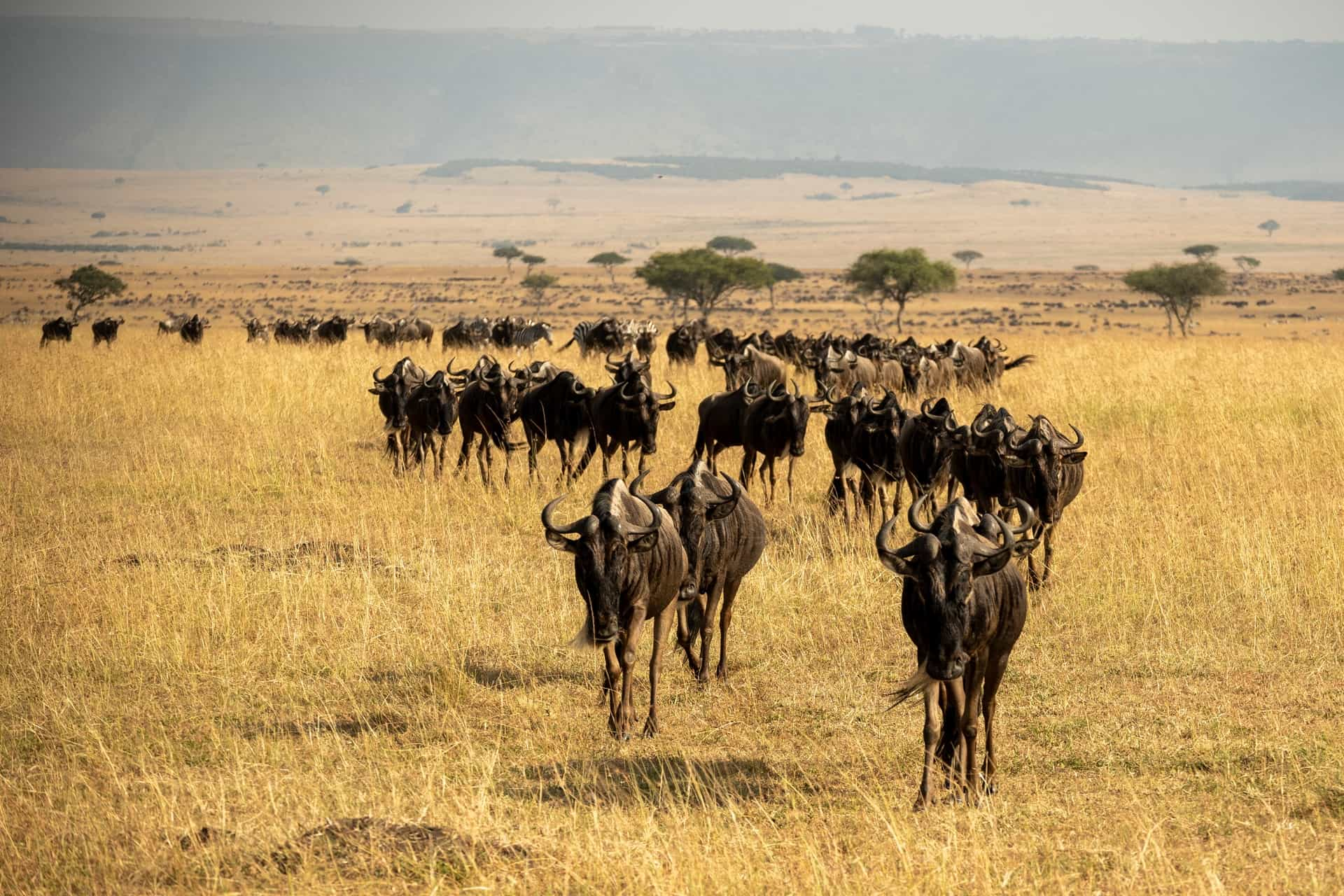
A Kenya-on-Kenya safari offers unparalleled wildlife and cultural experiences, anchored by witnessing the Great Migration in the Masai Mara (July–October) and viewing elephant herds against Mount Kilimanjaro in Amboseli. Essential activities include hot air ballooning at dawn, visiting Samburu for unique northern species, and relaxing on the white sands of Diani Beach
12-days-lake-nakuru-masai-mara-central-serengeti-ngorongoro-crater-amboseli-kenya-tanzania-safari
11-days-ultimate-kenya-tanzania-safari-combined-tour
9-days-kenya-wildlife-safari-in-masai-mara-and-uganda-primate-safari-tour
9-days-photography-kenya-tanzania-safari-holiday-vacation
8-days-masai-mara-lake-nakuru-amboseli-and-mombasa-beach-holidays
7-days-perfect-kenya-wildlife-safari-and-optional-hot-air-balloon-safari
6-days-circuit-kenya-safari-to-masai-mara-lake-nakuru-and-amboseli-park
4-days-best-luxury-kenya-safari-to-lake-nakuru-and-masai-mara-safari-tour
Top Must-Do Activities in Kenya
1. Witness the Great Migration (Masai Mara)
The Great Migration is often described as the "World’s Greatest Wildlife Show," a monumental trek where over 1.5 million wildebeest, zebras, and gazelles move in a thunderous cycle across the Serengeti-Mara ecosystem. Between July and October, these vast herds arrive in the Masai Mara, driven by the search for greener pastures. The most dramatic scenes occur at the Mara River, where the animals must run the gauntlet of steep banks and massive Nile crocodiles to reach the lush grass on the other side. For couples, witnessing a river crossing is a profound and primal experience, showcasing the raw determination of life in the wild. Even beyond the crossings, the sheer scale of the herds stretching to the horizon creates a sense of immense solitude and wonder, perfectly complemented by the high density of lions and cheetahs that follow in the migration's wake.
2. See Elephants in Amboseli
Amboseli National Park provides what is arguably the most iconic photographic backdrop in all of Africa: massive herds of elephants moving gracefully across the plains with the snow-capped peak of Mount Kilimanjaro towering behind them. These "Gentle Giants" are the stars of the park, which is home to some of the longest-studied elephant families in the world. The park’s unique hydrology—fed by underground springs from the mountain—creates permanent emerald-green swamps like Enkongo Narok, where elephants congregate to bathe and graze. Watching a matriarch lead her family through the marshy waters as the morning mist clears from the mountain peak is a serene and majestic experience. It is a destination of quiet power, where the scale of the landscape and the dignity of the wildlife combine to create a deeply moving safari atmosphere.
3. Hot Air Balloon Safari
A hot air balloon safari is the ultimate romantic indulgence, offering a "bird’s-eye view" of the savannah that no vehicle can match. Departing in the pre-dawn chill, you drift silently upward as the sun begins to crest the horizon, painting the plains in shades of gold and purple. From the basket, you can look down on hippos retreating to the water, prides of lions beginning their day, and the intricate patterns of animal trails winding through the grass. The silence is broken only by the occasional roar of the burner, allowing for a peaceful, intimate connection with the landscape. The experience traditionally concludes with a decadent bush breakfast set up in a secluded spot in the wild, complete with champagne, fresh fruit, and white linen service—a sophisticated and unforgettable way to celebrate a special occasion in the heart of the bush.
4. Explore Samburu National Reserve
For those seeking something truly unique, Samburu National Reserve in Northern Kenya is home to the "Samburu Special Five"—a collection of rare species specifically adapted to the arid, rugged terrain. These include the Reticulated giraffe with its striking geometric patterns, the narrow-striped Grevy’s zebra, the regal Beisa oryx, the blue-necked Somali ostrich, and the Gerenuk, a gazelle known for standing on its hind legs to reach high acacia leaves. The landscape here is starkly beautiful, characterized by red earth and the life-giving Ewaso Nyiro River. The rarity of these animals, combined with the lower visitor numbers compared to the southern parks, gives Samburu an "off-the-beaten-path" feel that is ideal for adventurous couples looking for a safari experience that goes beyond the standard Big Five.
5. Visit Ol Pejeta Conservancy
Ol Pejeta Conservancy is a global leader in conservation and a must-visit for those who want their safari to have a deeper purpose. It is the final refuge for the world’s last two northern white rhinos, Najin and Fatu, who live under 24-hour armed guard—a poignant reminder of the fragility of nature. The conservancy also hosts the Sweetwaters Chimpanzee Sanctuary, the only place in Kenya where you can see rescued and orphaned chimpanzees living in a natural forest environment. Beyond these specialist encounters, Ol Pejeta offers exceptional Big Five viewing and is the largest black rhino sanctuary in East Africa. It is a place of hope and action, where you can participate in rhino tracking or visit the conservation center to learn about the cutting-edge technology used to protect these ancient species.
6. Walking Safaris and Night Drives
In many of Kenya's private conservancies, such as those in Laikipia or the Mara, the safari experience extends into the night and out of the vehicle. A walking safari led by expert Maasai or Samburu guides allows you to slow down and appreciate the "little things"—the tracks in the dust, the medicinal uses of plants, and the intricate calls of birds. Walking through the wild on foot heightens your senses and provides a visceral connection to the land. Conversely, night game drives reveal a hidden world that is invisible during the day. Using filtered spotlights, you can search for elusive nocturnal predators like leopards, serval cats, and aardvarks. These exclusive activities offer a more layered and intimate understanding of the ecosystem, away from the crowds of the national reserves.
7. Boat Safari at Lake Naivasha
A boat safari on Lake Naivasha provides a tranquil, water-based contrast to the dusty roads of the savannah. Drifting across the freshwater lake, you can get remarkably close to pods of yawning hippos and observe some of the 400 species of birds that call the Rift Valley home, including the iconic African Fish Eagle. The journey typically leads to Crescent Island Game Sanctuary, a private peninsula where you can enjoy a unique "walking safari." Because there are no predators on the island, you can walk freely alongside giraffes, zebras, and wildebeests. The experience of strolling through the grass as a giraffe grazes just meters away is peaceful and surreal, offering a "barefoot luxury" feel that is perfect for a relaxing afternoon in the heart of the Great Rift Valley.
8. Cycle in Hell’s Gate National Park
Hell’s Gate National Park offers one of the most active and exhilarating safari experiences in Kenya. It is one of the few places in East Africa where you can rent a bicycle and ride through the park without a vehicle. The route takes you past towering obsidian cliffs and through open plains where zebras, giraffes, and warthogs graze calmly beside the track. The lack of large predators makes this a safe and liberating way to see wildlife. After your ride, you can explore the Ol Njorowa Gorge on foot, hiking through narrow sandstone walls and natural hot springs. The park’s dramatic scenery served as the inspiration for the landscapes in The Lion King, and cycling through it provides a sense of freedom and adventure that is a highlight for active couples.
9. Cultural Interaction
Kenya’s cultural heritage is as rich as its wildlife, and a visit to a Maasai or Samburu village provides a meaningful window into the lives of the people who have coexisted with the wild for centuries. These interactions are often vibrant and sensory—filled with the sights of colorful beadwork, the sounds of traditional chanting, and the rhythmic "jumping dance" of the warriors. Beyond the ceremony, you can learn about traditional house building, fire-making, and the deep spiritual connection these communities have with their livestock and the land. For many couples, these shared moments of human connection—sitting inside a traditional boma and hearing stories of the elders—add a profound layer of depth to the safari, turning a wildlife holiday into a journey of cultural discovery.
10. Coastal Relaxation
After the early mornings and rugged terrain of the bush, the Kenyan coast offers the ultimate sanctuary for relaxation. Diani Beach is the premier choice for couples, with its powder-white sands and turquoise waters. For those who want more than just sunbathing, the Kisite-Mpunguti Marine National Park offers some of the best snorkeling and diving in East Africa. You can take a traditional dhow to the coral gardens to swim with wild dolphins, sea turtles, and a shimmering array of tropical fish. Combining the "Big Five" of the land with the "Blue Wilderness" of the ocean provides a complete Kenyan experience. Whether you are enjoying a private seafood dinner on the beach or exploring the ancient ruins of Gedi, the coast is the perfect place to reflect on your safari adventures in a setting of tropical luxury.
Essential Urban/Wildlife Stops
Nairobi National Park: The Wilderness on the City’s Doorstep
Nairobi National Park offers one of the most surreal and captivating safari experiences in the world, serving as the only place on Earth where you can photograph a wild rhinoceros or a pride of lions with a backdrop of a modern city skyline. Located just 30 minutes from the Nairobi city center, the park is a vital 117-square-kilometer ecosystem that remains unfenced on its southern border, allowing wildlife to migrate traditionally between the park and the adjacent Kitengela plains. For couples, it provides an immediate "plunge" into the wild without the need for long travel days. The landscape is a diverse mix of open grass plains, scattered acacia bush, and a highland dry forest, offering a surprisingly rugged feel despite its proximity to the capital’s skyscrapers.
Despite its urban neighbors, the park is a high-density wildlife sanctuary. It is arguably the most successful Black Rhino sanctuary in East Africa, and sightings of these prehistoric-looking creatures are more frequent here than in many larger, more famous reserves. Beyond rhinos, the park supports a healthy population of lions, leopards, hyenas, and cheetahs, as well as over 400 species of birds. A morning game drive here often starts as the sun rises over the city’s glass towers, casting a golden light over herds of zebra and giraffe. For a romantic touch, many couples visit the Ivory Burning Site Monument, a poignant location marking Kenya’s commitment to conservation, or stop for a picnic at one of the elevated viewpoints that offer panoramic views of the entire park. It is the ultimate "city-safari," proving that nature and urbanity can exist in a delicate, beautiful balance.
Giraffe Centre and Sheldrick Wildlife Trust: Conservation and Connection
Nairobi’s soul as a conservation hub is best experienced through its two most famous wildlife sanctuaries: the Giraffe Centre and the Sheldrick Wildlife Trust. The Giraffe Centre, located in the leafy suburb of Lang'ata, was established to protect the endangered Rothschild’s giraffe. Unlike the more common Reticulated or Masai giraffes, the Rothschild’s was once on the brink of extinction. Today, couples can stand on a raised wooden platform to meet these gentle giants "eye-to-eye." Feeding them their favorite grain pellets—and perhaps receiving a "giraffe kiss" from their long, blue-gray tongues—is a joyful, intimate experience that fosters a deep appreciation for the species' delicate features and towering grace.
A short drive away lies the Sheldrick Wildlife Trust, world-renowned for its orphan elephant rescue and rehabilitation program. Visiting during the daily 11:00 AM public feeding session is a deeply moving experience. You can watch as dozens of orphaned baby elephants—many rescued from across Kenya due to poaching or drought—come charging out of the bush for their oversized milk bottles. Hearing the stories of their rescue and seeing the dedication of their keepers, who sleep in the stables with them, is profoundly emotional. For a lasting romantic gesture, many couples choose to "adopt" an orphan, receiving regular updates on their journey back to the wild in Tsavo. Together, these two institutions offer more than just a photo opportunity; they provide a heartfelt connection to Kenya’s conservation efforts, making them an essential and soul-stirring part of any Nairobi visit.
1. What is the "must-do" safari activity?
The traditional game drive remains the absolute cornerstone of the African safari experience, serving as the most effective and reliable way to witness the majesty of the "Big Five" in their natural habitat. In iconic landscapes like the Masai Mara and Amboseli, game drives are typically conducted in open-sided 4x4 vehicles, which offer 360-degree visibility and an elevated vantage point for photography. These excursions are usually timed for the "golden hours"—the first light of dawn and the soft glow of late afternoon—when wildlife is most active and the light is most forgiving for photographers.
The "must-do" aspect of a game drive lies in its unpredictability and the skill of the professional guides. These experts are not just drivers; they are master trackers who read the "language" of the bush, from the alarm calls of birds to the specific scent of a leopard’s kill. A single drive can transition from the quiet observation of a grazing elephant family to the high-octane drama of a lioness stalking her prey. For couples, the shared thrill of a first-time sighting creates a unique bond, while the comfort of the vehicle allows you to cover vast distances, ensuring you see the full diversity of Kenya’s ecosystems. Whether you are navigating the dusty plains of the south or the rugged scrubland of the north, the game drive is the heartbeat of the safari, providing the raw, unscripted encounters that define a journey through the African wild.
2. When is the best time for the Wildebeest Migration?
The Great Wildebeest Migration is a seasonal phenomenon that typically reaches its crescendo in the Masai Mara between July and October. This is the window when over a million wildebeest, accompanied by hundreds of thousands of zebras and gazelles, pour into Kenya from Tanzania’s Serengeti. This period represents the most dramatic chapter of the migration, as the herds face the ultimate challenge: crossing the Mara River. These crossings are the stuff of legend, filled with tension as the animals hesitate on the steep banks before plunging into the water, where massive Nile crocodiles lie in wait.
For travelers, this is the most sought-after time to visit, as the sheer density of animals is staggering. The presence of such a massive food source also attracts Africa's "Big Cats" in record numbers, making it the best time to see lions, cheetahs, and leopards in action. Because this is the peak tourist season, the weather is generally dry and temperate, with clear skies and cool nights. However, because the migration is dictated by the rains and the search for fresh grass, the exact timing of the river crossings can vary by a few weeks each year. To maximize the experience, staying for at least four to five days in the Mara is recommended, giving you the best chance to witness the "crossing" and the intense predator-prey dynamics that define this world-renowned natural wonder.
3. Are there alternative activities to game drives?
While game drives are essential, Kenya offers a wealth of alternative safari activities that allow you to experience the wild from entirely different perspectives. One of the most romantic and iconic options is hot air ballooning over the Masai Mara. Drifting silently above the savannah at sunrise provides a sense of scale and tranquility that is impossible to achieve on the ground, concluding with a traditional champagne bush breakfast. For those who want to feel the pulse of the earth, walking safaris in private conservancies like Laikipia or the Mara North offer a visceral connection to nature. Led by armed rangers and Maasai guides, these walks focus on the "micro-safari"—tracking animals by their prints, identifying bird calls, and learning about traditional medicinal plants.
Other unique alternatives include night game drives, which are prohibited in national parks but offered in private conservancies. These allow you to see nocturnal species like leopards, genets, and bushbabies using specialized spotlights. For a more active adventure, you can go horseback riding alongside giraffes, mountain biking through the gorges of Hell’s Gate, or camel trekking in the arid landscapes of Samburu. Water-based safaris, such as boat trips on Lake Naivasha or Lake Baringo, provide a serene way to view hippos and vibrant birdlife. These alternatives add a layered, multi-sensory dimension to a trip, ensuring that your safari is not just about looking through a window, but about fully immersing yourself in the sights, sounds, and rhythms of the African bush.
4. Can I see lions and cheetahs hunting?
Yes, witnessing a hunt is one of the most exhilarating experiences on safari, and it is most likely to occur during early morning and late afternoon game drives. These are the periods when predators like lions and cheetahs are most active, taking advantage of the cooler temperatures and the "low light" that provides them with a tactical advantage. Lions are primarily nocturnal and crepuscular hunters; you might see them stalking through the tall grass at dawn or preparing for a night hunt as the sun sets. Cheetahs, however, are diurnal hunters, often spotted during the day using elevated mounds or termite hills to scan the horizon for a fast-moving target like a Thompson’s gazelle.
Seeing a hunt requires patience and a bit of luck. It often begins with the "stalk"—a slow, calculated approach where every muscle is coiled for the strike. Your guide will watch for specific signs: the intense focus of a predator, the nervous behavior of a herd of impala, or the "bark" of a baboon warning its troop. Witnessing the explosive speed of a cheetah or the coordinated teamwork of a lion pride is a powerful reminder of nature’s raw efficiency. While the outcome is never guaranteed, being in the right place at the right time—especially during the Great Migration when prey is abundant—significantly increases your chances of seeing these apex predators in their most dynamic and impressive state.
5. What are the top parks to visit?
Kenya’s park system is diverse, but four key destinations stand out as the "must-visit" pillars of a classic itinerary. The Masai Mara National Reserve is the undisputed star, famous for the Great Migration and its unmatched density of predators. It is the definitive "Big Five" destination and offers the quintessential African savannah landscape. To the south, Amboseli National Park is world-renowned for its massive elephant herds and the most spectacular views of Mount Kilimanjaro. The sight of elephants crossing the dusty plains against the backdrop of the snow-capped mountain is one of the most iconic images of Africa.
For those interested in unique wildlife and varied landscapes, Lake Nakuru National Park is a premier choice. It is a world-class Rhino Sanctuary, providing some of the best chances to see both black and white rhinos, and its soda lake often hosts thousands of flamingos. In the rugged north, Samburu National Reserve offers a stark, arid beauty and is home to the "Samburu Special Five"—species like the reticulated giraffe and Grevy’s zebra that aren't found in the southern parks. Each of these destinations offers a distinct ecosystem: from the lush grasslands of the Mara to the volcanic springs of Amboseli and the desert scrub of Samburu. Combining two or three of these parks ensures a comprehensive and visually stunning overview of Kenya’s extraordinary biodiversity and natural beauty.
6. Are cultural tours worth it?
Cultural tours are absolutely "worth it" as they provide the human context to the wild landscapes of Kenya. A visit to a Maasai or Samburu village (Manyatta) is much more than a photo opportunity; it is an authentic insight into a way of life that has remained remarkably resilient for centuries. These indigenous communities have lived in harmony with wildlife for generations, and their knowledge of the land is unparalleled. During a visit, you can learn about their ancient survival techniques, their sophisticated social structures, and the symbolic meanings behind their vibrant beadwork and traditional ceremonies.
Many visitors find that these interactions provide a deeper sense of connection to the safari experience. You might witness a traditional "jumping dance," participate in fire-making without matches, or learn how to track wildlife using traditional Maasai methods. For couples, it is a chance to step outside the luxury of a lodge and see the world through a different lens. It is important to ensure these visits are conducted ethically and respectfully, often through lodges that have long-standing partnerships with their local communities. By participating in these tours, you are often contributing directly to community-led conservation and development projects. These cultural encounters add a profound layer of meaning to your trip, reminding you that the "cradle of mankind" is defined as much by its people and their enduring traditions as it is by its wildlife.
7. What should we pack for a safari?
Packing for a safari requires a blend of practicality and "bush-chic" style. The most important guideline is to choose light, breathable layers in neutral colors such as tan, green, khaki, and brown. These shades help you blend in with the environment—which is crucial for wildlife spotting—and are significantly less attractive to biting insects like the tsetse fly, which is famously drawn to dark blue and black. Avoid camouflage patterns, as these are often reserved for military personnel in many African countries and can be misunderstood.
The "layering" approach is essential because temperatures fluctuate wildly. Early morning game drives start in the pre-dawn chill, requiring a fleece or a light down jacket, while by midday, you’ll want to be in a light t-shirt. Essential items include a wide-brimmed hat for sun protection, high-quality polarized sunglasses, and comfortable, closed-toe walking shoes or light hiking boots. Don't forget a "dust-proof" bag for your camera equipment and a good pair of binoculars—sharing a pair can be frustrating when a leopard is on the move! Most luxury lodges provide daily laundry service, so you can actually pack quite light. If you’re flying between parks on light aircraft, remember that luggage is usually restricted to 15kg in soft-sided bags, so prioritize versatile, durable clothing that can handle the dusty roads and the occasional bush walk.
8. What is the dress code?
The general dress code for a safari is "relaxed and functional." There is no strict requirement for formal attire, even in the most luxurious lodges, as the emphasis is on comfort and suitability for the environment. During the day, the primary goal is protection from the sun and insects. Long-sleeved shirts and trousers are highly recommended, especially for the early morning and late afternoon game drives. This not only protects your skin from UV rays but also serves as a barrier against mosquitoes and biting flies. Lightweight, moisture-wicking fabrics are ideal to keep you cool during the heat of the day.
In the evenings, the atmosphere at most safari camps is "smart-casual." For dinner, many guests choose to change into a fresh linen shirt or a simple sundress, but even then, the focus remains on comfort. It is wise to wear long trousers and socks during dinner to prevent mosquito bites around the ankles. While you might see people in "safari suits," it is by no means mandatory; the most important thing is that your clothing is durable and doesn't show the dust too easily. If your itinerary includes a stay at a beach resort like Diani or Watamu, the dress code shifts to "tropical chic," where swimwear, sandals, and light cotton wraps are the norm. Essentially, your safari wardrobe should be about "blending in and staying protected," allowing you to focus on the spectacular wildlife around you.
9. Are there restrictions on cameras or drones?
When it comes to photography in Kenya’s wild spaces, there are strict regulations designed to protect the privacy of both wildlife and other travelers. Drones are typically illegal in all national parks and reserves without extensive prior authorization from the Kenya Civil Aviation Authority and the Kenya Wildlife Service. Attempting to fly a drone without these permits can lead to heavy fines, confiscation of equipment, and even legal action. This is because drones can cause significant distress to animals—particularly elephants and rhinos—and can ruin the serene "wilderness" experience for other visitors.
Regarding traditional cameras, there are few restrictions, but etiquette is key. It is considered polite to ask your guide’s permission before photographing local people, and in many cultural villages, it is standard to ask the village head first. While most "Big Five" sightings are public, some private conservancies may have rules about sharing specific "real-time" locations of endangered species like rhinos on social media to prevent poaching. Most guides are expert photographers themselves and can help you position the vehicle for the best light and angle. If you are a serious photographer, consider bringing a "bean bag" or a window mount for your camera, as tripods can be cumbersome in a safari vehicle. The rule of thumb is: capture the memories with your lens, but always prioritize the welfare of the animal and the peace of the park.
10. Is there a ban on plastics?
Yes, Kenya has some of the world’s strictest regulations regarding plastic waste, and there is a total ban on single-use plastics within all protected areas, including national parks, reserves, and forests. This means that items such as single-use plastic water bottles, plastic bags (including retail bags), and plastic food wrappers are strictly forbidden. The goal of this initiative is to prevent the littering of these pristine environments and to protect wildlife, as animals can often ingest plastic waste with fatal consequences.
Travelers are expected to comply with these rules from the moment they enter the country. Most reputable safari lodges and camps have responded to this ban by providing reusable metal or glass water bottles for their guests, which can be refilled from large dispensers of purified water. When packing, it is recommended to remove any unnecessary plastic packaging from your toiletries and to use reusable "dry bags" or cloth bags for organizing your luggage instead of plastic zip-locks. This shift toward a "plastic-free" safari is part of a broader commitment to sustainable tourism in Kenya. By adhering to these rules, you are helping to preserve the integrity of the ecosystems you’ve come to enjoy, ensuring that the only tracks you leave behind are the ones in the dust.
11. Do I need vaccinations?
Health and safety are paramount when planning a safari, and it is highly recommended to consult a travel clinic or your doctor at least 6 to 8 weeks before your trip. Standard recommended vaccinations for Kenya typically include Hepatitis A and B, Tetanus, Polio, and Typhoid. Depending on your itinerary and where you are traveling from, a Yellow Fever certificate may be a mandatory requirement for entry into the country. While Kenya is generally a safe destination, these precautions ensure that your immune system is prepared for a different biological environment.
Malaria prophylaxis is also a critical consideration, especially for the Masai Mara, the coastal regions, and low-lying areas. Your doctor will likely prescribe a course of tablets (such as Malarone or Doxycycline) that you must start before your arrival and continue after you return home. In addition to medication, the best defense is preventing bites: use insect repellent containing DEET, wear long sleeves in the evening, and always sleep under the mosquito nets provided by your lodge. It is also worth noting that many of the high-altitude areas like Nairobi and the slopes of Mount Kenya have a much lower malaria risk, but a comprehensive "blanket" approach to protection is usually the safest path. Being proactive about your health allows you to enjoy the physical demands of a safari with total peace of mind.
12. What is a "bush breakfast" or "sundowner"?
A "bush breakfast" and a "sundowner" are two of the most magical and enduring traditions of the African safari, designed to celebrate the beauty of the wild in a sophisticated, intimate setting. A bush breakfast usually follows a sunrise game drive or a hot air balloon flight. Instead of returning to the lodge, your guides set up a full kitchen in a safe, scenic spot in the middle of the savannah. You might find yourself eating eggs and bacon under a solitary acacia tree, with the sounds of the bush as your soundtrack. It is an extraordinary way to start the day, combining the raw environment with the luxury of white linen and fresh coffee.
The sundowner is the evening counterpart, marking the transition from day to night. As the sun begins to set, your guide will find a picturesque viewpoint—perhaps a rocky outcrop overlooking the Mara River or a spot with a clear view of Mount Kilimanjaro. A "pop-up bar" is established, offering cocktails, wine, and light snacks. For couples, this is often the most romantic moment of the day; sipping a gin and tonic while the sky turns a vibrant palette of orange and violet is a quintessential safari ritual. These experiences are designed to help you "slow down" and absorb the atmosphere of the wild away from the confines of the vehicle. They represent the "spirit of safari"—a blend of adventure, hospitality, and a deep appreciation for the natural world’s daily spectacles.
13. Are walking safaris safe?
Walking safaris are an exhilarating way to experience the bush, and they are completely safe when conducted by professionals. In Kenya’s national parks and private conservancies, these walks are strictly controlled and led by highly trained, armed park rangers or professional guides. These experts are skilled in animal behavior and "reading" the wind and the terrain to ensure that you remain at a safe distance from any potentially dangerous wildlife. The primary goal of a walking safari is not to approach large predators, but to appreciate the smaller details of the ecosystem that you miss from a vehicle.
Before you set out, your guide will give you a comprehensive safety briefing: you usually walk in a single file, keep noise to a minimum, and follow the guide’s instructions without hesitation. The guides use their senses—hearing, smell, and sight—to navigate, often knowing an animal is nearby long before you see it. Walking through the wild on foot heightens your own senses; you become aware of the crunch of the grass, the scent of the wild sage, and the warning calls of birds. For many, this is the most "authentic" form of safari, providing a visceral connection to the land that a vehicle simply cannot replicate. It is a slow, methodical journey that emphasizes the interconnectedness of all life in the bush, conducted with a level of expertise that makes it both safe and profoundly educational.
14. What is the best way to see birdlife?
Kenya is one of the world’s premier birdwatching destinations, with over 1,100 species recorded. The best way to see birdlife is to head out during the early mornings and late afternoons, which are the peak times for avian activity. Birding requires a slightly different pace than a standard game drive; it is about "patience and pausing." Using a high-quality pair of binoculars is essential, as many of Kenya’s most beautiful species—like the lilac-breasted roller or the malachite kingfisher—are small and brilliantly colored, requiring a closer look to appreciate their detail.
A knowledgeable guide is your greatest asset in birding. They can identify species by their song alone and know the specific habitats—from the papyrus reeds of Lake Naivasha to the high-altitude forests of Mount Kenya—where elusive endemics might be found. For serious birders, a specialized birding safari can be arranged, focusing on specific "hotspots" like the Albertine Rift or the Kakamega Forest. Even for those who aren't dedicated "twitchers," the sheer variety of Kenyan birdlife—from the massive ostriches and secretary birds to the shimmering sunbirds—is captivating. Many lodges also feature "bird baths" or fruiting trees near the dining areas, allowing for fantastic viewing right from your breakfast table. Whether you are watching a fish eagle swoop over a lake or a vulture circling a kill, birdlife adds a constant, vibrant layer of movement and sound to the safari landscape.
15. Can I combine safari with a beach holiday?
One of Kenya’s greatest strengths as a travel destination is the ease with which you can combine a world-class safari with a tropical beach holiday. This "Bush and Beach" combination is the most popular itinerary for couples and honeymooners, offering the perfect balance of high-energy adventure and deep relaxation. After the early starts and dusty roads of the Masai Mara or Amboseli, heading to the Indian Ocean coast provides a literal and metaphorical "breath of fresh air." Destinations like Diani Beach, Watamu, and Lamu Island offer some of the most beautiful white-sand beaches in the world.
The transition is remarkably efficient; you can take a light aircraft flight directly from a safari airstrip in the Mara or Amboseli and land at the coast within 90 minutes. This means you could be watching a lion pride at dawn and sipping a cocktail on a white-sand beach by sunset. At the coast, the "safari" continues underwater in marine parks like Kisite-Mpunguti, where you can snorkel with dolphins and sea turtles. You can also explore the rich Swahili culture of Mombasa or Lamu, or simply enjoy the luxury of a beachfront villa with a private chef. This dual-destination approach ensures that your Kenyan journey is holistic—capturing the raw power of the savannah and the serene, rhythmic beauty of the ocean, leaving you both exhilarated and rejuvenated.
Booking Kenya safari with us Roads of Adventure safaris with us Roads of Adventure safaris
Book a Kenya safari with Roads of Adventure Safaris, a Uganda-based operator offering customized wildlife tours, including Masai Mara, Amboseli, and Nakuru. They specialize in mid-range to luxury wildlife, birding, and combined East Africa packages (e.g., Kenya + Uganda gorillas). Contact them at info@roadsofadventuresafaris.com
