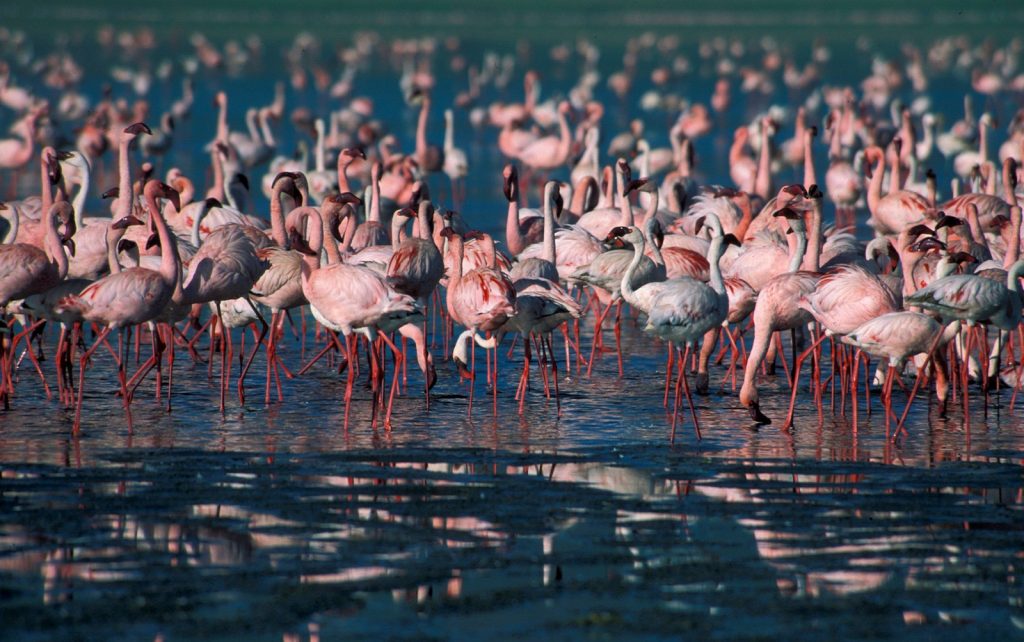
Yes, Lake Nakuru National Park is definitely worth visiting on a Kenya safari. It is a premier destination for spotting rhinos (both black and white) and seeing vast flocks of flamingos, along with Rothschild giraffes, lions, and leopards. Its compact size ensures high-density wildlife viewing, making it a perfect, scenic addition to any itinerary.
Lake Nakuru National Park is a crown jewel of the Kenya wildlife safari circuit, offering a unique blend of aquatic beauty and terrestrial drama. Whether you are a seasoned birder or a first-time traveler, here is a deep dive into why this park is an essential stop.
3-days-lake-nakuru-and-lake-naivasha-africa-safari-tour-package
4-days-budget-masai-mara-safari-and-lake-nakuru-holiday-vacation
4-days-masai-mara-and-lake-nakuru-kenya-safari-tour-package
5-day-best-luxury-kenya-safari-to-amboseli-lake-nakuru-and-maasai-mara-safari-tour
6-days-luxury-safari-to-kenya-best-parks
7-days-samburu-ol-pejeta-lake-nakuru-and-masai-mara-safari-tour
7-days-budget-kenya-safari-holiday-vacation-tour
The Ultimate Rhino Sanctuary
Lake Nakuru is arguably the most reliable destination for rhino sightings during a Kenya wildlife safari. Established as the country’s first official rhino sanctuary, it has become a global model for conservation. The park is split into a highly protected ecosystem where both the endangered Black Rhino and the more social White Rhino thrive.
Because the park is fenced to protect these prehistoric-looking giants from poachers, the density of the population is remarkably high. On a typical game drive, you might encounter a crash of White Rhinos grazing near the lakeshore or catch a glimpse of the more reclusive Black Rhino browsing in the dense acacia woodlands. This sanctuary doesn't just offer a photo opportunity; it provides a profound look at the successful efforts to bring a species back from the brink of extinction.
A Symphony of Flamingos and Birdlife
For decades, Lake Nakuru has been synonymous with a "pink heartbeat." It is world-renowned for hosting massive congregations of Lesser and Greater Flamingos. While water levels fluctuate, these birds often gather in the thousands, creating a shimmering pink fringe along the alkaline edges of the lake.
However, the birding experience on a Kenya wildlife safari here goes far beyond flamingos. With over 400 recorded species, the park is a literal paradise for ornithologists. You can spot the African Fish Eagle swooping for a kill, the Goliath Heron wading in the shallows, and various species of Kingfishers darting through the reeds. The diversity of habitats—from the open water to the marshlands and yellow-fever tree forests—ensures that every turn of the safari vehicle reveals a new feathered wonder.
1. Is Lake Nakuru National Park worth visiting primarily for its famous, massive flocks of flamingos?
While Lake Nakuru was historically defined by the "pink rim" of millions of flamingos, visiting primarily for this reason in 2026 requires a nuanced understanding of ecology. Over the last decade, rising water levels have altered the lake's salinity, reducing the abundance of the specific blue-green algae that Lesser Flamingos feed on. Consequently, while you will still see flamingos, the massive, carpet-like flocks are more nomadic now, often moving between Nakuru, Lake Bogoria, and Lake Elementaita.
However, the park is absolutely still worth visiting. The ecological shift has transformed the lake into a thriving freshwater-influenced habitat, leading to a massive surge in Great White Pelicans and other water birds. Instead of just a "pink lake," you now experience a more diverse avian spectacle. The sight of thousands of pelicans cooperative-fishing near the shore, interspersed with yellow-billed storks and African spoonbills, offers a more complex bird-watching experience than the mono-species sights of the past.
Furthermore, the park has pivoted its identity toward being one of Kenya’s premier Rhino Sanctuaries. Travelers who arrive expecting only birds are often pleasantly surprised by the sheer density of terrestrial megafauna. The flamingos remain a beautiful highlight, but they are now just one chapter in a much larger story of biodiversity. Visiting for the flamingos is a great starting point, but the park’s value lies in its ability to surprise you with sightings of leopards, lions, and rare giraffes within minutes of the gate. It is a destination that has matured from a one-trick pony into a robust, multi-faceted wildlife haven.
2. Can visitors see both black and white rhinoceros species during a safari in Lake Nakuru?
Yes, Lake Nakuru National Park is one of the most reliable locations in East Africa to see both Black and White Rhinoceroses in a single game drive. Established as Kenya’s first official rhino sanctuary in the 1980s, the park is fully fenced, which has allowed the populations to be closely monitored and protected from poaching. This "sanctuary" status creates a high-density environment where sightings are almost guaranteed, unlike the vast, open plains of the Mara where these animals can be notoriously difficult to track.
The two species occupy different ecological niches within the park, making a safari here a fascinating lesson in biology. The White Rhino, which is a grazer with a wide mouth, is frequently seen in the open grasslands and along the southern lakeshore. They are generally more social and can often be found in small groups or "crashes." On the other hand, the Black Rhino is a browser with a hooked lip for eating leaves and twigs. They are more reclusive and are typically found in the dense acacia woodlands or the thickets near the base of the cliffs.
Seeing both species offers a rare opportunity to compare them side-by-side. You can observe the physical differences—the White Rhino’s larger size and flat snout versus the Black Rhino’s smaller frame and pointed lip—as well as their distinct temperaments. For many visitors, the chance to see these prehistoric-looking giants, which are critically endangered elsewhere, is the primary draw of the park. The sanctuary is so successful that it often serves as a "nursery," providing rhinos to be translocated to other Kenyan parks to help boost their populations.
3. How does the density of wildlife in Lake Nakuru compare to larger parks like Maasai Mara?
While the Maasai Mara is world-famous for its sheer scale and the Great Migration, Lake Nakuru offers a vastly different, high-intensity experience characterized by extreme wildlife density. The park is relatively compact, covering about 188 square kilometers, and is entirely fenced. This physical boundary prevents animals from migrating out, meaning the wildlife stays concentrated within the park’s borders year-round. In the Mara, you might drive for an hour through vast golden plains without seeing a predator; in Nakuru, the distance between major sightings is significantly shorter.
In Nakuru, the "game-per-kilometer" ratio is exceptionally high. Within a three-hour drive, it is common to check off four of the "Big Five" (excluding elephants, which are not present to protect the delicate flora). The density of leopards is particularly notable; because their habitat is restricted to the forested areas and rocky ridges, your chances of spotting one lounging in a Yellow Fever tree are statistically higher than in many larger parks.
Furthermore, the density of herbivores like the Rothschild’s Giraffe, Cape buffalo, and Waterbuck is so high that the landscape often feels like a carefully curated wildlife documentary. This makes Nakuru an excellent choice for those with limited time or for photographers who want to maximize their "shutter time" rather than their "driving time." While the Mara offers the epic "theatre" of the savannah, Nakuru offers an "intimate stage" where the actors are always present and the action is never far away. It provides a sense of abundance that feels immediate and accessible.
4. Is a one-day trip to Lake Nakuru sufficient to experience the park's main attractions?
A one-day trip to Lake Nakuru is not only sufficient but is one of the most popular ways to experience the park, especially for those based in Nairobi. Because the park is compact and the wildlife is so concentrated, you can realistically see the majority of its highlights—the rhino sanctuary, the flamingo-lined shores, the baboon cliff viewpoint, and the giraffe herds—within a 4 to 6-hour game drive. This "high-impact" nature makes it an ideal destination for travelers who want a premier safari experience without committing to a multi-day expedition.
For a successful one-day trip, timing is everything. Most visitors leave Nairobi early in the morning (around 6:00 AM) to arrive at the park by mid-morning. The drive itself is scenic, descending into the Great Rift Valley with a stop at the escarpment lookout. Once inside the park, the well-maintained road network allows you to loop the lake and visit the varied habitats—from the alkaline waters to the fever tree forests—within a single afternoon. You can enjoy a picnic lunch at the top of Baboon Cliff, watching the wildlife below, before heading back to the city by sunset.
However, while one day covers the "must-sees," it misses the magic of the "golden hours." The predators, particularly leopards and lions, are most active at the crack of dawn and as the sun sets. Staying overnight allows you to experience the park when the light is best for photography and the air is filled with the calls of over 400 bird species. If your goal is to simply see the rhinos and the lake, one day is perfect; if you want to truly immerse yourself in the rhythm of the African bush, an overnight stay is recommended.
5. What makes the scenic views of Lake Nakuru, surrounded by cliffs and hills, worth visiting?
The scenic beauty of Lake Nakuru National Park is unique because it offers verticality in a landscape often associated with flat plains. The park is nestled on the floor of the Great Rift Valley, framed by the towering Mau Escarpment to the west and the Lion Hill ridges to the east. This creates a "cauldron" effect, where the shimmering blue-green water of the lake is cradled by dramatic volcanic cliffs and rolling hills, providing a backdrop that is far more varied than the typical savannah.
The most iconic viewpoint is Baboon Cliff, which offers a breathtaking 360-degree panorama of the entire ecosystem. From this height, you can see the scale of the lake, the fringe of flamingos (or pelicans) along the shore, and the vast forests of acacia trees that line the base of the hills. On a clear day, the contrast between the deep blue of the sky, the white soda crust of the lake, and the lush green of the forests is stunning. It’s a place where you can truly appreciate the geography of the Rift Valley, seeing how the earth’s tectonic forces shaped this sanctuary.
These views are more than just pretty pictures; they provide a "map" of the park's biodiversity. From the lookouts, you can spot herds of buffalo grazing on the floodplains or giraffes moving through the trees like miniature figurines. The presence of the Makalia Falls at the southern end adds another layer of scenic variety, offering a rare waterfall experience in a safari setting. For those who appreciate landscapes as much as animals, the topographical drama of Nakuru—with its rocky outcrops and "ghost forests" of submerged trees—is arguably as compelling as the wildlife itself.
6. Are there opportunities to see lions, leopards, and hyenas within Lake Nakuru National Park?
Absolutely. While Nakuru is famous for rhinos and birds, it is a formidable destination for predator sightings. The park supports a healthy population of lions, leopards, and spotted hyenas, all of which have adapted to the park's specific environment. Because the park is fenced and prey—such as buffalo, waterbuck, and impala—is abundant and localized, the predators do not have to travel far, making them relatively easy to find for experienced guides.
The lions of Nakuru are particularly famous for their tree-climbing behavior. While not as common as in Manyara (Tanzania), they are often seen lounging in the sturdy branches of the yellow-fever acacia trees to escape the heat or the damp ground near the lake. This provides a unique photographic opportunity to see the "King of the Jungle" in an arboreal setting. Leopards are also a highlight here; they thrive in the rocky escarpments and dense woodlands. Because their territory is somewhat confined by the park's boundaries, Nakuru is often cited as one of the best places in Kenya to spot these elusive cats during the day.
Spotted hyenas are the park's primary scavengers and are frequently seen patrolling the lakeshore, especially in areas where flamingos or pelicans gather. They play a crucial role in the ecosystem, and you can often hear their distinctive "whoop" at night if you stay within the park. While you won't see cheetahs (the terrain is too wooded and hilly for their high-speed hunting style), the density of the "Big Three" predators ensures that the drama of the African food chain is always on full display.
7. How does Lake Nakuru fit into a broader Kenya safari itinerary that includes bird watching?
In a comprehensive Kenya safari itinerary, Lake Nakuru acts as the ornithological anchor. While the Maasai Mara offers the big cats and Amboseli offers elephants against Kilimanjaro, Nakuru provides a concentrated dose of aquatic and woodland birdlife that is unmatched in diversity. For a bird enthusiast, a circuit that includes Lake Naivasha (for freshwater birds), Lake Nakuru (for alkaline/soda lake species), and the Mara (for birds of prey and savannah species) covers almost every major avian habitat in East Africa.
Nakuru's specific value lies in its 450+ recorded species within a small area. It serves as a transition point. A typical itinerary might start in Nairobi, stop at Nakuru for a day or two to secure sightings of Great White Pelicans, Flamingos, and the African Fish Eagle, and then move on to the grasslands. Because Nakuru is also a rhino sanctuary, it allows travelers to "tick off" rare mammals early in their trip, freeing up time in the Mara or Serengeti to focus exclusively on the Great Migration or predator behavior.
Furthermore, Nakuru is a vital stop for Palearctic migrants. From November to April, the park's resident population is bolstered by birds flying in from Europe and Asia, such as various species of waders and warblers. This seasonal influx makes it a dynamic destination that changes throughout the year. For an itinerary focused on biodiversity, Nakuru provides the "water" element that completes the African wilderness puzzle, ensuring that the traveler sees the full spectrum of Kenya’s natural heritage, from the smallest sunbird to the largest rhino.
8. Is the park easily accessible from Nairobi, making it a good short safari option?
Lake Nakuru National Park is one of the most accessible premier wildlife destinations in Kenya. Located approximately 160 kilometers (about 100 miles) northwest of Nairobi, the drive typically takes between 3 to 4 hours depending on traffic. The route follows the main A104 highway, which is paved and relatively well-maintained. This proximity makes it the "go-to" choice for business travelers in Nairobi with a free weekend, or for tourists who want to experience a high-quality safari without the long, bumpy drives or expensive internal flights required for more remote parks.
The journey itself is part of the experience. The road winds along the edge of the Great Rift Valley, offering several spectacular viewpoints where you can look out over the vast expanse of the valley floor and see the dormant Longonot and Suswa volcanoes in the distance. This easy accessibility means you can leave your hotel in Nairobi after breakfast and be watching a rhino graze by lunchtime. There is no need for specialized 4x4 vehicles just to reach the gate (though they are recommended for game drives), as the park is situated right on the outskirts of Nakuru City.
This convenience makes Nakuru a "low-stress" safari option. Unlike the Mara, which often requires a full day of travel or a costly flight, Nakuru can be integrated into almost any schedule. For those who find the idea of a 10-day expedition daunting, Nakuru serves as a perfect "taster." It delivers the "African Dream"—lions, rhinos, and dramatic landscapes—in a manageable timeframe, making it arguably the most efficient safari destination in the country for those short on time but high on expectations.
9. Can visitors see endangered Rothschild giraffes during a game drive in Lake Nakuru National Park?
Yes, seeing the Rothschild’s Giraffe (also known as the Baringo Giraffe) is one of the distinct highlights of a game drive in Lake Nakuru. This subspecies is one of the most endangered giraffe populations in the world, distinguished from the more common Reticulated or Maasai giraffes by its "white stockings"—the creamy, unspotted legs from the knee down—and the presence of five "horns" (ossicones) on its head rather than the usual two.
The population in Lake Nakuru was established through a successful translocation program designed to protect the species from habitat loss in its original range. In the safety of the park’s fenced boundaries, the population has thrived. They are most commonly seen in the Acacia woodlands and the bushy areas around the southern part of the lake. Because they have few natural predators within the park that can take down an adult, they are often quite relaxed around vehicles, allowing for incredible close-up photographic opportunities.
Watching a herd of Rothschild’s giraffes moving through the yellow-fever trees with the blue lake in the background is a quintessential Nakuru image. Their presence adds a layer of conservation significance to your visit; by paying park fees, you are directly supporting the protection of one of the rarest large mammals on earth. For wildlife enthusiasts, seeing this specific subspecies in such a scenic setting is often a more meaningful experience than seeing the common giraffes found elsewhere.
10. Does Lake Nakuru National Park offer a good, cost-effective alternative to more expensive parks?
Lake Nakuru is widely considered one of the most cost-effective high-end safari experiences in Kenya. While the park entrance fees are set by the Kenya Wildlife Service (KWS) and are comparable to other "Premium" parks like Amboseli, the "hidden costs" of a safari are significantly lower in Nakuru. Because of its proximity to Nairobi and its compact size, you save a substantial amount on transportation and fuel. You don’t need a multi-day fuel budget or expensive air transfers to see the "Big Four."
Accommodation is another area where Nakuru offers great value. Because the park is located right next to Nakuru City, travelers have the option to stay in budget-friendly hotels or guesthouses just outside the park gates and drive in for day trips. This is a massive cost-saver compared to the Maasai Mara, where almost all accommodation is in expensive lodges or luxury tented camps within or immediately adjacent to the park. You can experience the same quality of wildlife viewing by day and return to a cost-effective urban hotel by night.
Additionally, the "density" of wildlife means you get more value for every hour spent on a game drive. In larger parks, you might spend hours driving through "empty" space; in Nakuru, almost every kilometer has the potential for a major sighting. For families, students, or solo travelers on a budget, Nakuru provides a "Premium Safari" experience at a "Mid-Range" price point. It allows you to see the rare rhinos and leopards that people pay thousands of dollars to see elsewhere, but for a fraction of the logistical cost.
11. Is Lake Nakuru a worthwhile destination for bird enthusiasts, given its extensive species diversity?
For a bird enthusiast, Lake Nakuru is not just "worthwhile"—it is a mandatory pilgrimage. Even with the fluctuating flamingo populations, the park remains one of the most diverse avian habitats in the world. With over 450 recorded species, the sheer variety of birds squeezed into this 188-square-kilometer area is staggering. The park's brilliance lies in its varied ecosystems: the alkaline lake, freshwater marshes, open grasslands, rocky cliffs, and dense acacia forests each host a unique community of birds.
In addition to the famous water birds like the Great White Pelican, Greater and Lesser Flamingos, and various Storks, the park is a haven for raptors. You can regularly see the African Fish Eagle, the Verreaux’s Eagle (nesting on the cliffs), and the Long-crested Eagle. The woodland areas are alive with colorful species like the Lilac-breasted Roller, various Sunbirds, and the Narina Trogon. For those interested in "LBBs" (Little Brown Birds), the grasslands offer a variety of pipits, larks, and cisticolas that challenge even the most experienced birders.
The ease of birding here is also a major draw. Because the park is well-mapped and the habitats are distinct, you can target specific species within a short drive. You can spend the morning by the lake checking off shorebirds and the afternoon in the forest looking for woodland specialists. Whether you are a casual observer who loves "the pink lake" or a hardcore lister looking for rare migrants, Nakuru’s avian density ensures that your binoculars will never be far from your eyes.
12. What are the best times of the year to visit Lake Nakuru for optimal wildlife spotting?
The best time to visit Lake Nakuru for wildlife spotting is generally during the Dry Seasons: from July to March. During these months, the vegetation is thinner, and animals are forced to congregate around the permanent water sources and the lakeshore, making them much easier to see. Specifically, the months of July to October are excellent as the weather is cool and dry, providing comfortable conditions for both humans and animals.
However, the "best time" can vary depending on your specific interests:
- For Mammals: The peak dry season (January, February, and August) is best. This is when the leopards and lions are most active along the tracks, and the rhinos are often seen grazing in the open near the water.
- For Bird Watching: The period from November to April is phenomenal. This is when the resident species are joined by thousands of migratory birds from the Northern Hemisphere. The park becomes a bustling hub of international avian activity.
- For Photography: The "Green Season" (April to June) offers stunning, lush landscapes and clear air, though the rain can make some tracks muddy and the animals harder to find in the tall grass.
Unlike some parks that become nearly inaccessible during the long rains (April-May), Nakuru’s main circuit is mostly gravel-based and remains navigable. Therefore, it is a year-round destination. However, if you want the "guaranteed" sightings of rhinos and predators, sticking to the dry months will ensure that the wildlife isn't hidden in the thickets, giving you the best return on your safari investment.
13. Does the park offer unique photographic opportunities for visitors focused on wildlife and landscapes?
Lake Nakuru is a photographer’s paradise, offering a visual palette that is distinct from any other park in Kenya. The most unique feature for photographers is the "Ghost Forest"—hundreds of dead Acacia trees that were submerged by the rising lake levels. These bleached, skeletal branches provide dramatic perches for pelicans, cormorants, and eagles, creating hauntingly beautiful compositions against the blue water and the pink hues of the birds.
The lighting in Nakuru is also special. Because the park is a basin, the morning sun hits the western escarpment, creating a golden glow on the cliffs, while the evening sun sets over the Mau hills, casting long shadows across the lake. The "Golden Hour" at Baboon Cliff is legendary, allowing you to capture the entire lake basin in soft, amber light. For wildlife photography, the proximity of the animals is a huge advantage. Because the wildlife is accustomed to vehicles and the park is compact, you can often get frame-filling shots of rhinos, giraffes, and even leopards without needing a massive 600mm lens.
Furthermore, the variety of textures—the cracked soda crust of the dry shores, the lush green of the forest, and the rugged basalt of the cliffs—allows for diverse storytelling. You can move from high-action predator shots to serene landscape panoramas in a matter of minutes. Whether you are interested in the macro world of colorful birds or the grand scale of the Rift Valley, Nakuru provides a concentrated "studio" of natural beauty that is both accessible and endlessly inspiring.
14. Is the park a good option for families, given the shorter driving times between wildlife sightings?
Lake Nakuru is arguably the best safari park in Kenya for families with children. The primary challenge of a safari with kids is "safari fatigue"—the long hours spent driving through vast landscapes looking for animals. In Nakuru, this problem is virtually eliminated. Because the wildlife density is so high, kids are engaged almost immediately. You often see your first rhino or giraffe within ten minutes of entering the gate, which is vital for keeping shorter attention spans occupied.
The park's infrastructure is also family-friendly. The roads are well-maintained, meaning less "African massage" (bumpy roads) that can make children cranky or motion-sick. There are also several well-equipped picnic sites and viewpoints where you can safely get out of the vehicle, stretch your legs, and have a snack while looking at the view. This "break time" is essential for families and isn't as easily available in larger, predator-heavy parks where you are often confined to the vehicle for hours.
Additionally, the proximity to Nakuru City means that if a child gets tired or feels unwell, you are only minutes away from modern amenities, pharmacies, and comfortable hotels. Many of the lodges within the park, like Lake Nakuru Sopa Lodge or Sarova Lion Hill, have swimming pools and large grounds, providing a "vacation" feel in between game drives. For parents who want to introduce their children to the wonders of African wildlife in a safe, accessible, and high-reward environment, Nakuru is the perfect "entry-level" safari.
15. Are there good accommodation options within or near Lake Nakuru National Park, for example?
Accommodation for Lake Nakuru is diverse, catering to everyone from luxury seekers to budget backpackers. Within the park, there are several high-end lodges that offer an "immersive" experience. The Cliff is perhaps the most famous—a luxury tented camp perched on a precipice overlooking the lake, offering private decks and stunning views. Sarova Lion Hill Game Lodge and Lake Nakuru Sopa Lodge are classic, well-established options that provide full-board service, swimming pools, and traditional safari charm right in the heart of the action.
For those who prefer a more intimate or eco-friendly stay, there are several public and private campsites managed by the KWS, such as the Naishi and Makalia campsites. These allow you to sleep under the stars and listen to the sounds of the bush, though you need to be self-sufficient with gear and food.
However, a unique advantage of Nakuru is the out-of-park options. Because the park is so close to Nakuru City, you can stay at business hotels like the Merica Hotel or boutique stays like Mbweha Camp (located on the southern border in a private conservancy). Staying just outside the park is often significantly cheaper and allows you to enjoy activities like night game drives and guided walks, which are not permitted inside the national park. This flexibility means you can tailor your stay to your budget and interests, whether you want a five-star lodge with a view or a practical base for early-morning game drives.
16. How does the Rhino Sanctuary within the park enhance the overall value of the safari experience?
The Rhino Sanctuary is the "beating heart" of Lake Nakuru and elevates the safari from a simple wildlife tour to a meaningful conservation experience. When you visit Nakuru, you aren't just looking at animals; you are witnessing one of the most successful anti-poaching and species-recovery programs in the world. This sense of purpose adds an emotional layer to the experience—you know that the park fees you pay are directly funding the 24-hour armed rangers and the high-tech monitoring required to keep these animals safe.
For the traveler, the sanctuary offers a level of exclusivity and reliability. Because the rhinos are protected within a fenced area, their movements are well-known to the rangers. This makes Nakuru one of the very few places where you can almost "promise" a rhino sighting to a guest. In an era where rhinos are becoming increasingly rare and difficult to see in the wild, the value of having a dedicated, high-density sanctuary cannot be overstated. It ensures that your safari includes a sighting of one of the world's most endangered and iconic mammals.
Furthermore, the sanctuary serves as an educational hub. Many guides in the park are deeply knowledgeable about the history of rhino conservation in Kenya, and they can explain the intricate social structures and the challenges of protecting these animals. Seeing a mother rhino with her calf grazing peacefully on the lakeshore is a powerful reminder of what is possible when conservation is prioritized. It transforms a standard game drive into a profound encounter with a species that has survived for millions of years, making Nakuru a truly "value-added" destination.
17. Is Lake Nakuru a good place for walking or running on the shores of the lake?
No, Lake Nakuru is not a safe place for walking or running on the shores, and it is strictly prohibited by park regulations. While the shoreline may look inviting and serene, it is a high-risk area. The lake is home to a large population of Hippos, which are widely considered Africa’s most dangerous large land mammal. They are highly territorial and can be extremely aggressive toward anyone between them and the water. Additionally, the shores are frequented by Cape Buffaloes, which are notoriously unpredictable and dangerous if startled.
Furthermore, Lake Nakuru has a high density of predators, including lions, leopards, and hyenas. These animals use the thickets and tall grasses near the shore for cover and hunting. Stepping out of your vehicle in these areas would put you at significant risk. The "alkaline" nature of the mud around the lake is also deceptive; it can be deep and boggy, making it easy to get stuck while an animal approaches.
The only places where you are allowed to exit your vehicle are the designated viewpoints (like Baboon Cliff and Out of Africa) and the picnic sites (like Makalia Falls). These areas are selected for their visibility and are generally monitored. For those who want to be active, the best option is to stay at a lodge or camp located in a private conservancy on the park's border, such as Mbweha Camp or Soysambu Conservancy. In these areas, guided bush walks and even mountain biking are permitted under the supervision of armed rangers, offering the "active" experience you can't get inside the national park itself.
18. Do the water levels in Lake Nakuru significantly impact the bird-viewing experience in the park?
Yes, water levels are the single most influential factor in the Lake Nakuru ecosystem. Over the last decade, the lake has experienced a significant rise in water levels (part of a wider phenomenon affecting Rift Valley lakes). This has transformed the environment from a shallow, highly alkaline soda lake into a much deeper, less saline body of water. This change has fundamentally altered the bird-viewing experience.
The most visible impact is the movement of flamingos. Flamingos thrive in shallow, hypersaline water where blue-green algae (spirulina) grow. As the water deepened and became less salty, the algae decreased, causing the massive flocks of Lesser Flamingos to move to other lakes like Bogoria. However, this "fresher" water has attracted a whole new suite of birds. Great White Pelicans have arrived in the thousands, as the deeper water supports the fish populations they feed on. You will also see many more Cormorants, Kingfishers, and Goliath Herons than in the past.
While some traditionalists miss the "total pink" look, most birders find the current state of the lake even more exciting because of the increased diversity. Instead of one or two dominant species, you now see a complex mix of water birds interacting in the "Ghost Forests" of submerged trees. The rising water has also brought the wildlife closer to the roads, as the old shoreline tracks are now under water, creating "water safaris" where you drive right alongside pelicans and hippos. The experience hasn't been diminished; it has been reimagined by nature.
19. Is the park, which is often combined with other destinations, worth the time for a safari?
Lake Nakuru is absolutely worth the time, and its ability to be easily combined with other destinations is one of its greatest strengths. In a standard Kenya safari, Nakuru acts as the "bridge" between the freshwater experience of Lake Naivasha and the savannah experience of the Maasai Mara. Spending even 24 hours in Nakuru provides a necessary change of scenery and species that rounds out the entire trip.
If you were to only visit the Mara, you might miss out on seeing rhinos and the specific birdlife of the Rift Valley. By adding Nakuru, you ensure that your "Big Five" checklist is complete and that you experience the unique "Ghost Forest" landscapes that are found nowhere else. Because Nakuru is so compact, it doesn't "eat up" much time. You don't need three days there to "get it"—one morning and one evening game drive are often enough to see the highlights, making it a "high-yield" addition to any itinerary.
Furthermore, combining it with other spots allows for a rhythm of contrasts. You go from a boat safari in Naivasha (where you see hippos and eagles from the water) to a land safari in Nakuru (where you see rhinos and leopards in the forest) to the open plains of the Mara. This variety keeps the safari feeling fresh and exciting. For most travelers, Nakuru is the "middle chapter" that provides some of the most memorable close-up wildlife encounters of their entire journey, proving that "worth" isn't measured by a park's size, but by the density of the magic it holds.
20. Does Lake Nakuru offer a different, and complementary, experience to the savanna-based safaris?
Yes, Lake Nakuru offers a perfect ecological counterpoint to the traditional savanna-based safaris like those in the Maasai Mara or Amboseli. If the Mara is defined by "horizontal" vastness and golden grass, Nakuru is defined by "vertical" drama and blue-green hues. The presence of the lake as a central focal point changes everything about how you view wildlife. Instead of looking for animals across a flat horizon, you are often looking "down" from cliffs or "into" dense forests of yellow-fever acacia trees.
The wildlife themselves offer a complementary experience. In the savanna, you are looking for the "Great Migration" and wide-ranging herds. In Nakuru, the experience is about specialization and sanctuaries. You come here specifically for the rhinos, the Rothschild’s giraffes, and the tree-climbing lions—species or behaviors that are not the primary focus of the Mara. The "closed" nature of the park creates an intimacy with the animals that you don't get in the vast, open spaces where wildlife can be miles away from the track.
Ultimately, a savanna safari tells the story of the "Great Plains," while a Nakuru safari tells the story of the "Great Rift Valley." One is about the rhythm of the seasons and the movement of millions; the other is about the resilience of an ecosystem and the success of intensive conservation. By visiting both, you get a 360-degree view of Kenya’s natural heritage. Nakuru provides the colors, the birds, and the rare mammals that fill the gaps in a savanna itinerary, ensuring that your African experience is as diverse and vibrant as the continent itself.
Booking Kenya wildlife safari to lake Nakuru with us Roads of Adventure safaris
Book a tailored Kenya wildlife safari to Lake Nakuru with Roads of Adventure Safaris to experience premier rhino sanctuaries and iconic flamingo flocks. Specializing in mid-range and budget-friendly, customized adventures, they offer 4–10-day itineraries that often include Maasai Mara and Amboseli. Book via their Kenya Wildlife Safaris Page.
