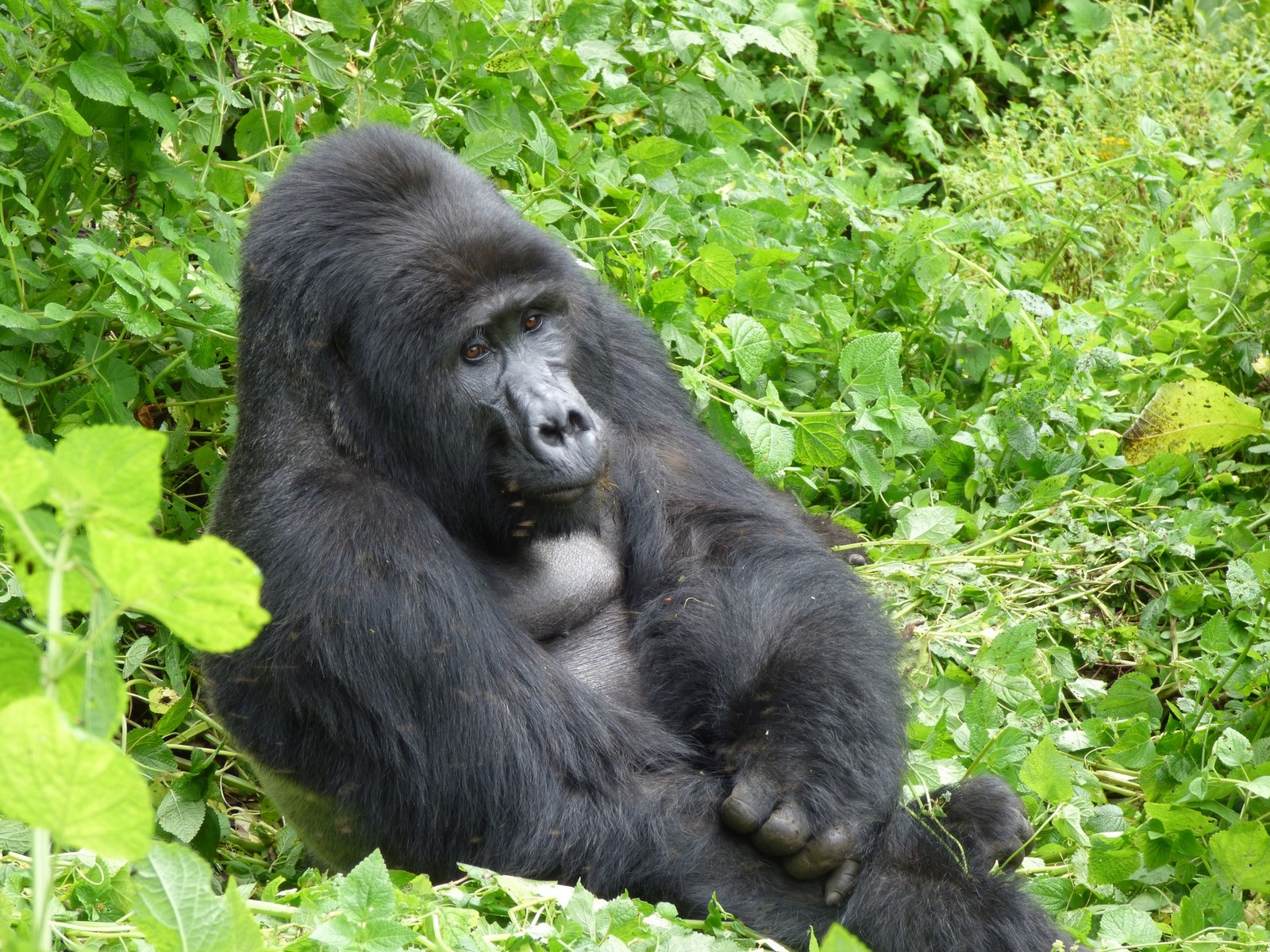
The best time for a Uganda gorilla trekking safari is during the dry seasons: June to August and December to February. These months offer drier hiking trails in Bwindi Impenetrable National Park, making the trek less strenuous, and provide clearer, less dense vegetation for better gorilla sightings
2-days-all-inclusive-uganda-gorilla-trekking-from-kigali-rwanda
3-day-budget-gorilla-trekking-safari-in-uganda
4-days-mgahinga-gorilla-trekking-golden-monkey-tracking-batwa-heritage-and-lake-bunyonyi
5-days-murchison-falls-safari-and-gorilla-trekking-in-bwindi
6-days-budget-uganda-safari-and-gorilla-trekking
7-day-uganda-gorilla-trekking-chimpanzee-wildlife-safari-tour-and-culture
Key Considerations for Timing
Best Weather (The Primetime Dry Seasons)
The dry seasons—stretching from June to September and again from December to February—are widely considered the gold standard for Ugandan travel. During these months, the equatorial sun dominates, and the rain takes a backseat. For hikers, this is a game-changer. Gorilla trekking in Bwindi Impenetrable Forest or Mgahinga involves navigating steep, dense terrain; in the dry season, the trails are significantly firmer, reducing the "one step forward, two steps back" struggle through slick mud.
The air is generally clearer, and the humidity is more manageable, making long treks less draining. Beyond the physical comfort, the dry weather also affects the vegetation. The undergrowth is less dense, providing better lines of sight for photography and making it easier to spot primates swinging through the canopy. While "dry" in a rainforest doesn't mean zero rain, the showers are usually brief and followed by sunshine, ensuring your gear stays relatively dry and your experience remains focused on the wildlife rather than the weather.
Peak Season Caution (The Logistics Logic)
With perfect weather comes the inevitable crowd. The windows of June–August and December–January coincide with global holiday breaks, making them the busiest times in Uganda’s national parks. The most critical factor here isn't just the crowds at the lodges—it’s the Gorilla Permit.
The Uganda Wildlife Authority (UWA) strictly limits the number of people who can visit a gorilla family to eight per day. Because demand skyrockets during these months, permits often sell out a year in advance. If you’re a "spur-of-the-moment" traveler, peak season will be frustrating. Furthermore, because lodges are at capacity, "rack rates" (full price) are standard, and the best-located accommodations—those closest to the trekking starting points—are the first to go. If you choose this window, you trade spontaneity for the highest probability of perfect trekking conditions, but your itinerary must be locked down months before you even pack your bags.
Best for Budget & Low Crowds (The Emerald Season)
From March to May and October to November, Uganda enters its rainy seasons. While some shy away from the "Emerald Season," savvy travelers embrace it. Yes, the trails are muddier and you will definitely need high-quality gaiters and waterproof gear, but the rewards are financial and atmospheric. Many luxury lodges offer significant "low season" discounts to fill beds, and you might find yourself on a gorilla trek with only two or three other people instead of a full group of eight.
The landscape during these months is spectacularly vibrant. The dust of the dry season is washed away, leaving the hills of Kabale and Kisoro a deep, cinematic green. For birdwatchers, this is often the preferred time as migratory birds are present and food sources are abundant. If you don't mind a bit of mud and the occasional heavy downpour, the rainy season offers a much more intimate, private, and cost-effective experience with the mountains.
Wildlife Viewing (Savannah Dynamics)
While gorillas are the main event, most travelers pair their trek with a safari in Queen Elizabeth, Murchison Falls, or Kidepo Valley National Parks. The dry seasons are undeniably superior for savannah wildlife viewing. As the smaller watering holes in the bush dry up, animals are forced to congregate around permanent water sources like the Kazinga Channel or the Victoria Nile.
This creates a "spectator sport" environment. You don't have to search as hard for elephants, buffaloes, or thirst-driven predators because you know exactly where they are headed. The grass is also much shorter during these months; lions and leopards, who rely on tall grass for camouflage, are much easier to spot against the parched, golden backdrop. If your goal is to see the "Big Five" alongside the Great Apes, timing your visit for the height of the dry season ensures the most dramatic and reliable wildlife sightings.
Summary of Months
Best: June, July, and August (The Prime Dry Season)
This is the undisputed heavyweight champion of Ugandan tourism. These months represent the longest dry season of the year, characterized by clear blue skies and minimal rainfall. For those heading to Bwindi Impenetrable Forest or Mgahinga Gorilla National Park, this is the "Goldilocks" zone. The forest floor is at its driest, meaning the steep, tangled trails are as stable as they ever get. You’ll spend less time worrying about your footing and more time making eye contact with a mountain gorilla.
Beyond the primates, this is the peak of the safari circuit. In parks like Queen Elizabeth or Murchison Falls, the vegetation thins out significantly. This lack of foliage acts like a curtain being pulled back, revealing lions, leopards, and elephants that would otherwise be hidden in the tall grass. Furthermore, as smaller water holes vanish, wildlife is forced to congregate around major water sources. A boat cruise on the Kazinga Channel during these months is like a live-action nature documentary, with hippos, crocodiles, and thirsty buffalo lining the banks in record numbers. Because this is the "best" time, expect to book your permits at least 6–12 months out, as the world’s eyes are firmly fixed on Uganda during these months.
Excellent: December, January, and February (The Short Dry Season)
If June to August is the "Grand Summer," then December through February is the "Slightly Cooler Cousin." This second dry season is often preferred by seasoned travelers who want the benefits of dry weather without the intense mid-year heat. The dust levels are often lower than in August, and the air feels crisp. This is a fantastic window for trekking because, while it is technically "dry," the occasional light shower keeps the landscape looking vibrant rather than parched.
Logistically, this window is perfect for those looking to escape the Northern Hemisphere’s winter. It’s a popular time for birdwatchers; while the local species are active, you also get to witness the arrival of Palearctic migratory birds, making the birding lists in places like the Kibale Forest staggering. The temperatures are incredibly pleasant—rarely too hot for a long hike and perfectly cool in the evenings for a campfire at your lodge. While it is still a "peak" season, the crowds can feel slightly more dispersed than in July, though gorilla permits remain a hot commodity that requires advanced planning.
Alternative: September (The Transition Month)
September is the "wildcard" of the Ugandan calendar, and for many, it is the best-kept secret. It serves as a transition period between the long dry season and the shorter rains of October. Early September usually retains the bone-dry characteristics of August, while late September starts to see the occasional dramatic equatorial thunderstorm. The beauty of this month lies in the shifting light. Photographers often prefer September because the air is washed clean of the dry season’s dust, but the heavy cloud cover of the rainy season hasn't fully set in yet.
The wildlife viewing remains top-tier. Because the "peak" rush of July and August has subsided, you might find the parks a bit quieter. It’s a month where spontaneity is slightly more possible; you might find a last-minute permit or a room at a preferred lodge that was blocked out weeks prior. The vegetation begins to turn a deeper shade of emerald, providing a stunning backdrop for photography. It’s the perfect month for the traveler who wants the "Prime" experience but prefers to avoid the height of the tourist surge.
Rainy Season: March–May and October–November (The Emerald Season)
While often labeled "Low Season," the rainy months are unfairly maligned. In Uganda, "rainy" rarely means gray skies all day; instead, it usually involves a massive, spectacular downpour for an hour or two, followed by brilliant sunshine. For the budget-conscious or the crowd-averse, this is the "Emerald Season." This is when the Pearl of Africa is at its most photogenic—the landscape is a riot of deep greens, the air is incredibly clear, and the flowers are in full bloom.
The most significant advantage here is exclusivity and value. Many luxury lodges drop their prices significantly to attract visitors, and the "crowds" vanish. Imagine standing with a family of mountain gorillas and being one of only three people in the group—it’s an intimate, spiritual experience that you rarely get in July. Yes, the trekking is harder. You will get muddy, and you will need a sturdy pair of boots and a serious raincoat. However, the gorillas often move to lower elevations during these months to feast on fresh bamboo shoots, which can actually result in shorter (though slipperier) treks. If you don't mind a bit of "adventure" in your adventure, the rainy season offers a raw, powerful version of the Ugandan wilderness.
Which months are the absolute best for gorilla trekking in Uganda?
The months of June, July, August, and September, along with December, January, and February, are widely considered the gold standard for trekking. During these windows, the equatorial climate shifts into a dry phase, providing the most stable conditions for navigating the steep, volcanic ridges of Bwindi Impenetrable Forest and Mgahinga Gorilla National Park. Because the rainfall is at its annual minimum, the trails are significantly firmer, reducing the physical strain of the climb.
While the "best" months are often defined by human comfort, they also offer the highest reliability for travel logistics. Flights are less likely to be delayed by tropical storms, and the unpaved "African massage" roads leading to the parks are much easier for 4x4 vehicles to traverse without getting stuck in deep mud. Choosing these months maximizes your "active" time; instead of huddling under a poncho waiting for a downpour to pass, you are more likely to spend your trek under clear skies with excellent sunlight for photography. It is the period where the "Impenetrable" forest becomes the most welcoming to outsiders.
When is the peak season for gorilla trekking in Uganda?
Peak season runs from June to August and during the December-to-January holiday rush. This popularity is a double-edged sword. On one hand, you are guaranteed the best weather and a vibrant atmosphere at the safari lodges, where you can swap stories with travelers from around the world. On the other hand, the demand for gorilla permits reaches a fever pitch. Because the Uganda Wildlife Authority strictly limits the number of visitors to protect the primates’ health, permits are a finite resource.
To secure a spot during these months, you must think half a year—if not a full year—ahead. Booking 3 to 6 months in advance is the absolute minimum safety net; if you wait until you arrive in Entebbe to look for a permit in July, you will almost certainly be disappointed. Furthermore, peak season means that high-end lodges are often at full capacity. By booking early, you ensure you stay at a lodge that is geographically close to your assigned trekking "gate," saving you from a grueling 2:00 AM wake-up call just to drive to the starting point.
Is gorilla trekking available year-round?
Yes, gorilla trekking is a 365-day-a-year activity. Uganda does not "close" for a winter or a monsoon season. The gorillas are permanent residents of these high-altitude forests, and the rangers who protect them are there every single day. This year-round availability is a testament to the resilience of the local tourism infrastructure and the adaptability of the mountain gorillas themselves.
For the traveler, this means that even if your work schedule only allows for a trip in the "low" months of April or November, the adventure is still very much on the table. In fact, some regular visitors prefer the off-season because the experience feels more raw and authentic. You aren't just visiting a park; you are entering a living, breathing ecosystem that doesn't stop for the rain. Whether it is a sunny Tuesday in January or a misty Friday in May, the trackers will head out at dawn to locate the families, ensuring that the opportunity for a face-to-face encounter is always available.
How does the weather in the dry season affect trekking?
The dry season acts as a mechanical advantage for the hiker. Bwindi’s terrain is famously vertical, with trails that often require you to pull yourself up using roots and branches. When the weather is dry, the soil—a thick, volcanic clay—stays compact and "grippy." This makes the ascent far less exhausting, as you aren't fighting for traction with every step. You’ll find that you can maintain a much more consistent pace, which can turn a "difficult" trek into a "moderate" one.
Beyond the footing, the dry season significantly reduces the "nuisance factors" of the jungle. Humidity is lower, which helps keep your body temperature regulated during the steep climbs. You also encounter fewer stinging nettles and insects, which thrive in the damp, tropical heat of the rainy months. Furthermore, the lack of cloud cover means the forest floor is brighter, which helps the rangers (and you) spot the gorillas from a distance. In the dry season, the weather is essentially a silent partner, working to make the logistical challenges of the forest as manageable as possible.
Is it possible to track gorillas in the rain?
Absolutely. In fact, if you trek during the wet seasons of March to May or October to November, you should expect rain as a certainty. Tracking in the rain is a visceral, sensory experience. The forest takes on a "primordial" feel, with mist clinging to the ancient ferns and the sound of water dripping through the multi-layered canopy. However, it requires a higher level of physical preparation. The trails become slick, red slides, and a pair of high-quality, waterproof hiking boots with deep tread is non-negotiable.
The gorillas themselves are largely indifferent to the rain; they may huddle together or seek shelter under thick foliage, but they continue their daily routines. For the trekker, the challenge is mostly one of gear and mindset. You must be prepared to get muddy and wet. Using a "porter" (a local resident who assists with your bag) becomes almost essential during the rain, as they provide an extra set of steady hands to help you navigate the more treacherous slopes. If you embrace the mud, a rainy trek can be one of the most memorable and atmospheric adventures of your life.
What are the advantages of trekking in the rainy season?
While the dry season gets all the fame, the rainy season—often called the "Emerald Season"—offers unique benefits that appeal to savvy travelers. The first is solitude. During these months, the number of tourists drops significantly. You might find that your trekking group consists of just three or four people instead of the maximum of eight, leading to a much more intimate and quiet encounter with the gorillas. It feels less like a tour and more like a private expedition.
The second major advantage is value. To keep occupancy up, many of Uganda’s most luxurious lodges offer deep discounts during the low season. You can often stay in a world-class forest villa for a fraction of the July price. Additionally, the scenery is at its most spectacular; the rain washes the dust away, leaving the mountains a vibrant, cinematic green that looks incredible in photos. Finally, because food is so abundant at lower altitudes during the rains, the gorillas often move down the mountains to feast on bamboo shoots, which can actually make the trekking distance shorter than in the dry season.
Is there a best time for photographing gorillas?
For the best photographic results, the dry months of June to September and December to February are superior. The primary reason is light. Under the dense canopy of a rainforest, light is a precious commodity. In the dry season, the skies are clearer and the sun is higher, allowing more "dappled" light to reach the forest floor. This makes it easier to keep your shutter speeds high enough to capture a moving gorilla without the blur that often plagues low-light jungle photography.
Vegetation also plays a massive role. In the rainy season, the forest grows at an explosive rate, and the undergrowth can become a solid wall of green. During the dry months, the "soft" vegetation thins out slightly, providing clearer lines of sight. You’re less likely to have a perfect shot of a silverback’s eyes ruined by a stray, out-of-focus leaf right in front of the lens. Additionally, your gear will thank you—keeping expensive lenses and camera bodies dry and fungus-free is much easier when you aren't battling 90% humidity and daily tropical downpours.
How far in advance should I book my December trek?
December is a "Peak of Peaks." Because it coincides with global Christmas and New Year holidays, it is arguably the most competitive time of year for gorilla permits. To ensure you don't miss out, you should aim to book 3 to 6 months in advance, though 9 months is even safer. December permits are often the first to sell out because many travelers combine their gorilla trek with a wider East African "Festive Season" itinerary.
Booking early isn't just about the permit; it’s about the entire ecosystem of your trip. The most experienced guides and the most comfortable 4x4 safari vehicles are reserved months ahead of time. If you wait until October to plan a December trip, you may find that you have a permit but are forced to stay in a lodge two hours away from the park gate because all the local options are full. By locking in your December plans by mid-year, you guarantee a seamless, high-quality experience during one of the most beautiful times of the year in the mountains.
Are there months to avoid for trekking?
While you can trek every month, March, April, and May are the most challenging. These months represent the "long rains," where the equatorial downpours can be heavy and sustained. For those who aren't confident in their physical fitness or balance, these months can be frustrating. The mud is deep, the slopes are slick, and the humidity can make the climb feel twice as difficult. If your goal is a "comfortable" vacation, these are the months you might want to skip.
However, "avoid" is a strong word. For the budget-conscious traveler or the professional photographer looking for "moody" mist shots, these months are actually an opportunity. The key is to manage expectations: you will get wet, the car might get stuck in the mud once or twice, and the hike will be a workout. As long as you have the right gear—waterproof bags for your electronics and sturdy boots—you can still have a successful trek. If you prefer predictability and dry feet, stick to the June–September window.
What is the temperature like in the dry season?
Uganda’s climate is surprisingly mild given its equatorial location, largely due to the high altitude of the gorilla-dwelling regions. In the dry season, daytime temperatures typically hover between 24°C and 30°C (75°F to 86°F). This is ideal "hiking weather"—warm enough that you don't need heavy layers while you’re moving, but rarely so hot that you feel heat exhaustion. It is a pleasant, tropical warmth that feels energized rather than draining.
The real surprise for many travelers is the nighttime temperature. Because Bwindi and Mgahinga are located at altitudes between 1,100 and 2,500 meters, the mercury drops significantly once the sun goes down. Even in the height of the dry season, evening temperatures can fall to 10°C or 15°C (50°F to 60°F). Most lodges provide hot water bottles and have roaring fireplaces in the lounge. When packing for the dry season, you need a "layered" strategy: light, breathable clothes for the humid forest during the day, and a fleece or warm jacket for the chilly mountain nights.
Do gorillas move less in the dry season?
Interestingly, the gorillas often move more during the dry season. This comes down to their diet. Mountain gorillas are "folivores," meaning they eat leaves, shoots, and stems. In the rainy season, food is everywhere—the forest is a lush buffet, and a family might only move a few hundred meters in a day because they don't have to search for their next meal. They become somewhat "lazy" in their movements because the "pantry" is full.
In the dry season, some of their favorite plants become less abundant or dry up in certain areas. This forces the troop to roam further and climb higher to find the best foraging spots. For the trekker, this means your "dry and easy" trek might actually involve more walking distance than a "rainy and hard" one. However, the trackers are experts at following their trail, and because the ground is dry, walking that extra mile is usually much easier than a shorter distance in the mud. It’s a trade-off: you walk further, but on much better footing.
Which months offer the best value for money?
If you are looking for a luxury experience on a mid-range budget, April, May, and November are your target months. These "low season" windows are when the Ugandan tourism industry offers its best deals. Many of the high-end safari lodges, which charge premium rates in August, switch to "low season pricing" to attract visitors. You can often find yourself staying in a $800-a-night forest lodge for $450, or benefiting from "stay 3, pay 2" deals.
While the gorilla permit price itself is currently set at a fixed rate by the government to ensure conservation funding, the ancillary costs drop significantly. Internal "bush flights" may have more availability for lower-fare buckets, and private driver-guides are more negotiable with their daily rates. For a couple or a family, the savings of traveling in May versus July can amount to thousands of dollars. If you are physically fit and don't mind the rain, these months provide the highest "luxury-per-dollar" ratio available in East Africa.
Is Jan/Feb a good alternative to peak season?
Absolutely. January and February are often called the "short dry season," and they are arguably the best-kept secret in Ugandan travel. While the world focuses on the June-to-August window, January and February offer almost identical weather conditions—plenty of sun, dry trails, and clear skies—but with a noticeable drop in tourist volume once the New Year’s rush subsides.
This is a "sweet spot" for several reasons. First, the vegetation is still relatively thin from the preceding dry weeks, making for excellent wildlife viewing. Second, if you are also planning a savannah safari (like Queen Elizabeth Park), this is a great time to see newborn animals, which in turn attracts predators like lions and leopards. It is a fantastic time for birding as well. If you want the "Peak Season experience" without the "Peak Season crowds," January and February are the months to circle on your calendar. You get all the benefits of the dry weather with a much more relaxed, exclusive feel at the lodges.
How do I book permits in the best months?
Booking permits for the "Best Months" requires a strategic approach. You have two options: booking directly with the Uganda Wildlife Authority (UWA) or through a registered tour operator. While direct booking is possible, it can be administratively heavy, especially from overseas. Most travelers use a tour operator because these companies have direct access to the UWA booking system and can see real-time availability across the different "sectors" of the park (Buhoma, Ruhija, Rushaga, and Nkuringo).
When booking for peak months, you should verify that your operator is a member of the Association of Uganda Tour Operators (AUTO). This ensures they are a legitimate business with the "clout" to secure permits. In the busiest months, operators often have blocks of permits reserved, which might be your only way in if the public allocation is showing as zero. Once your permit is secured, you will receive a scanned copy of the receipt; keep this safe, as it is your "golden ticket" into the forest. Remember, once purchased, permits are generally non-refundable, so ensure your travel dates are locked in before you pay.
Does the vegetation affect the trekking experience?
Vegetation is the "invisible" factor that defines your time with the gorillas. In a dense rainforest, the difference between seeing a gorilla and experiencing a gorilla often comes down to a few branches. During the dry seasons, the lower-level vegetation (ferns, stinging nettles, and soft-stemmed plants) tends to thin out or die back slightly. This is a massive boon for visibility. It allows you to see the full body of the gorilla, including the silverback’s impressive stature, rather than just a head peering out from behind a wall of green.
In contrast, during the rainy seasons, the forest is at its most "impenetrable." The greenery is lush, thick, and vibrant, which looks beautiful but can make photography frustrating. You may find yourself constantly shifting your position just to get a clear view of an infant playing. However, the thick vegetation does provide a more "authentic" jungle feel. If you are there for the photos, you want the thinned-out vegetation of the dry season. If you are there for the atmosphere and the "lost world" aesthetic, the dense, rain-soaked greenery of the wet season is unparalleled.
Booking Uganda gorilla trekking safari tour with us Roads of Adventure safaris
Roads of Adventure Safaris offers personalized Uganda gorilla trekking tours, featuring 6, 7, 11, and 14-day itineraries to Bwindi Impenetrable National Park. Their packages include gorilla permits, transportation, and luxury or mid-range accommodation, with options to combine treks with wildlife viewing in Queen Elizabeth National Park
