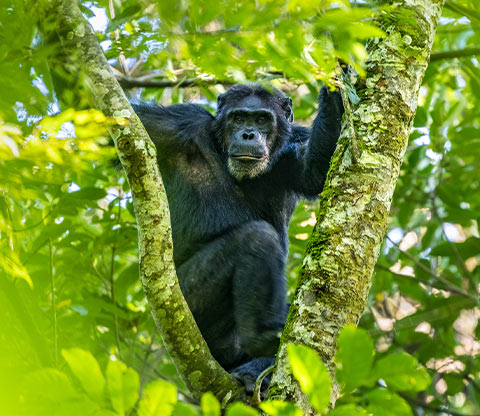
The best time for a 3-day Kibale National Park chimpanzee tracking safari is during the dry seasons: June to August and December to February. During these months, trails are less muddy, walking is easier, and visibility is better, providing the most enjoyable experience for tracking and photography
3-days-chimpanzee-tracking-to-kibale-forest-national-park
3-days-chimpanzee-habituation-in-kibale-forest-park
3-days-chimpanzee-tracking-in-kibale-forest-park-from-kigali
Key Considerations by Season
- Best Time (Dry Seasons - June-Aug & Dec-Feb): The forest is less dense, making chimps easier to spot. These months offer the best weather conditions for hiking.
- Alternative Time (Wet Seasons - Mar-May & Oct-Nov): While it is rainy, this period offers lush, green scenery and often fewer crowds. Chimpanzees can sometimes be easier to find as they tend to stay in lower-altitude areas with abundant food, though trails are slippery.
- Peak Season: June to September is the busiest period; it is advised to book permits and lodges in advance
3 Days Kibale national park Chimpanzee tracking
This 3-day chimpanzee tracking safari takes you to Kibale National Park, the "Primate Capital of the World," located in western Uganda. Covering over 795 square kilometers of lush tropical rainforest, Kibale holds the highest density of primates in Africa, boasting over 1,500 chimpanzees. This action-packed itinerary is designed to provide an intimate, guided, and unforgettable face-to-face encounter with humanity’s closest relatives, who share about 98-99% of our DNA.
Beyond chimpanzees, you will explore a biodiverse habitat home to 12 other primate species, including red-tailed monkeys, black-and-white colobus, and grey-cheeked mangabeys. The adventure combines a thrilling morning trek with an afternoon of cultural immersion and birding in the scenic Bigodi Wetland Sanctuary. Perfect for nature lovers and wildlife enthusiasts, this short, intensive safari promises exceptional photography opportunities and deep insights into forest ecology, departing from Kampala for a 3-day immersion into Uganda's premier primate destination.
Day 1: Scenic Drive to Kibale Forest and Bigodi Swamp Walk
Your adventure begins early in Kampala or Entebbe with a 5–6-hour scenic drive westwards, passing through vibrant villages, rolling hills, and expansive tea plantations. After arriving in Fort Portal town and enjoying a delicious lunch, you will proceed to Kibale National Park for check-in. In the afternoon, embark on an immersive guided nature walk in the Bigodi Wetland Sanctuary. This sanctuary is a paradise for birders, offering a chance to spot the Great Blue Turaco, papyrus gonolek, and various kingfishers. While walking through the papyrus forest, you may encounter other primates such as black-and-white colobus, red-tailed monkeys, and vervet monkeys. This walk offers a fantastic, tranquil introduction to the biodiversity of the region before the next day's excitement. Return to your lodge for relaxation, dinner, and an overnight stay, surrounded by the sounds of nature.
Day 2: Chimpanzee Tracking and Cultural Experience
Following an early breakfast, you will head to the Kanyanchu Visitor Centre for a 7:30 am briefing from knowledgeable park rangers on the rules of trekking. Then, you will enter the dense forest to track a habituated chimpanzee group. The trek can take 2–5 hours depending on where the chimps nested the previous night. Once located, you are permitted one magical hour with these intelligent apes, observing them playing, grooming, and feeding high in the trees. Return to the lodge for lunch and rest. In the afternoon, you may take a walk through the local Bigodi community to explore the traditional daily life of the Batooro people, visit a local school, or see the Bigodi Women’s Group at work. Alternatively, spend the evening relaxing and enjoying the lodge’s amenities, preparing for your journey back the next day.
Day 3: Optional Activity and Departure
After a relaxed breakfast and checking out of your lodge, you will have the option to visit the nearby scenic crater lake region for a spectacular view. You can also choose an optional visit to the historic Amabere Ga Nyina Mwiru Caves, which are filled with local folklore and history, before starting the return journey to Kampala or Entebbe International Airport. The drive back is filled with scenic views of the countryside, and you will have lunch in Fort Portal town. You will arrive in Kampala or Entebbe in the late afternoon, concluding an incredible 3-day primate trekking experience. Depending on your flight time, the tour guide will drop you off at a place of your choice or directly at Entebbe Airport.
1. When is the absolute best time for Chimpanzee tracking in Kibale?
The absolute best time to visit Kibale National Park for chimpanzee tracking is during the two distinct dry seasons: June to September and December to February. These windows offer the most stable weather conditions, which is crucial when navigating the dense, tropical terrain of the forest. During these months, the forest floor is relatively dry, making the hiking trails much more manageable and reducing the risk of slipping on steep or muddy inclines. This is particularly important because chimpanzees are highly mobile; trackers must sometimes move quickly through the undergrowth to keep up with a troop on the move.
Beyond the ease of trekking, the dry season significantly improves your viewing opportunities. When the rainfall is low, the canopy is slightly less dense, and the chimpanzees often spend more time on the ground or in the lower branches of the trees looking for fallen fruit. This brings them closer to eye level, providing an intimate look at their complex social interactions and grooming rituals. Additionally, the lack of rain means that the primates are more active and vocal, as they don't have to seek shelter from heavy downpours.
For those planning a comprehensive safari, these months also align perfectly with wildlife viewing in other Ugandan parks like Queen Elizabeth or Murchison Falls. Since the weather is consistent across the region, you can seamlessly transition from the forest to the savannah. However, because this is the "absolute best" time, it is also the period of highest demand. Accommodations near the park, such as those in the Bigodi area or overlooking the Crater Lakes, tend to fill up months in advance. If you prioritize comfort, clear skies, and high-quality sightings, the peak dry season is the undisputed winner for your chimpanzee encounter.
2. Which months should I avoid for Chimpanzee tracking?
While chimpanzee tracking is technically a year-round activity, the "low" or wet seasons—March to May and October to November—are often considered the months to avoid if you have a choice. During these periods, Kibale receives heavy equatorial rainfall, which transforms the forest into a challenging environment. The trails become incredibly slick and muddy, requiring a much higher level of physical fitness and coordination to navigate. Thick mud can make a two-hour trek feel significantly longer and more exhausting, which might detract from the enjoyment of the experience for some visitors.
Weather in the rainforest is unpredictable, but during these months, the likelihood of a heavy downpour during your scheduled tracking hour is high. Rain can make photography difficult, as keeping expensive camera gear dry while trekking through dripping vegetation is a constant struggle. Furthermore, when it rains heavily, chimpanzees tend to retreat into the thickest parts of the canopy or huddle together for warmth, making them quieter and harder to locate. The usual "pant-hoots" that guides use to track the troop are muffled by the sound of falling rain, potentially leading to longer search times.
However, "avoiding" these months is a subjective choice. For budget-conscious travelers, these months often see lower prices for lodges and a much lower volume of tourists in the park. You will likely have the forest almost to yourself, providing a raw and solitary connection with nature that isn't possible in July or August. If you are well-prepared with high-quality waterproof gear, sturdy boots with deep tread, and a sense of adventure, the wet season can still be rewarding. But for the average traveler seeking a smooth and predictable experience, the peak rains of April and October are best left off the itinerary.
3. Is Chimpanzee tracking in Kibale possible all year round?
Yes, chimpanzee tracking in Kibale National Park is a year-round activity. Unlike certain high-altitude mountain treks that may become impassable, the equatorial location of Kibale ensures that temperatures remain relatively consistent, and the park rangers and trackers operate every single day, including holidays. The chimpanzees themselves do not migrate; they are permanent residents of the forest, meaning they are present and available to be found regardless of whether it is January or June.
The "all-year" availability is a testament to the professionalism of the Uganda Wildlife Authority (UWA) staff. Even in the height of the rainy season, trackers head out early in the morning to locate the various habituated communities. They are highly skilled at reading forest signs—broken branches, discarded fruit skins, and dung—ensuring that even when weather conditions are suboptimal, the success rate for finding the chimps remains remarkably high (usually above 90%). This reliability makes Kibale one of the best places in the world for primate tourism.
However, the nature of the experience shifts with the seasons. In the "green" months (the wet season), the forest is at its most vibrant and lush, providing a stunning backdrop for the trek. The air is crisp, and the scent of damp earth and blooming tropical plants is intoxicating. In contrast, the dry months offer a more "clinical" trekking experience with firm ground and better visibility. Knowing that the park is always open allows for great flexibility in travel planning. Whether you are adding a primate trek to a winter holiday or a summer break, Kibale is ready to welcome you, provided you have secured your permit and packed the appropriate clothing for the prevailing season.
4. What is the best time of day for Chimpanzee tracking?
The morning session, which typically begins with a briefing at 7:00 am, is widely considered the best time of day for chimpanzee tracking. Chimpanzees are diurnal animals, and their activity levels peak shortly after sunrise. After spending the night in nests high in the trees, they descend to the ground or move through the mid-canopy to forage for food. This early morning window is when they are most vocal; their loud "pant-hoots" echo through the forest as they communicate with other members of the troop, making it much easier for your guides to pin down their exact location.
During the morning hours, you are more likely to witness dynamic social behaviors. This is when the community is most active—socializing, grooming, and playing. Seeing a large group of chimpanzees on the forest floor is a breathtaking sight, and early morning light filtering through the canopy provides a magical, soft glow that is perfect for photography. As the day progresses and the sun rises higher, temperatures in the forest can increase, often leading the chimps to become more lethargic. By midday, they frequently find a shaded spot to rest, which, while still interesting to observe, lacks the high energy of the morning forage.
There is also an afternoon session, usually starting around 2:00 pm. While still very successful, the afternoon can feel a bit more rushed if the sun sets while you are still in the forest. However, the afternoon session can be a tactical choice for those who prefer fewer crowds, as many tour groups opt for the morning slot. For the most "classic" experience with the highest probability of seeing the chimps at their most animated, the 7:00 am start is the gold standard. It allows you to complete your trek and return for lunch, leaving the afternoon free for a swamp walk in Bigodi or a visit to the local community.
5. How are the conditions for Chimpanzee tracking in June to September?
The period from June to September represents the "long dry season" in Uganda and is arguably the most popular time for chimpanzee tracking in Kibale. During these months, the weather is characterized by brilliant sunshine and minimal rainfall. For the trekker, this means the forest floor is at its driest. You can walk with confidence, knowing that the trails are firm, which allows you to focus your attention on the canopy above rather than your feet. The reduced humidity also makes the physical exertion of the hike much more comfortable, preventing the "sauna-like" feeling that can occur during the wetter months.
From a wildlife perspective, these months are excellent for visibility. The lack of heavy rain leads to a slight thinning of the undergrowth and lower-level vegetation. This "openness" in the forest structure makes it significantly easier to spot chimpanzees if they are moving through the bushes or sitting in a clearing. It also benefits the chimps’ diet; as certain fruits ripen during this time, they may congregate in specific, predictable areas, allowing guides to lead you directly to the action. Because the ground is dry, the chimps themselves are more inclined to walk on the forest floor, offering those iconic ground-level viewing opportunities that every visitor hopes for.
However, visitors should be aware that June to September is the "peak-peak" season. This means that the park’s headquarters at Kanyanchu will be at its busiest. While UWA strictly limits the number of people allowed to visit each chimpanzee family to ensure the animals' well-being, the communal areas and nearby lodges will have a high level of activity. It is also the most expensive time to travel, as "low season" discounts on accommodation are unavailable. If you can overlook the presence of fellow travelers, the environmental conditions during these four months provide the most effortless and visually stunning tracking experience possible.
6. Is December to February good for Chimpanzee tracking?
Yes, the December to February window is an outstanding time for chimpanzee tracking, often referred to as the "short dry season." This period follows the rains of October and November, but by mid-December, the forest has usually dried out significantly. The weather is generally hot and dry, with clear blue skies providing excellent light for photography. For many travelers, this is the perfect time to visit, as it aligns with the northern hemisphere’s winter holidays, offering a tropical escape into one of the world’s most biodiverse environments.
One of the unique advantages of tracking during these months is the behavior of the chimpanzees in relation to food sources. During the heat of the short dry season, certain trees may bear fruit that the chimps find irresistible. Your guides will know exactly which "fruiting trees" are currently in season, which often results in very short treks; sometimes you can find a troop within 30 to 45 minutes of entering the forest. The high temperatures also mean the chimpanzees are very active in the cooler early mornings before settling down in the shade, providing a predictable rhythm to their day that trackers can easily follow.
While December can be quite busy due to the festive season, January and February often see a slight dip in tourist numbers compared to the July/August rush. This makes it a "sweet spot" for travelers who want the benefits of dry weather but prefer a slightly quieter atmosphere at the lodges. The trails remain in excellent condition—firm and easy to navigate—making it accessible for older travelers or those who might be worried about the physical demands of the trek. Overall, the December to February period offers a high-reward, low-stress environment for anyone looking to check chimpanzee tracking off their bucket list.
7. Can I go Chimpanzee tracking during the wet season?
Absolutely. Chimpanzee tracking during the wet season (March–May and October–November) is not only possible but can be a deeply rewarding experience for the right kind of traveler. While the physical challenges are greater due to the mud and rain, the forest itself undergoes a spectacular transformation. This is the "green season," where the foliage is at its most lush and vibrant. For those interested in botany or macro photography, the wet season offers a wealth of opportunities to capture the intricate details of mosses, ferns, and exotic flowers that thrive in the damp environment.
One of the most significant advantages of the wet season is the lack of crowds. You will find that the park is much quieter, and you may even end up in a smaller tracking group, allowing for a more personal interaction with your guide. This quietness extends to the wildlife; with fewer people in the forest, the experience feels more authentic and wild. Furthermore, the wet season is the best time for bird watching in Kibale. Many birds are in their breeding plumage, and migratory species are often present. If you are a "birder," the trade-off of a little mud for a glimpse of the Great Blue Turaco or the elusive Green-breasted Pitta is well worth it.
Logistically, the wet season can also be easier on your wallet. Many luxury lodges in the Kibale and Fort Portal area offer "low season" rates, sometimes discounting their rooms by 20-30%. If you are prepared with a pair of high-quality gaiters (to keep mud out of your boots) and a professional-grade rain jacket, the rain rarely lasts all day; it usually comes in intense, short bursts followed by sunshine. For the adventurous traveler who values solitude and lush scenery over perfectly dry boots, the wet season is a hidden gem in the Ugandan safari calendar.
8. Is Chimpanzee tracking in the afternoon better than the morning?
While the morning session is the traditional favorite, the afternoon session (starting around 2:00 pm) has its own set of unique advantages. The primary reason a traveler might choose the afternoon is to avoid the crowds. Most large tour groups and itineraries default to the 7:00 am slot, meaning the afternoon briefing at Kanyanchu is often much more relaxed. If you prefer a quieter start to your day—perhaps enjoying a slow breakfast overlooking the forest before heading out—the afternoon session is perfect for your pace.
In terms of chimpanzee behavior, the afternoon can be a bit of a "wildcard." By 2:00 pm, the chimpanzees have usually finished their primary morning forage and may be in a "rest and social" phase. You might find them lounging in the shade, grooming one another, or nursing their young. While there might be less "high-speed" movement through the forest compared to the morning, the sightings can be much more stationary and intimate, allowing you to observe the nuances of their social hierarchy without having to constantly hike to keep up.
However, there are a few drawbacks to consider. In the rainforest, the clouds often build up throughout the day, meaning the chance of an afternoon rain shower is slightly higher than in the early morning. Additionally, the light levels under the dense canopy drop significantly as the sun begins to set (usually around 6:30 pm), which can make photography more challenging toward the end of your trek. If you are a serious photographer, the morning light is superior. But if you are a relaxed traveler looking for a more "private" forest experience and don't mind a slightly higher chance of a shower, the afternoon session is an excellent alternative that still boasts a very high success rate.
9. How does weather affect the 3-day Chimpanzee tracking schedule?
The weather plays a pivotal role in the rhythm and success of a 3-day chimpanzee tracking itinerary. In a typical 3-day trip, Day 1 is usually for arrival and perhaps a crater lake hike, Day 2 is the primary tracking day, and Day 3 involves a community walk before departure. If your trip falls during the dry season, the schedule usually runs like clockwork. You can expect clear mornings for your trek and warm, dry afternoons for secondary activities like the Bigodi Wetland Sanctuary walk, which is famous for its primates and birds.
However, during the wet season, the weather can introduce a level of unpredictability that requires a flexible mindset. A heavy morning downpour on Day 2 might delay the start of your trek or make the hike significantly longer as trackers work harder to find a "quiet" troop. In extreme cases, if the rain is torrential, you might spend the first hour of your permit time waiting under a shelter. This doesn't mean you'll miss the chimps—UWA guides are very patient—but it might mean your trek lasts four hours instead of two, potentially cutting into your planned afternoon activities.
Strategically, the 3-day format is the safest way to handle weather risks. Having those extra "buffer" hours on Day 1 or Day 3 allows you to shift activities around if the weather turns. For example, if it's pouring on the afternoon of Day 2, you might move your Bigodi walk to the morning of Day 3. The most important thing for a 3-day trip is to pack for "all seasons"—even in the dry season, a stray shower is possible. By bringing a good rain jacket and waterproof bags for your electronics, you ensure that the weather remains a part of the adventure rather than a disruption to your carefully planned schedule.
10. When is the best time for photography during Chimpanzee tracking?
For serious photographers, the dry seasons (June–September and December–February) are the undisputed best times for a mission to Kibale. The primary reason is light. In the dense, multi-layered canopy of the rainforest, light is your most precious and scarcest resource. During the dry months, the skies are clearer, allowing more "dappled" sunlight to penetrate the forest floor. This provides the contrast and illumination needed to capture the dark fur of the chimpanzees against the green background without having to push your ISO to grain-inducing levels.
Rain is the enemy of camera gear. During the dry season, you can move through the forest with your camera "at the ready," allowing you to capture spontaneous moments—a chimp leaping between branches or a mother cradling an infant. In the wet season, you spend a significant amount of time with your gear tucked away in waterproof bags, often missing these fleeting shots because you are busy managing your equipment. Furthermore, the dry season ensures that the humidity levels are slightly lower, reducing the risk of your lenses fogging up when moving from a cool vehicle or lodge into the humid forest environment.
Another factor is the behavior of the subjects. When it is dry, chimpanzees spend more time on the ground, which is a photographer’s dream. Capturing a chimpanzee at eye level, looking directly into the lens, creates a powerful, soulful image that is much harder to achieve when they are 20 meters up in a tree, silhouetted against a bright sky. If you are traveling specifically for photography, aim for the morning session in July or January. The combination of active animals, firm ground for steadying your shots, and the best possible light will give you the highest chance of returning home with "National Geographic" quality images.
11. Is it easier to find the chimps during specific months of Chimpanzee tracking?
While the success rate for finding chimpanzees in Kibale is consistently high (often cited as over 95%), it is generally "easier" and quicker during the dry months. The primary reason for this is food availability and movement. Chimpanzees are highly intelligent and follow the fruiting cycles of the trees. During the dry season, their food sources are often more concentrated. If a particular grove of wild figs is ripening, multiple communities may congregate in that area, making them very easy for the advance trackers to locate.
During these dry periods, the chimpanzees are also more vocal. They use loud, echoing calls to announce the discovery of food or to maintain contact between different subgroups. These sounds carry clearly through the dry air, acting as a "GPS" for your guides. In contrast, heavy rain can dampen sound and cause the chimps to move into deep, inaccessible ravines to seek shelter, which can make the "find" take a bit more time and effort. When the ground is dry, the chimps also tend to use the established human trails for ease of movement, sometimes walking right past you on the path!
It's also worth noting that "ease" isn't just about the chimps; it's about the humans. In the dry months, because you can walk faster and with less effort, you can cover more ground in a shorter amount of time. If a troop moves suddenly, a group of tourists can follow them much more easily on dry earth than they can through slippery mud. So, while you will almost certainly find them in any month, the "quick find" that allows for more time observing and less time hiking is a hallmark of the June–September and December–February seasons.
12. When is the best time for Chimpanzee habituation experience in Kibale?
The Chimpanzee Habituation Experience (CHEX) is a more intense version of tracking where you spend a full day (or half-day) with a community that is currently being "habituated" to human presence. Because this experience involves staying with the chimps from the time they wake up until they build their nests at night, the dry seasons (June–August and December–February) are strongly recommended. A full day in the forest is a long time, and doing it in the rain can be a test of endurance that goes beyond what most casual travelers enjoy.
During the dry season, the logistics of the full-day habituation are much smoother. You will be following the chimps as they move through the forest, which can cover several kilometers in a single day. Doing this on firm ground is significantly less exhausting than trudging through mud for 6 to 8 hours. The dry weather also makes it easier to enjoy your packed lunch in the forest; finding a dry log to sit on is much easier in July than in April! Since CHEX is about observing a wide range of behaviors—from hunting to nesting—the high activity levels of the dry season provide a more "complete" picture of chimp life.
However, there is one niche advantage to doing habituation in the wet season: it is much easier to secure a permit. CHEX permits are very limited (only a few people per day), and they sell out even faster than standard tracking permits during the peak season. If you are planning a last-minute trip and have your heart set on the habituation experience, the "shoulder" months of June or September might be your best bet. Just ensure you have the stamina and the gear to handle the potential for wet weather, as a full day of rain in the forest is a very "authentic" but very damp experience.
13. Do I need to book my Chimpanzee tracking permit in advance?
Yes, booking your chimpanzee tracking permit in advance is absolutely essential, particularly if you plan to visit during the peak dry seasons of June to September and December to February. Kibale is the premier destination for chimpanzee tracking in East Africa, and demand significantly exceeds the daily supply of permits. The Uganda Wildlife Authority (UWA) strictly regulates the number of visitors to prevent over-stressing the habituated communities, meaning once the spots for a particular day are gone, there are no exceptions.
During the peak months, it is highly recommended to book your permit at least 3 to 4 months in advance. If you are traveling as part of a large group or have very specific dates that cannot be changed, even 6 months is not too early. Permits are issued on a first-come, first-served basis, and popular dates (like those around Christmas or in mid-August) are often snapped up by tour operators as soon as they are released. Without a permit, you simply cannot track; there are no "walk-in" spots available at the park gate during the busy season.
If you are traveling in the low/wet season (April, May, or November), you might have more flexibility. It is sometimes possible to secure a permit just a few weeks or even days in advance, but it is still a risk. Booking ahead also allows your tour operator to better coordinate your logistics, such as securing a nearby lodge and arranging your transportation from Arusha or Kampala. Remember that the permit is the most important document of your safari; it is your "golden ticket" into the forest. Once you have it, you can breathe a sigh of relief and focus on the excitement of the upcoming encounter.
14. What are the best weather conditions for a 3-day trip for Chimpanzee tracking?
The "perfect" weather conditions for a 3-day chimpanzee tracking trip are characterized by clear, sunny mornings and mild, dry afternoons, conditions most frequently found in July, August, January, and February. Ideally, you want a "stable" weather pattern where the trails have had a few days to dry out from any stray showers. This stability allows for a predictable schedule, ensuring that your arrival, your trek, and your departure all happen on time and without the stress of navigating washed-out roads or delayed flights.
Sunshine is more than just a convenience; it’s a key part of the forest experience. Sunlight filtering through the giant mahoganies and fig trees creates a stunning visual environment that enhances the "cathedral-like" feeling of Kibale. For your 3-day trip, these conditions also make the secondary activities much more enjoyable. A visit to the Bigodi Wetland Sanctuary to see the Great Blue Turaco or a hike to the "Top of the World" viewpoint near the Crater Lakes is infinitely better when you have a clear view of the Rwenzori Mountains (the "Mountains of the Moon") in the distance.
While "perfect" weather is the goal, it’s important to remember that Kibale is a rainforest. Even in the driest months, a short, refreshing afternoon shower is possible—and it’s actually a good thing! It keeps the forest cool and the air clean. The "best" weather is ultimately any condition that allows you to walk safely and see the chimpanzees clearly. By aiming for the peak dry months, you are simply stacking the deck in your favor, ensuring that your 3-day window is filled with more sunshine than rain, and more "tracking" than "trudging."
15. Is it too crowded to go Chimpanzee tracking in July?
July is the heart of the peak season in Uganda, and while it offers the best weather for tracking, it is naturally the most crowded time in the park. However, it’s important to understand what "crowded" means in the context of Kibale. Unlike some savannah parks where twenty vehicles might surround a single lion, the chimpanzee tracking experience is strictly controlled. UWA limits the number of people per group (usually 6 to 8 people) and the number of groups per chimp family. This means that once you are in the forest with your guide, the experience remains intimate and personal. You won't be jostling with 50 other people to see the same chimpanzee.
The "crowds" are mostly felt at the Kanyanchu Visitors Center during the morning and afternoon briefings. You will see many other travelers, safari vehicles, and a general buzz of activity. Lodges in the area will likely be at 100% capacity, so the communal dining areas will be full, and the overall atmosphere will be high-energy and social. For some, this is a positive; it’s a great time to meet fellow travelers from around the world and share stories of your sightings.
If you want the perfect weather of July but are "crowd-shy," you can mitigate the busy-ness by booking the afternoon session, which is typically less popular than the morning. You can also choose to stay at a more secluded lodge further away from the main park entrance. Overall, July is not "too crowded" to the point of ruining the experience—the forest is vast, and the management is professional. The benefits of the dry trails and active wildlife far outweigh the minor inconvenience of seeing a few more safari Land Cruisers at the park headquarters.
Booking 3 Days Chimpanzee tracking with us Roads of Adventure safaris
Book a 3-day Chimpanzee tracking safari in Kibale National Park with Roads of Adventure Safaris to explore Uganda's primate capital, home to over 1,500 chimpanzees and 12 other primate species. The tour includes tracking, Bigodi Wetland sanctuary visits, community tours, and full-board accommodation, offering a comprehensive primate experience
