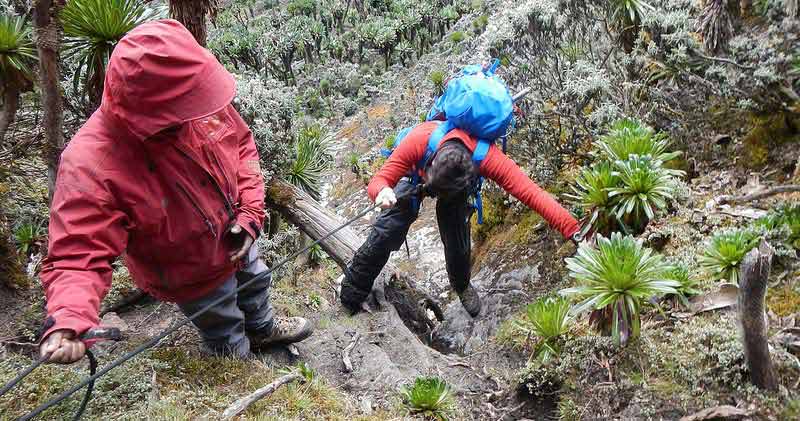
Layering is essential for the Rwenzori’s unpredictable climate. Pack moisture-wicking synthetic or merino wool base layers, insulating fleece/down jackets, and fully waterproof outer shells. Avoid cotton entirely. You will also need waterproof hiking boots, two pairs of gloves, and full-length waterproof gaiters
15-days-rwenzori-hiking-safari-and-mountain-gorilla-trekking-vacation
11-days-best-rwenzori-mountain-hike-to-margherita-peak
7-days-mountain-rwenzori-mountain-climbing-active-adventure-to-margherita-peak
5-days-rwenzori-hike-to-either-mountain-sepeke-baker-or-luig-di-savoia
2-days-rwenzori-trek-to-nyabitaba-camp
1. Clothing Layers
Base Layers
Preparing for a Rwenzori climb requires high-quality, long-sleeve thermal tops and bottoms. These garments sit directly against your skin, making their fabric choice critical for regulating body temperature. Merino wool or advanced synthetic materials are highly recommended because they naturally pull sweat away from your body, preventing moisture from chilling you during rest breaks. Given the high humidity and frequent rainfall characteristic of the Rwenzori range, cotton must be completely avoided as it holds moisture and accelerates hypothermia. Packing 2 to 3 complete sets ensures you always have a dry, clean layer to change into at the end of a grueling trekking day, keeping you warm and fresh throughout the expedition.
Mid-Layers
As you ascend higher into the alpine zones during your Rwenzori climb, temperatures drop drastically, requiring efficient insulation. Bringing 1 to 2 heavy fleece jackets or a lightweight, highly compressible insulated down jacket is essential for trapping your body heat. The mid-layer acts as a thermal barrier between your base moisture-wicking layer and your outer weather protection. Because the weather in the Rwenzoris fluctuates rapidly, having a versatile mid-layer allows you to easily adjust to shifting microclimates, keeping you comfortable during steep ascents or sedentary evenings at the mountain camps. A high-quality down jacket is particularly valuable for the freezing nights and early morning summit bids when maximum thermal efficiency is required.
Outer Shells
A premium waterproof and windproof jacket equipped with a sturdy hood, alongside matching waterproof rain pants, are non-negotiable lifesavers on a Rwenzori climb. The Rwenzori Mountains are legendary for their unpredictable, torrential downpours and relentless winds. Your outer shell serves as the primary shield against these harsh elements, preventing external moisture from penetrating your inner insulating layers. When selecting these garments, prioritize high-quality, breathable, and fully seam-sealed fabrics like Gore-Tex. This ensures that while rain and wind are kept firmly out, internal body vapor can still escape, preventing you from getting soaked from the inside out while trekking through the notoriously wet and stormy high-altitude moorlands.
Bottoms
For the daily trekking routine on a Rwenzori climb, you will need at least 2 pairs of durable, quick-drying trekking pants designed to withstand rugged terrain. These pants must be made of synthetic fabrics that offer flexibility, breathability, and rapid drying times; traditional denim jeans must be strictly avoided as they soak up water and dry incredibly slowly. Additionally, packing a pair of lightweight hiking shorts is highly beneficial for the initial stages of the trek. The lower slopes feature warm, dense forested environments where long pants can cause overheating. Having convertible pants or separate shorts allows you to remain cool and agile before transitioning into the colder, more exposed high-altitude zones of the mountain.
2. Extremities and Protection
Headwear
Proper head protection is vital for managing the extreme climate shifts encountered during a Rwenzori climb. A broad-brimmed sun hat is essential for the lower, open ridges where equatorial UV radiation is intense and can quickly cause sunburn or heat exhaustion. Conversely, as you climb into the sub-alpine and glacial zones, protecting your core body temperature requires a warm fleece or wool beanie to prevent rapid heat loss from your head. Complementing these with a versatile neck gaiter or scarf adds an extra layer of defense against freezing winds, helping to protect your neck and face from chapping while keeping cold air from slipping down into your jacket collar.
Hands
Protecting your hands requires a strategic two-layer system due to the intense cold and wet conditions of a Rwenzori climb. First, a pair of thin, lightweight thermal liner gloves is necessary for general trekking in cooler weather, allowing you to maintain dexterity for adjusting gear or holding trekking poles. Second, you must pack a heavy-duty, heavily insulated, and completely waterproof outer pair of gloves or mittens. This thick outer layer is absolutely critical for the freezing high-altitude summit push, where sub-zero temperatures and biting winds can easily cause frostbite if your hands are exposed to the elements or damp glacial surfaces.
Eyes
The high-altitude environment of a Rwenzori climb exposes your eyes to intense, damaging ultraviolet radiation that increases significantly with elevation. Furthermore, the final push to Margherita Peak involves traversing vast, bright glacial ice fields that create sharp, blinding reflections. Without adequate protection, this intense glare can lead to painful, temporary blindness known as photokeratitis. To prevent this, investing in high-quality sunglasses with category 3 or 4 UV protection and wrap-around frames is absolutely essential. These specialized glasses shield your eyes from both direct sunlight and lateral glare, ensuring clear, safe visibility while navigating the dazzling, ice-covered summits.
Feet
Your choice of footwear can make or break your entire Rwenzori climb, demanding sturdy, fully waterproof hiking boots with excellent ankle support. The terrain is exceptionally unforgiving, characterized by steep, slippery rock scrambles, muddy trails, and unstable, uneven surfaces. It is vital that these boots are thoroughly well-broken-in before the expedition to avoid debilitating blisters. Pair your boots exclusively with high-quality, moisture-wicking, non-cotton hiking socks, preferably made of merino wool or technical synthetic blends. These socks cushion your feet, reduce friction, and pull moisture away from the skin, keeping your feet dry, warm, and comfortable throughout days of rigorous trekking.
Camp Shoes
After spending long, exhausting hours trekking through mud and wet terrain on a Rwenzori climb, your feet require a chance to recover. Bringing a pair of lightweight camp shoes, such as breathable sandals, crocs, or flip-flops, is highly recommended for use inside the mountain huts. Slipping out of heavy, damp hiking boots and into dry camp shoes allows your feet to breathe, dry out, and relax, which significantly reduces the risk of skin maceration and blisters. Furthermore, these lightweight shoes are incredibly convenient for walking around the wooden mountain huts and communal camp areas in the evenings without tracking mud indoors.
3. Essential Accessories
Waterproof Gaiters
Full-length waterproof gaiters are an absolute necessity to combat the notoriously deep, muddy bogs encountered on a Rwenzori climb. The trail frequently requires wading through legendary swampy zones, such as the Bigo Bog, where mud can easily reach mid-calf depth. Premium gaiters wrap securely around your lower legs and boots, creating an impermeable barrier that keeps mud, slush, melting snow, and heavy rain from spilling over the tops of your hiking boots. By keeping the interior of your boots dry and preventing debris from entering, gaiters play a massive role in maintaining foot health, warmth, and overall trekking comfort throughout the wettest sections.
Garden Gloves:
An unconventional yet highly practical item to pack for a Rwenzori climb is a pair of simple, rubber-coated garden gloves. The lower sections of the Rwenzori range take you through dense, tangled jungle zones and thick montane forests where the vegetation is wild and untamed. In these areas, the trails can be incredibly steep and muddy, frequently forcing you to grab onto nearby roots, branches, and rocks for balance and stability. The forest is filled with sharp stinging nettles and thorny plants that can inflict painful rashes or cuts; these inexpensive, durable rubber-coated gloves provide excellent grip and perfect protection against these natural trail hazards.
When is the best time for climbing Mountain Rwenzori
The ultimate window for a Rwenzori climb falls during the region's two dry seasons: from June to August and December to February. During these months, the notoriously frequent equatorial rains decrease, resulting in clearer skies, drier trekking trails, and significantly better visibility of the spectacular snow-capped peaks and glaciers. Climbing during the dry periods makes navigating the legendary, deep mud bogs far more manageable and enhances overall safety on the steep, rocky scrambles. However, because the Rwenzoris are a tropical rainforest mountain range, occasional rainfall can still happen at any time. The shoulder months of March and September offer a quieter experience on the trails with fewer trekkers, but you must be fully prepared for wetter conditions, higher humidity, and denser summit mist, which can obscure the dramatic alpine vistas.
What to pack on climbing Mountain Rwenzori
Packing correctly for a Rwenzori climb requires a meticulous layering strategy designed to handle extreme tropical humidity and sub-zero glacial zones. Your clothing must feature moisture-wicking merino wool or synthetic base layers, heavy fleece or down mid-layers, and premium, fully waterproof Gore-Tex outer shells. Sturdy, well-broken-in waterproof hiking boots with excellent ankle support are critical, paired with full-length waterproof gaiters to seal out the deep mud of the high-altitude bogs. Do not forget tough, rubber-coated garden gloves to protect your hands from stinging nettles in the dense jungle zones, alongside warm summit gloves. Additionally, high-quality UV-protection sunglasses are mandatory to prevent snow blindness on the Margherita Peak glaciers. Finally, pack a durable, sub-zero-rated sleeping bag, a headlamp with extra batteries, water purification tablets, and a robust, waterproof daypack to safeguard your electronics.
Where to stay on climbing Mountain Rwenzori
Accommodation options during a Rwenzori climb depend entirely on the specific trekking circuit you choose, featuring two main established routes. On the classic Central Circuit, managed by the Rwenzori Mountaineering Services (RMS), trekkers stay in permanent, wooden mountain huts like Nyabitaba, John Matte, and Elena Hut. These rustic shelters provide basic wooden bunk beds with mattresses, requiring you to bring your own warm sleeping bag. Alternatively, the Kilembe Trail, operated by Rwenzori Trekking Services (RTS), utilizes a well-maintained network of comfortable, fully wooden cabins and structured tented camps, such as Sine Camp and Mutinda Camp. These camps offer cozy bunk beds, basic dining areas, and eco-friendly pit latrines. Before and after your grueling mountain expedition, comfortable lodging options ranging from budget guesthouses to luxury safari lodges are readily available in the nearby towns of Kasese and Fort Portal.
Booking climbing Mountain Rwenzori with us Roads of Adventure safaris
Booking your epic Rwenzori climb with Roads of Adventure Safaris guarantees a seamless, expertly managed, and deeply personalized mountaineering experience from start to finish. Based locally in Uganda, our team specializes in crafting high-end, tailor-made East African safari itineraries that prioritize safety, comfort, and unparalleled adventure. We handle all the intricate logistics, including securing mandatory park permits, organizing top-tier mountain guides, and arranging dedicated porters who form the backbone of your expedition. Our clients travel in reliable, customized 4x4 Land Cruisers with pop-up roofs, ensuring smooth ground transportation to the mountain base. Whether you want to conquer the challenging glaciers of Margherita Peak or enjoy a scenic lower-loop nature trek, our passionate travel specialists will design the perfect itinerary, combining rugged mountain triumphs with exceptional, stress-free hospitality throughout your entire Ugandan journey.
