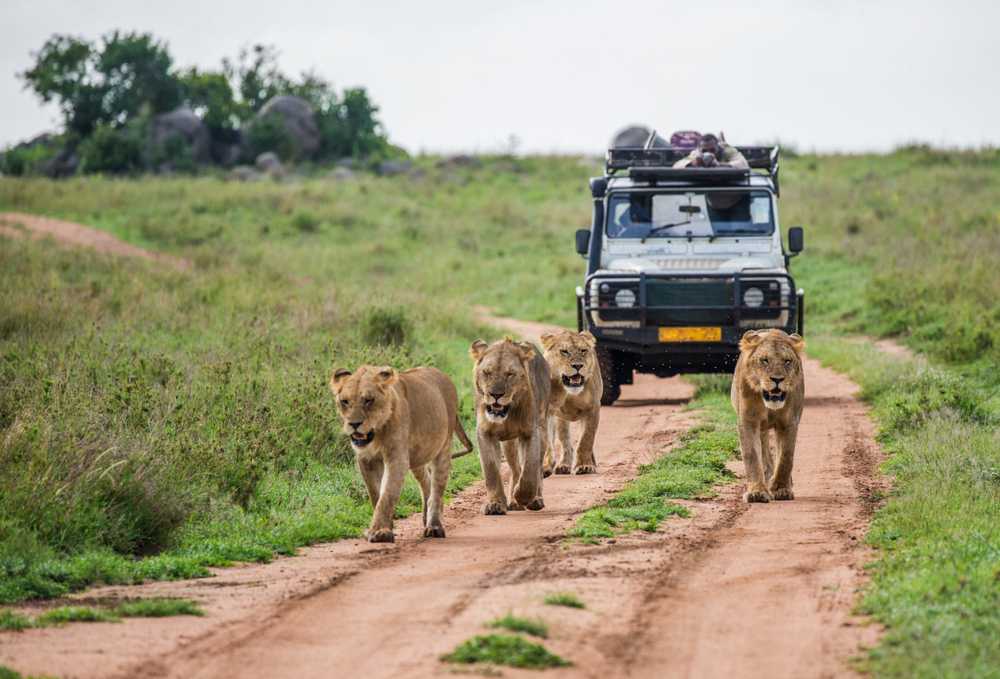
A Tanzania safari offers iconic wildlife viewing, focusing on the Great Migration in the Serengeti, the dense "Big Five" population in the Ngorongoro Crater, and massive elephant herds in Tarangire. Key experiences include boat safaris in Nyerere (Selous), chimpanzee trekking in Gombe, and birdwatching in Lake Manyara, often ending with relaxation on Zanzibar's beaches.
10-days-tanzania-wildlife-safari-and-optional-visit-to-masai-tribe-or-hadzabe
8-days-perfect-materuni-waterfall-and-coffee-cultural-tour-in-tanzania
7-days-best-of-tanzania-safari-grumetimara-river-crossing-and-masai-warrior-homestay
10-days-perfect-tanzania-safari-itinerary
10-days-luxury-kenya-tanzania-safari-holiday-high-end-tour-package
10-days-tanzania-wildlife-safari-and-optional-visit-to-masai-tribe-or-hadzabe
10-days-luxury-gorilla-trekking-masai-mara-serengeti-and-ngorongoro-crater
14-days-best-tanzania-honeymoon-safari-and-zanzibar-for-couples
3-days-fly-in-and-out-tanzania-wildlife-safari-itinerary-to-nyerere-from-zanzibar
3-days-serengeti-safari-fly-in-ngorongoro-big-five-safari-from-zanzibar-island
10-days-best-tanzania-safari-tour-and-zanzibar-beach-holiday-itinerary
8-days-best-tanzania-wildlife-safari-to-zanzibar-beach-holiday-combined
7-day-best-zanzibar-beach-holidays-combo-to-ruaha-and-mikumi-safari-parks
Top Must-See Tanzania Safari Destinations
Serengeti National Park
The Serengeti is the quintessential image of the African wild, a vast sea of golden grass that hosts the most spectacular wildlife show on Earth: the Great Migration. Each year, over 1.5 million wildebeest, accompanied by hundreds of thousands of zebras and gazelles, thunder across the plains in a relentless search for fresh grazing. If you visit between July and August, you may witness the dramatic Mara River crossings, where herds brave crocodile-infested waters in a high-stakes display of survival.
However, the Serengeti is a premier destination year-round, not just during the migration. Its "endless plains" are home to the highest concentration of large predators in Africa. You are almost guaranteed sightings of lions lounging on granite kopjes, leopards draped across acacia limbs, and cheetahs using the flat terrain to reach blistering speeds during a hunt. Whether you are soaring over the plains in a hot air balloon at dawn or navigating the Seronera Valley in a 4x4, the Serengeti offers a sense of prehistoric scale that remains unmatched by any other park on the continent.
Ngorongoro Crater
Often described as the "Eighth Wonder of the World," the Ngorongoro Crater is the world's largest inactive, intact, and unfilled volcanic caldera. This UNESCO World Heritage site acts as a natural enclosure, creating a self-sustaining ecosystem where wildlife thrives in extraordinary densities. Descending 600 metres down the steep crater walls feels like entering a lost world. Within a single day, you can traverse open grasslands, fever tree forests, and the soda waters of Lake Magadi.
The crater is perhaps the best place in East Africa to see the endangered black rhino, a rare sight that completes the "Big Five" checklist for many travellers. The resident lion population is one of the densest in the world, and the elephants here are known for their massive, "tusker" ivory. Because the animals are habituated to vehicles and cannot easily leave the caldera, the wildlife viewing is remarkably reliable. It is a place where nature is concentrated into a breathtaking, 260-square-kilometre theatre of life and death.
Tarangire National Park
Tarangire is the land of giants. It is defined by two iconic silhouettes: the massive, ancient Baobab trees that dot the landscape like prehistoric pillars and the mammoth elephant herds that congregate here in numbers rarely seen elsewhere. During the dry season (June to October), the Tarangire River becomes the only permanent water source in the region, drawing thousands of animals from the surrounding Maasai Steppe.
This park offers a quieter, more rugged atmosphere compared to the busier Serengeti. Beyond the elephants, you can spot fringe-eared oryx, eland, and even the occasional leopard hidden in the riverine trees. Tarangire is also a birder’s paradise, with over 550 species recorded, including the dazzling yellow-collared lovebird. The park’s undulating hills and diverse vegetation make it a photographer’s dream, providing a textured, "old-world" African safari feel that resonates with those looking to get off the beaten track.
Lake Manyara National Park
Nestled at the base of the rusty-gold Great Rift Valley escarpment, Lake Manyara offers a surprisingly diverse array of habitats within a relatively small area. As you enter the park, you are greeted by a lush, evergreen groundwater forest where baboons play and blue monkeys swing through the canopy. As the forest opens up, you reach the alkaline waters of the lake itself, which are often shimmering with a pink hue from thousands of migratory flamingos.
The park is most famous for its tree-climbing lions. While this behaviour is rare elsewhere, the lions here have adopted the habit of lounging in the branches of mahogany and acacia trees, likely to escape insects or enjoy a cooling breeze. Beyond the cats, the park is home to large pods of hippos at the "Hippo Pool" and a healthy population of giraffes and buffaloes. It is an ideal "introductory" park, offering a gentle yet vibrant start to any northern Tanzanian circuit.
Nyerere National Park (Selous)
Formerly known as the Selous Game Reserve, Nyerere National Park is one of the largest protected areas in the world. It represents the pinnacle of the "Southern Circuit" and offers a wilder, more remote experience than the northern parks. The defining feature of Nyerere is the Rufiji River, a lifeline that carves through the landscape and creates a network of lakes and lagoons. This water-rich environment allows for boat safaris, a refreshing departure from standard game drives.
From the water, you can watch hippos jostling for space and massive crocodiles sunning on the banks, all while keeping an eye out for elephants coming down to drink. Nyerere is also one of the last strongholds for the African wild dog, a rare and highly social predator. Because the park allows for walking safaris and fly-camping, it caters to the adventurous traveller who wants to feel the crunch of the African soil beneath their boots and experience the bush with all five senses.
Ruaha National Park
Ruaha is Tanzania’s largest national park, yet it remains one of its best-kept secrets. It is a place of dramatic, rugged scenery, characterised by rocky escarpments, rolling hills, and the Great Ruaha River. The park is a transition zone where eastern and southern African species overlap, meaning you can see both the Greater and Lesser Kudu, as well as the rare sable and roan antelopes.
Ruaha is famous for its massive buffalo herds and the large lion prides that have learned to hunt them. The predator-prey interactions here are raw and intense. With fewer tourist vehicles than the Serengeti, you often have these incredible sightings all to yourself. The landscape is dominated by baobabs and sweeping plains, providing a sense of isolation and grandeur. For the seasoned safari-goer, Ruaha offers the "real Africa"—vast, untamed, and brimming with life that doesn't wait for the camera.
Gombe Stream National Park
Gombe Stream is the smallest of Tanzania’s national parks, but its cultural and scientific impact is monumental. This is where Jane Goodall conducted her pioneering research on chimpanzees, forever changing our understanding of the relationship between humans and primates. Perched on the wild shores of Lake Tanganyika, the park consists of steep valleys and lush forest, accessible only by boat.
The primary draw here is chimpanzee trekking. Guided by expert trackers, you will hike through the forest to find the Kasekela community. Watching these primates groom, play, and hunt in their natural habitat is an intimate and often emotional experience. Because the park is so secluded, the encounter feels like a private window into our evolutionary past. After a trek, you can cool off with a swim in the crystal-clear waters of the lake, making Gombe a unique blend of primate adventure and lakeside relaxation.
Mount Kilimanjaro
Standing at 5,895 metres, Mount Kilimanjaro is the "Roof of Africa" and the highest free-standing mountain in the world. It is a crown jewel of Tanzania, visible from miles away as its snow-capped peak rises above the heat of the savannah. While most Tanzanian destinations focus on vehicle-based viewing, Kilimanjaro is all about the climb. It is a journey through five distinct climate zones, from tropical rainforest at the base to an arctic wasteland at the summit.
Climbing "Kili" does not require professional mountaineering skills, but it demands immense physical and mental stamina. Routes like the Machame or Lemosho offer stunning vistas of the Shira Plateau and the dramatic Barranco Wall. For those who prefer not to summit, the lower slopes offer beautiful day hikes through montane forests home to colobus monkeys and exotic birdlife. Reaching Uhuru Peak at sunrise, with the clouds spread out like a white sea below you, is a transformative experience that defines a lifetime of adventure.
Unforgettable Tanzanian Experiences
Game Drives
The traditional game drive is the heartbeat of any Tanzanian safari, offering the most reliable way to witness the raw drama of the African bush. Guided by experts who can track a leopard by a single paw print or predict a lion’s hunt by the alarm call of a bird, these drives take you into the very centre of the action. In the Serengeti, game drives are the front-row seat to the Great Migration, where you can follow the shifting herds as they navigate the vast plains.
Most drives occur at dawn and dusk—the "golden hours"—when the light is soft for photography and the predators are most active. In a custom-built 4x4 with a pop-up roof, you have a 360-degree view of the landscape. Whether you are watching a cheetah scan the horizon from a termite mound in Tarangire or observing a massive tusker elephant near the marshes of Ngorongoro, the game drive provides a sense of discovery that never fades. Each turn of the track holds the potential for a rare sighting, making every hour spent in the vehicle an exhilarating chapter in your safari story.
Hot Air Balloon Safari
For a perspective that no vehicle can provide, a hot air balloon safari over the Serengeti is the ultimate bucket-list experience. Rising before the sun, you’ll watch the burners illuminate the morning darkness as the balloon inflates. As you lift off, the silence is broken only by the occasional roar of the flame, leaving you to drift effortlessly above the "endless plains." From this height, the true scale of the migration becomes clear; you can see the long, winding lines of wildebeest stretching toward the horizon like a slow-moving river.
As the sun breaks over the Rift Valley escarpment, the golden light reveals predators returning from their nightly hunts and hippos splashing in the Mara River. Looking down, you might see a pride of lions waking up on a kopje or a journey of giraffes gliding through the acacia tops. The flight typically lasts about an hour and concludes with a traditional "Bush Breakfast"—a full English breakfast served in the middle of the wilderness, complete with chilled champagne. It is a moment of pure, serene luxury that captures the majestic spirit of East Africa.
Walking Safaris
A walking safari is the most intimate way to connect with the African wilderness. Once you step out of the vehicle and onto the soil, your perspective shifts from the "big picture" to the intricate details of the ecosystem. Led by an armed ranger and an expert guide in parks like Nyerere (Selous) or Ruaha, you’ll learn to read the "morning newspaper" of the bush: identifying tracks, examining dung to determine how recently an animal passed, and understanding the medicinal uses of local plants.
Without the hum of an engine, your senses become hyper-attuned to the environment. You’ll hear the rustle of a dry leaf, catch the scent of wild sage, and feel the African sun on your skin. While you may still encounter large game like buffalo or elephants from a safe distance, the focus is on the "Little Five"—the ant lion, leopard tortoise, elephant shrew, rhino beetle, and red-billed buffalo weaver. It is a thrilling, primal experience that humbles the soul and provides a profound understanding of the delicate balance that sustains the wild.
Cultural Tours
A safari in Tanzania is as much about the people as it is about the wildlife. Cultural tours, particularly visits to Maasai bomas (villages), offer a window into a way of life that has remained remarkably resilient against the pressures of the modern world. The Maasai are iconic pastoralists, known for their vibrant red shukas, intricate beadwork, and legendary jumping dances. A visit often begins with a warm welcome of song and dance, where you are invited to participate in their rhythmic celebrations.
Inside the village, you’ll learn about their deep connection to their cattle, their traditional building techniques using mud and thatch, and their sophisticated social structures. Beyond the Maasai, you might visit the Hadza hunter-gatherers near Lake Eyasi, who still hunt with bows and speak in a unique click language, or the Chagga people on the slopes of Kilimanjaro to learn about their ancient coffee-growing traditions. These encounters are handled with mutual respect and provide a vital human context to the landscapes you explore, ensuring your journey supports local heritage and community development.
Beach Holiday
After the dusty tracks and early wake-up calls of the bush, there is no better antidote than the turquoise waters of Zanzibar. Known as the "Spice Island," Zanzibar is a sensory paradise where the scent of cloves and cinnamon hangs in the air. The archipelago offers some of the world's most pristine white-sand beaches, such as Nungwi and Kendwa, where the Indian Ocean is as warm as a bath and perfect for snorkeling or diving among vibrant coral reefs.
For a touch of history, a stroll through the narrow, winding alleys of Stone Town—a UNESCO World Heritage site—reveals a melting pot of African, Arab, Indian, and European influences. You can explore ornate carved wooden doors, visit the bustling Forodhani night market, or take a dhow cruise at sunset. Whether you are staying in a boutique beachfront villa or a restored Swahili palace, the island provides a tranquil conclusion to your adventure. The rhythm of the tides and the gentle sway of the palm trees offer the perfect environment to reflect on your safari memories before heading home.
What is the best thing to see on a Tanzania safari?
The Great Migration is arguably the most profound wildlife spectacle on the planet. This annual cycle involves over 1.5 million wildebeest and 300,000 zebras moving in a clockwise direction across the Serengeti ecosystem. It is not merely a "sight" but a colossal movement of life driven by the search for water and green pastures. While many focus on the river crossings, the sight of a horizon-to-horizon herd moving as a single, grunting organism across the plains is a humbling reminder of nature's scale. It is the ultimate testament to the "endless plains" of the Serengeti and remains the primary reason millions flock to Tanzania.
Can I see the Big Five in Tanzania?
Yes, Tanzania is one of the premier locations for spotting the Big Five (lion, leopard, elephant, buffalo, and rhino). The Ngorongoro Crater is the most reliable place to tick off the list in a single day, as its confined walls host a resident population that includes the rare black rhino. The Serengeti follows closely, offering world-class lion and leopard sightings, particularly in the Seronera Valley. While buffalo and elephants are abundant across most northern and southern parks, the rhino remains the most elusive member, making the protected sanctuary of the crater a vital stop for any Big Five seeker.
When is the best time for a Tanzania safari?
The dry season (June to October) is the gold standard for wildlife viewing. As water sources dry up, animals congregate around permanent rivers and waterholes, making them much easier to locate. The vegetation is also thinner, which aids in spotting camouflaged cats. However, January to March is equally spectacular for the Calving Season in the southern Serengeti. While the "short rains" may occur, the landscapes are lush, and the sheer volume of new life—and the subsequent predator activity—creates a different, more vibrant safari experience.
What is the "Calving Season" in the Serengeti?
Occurring between January and March on the short-grass plains of Ndutu and the southern Serengeti, the calving season is a period of incredible abundance. Approximately 8,000 wildebeest calves are born every single day during the peak. This sudden influx of vulnerable prey acts as a magnet for predators; lions, cheetahs, and hyenas are seen in record numbers, often engaging in high-stakes hunts. It is a period of intense biological drama, where the circle of life is on full display against a backdrop of blooming wildflowers and emerald-green grass.
Where can I see tree-climbing lions?
Lake Manyara National Park is historically famous for its tree-climbing lions. While the exact reason for this behaviour is debated—ranging from escaping ground-level insects to catching a cooling breeze—seeing a massive lion lounging on a mahogany branch is a surreal sight. In recent years, this behaviour has also been frequently spotted in the Ishasha sector of Queen Elizabeth National Park in neighbouring Uganda and occasionally in the Serengeti. However, Manyara remains the iconic home of this phenomenon, set against the dramatic backdrop of the Great Rift Valley escarpment.
What makes the Ngorongoro Crater special?
The Ngorongoro Crater is a UNESCO World Heritage Site and the world's largest inactive, intact volcanic caldera. Often called "Africa's Eden," it creates a unique, self-contained "island" of biodiversity. Because the crater floor provides high-quality grazing and permanent water, many of the 25,000 resident animals never leave. This creates a concentrated wildlife experience where you can see lions, hippos, hyenas, and rare rhinos within a very small radius. The sheer beauty of the morning mist descending over the crater walls as you drive down into the caldera is a highlight of any Tanzanian journey.
When can I see the Mara River crossing?
The dramatic Mara River crossings typically occur between mid-July and mid-October. This is the point where the Great Migration reaches the northern Serengeti and must cross into Kenya’s Masai Mara. The crossings are chaotic and heart-pounding; wildebeest must navigate steep banks and the jaws of massive Nile crocodiles. It is a waiting game—herds may gather on the banks for hours or days before a single "brave" individual takes the plunge, triggering a spectacular, dusty stampede across the water. It is widely considered the most intense wildlife encounter in Africa.
What can I see in Tarangire National Park?
Tarangire is defined by two giants: massive elephant herds and ancient baobab trees. During the dry season, the park has the highest concentration of elephants in the world outside of Botswana. The landscape is dominated by the "Upside Down Trees" (baobabs), some of which are over a thousand years old. Beyond the elephants, Tarangire is a sanctuary for the fringe-eared oryx and the long-necked gerenuk. The Tarangire River serves as a vital artery, and watching hundreds of elephants silhouetted against a baobab-studded sunset is one of the most iconic photographic opportunities in Tanzania.
Are there boat safaris available?
Yes, Nyerere National Park (formerly Selous) is the premier destination for boat safaris. The mighty Rufiji River and its network of interconnected lakes allow you to view wildlife from a totally different perspective. As you drift silently past pods of hippos and enormous crocodiles, you’ll see elephants and buffaloes coming to the water's edge to drink. Boat safaris are also a dream for birdwatchers, offering close-up views of kingfishers, herons, and the African fish eagle. It is a tranquil, cooling alternative to the dusty game drives of the northern circuit.
What wildlife is in Ruaha National Park?
Ruaha is a wild, rugged park known for its predator density. It is home to roughly 10% of the world's lion population, and its prides are famous for their ability to hunt massive Cape buffalo. Ruaha is also a stronghold for the African wild dog, one of the continent's most endangered and efficient hunters. Because the park sits at the intersection of eastern and southern African eco-zones, you can see a unique mix of species, such as both Greater and Lesser Kudu, as well as sable and roan antelopes. It is a park for the true connoisseur of untamed wilderness.
Can I go on a walking safari?
Absolutely. Walking safaris are a specialty in the southern parks like Nyerere and Ruaha, as well as certain private concessions in the Serengeti. Accompanied by an armed ranger and an expert guide, you leave the vehicle behind to focus on the "small stuff." You’ll learn to track animals by their footprints, identify bird calls, and discover the traditional uses of various plants. Walking through the bush heightens your senses and provides a primal connection to the land that you simply cannot get from inside a car. It is a thrilling way to experience the African landscape.
What is the best way to see the Serengeti from above?
A hot air balloon safari at sunrise is the definitive way to appreciate the vastness of the Serengeti. Drifting silently over the plains as the sun breaks the horizon, you can see the Great Migration from a bird's-eye view. From the air, you’ll spot predators returning from their hunts and hippos splashing in the river below. The flight concludes with a luxury "Bush Breakfast" and champagne under an acacia tree. It is a serene, majestic experience that provides a sense of the Serengeti's "endless" scale that is impossible to grasp from the ground.
Can I visit a Maasai Village?
Yes, cultural tours to Maasai villages (bomas) are a popular way to learn about the indigenous people of East Africa. These visits offer a chance to see their unique architectural style, learn about their pastoral lifestyle, and witness the famous jumping dance (adumu). It is an opportunity to engage with a culture that has maintained its traditions for centuries amidst the modern world. When done respectfully through reputable operators, these visits provide vital income to the community and a profound human perspective to your wildlife journey, highlighting the delicate balance between people and nature.
Is it possible to see Chimpanzees?
Tanzania is a fantastic destination for chimpanzee trekking, primarily in the Mahale Mountains and Gombe Stream National Park. Perched on the shores of Lake Tanganyika, Mahale offers one of the most intimate primate encounters in the world. Tracking the "M-group" through the lush forest to watch them groom, play, and interact is a deeply moving experience. The combination of the forested mountains and the crystal-clear, white-sand beaches of the lake makes Mahale one of Africa's most unique and remote "hidden gems" for primate lovers.
What can I see besides animals?
Mount Kilimanjaro is the most iconic non-wildlife sight in Tanzania. As the highest free-standing mountain in the world, its snow-capped peak is a legendary silhouette. Many safari-goers combine their wildlife trip with a hike on the lower slopes or a multi-day climb to the summit. Beyond the mountain, the Spice Island of Zanzibar offers a beautiful cultural and coastal contrast. With the historic Stone Town (a UNESCO site) and its world-class beaches, it is the perfect place to unwind after the physical demands of a safari, offering a blend of history, spice markets, and turquoise waters.
Booking Tanzania safari with us Roads of Adventure safaris
Book your unforgettable Tanzania safari with Roads of Adventure Safaris for expertly crafted itineraries focusing on the Serengeti, Ngorongoro Crater, and Tarangire. We offer personalized, safe, and high-quality 4x4 tours featuring knowledgeable guides, ensuring top-tier wildlife viewing and cultural experiences. Our services include private and group packages designed to match your specific budget and preferences. Rely on our expert planners to handle all logistics for a seamless adventure. Visit us to plan your Tanzania safari today.
