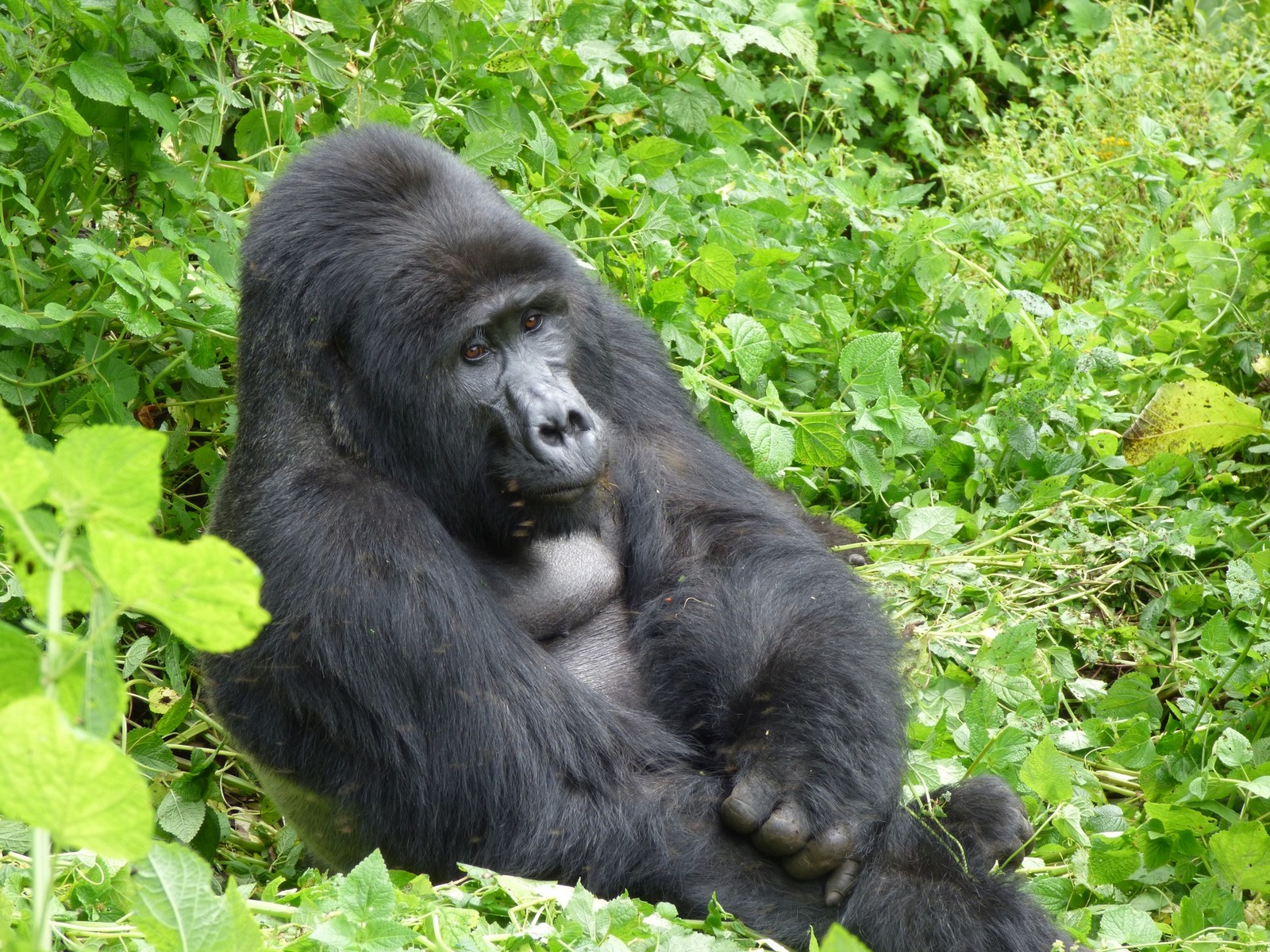
For a 14-day Uganda safari, pack sturdy waterproof hiking boots, breathable long-sleeved shirts/trousers, gardening gloves, and a high-quality raincoat to navigate steep, muddy terrain and unpredictable rain. Bring neutral-colored clothing, a daypack, energy snacks, insect repellent, cameras, binoculars, and a sunhat.
14-days-complete-uganda-safari-tour-and-primate-safari-experience
14-days-uganda-and-rwanda-safari-tour-itinerary
14-days-luxury-uganda-primate-safari-holiday
14-days-uganda-primate-safari-and-jinja-white-water-rafting
14-days-classic-uganda-birding-safari-expedition
14-days-best-africa-big-five-safari-in-uganda-and-best-gorilla-trekking-adventure
Trekking Gear
When preparing for the dense undergrowth of Bwindi or Kibale, your clothing serves as your primary line of defense. The "long and light" rule is the golden standard for primate trekking. Long-sleeved shirts and long trousers are not merely suggestions; they are mechanical necessities to protect your skin from stinging nettles, sharp thorns, and the notorious safari ants. A common practice among experienced guides is to tuck trousers into socks, creating a sealed barrier against ground-dwelling insects.
The color palette you choose is equally strategic. You should prioritize neutral tones such as beige, khaki, and olive green. These colors allow you to blend into the forest environment, minimizing the visual impact of your presence on the primates. More importantly, you must avoid bright blue and black clothing, as these colors are scientifically proven to attract tsetse flies, which have a painful bite and are prevalent in several Ugandan savannah sectors. Fabrics should be moisture-wicking and quick-drying, as the humidity in the rainforest is often near 100%, and cotton remains damp for hours, leading to chafing and discomfort during long, multi-hour treks.
Footwear
Your choice of footwear is perhaps the most critical gear decision you will make. The terrain in Uganda’s primate parks is characterized by steep ridges, tangled roots, and slippery mud. Waterproof hiking boots with high ankle support are essential to prevent strains and injuries on uneven ground. It is a massive risk to attempt these treks in "fresh-out-of-the-box" boots; they must be thoroughly broken-in weeks before your arrival to avoid debilitating blisters.
Pair your boots with thick, high-quality hiking socks—ideally made of wool or a synthetic blend that pulls moisture away from the skin. Packing extra pairs in your daypack is a wise move, as the occasional deep puddle or heavy downpour can result in wet feet. In the rainforest, foot hygiene is paramount to prevent fungal issues. Good boots don't just provide comfort; they provide the literal foundation for your experience, allowing you to focus on the movement of the gorillas rather than the pain in your arches or the instability of the mud beneath you.
Weather Protection
Uganda’s equatorial climate is famously unpredictable, particularly in the southwestern highlands. Even during the "dry" seasons, the rainforest can live up to its name at any moment. A lightweight, breathable waterproof jacket or poncho is a mandatory item for every trek. Breathability is key; a non-breathable plastic poncho will create a "sauna effect" as you exert yourself on steep climbs, leaving you as wet from sweat as you would have been from rain.
Furthermore, temperature regulation is vital. While the savannahs are hot, the high altitudes of Bwindi and the Virunga Volcanoes mean that early mornings and late evenings can be surprisingly chilly. A warm fleece or sweater is required for these times, especially when sitting at a lodge overlooking the misty valleys. Layering is the most effective strategy: start with a moisture-wicking base, add a fleece for warmth, and keep your waterproof shell accessible at the top of your pack. This flexibility allows you to adapt quickly to the rapidly shifting microclimates of the Albertine Rift.
Protection Items
A unique but essential item for Ugandan trekking is a pair of sturdy gardening gloves. While it may seem unusual to pack them for a safari, they are invaluable when you are deep in the forest. You will frequently find yourself needing to grab onto vines, bamboo stalks, and even the ground to maintain your balance on slippery slopes. The gloves protect your hands from the thorns and stinging nettles that dominate the undergrowth. Without them, your hands can quickly become covered in painful welts, which is a major distraction when you are trying to photograph a silverback.
Beyond gloves, standard protection from the equatorial sun and insects is mandatory. A wide-brimmed hat and polarized sunglasses protect you from the intense UV rays that penetrate even on cloudy days. Finally, an insect repellent with a high DEET concentration is necessary to ward off mosquitoes and flies. Apply it to your skin and clothing before entering the forest, paying special attention to your ankles and wrists. These small protection items collectively ensure that your physical comfort is maintained, allowing the sheer awe of the wildlife encounter to remain the focus of your day.
Daypack
Your daypack is your mobile survival kit during a 4-to-8-hour trek. It must be waterproof or come with a high-quality rain cover to protect your contents from sudden tropical downpours. The pack should have a comfortable harness system with a waist belt to distribute weight, as you will be carrying several liters of water, your packed lunch, and your camera gear over difficult terrain.
Inside, you should have enough capacity for hydration and high-energy snacks, extra clothing layers, and your personal first-aid items. Many travelers choose to hire a porter at the trailhead to carry this pack. For a small fee ($15–$20), a porter not only eases your physical burden but also provides a steady hand on the slopes. Whether you carry it yourself or hire help, having a well-organized daypack ensures that everything you need—from your rain jacket to your spare camera battery—is within easy reach the moment the trackers signal that the primates have been found.
Camera Gear
Photographing primates in a rainforest is one of the most challenging environments for a photographer. The lighting is often "dim and dappled," requiring a camera that performs well at high ISO settings. A dry bag or specialized rain sleeve is essential; the moisture in the forest can easily fry the electronics of an unprotected camera. You must also pack extra batteries, as the humidity and search for focus in low light can drain power faster than expected.
Regarding lenses, a versatile zoom (like a 70–200mm) is ideal for gorillas, while a longer reach (up to 400mm or 600mm) is better for chimpanzees and birds in the high canopy. Avoid using a flash, as it is strictly prohibited and can agitate the animals. Instead, use a wide aperture (f/2.8 or f/4) to let in as much light as possible. Finally, bring plenty of high-speed memory cards. When a gorilla juvenile starts playing or a chimp begins a vocal display, you will likely shoot in "burst mode," and you don't want to run out of storage space at the climax of the encounter.
Binoculars
While gorillas are often seen at close range (7–10 meters), much of Uganda’s other wildlife is observed at a distance. High-quality binoculars (ideally 8x42 or 10x42) are indispensable for spotting chimpanzees, which often spend time in the high forest canopy, and for identifying the 1,000+ bird species found in the country. Without binoculars, a chimpanzee high in a mahogany tree can look like a dark silhouette; with them, you can see the intricate expressions on their faces and the details of their grooming rituals.
Binoculars are also vital during savannah game drives in Murchison Falls or Queen Elizabeth National Park. They allow you to scan the horizon for leopards in acacia trees or to watch lions on a distant hunt. Look for a pair that is waterproof and fog-proof, as the internal optics can easily cloud over in the high-humidity environment of the rainforest. For birders, a good pair of "bins" is the single most important tool in the kit, turning a green wall of trees into a vibrant gallery of sunbirds, turacos, and eagles.
Hydration & Snacks
Trekking at high altitudes in a tropical climate is physically demanding and quickly leads to dehydration. You must carry at least 2 to 3 liters of water per trek. Most lodges provide bottled water, but carrying a reusable bladder (like a CamelBak) is often more convenient for sipping on the go without stopping to open a bottle. Staying hydrated is the best way to combat the effects of altitude and the heat of the climb.
In addition to water, high-energy snacks are vital for maintaining your stamina. Pack protein bars, nuts, dried fruit, or glucose biscuits. The trekking duration is unpredictable; you might be out for three hours or eight. Having "quick-burn" energy sources ensures you don't "bonk" or run out of steam before you reach the primates. Most lodges provide a packed lunch (sandwiches, fruit, and juice), but your personal stash of snacks provides that extra boost needed for the final steep ascent to the gorilla family’s location.
Personal Items
Your personal kit should include high-SPF sunscreen and lip balm, as the equatorial sun is intense even when hidden by clouds. A basic first-aid kit is also a "must-pack." This should include various sizes of bandages, antiseptic wipes, and specifically blister treatments (like Compeed or moleskin). Even with broken-in boots, the unusual angles of trekking on steep slopes can create "hot spots" on your feet; catching these early with a blister pad can save your entire safari.
Other useful items include hand sanitizer, wet wipes for a quick refresh after a dusty drive, and any personal medications (such as anti-malarials or antihistamines). If you wear contact lenses, bring a spare pair of glasses, as the dust of the savannah game drives can irritate your eyes. These small items take up very little space but provide a significant "quality of life" boost, ensuring that minor physical annoyances don't detract from the grandeur of your wildlife experiences.
Documents
Your travel documents are the literal keys to your journey. Most importantly, your Gorilla and Chimpanzee permits are essential; without the physical permit or the digital confirmation from your operator, you will not be allowed to trek. These are non-refundable and tied to specific dates, so treat them like gold. You must also carry your Passport, which is required at park headquarters for verification before the trek begins.
Additionally, a Yellow Fever Vaccination Certificate is a mandatory entry requirement for Uganda. You will be asked to present this "Yellow Card" upon arrival at Entebbe Airport. It is wise to keep digital copies of all these documents on a cloud drive or your phone, but always carry the physical originals in a waterproof folder. Finally, ensure you have travel insurance details and emergency contact numbers easily accessible. These documents are the administrative foundation of your 14-day safari, and having them organized ensures a smooth transition through the various checkpoints and park gates.
Cash
Uganda remains a largely cash-based society, especially once you leave the major cities. You should carry a mix of US Dollars (USD) and Uganda Shillings (UGX). USD is the preferred currency for tipping and for paying for larger activities. Crucial Tip: US bills must be newer than 2009 (ideally 2013 or newer) and must be in pristine condition. Any bills with tears, ink marks, or heavy folds will be rejected by local banks and forex bureaus.
Local currency (UGX) is essential for small purchases, souvenirs, and for paying your porters. While many luxury lodges accept credit cards (Visa is most common), they often charge a 3–5% surcharge, and card machines can be unreliable in remote areas due to poor internet. Carrying enough cash for tips ($10–$20 per day for your guide, $5–$10 for trackers) and for community purchases ensures you can support the local economy directly. It is best to exchange money at Entebbe Airport or in Kampala before heading into the national parks where ATMs are non-existent.
14 Days Uganda gorilla trekking and chimpanzee tracking
This 14 Days Uganda gorilla trekking and chimpanzee tracking expedition is a definitive journey into the heart of the Albertine Rift, designed for those who seek deep, meaningful encounters with our closest living relatives. This safari traverses a diverse topographical tapestry, from the lush, volcanic highlands of the southwest to the sprawling, river-fed savannahs of the north. You will navigate the ancient, mist-shrouded corridors of Bwindi Impenetrable Forest and the high-canopy theaters of Kibale, the "Primate Capital of the World." Beyond the great apes, this odyssey incorporates the raw power of Murchison Falls, the unique tree-climbing lions of Ishasha, and the serene, island-dotted waters of Lake Bunyonyi. It is a carefully paced adventure that balances the physical thrill of the trek with the tranquility of Uganda’s most scenic retreats. By the end of this 14-day circuit, you will have experienced the very soul of the "Pearl of Africa" through its wildlife, landscapes, and people.
Day 1: Arrival and Entebbe Immersion
Your 14 Days Uganda gorilla trekking and chimpanzee tracking begins at Entebbe, a leafy peninsula on the shores of Lake Victoria. Upon arrival, you are transferred to your lodge to relax after your flight. If you arrive early, a visit to the Entebbe Botanical Gardens offers a serene introduction to Uganda’s flora and fauna, where you can spot your first primates, like the black-and-white colobus monkeys, and vibrant birdlife. This day is about acclimatization and preparing for the epic journey ahead. Dinner is served overlooking the lake, providing a quiet moment to review the itinerary with your guide. The gentle pace of Entebbe ensures you start your primate adventure refreshed and ready for the northern savannahs tomorrow.
Day 2: Ziwa Rhino Tracking & Murchison Falls
Heading north, the 14 Days Uganda gorilla trekking and chimpanzee tracking makes its first major wildlife stop at Ziwa Rhino Sanctuary. This is the only place in Uganda to see wild Southern White Rhinos. You will track these prehistoric-looking giants on foot with an armed ranger, a visceral experience that brings you remarkably close to these three-ton mammals. After lunch, you continue to Murchison Falls National Park. You will visit the "Top of the Falls," where the entire Nile River is forced through a narrow seven-meter gap, exploding into a thunderous white spray. The earth literally vibrates beneath your feet, offering a powerful display of nature’s raw energy before you settle into your lodge on the banks of the Victoria Nile.
Day 3: Nile Game Drive & Boat Cruise
Day three of your 14 Days Uganda gorilla trekking and chimpanzee tracking features a classic African safari experience. An early morning game drive on the northern bank reveals lions, leopards, Rothschild’s giraffes, and massive herds of buffaloes and elephants. In the afternoon, you board a boat for a cruise upstream toward the base of the falls. You will navigate past enormous pods of grunting hippos and Nile crocodiles basking on the banks. The boat reaches the "Devil's Cauldron," providing an unforgettable view of the falls from below. For those with extra energy, a hike from the boat landing to the top of the falls offers stunning panoramic views of the Nile winding through the savannah, marking a sensory highlight of the northern circuit.
Day 4: Transfer to Kibale Forest
The 14 Days Uganda gorilla trekking and chimpanzee tracking heads southwest today toward the lush foothills of the Rwenzori Mountains. The drive is a scenic journey through vibrant tea estates that carpet the rolling hills near Fort Portal. As you approach Kibale National Park, the landscape transforms from open savannah into a deep, tropical rainforest. This park is world-renowned for hosting 13 different primate species, the highest density in Africa. You will settle into a forest lodge where the evening air is filled with the rhythmic calls of tree hyraxes and distant primates. This transition marks the end of the savannah chapter and the beginning of your deep immersion into the world of Uganda’s great apes.
Day 5: Chimpanzee Tracking & Bigodi Wetland
Today is a pivotal day in your 14 Days Uganda gorilla trekking and chimpanzee tracking. You enter Kibale Forest to track habituated chimpanzees. Following their loud pant-hoots through the canopy, you spend an hour observing their complex social structures and human-like behaviors. In the afternoon, the adventure continues at Bigodi Wetland Sanctuary. This community-led project is a haven for primates like the Red Colobus and the Grey-cheeked Mangabey, as well as the magnificent Great Blue Turaco. This day perfectly illustrates the staggering primate diversity of the region and the successful intersection of wildlife conservation and community development. The experience of standing beneath the towering mahoganies while chimps swing overhead is a memory that defines the "Primate Capital of the World."
Day 6: Transfer to Queen Elizabeth Park
Continuing south, the 14 Days Uganda gorilla trekking and chimpanzee tracking crosses the Equator as you enter Queen Elizabeth National Park. This park offers a dramatic landscape of ancient volcanic craters and open plains set against the backdrop of the "Mountains of the Moon." An evening game drive on the Kasenyi Plains provides opportunities to see prides of lions and herds of Uganda kob. You will settle into a lodge with commanding views of the Kazinga Channel. This segment of the trip balances your primate focus with diverse savannah wildlife, ensuring a comprehensive look at Uganda's ecosystems. The sunset over the crater lakes provides a stunning end to a day of transition between the rainforest and the rift valley.
Day 7: Kazinga Channel & Crater Drive
Morning on your 14 Days Uganda gorilla trekking and chimpanzee tracking features a boat cruise along the Kazinga Channel. This natural waterway hosts one of the world's highest concentrations of hippos and a staggering array of water birds, including African Fish Eagles and Pelicans. In the afternoon, you take a scenic drive through the Explosion Craters, a breathtaking landscape of dormant volcanic vents that now house serene salt lakes. The views from the crater rims are among the most spectacular in East Africa. This day offers a relaxed pace, allowing for close-up photography of aquatic wildlife and an appreciation for the tectonic forces that shaped the Western Rift Valley, providing a beautiful visual contrast to the dense forests visited earlier.
Day 8: Ishasha’s Tree-Climbing Lions
The 14 Days Uganda gorilla trekking and chimpanzee tracking heads to the remote Ishasha sector of Queen Elizabeth National Park. This area is famous for its unique population of tree-climbing lions, which spend the heat of the day lounging in the sturdy branches of sycamore fig trees. Spotting a 400-pound predator draped over a limb is a surreal and rare sight. The sector also hosts large herds of Topi and buffalo. This day is about the outliers of animal behavior and the raw, secluded feel of the southern savannah. As you navigate the golden grasslands, the sense of isolation and wilderness is palpable, capturing the unpredictable spirit of the African bush before you ascend back into the primate-rich highlands.
Day 9: Transfer to Bwindi Forest
Leaving the savannah behind, your 14 Days Uganda gorilla trekking and chimpanzee tracking enters the Kigezi Highlands, often called the "Switzerland of Africa." The winding mountain roads offer breathtaking views of terraced hillsides and mist-covered valleys. You eventually arrive at the boundary of Bwindi Impenetrable National Park, a UNESCO World Heritage site and home to nearly half of the world’s mountain gorillas. The air is cool and crisp, and the vegetation is impossibly thick. You will settle into your lodge, which often sits right on the forest edge. Tonight, the anticipation reaches its peak as you prepare for the most iconic encounter of the trip, knowing that you are on the doorstep of one of the world's greatest natural treasures.
Day 10: Gorilla Trekking in Bwindi
This is the heart of your 14 Days Uganda gorilla trekking and chimpanzee tracking. After a morning briefing, you enter the thick forest to track a habituated family of mountain gorillas. The trek through steep ridges and tangled vines can be strenuous, but the reward is life-changing. You spend one quiet, transformative hour in the presence of a silverback and his family. Watching them forage, play, and interact just meters away is a profound privilege that creates an indelible emotional connection. Returning from the forest with a certificate of completion, you spend the evening in reflection. This encounter is the defining moment of the safari, representing the pinnacle of primate conservation and the ultimate "bucket-list" experience in the "Pearl of Africa."
Day 11: Golden Monkey Tracking in Mgahinga
The 14 Days Uganda gorilla trekking and chimpanzee tracking continues to Mgahinga Gorilla National Park, located on the slopes of the Virunga Volcanoes. Today, you track the endangered Golden Monkeys, which are endemic to this volcanic region. These vibrant, orange-gold primates live in large groups within the bamboo forests. Watching them leap through the stalks is a fast-paced and delightful contrast to the slower movements of the gorillas. The volcanic backdrop adds a dramatic aesthetic to the trek, completing your primate "triple crown" of gorillas, chimpanzees, and golden monkeys. The afternoon is spent relaxing with views of the towering Mount Sabinyo and Mount Muhabura, celebrating the completion of your major primate tracking goals.
Day 12: Relaxation at Lake Bunyonyi
After the physical intensity of the treks, the 14 Days Uganda gorilla trekking and chimpanzee tracking heads to Lake Bunyonyi for a well-deserved rest. Known as the "Place of Many Little Birds," this lake is dotted with 29 emerald islands and surrounded by steep terraced hills. You can spend the day canoeing in a traditional dugout, swimming in the bilharzia-free waters, or visiting the historic Punishment Island. The serenity of the lake provides a peaceful space to process the wildlife encounters of the past ten days. This day of leisure is a vital component of the itinerary, allowing you to recharge in one of the most picturesque and tranquil landscapes in East Africa before the journey back.
Day 13: Lake Mburo Walking Safari
As the 14 Days Uganda gorilla trekking and chimpanzee tracking begins its journey back toward the center of the country, you stop at Lake Mburo National Park. This park is a unique mosaic of acacia woodlands and wetlands. Because it lacks large predators like lions, it is the only place in southern Uganda where you can enjoy a guided walking safari. Accompanied by an armed ranger, you walk among zebras, giraffes, and Elands, appreciating the smaller details of the ecosystem—from animal tracks to medicinal plants. In the evening, a game drive offers a chance to spot elusive leopards. This "silent safari" provides a tactile, ground-level connection with nature that serves as a perfect final chapter to your wildlife adventure.
Day 14: Equator Stop & Departure
On the final day of your 14 Days Uganda gorilla trekking and chimpanzee tracking, you begin the drive back to Entebbe. You will make a final stop at the Equator crossing for photographs and a chance to browse local craft markets for souvenirs. After a farewell lunch, you are transferred to Entebbe International Airport for your departure flight. You leave with a camera full of photos and a heart full of memories, having completed a comprehensive circuit of Uganda’s most iconic primates and landscapes. As you board your flight, you carry the sights of the thundering Nile and the gaze of the silverback with you, marking the end of a truly transformative 14-day expedition.
What are the most essential, non-negotiable items I must pack for my 14-day trekking adventure in Uganda?
For a 14-day trekking adventure in Uganda, the most essential, non-negotiable items are those that ensure your safety, legal entry, and physical ability to participate in the activities. At the top of the list are your Gorilla and Chimpanzee tracking permits. These are the literal keys to the forest; without them, you will be turned away at the park gates regardless of your booking. Equally vital is your Passport and Yellow Fever Vaccination Certificate, which are mandatory for entry into the country. From a gear perspective, the "holy trinity" of trekking consists of waterproof hiking boots, long-sleeved shirts/trousers, and a breathable raincoat.
Beyond these, your health depends on malaria prophylaxis and a high-DEET insect repellent. Because you will be navigating high altitudes and dense undergrowth, your physical comfort is tied to small but critical items like gardening gloves for grip and protection, and rehydration salts to combat the tropical heat. If you are a photographer, extra batteries and a waterproof dry bag for your gear are non-negotiable due to the lack of charging points in the deep forest and the frequent, sudden downpours. Packing these items ensures that you are not just a spectator, but a prepared participant in one of the world's most demanding and rewarding wildlife environments.
Should I choose waterproof hiking boots, or are walking shoes sufficient for the rugged terrain in Bwindi?
Choosing between waterproof hiking boots and walking shoes is a matter of safety and endurance. For the rugged terrain of Bwindi Impenetrable Forest, waterproof hiking boots with high ankle support are absolutely essential. Bwindi is characterized by steep, 45-degree ridges, loose volcanic soil, and hidden holes beneath thick leaf litter. Standard walking shoes or sneakers lack the lateral stability required to prevent ankle sprains when you are stepping over massive tree roots or navigating slippery mudbanks.
The "waterproof" element is equally critical. Even in the dry season, the forest floor remains damp, and you will likely cross small streams or boggy patches. Wet feet lead to blisters, which can ruin a 14-day itinerary. A high-quality boot with a Vibram or similar high-traction sole provides the grip necessary to climb the "impenetrable" slopes without constant slipping. While walking shoes might be sufficient for a flat savannah stroll in Lake Mburo, the vertical world of the mountain gorilla demands a boot that protects your joints and keeps your feet dry through hours of unpredictable trekking.
How many sets of long-sleeved shirts and trousers are recommended to survive the two-week, mud-prone jungle trek?
To survive a two-week, mud-prone jungle trek, efficiency in packing is key, but you must have enough sets to allow for drying time. It is recommended to pack 3 to 4 complete sets of trekking clothes (long-sleeved shirts and trousers). You will likely use one set for your gorilla trek, another for chimpanzees, and a third for other forest walks. In the high humidity of the Ugandan rainforest, clothes do not dry overnight; having a rotation allows you to always have a dry set ready while the mud-caked set from the previous day is being laundered at the lodge.
Most luxury and mid-range lodges offer laundry services, often available for a small fee. This is the secret to surviving 14 days without a massive suitcase. You can wear a set, have it washed, and it will usually be returned within 24–48 hours. Ensure your trousers are made of synthetic, quick-dry materials rather than heavy denim, which becomes incredibly heavy when wet and takes days to dry. This "3+1" strategy (three active sets and one clean set for travel) strikes the perfect balance between being prepared for the mud and keeping your luggage manageable for the long drives between parks.
Why is a high-quality, lightweight, and waterproof raincoat absolutely necessary, even if I travel during the dry season?
A high-quality, lightweight, and waterproof raincoat is an absolute necessity in Uganda, even if you are traveling during the peak dry seasons. Uganda’s primate parks are located in tropical rainforests, which create their own microclimates. The "dry season" simply means it rains less frequently, not that it doesn't rain at all. A sudden, heavy downpour can happen at any time of day, often lasting for an hour before the sun returns. Without a raincoat, you risk hypothermia; at the high altitudes of Bwindi ($1,160$ to $2,607$ meters), getting soaked to the bone in the wind can lead to a dangerous drop in body temperature.
Your raincoat should be breathable (look for materials like Gore-Tex). If you wear a cheap, non-breathable plastic poncho while hiking up steep ridges, you will quickly become "wet from the inside" due to sweat. A breathable jacket allows moisture to escape while blocking the rain. Additionally, a raincoat serves as an extra layer of protection against the wind during early morning boat cruises on the Nile or Kazinga Channel. It is the most versatile piece of "insurance" in your daypack, ensuring that a 30-minute storm doesn't turn a world-class wildlife encounter into a shivering struggle.
What specific type of gardening gloves should I pack to protect my hands from thorny bushes and stinging nettles?
The specific type of gardening gloves you should pack are sturdy, leather-palmed or rubber-coated gloves. These are not for gardening in the traditional sense, but for survival in the "impenetrable" forest. During a gorilla trek, you will not be walking on manicured trails; you will be grabbing onto vines, bamboo stalks, and branches to pull yourself up steep slopes or to steady yourself on a descent. Many of these plants are covered in stinging nettles or sharp thorns that can easily pierce the skin.
Avoid thin, breathable mesh gloves used for light weeding. You need something with a thick, puncture-resistant palm that can withstand the friction of grabbing a rough branch. These gloves also protect your hands from the "safari ants" that sometimes swarm the forest floor. Being able to move through the thicket with confidence, knowing you can grab any available handhold without pain, significantly improves your trekking speed and safety. Once you reach the gorillas, you can tuck the gloves into your pocket to handle your camera, making them a small but transformative addition to your kit.
How do I prepare for unpredictable weather by layering my clothes for chilly mornings and hot, humid afternoons?
Preparing for Uganda’s weather requires a three-layer system to handle the transition from chilly $10^\circ\text{C}$ mornings to humid $28^\circ\text{C}$ afternoons.
- Base Layer: This should be a moisture-wicking, synthetic t-shirt or long-sleeved shirt. It pulls sweat away from your skin as you hike, keeping you dry and preventing chafing.
- Mid-Layer: A lightweight fleece or wool sweater is essential for the early morning starts at park headquarters. At high altitudes, the mist holds the cold, and you will feel the chill while waiting for your briefing.
- Outer Layer: This is your waterproof shell (raincoat). It blocks the wind during the drive to the trailhead and the rain during the trek.
As the sun rises and the physical exertion of the hike increases, you can strip off the fleece and pack it in your daypack. This flexibility is vital for the 14-day circuit, where you might spend the morning in the cold mountains of Mgahinga and the afternoon in the hot, sun-drenched savannahs of Queen Elizabeth Park. By layering, you ensure that you are never too cold to start the day and never too hot to finish the trek.
What kind of durable daypack should I bring to carry my personal belongings, water, and camera equipment comfortably?
A durable daypack for a Ugandan safari should be between 20 and 30 liters in capacity and must be waterproof or come with an integrated rain cover. This pack needs to comfortably house your 2–3 liters of water, packed lunch, camera equipment, and extra layers of clothing. Look for a pack with a padded hip belt and chest strap; these are essential for distributing the weight away from your shoulders during steep climbs in Bwindi, preventing back strain over multiple days of trekking.
The pack should also have easy-access side pockets for water bottles and a secure, padded internal compartment for your camera body and lenses. Because the forest is dense, a "streamlined" pack without too many external dangling straps is better, as it is less likely to get caught on vines and thorns. Many travelers choose to have a porter carry this pack ($15–$20$), but even then, a high-quality pack ensures your expensive camera gear and dry clothes remain protected from the elements and the rigors of the bush.
Are gaiters essential for protecting my legs against insects and mud during treks in Bwindi Impenetrable Forest and Kibale?
Gaiters are highly recommended, if not essential, for treks in Bwindi and Kibale. These are protective sleeves that cover the gap between your hiking boots and your trousers. Their primary purpose in the Ugandan jungle is two-fold: protection against mud and defense against biting insects, particularly safari ants. When trekking through deep mud or thick leaf litter, gaiters prevent debris from entering your boots, which can cause blisters and discomfort.
More importantly, safari ants are common on the forest floor and are known for their painful bites. They tend to crawl up legs and find their way inside clothing; gaiters create a physical seal that makes it much harder for them to reach your skin. While some travelers use the "tuck trousers into socks" method, gaiters provide a more durable and breathable barrier. They are particularly useful during chimpanzee tracking in Kibale, where the ground can be boggy, and in Bwindi, where the undergrowth is thickest. They are a lightweight addition to your luggage that provides a high level of "quality of life" protection in the bush.
Which insect repellent with DEET formula is most effective against mosquitoes and other insects in dense rainforests?
In the dense rainforests of Uganda, the most effective insect repellent is a formula containing 20% to 30% DEET. This concentration provides several hours of protection against mosquitoes, which carry malaria, as well as tsetse flies and other biting gnats. While higher concentrations exist, they can be harsh on the skin and can damage the plastic components of your camera or sunglasses. A 30% DEET spray or lotion is the "sweet spot" for safety and efficacy.
You should apply the repellent to all exposed skin and even to your clothing, as some insects can bite through thin fabrics. It is best to apply it after your sunscreen has dried. In areas like Murchison Falls or the Ishasha sector of Queen Elizabeth Park, tsetse flies can be particularly persistent; they are attracted to dark colors (blue and black), so combining your DEET repellent with neutral-colored clothing is your best defense. For a 14-day trip, bring two bottles to ensure you have enough for daily reapplication, especially after sweating during a long gorilla trek.
Should I bring my own packed lunch or energy-giving snacks, and how much water is needed per trek?
For each trek, you should carry a minimum of 2 to 3 liters of water. The combination of high altitude, humidity, and physical exertion means you will lose fluids rapidly. Most lodges provide bottled water, but carrying a hydration bladder is often more efficient than bottles, as it allows you to sip continuously without stopping to open your pack. Staying hydrated is the best way to prevent altitude sickness and fatigue, ensuring you are alert when you finally encounter the primates.
Regarding food, most lodges provide a packed lunch (usually a sandwich, fruit, and juice). However, it is highly recommended to bring your own high-energy snacks like protein bars, nuts, or dried fruit. The duration of a gorilla trek is unpredictable; you could be back in two hours, or you could be out for eight. Having "quick-burn" energy sources in your pocket allows you to maintain your blood sugar levels during a long search. These small snacks are also useful for the long drives between national parks, keeping you fueled throughout the 14-day circuit.
What kind of camera equipment, such as extra batteries, memory cards, and lenses, is recommended for taking wildlife photos?
To capture high-quality wildlife photos in Uganda's challenging environments, you need a specific set of gear. For gorillas, who are often in low-light, shaded areas, a lens with a wide aperture ($f/2.8$ or $f/4$) is vital. A versatile zoom lens like a 70–200mm is the "workhorse" for gorillas, allowing you to frame tight portraits and wider group shots. For chimpanzees and birds, you will need more reach, such as a 100–400mm or a 600mm lens, as these animals are often high in the canopy.
Crucially, bring 3–4 spare batteries and several high-speed memory cards. The humidity and the constant hunting for focus in the forest can drain batteries faster than normal. You should also carry a waterproof dry bag or a specialized rain cover for your camera body and lens. Flash photography is strictly prohibited with primates, so practice shooting at high ISO settings before your trip. A monopod can be helpful for stabilization on steep slopes, as a full tripod is usually too cumbersome for dense, off-trail hiking.
Why should I use neutral, earth-colored clothing (such as khaki or green) instead of brightly colored clothes or camouflage gear?
The recommendation to wear neutral, earth-colored clothing (khaki, beige, olive green) is based on both animal behavior and insect biology. Neutral colors help you blend into the forest and savannah, making you less of a visual "threat" to the wildlife. This is particularly important for primate tracking, where the goal is to observe the animals in their natural state without causing agitation. Bright colors can be seen as a challenge or a curiosity, potentially altering the animals' behavior.
More importantly, bright blue and black colors must be avoided because they are the primary attractants for tsetse flies. These flies have a painful bite and can carry sleeping sickness. In savannah parks like Murchison Falls, tsetse flies are common, and wearing a bright blue shirt is an invitation for them to swarm you. Furthermore, camouflage clothing is strictly discouraged and often illegal for civilians in many East African countries, as it is reserved for the military and park rangers. Sticking to khaki and green ensures you stay comfortable, safe from flies, and respectful of local regulations.
Is it necessary to bring binoculars for birdwatching and spotting primates, particularly during chimpanzee tracking in Kibale Forest?
Binoculars are an essential tool for a Ugandan safari, even if you are not a dedicated birder. While gorillas are often seen at close range, chimpanzees in Kibale are frequently high in the forest canopy, often 20 to 30 meters above the ground. Without binoculars, you may only see a dark silhouette; with a good pair of 8x42 or 10x42 binoculars, you can see the intricate facial expressions, grooming habits, and tool-use behaviors of the chimps.
In the savannah parks, binoculars are vital for spotting leopards camouflaged in acacia trees or lions on a distant ridge. Uganda is also a top-tier birding destination with over 1,000 species. Binoculars allow you to appreciate the vibrant plumage of the Great Blue Turaco or the prehistoric features of the Shoebill stork. Look for a pair that is waterproof and fog-proof, as the high humidity of the rainforest can cause internal fogging in cheaper optics. They turn a "wildlife viewing" trip into a "wildlife observation" experience.
What personal medication and items should I include in my first-aid kit for a 14-day safari in Uganda?
For a 14-day safari, your personal first-aid kit should be comprehensive but compact. The most critical items are anti-malarial tablets, which you should start before arrival as per your doctor's advice. Beyond that, include:
- Blister Treatment: Compeed or moleskin is vital for the long trekking days.
- Gastrointestinal Meds: Imodium and rehydration salts to combat dehydration or upset stomach.
- Antihistamines: For reactions to insect bites or plant stings.
- Pain Relief: Ibuprofen or Paracetamol for muscle aches after a steep climb.
- Antiseptic: Wipes and a small tube of antibiotic cream for scratches.
Don't forget a broad-spectrum antibiotic if your doctor will prescribe one, and plenty of hand sanitizer. While most lodges have basic medical supplies and your guide carries a first-aid kit, having your own supply ensures that a minor headache or a small blister doesn't slow down your 14-day adventure. Always include a copy of your prescriptions and the generic names of any medications you take regularly.
How should I pack for the difference between the cold forest temperatures and the warm, open savannahs of Queen Elizabeth Park?
Packing for the difference between the cold forest temperatures of Bwindi and the warm savannahs of Queen Elizabeth Park requires a "split-kit" approach. Bwindi is high-altitude ($2,000\text{m}+$); the nights are cold, and the morning treks start in the mist. For this region, you need your warm fleece, long trousers, and sturdy boots. The humidity is high, so your focus is on staying dry and warm.
Conversely, Queen Elizabeth and Murchison Falls are much lower in altitude and significantly hotter. During the day, temperatures can reach $30^\circ\text{C}$ ($86^\circ\text{F}$). For the savannah, you want lightweight, breathable khaki shirts and even shorts for when you are inside the safari vehicle. However, don't pack away your long sleeves entirely; they are still your best defense against the sun and tsetse flies during game drives. The key to a 14-day trip is a modular wardrobe—using the same neutral trousers and shirts for both environments, but adding the fleece and heavy boots only when you head into the mountains. This ensures you
Booking 14 Days Uganda gorilla trekking with us Roads of Adventure safaris
Booking a 14-day Uganda gorilla trekking tour with Roads of Adventure Safaris offers a comprehensive, top-rated experience that combines tracking mountain gorillas with primate, birding, and wildlife viewing across the country. These itineraries typically cost around $4,000–$7,000 per person and include lodging, transportation, and permits
