An 11-day Rwanda safari typically offers an immersive experience in the "Land of a Thousand Hills," featuring prime mountain gorilla trekking in Volcanoes National Park, chimpanzee tracking in Nyungwe Forest, and Big Five game drives in Akagera National Park. Expect cultural tours, canopy walks, boat cruises on Lake Kivu, and solemn visits to the Kigali Genocide Memorial.
11 Days Rwanda safari holiday tour
11-days-best-rwanda-safari-tour-holiday-vacation
11-days-rwanda-safari-tour-and-uganda-safari-vacation
11-days-rwanda-gorilla-trekking-safaris-and-best-zimbabwe-safari-tour.
11-days-classic-uganda-rwanda-tour-combined-itinerary
11-days-ultimate-rwanda-safari-and-kenya-tanzania-safari-itinerary
11 Days Rwanda safari tour vacation holiday
This 11-day Rwanda Safari Tour Vacation is a masterfully curated odyssey through the "Land of a Thousand Hills," offering a comprehensive immersion into Africa’s most remarkable conservation success story. From the somber, resilient heartbeat of Kigali to the mist-shrouded volcanic peaks of the Virungas, this journey traverses Rwanda’s three distinct national parks. You will witness the staggering biodiversity of Akagera’s savanna, the ancient primate kingdom of Nyungwe’s montane rainforest, and the legendary sanctuary of the mountain gorillas in Volcanoes National Park. This holiday is designed for those who seek more than just wildlife sightings; it is a deep dive into high-end eco-tourism, cultural heritage, and dramatic landscapes. Whether you are trekking chimpanzees, kayaking the emerald waters of Lake Kivu, or standing in the presence of a silverback, this 11-day circuit delivers a profound, life-changing experience in one of the cleanest, safest, and most breathtakingly beautiful destinations on the continent.
Day 1: Arrival in Kigali and Cultural Immersion
Your Rwandan adventure begins in the remarkably clean and organized capital, Kigali. Upon arrival at the international airport, you will be transferred to your boutique hotel. The afternoon is dedicated to exploring the city's vibrant history and resilient spirit. You will visit the Kigali Genocide Memorial, a deeply moving site that provides essential context for the country's journey toward peace and unity. Afterward, take a stroll through the bustling Kimironko Market, where the sights and scents of local produce and colorful "Kitenge" fabrics offer a sensory introduction to Rwandan daily life. The evening concludes with a welcome dinner featuring traditional flavors, allowing you to settle in and prepare for the incredible diversity of landscapes and wildlife that await you in the coming ten days of exploration across this magnificent highland nation.
Day 2: Transfer to Akagera National Park and Evening Game Drive
Leaving the city behind, you will drive east toward the border of Tanzania to reach Akagera National Park. This park is a stunning contrast to the rest of mountainous Rwanda, characterized by low-lying plains, sprawling woodlands, and a complex system of lakes and papyrus swamps. After checking into your lodge, which overlooks the vast savanna, you will embark on an evening game drive. As the sun dips below the horizon, the park comes alive with activity. This is an excellent time to spot predators beginning their nightly hunts or herbivores like zebras and topis moving toward water sources. The return of lions and black rhinos to Akagera has restored its "Big Five" status, making this initial safari leg a thrilling introduction to Rwanda’s successful wildlife restoration and conservation efforts.
Day 3: Full Day Safari and Lake Ihema Boat Cruise
A full day in Akagera allows for a deep exploration of its diverse ecosystems. The morning game drive focuses on the northern plains, where large herds of elephants and buffaloes are frequently sighted alongside giraffes and various antelope species. In the afternoon, the perspective shifts from land to water with a boat cruise on Lake Ihema, Rwanda's second-largest lake. Drifting along the shoreline, you will get remarkably close to massive pods of hippos and enormous Nile crocodiles sunning themselves on the banks. The lake is also a birder’s paradise, offering sightings of the African fish eagle, kingfishers, and the prehistoric-looking shoebill stork. Watching the sunset from the water provides a tranquil end to a day of intense wildlife viewing, highlighting the unique aquatic beauty of eastern Rwanda.
Day 4: Scenic Transfer to Nyungwe Forest National Park
Today involves a long but visually spectacular transit as you head southwest toward Nyungwe Forest National Park. The drive takes you back through Kigali and into the southern highlands, passing through rolling tea plantations that drape over the hills like green velvet. Along the way, you will stop in Huye (formerly Butare) to visit the Ethnographic Museum, home to one of Africa’s finest ethnographic collections, offering insights into pre-colonial Rwandan culture and traditional architecture. As you approach Nyungwe, the air becomes cooler and the vegetation more dense. This ancient montane rainforest is one of the oldest in Africa and serves as a vital watershed for the region. You will arrive at your forest lodge in the evening, surrounded by the primeval sounds of one of the world's most biodiverse habitats.
Day 5: Chimpanzee Tracking and Canopy Walk
The day begins before dawn as you head into the deep forest for a high-energy chimpanzee tracking expedition. Led by expert trackers, you will follow the vocal "pant-hoots" of our closest relatives as they swing through the high canopy. Witnessing their complex social interactions and agile movements is a thrilling experience that highlights the intelligence of these primates. In the afternoon, you will test your nerves on the famous Nyungwe Canopy Walk. Suspended 70 meters above the forest floor on a sturdy bridge, you will enjoy a "bird’s-eye view" of the ancient treetops and the distant valleys. This perspective offers a rare look at forest life that is usually invisible from the ground, including various monkey species and rare orchids, making it a definitive highlight for nature enthusiasts.
Day 6: Colobus Monkey Trekking and Tea Plantation Tour
Nyungwe is home to 13 primate species, and today you will focus on the striking black-and-white colobus monkeys. Unlike the chimpanzees, these monkeys often travel in massive "super-groups" of several hundred individuals, creating a spectacular visual of jumping primates through the emerald foliage. The trek is generally less strenuous, allowing more time to appreciate the forest’s ancient ferns and towering hardwoods. After the trek, you will visit a neighboring tea plantation. Here, you can learn about the "leaf-to-cup" process, from the meticulous hand-picking of the leaves by local workers to the drying and packaging stages. Sipping a fresh cup of Rwandan tea while overlooking the perfectly manicured rows of bushes provides a serene cultural connection to the land and the communities that live on the forest's edge.
Day 7: Transfer to Lake Kivu and Coastal Relaxation
After the humidity of the rainforest, you will head north toward the shores of Lake Kivu, specifically the resort town of Karongi or Rubavu. This drive follows the famous Congo-Nile Divide, offering some of the most dramatic mountain scenery in Africa. Lake Kivu is one of the African Great Lakes and is remarkably unique because it contains no hippos or crocodiles, making its clear, cool waters perfect for swimming and water sports. Upon arrival, the afternoon is yours to relax and rejuvenate. You might choose to take a dip in the lake, lounge on the sandy shores, or simply enjoy a sundowner on your balcony as you watch the "singing fishermen" paddle their three-hulled canoes out for the nightly harvest. It is a perfect "mid-safari" pause before the final mountain trek.
Day 11: Final Souvenir Shopping and Departure
On your final day, you will enjoy a relaxed breakfast overlooking the city before heading out for some last-minute souvenir shopping. The Caplaki Craft Village or the Inema Arts Center are perfect spots to pick up high-quality Rwandan crafts, including the famous "Agaseke" peace baskets, hand-woven textiles, and contemporary African paintings. These items serve as tangible memories of the artistry and resilience you have witnessed throughout your journey. After a farewell lunch, your driver-guide will transfer you to Kigali International Airport for your departure flight. As you fly over the "Thousand Hills" one last time, you carry with you the indelible memories of mountain gorillas, the warmth of the Rwandan people, and the profound realization that you have experienced one of the most remarkable and beautiful corners of the natural world.
1. What specific, unique wildlife encounters should I expect when trekking to see mountain gorillas in Volcanoes National Park?
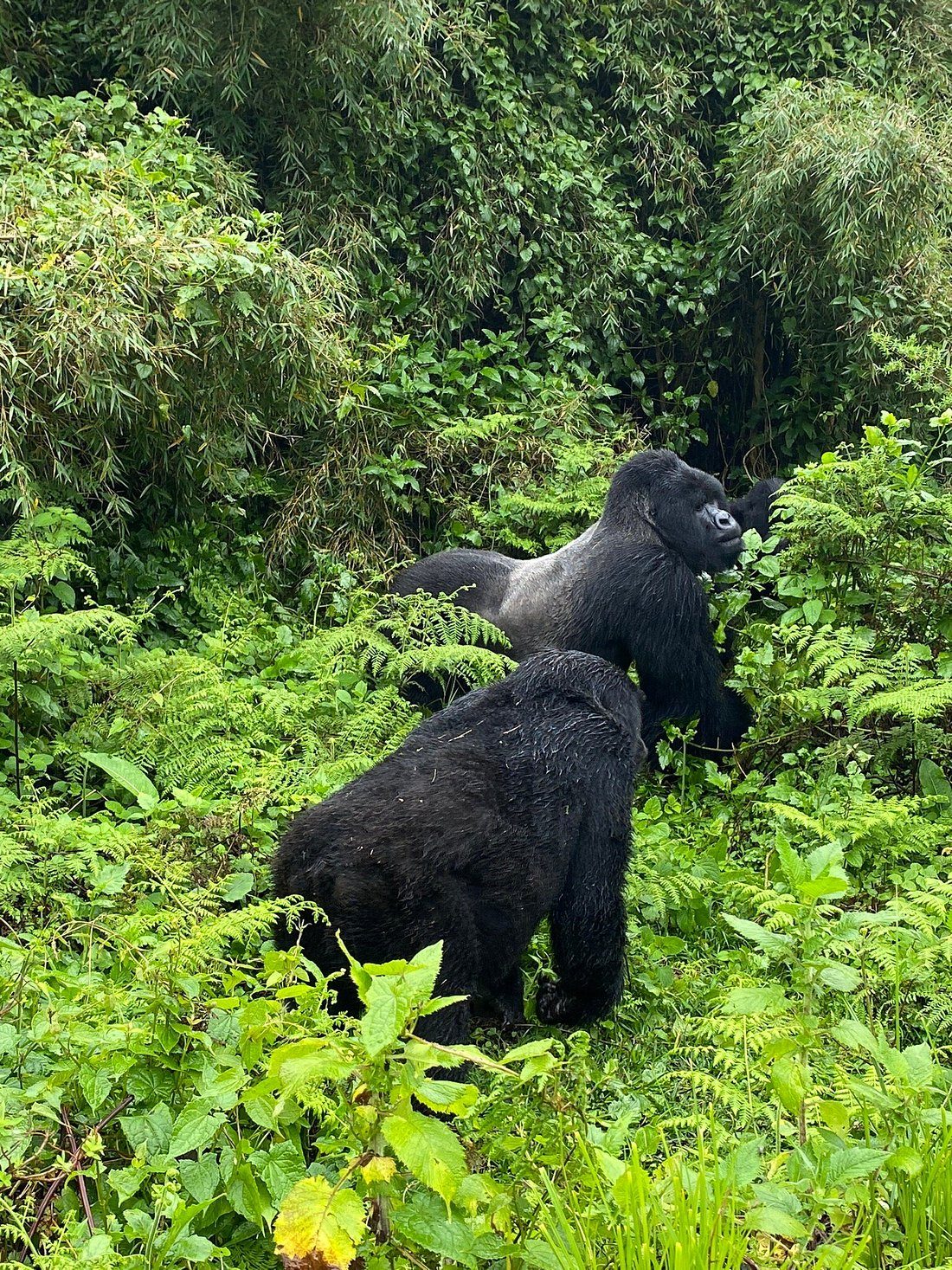
When entering the mist-shrouded slopes of Volcanoes National Park, the primary encounter is, of course, with a family of mountain gorillas. Because these primates share approximately 98% of our DNA, the encounter feels less like typical wildlife viewing and more like a profound connection with a distant relative. You will observe the Silverback, a massive male weighing up to 200kg, who oversees the group with a quiet but absolute authority. You may witness mothers meticulously grooming their infants or boisterous juveniles engaging in wrestling matches. The gorillas are habituated, meaning they continue their natural behaviors—foraging on bamboo shoots, napping, and socializing—while largely ignoring your presence as long as you maintain the mandatory distance.
Beyond the gorillas, the park is one of the few places on Earth where you can encounter the Golden Monkey. These beautiful, energetic primates are endemic to the Virunga Massif and are often found in the bamboo forests at the base of the volcanoes. Their striking orange-gold coats and playful antics offer a high-energy contrast to the more stoic gorillas. The park is also home to a variety of Albertine Rift endemic birds, such as the Rwenzori Turaco and the Archer’s Ground Robin.
While more elusive, the forest also hosts forest elephants and buffaloes. Though you are unlikely to see them directly in the dense foliage, you will frequently see evidence of their presence, such as large tracks or dung. The flora itself is a unique encounter; you will trek through "lobelia" and "senecio" zones that look like something out of a prehistoric landscape. This combination of rare primates, specialized high-altitude birds, and unique Afro-alpine vegetation makes Volcanoes National Park one of the most ecologically significant destinations on the continent.
2. How many hours of physical hiking through steep, dense forests are typically required to reach the gorilla families?
The duration of a gorilla trek is one of the most unpredictable elements of the safari, typically ranging from 2 to 8 hours for the total round trip. The hike to find the gorillas can take anywhere from 30 minutes to 4 hours of one-way walking. This variability exists because the gorillas are wild animals that move daily in search of food and suitable nesting sites. On some days, a family may be lounging just at the edge of the forest; on others, they may have moved deep into the interior or climbed to higher altitudes in search of seasonal bamboo shoots.
The physical nature of the hike is often described as "moderate to difficult." You are trekking at altitudes between 2,500 and 4,000 meters, where the air is thinner and physical exertion feels more taxing. The terrain involves navigating steep ridges, slippery volcanic soil, and thick undergrowth where rangers may need to use machetes to clear a path. You are not just walking on a trail; you are often "bushwhacking" through nettles and vines.
To manage the physical demand, the park authorities categorize gorilla families by their general location. During the morning briefing, rangers will assess the fitness levels of the guests and attempt to assign "easy," "medium," or "difficult" treks accordingly. However, even an "easy" trek requires a baseline level of mobility. Hiring a porter is highly recommended, as they not only carry your gear but also provide a steadying hand on the steep sections. Regardless of the time spent hiking, the one hour spent with the gorillas is universally considered so transformative that the physical effort to get there is immediately forgotten.
3. Will I have the opportunity to see chimpanzees and various monkey species during my hike in Nyungwe National Park?
Nyungwe National Park is a premier primate destination, often called the "Primate Capital of Rwanda" because it hosts 13 different species. During your visit, you will have a high probability of seeing chimpanzees. The chimpanzee tracking experience is high-energy and vocal; you will follow the "pant-hoots" of the community as they move through the high canopy. Because Nyungwe is a vast, ancient montane rainforest, the chimps are highly mobile, and seeing them often involves a fast-paced trek through the forest floor to keep up with their movements.
In addition to chimpanzees, you are likely to encounter the Black-and-White Colobus monkeys. Nyungwe is famous for its "super-groups" of colobus, which can number in the hundreds—one of the largest primate gatherings in Africa. Seeing a sea of black-and-white fur leaping through the emerald trees is a spectacular sight. The park is also a sanctuary for the L'Hoest's monkey, which is often spotted along the forest floor or near the roadsides, and the energetic Blue monkey.
Other species include the Grey-cheeked Mangabey, Red-tailed monkey, and the Owl-faced monkey. Birdwatchers will also find the forest hikes rewarding, as Nyungwe is home to over 300 bird species, including many Albertine Rift endemics. The biodiversity here is staggering; while the chimpanzees are the primary draw, the sheer number of different primates you might encounter in a single hike makes Nyungwe a unique "living laboratory" of primate behavior and evolution.
4. What kind of aquatic birds and mammals will I see during the boat safari on Lake Ihema in Akagera?
A boat safari on Lake Ihema, Rwanda’s second-largest lake, provides a stark and beautiful contrast to the mountain treks. The most prominent mammals you will encounter are the massive pods of hippos. Lake Ihema has one of the highest concentrations of hippos in the region, and you will see them submerged in the water or basking on the muddy banks. You will also see some of the largest Nile crocodiles in Africa, often found sunning themselves with their mouths agape to regulate their body temperature.
The birdlife on Lake Ihema is world-class. You are almost guaranteed to see the African Fish Eagle, perched high in the acacia trees or diving for prey. The lake is also a haven for various species of kingfishers, herons, and egrets. If you are lucky, you may spot the prehistoric-looking Shoebill Stork, which frequents the papyrus swamps bordering the lake. Other common sightings include the Great Cormorant, African Darter, and the beautiful Malachite Kingfisher.
Along the shoreline, you may also see "land" mammals coming down to drink. It is common to spot elephants, buffaloes, and various antelopes like the waterbuck or impala at the water’s edge, especially during the heat of the afternoon. The boat provides a safe and stable platform for photography, allowing you to get much closer to these aquatic and semi-aquatic species than you would on a traditional game drive. The serene atmosphere of the lake, punctuated by the grunts of hippos and the calls of eagles, offers a tranquil yet wildlife-rich experience.
5. What are the key differences between the canopy walk in Nyungwe and the mountain hiking experiences in other areas?
The Nyungwe Canopy Walk is a specialized aerial experience that differs significantly from the ground-based mountain hiking found in Volcanoes or the savanna game drives of Akagera. The most obvious difference is the perspective. While traditional hiking places you under the forest canopy looking up, the canopy walk suspends you 70 meters above the forest floor on a 160-meter-long bridge. This allows you to look down onto the treetops, providing a rare "bird’s-eye view" of the rainforest ecosystem that is usually inaccessible to humans.
The physical demand is also different. While the hike to reach the canopy bridge involves some steep sections and takes about 1.5 to 2 hours round-trip, it is generally less grueling than a full-day gorilla or chimpanzee trek. The focus is not on tracking a specific animal but on appreciating the vertical layers of the forest. From the bridge, you can see rare orchids, epiphytes, and various monkey species that live exclusively in the upper reaches of the trees.
The sensory experience is unique as well. On a mountain hike, you are immersed in the smells of damp earth and the feeling of the terrain. On the canopy walk, you experience the vastness of the rift valley and the swaying of the bridge, which provides a sense of scale and vulnerability. It is a spectacular way to understand the forest as a watershed and a giant carbon sink. For those with a fear of heights, it is a thrill; for nature lovers, it is an essential lesson in the complexity of Rwanda’s ancient montane habitats.
6. How does the 11-day itinerary balance intensive trekking activities with relaxing, scenic, or leisurely leisure time for guests?
A well-designed 11-day Rwanda itinerary follows a "peaks and valleys" rhythm to ensure that the physical demands of trekking don't lead to exhaustion. The "peaks" are the intensive trekking days—specifically the chimpanzee tracking in Nyungwe and the gorilla trekking in Volcanoes. These days involve early starts and several hours of physical exertion. To balance this, the itinerary incorporates "buffer" or leisure days in between.
For example, after the humidity and hills of Nyungwe, the schedule typically shifts to Lake Kivu. This is a purely scenic and leisurely phase where you can engage in kayaking, swimming, or simply relaxing on a boat while watching the sunset. There are no 5:00 AM wake-up calls here, allowing your body to recover before the final push to the volcanoes. Similarly, the Akagera portion of the trip involves game drives and boat safaris, which are "seated" activities that offer wildlife excitement without the physical strain of hiking.
Even within the trekking days, the afternoons are usually kept open for low-impact activities. After a morning gorilla trek, you might spend the afternoon visiting a local cultural village or enjoying a massage at the lodge. The 11-day timeframe is chosen specifically because it allows for these "rest beats." A shorter trip would force you to trek back-to-back, whereas 11 days provides the luxury of time to enjoy the high-end amenities of your lodges and reflect on the wildlife encounters without feeling rushed from one park to the next.
7. What kind of accommodation, amenities, and service standards should I expect at the luxury lodges in Rwanda?
Rwanda has positioned itself as a world-leader in high-end eco-tourism, and the luxury lodges reflect this "low-impact, high-value" philosophy. At the top tier, you can expect accommodations that are architectural masterpieces, often utilizing local stone, wood, and traditional "Imigongo" patterns. Lodges in Volcanoes National Park are particularly renowned for their "villa" or "cottage" styles, featuring private fireplaces, expansive decks with views of the volcanoes, and deep soaking tubs—essential for post-trek recovery.
Service standards are exceptionally high and personalized. Most luxury lodges operate on a "butler service" model, where a dedicated staff member handles everything from cleaning your muddy trekking boots to ensuring your favorite drink is waiting for you after a hike. The staff-to-guest ratio is often very high, ensuring that your needs are anticipated. You can expect "all-inclusive" dining featuring international gourmet cuisine made with fresh, organic Rwandan produce.
Amenities often include world-class spas, heated pools, and sophisticated lounge areas centered around roaring fires. Many lodges also provide high-quality trekking gear, such as gaiters and rain jackets, for guest use. Sustainability is a core amenity; you will see sophisticated solar power systems, plastic-free environments, and a deep commitment to community empowerment. Whether you are staying in a luxury tented camp in Akagera or a forest villa in Nyungwe, the experience is designed to be a seamless blend of wild adventure and refined comfort.
8. Will I have opportunities to interact with local communities and learn about Rwandan culture during my trip?
Yes, cultural immersion is a pillar of the Rwandan safari experience. The 11-day itinerary typically includes visits to Cultural Villages, such as the "Iby’iwacu Cultural Village" near Volcanoes National Park. Here, many of the performers and guides are former poachers who have transitioned into conservation. You can learn about traditional medicine, watch "Intore" dancing (the traditional dance of heroes), and see demonstrations of traditional wedding ceremonies and blacksmithing.
Beyond formal "village visits," you will have organic opportunities to interact with locals. In Kigali, a visit to the Kimironko Market provides a vibrant look at modern Rwandan life, from the barter system of produce to the meticulous work of tailors. In Nyungwe, you might visit a tea plantation, where you can talk to the farmers and learn about the "leaf-to-cup" process. Rwandan culture is also deeply reflected in the artisanal crafts you will see, such as the "Agaseke" peace baskets and traditional pottery.
A vital part of the cultural journey is learning about Rwanda's modern history and resilience. Visits to the Kigali Genocide Memorial or community-based reconciliation projects offer a profound look at how the country has transformed itself over the last three decades. The guides are often very open about their country’s journey, providing a narrative of hope and unity that is as much a part of the "safari" as the wildlife. Rwandans are famously hospitable, and these interactions often leave a more lasting impression on guests than the animals themselves.
9. What are the typical weather conditions and temperature ranges I should prepare for during my 11-day safari?
Rwanda’s climate is characterized by its elevation, earning it the title "The Land of Eternal Spring." However, because you are visiting three different ecosystems, you must prepare for a range of conditions. In the savanna of Akagera, it is generally warmer and drier, with daytime temperatures ranging from 25°C to 30°C. The sun can be quite intense, so sun protection is essential during morning and afternoon game drives.
In the montane forests of Nyungwe and Volcanoes, the weather is significantly cooler and more unpredictable. Daytime temperatures here usually hover between 15°C and 22°C, but they can drop sharply to 10°C or lower at night and in the early mornings. Because these are rainforests, "tropical downpours" can happen at any time, even during the dry season. The humidity is high, and the mist is a constant companion on the volcanic slopes.
Rwanda has two dry seasons (June–August and December–February) and two wet seasons (March–May and September–November). During the dry seasons, trekking is easier as the trails are less muddy, but the dust can be a factor in Akagera. During the wet seasons, the landscape is incredibly lush and green, but the trails become "moderate to difficult" due to mud. Regardless of when you visit, the key to comfort is layering. You will likely start your day in a fleece and rain jacket and end it in a t-shirt.
10. Do I need to obtain specific, specialized vaccinations or bring anti-malaria medication for my trip to Rwanda?
The most critical medical requirement for entry into Rwanda is a Yellow Fever vaccination certificate. You must present this "Yellow Book" at immigration upon arrival. If you are traveling from or through a country with a risk of Yellow Fever transmission, this is a non-negotiable requirement. It is also recommended to be up-to-date on routine vaccinations such as Typhoid, Hepatitis A and B, and Tetanus.
Malaria prophylaxis is strongly recommended for all travelers to Rwanda. While the high-altitude areas of Volcanoes National Park have a lower risk of mosquitoes, the savanna of Akagera and the city of Kigali are malaria-endemic zones. You should consult a travel clinic at least 4–6 weeks before departure to get a prescription for medications like Malarone or Doxycycline. It is also important to practice "physical" prevention: wear long-sleeved clothing in the evenings and use the mosquito nets provided by the lodges.
Because you will be in close proximity to mountain gorillas and chimpanzees, respiratory health is a major conservation concern. You share a high percentage of DNA with these primates, and they are highly susceptible to human illnesses like the common cold or flu. If you feel unwell on the day of your trek, you must disclose this to the rangers. In some cases, you may be barred from the trek to protect the animals (often with a refund or a rescheduled date). Carrying hand sanitizer and wearing a mask (often provided) during the actual hour with the primates is a standard safety measure.
11. What is the standard process and what to expect during the daily briefings with experienced local park guides?
Every trekking activity in Rwanda’s national parks begins with a mandatory morning briefing at the park headquarters, usually around 7:00 AM or 7:30 AM. During this time, you will be offered coffee or tea while you meet your lead guide and the team of rangers who will accompany you. The briefing serves three main purposes: safety, education, and logistics.
First, the guide will explain the safety protocols. This includes how to react if an animal approaches you, why you must keep a 7-meter distance, and the importance of staying in a single-file line behind the lead ranger. They will also cover "forest etiquette," such as not leaving any trash behind and how to "use the bathroom" in the wild if necessary. Second, they provide an educational overview of the specific gorilla family or chimpanzee community you are visiting, including the name of the Silverback, the number of infants, and any recent social drama within the group.
Finally, the guides handle the logistics. They will check that everyone has the proper gear (gaiters, gloves, water) and will facilitate the hiring of porters. This is also when the "grouping" happens; for gorilla trekking, guests are divided into groups of eight based on their fitness levels and interests. These briefings are conducted by highly experienced rangers, many of whom have spent decades in the forest and know the individual animals by name. Their storytelling and expertise are a vital part of the experience, turning a "hike" into an educational journey.
12. Is it safe for visitors to travel between the various national parks and urban areas in Rwanda?
Rwanda is widely considered one of the safest countries in Africa for international travelers. The government has made security a top priority, and you will notice a visible but non-intrusive security presence throughout the country. Whether you are in the bustling streets of Kigali or the remote reaches of the national parks, the crime rate against tourists is remarkably low. The country is clean, organized, and the infrastructure is excellent, with well-maintained (albeit winding) paved roads connecting all major destinations.
When traveling between parks, you will be in a private 4x4 safari vehicle with a professional driver-guide. These guides are experts in navigating the "thousand hills" and are trained in safety and first-aid. Driving is done during daylight hours to ensure safety on the winding mountain roads. While the drives can be long (e.g., 5–6 hours from Akagera to Nyungwe), the scenery is spectacular, and the transit is considered a safe and scenic part of the holiday.
In urban areas like Kigali, it is safe to walk around during the day and even in the evenings in most tourist-friendly neighborhoods. The local "moto-taxis" and registered taxis are reliable ways to get around. As with any international travel, you should practice standard "common sense" (such as not displaying large amounts of cash or expensive jewelry), but overall, Rwanda offers a peaceful and secure environment. The sense of safety is one of the reasons Rwanda has become such a popular destination for solo travelers and families alike.
13. What kind of typical Rwandan cuisine should I be prepared to experience while dining at my safari lodges?
Dining at Rwandan safari lodges is a highlight of the trip, offering a blend of international gourmet standards and local Rwandan flavors. The focus is on fresh, organic, "farm-to-table" ingredients, as most lodges have their own vegetable gardens or source from neighboring communities. You can expect high-quality proteins (beef, chicken, and tilapia from the lakes) paired with a wide variety of tropical fruits and vegetables.
Typical Rwandan staples you might encounter include "Ibitoke" (steamed or stewed green bananas/plantains), "Isombe" (pounded cassava leaves cooked with eggplant and spinach), and "Akabenz" (succulent roasted pork, though more common in towns than lodges). Legumes, especially various types of beans and peas, are a cornerstone of the diet. You will also see a lot of "Sweet Potatoes" and "Irish Potatoes" (locally called "Ipiri"), which are a major crop in the volcanic soil of the north.
For breakfast, you will enjoy world-class Rwandan Coffee and Tea, both of which are major exports and are prized for their rich, high-altitude flavor. Tropical fruits like tree tomatoes (tamarillos), passion fruit, and pineapples are exceptionally sweet and are served at almost every meal. While the lodges cater to international palates with familiar dishes like pasta, grilled fish, and steaks, they almost always offer a "Rwandan corner" or a special traditional night, providing a delicious and nutritious cultural connection through food.
14. What are the strict regulations, including prohibited actions, regarding photographing the mountain gorillas and chimpanzees?
Photographing the great apes is a privilege that comes with strict conservation-based regulations. The most important rule is that flash photography is strictly prohibited. Mountain gorillas and chimpanzees are highly sensitive to sudden bursts of light, which can startle them and cause aggressive behavior or cause them to flee. Ensure your flash is disabled before you enter the forest.
There are also rules regarding proximity and gear. You must maintain a minimum distance of 7 to 10 meters from the animals at all times. If a gorilla approaches you, you are instructed to stay still and lower your eyes—do not move back aggressively or try to touch them. When it comes to gear, you are allowed to bring professional cameras and lenses, but you must be able to carry them yourself or have a porter carry them in a bag. Tripods and monopods are generally discouraged because the terrain is too uneven and the primates move too quickly to make them practical; they can also be a tripping hazard in the dense forest.
Furthermore, drones are strictly banned in all Rwandan national parks. They are seen as a major disturbance to wildlife and a security risk. During your one hour of observation, the rangers will also ask you to keep noise to a minimum; the sound of a high-speed camera shutter is usually fine, but loud talking or sudden movements are not. The goal is to be a "silent witness" to their lives. Following these rules ensures that you get incredible shots without compromising the health or safety of these endangered primates.
15. What essential gear, such as proper boots or clothing, should I bring to ensure a comfortable tracking experience?
Proper gear is the difference between a miserable hike and a comfortable adventure. The most critical item is a pair of sturdy, waterproof hiking boots with good ankle support. The trails are often muddy, and you will be walking on uneven volcanic rock and roots; sneakers or sandals offer no protection and will be ruined. Pair these with long, moisture-wicking socks. A standard trekking practice is to tuck your trousers into your socks to prevent ants and other insects from crawling up your legs.
For clothing, you must wear long trousers and long-sleeved shirts, even if it feels warm. The forest is full of "stinging nettles" and thorny vines that will scratch exposed skin. Lightweight, synthetic fabrics that dry quickly are better than cotton. A lightweight, breathable rain jacket is essential, as tropical downpours occur year-round. You should also bring a pair of sturdy garden gloves (like those used for yard work); you will frequently need to grab onto branches or vines for balance, and the gloves protect your hands from thorns.
Other essentials include a wide-brimmed hat, sunscreen, and insect repellent with a high DEET concentration. A daypack (with a rain cover) is needed to carry your water, camera, and packed lunch. Most lodges and the park headquarters provide walking sticks, which are invaluable for balance on steep slopes. Finally, consider bringing a reusable water bottle; Rwanda is very environmentally conscious and discourages single-use plastics. This "utilitarian" kit will keep you dry, safe, and focused on the incredible wildlife encounters ahead.
Booking 11 Days Rwanda gorilla safari with us Roads of Adventure safaris
Book an 11-day Rwanda gorilla safari with Roads of Adventure Safaris to explore Volcanoes National Park, Nyungwe Forest, and Akagera, featuring mountain gorilla trekking, golden monkey tracking, and Kigali city tours. This tailored package offers expert guides, 4x4 transport, and secures necessary permits for an immersive, secure, and intimate wildlife experience.
