A safari in Rwanda typically costs between $2,000 and $10,000+ per person for a 3-day trip, largely driven by the $1,500 gorilla permit. Budget options start around $1,500–$2,500, mid-range, $3,000–$5,000, and luxury experiences can exceed $10,000 per person
14-days-magical-rwanda-photography-safari
12-days-budget-rwanda-primate-safari-and-wildlife-tour-holiday
11-days-africa-honeymoon-rwanda-wildlife-safari-holiday
11-days-rwanda-safari-tour-and-uganda-safari-vacation
11-days-classic-uganda-rwanda-tour-combined-itinerary
9-days-rwanda-gorilla-trekking-and-adventure-activities-and-relaxation
7-days-6-nights-midrange-rwanda-gorilla-trekking-holiday
6-days-5-nights-rwanda-midrange-itinerary-nyungwe-volcanoes
5-day-akagera-bwindi-gorilla-trekking-lake-bunyonyi-and-batwa-experience
3-days-luxury-rwanda-safari-in-akagera-park
Key Cost Factors & Average Prices (2026)
- Gorilla Permit: The most significant cost is the mountain gorilla permit, set at $1,500 per person for foreign non-residents, $500 for foreign residents, and $200 for East African citizens.
- 3-Day Gorilla Trekking: Generally ranges from $2,000 (budget) to over $5,000 (luxury) per person.
- Akagera National Park: A 3-day Big 5 safari often costs around $1,331 per person.
- Chimpanzee Trekking (Nyungwe): 3-day trips are generally cheaper, starting around $1,133–$1,134.
- Accommodation: Budget lodges cost $100–$300/night, mid-range $300–$800/night, and luxury, $800–$1,500+ per night.
- Other Costs: Park entrance fees ($100/day for international adults), guides ($25–$40), and game drives ($180–$280) in Akagera
1. How much does a Rwanda safari cost on average?
The cost of a Safari in Rwanda varies significantly based on your comfort level and activities. For a typical 5-to-7-day itinerary, budget travelers can expect to spend approximately $1,500 to $2,500, while a mid-range experience usually falls between $3,000 and $5,000. Luxury travelers often see prices exceeding $7,000 per person.
The primary driver of these costs is the mountain gorilla trekking experience. Unlike other East African destinations where game drives are the main expense, Rwanda’s tourism model is built on "high-value, low-volume" principles. This means that even a "budget" Safari in Rwanda starts at a higher baseline than a similar trip in neighboring countries.
Beyond the permits, the duration of your stay and the internal logistics play a major role. A 7-day trip that includes Akagera National Park for savannah wildlife, Nyungwe for chimpanzees, and Volcanoes for gorillas requires significant driving time and multiple park fees. To keep costs closer to the average, many travelers focus on one or two regions rather than trying to cover the entire country in a single week.
2. How much is a gorilla trekking permit in Rwanda?
The gorilla permit is the cornerstone of any Safari in Rwanda. As of 2026, the price remains fixed at $1,500 for foreign non-residents. This price is set by the Rwanda Development Board (RDB) to fund the intensive conservation efforts required to protect the endangered mountain gorillas and to support the communities living around the parks.
For those with different residency statuses, the pricing is tiered: foreign residents living in Rwanda or other East African Community (EAC) countries pay $500, while EAC citizens pay $200. It is important to note that these permits are limited to 96 per day (12 habituated groups of 8 people each), making them a scarce and highly sought-after commodity.
When you purchase a permit for your Safari in Rwanda, the fee covers the park entrance, the expert guides and trackers who locate the gorillas, and a team of security rangers. It does not, however, include the cost of a porter (roughly $20) or tips for the trekking team. Despite the high price tag, the revenue has been instrumental in the 25% increase in the gorilla population over the last decade.
3. What is the most expensive part of a Rwanda safari?
Without question, the mountain gorilla trekking permit is the single most expensive component of a Safari in Rwanda. At $1,500 per person for a single hour with the gorillas, the "cost per minute" is among the highest of any wildlife experience globally. For a couple, the permits alone represent a $3,000 investment before a single night of lodging or a meal is paid for.
This high cost is a deliberate choice by the Rwandan government to prevent over-tourism. By making the permit the most expensive element, the country ensures that the environmental footprint remains small while generating enough revenue to make conservation sustainable.
The second most expensive part is typically high-end accommodation. Because the permits are so costly, the lodges built around Volcanoes National Park cater to a demographic willing to spend $1,000+ per night. Consequently, finding truly "cheap" options near the gorillas is difficult, often forcing budget travelers to stay further away in towns like Musanze and commute to the park headquarters at dawn.
4. How much does a 3-day gorilla safari cost?
A 3-day Safari in Rwanda is often chosen by time-constrained travelers or those adding a Rwanda leg to a longer African journey. A budget version of this trip typically costs between $1,800 and $2,200. This covers the $1,500 permit, two nights in a basic guesthouse ($100–$200 total), and transport from Kigali ($200–$400).
A mid-range 3-day Safari in Rwanda will usually land between $2,800 and $3,500 per person. This upgrade usually includes a private 4x4 vehicle with a professional driver-guide and a stay at a comfortable lodge with all meals included. The jump in price reflects the higher quality of food, better vehicle reliability, and more personalized service.
For those seeking luxury, a 3-day trip can exceed $6,000. At this level, travelers often bypass the 2.5-hour drive from Kigali by taking a 20-minute helicopter flight directly to their lodge. These packages include stays at world-renowned properties where every detail, from massage treatments after the trek to private bush dinners, is curated.
5. Are there budget safari options in Rwanda?
Yes, a budget Safari in Rwanda is possible, though it requires more logistical planning. Budget travelers can manage a 4-to-7-day trip for $1,200 to $2,500 by making strategic choices. The first choice is often to opt for a "Golden Monkey" trek ($100) or a hike to Diane Fossey’s grave instead of the $1,500 gorilla trek.
To stay within a budget, travelers often use Rwanda’s reliable public bus system to move between Kigali, Musanze (gorillas), and Rubavu (Lake Kivu). Staying in community-run guesthouses or religious hostels (which are very common and clean in Rwanda) can keep accommodation costs as low as $40–$60 per night.
Eating at local "melange" restaurants (buffets) instead of tourist lodges also saves significant funds. However, even on a budget Safari in Rwanda, some costs are unavoidable, such as park entry fees for Akagera or Nyungwe. To maximize value, budget travelers often focus on Akagera National Park, where the daily entry fees are lower and the wildlife variety—including lions, rhinos, and elephants—is high.
6. What is the cost of a luxury safari in Rwanda?
A luxury Safari in Rwanda is an exercise in "refined wilderness." These trips can easily exceed $15,000 per person for a 10-day circuit. The pricing is driven by stay-at-properties like Wilderness Bisate, Singita Kwitonda, or One&Only Gorilla’s Nest, where nightly rates frequently start at $2,000 and can go up to $5,000 per person.
Luxury packages provide seamless logistics. Rather than navigating bumpy roads, guests are whisked between parks via private helicopter transfers. A luxury Safari in Rwanda also includes "exclusive" experiences, such as private gorilla trekking (where you pay for all 8 spots in a group to be alone with the gorillas) or private behind-the-scenes tours with conservationists and researchers.
Beyond the room and board, luxury safaris include high-end 4x4 vehicles equipped with WiFi, binoculars, and refreshments, accompanied by the country’s top-tier guides. Every meal is a gourmet experience, often featuring "farm-to-table" ingredients from the lodge's own organic gardens. This level of service ensures that the physical toll of trekking through dense rainforest is balanced by ultimate evening relaxation.
7. How much is accommodation per night in Rwanda?
Accommodation pricing for a Safari in Rwanda is sharply divided into three tiers. Budget guesthouses and "homestays" generally cost between $50 and $100 per night. These are typically clean, basic, and located in the towns bordering the parks rather than inside the park boundaries themselves.
The mid-range tier, costing between $200 and $500 per night, is where most international tourists stay. These lodges offer private cottages, hot showers, stunning views of the volcanoes or the savannah, and full-board dining. Many of these properties are eco-lodges that pride themselves on sustainable operations and community employment.
Luxury lodges represent the top tier, with rates starting at $1,000 and often exceeding $3,000 per night. These are world-class destinations in their own right. When booking accommodation for your Safari in Rwanda, it is crucial to check if the price includes "all-inclusive" perks like alcoholic beverages, laundry, and local activities, as these can add up quickly at the luxury level.
8. What is the cost of a safari in Akagera National Park?
Akagera National Park offers a traditional savannah Safari in Rwanda. For those on a self-drive trip, the entry fee is $100 per person for a single night stay. If you are just visiting for the day, the fee remains $100. Vehicle entry fees also apply, usually around $10–$20 depending on the vehicle’s registration.
If you prefer a guided experience, a half-day game drive using a park vehicle and guide costs between $180 and $200, while a full-day drive ranges from $280 to $300. These fees are per vehicle, not per person, making it more affordable for families or small groups. Akagera is unique for a Safari in Rwanda because it allows for self-driving, which is not permitted in the forested parks.
Camping in Akagera is a popular budget option, costing around $25 per person per night at designated sites like Shakani or Muyumba. On the flip side, luxury options like Magashi Camp offer an exclusive experience in the park’s private concession, emphasizing high-end boat trips and night game drives that are not available to the general public.
9. How much are chimpanzee tracking permits?
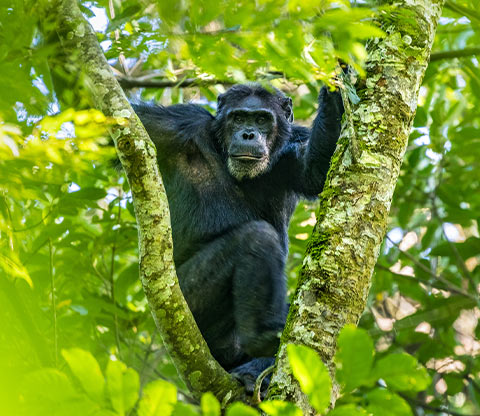
Chimpanzee tracking is a highlight of a Safari in Rwanda when visiting Nyungwe National Park. As of 2026, the permit fee for foreign non-residents is approximately $150 per person. While this is a tenth of the cost of a gorilla permit, the experience is equally thrilling, involving a trek through one of the oldest rainforests in Africa.
The pricing for chimpanzee permits is also tiered: foreign residents pay around $75, and EAC citizens pay $25. It is important to remember that chimpanzees are more mobile than gorillas. A chimp trek on your Safari in Rwanda can involve several hours of fast-paced walking through steep, dense terrain to keep up with the troop as they move through the canopy.
In addition to the chimp permit, travelers in Nyungwe often pay for the Canopy Walk ($60), which offers a bird’s-eye view of the forest. Combining these activities makes for a comprehensive primate-focused Safari in Rwanda, allowing you to see colobus monkeys, grey-cheeked mangabeys, and various bird species alongside the chimpanzees.
10. What is the cost of transport for a safari?
Transport is a significant logistical expense for a Safari in Rwanda. Hiring a private 4x4 safari vehicle (usually a Toyota Land Cruiser) with a professional driver-guide costs between $150 and $250 per day. This fee typically includes the driver’s salary, their accommodation and meals, and basic insurance.
Fuel is an additional cost and can be significant given Rwanda’s mountainous terrain. For a standard 7-day Safari in Rwanda, you should budget an extra $200–$400 for petrol. While you can rent a smaller SUV (like a Toyota RAV4) for a self-drive trip at $80–$100 per day, this is generally only recommended for the paved roads between Kigali and the main towns.
For the actual park tracks, especially during the rainy season, a heavy-duty 4x4 is essential. Many travelers find that the cost of a professional driver-guide is the best investment they make on their Safari in Rwanda. A good guide knows the best spots for wildlife, understands the local culture, and handles the stress of navigating winding mountain roads, allowing you to focus on the scenery.
11. Is it better to book a safari in advance?
Securing your Safari in Rwanda 3 to 6 months in advance is highly recommended, and for peak season, even 9 to 12 months is better. The primary reason is the scarcity of gorilla permits. Since only 96 people can trek each day, permits for June, July, August, and December often sell out months before the travel date.
Furthermore, Rwanda’s best lodges are small, often having only 6 to 12 rooms. If you have your heart set on a specific eco-lodge for your Safari in Rwanda, waiting until the last minute will likely result in that property being fully booked. Early booking also allows you to secure the best guides, who are often requested by name long in advance.
Last-minute bookings (within 30 days) are sometimes possible, especially during the rainy season, but they come with risks. You may find yourself staying in a hotel an hour away from the park gates or having to shuffle your itinerary based on which day a permit is available. In short, the more complex your Safari in Rwanda itinerary, the earlier you should lock it in.
12. When is the cheapest time to visit Rwanda?
The "low season" for a Safari in Rwanda falls during the long rains (March to May) and the short rains (October to November). During these months, many lodges offer discounted rates to attract travelers, sometimes reducing their prices by 20% to 40%. This is the best time for those looking for a luxury experience at a mid-range price.
Interestingly, the RDB sometimes offers a promotional discount on gorilla permits during the low season. If you spend at least two nights in Akagera or Nyungwe National Park, the gorilla permit price may be reduced to $1,050. This "promotional permit" makes a Safari in Rwanda significantly more accessible, though you must be prepared for rain and muddy trekking conditions.
The landscape is also at its most beautiful during the rainy season—the hills are vibrant green, and the air is clear of dust, which is ideal for photography. However, if your Safari in Rwanda involves heavy hiking, be aware that the trails can be slippery and more physically demanding during these months.
13. What is included in a typical safari package?
When you book a Safari in Rwanda through a tour operator, the package is usually "full board." This means it includes all accommodation, three meals a day, a private 4x4 vehicle, a driver-guide, and the park entry fees and permits mentioned in your itinerary. It also usually includes bottled water in the vehicle.
Items typically not included are international flights to Kigali, the East African Tourist Visa ($50), and travel insurance. Most mid-range and budget packages also exclude tips, laundry, and alcoholic beverages. It is vital to read the "exclusions" list carefully before paying for your Safari in Rwanda to avoid unexpected costs on the ground.
Some high-end packages might include "amenities" like bush breakfasts, sundowner drinks in Akagera, or even the use of high-quality cameras and binoculars. Because Rwanda is a relatively small country, many Safari in Rwanda packages also include a city tour of Kigali and a visit to the Kigali Genocide Memorial, which is an essential part of understanding the nation's history.
14. Are there any other hidden costs?
Beyond the big-ticket items, a Safari in Rwanda has several smaller "hidden" costs. Tipping is a major one; it is customary to tip your guide $20–$50 per day, and each trekking group (gorillas or chimps) expects a collective tip for the rangers and trackers. If you hire a porter to help you on a trek—which is highly recommended—that is an additional $15–$20.
Gear is another factor. For a successful Safari in Rwanda, you need specialized clothing: waterproof hiking boots, gaiters to keep ants out of your socks, and sturdy garden gloves to grab onto thorny vegetation while trekking. If you don't own these, you’ll need to buy them before your trip or rent them locally.
Health-related costs also apply. You may need a Yellow Fever vaccination (required for entry from some countries) and malaria prophylaxis. Finally, don't forget the cost of souvenirs. Rwanda is famous for its "Agaseke" peace baskets and high-quality coffee and tea. Budgeting an extra $200–$500 for these incidental expenses will ensure your Safari in Rwanda remains stress-free.
15. How much is a boat trip in Akagera?
A boat trip on Lake Ihema is a serene way to break up the game drives during a Safari in Rwanda. A standard 1-hour scheduled boat trip costs approximately $35 per person for the morning or midday slots. The sunset trip, which is highly recommended for the lighting and increased hippo activity, usually costs $45 per person.
For those who want a more intimate experience or are serious about bird photography, a private boat can be rented for $180. This allows you to dictate the pace and stay longer near specific sightings, such as a nesting colony of water birds or a crocodile basking on the shore.
The boat trip is often the best way to see the rare Shoebill stork or the majestic African Fish Eagle in action. On any Safari in Rwanda that includes Akagera, the boat trip provides a unique perspective on the ecosystem that you simply can't get from a vehicle, making it a highly recommended and relatively affordable add-on to your itinerary.
Booking safari in Rwanda with us Roads of Adventure safaris
Booking a Rwanda safari with Roads of Adventure Safaris offers customized, professional, and mid-range to luxury experiences focusing on gorilla trekking in Volcanoes National Park and wildlife in Akagera. Packages range from 2-day quick trips to 20-day, multi-country adventures with 4x4 transport and expert guides, often combined with Uganda
