The Top Ugandasafari destinations include Bwindi Impenetrable National Park for gorilla trekking and Queen Elizabeth National Park for diverse wildlife, Uganda’s top safari destinations offer a rich blend of dense, primate-filled jungles and classic savannah plains. The ultimate highlights are gorilla and chimpanzee trekking, alongside Big Five wildlife viewing, boat cruises, and dramatic waterfalls across the country's premier national parks.
10-days-best-uganda-big-five-safaris-and-primate-experience
10-days-uganda-rwanda-primate-safari-vacation-and-game-drive-safari
10-days-uganda-safari-all-big-five-gorilla-and-chimpanzee-tracking-adventure
7-days-safari-to-uganda-queen-elizabeth-park-gorillas-trekking-and-lake-mburo
7-days-perfect-uganda-primate-safari-itinerary
7-days-uganda-tour-to-murchison-falls-via-ziwa-kibale-and-queen-elizabeth-national-park
7-day-ultimate-uganda-primate-safari-chimpanzees-and-game-drives
6-days-safari-in-uganda-gorilla-trekking-and-chimpanzee-tracking
6-days-classic-uganda-rwanda-primate-and-wildlife-safari
6-days-uganda-primate-safari-and-wildlife-experience
6-days-budget-uganda-wildlife-safari-holiday-vacation
6-days-double-gorilla-trekking-uganda-and-rwanda-side
4-days-bwindi-impenetrable-gorilla-trekking-and-queen-elizabeth-park-tour
4-days-budget-gorilla-trekking-lake-bunyonyi-and-golden-monkey-tracking
Primate Trekking & Jungles
Uganda's dense, misty rainforests provide some of the finest wildlife encounters on Earth. Here is a detailed look at each of these three legendary primate sanctuaries.
Bwindi Impenetrable National Park
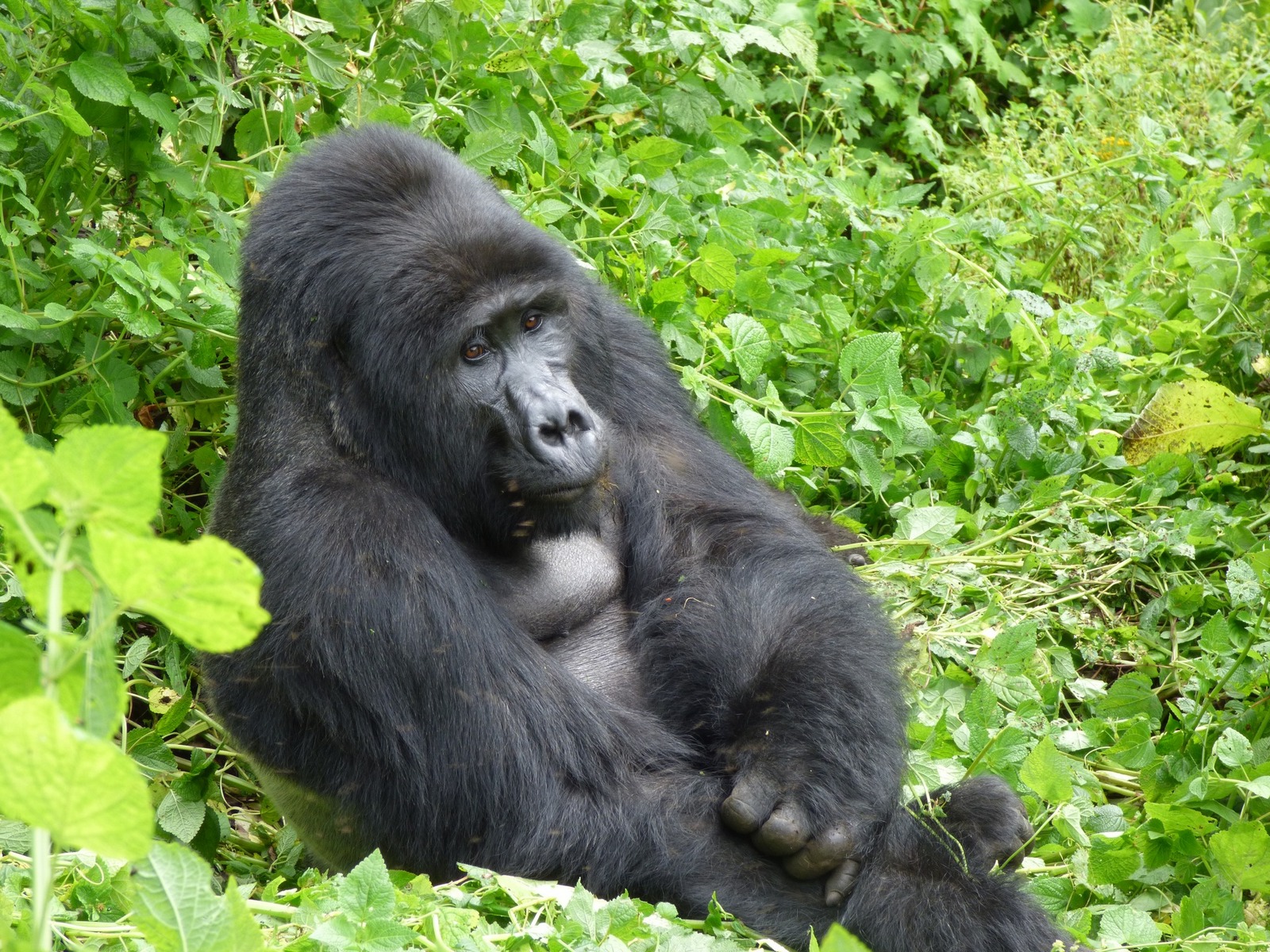
True to its name, Bwindi Impenetrable National Park is a massive, tangled matrix of ancient, montane, and lowland forest covering roughly 321 square kilometers. Located along the edge of the Western Rift Valley in southwestern Uganda, this UNESCO World Heritage Site dates back more than 25,000 years, surviving the last ice age to become one of Africa’s richest ecological zones. The forest floor is blanketed in a dense layer of ferns, vines, and shrubs that make navigating it a physical challenge, but the reward is unmatched: Bwindi is home to roughly half of the world's remaining population of endangered mountain gorillas (Gorilla beringei beringei).
Trekking here is a deeply immersive wilderness experience. Visitors set out in small groups, led by expert rangers and trackers who slash paths through the thick undergrowth. The trek can take anywhere from two to eight hours, scaling steep, slippery ridges and muddy valleys ranging between 1,160 and 2,607 meters in elevation. Coming face-to-face with a habituated gorilla family—watching a gentle silverback oversee his playing infants and foraging females—is a profound, quiet experience that heavily funds local community development and wildlife conservation.
Beyond its famous great apes, Bwindi protects a staggering level of biodiversity. It shelters over 120 mammal species, including forest elephants, chimpanzees, and various small antelopes. Bird enthusiasts travel from all over the world to catch a glimpse of its 350 bird species, which include 23 highly localized Albertine Rift endemics like the African green broadbill. Bwindi is a vital biological stronghold where the ancient pulse of Africa remains completely untouched.
Kibale National Park
Moving north toward the foothills of the Rwenzori Mountains, the landscape opens up into the lush, undulating canopy of Kibale National Park. Spanning 795 square kilometers, Kibale features a beautiful transition between lowland and montane rainforests, interspersed with patches of grassland, swamp, and woodland. This rich habitat variation has earned it the well-deserved title of the "Primate Capital of the World." Kibale boasts the highest density and diversity of primates in all of East Africa, protecting a remarkable 15 distinct species.
The park's crown jewel is its thriving population of roughly 1,500 eastern chimpanzees (Pan troglodytes schweinfurthii). Tracking these highly intelligent, vocal primates is a thrilling, fast-paced adventure. Unlike the quiet, deliberate movements of gorillas, chimpanzees are incredibly active. Visitors follow them as they move rapidly through the high canopy, swinging across branches, drumming on buttress roots, and communicating with loud hooting calls that echo through the forest. Kibale offers both standard one-hour viewings and a full-day Chimpanzee Habituation Experience (CHEX), letting guests accompany researchers as they follow a wild troop from nests at dawn to nests at dusk.
While the chimpanzees take center stage, walking through Kibale reveals a bustling, multi-layered primate society. You can easily spot rare L'Hoest's monkeys, red-tailed monkeys, grey-cheeked mangabeys, black-and-white colobus, and the endangered Ashy red colobus monkey. The park's biodiversity extends far beyond primates, hosting over 375 bird species, colorful butterflies, and secretive forest elephants that travel along a dedicated wildlife corridor connecting Kibale directly to neighboring Queen Elizabeth National Park.
Mgahinga Gorilla National Park
Perched at Uganda’s southernmost tip where the borders of Uganda, Rwanda, and the Democratic Republic of Congo meet, Mgahinga Gorilla National Park is a compact but breathtakingly beautiful wilderness. At just 33.7 square kilometers, it is Uganda’s smallest national park, yet what it lacks in size, it more than makes up for in dramatic, volcanic scenery. Mgahinga covers the Ugandan slopes of three striking, extinct Virunga Volcanoes: Mount Muhavura, Mount Gahinga, and Mount Sabinyo, creating a striking backdrop of bamboo forests, alpine moorlands, and misty craters.
Mgahinga offers a unique trekking dynamic because it is part of the larger, transboundary Virunga Conservation Area. It provides a home to the Nyakagezi gorilla family, a group notorious for its past nomadic tendencies across international borders, though they have settled firmly on the Ugandan side for years. The tracking experience here feels exclusive and vast, often lacking the crowds of larger parks. However, Mgahinga’s true unique claim to fame is that it is the only place in Uganda where visitors can track the endangered golden monkey (Cercopithecus kandti). These energetic, striking primates feature bright orange-gold coats and are strictly adapted to the dense bamboo zones flanking the lower volcanic slopes.
Beyond wildlife tracking, Mgahinga is a deeply cultural landscape. It is the ancestral home of the indigenous Batwa people, hunter-gatherers who lived in harmony with the forest for generations before the park's gazettement. Visitors can embark on the Batwa Trail, led by local guides who demonstrate ancient survival skills, traditional medicine extraction, and sacred rituals inside the massive Garama Cave, making Mgahinga a powerful blend of volcanic beauty, rare wildlife, and living human history.
Savannah & Big Game
Queen Elizabeth National Park
Spanning nearly 1,978 square kilometers in western Uganda, Queen Elizabeth National Park is a masterclass in ecological diversity. Framed by the snow-capped Rwenzori Mountains, the park transitions seamlessly from sprawling open savannah and humid rainforests to striking volcanic crater lakes. This mosaic of habitats supports an incredible array of wildlife, including four of the "Big Five."
The park's defining highlight is split between two distinct regions and experiences. In the remote southern Ishasha sector, visitors witness one of nature's most peculiar behavioral anomalies: tree-climbing lions. Unlike typical prides that stay grounded, these lions spend their afternoons draped lazily over the sturdy limbs of ancient fig trees to escape the midday heat and pesky tsetse flies.
Further north lies the Kazinga Channel, a natural 32-kilometer waterway connecting Lake Edward and Lake George. A boat safari along this channel offers an intimate, up-close look at one of the world's highest concentrations of hippos, alongside massive Nile crocodiles basking on the banks. Elephants, buffalos, and waterbucks frequently line the shores to drink, while overhead, over 600 bird species—including martial eagles and African skimmers—make it an absolute paradise for birdwatchers.
Murchison Falls National Park
As Uganda's largest and oldest conservation area, Murchison Falls National Park covers over 3,800 square kilometers. The park is cleft in two by the historic Victoria Nile, a geographic feature that dictates the rhythm of life and the layout of safaris in the region.
The crown jewel of the park is its namesake waterfall. Here, the entire volume of the Nile is dramatically compressed through a tiny, seven-meter fracture in the rift valley escarpment. The water plunges 43 meters into the "Devil's Cauldron" below with a thunderous roar, creating a permanent mist and a vibrant, perpetual rainbow. A boat cruise upstream to the base of the falls reveals thousands of hippos and aquatic birds, while a hike to the top provides a dizzying perspective of the river's raw kinetic energy.
On the northern banks of the Nile, the landscape opens up into classic Borassus palm-dotted savannah. This is the prime territory for game drives, where visitors can effortlessly spot massive herds of Rothschild’s giraffes, elegant Ugandan kobs, lions, leopards, and heavy-set Cape buffalos. For birding enthusiasts, the marshy delta where the river empties into Lake Albert serves as one of the best places in Africa to catch a glimpse of the prehistoric-looking, rare shoebill stork.
Kidepo Valley National Park
Tucked into the rugged, mountainous terrain of the far northeastern corner on the border of South Sudan and Kenya, Kidepo Valley National Park is Uganda’s most isolated wilderness. Because of its remote location, it remains largely untouched by mass tourism, offering a raw, exclusive atmosphere reminiscent of Africa's golden age of exploration.
The park is composed of two main valley systems: the Narus Valley and the Kidepo Valley. During the dry season, the Narus Valley becomes the sole water source for miles around, transforming into a bustling oasis where staggering herds of up to 4,000 buffalos, along with elephants, zebras, and giraffes, gather to survive. This dense concentration of prey attracts a formidable lineup of predators. Kidepo is one of the only places in Uganda where you can regularly see cheetahs sprint across the plains, alongside lions that often use the park's dramatic kopjes (isolated rock hills) as natural lookout points.
Beyond the wildlife, Kidepo offers a unique cultural element. The surrounding Karamoja region is home to the Ik and Karamojong people, whose traditional, cattle-centric ways of life have resisted modernization for centuries, adding profound cultural depth to a spectacular wilderness experience.
Lake Mburo National Park
At just 370 square kilometers, Lake Mburo National Park may be the smallest of Uganda’s savannah parks, but it packs an exceptional punch. Strategically positioned along the highway connecting Kampala to the western gorilla highlands, it serves as the ultimate, highly accessible safari stopover.
Unlike the larger parks dominated by wide-open plains, Lake Mburo features a gentle landscape of sculpted hills, rich acacia woodlands, and a network of 14 interconnected lakes. Crucially, the park lacks elephants and has a minimal lion presence, a unique ecological balance that opens the door for immersive activities forbidden elsewhere. Visitors can step out of the vehicle for guided walking safaris, mountain biking treks, or even horseback riding safaris, allowing them to quietly glide past herds of impalas and common elands—the largest antelopes in Africa—without the drone of an engine.
The park is also famous for hosting the highest concentration of Burchell’s zebras in Uganda. As twilight falls, night game drives frequently reveal the park’s elusive nocturnal residents, most notably its healthy population of leopards, which can be seen hunting in the dense thickets.
Adventure & Scenery
Jinja
Resting peacefully on the shores of Lake Victoria, Jinja is widely celebrated as the "Adventure Capital of East Africa." The town possesses a relaxed, colonial-era charm, yet it serves as the launching pad for some of the most intense, adrenaline-pumping outdoor activities on the continent. Its defining geographic claim to fame is being the historic Source of the Nile, the exact point where the world’s longest river exits Lake Victoria to begin its massive 6,600-kilometer journey north toward the Mediterranean Sea.
For thrill-seekers, the stretch of the Nile just downstream from Jinja is a legendary playground. It features world-class, heavy-volume white-water rafting, where adventurers can tackle turbulent, churning Class 4 and Class 5 rapids like "The Bad Place" and "Big Brother." The warm water and deep channels make it an exceptionally safe yet high-octane environment for both rafters and kayakers.
Those who prefer to keep their feet on solid ground can explore the scenic landscape via muddy, fast-paced quad biking or horseback riding trails. These routes wind tightly through rural Ugandan villages, vibrant red-dirt paths, and lush sugarcane plantations along the riverbanks. For extreme thrill-seekers, bungee jumping over the edge of a cliff directly toward the swirling waters of the Nile offers an unforgettable rush. At sunset, the high energy transitions into tranquility. Visitors can board a peaceful, motorized canoe voyage to the exact geographic point where the Nile bubbles up out of Lake Victoria, enjoying cold drinks while watching kingfishers and fish eagles hunt in the golden twilight.
Lake Bunyonyi
Hidden away in the extreme southwestern highlands of Uganda near the Rwandan border, Lake Bunyonyi is a magical oasis of calm. Affectionately nicknamed the "Switzerland of Africa" due to its refreshing, cool mountain climate and framed by steep, deeply terraced green hillsides, it looks less like a tropical African landscape and more like an alpine paradise. Believed to be the second-deepest lake on the continent, Bunyonyi is famously free from dangerous hippos, crocodiles, and bilharzia (a common water-borne parasite), making it one of the absolute safest lakes in Africa for open swimming.
The body of water is dotted with 29 unique, emerald-green islands, each with its own captivating history. Among them is Punishment Island, a tiny, isolated patch of land where local Bakiga communities historically abandoned unmarried pregnant women as a stark deterrent. Today, the lake serves as the ultimate sanctuary for relaxation, particularly for travelers looking to heal their aching muscles after grueling gorilla tracking expeditions in nearby Bwindi Impenetrable National Park.
The pace of life at Lake Bunyonyi is delightfully slow. Visitors can spend their mornings smoothly gliding through the morning mist in a traditional dugout canoe, listening to the delicate bird calls that give the lake its name—"Bunyonyi" translates directly to "place of many little birds" in the local language. Days are easily filled with ziplining across the water, hiking up to breathtaking panoramic viewpoints on the surrounding ridges, or visiting local Batwa pygmy communities to learn about their history. As night falls, watching the stars reflect off the perfectly still water offers a serene, unforgettable conclusion to any Ugandan safari.
What to consider when choosing Uganda safari destinations
When choosing Uganda safari destinations, start with what you want to see most. Uganda offers iconic gorilla trekking, chimpanzee tracking, game drives, birding, and scenic river cruises. Prioritize destinations that match your interests—Bwindi and Mgahinga for mountain gorillas, Kibale for chimpanzees, Queen Elizabeth for wildlife and the Kazinga Channel, and Murchison Falls for dramatic waterfalls and big game.
Next, consider your travel pace and budget. Gorilla safaris require permits and often cost more, while some parks allow more flexible schedules. Also think about season and terrain: some areas can be muddy during rainy months, affecting road comfort and trek conditions.
Check habitat and safety factors, including health advice for malaria prevention, park rules, and guide support. Finally, choose a reputable operator that builds realistic itineraries, handles permits, and offers experienced drivers. Roads of Adventure Safaris can tailor routes to your time, interests, and comfort level.
When is the best time to visit Uganda safari destinations
The best time to visit Uganda safari destinations depends on weather, wildlife activity, and your tolerance for rain. Uganda has two rainy seasons: March–May and October–November, and two drier periods: June–September and December–February.
For gorilla trekking in Bwindi and Mgahinga, many travelers prefer June–September and December–February for clearer trails and generally drier conditions, though it can be busier and permits sell quickly. During rainy months, trekking is still possible, but paths may be slippery and hikes slower.
For Queen Elizabeth and Murchison Falls, wildlife viewing is excellent year-round, yet the landscape looks greener after rains. Birding can be especially rewarding in transition seasons.
If you want a balance of fewer crowds and manageable weather, consider January–February or late November to early December. Roads of Adventure Safaris can recommend ideal dates based on your route, photography goals, and comfort with road travel.
How to get to Uganda safari destinations
Getting to Uganda safari destinations usually starts with flying into Entebbe International Airport (EBB) near Kampala. From there, you can reach safari areas by road transfers with a professional driver-guide. Roads of Adventure Safaris will organize convenient pick-ups, scheduled rest stops, and reliable driving times.
Most popular parks are accessible by road: Kampala to Murchison Falls takes a long but rewarding drive, while Kampala to Queen Elizabeth is typically shorter. For western destinations like Kibale and Bwindi, you’ll travel through scenic countryside and mountain regions.
In some itineraries, domestic flights may be used to reduce travel time to remote areas, depending on your schedule. For gorilla treks, timing matters because you must arrive early for briefing and permit-related requirements.
To travel smoothly, plan for flexible connections, keep essentials in your day bag, and bring suitable clothing for changing weather. Your safari company should handle logistics and contingency planning for road conditions.
Booking Uganda safari destinations with us Roads of Adventure safaris
To book a tailored Ugandan safari with Roads of Adventure Safaris, contact them directly via email at info@roadsofadventuresafaris.com or WhatsApp at +256 701041637. They specialize in custom mid-range and budget tours across Uganda, Rwanda, and the broader East Africa region
