A Uganda Rwanda safari connects Africa's best primate tracks and wild savannahs in one trip. This combined route lets you explore Uganda’s dense forests and Rwanda’s steep volcanic hills. You will trek through Bwindi Impenetrable National Park to see mountain gorillas up close. Next, you can head to Volcanoes National Park to spot rare golden monkeys. The landscape changes quickly from deep rainforests to open plains. You can watch unique tree-climbing lions in Ishasha and see massive hippos along the Kazinga Channel. Combining both countries gives you the best of two worlds. You experience Rwanda's highly organized ecotourism alongside Uganda's rich variety of big game. Local drivers manage the border paperwork, making the road travel smooth and simple. This journey offers a complete, realistic view of East Africa’s wildlife.
28-days-perfect-uganda-rwanda-bird-watching-safari-and-wildlife-expedition
22-days-rwanda-and-uganda-primate-safari-and-wildlife
21-days-best-of-uganda-and-rwanda-safari-adventure
20-days-complete-rwanda-uganda-safari-tour-combo
18-days-rwanda-uganda-birding-safari-and-primate-experience
17-days-rwanda-birding-safari-and-uganda-birding-tour-combined-vacation
12-days-rwanda-primate-safari-vacation-and-akagera-national-park
11-days-best-uganda-rwanda-primate-safari-and-wildlife-from-kigali
10-days-rwanda-uganda-safari-tour-double-gorilla-trekking-itinerary
9-days-best-africa-big-five-safari-and-rwanda-gorilla-trekking-tour-package
8-days-best-luxury-rwanda-gorilla-trekking-safari-and-wildlife
7-day-perfect-rwanda-gorilla-tour-and-wildlife-safari-itinerary
6-days-luxury-rwanda-gorilla-trekking-safari-tour-vacation
2-days-quick-escape-to-bwindi-impenetrable-to-trek-mountain-gorilla-from-kigali
What is the best time of year to book a Uganda Rwanda safari?
The best time of year to book a Uganda Rwanda safari is during the dry seasons, which run from June to September and December to February. During these months, forest trails in Bwindi Impenetrable National Park and Volcanoes National Park are drier and firmer, making mountain gorilla and chimpanzee trekking less demanding. Savanna vegetation in parks like Queen Elizabeth and Akagera is thinner, making wildlife easier to spot as animals gather around rivers and waterholes. The rainy seasons from March to May and October to November bring heavier rainfall and slipperier paths. However, this period offers quieter parks, vibrant scenery, excellent bird watching, and occasional promotional discounts on accommodation.
How many national parks does a typical Uganda Rwanda safari visit?
A typical Uganda Rwanda safari visits between 3 and 5 national parks over a standard 7 to 10-day itinerary. Travelers frequently explore Bwindi Impenetrable National Park or Mgahinga Gorilla National Park in Uganda for gorilla tracking, combined with Volcanoes National Park in Rwanda for golden monkeys or additional gorilla treks. Savanna and primate-focused itineraries often add Queen Elizabeth National Park or Kibale National Park in Uganda, along with Akagera National Park or Nyungwe National Park in Rwanda.
What wildlife can I see on a Uganda Rwanda safari?
A Uganda Rwanda safari offers a rare mix of dense rainforest primates and classic open-savanna game. Key sightings include mountain gorillas, habituated chimpanzees, golden monkeys, L'Hoest's monkeys, colobus monkeys, and baboons. Across savanna reserves, visitors can observe African bush elephants, lions (including tree-climbing lions in Ishasha), leopards, Cape buffaloes, giraffes, zebras, and hippos. The region is also home to over 1,000 bird species, including the elusive shoebill stork, African fish eagle, and numerous Albertine Rift endemics.
Do I need a visa for a Uganda Rwanda safari?
Yes, visitors require a visa for a Uganda Rwanda safari unless exempt by nationality. The most efficient option is the East Africa Tourist Visa (EATV), which costs USD $100 and grants 90 days of multiple-entry travel across Uganda, Rwanda, and Kenya. This joint visa must be applied for online through the official immigration portal of the country where you first enter the region. Travelers also need a passport valid for at least six months, a return flight itinerary, and an official Yellow Fever vaccination certificate.
What is the cost of a standard Uganda Rwanda safari?
The cost of a standard Uganda Rwanda safari ranges between USD $3,000 and $5,000 per person for a mid-range trip lasting 7 to 10 days, based on double occupancy. Budget-conscious options generally start around USD $2,000 to $2,800 per person, while luxury cross-border itineraries can reach USD $6,000 to $12,000+ per person. The primary cost drivers are fixed permit fees for gorilla trekking (USD $800 per permit in Uganda and USD $1,500 in Rwanda), transport choice (road vs. domestic fly-in charters), and accommodation selection.
Which gorilla trekking destination is better on a Uganda Rwanda safari?
Neither destination is objectively better on a Uganda Rwanda safari, as each serves different preferences. Uganda offers more affordable gorilla permits (USD $800) and houses over half of the world's mountain gorillas in Bwindi Impenetrable National Park and Mgahinga Gorilla National Park, making it ideal for longer multi-park journeys. Rwanda’s Volcanoes National Park features higher permit prices (USD $1,500) but offers shorter drive times from Kigali International Airport (2.5 hours) and easier forest access, making it preferred for high-end or time-constrained safaris.
How do I book permits for a Uganda Rwanda safari?
Gorilla and chimpanzee permits for a Uganda Rwanda safari are strictly limited to protect primate populations and must be reserved several months in advance. Permits in Uganda are issued by the Uganda Wildlife Authority (UWA), while Rwandan permits are managed by the Rwanda Development Board (RDB). While individual travelers can attempt direct reservations via official government channels, standard practice involves securing permits through a licensed ground operator like Roads of Adventure Safaris, who coordinate permit availability, payment clearance, and physical collection alongside local transport and lodging.
What should I pack for a Uganda Rwanda safari?
Packing for a Uganda Rwanda safari requires preparing for both humid forest hikes and cool morning game drives. Essential footwear includes waterproof, broken-in hiking boots with good traction and thick socks. For forest trekking, wear long-sleeved shirts, light breathable trousers (tucked into socks to repel ants), a lightweight rain jacket, and sturdy gardening gloves to grip dense vegetation. Pack insect repellent, sunscreen, a wide-brimmed hat, a daypack with a rain cover, reusable water bottles, camera equipment, and binoculars. Neutral tones like khaki, green, and tan are recommended for savanna activities.
Are flights included in a Uganda Rwanda safari package?
International flights to and from East Africa are not included in a standard Uganda Rwanda safari package. Travelers purchase their long-haul tickets into Entebbe International Airport (EBB) or Kigali International Airport (KGL) independently. However, internal transfers—such as domestic scheduled or charter flights connecting Entebbe to southwest airstrips near Bwindi (Kihihi or Kisoro)—can be seamlessly integrated into fly-in packages arranged by safari operators like Roads of Adventure Safaris.
Can I see chimpanzees on a Uganda Rwanda safari?
Yes, chimpanzee trekking is a popular highlight of a Uganda Rwanda safari. Kibale National Park in Uganda is recognized as the top chimpanzee destination in East Africa, hosting over 1,500 habituated primates with very high sighting success rates. Chimpanzees can also be tracked in Uganda's Budongo Forest, Kalinzu Forest, and Kyambura Gorge. In Rwanda, Nyungwe National Park offers chimpanzee tracking within a high-altitude montane rainforest, often combined with a canopy walkway experience.
Which physical fitness level is required for a Uganda Rwanda safari?
A Uganda Rwanda safari requires a moderate to high level of physical fitness, primarily for rainforest primate tracking. Gorilla and chimpanzee treks involve traversing unpaved terrain, steep ridges, thick vines, and muddy slopes at high elevations (1,100 to 3,000 meters above sea level) for 1 to 6 hours. Porters are available at all national park visitor centers for a small fee to carry gear and assist on challenging ascents. Savanna game drives and boat cruises require no strenuous activity.
What is the accommodation like on a Uganda Rwanda safari?
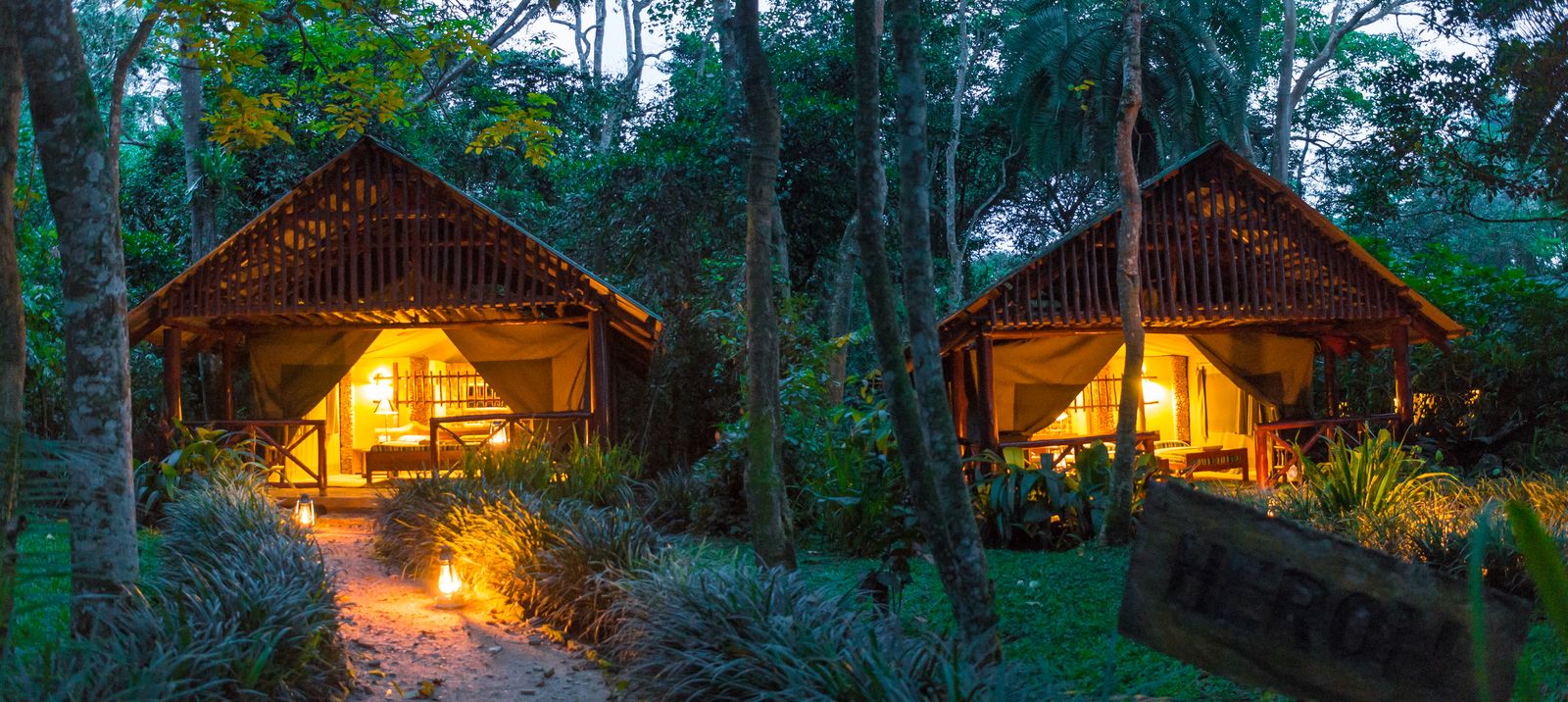
Accommodation choices on a Uganda Rwanda safari span three main tiers. Budget options consist of simple, clean guesthouses, safari tents, and eco-camps with en-suite bathrooms and basic amenities. Mid-range options feature comfortable eco-lodges, permanent tented camps, private cottages, full-board dining, and scenic views. Luxury tier properties deliver boutique high-end lodges with private butler service, fine dining, plunge pools, spa facilities, and direct views into forest limits or savanna landscapes.
How long is the drive between Uganda and Rwanda on a Uganda Rwanda safari?
Drive times across the border on a Uganda Rwanda safari depend on the specific parks being connected. Driving from Kigali International Airport to Bwindi Impenetrable National Park or Mgahinga Gorilla National Park in southwestern Uganda takes roughly 3.5 to 5 hours, including immigration checks. Transferring between Volcanoes National Park in Rwanda and Bwindi in Uganda takes around 3 to 4 hours. Driving from Kigali to Queen Elizabeth National Park takes approximately 6 to 7 hours.
Which border crossing is used during a Uganda Rwanda safari?
Two primary land border posts connect the two countries during a Uganda Rwanda safari:
Cyanika Border (Kisoro / Musanze) is located between southwestern Uganda and northwestern Rwanda, commonly used when connecting Bwindi Impenetrable National Park or Mgahinga Gorilla National Park with Volcanoes National Park.
Katuna / Gatuna Border (Kabale / Byumba) is located further east and connects Kabale in Uganda to Kigali, making it the main route for transfers between Kigali and central Bwindi, Lake Bunyonyi, or Queen Elizabeth National Park.
Is travel insurance mandatory for a Uganda Rwanda safari?
While travel insurance is not always legally enforced at border control, it is highly recommended and practically essential for a Uganda Rwanda safari. Many licensed tour operators and luxury lodges require proof of comprehensive travel insurance before confirming bookings for high-altitude trekking and wildlife activities. A standard policy should cover medical expenses, emergency air evacuation, trip cancellation, lost luggage, and unexpected travel delays. National parks like Bwindi Impenetrable Forest and Volcanoes National Park are situated in remote, high-altitude regions far from advanced medical facilities. In the event of an emergency or sudden illness during gorilla trekking, medical evacuation by air to a major regional hospital in Kigali or Kampala can be prohibitively expensive without comprehensive coverage. Additionally, safari permits for gorillas and chimpanzees are non-refundable by park authorities in most cases, making travel insurance crucial to protect your financial investment if health issues or travel interruptions force you to cancel your trip.
What vaccinations do I need before a Uganda Rwanda safari?
The Yellow Fever vaccination is mandatory for entry into Uganda and Rwanda on a Uganda Rwanda safari. Travelers aged nine months and above must present an official Yellow Fever International Certificate of Vaccination or Prophylaxis (yellow card) at immigration checkpoints and border crossings. The vaccine must be administered at least 10 days prior to arrival to be considered valid by health authorities. Aside from Yellow Fever, health organizations strongly recommend routine vaccinations including Hepatitis A, Hepatitis B, Typhoid, Tetanus, Polio, and Measles-Mumps-Rubella (MMR). Malaria prophylaxis medication is also essential, as malaria is endemic across both countries. Because mountain gorillas share nearly 98% of human DNA and are susceptible to human respiratory illnesses, travelers displaying symptoms of communicable infections like flu or COVID-19 may be barred from gorilla trekking to protect the primates.
Can I customize the itinerary of a Uganda Rwanda safari?
Yes, you can fully customize the itinerary of a Uganda Rwanda safari to match your preferences, timeline, budget, and physical fitness level. Professional local operators like Roads of Adventure Safaris tailor cross-border packages based on whether you want to focus heavily on primate tracking, classic savanna game drives, bird watching, or cultural interactions. You can choose your entry and exit points, such as arriving at Kigali International Airport in Rwanda and departing via Entebbe International Airport in Uganda, or vice versa. Customization also extends to accommodation standards, where you can select budget eco-camps, mid-range safari lodges, or ultra-luxury boutique resorts. Ground transportation can be tailored to include private 4x4 Land Cruisers or domestic fly-in charter flights between remote national parks to minimize transit time on the road.
What is the luggage weight limit for a Uganda Rwanda safari?
The luggage weight limit for a Uganda Rwanda safari varies depending on your mode of transport, but soft-sided bags are strictly required across all safari vehicles and aircraft. For standard overland ground safaris using 4x4 safari Land Cruisers, travelers are encouraged to keep luggage to around 15 to 20 kilograms per person so it can fit comfortably in vehicle storage compartments. If your itinerary includes domestic bush flights connecting airstrips like Kihihi or Kisoro to Entebbe, internal airlines enforce a strict luggage allowance of 15 kilograms per passenger, including hand luggage. Duffel bags or soft duffels with canvas exteriors are mandatory because rigid hard-shell suitcases cannot squeeze into the small cargo pods of light aircraft or safari vehicle trunks. Excess luggage can often be safely stored at your operator's main office in Kampala or Kigali for the duration of the wilderness loop.
Are meals included throughout a Uganda Rwanda safari?
Meals are almost always included on a full-board basis throughout a Uganda Rwanda safari once you arrive at your safari lodges and camps. Full-board dining typically covers breakfast, lunch, and a multi-course dinner prepared by lodge chefs, along with packed lunch boxes for long transit days or full-day gorilla and chimpanzee treks. Accommodations cater well to various dietary requirements, including vegetarian, vegan, gluten-free, and halal preferences, provided these are communicated to your operator in advance. Standard safari packages usually include drinking water in the transport vehicles and at the lodges. Premium alcoholic beverages, specialty cocktails, soft drinks, and personal snacks outside regular dining hours are usually charged separately, though luxury tier properties often bundle house wines and local spirits into their all-inclusive nightly rates.
What currency should I bring on a Uganda Rwanda safari?
The most practical foreign currency to bring on a Uganda Rwanda safari is the US Dollar (USD), alongside local currencies for small personal transactions. US Dollar bills are widely accepted across tourist lodges, national parks, and border centers, but bills must be clean, un-torn, and printed in the year 2013 or newer, as older or damaged bills are rejected by local banks and exchange bureaus. Upon arrival, it is helpful to convert a small amount of cash into Uganda Shillings (UGX) and Rwandan Francs (RWF) for purchasing souvenirs, buying roadside fruits, tipping porters and drivers, or settling small local bills. Credit cards such as Visa and Mastercard are accepted at major hotels, luxury lodges, and national park offices, though transactions may incur a surcharge of 3% to 5%. ATMs are available in major urban centers like Kigali, Kampala, and Entebbe, but they are absent inside remote national parks.
How many hours of trekking happen on a Uganda Rwanda safari?
The number of trekking hours on a Uganda Rwanda safari varies depending on the specific activity and the real-time movement of wild animals. For mountain gorilla trekking in Bwindi Impenetrable Forest or Volcanoes National Park, a trek can take anywhere from 1 to 6 hours or longer. Rangers track the gorilla families from their previous night's nesting site, meaning physical distance depends on terrain and how far the primates have wandered. Once the gorillas are located, visitors spend strictly one hour observing and photographing them. Chimpanzee tracking in Kibale National Park or Nyungwe National Park typically takes 2 to 4 hours, including a dedicated hour of viewing time once the habituated troop is found. Golden monkey tracking in Volcanoes National Park or Mgahinga is generally shorter, lasting between 2 and 4 hours over milder forest slopes.
What shoes are best for hiking on a Uganda Rwanda safari?
The best footwear for a Uganda Rwanda safari consists of sturdy, waterproof hiking boots with deep tread soles and good ankle support. Rainforest trails in Bwindi, Volcanoes, Kibale, and Nyungwe are frequently steep, muddy, slippery, and overgrown with tangled roots and dense vines. High-cut waterproof boots prevent water and mud from soaking your feet while giving stability on uneven terrain. Pairing your boots with tall, breathable hiking socks and gaiters provides an essential layer of protection against stinging nettles, mud, and safari ants. It is critical to thoroughly break in new hiking boots well before your safari to avoid painful blisters during long forest hikes. Lightweight sneakers or comfortable sandals are suitable for relaxing around the lodge, while lightweight trail runners work well during open savanna nature walks.
Are cameras allowed during gorilla trekking on a Uganda Rwanda safari?
Yes, cameras are fully permitted during gorilla trekking on a Uganda Rwanda safari, but flash photography is strictly prohibited under national park regulations. Flash lighting can startle, agitate, or distress mountain gorillas, potentially provoking a protective reaction from the silverback. Trekkers must turn off all automatic flash settings and camera focus-assist lights before entering the viewing zone. High-resolution cameras with fast lenses, good low-light capabilities, and quiet or electronic shutters perform best beneath the dense forest canopy. A versatile zoom lens allows you to frame intimate close-ups as well as wider family group shots while maintaining the mandatory 7-meter safety distance. It is also recommended to bring waterproof protective covers or dry bags for your camera gear, as sudden tropical rain showers are common in montane rainforests.
What is the age limit for children on a Uganda Rwanda safari?
The strict minimum age limit for gorilla trekking on a Uganda Rwanda safari is 15 years old in both Uganda and Rwanda. This rule is enforced by the Uganda Wildlife Authority (UWA) and the Rwanda Development Board (RDB) to protect young travelers from strenuous jungle hazards and to safeguard gorillas from communicable childhood illnesses. Chimpanzee tracking also carries a minimum age requirement of 12 to 15 years depending on the park. However, children under 15 can still join a general family safari. While parents trek gorillas, younger children can participate in guided nature walks, cultural village visits, boat cruises, and savanna game drives in parks like Queen Elizabeth or Akagera, where age restrictions do not apply.
Can I see the Big Five on a Uganda Rwanda safari?
Yes, you can see all of the Big Five—lion, leopard, elephant, rhino, and buffalo—by combining destinations on a Uganda Rwanda safari. Akagera National Park in Rwanda is a complete Big Five reserve, housing free-roaming lions, leopards, African bush elephants, Cape buffaloes, and black and white rhinos. In Uganda, Queen Elizabeth National Park and Murchison Falls National Park support thriving populations of lions, leopards, elephants, and buffaloes. While wild rhinos were historically wiped out in Uganda, travelers can track southern white rhinos on foot at Ziwa Rhino Sanctuary en route to Murchison Falls. Combining these savanna parks with rainforest primate tracking yields a comprehensive wilderness experience featuring big game alongside rare great apes.
Which rivers or lakes will I visit during a Uganda Rwanda safari?
A Uganda Rwanda safari showcases several famous water bodies across the Albertine Rift and Nile basin. In Uganda, itineraries frequently feature the Kazinga Channel, a natural waterway connecting Lake Edward and Lake George in Queen Elizabeth National Park that hosts dense concentrations of hippos and Nile crocodiles. Travelers also visit Lake Bunyonyi, known for its terraced hills and islands, as well as Lake Mburo and the River Nile in Murchison Falls or Jinja. In Rwanda, safaris often pass scenic Lake Kivu, one of Africa's Great Lakes along the western border, offering relaxing boat rides and kayaking. Akagera National Park in eastern Rwanda features a complex chain of lakes, including Lake Ihema, where boat safaris offer sightings of water birds and aquatic mammals.
What cultural experiences are included in a Uganda Rwanda safari?
Cultural immersion is an integral part of a Uganda Rwanda safari, providing meaningful interactions with local communities living adjacent to national parks. In Uganda, visitors can join the Batwa Cultural Experience near Bwindi Impenetrable Forest or Mgahinga to learn about the indigenous hunter-gatherer traditions, forest survival skills, and ancient herbal remedies of the Batwa people. Community walks through rural villages around Kibale or Bigodi offer insights into traditional coffee processing, banana brewing, and local handcrafts. In Rwanda, travelers frequently visit the Iby'Iwacu Cultural Village (Gorilla Guardians) near Volcanoes National Park to experience traditional Intore dancing, drumming, and royal history. Visiting the Kigali Genocide Memorial provides essential context regarding Rwanda’s modern history and inspiring socio-economic recovery.
How do local guides assist tourists on a Uganda Rwanda safari?
Local guides play a central role in ensuring safety, comfort, and deep contextual learning on a Uganda Rwanda safari. Professional driver-guides managed by ground operators like Roads of Adventure Safaris handle all cross-border navigation, border logistics, vehicle maintenance, and game tracking across savanna reserves. Inside national parks, official government park rangers leading gorilla and chimpanzee treks use expert tracking skills, fresh spoor, and vocalizations to locate primate families safely. Rangers carry satellite communications and firearm protection for emergency wildlife deterrence. At gorilla trailhead sites, local community porters are available for hire to carry heavy backpacks, navigate slippery mud slopes, and provide physical balance support on steep jungle ascents, directly supporting local families through sustainable tourism income.
What is the weather like during a Uganda Rwanda safari?
The weather on a Uganda Rwanda safari is predominantly tropical, tempered by high elevation across the Albertine Rift. Average daytime temperatures in savanna regions like Queen Elizabeth and Akagera range between 25°C and 28°C (77°F to 82°F), dropping to around 16°C to 18°C (60°F to 64°F) at night. High-altitude rainforest parks such as Bwindi Impenetrable National Park, Volcanoes National Park, and Nyungwe National Park are significantly cooler, with daytime temperatures between 16°C and 22°C (60°F to 72°F) and chilly nights that can fall to 10°C (50°F). Due to the rainforest environment, light afternoon showers can occur at any time of year regardless of season, making layered clothing and waterproof outerwear essential for all park activities.
Are private vehicles used for a Uganda Rwanda safari?
Yes, private 4x4 safari vehicles are standard for a Uganda Rwanda safari booked through professional ground operators like Roads of Adventure Safaris. Safaris utilize custom-built 4x4 Land Cruisers equipped with pop-up roofs for unobstructed 360-degree game viewing and photography, extended legroom, charging sockets for camera electronics, mini-fridges for chilled drinking water, and heavy-duty suspension systems to navigate rough gravel roads. A private vehicle ensures exclusive use for your group, providing a flexible schedule during game drives without sharing space with strangers. For long-distance cross-border movements, having a dedicated vehicle and driver-guide allows seamless border processing at Cyanika or Katuna without changing transport midway through the journey.
Can I combine wildlife viewing with bird watching on a Uganda Rwanda safari?
Combining classic wildlife viewing with bird watching is seamless on a Uganda Rwanda safari, as the region spans diverse ecosystems ranging from tropical rainforests and papyrus swamps to open savanna and montane woodlands. Uganda and Rwanda collectively host over 1,000 recorded bird species, including numerous Albertine Rift endemics found nowhere else on earth. Highlight species include the prehistoric Shoebill stork in Mabamba Swamp or Lake Mburo, the Great Blue Turaco in Kibale Forest, African Green Broadbills in Bwindi, and colorful sunbirds, kingfishers, and fish eagles along the Kazinga Channel and Lake Ihema. Specialized birding guides can easily be integrated into custom itineraries alongside standard gorilla, chimpanzee, and savanna game drives.
What is the tipping etiquette on a Uganda Rwanda safari?
Tipping on a Uganda Rwanda safari is customary and deeply appreciated by local tourism workers, though it remains entirely discretionary based on service quality. For your private safari driver-guide who accompanies you throughout the journey, a standard tip ranges between USD $10 and $20 per day per vehicle group. For gorilla and chimpanzee tracking excursions, tipping the main park ranger guide USD $10 to $15 per trek and the tracking team USD $5 to $10 per trek is customary. Hiring a local porter for gorilla trekking costs USD $15 to $20, and giving an additional tip of USD $5 to $10 is standard for their physical assistance. Most safari lodges feature a communal staff tip box at reception, where leaving USD $10 to $20 per day covers housekeepers, kitchen staff, and waiters collectively.
Which Park offers golden monkey tracking on a Uganda Rwanda safari?
Golden monkey tracking on a Uganda Rwanda safari is offered in two contiguous national parks within the Virunga Massif: Volcanoes National Park in northwestern Rwanda and Mgahinga Gorilla National Park in southwestern Uganda. These endangered, bamboo-eating primates live in habituated troops of up to 100 individuals on the lower slopes of the Virunga Volcanoes. Golden monkey treks require a moderate hike through high-altitude bamboo forests and offer lively viewing as the monkeys leap energetically through the canopy. Permit fees for golden monkey tracking are significantly lower than gorilla permits (USD $100 in Rwanda and USD $60 in Uganda), making it a popular complementary activity before or after gorilla trekking.
How safe is it to travel on a Uganda Rwanda safari?
Travel on a Uganda Rwanda safari is generally very safe, stable, and well-regulated. Both Uganda and Rwanda are established African safari destinations that prioritize tourist security. National parks like Bwindi Impenetrable Forest, Queen Elizabeth, Akagera, and Volcanoes are actively patrolled by armed government park rangers, wildlife authorities, and tourism police. Professional operators ensure secure private transportation throughout the journey. Standard travel precautions apply, such as securing valuables in lodge safes and avoiding unguided walks after dark in major urban centers.
What electrical plugs are used during a Uganda Rwanda safari?
On a Uganda Rwanda safari, Uganda uses the Type G electrical plug (the standard UK three-square-pin plug) operating at 240V. Rwanda primarily uses Type C and Type F plugs (European two-round-pin plugs), though Type G sockets are also available in certain international hotels. Bring a universal travel adapter to ensure your electronic devices fit outlets across both countries. Most dual-voltage devices like phones, cameras, and laptops automatically handle the 230V–240V voltage used across East Africa.
Can I charge my electronics while on a Uganda Rwanda safari?
Yes, you can reliably charge electronics on a Uganda Rwanda safari. Custom 4x4 safari Land Cruisers are equipped with built-in power inverters and USB charging ports, allowing you to charge camera batteries and phones during game drives and long transfers. Safari lodges and camps provide charging stations in rooms or main lounge areas. Remote off-grid eco-lodges operating on solar power may turn off generators at night, so charging high-drain devices during daylight hours or early evening is recommended.
What is the main language spoken by guides on a Uganda Rwanda safari?
English is the primary language spoken by professional driver-guides, park rangers, and lodge staff on a Uganda Rwanda safari. English is an official language in both Uganda and Rwanda, ensuring clear communication throughout your trip. Guides are also fluent in major regional languages such as Swahili, Luganda (Uganda), and Kinyarwanda (Rwanda). If requested in advance through your tour operator, multi-lingual guides fluent in French, German, Spanish, or Italian can also be arranged.
Are there night game drives available on a Uganda Rwanda safari?
Night game drives are available in specific national parks on a Uganda Rwanda safari. In Rwanda, Akagera National Park offers guided night drives using powerful spotlights to spot nocturnal wildlife like leopards, hyenas, civets, genets, and bushbabies. In Uganda, night drives are permitted in select savanna parks, including Lake Mburo, Queen Elizabeth, and Murchison Falls National Parks, under the supervision of armed wildlife rangers. Night drives are prohibited inside dense rainforest parks like Bwindi and Kibale.
What happens if it rains during a Uganda Rwanda safari?
Rain is common in rainforest ecosystems, so a Uganda Rwanda safari proceeds as scheduled regardless of rainfall. Gorilla and chimpanzee treks, as well as savanna game drives, continue during rain showers. Trekkers wear waterproof jackets, gaiters, and rain covers for daypacks while navigating damp forest trails. Safari Land Cruisers feature closed roofs with pop-up hatches that can be lowered instantly if heavy rain starts during a savanna game drive.
How far in advance should I reserve a Uganda Rwanda safari?
You should reserve a Uganda Rwanda safari 6 to 12 months in advance, especially if your itinerary includes mountain gorilla trekking during peak dry seasons (June to September and December to February). Gorilla permits in Bwindi (Uganda) and Volcanoes (Rwanda) are strictly limited per day to protect primate welfare and sell out quickly. Early booking ensures permit availability, secures preferred eco-lodges, and allows sufficient time to process East Africa Tourist Visas.
What is the cancellation policy for a Uganda Rwanda safari?
Cancellation policies on a Uganda Rwanda safari depend on the terms set by your ground operator and regional wildlife authorities. Permit fees for mountain gorillas and chimpanzees issued by the Uganda Wildlife Authority (UWA) and Rwanda Development Board (RDB) are non-refundable in most circumstances. Accommodation and transport refunds vary based on notice given prior to departure, typically incurring tiered cancellation fees. Comprehensive travel insurance with cancellation coverage is strongly recommended to protect against unforeseen medical or travel disruptions.
Are solo travelers welcome on a Uganda Rwanda safari?
Solo travelers are fully welcome on a Uganda Rwanda safari. Solo guests can book private customized itineraries with a personal driver-guide or join scheduled group departures to share transport and lodge costs. On gorilla and chimpanzee treks, solo travelers are placed in small tracking groups of up to eight people, offering a social dynamic on the trail. Lodges cater comfortably to solo guests, though single room supplements usually apply for private accommodation.
What is a typical daily schedule on a Uganda Rwanda safari?
A typical day on a Uganda Rwanda safari begins early with coffee or breakfast around 6:00 AM to capitalize on peak morning wildlife activity. For trekking days, guests transfer to park headquarters by 7:00 AM for briefings before entering the forest. On savanna days, morning game drives run from 6:30 AM until mid-day. After lunch and a afternoon break at the lodge, activities resume around 3:30 PM with late-afternoon game drives or boat cruises, concluding at sunset before dinner and evening relaxation.
Which city does a Uganda Rwanda safari usually start in?
A Uganda Rwanda safari typically starts in either Kigali (the capital of Rwanda) or Entebbe/Kampala (Uganda). Starting in Kigali is popular because Kigali International Airport is located just 2.5 hours from Volcanoes National Park and 4 hours from Bwindi Impenetrable Forest across the border. Starting in Entebbe allows travelers to traverse Uganda’s national parks from north to south before crossing into Rwanda.
Which city does a Uganda Rwanda safari usually end in?
A Uganda Rwanda safari usually ends in either Kigali or Entebbe, depending on your preferred flight routing. Many cross-border itineraries follow a seamless point-to-point route, starting in Entebbe, traveling southwest through Ugandan parks, crossing the land border, and ending in Kigali for international departure. Alternatively, circular routes can end back in the initial arrival city if round-trip flights were booked.
Can I see tree-climbing lions on a Uganda Rwanda safari?
Yes, you can see tree-climbing lions on a Uganda Rwanda safari by visiting the Ishasha sector of Queen Elizabeth National Park in southwestern Uganda. The lions in Ishasha regularly climb large fig and acacia trees to rest, escape ground insects, and catch cool breezes during the heat of the day. While tree-climbing lions are rare across Africa, Ishasha provides one of the most reliable locations in the world to observe this behavior.
What is the highlight of the Rwandan portion of a Uganda Rwanda safari?
The main highlight of the Rwandan portion of a Uganda Rwanda safari is mountain gorilla trekking in Volcanoes National Park, set against the dramatic backdrop of the Virunga Volcanoes. Other major highlights include golden monkey tracking, hiking to Dian Fossey's historic grave site, canopy walks in Nyungwe Forest National Park, Big Five safaris in Akagera National Park, and visiting the Kigali Genocide Memorial.
What is the highlight of the Ugandan portion of a Uganda Rwanda safari?
The main highlight of the Ugandan portion of a Uganda Rwanda safari is gorilla trekking in the dense, ancient rainforests of Bwindi Impenetrable National Park. Additional highlights include chimpanzee tracking in Kibale National Park, boat cruises along the Kazinga Channel in Queen Elizabeth National Park, viewing tree-climbing lions in Ishasha, and visiting Murchison Falls, where the Victoria Nile forces through a narrow rock gorge.
Are Park entrance fees included in a Uganda Rwanda safari cost?
Yes, national park entrance fees are fully included in the total package price of a standard Uganda Rwanda safari organized by licensed tour operators. Package rates cover conservation entry fees, vehicle park fees, ranger guide fees, boat cruise permits, and specialized trekking permits for mountain gorillas and chimpanzees, ensuring guests face no hidden costs at park gates.
How many hours of game driving happen on a Uganda Rwanda safari?
On savanna days of a Uganda Rwanda safari, game drives typically last between 3 and 4 hours per session. A standard schedule includes a morning game drive from roughly 6:30 AM to 10:00 AM and an afternoon game drive from 3:30 PM to 6:30 PM. On transit days between distant parks, time spent in the vehicle ranges from 3 to 6 hours, combining scenic road travel with wildlife viewing.
What kind of 4x4 vehicles are used for a Uganda Rwanda safari?
Custom-built 4x4 safari Land Cruisers are the standard vehicles used for a Uganda Rwanda safari. These heavy-duty vehicles feature pop-up roofs for unhindered 360-degree photography, large window openings, all-terrain suspension, power charging sockets, onboard mini-fridges for drinking water, and extended legroom. Customized 4x4 safari vans are also used for budget-conscious group travel.
Are boat cruises part of a standard Uganda Rwanda safari?
Yes, boat cruises are a core component of a standard Uganda Rwanda safari. Key aquatic safaris include the Kazinga Channel boat launch in Queen Elizabeth National Park, the Nile River launch to the base of Murchison Falls in Uganda, Lake Ihema boat trips in Akagera National Park (Rwanda), and scenic boat rides across Lake Bunyonyi or Lake Kivu.
Can I visit local markets during a Uganda Rwanda safari?
Yes, visiting local markets is easily integrated into a Uganda Rwanda safari. Travelers can explore colorful fruit markets, craft markets, and artisan centers in urban hubs like Kigali, Kampala, and Entebbe, or roadside markets near national parks. Visiting local markets provides direct opportunities to purchase handmade souvenirs, fresh produce, and local art while supporting community economies.
What is the East Africa Tourist Visa and does it cover a Uganda Rwanda safari?
The East Africa Tourist Visa (EATV) is a joint regional travel permit that allows foreign tourists multiple entries into Uganda, Rwanda, and Kenya over a single 90-day period for a flat fee of USD $100. It fully covers cross-border travel on a Uganda Rwanda safari. Rather than purchasing separate single-entry visas for Uganda ($50) and Rwanda ($50), the EATV simplifies border crossings by granting seamless transit between both nations. Under immigration rules, you must apply for the EATV through the official online immigration portal of the country where you first arrive in the region (for example, applying via the Uganda e-Visa system if flying into Entebbe International Airport, or via the Irembo portal if arriving at Kigali International Airport).
How do I handle laundry services during a Uganda Rwanda safari?
Laundry services are readily available at almost all mid-range and luxury safari lodges throughout a Uganda Rwanda safari. Most lodges offer same-day or overnight laundry service for a small extra fee or as an included perk. However, because clothing is often hand-washed and sun-dried outdoors, laundry availability depends heavily on dry weather conditions. Additionally, due to cultural customs across East Africa, staff generally do not wash undergarments, so guests are expected to hand-wash their own delicate items using detergent provided in the lodge bathrooms.
Are dietary restrictions accommodated on a Uganda Rwanda safari?
Yes, safari lodges and camps on a Uganda Rwanda safari cater well to various dietary restrictions, including vegetarian, vegan, gluten-free, dairy-free, nut allergies, and halal requirements. Because most safari lodges operate in remote national parks with complex supply chains, meals are prepared on a set menu basis. Providing your dietary needs to your tour operator prior to arrival ensures that chefs stock the necessary fresh ingredients and tailor daily menus accordingly.
What souvenirs are best to buy during a Uganda Rwanda safari?
Popular souvenirs to purchase during a Uganda Rwanda safari include hand-carved wooden gorilla statues, intricate hand-woven Agaseke peace baskets, traditional barkcloth crafts, local paintings, and colorful Kitenge textiles. Coffee lovers can purchase single-origin Arabica coffee beans grown on the volcanic slopes near Mount Elgon, Bwindi, or the Rwandan highlands. Purchasing crafts directly from local community cooperatives around park gates—such as the Ride 4 a Woman community project in Bwindi or local artisan centers in Kigali—directly supports local families living alongside protected wildlife reserves.
How strict are the rules for gorilla encounters on a Uganda Rwanda safari?
Park authorities enforce strict regulations during gorilla encounters on a Uganda Rwanda safari to safeguard both human visitors and the endangered primates. Trekkers must maintain a minimum distance of 7 meters (23 feet) from the gorillas at all times, wear protective face masks during the encounter to prevent transmitting human respiratory diseases, and keep their voices low. Flash photography is prohibited, and viewing time is capped at one hour once the gorilla family is located. Anyone showing signs of communicable illness, such as a cold or flu, will be barred from joining the trek by park rangers.
What is the elevation profile during a Uganda Rwanda safari?
The elevation profile during a Uganda Rwanda safari span from mid-altitude savannas to high-altitude montane rainforests. Savanna parks like Queen Elizabeth and Akagera sit between 900 and 1,300 meters above sea level. Primate parks are noticeably higher: Bwindi Impenetrable Forest ranges from 1,160 to 2,600 meters, Kibale Forest sits around 1,500 meters, and Volcanoes National Park ranges from 2,300 to over 3,000 meters along the volcanic slopes. The cooler temperatures and thinner air at these higher elevations make physical exertion feel more demanding during jungle treks.
Are there medical evacuation services available during a Uganda Rwanda safari?
Yes, air ambulance medical evacuation services operate across a Uganda Rwanda safari. Specialized emergency evacuation providers, such as AMREF Flying Doctors, offer coverage that transports critically ill or injured travelers from remote bush airstrips directly to advanced international hospitals in Nairobi or Kampala. Many tour operators include basic air evacuation insurance as part of their comprehensive package, though travelers should confirm that their personal travel insurance policy explicitly covers high-altitude trekking and emergency airlift.
What snacks or water are provided on a Uganda Rwanda safari?
Clean drinking water is continuously supplied inside private 4x4 safari vehicles and at safari lodges during a Uganda Rwanda safari. Operators provide purified, bottled water or filtered water refilling stations in transport vehicles. On long driving days or full-day forest treks, safari guides pack boxed lunches containing fruits, hard-boiled eggs, sandwiches, juice, and energy snacks like nuts, biscuits, or dried fruits to maintain stamina along the trails.
Can I see the source of the Nile on a Uganda Rwanda safari?
Yes, you can easily visit the official source of the River Nile during a Uganda Rwanda safari. Located in Jinja, Uganda—roughly 80 kilometers east of Kampala—the source of the Nile marks the exact spot where Lake Victoria overflows to form the Victoria Nile on its journey toward the Mediterranean Sea. Incorporating Jinja into a safari itinerary allows travelers to take scenic boat trips to the Nile's origin, visit white-water rafting sites, or explore heritage points along the riverbanks.
How does conservation work benefit from a Uganda Rwanda safari?
Tourism directly finances conservation efforts on a Uganda Rwanda safari. A significant portion of revenue generated from gorilla permit fees (USD $800 in Uganda and USD $1,500 in Rwanda) and park entry fees goes directly toward paying park ranger salaries, funding anti-poaching patrols, supporting veterinary monitoring through organization partners like Gorilla Doctors, and maintaining park boundaries. Furthermore, government revenue-sharing programs distribute a percentage of permit fees to surrounding communities to fund local infrastructure, school building, and healthcare, incentivizing residents to protect local wildlife.
What is the history behind the parks visited on a Uganda Rwanda safari?
The national parks featured on a Uganda Rwanda safari have rich histories tied to East African conservation. Bwindi Impenetrable Forest and Mgahinga were gazetted as national parks in 1991 to protect remaining mountain gorilla populations and primary rainforest ecosystems. Volcanoes National Park in Rwanda, established in 1925 as part of Albert National Park, is Africa's oldest national park and served as the base for primatologist Dian Fossey's pioneering gorilla research from the late 1960s until her death in 1985. Queen Elizabeth National Park was founded in 1952 (initially named Kazinga National Park) to commemorate the British monarch's visit, while Akagera was established in 1934 to preserve Rwanda's eastern savanna landscape.
Are walking safaris an option on a Uganda Rwanda safari?
Yes, walking safaris are available in select parks on a Uganda Rwanda safari. While game viewing in big-game parks like Queen Elizabeth or Akagera is primarily conducted in 4x4 vehicles due to dangerous wildlife, guided bush walks accompanied by armed rangers are offered in Lake Mburo National Park, the Bigodi Wetland Sanctuary near Kibale, and designated forest trails within Nyungwe National Park. These walking excursions focus on bird species, plant life, small mammals, and tracking animal footprints at ground level.
What is the difference between luxury and mid-range options for a Uganda Rwanda safari?
The main differences between luxury and mid-range options on a Uganda Rwanda safari lie in accommodation standards, transportation, and exclusivity. Mid-range safaris feature comfortable eco-lodges with private en-suite rooms, quality full-board dining, and standard ground transport in 4x4 safari Land Cruisers. Luxury safaris elevate the experience by utilizing high-end boutique lodges with private plunge pools, butler service, fine dining, inclusive premium beverages, and domestic fly-in charter flights between parks to bypass long road transit hours.
How do I communicate with family back home during a Uganda Rwanda safari?
Communicating with family back home on a Uganda Rwanda safari is straightforward using local mobile networks and lodge Wi-Fi. Most safari lodges and camps provide free Wi-Fi in main lounge areas, though signal strength can be slower in remote forests. Travelers can also purchase local SIM cards upon arrival in Entebbe, Kampala, or Kigali (from providers such as MTN or Airtel) to access cellular data and local calling coverage across urban areas and main park corridors.
What wildlife conservation projects can I visit on a Uganda Rwanda safari?
Several prominent conservation projects can be visited during a Uganda Rwanda safari. In Uganda, travelers can stop at the Ziwa Rhino Sanctuary to observe white rhino breeding programs, visit the Ngamba Island Chimpanzee Sanctuary on Lake Victoria, or learn about primate research at the Makerere University Biological Field Station in Kibale. In Rwanda, tourists can visit the Ellen DeGeneres Campus of the Dian Fossey Gorilla Fund adjacent to Volcanoes National Park to view interactive exhibits detailing mountain gorilla research and ongoing habitat restoration efforts.
How is the luggage transported between lodges on a Uganda Rwanda safari?
Luggage is transported securely inside your private 4x4 safari vehicle throughout a Uganda Rwanda safari. Your dedicated driver-guide loads your soft-sided bags into the vehicle's rear storage compartment before departing for each destination. Upon arrival at a new lodge or camp, lodge staff and porters handle carrying your bags directly from the vehicle to your private room or tent, ensuring seamless transitions between stops without requiring travelers to move heavy bags.
Why choose a 12-day duration for a Uganda Rwanda safari instead of a shorter one?
Choosing a 12-day duration for a Uganda Rwanda safari allows travelers to build a comprehensive, well-paced itinerary without rushing through long transit days. A shorter 3 to 5-day trip restricts travel to gorilla trekking in a single park, whereas a 12-day journey permits combining mountain gorillas in Bwindi or Volcanoes with chimpanzee tracking in Kibale, classic Big Five savanna drives in Queen Elizabeth or Akagera, boat cruises along the Kazinga Channel, and cultural community visits, offering a full overview of both countries.
Booking Uganda Rwanda safari with us Roads of Adventure safaris
You can book your cross-border Uganda and Rwanda safari by contacting the Roads of Adventure Safaris team directly through their official channels. To confirm your reservation, a 30% deposit is required, with the final remaining balance due 60 days prior to your departure date. Because primate trekking permits face a strict daily cap, it is highly recommended to secure your spot 6 to 12 months in advance.
