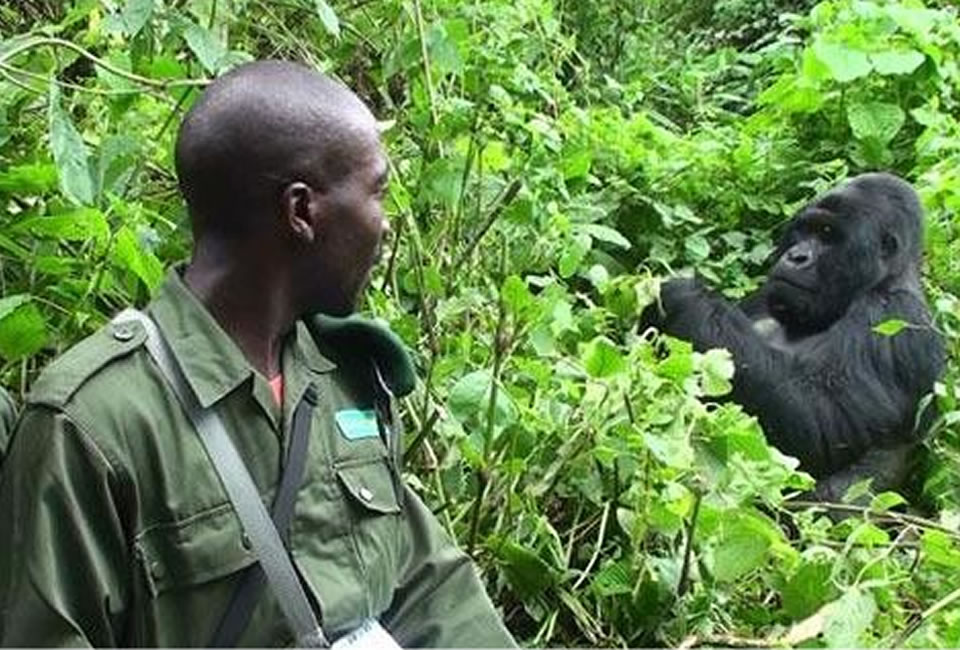
Rwanda safari. Activities range from coming face-to-face with wild mountain gorillas in misty bamboo forests to tracking playful chimpanzees and spotting the Big Five in savanna plains. It's an intimate, life-changing adventure that brings you directly into the heart of nature
2-days-luxury-rwanda-gorilla-trekking-safari-from-kigali-city
3-days-rwanda-gorilla-trekking-and-golden-monkey-tracking-in-volcanoes
3-days-rwanda-gorilla-trekking-safari-itinerary-in-volcanoes-park
4-days-rwanda-golden-monkey-tracking-and-bisoke-hiking-tour-package
4-days-best-volcanoes-and-bwindi-impenetrable-national-park-double-gorilla-trekking
4-days-rwanda-primates-safari-gorilla-trekking-and-chimpanzee-all-inclusive-package
5-days-best-chimpanzee-tracking-golden-monkey-tracking-and-visit-to-lake-kivu
5-days-rwanda-double-gorilla-trekking-and-golden-monkey-tracking
5-days-uganda-gorilla-trekking-chimps-and-rwanda-golden-monkey-tracking-combo
6-days-gorillas-trekking-chimpanzee-tracking-and-golden-monkeys-safari-in-rwanda
7-days-best-gorilla-trekking-and-other-highlights-of-rwanda-tour
8-days-best-of-rwanda-uganda-safari-volcanoes-to-best-uganda-safari-parks
Mountain Gorilla Trekking in Volcanoes National Park
Nestled in Rwanda’s far northwest near the bustling safari hub of Musanze, Volcanoes National Park (Parc National des Volcans) forms part of the greater Virunga Transboundary Conservation Area. Reaching the park is remarkably straightforward—a smooth 2.5-hour drive along paved highways from Kigali International Airport. Upon arrival at the Kinigi park headquarters at 7:00 AM, you are matched with an expert park ranger, security escorts, and a small group of no more than eight trekkers. Dedicated trackers head up the volcanic slopes at first light to locate one of the 12 habituated gorilla families, such as the famous Sabyinyo, Amahoro, or Agashya groups.
The hike itself is an invigorating physical challenge. You’ll trek through misty bamboo zones and tangled hypericum trees at elevations ranging from 2,300 to 3,000 meters above sea level. Depending on where the troop moved overnight, the walk can take anywhere from 45 minutes to several hours over muddy, uneven terrain.
When you finally catch up to the troop, all fatigue vanishes. You are granted exactly one hour of direct observation time. Standing just a few meters away, you’ll watch massive silverbacks passively chew on bamboo shoots, mothers cradle tiny infants, and juveniles tumble playfully through the foliage. To protect these endangered primates from human respiratory illnesses, visitors are required to wear surgical masks and maintain a 7-meter distance. Permits cost $1,500 USD for foreign non-residents ($1,050 USD during the low-season promotional window from November through May), with 10% of all permit revenue directly funding local community infrastructure like schools, health clinics, and clean water projects.
2. Chimpanzee Tracking & The Canopy Walk in Nyungwe Forest
Located in southwestern Rwanda, roughly 5 to 6 hours by road from Kigali, Nyungwe Forest National Park is one of Africa’s oldest and most bio-diverse montane rainforests. Spanning over 1,000 square kilometers, this ancient, emerald wilderness is home to 13 distinct primate species, making it an absolute paradise for primate enthusiasts.
Chimpanzee tracking here is an early-morning adventure that typically begins around 5:00 AM at either the Uwinka or Gisakura visitor centers. Guided by knowledgeable trackers, you’ll trek through dense undergrowth, following the distant, thrilling echoing hoots and pant-grunts of wild chimps. Because these habituated troops are fast-moving and agile, the hike is dynamic and energetic as you weave through ancient hardwood trees to watch them feed on wild figs, groom one another, and leap through the high canopy.
The highlight of any visit to Nyungwe is the Uwinka Canopy Walkway. Hanging 70 meters (nearly 230 feet) above the forest floor, this metal suspension bridge stretches 160 meters across a lush ravine. Crossing the canopy bridge gives you a breathtaking bird's-eye view over the endless rainforest canopy, giant tree ferns, and deep valleys below. It's an extraordinary spot for birdwatchers, offering sightings of rare Albertine Rift endemics like the Great Blue Turaco and Ruwenzori Batis. The canopy walk takes about two hours round-trip, including the scenic hike down from the Uwinka center, and serves as an ideal afternoon activity following a morning chimp trek.
3. Big Five Game Drives in Akagera National Park
Positioned along Rwanda’s eastern border with Tanzania, Akagera National Park offers a striking landscape contrast to the country’s mountainous west. A scenic 2.5-hour drive east from Kigali brings you to a classic African savanna ecosystem dominated by rolling hills, open grasslands, acacia woodlands, and a vast network of interconnected lakes and papyrus swamps. Managed through a successful conservation partnership between the Rwanda Development Board and African Parks, Akagera has undergone a remarkable restoration over the past decade, officially reclaiming its status as a full Big Five destination.
A standard game drive takes you along well-maintained park tracks, particularly through the Mutumba Hills in the center and the sprawling Kilala Plains in the far north. Here, you can track pride of lions, re-introduced eastern black rhinos, white rhinos, secretive leopards, herds of African bush elephants, and cape buffaloes. The park is also packed with plains game, including Masai giraffes, zebras, topis, elands, and hippos.
For a unique perspective, swap the 4x4 land cruiser for a guided boat safari on Lake Ihema, Rwanda’s second-largest lake. Drifting along the shoreline allows you to get remarkably close to pods of bathing hippos, massive Nile crocodiles basking on the muddy banks, and a rich array of waterbirds like shoebill storks, African fish eagles, and kingfishers. Akagera is best explored over two to three days, staying at eco-lodges ranging from self-catering campsites to luxury tented camps perched right on the lake edge.
4. Cultural Immersion at Iby’Iwacu Cultural Village (Gorilla Guardians)
Situated in Kinigi, right on the boundary of Volcanoes National Park, the Iby’Iwacu Cultural Village—famously known as the Gorilla Guardians Cultural Village—offers one of the most heartwarming cultural experiences in East Africa. What makes this initiative truly special is its origin story: many of the village hosts, performers, and guides are former poachers who once set snares in the Virunga forest. Through community conservation efforts, they transitioned into proud guardians of the mountain gorillas, earning a sustainable living by sharing their rich cultural heritage with travelers.
A visit here is hands-on and interactive. As you enter through the traditional thatched gates, you are welcomed by the thunderous beat of wooden drums and the high-energy performance of Intore dancers, who leap and stomp wearing traditional grass wigs and carrying ceremonial spears.
During your guided walk through the compound, you are invited to participate in age-old Rwandan traditions. You can try your hand at shooting a traditional bow and arrow, learn how local herbal medicine is harvested from indigenous plants, and discover the traditional step-by-step process of brewing banana beer (Urwagwa). You can even be crowned "King for a Day" inside a replica of a traditional royal palace, complete with leopard-skin robes and royal headgear. More than just entertainment, visiting Iby’Iwacu directly supports community livelihoods, proving that wildlife conservation succeeds when local people actively benefit from tourism.
5. Kayaking and Island Exploring on Lake Kivu
Stretching along Rwanda’s western border with the Democratic Republic of the Congo, Lake Kivu is one of Africa’s Great Lakes and a top destination for relaxation after strenuous mountain treks. The lake is entirely free of bilharzia, hippos, and crocodiles, making its clear, cool waters exceptionally safe for swimming, stand-up paddleboarding, and sea kayaking.
The main resort towns along the shore are Rubavu (formerly Gisenyi) in the north and Karongi (formerly Kibuye) further south. Rubavu is just a 1-hour drive down from Volcanoes National Park, while Karongi sits about 3 hours from Nyungwe Forest. Renting a modern sea kayak allows you to paddle quietly along the dramatic, terraced shorelines, past quiet fishing hamlets, secluded coves, and lush green islands. Popular paddling trips include exploring Napoleon Island near Karongi—famous for its high, chimney-like peak and a colony of thousands of straw-colored fruit bats—or paddling out to Amani Island for a peaceful nature walk.
The highlight of any Lake Kivu experience happens at dusk. As the sun sets behind the Virunga volcanoes, local fishermen head out in their distinctive three-rigged wooden canoes (singoro). Paddling in rhythm, they sing traditional songs in unison while lighting kerosene lanterns to attract sambaza sardine fish to their nets overnight. Watching these illuminated fishing fleets glide across the dark, glassy water while hearing their songs echo across the bay is a magical finish to a Rwandan safari.
Where is Volcanoes National Park located, and how easy is it to reach from Kigali?
Volcanoes National Park (Parc National des Volcans) sits in Rwanda’s far northwestern corner, right near the lively safari hub of Musanze. What travelers love most about this park is how incredibly easy it is to get to. Unlike many remote African safari destinations that require light aircraft flights or grueling full-day drives over dirt roads, Volcanoes National Park is just a smooth 2.5-hour drive from Kigali International Airport.
The journey takes you along well-paved, scenic highways winding through Rwanda’s iconic, terraced green hills. Most visitors land in Kigali, spend a night relaxing or exploring the city, and then take a comfortable morning drive directly to the park headquarters at Kinigi.
Because of this seamless access, you can easily incorporate gorilla trekking into a short trip without spending half your holiday in transit. Once you arrive in the Musanze region, you're surrounded by stunning views of the Virunga volcanoes and a fantastic range of lodges, making the entire transit experience remarkably stress-free.
What can a traveler expect on the morning of a gorilla trek in Volcanoes National Park?
Your gorilla trekking morning begins bright and early at 7:00 AM at the Kinigi park headquarters. The atmosphere is buzzing with excitement as travelers gather for hot Rwandan coffee, traditional live dance performances, and an essential safety briefing.
During this time, park officials group trekkers—maximum eight people per group—and match them with one of the park’s 12 habituated gorilla families, such as the Sabyinyo, Amahoro, or Agashya groups. You'll meet your lead park ranger, who explains the family's background, and your security escorts. Local trackers head up the mountain at dawn to locate where the gorillas built their nests the night before, keeping in radio contact with your guide.
Before setting off, you also have the chance to hire a local porter. Hiring a porter is one of the best choices you can make; they carry your daypack and give you a steady hand on slippery trails, while you directly support local community families.
How physical is the hike to find mountain gorillas, and what is the terrain like?
Gorilla trekking in Volcanoes National Park is an exhilarating physical challenge that varies from day to day. The hike takes place at high altitudes, between 2,300 and 3,000 meters above sea level, where the air is noticeably thinner.
The terrain is untamed and rugged. You'll hike through dense bamboo thickets, step over tangled roots, and scramble up muddy, volcanic slopes covered in lush foliage. Depending on where your assigned gorilla family traveled since sunrise, the hike to reach them can take anywhere from a quick 45-minute stroll to a demanding, three-hour trek through thick vegetation.
While you don't need to be an elite athlete, having a reasonable level of cardio fitness and good balance definitely makes the journey more enjoyable. Wearing sturdy, waterproof hiking boots with good ankle support and using a wooden walking stick (provided at the park entrance) will help you navigate the slick, uneven rainforest floor with confidence.
What happens during the one hour of observation time with the mountain gorillas?
The moment you finally catch up to the gorilla family, all the physical effort of the hike instantly fades away. You are granted exactly one hour of direct observation time, a strict limit enforced to keep the wild primates from feeling stressed or crowded.
Standing just a few meters away, you’ll watch life in the troop unfold naturally. You might see a massive silverback peacefully stripping leaves from bamboo shoots, mothers tenderly grooming their infants, or energetic juveniles wrestling playfully in the branches overhead. The quiet sound of their deep grunts and the sheer scale of these gentle giants is deeply moving.
To protect the gorillas from human illnesses, all visitors are required to wear surgical masks and keep a respectful 7-meter distance. Flash photography is strictly forbidden so as not to startle the animals. That single, quiet hour flies by, leaving you with memories—and photos—that last a lifetime.
What are the permit costs for gorilla trekking in Rwanda, and where does that money go?
A standard gorilla trekking permit in Volcanoes National Park costs $1,500 USD per person for international non-residents. While this is a significant investment, it is the cornerstone of Rwanda’s high-value, low-impact eco-tourism strategy, prioritizing strict habitat protection over massive tourist crowds. (International travelers can also access a discounted $1,050 USD permit during the low season from November to May if they spend two nights in Akagera or Nyungwe).
Where does your permit money actually go? A massive portion directly funds high-level conservation: paying park ranger salaries, funding daily anti-poaching patrols, and supporting veterinary care like the Gorilla Doctors.
Furthermore, through Rwanda’s Community Revenue Share program, 10% of all permit proceeds are funneled straight into the local villages surrounding the park. This revenue funds crucial public infrastructure, including primary schools, clean water points, health clinics, and roads, ensuring local communities directly benefit from protecting the mountain gorillas.
Where is Nyungwe Forest National Park, and what makes its ecosystem so special?
Located in southwestern Rwanda, roughly 5 to 6 hours by road from Kigali, Nyungwe Forest National Park is one of the oldest and most bio-diverse montane rainforests in all of Africa. Spanning over 1,000 square kilometers of dense, mountainous terrain, it serves as a critical water catchment area for the entire country.
What makes Nyungwe truly extraordinary is its staggering biodiversity. The park is a paradise for primate lovers, sheltering 13 distinct primate species—including habituated chimpanzees, large troops of Ruwenzori colobus monkeys, and L'Hoest's monkeys.
Beyond primates, Nyungwe’s ancient canopy harbors over 1,000 plant species, delicate orchids, giant tree ferns, and more than 300 bird species. Because it forms part of the Albertine Rift endemic zone, birdwatchers travel from around the globe to spot rare species like the Great Blue Turaco and Ruwenzori Batis. Stepping into Nyungwe feels like walking into a prehistoric, emerald paradise where nature has reigned supreme for thousands of years.
What can you expect during a chimpanzee tracking excursion in Nyungwe Forest?
Chimpanzee tracking in Nyungwe Forest is a fast-paced, high-energy jungle adventure. The trek starts early—usually around 5:00 AM—from either the Uwinka or Gisakura visitor centers, allowing you to reach the forest just as the chimps wake up and leave their nests.
Unlike mountain gorillas, who tend to sit quietly in one area feeding, chimpanzees are dynamic, vocal, and constantly on the move. Following your expert park tracker, you’ll trek off-trail through dense undergrowth, guided by the echoing pant-grunts, hoots, and drum-like treetop slaps of the troop echoing through the morning mist.
Once you spot them, you'll watch them swing effortlessly through the high canopy, feed on wild figs, groom each other, and interact with loud, fascinating social drama. The terrain can be steep and slippery, requiring agile footwork, but the thrilling rush of following wild chimps through an ancient rainforest makes every bit of sweat worth it.
What is the Nyungwe Canopy Walkway, and why is it a must-do experience?
The Uwinka Canopy Walkway is easily one of Nyungwe Forest’s most famous attractions and an absolute must-do for adventurous travelers. Suspended 70 meters (nearly 230 feet) above the forest ravine, this 160-meter-long metal suspension bridge gives you a breathtaking, bird's-eye view over the rainforest canopy.
The experience begins with a scenic 30-minute hike down from the Uwinka Visitor Center through lush vegetation, giant ferns, and towering hardwood trees. Stepping onto the gently swaying bridge, you find yourself eye-level with the upper layers of the forest, where colorful birds, butterflies, and monkeys swing through the branches.
Looking out over the endless rolling green hills and deep valleys below is truly awe-inspiring. The entire round-trip walk takes about two hours and pairs perfectly as an afternoon activity after a morning chimpanzee trek, giving you a completely unique perspective on one of Africa’s oldest rainforests.
How has Akagera National Park transformed into a premier Big Five safari destination?
Located along Rwanda’s eastern border with Tanzania, Akagera National Park offers a striking contrast to the lush, mountainous west. Spanning rolling savanna hills, open grasslands, acacia woodlands, and papyrus-fringed lakes, Akagera is a classic African game reserve just a 2.5-hour drive from Kigali.
Over two decades ago, Akagera suffered heavily from human encroachment and poaching. However, thanks to a landmark conservation partnership between the Rwanda Development Board and non-profit organization African Parks, the park underwent a world-class ecological restoration.
Lions were reintroduced in 2015, followed by eastern black rhinos and white rhinos, officially reclaiming Akagera’s status as a flourishing Big Five destination. Today, visitors on game drives across the northern Kilala Plains can spot lions, leopards, elephants, buffaloes, and rhinos, alongside massive herds of giraffes, zebras, topis, and antelopes. It stands as one of Africa’s greatest conservation success stories.
What unique wildlife experiences does a boat safari on Lake Ihema offer?
While 4x4 game drives explore Akagera’s open savannas, taking a guided boat safari on Lake Ihema—Rwanda’s second-largest lake—offers a completely different, water-based wildlife adventure.
Drifting along the peaceful, reed-lined shores, you get remarkably close to aquatic wildlife without disturbing them. Lake Ihema boasts one of East Africa’s highest concentrations of hippos; you’ll see large pods grunting and splashing in the water, alongside massive Nile crocodiles sunbathing on the muddy banks.
For birdwatchers, a Lake Ihema boat trip is pure magic. The surrounding papyrus swamps host hundreds of avian species, including iconic African fish eagles perched high in acacia trees, kingfishers diving for small fish, marabou storks, cormorants, and, if you're lucky, the elusive, prehistoric-looking shoebill stork. A sunset boat cruise, watching the evening light turn the water golden while hippos stir nearby, is an unforgettable Akagera highlight.
What is the origin story of the Iby’Iwacu Cultural Village (Gorilla Guardians)?
Situated in Kinigi, right outside the entrance to Volcanoes National Park, the Iby’Iwacu Cultural Village—now known as the Gorilla Guardians Cultural Village—has one of the most heartwarming origin stories in African tourism.
Years ago, many of the village hosts, performers, and guides were local poachers who set wire snares in the Virunga forest to hunt bushmeat, occasionally harming mountain gorillas in the process. Recognizing that conservation could only succeed if local people had alternative incomes, community leaders transformed these former poachers into active cultural ambassadors and wildlife guardians.
Today, tourism revenue from village visits provides these families with dignified, stable incomes. Former poachers now earn their living celebrating Rwandan culture, performing traditional dances, and educating tourists. By visiting Iby’Iwacu, you directly support local livelihoods while experiencing a moving example of how community development and wildlife protection can go hand in hand.
What interactive activities can travelers experience at the Gorilla Guardians Village?
A visit to the Gorilla Guardians Cultural Village is far more than a passive performance—it is a hands-on, deeply interactive cultural deep-dive.
As you walk through the traditional thatched gates, you are greeted by the thunderous rhythm of wooden drums and the high-energy Intore dance, where performers leap and stomp wearing traditional grass wigs and carrying ceremonial wooden spears. Visitors are warmly encouraged to join in the dance and try beating the traditional drums.
During your guided walk, you can test your aim with a traditional bow and arrow, learn how local traditional healers harvest medicinal remedies from indigenous plants, and discover the step-by-step process of brewing traditional banana beer (Urwagwa). You can even dress up in traditional royal robes and be crowned "King or Queen for a Day" inside a full-scale replica of a traditional Rwandan royal palace.
What makes Lake Kivu a great destination for relaxation and water sports?
Stretching along Rwanda’s western border with the Democratic Republic of the Congo, Lake Kivu is one of Africa’s Great Lakes and the ultimate spot to unwind after strenuous mountain hiking.
Unlike many other large African lakes, Lake Kivu is completely free of bilharzia, hippos, and Nile crocodiles. Its clean, clear, and cool waters make it exceptionally safe for swimming, stand-up paddleboarding, and open-water sea kayaking.
The main lake hubs are Rubavu (just an hour's drive south from Volcanoes National Park) and Karongi (about three hours from Nyungwe Forest). Both towns feature sandy beaches, charming waterfront eco-lodges, and vibrant resort vibes. Whether you want to lounge on a beach, paddle along dramatic terraced shorelines, or explore peaceful offshore islands, Lake Kivu provides the perfect relaxing contrast to Rwanda's action-packed wildlife treks.
What island tours and kayaking trips can you take on Lake Kivu?
Renting a modern sea kayak or booking a motorboat tour on Lake Kivu opens up a world of peaceful coastal exploration. The lake’s shoreline is carved into dramatic bays, terraced green hills, and quiet fishing villages.
One of the most popular boat excursions from Karongi is a trip to Napoleon Island, named for its shape, which resembles Napoleon’s iconic hat. A short, steep hike up the island’s peak gives you panoramic views over the lake and brings you up close to a noisy colony of thousands of straw-colored fruit bats roosting in the treetops. Another peaceful stop is Amani Island, famous for its quiet walking trails and native plant life.
Kayakers can paddle quietly along the shoreline, passing secluded coves and friendly local fishermen waving from the shore. It’s an intimate, eco-friendly way to appreciate Rwanda's serene landscape from the water.
What is special about seeing the night fishermen on Lake Kivu at dusk?
One of the most iconic and magical experiences on Lake Kivu happens every evening just as the sun sets over the Virunga volcanoes.
As twilight falls, local fishermen set out into the deep waters in distinctive, three-rigged wooden canoes called singoro. The three long wooden poles extend from the boats, holding wide nets suspended beneath them. To lure small sambaza (sardine-like fish) and tilapia to the surface, the fishermen light bright kerosene lanterns attached to the frames.
What makes this ritual so moving is the sound. To stay in sync while paddling out into the dark, the fishing crews sing traditional rhythmic songs in unison, their voices echoing across the glassy bay. Watching these illuminated canoes glide across the dark water while listening to their hauntingly beautiful chorus is a unforgettable finish to a Rwandan safari.
