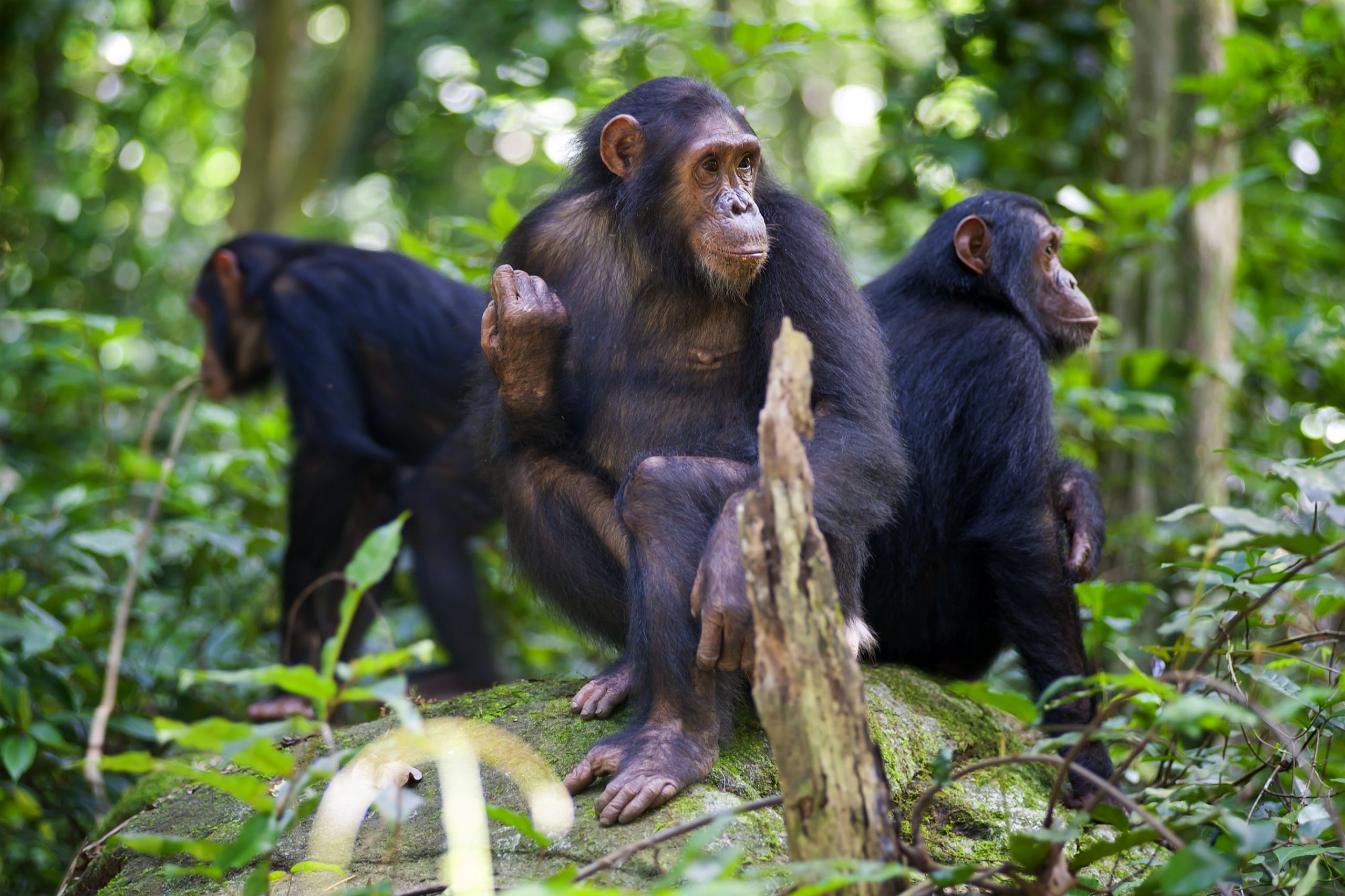
Deep within Rwanda's 1,019 square-kilometer montane rainforest lies an ancient wilderness that feels entirely untouched. Nyungwe Forest—one of Central Africa’s most vital ecosystems—is a biological sanctuary boasting 13 primate species and over 300 vibrant bird species.
Here, you can track habituated chimpanzee troops, navigating a 2- to 5-hour expedition to spend a magical hour watching them interact in their natural habitat. Afterward, elevate your adventure at the famous Uwinka Visitor Center. Step onto the 160-meter-long canopy walkway, suspended up to 70 meters above the forest floor, where a breathtaking bird's-eye view awaits.
2-days-nyungwe-luxury-fly-in-to-trek-with-chimpanzee
2-days-nyungwe-chimpanzee-tracking-and-canopy-walk
3-days-luxury-honeymoon-chimpanzee-tracking-and-canopy-walk-in-nyungweb
3-days-budget-chimpanzee-tracking-in-nyungwe-forest-park
3-days-nyungwe-chimpanzee-tracking-and-lake-kivu-relaxation
3-days-best-rwanda-canopy-walk-and-nyungwe-chimpanzee-tracking-adventure
3-day-chimpanzee-trekking-tour-package-canopy-and-lake-kivu
4-days-nyungwe-chimpanzee-trekking-canopy-walk-and-lake-kivu-relaxation
The Ultimate Guide to Chimpanzee Tracking Protocol
Tracing wild chimpanzees through the lush slopes of Nyungwe is an exhilarating adventure that puts you right in the heart of our distant cousins' world. Your morning kicks off bright and early around 4:30 AM at either Uwinka Reception or Gisakura Visitor Center, where you meet your expert ranger for a brief safety briefing before driving to the day's starting point. Depending on where the troops slept, you might trek inside Nyungwe proper or venture into the nearby Cyamudongo forest enclave. Finding these energetic primates takes patience and solid endurance, as hikes usually run between two and five hours over uneven, vine-tangled terrain while trackers stay connected via radio. Once you locate the troop, strict protocols immediately kick in to keep both you and the animals safe. You get exactly one hour to quietly observe their daily lives—grooming, playing, and swinging through the trees—before heading back. Groups are strictly kept to a maximum of eight guests per habituated family to avoid overwhelming the primates, and everyone must maintain a safe distance of at least 10 meters. Because chimpanzees share so much of our DNA, human illness poses a severe threat to them, meaning anyone showing signs of cold or flu must sit the trek out. Permit costs sit at $250 per person for international visitors, and because spaces are tightly regulated to protect the forest, securing your slot early through the Rwanda Development Board or a local tour operator is an absolute must for a seamless trip.
What to Expect on the Nyungwe Canopy Walk Experience
Stepping out onto the Nyungwe Canopy Walkway gives you an unforgettable, bird’s-eye perspective of an ancient tropical rainforest high above the mist. Your journey begins at the main Uwinka Visitor Center, where you check in, meet your park ranger, and get a quick safety rundown. Before reaching the suspension bridge itself, you will take a scenic 30-to-45-minute trek down the Igishigishigi Trail, covering roughly two kilometers through towering tree ferns, moss-draped hardwoods, and lush undergrowth. The walkway itself stretches across 160 meters divided into three distinct bridge sections suspended high over a steep mountain ravine. The main highlight is the central span, hanging an incredible 74 meters above the forest floor, where gentle sways give you a thrilling sense of floating above the wilderness. Looking down into the canopy reveals giant emergent trees, colorful orchids, and brilliant sunbirds, while distant vistas open up toward Lake Kivu on clear days. The whole experience takes about an hour and a half to two hours round-trip, making it accessible for most casual hikers with a reasonable head for heights. Guided tours depart at set times throughout the day, usually starting around 8:00 AM, 10:00 AM, 1:00 PM, and 3:00 PM, with international permit prices around $60 per person. Walking along this narrow air-bridge through the clouds gives you a genuine sense of how vast, unbroken, and vibrant Nyungwe’s wilderness really is, making it a absolute staple for any trip.
Essential Packing List for a Nyungwe Forest Adventure
Preparing for Nyungwe’s unpredictable climate requires a bit of thoughtful planning, as this high-altitude montane rainforest reaches up to nearly 3,000 meters above sea level. Temperatures can drop quickly, and sudden downpours are normal no matter when you visit. Above all else, invest in a reliable pair of sturdy, waterproof hiking boots with solid ankle support and deep treads to handle slick clay and hidden tree roots. Pack lightweight rain gear, such as a breathable waterproof jacket or heavy-duty poncho, to stay dry without overheating on steep ascents. Layering your clothes is the secret to staying comfortable throughout the day; stick to long-sleeved shirts and durable long pants in earthy tones like green, khaki, or brown, while bright colors should be left behind to avoid startling the wildlife. Tucking your pants into thick socks or wearing gaiters will shield your ankles from mud and biting ants along the trail. Bring along a pair of simple gardening gloves to protect your hands when grasping branches or steadying yourself on damp inclines. A sturdy pair of adjustable trekking poles will save your knees during steep downhill stretches on paths like Igishigishigi. Pack a comfortable 20-to-30-liter daypack equipped with a waterproof cover to carry at least two liters of drinking water, energy-rich snacks, personal medications, and a pair of lightweight 8x42 or 10x42 binoculars so you can spot monkeys and colorful canopy birds hiding high up in the leafy branches.
The Best Time of Year to Visit Nyungwe National Park
Nyungwe is a vibrant destination open year-round, though changing seasonal weather shifts trail conditions and wildlife viewing in unique ways. The park goes through two main dry periods and two rainy seasons each year. The long dry season runs from June through September, offering the driest trails, lower humidity, and the most comfortable footing for long forest hikes and the Canopy Walkway. A shorter dry stretch arrives between December and February, bringing clear skies, mild rainfall, and great visibility for photography across the mountain vistas. If you come during the short rains from October to November, you will encounter wetter paths, but the forest comes alive with lush foliage and abundant wild fruit. This extra fruit draws chimpanzees down into the lower canopy levels, making troops much easier to find and drastically shortening your trek time. The main rainy season spans from March to May, marked by heavier downpours, muddy trails, and thick mountain mist. While hiking requires extra effort during these wetter months, it is a absolute paradise for passionate birdwatchers aiming to spot migratory species and plant lovers eager to see wild orchids blooming across the misty forest floor. Deciding when to travel depends entirely on what you want out of your trip: standard hikers often prefer the drier summer months for easier walking conditions, while avid primate trackers and birdwatchers frequently embrace the damper months to catch the park at its absolute peak of biological energy.
Sights and Sounds: Other Primates and Birdlife to Spot
While chimpanzees often steal the spotlight, Nyungwe ranks as one of Africa's rich hotspots for biodiversity, harboring 13 distinct primate species and well over 345 bird species. Walking along the shaded forest paths, you might encounter massive super-troops of white-and-black Rwenzori Angolan Colobus monkeys, which can gather in groups numbering up to 600 individuals—the largest single aggregation of primates on the continent. Look closely at the forest floor and lower branches to spot the striking L'Hoest's monkey, recognizable by its dark fur and fluffy white beard, often foraging along trail edges. As you trek deeper into the woodland, keep an eye out for curious red-tailed monkeys, silver monkeys, Dent’s mona monkeys, grey-cheeked mangabeys, and the elusive owl-faced monkey hiding in dense thickets. For bird lovers, Nyungwe is a dream destination hosting 30 species found only in the Albertine Rift region. The undisputed icon of the forest canopy is the magnificent Great Blue Turaco, often seen gliding between treetops in flashes of blue, yellow, and red. You might also spot the vibrant Ruwenzori Turaco with its crimson wings, or delicate species like the Regal Sunbird sipping nectar from bright rainforest blossoms. Skulking species like Neumann's Warbler and Grauer's Rush Warbler challenge keen birders to test their identification skills in the thick undergrowth. Listening to the complex chorus of bird calls and monkey hoots reverberating through the heavy foliage transforms every single step into a rich sensory journey.
Physical Fitness and Safety Preparation for the Trails
Trekking through Nyungwe requires a baseline of physical fitness because you are navigating high altitudes ranging from 1,600 to nearly 3,000 meters above sea level over rough, uneven ground. The combination of thin air, steep climbs, exposed roots, and slick clay mud means even short hikes can test your stamina. Preparing beforehand with regular cardio exercises, leg strength training, and stair climbing will pay huge dividends once you hit the trail. When hiking, let your official park ranger set the pace; moving at a steady, measured stride helps prevent altitude fatigue and keeps your heart rate stable. Hiring a local porter at the trailhead for around $15 to $20 is one of the smartest moves you can make; they carry your heavy daypack, offer a steady hand on slippery downhill sections, and allow you to fully enjoy the scenery. Staying on designated paths is vital for your safety and prevents foot traffic from eroding delicate slopes or trampling rare flora. Hydration is essential at high elevations where cool breezes mask sweat, so drink clean water continuously and carry electrolyte tablets for longer excursions. Pay attention to your footwear, place your feet carefully on wet logs or exposed stones, and never hesitate to ask for a brief pause if you feel winded. Taking care of your body lets you fully absorb the magic of the wild forest around you.
Eco-Tourism Impact: How Your Visit Supports Conservation
Choosing to visit Nyungwe National Park directly sustains a powerful community-driven conservation model protecting one of Africa’s oldest montane rainforests. Managed through a partnership between the Rwanda Development Board and African Parks, the sanctuary relies heavily on responsible tourism to fund its daily operations and safeguard its wildlife. Under Rwandan national law, 10% of all park entrance and permit revenue goes straight back into the local towns and villages surrounding the forest perimeter. This shared income funds critical community projects including local schools, clean water points, health clinics, and sustainable farming initiatives that improve everyday life for thousands of residents. Tourism revenue also directly funds daily anti-poaching foot patrols, snaring sweeps, canine units, and real-time monitoring systems that keep wire snares out of the forest and give endangered wildlife room to thrive. Crucially, the park creates direct, dignified employment by hiring local residents as park rangers, chimpanzee trackers, canopy guides, and trail porters—many of whom are former poachers who now use their deep knowledge of the wilderness to protect it. By demonstrating that living primates and standing trees generate steady income for families, tourism transforms neighboring communities into active partners in forest preservation. Every permit bought, guide hired, and local craft purchased helps ensure this spectacular ecosystem remains wild, intact, and flourishing for generations to come.
Here are 12 common questions travelers ask when planning a trip to Nyungwe National Park, along with detailed, practical answers for each.
Do I need a permit for chimpanzee tracking, and how far in advance should I book?
Yes, securing an official permit from the Rwanda Development Board (RDB) is strictly required before you can go chimpanzee tracking in Nyungwe. Because the park caps daily visitor numbers to protect the habituated troops from stress and overcrowding, spaces fill up remarkably fast—especially during the dry summer months. For international non-residents, a permit currently costs $250 per person. To avoid missing out, it is best to book your slot at least three to six months in advance, either directly through the official RDB portal or by partnering with a licensed local tour operator. Your permit covers your entry, safety briefings, and the guidance of expert park rangers and trackers who know the forest inside out. Keep in mind that permit fees are non-refundable, so ensure your travel dates are set before confirming. Securing your permit early guarantees your place on the trail and helps park authorities manage sustainable tourism levels across the delicate forest ecosystem.
Is chimpanzee tracking guaranteed, or is there a chance we won't find them?
While the expert trackers in Nyungwe have an incredible success rate—usually over 80%—seeing chimpanzees in the wild is never 100% guaranteed. These are completely wild animals living in a vast, dense rainforest, and their movements depend on food availability, weather, and troop dynamics. Trackers head out into the forest before dawn to locate where the troop slept the previous night and follow their calls, staying in radio contact with your guide throughout the morning. However, chimpanzees move fast through the canopy and across steep terrain, sometimes covering several kilometers in a short time. If the troop is actively traveling or foraging deep in the interior, the hike can become long and challenging. Embracing the uncertainty as part of the wild adventure helps manage expectations. Even on days when the chimps prove elusive, the trek itself rewards you with stunning ancient trees, rare mountain birds, and the magical atmosphere of an undisturbed equatorial rainforest.
What is the minimum age requirement for tracking chimpanzees in Nyungwe?
To join a chimpanzee tracking excursion in Nyungwe National Park, guests must be at least 15 years old. This age limit is strictly enforced by park authorities for both safety and conservation reasons. Tracking requires hiking for several hours over steep, muddy, and unpredictable terrain, which can be physically demanding for younger children. Additionally, wild chimpanzees are large, powerful animals that can occasionally display loud, assertive territorial behaviors, such as drumming on tree buttresses or vocalizing loudly. Staying calm, following ranger instructions, and maintaining a quiet presence are essential for visitor safety and to keep the primates relaxed. Children under 15 are not permitted on the chimpanzee trails, but families traveling with younger kids can still enjoy lighter forest walks, birdwatching tours around the park edges, or educational visits to the Uwinka Visitor Center.
How difficult is the Nyungwe Canopy Walkway for someone who is afraid of heights?
The Canopy Walkway is an exhilarating experience, but it can certainly challenge anyone with a mild fear of heights. Suspended 74 meters (about 240 feet) above a deep mountain ravine, the main suspension bridge naturally sways slightly as you walk across it. The structure is built to rigorous international engineering and safety standards, featuring sturdy steel cables, high protective netting, and narrow footpaths that ensure you are completely enclosed at all times. Park rangers guide every group across, offering steady encouragement and safety tips along the way. If you feel nervous, focusing your eyes on the horizon or the dense treetops rather than looking straight down through the walkway mesh helps significantly. Taking slow, deliberate steps and holding onto the side cables provides extra stability. Most visitors who feel initial hesitation find that the breathtaking views over the pristine forest canopy make pushing through the brief anxiety well worth the effort.
What should I do if I catch a cold or feel sick before my primate trek?
If you feel unwell or show symptoms of a cold, flu, or respiratory illness, you must report it to the park authorities and refrain from tracking. Because chimpanzees share roughly 98% of their DNA with humans, they are extremely susceptible to human respiratory viruses, which can quickly spread through a wild troop and prove fatal. Rwanda’s conservation guidelines prioritize primate health above all else. If you are unfit to track due to illness, notify the park officials at the visitor center as early as possible. While permit rules generally consider bookings non-refundable, rangers will assess your situation and may help reschedule your trek for a later day if your itinerary allows, or assist in arranging alternative, low-contact activities. Wearing a face mask may also be requested during primate briefings or close encounters to provide an extra layer of protection for the animals.
Are there options for less strenuous hikes in Nyungwe for casual walkers?
Nyungwe offers a wonderful variety of trails tailored to different fitness levels, so you do not need to be an extreme athlete to enjoy the forest. While chimpanzee tracking can be rugged and steep, the park maintains over a dozen well-marked hiking routes ranging from easy 1-hour strolls to multi-day treks. For a gentle, highly rewarding walk, the Igishigishigi Trail is a popular choice; it covers about 2.1 kilometers and serves as the access path to the Canopy Walkway. Another fantastic easy option is the Karamba Waterfall Trail, which traverses relatively flat terrain through former gold-mining areas now reclaimed by lush fern groves and bright orchids. These shorter paths offer easy footing, beautiful scenery, and excellent opportunities to spot forest birds, butterflies, and smaller primates like L'Hoest's monkeys without pushing your physical limits on steep mountain ascents.
Why is hiring a local porter so strongly recommended at the trailhead?
Hiring a local porter at the start of your trek is one of the best decisions you can make for both your hike and the local community. For a modest fee—usually around $15 to $20 plus a tip—a porter will carry your daypack, handle your heavy camera gear, and hold your water supply throughout the journey. More importantly, when trails become steep, muddy, or slippery, porters offer a steady hand to help balance you over tricky tree roots and slick clay slopes. Beyond physical support, hiring a porter delivers a direct positive economic impact. Most porters are residents from the communities surrounding Nyungwe, and many are former poachers who now earn a sustainable living protecting the forest. Your support directly provides income for their families, putting food on the table and supporting local schooling, which reinforces community enthusiasm for wildlife conservation.
What kind of food and drink should I bring on a day trek into the forest?
When heading out on a morning trek in Nyungwe, you should carry enough drinking water and high-energy snacks to keep your stamina up for several hours. Plan to pack at least two liters of clean drinking water in reusable bottles to stay hydrated in the humid mountain air. High-energy, non-perishable snacks like trail mix, dried fruit, nuts, energy bars, and dark chocolate are ideal for quick boosts during trail breaks. If you are embarking on a longer hike or tracking chimpanzees, packing a light lunch—such as sandwiches, hard-boiled eggs, or fruit provided by your lodge—is a great idea. Always pack out every piece of trash, including fruit peels and wrappers, to keep the forest pristine. Remember that eating or drinking within sight of the chimpanzees or other primates is strictly prohibited to prevent behavioral disruption and disease transmission.
Can I visit Nyungwe National Park as a day trip from Kigali?
While it is technically possible to drive to Nyungwe from Kigali, doing it as a single-day round trip is not recommended due to the driving distance. The journey from Kigali to the main park reception centers at Uwinka or Gisakura takes roughly 5 to 6 hours one way by road, winding through scenic but slow-moving mountain highways. Because chimpanzee tracking briefings begin as early as 4:30 AM or 5:00 AM, a day trip would require driving through the night on dark, winding roads. To truly enjoy the experience without extreme fatigue, plan to stay at least two or three nights at a lodge near the park boundary. Staying nearby allows you to rest properly before early morning treks, enjoy afternoon canopy walks at a relaxed pace, and explore surrounding attractions like tea plantations without feeling rushed by a long highway commute.
What is the photography policy, and what camera gear works best in the rainforest?
Photography is welcomed throughout Nyungwe, but strict rules apply when photographing primates: flash photography is strictly forbidden at all times because sudden bright flashes startle wild animals and can provoke defensive reactions. The forest interior is often dimly lit under the dense canopy, so bring a camera that performs well in low-light conditions with higher ISO settings. A versatile zoom lens, such as a 70–200mm or 100–400mm, is ideal for capturing chimpanzees high in the trees or birdlife flitting across canopy gaps. Because sudden rain showers are common, carry rain protection for your gear, such as a waterproof camera cover or dry bag. If you use a smartphone, keep it on silent mode and hold it securely with a wrist strap. Remember to spend plenty of time looking out from behind the lens to absorb the magical sights and sounds with your own eyes.
How does Nyungwe National Park handle visitor safety regarding wild animals and insects?
Visitor safety in Nyungwe is managed through strict operational protocols, experienced ranger escorts, and comprehensive briefings before every activity. Every trekking group is accompanied by armed park rangers trained in wilderness safety, animal behavior, and first aid. While large mammals like forest elephants exist in the park, encounters are rare, and rangers know how to navigate trails safely. To protect yourself from biting insects such as safari ants or mosquitoes, wear long-sleeved shirts, tuck your trousers into thick socks, and apply insect repellent containing DEET to exposed skin. Wearing sturdy gaiters provides an extra layer of protection against mud and ants. Following your ranger’s guidance, staying on established paths, keeping noise levels low, and maintaining respectful distances from all wildlife ensures a safe, enjoyable, and smooth forest adventure for everyone.
What local cultural or community experiences can I combine with my forest visit?
Pairing your wilderness treks in Nyungwe with local community experiences offers a richer, more meaningful perspective on Rwandan life. Around the edges of the national park, particularly near Gisakura, you can visit community-run tea plantations to learn how tea is grown, harvested, and processed on the misty hillsides. Local cultural cooperatives also offer guided village walks where you can interact with community members, watch traditional Intore dance performances, learn about traditional medicine, or try your hand at basket weaving and pottery. Visiting these community projects directly supports local livelihoods and demonstrates how eco-tourism benefits the people living alongside the forest. Spending an afternoon sharing stories with local hosts provides wonderful cultural context, showing how community development and wildlife conservation work hand in hand around Nyungwe National Park.
Booking Chimpanzee tracking in Nyungwe with us Roads of Adventure safaris
Roads of Adventure Safaris offers tailored 3-Day Nyungwe Chimpanzee Tracking and Lake Kivu Relaxation packages to secure your permits and manage logistics for Nyungwe National Park.
The park's pricing structure for the standard chimpanzee trekking permit is $150 USD for international visitors, $75 USD for African/East African foreign residents, and $25 USD for East African citizens. Note that park entry fees are billed separately (ranging from $10 to $100 USD depending on your residency status), bringing the total base park cost to $250 USD per person for international travelers.
