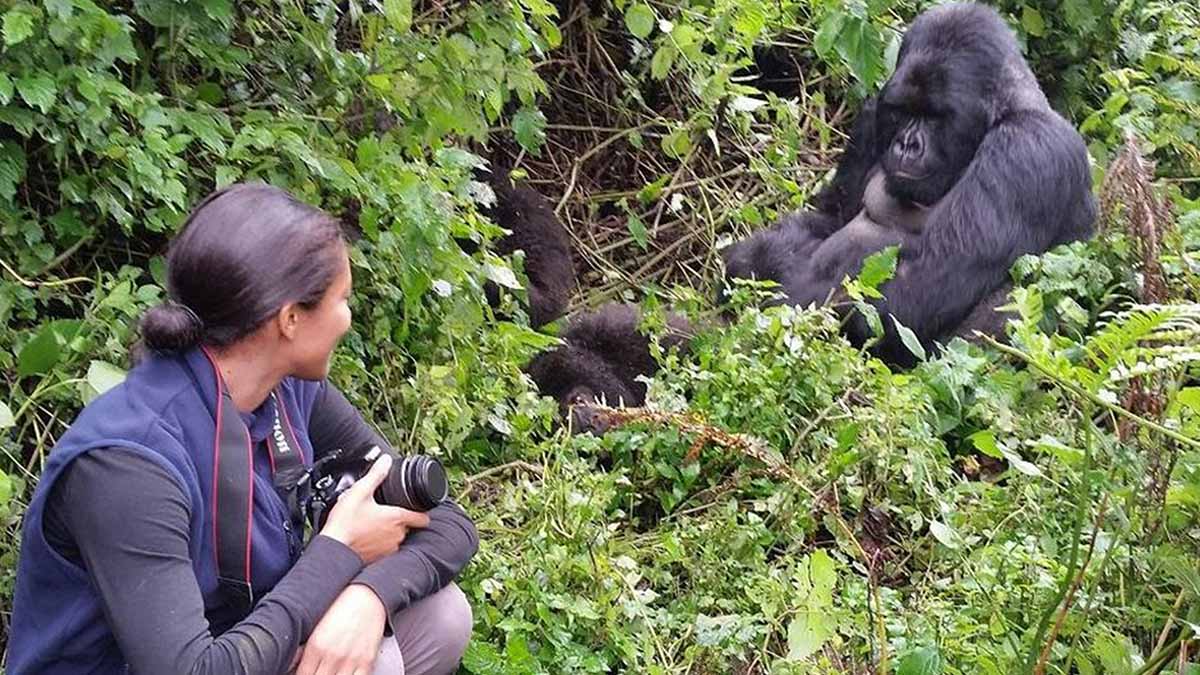
Stepping into the misty, emerald slopes of Rwanda's Volcanoes National Park to meet our closest wild cousins is a humbling, life-changing adventure. You’ll join small groups of eight to trek the lush bamboo forests in search of the park’s habituated mountain gorilla families.
Because these critically endangered primates share about 98% of our DNA, you are required to keep a strict seven-meter distance to protect them from human illnesses. Permits cost $1,500, directly funding critical conservation efforts and supporting local communities
2-days-luxury-rwanda-gorilla-trekking-safari-from-kigali-city
3-days-rwanda-gorilla-trekking-and-golden-monkey-tracking-in-volcanoes
3-days-rwanda-gorilla-trekking-safari-itinerary-in-volcanoes-park
4-days-rwanda-golden-monkey-tracking-and-bisoke-hiking-tour-package
4-days-best-volcanoes-and-bwindi-impenetrable-national-park-double-gorilla-trekking
4-days-rwanda-primates-safari-gorilla-trekking-and-chimpanzee-all-inclusive-package
5-days-best-chimpanzee-tracking-golden-monkey-tracking-and-visit-to-lake-kivu
5-days-rwanda-double-gorilla-trekking-and-golden-monkey-tracking
5-days-uganda-gorilla-trekking-chimps-and-rwanda-golden-monkey-tracking-combo
6-days-gorillas-trekking-chimpanzee-tracking-and-golden-monkeys-safari-in-rwanda
7-days-best-gorilla-trekking-and-other-highlights-of-rwanda-tour
8-days-best-of-rwanda-uganda-safari-volcanoes-to-best-uganda-safari-parks
The Magic of the Mist: What to Expect on Your Trek (2026 Guide)
Your morning begins around 7:00 AM at the Kinigi headquarters, where crisp mountain air mixes with the aroma of hot Rwandan coffee. As vibrant Intore cultural dancers perform, head rangers organize visitors into small groups capped at strictly eight trekkers per habituated gorilla family. Rangers tailor group assignments to match your fitness level while walking you through key safety rules—maintaining a seven-meter distance, keeping voices low, and remaining calm if a curious silverback steps close.
Once at the trailhead, you step directly into the lower bamboo zone around 2,500 meters in elevation. Golden stalks tower overhead, filtering light into cool, ethereal tunnels. As the incline sharpens, the bamboo transitions into lush, hyper-green montane rainforest thick with giant lobelias, hanging vines, and damp moss. Armed with machetes to clear tangled brush, expert rangers guide the way while staying in radio contact with advance trackers who set out at dawn. Breathing the thin altitude air and listening to distant forest bird calls, every step through the Virunga wilderness builds anticipation for the life-changing encounter ahead.
Meet the Families: Habituated Groups of Volcanoes
Every habituated gorilla family in Volcanoes National Park possesses its own distinct personality and social structure.
Take the legendary Susa (Susa-A) family, once studied by Dian Fossey. Comprising around 15–20 members and currently led by the formidable silverback Impuzamahanga, Susa gained global fame for its surviving twins, Byishimo and Impano—a rare marvel in gorilla biology. Trekking to them often means a tough, high-altitude climb up Mount Karisimbi, but the sight of playful youngsters tumbling through the wild bamboo makes every breathless step worthwhile.
If you prefer an easier trek, look toward the Sabyinyo group. Nestled in the lower slopes, this relaxed 12-member troop is anchored by Guhonda, one of the largest and most imposing silverbacks in the Virunga range. Meanwhile, the peaceful Amahoro family—led by silverback Ubumwe—is celebrated for its gentle temperament, making encounters remarkably calm and intimate. Each family offers an unforgettable window into gorilla culture.
The $1,500 Permit: Where Does the Money Go?
Rwanda’s $1,500 gorilla trekking permit is a deliberate investment in high-value, sustainable conservation. Managed by the Rwanda Development Board (RDB), the price tag directly funds 24/7 ranger patrols, anti-poaching teams, and life-saving veterinary care from Gorilla Doctors across Volcanoes National Park.
Crucially, 10% of every permit ($150) flows straight into neighboring communities through the Tourism Revenue Sharing Program. In sectors like Kinigi and Musanze, these funds build primary schools, health clinics, and clean water networks. They also empower local cooperatives—including former poachers who now work as park trackers and artisans.
When wild gorillas wander near farmland, local residents no longer see a threat to their livelihoods. They see the very reason their children have classrooms and safe drinking water. By turning neighbors into active guardians, Rwanda ensures genuine, peaceful human-wildlife coexistence along the Virunga slopes.
Trekking Etiquette: 1 Hour with the Gentle Giants
The single hour you spend in the presence of a mountain gorilla family is intense, humbling, and carefully controlled. Because humans share roughly 98% of their DNA with these endangered primates, strict guidelines are enforced in Volcanoes National Park to protect both the visitors and the gorillas.
Core Trail Rules & Etiquette
- The 7-Meter Distance Rule: You are required to maintain a minimum gap of 7 meters (23 feet) between yourself and the gorillas at all times. This buffer reduces behavioral stress on the family and cuts down disease transmission risks. If a curious youngster or silverback walks toward you, stay calm, hold your ground, and let your ranger guide you to slowly step back.
- Strictly No Flash Photography: Camera flashes can startle or disorient gorillas, potentially triggering a defensive response from the silverback. Double-check that your flash is completely disabled before stepping into the family's clearing.
- The Cold & Illness Ban: Gorilla immune systems lack antibodies against common human pathogens. A simple human cold or flu virus can quickly spread through a troop and prove fatal. If you show any signs of illness on the morning of your trek, you must step back; park policy will assess your condition to protect the habituated groups.
- Mandatory Face Masks: As a permanent health safeguard, trekkers must wear standard surgical face masks during the entire 60-minute viewing window.
- Low Voices and Controlled Movements: Keep your voice to a whisper and avoid sudden hand gestures. If you feel the urge to cough or sneeze, you must turn your head completely away and cover your face.
What makes mountain gorilla trekking in Volcanoes National Park such a unique and life-changing experience?
Trekking mountain gorillas in Volcanoes National Park stands out as one of the world's most intimate wildlife encounters. Unlike viewing animals from a safari vehicle, gorilla trekking requires stepping directly into their natural habitat—the dense, misty rainforests of the Virunga Massif. Because mountain gorillas share nearly 98% of their DNA with humans, standing just feet away from a family group creates a profound sense of recognition and connection. You observe complex social behaviors: mothers cradling infants, juveniles wrestling in the bamboo, and massive silverbacks keeping watch over their troops.
The experience is strictly managed to remain authentic and low-impact. Visitors hike alongside experienced Rwanda Development Board (RDB) trackers and rangers who read the forest's subtle cues to find the habituated families. The journey itself—navigating elevation changes, smelling crisp mountain air, and hearing distant forest bird calls—builds immense anticipation. Reaching the family after hours of hiking culminates in a single, deeply humbling hour of quiet observation. This combination of physical effort, pristine scenery, and close proximity to our endangered wild cousins makes the trek a bucket-list memory that stays with travelers forever.
How does the morning briefing at Kinigi headquarters set the stage for the gorilla trek?
The adventure officially starts at 7:00 AM at the Kinigi headquarters, the operational hub for Volcanoes National Park. Trekkers are greeted by crisp high-altitude air, fresh Rwandan coffee, and energetic performances by traditional Intore cultural dancers. This lively atmosphere blends excitement with cultural appreciation while park rangers gather visitors to organize trekking teams. Groups are capped at strictly eight people per habituated gorilla family to minimize human footprint and disturbance in the rainforest.
During the briefing, head rangers pair guests with specific gorilla families based on fitness levels, age, and personal preferences. Trekkers aiming for a lighter walk might be assigned lower-slope groups like Sabyinyo, while avid hikers can request higher-altitude groups like Susa. Rangers also walk everyone through critical safety protocols: maintaining a seven-meter distance, keeping voices down to a whisper, and remaining grounded if an curious gorilla moves close. This briefing transforms a group of global travelers into a cohesive, informed team, ensuring that everyone enters the jungle fully prepared to respect the wildlife and navigate the terrain safely.
What types of terrain and vegetation can trekkers expect to navigate during the hike?
Trekking through Volcanoes National Park involves traversing diverse ecological zones across steep volcanic inclines. The journey begins around 2,500 meters in elevation at the edge of the bamboo forest. This lower zone is defined by towering golden bamboo stalks that interlock overhead, forming cool, shaded tunnels where light filters through in soft streams. Walking through the bamboo is generally straightforward, though the ground can be uneven with hidden roots and damp soil underfoot.
As trekkers climb higher up the slopes of the Virunga volcanoes, the landscape transitions into dense montane rainforest. Here, the canopy opens up to reveal hyper-green, prehistoric foliage dominated by giant lobelias, sprawling hypericum trees, hanging vines, and thick moss. The terrain becomes steeper and muddy, requiring steady footwork and occasionally hands-on scrambling. Park rangers lead the group armed with machetes to clear tangled brush and forge pathways through the wild undergrowth. Breathing the thin mountain air while taking in panoramic views of the Virunga peaks makes the physical challenge of the hike immensely rewarding.
What is the role of park rangers and advance trackers during the trek?
Park rangers and advance trackers are the backbone of a successful gorilla trekking expedition in Rwanda. Early each morning, long before visitors arrive at Kinigi headquarters, teams of advance trackers hike high into the Virunga forest. Their job is to locate the exact spot where each habituated gorilla family made its nest the previous evening and follow their fresh trails from sunrise onward. Using radio communications, these trackers keep the lead rangers constantly updated on the family’s real-time position.
The lead rangers accompanying your group serve as navigators, educators, and safety leaders on the trail. They cut paths through dense brush, manage the pace to suit the group’s overall stamina, and share deep insights about forest ecology, plant life, and gorilla behavior. When approaching the gorilla family, rangers take charge of human-wildlife dynamics. They communicate with the gorillas using guttural vocalizations to signal non-threatening intent, manage visitor positioning, and ensure everyone adheres to safety rules. Their expertise guarantees a seamless, safe experience for both human visitors and the mountain gorillas.
What are the key characteristics and history of the famous Susa (Susa-A) gorilla family?
The Susa family—often called Susa-A—is one of the most famous and historically significant habituated gorilla groups in Volcanoes National Park. This troop was extensively studied by the renowned primatologist Dian Fossey during her pioneering research in the Virungas. Originally one of the largest groups in the park, Susa once boasted over 40 members before natural social dynamics led to troop splits that formed secondary groups like Karisimbi (Susa-B) and Igisha. Today, Susa maintains a stable size of roughly 15 to 20 individuals.
Led by the dominant silverback Impuzamahanga, Susa achieved global fame for a rare event in gorilla biology: the successful survival of twin gorillas, named Byishimo and Impano, born in 2004. Observing twins grow to maturity in the wild is extremely rare due to the intense demands on mother gorillas. Visiting the Susa family usually requires a strenuous, high-altitude hike along the upper slopes of Mount Karisimbi. Despite the physical challenge of reaching them, watching the playful juveniles and historical lineage of this iconic family remains a highlight for seasoned trekkers.
How do the Sabyinyo and Amahoro families differ in terms of trek difficulty and personality?
The Sabyinyo and Amahoro gorilla families highlight the diversity of group temperaments and trekking requirements within Volcanoes National Park. The Sabyinyo family, named after the jagged Mount Sabyinyo, generally ranges along the park's lower bamboo slopes. This makes them one of the most accessible groups, making them ideal for trekkers seeking a less physically demanding hike. The troop of about 12 members is anchored by Guhonda, a legendary silverback renowned as one of the largest, heaviest, and most physically imposing silverbacks in the Virunga region.
In contrast, the Amahoro family is famous for its distinct social personality. The word Amahoro translates to "peaceful" in Kinyarwanda, a name that perfectly reflects the group's calm, gentle nature. Led by the peaceful silverback Ubumwe, this family of 15 to 18 members is known for its relaxed interactions, rarely exhibiting aggressive behavior or intense hierarchy displays. Because Amahoro often ranges higher up the slopes of Mount Visoke, reaching them requires a moderate-to-challenging climb. Choosing between Sabyinyo and Amahoro offers a choice between an easier hike to see a massive silverback or a longer climb to observe an exceptionally tranquil troop.
How does Rwanda justify the $1,500 cost of a mountain gorilla trekking permit?
Rwanda's $1,500 permit price reflects a deliberate model of high-value, low-impact eco-tourism designed to prioritize conservation over mass visitor numbers. Rather than functioning as a basic entry fee, the permit serves as a direct investment in the survival of the endangered mountain gorilla and the protection of their fragile habitat. By keeping permit costs premium and daily visitor numbers capped, Rwanda prevents overcrowding in the park, reducing stress on the habituated gorilla families and preserving the wilderness environment.
The funds generated by permits are managed by the Rwanda Development Board (RDB) to sustain an extensive conservation infrastructure. The largest portion directly funds 24/7 anti-poaching patrols, veterinary care, forest monitoring, and ranger salaries. Additionally, permit revenue funds park maintenance, research initiatives, and national tourism development. Travelers purchasing a permit are not just buying a one-hour viewing pass; they are directly financing a world-recognized conservation model that has successfully brought mountain gorilla populations back from the brink of extinction over recent decades.
How does the 10% Tourism Revenue Sharing Program support local communities around Kinigi and Musanze?
The Tourism Revenue Sharing Program, established by the Rwandan government, ensures that local communities living alongside Volcanoes National Park directly benefit from eco-tourism. Under this scheme, 10% of all gorilla permit revenue ($150 per permit) is funneled directly into socio-economic development projects in neighboring sectors like Kinigi and Musanze. This initiative turns community members into financial stakeholders in the park's ongoing conservation successes.
These funds are distributed transparently to build essential public infrastructure. Over the years, permit revenue has financed the construction of primary and secondary schools, modern health clinics, roads, and clean water networks that bring safe drinking water straight to mountain villages. The program also funds local cooperatives, providing capital for sustainable agriculture, craft businesses, and community-led tourism ventures. By visibly improving daily living standards, the revenue-sharing scheme demonstrates to local residents that keeping wild gorillas safe brings real, long-term economic prosperity to their families.
How has revenue sharing helped maintain peaceful human-wildlife coexistence in Rwanda?
Historically, human-wildlife conflict was a major threat to mountain gorillas, as local farmers faced crop damage from wandering wildlife or turned to poaching out of economic hardship. Rwanda’s 10% revenue-sharing model effectively solved this tension by transforming neighbors from potential competitors into active guardians of the Virunga ecosystem. When residents see local schools and health clinics built from gorilla tourism, the value of keeping the forest intact becomes clear and tangible.
Furthermore, tourism revenue helps fund wildlife damage compensation funds and community-led defense cooperatives. Many former illegal poachers are now employed as park trackers, porters, and cultural performers, earning steady incomes while protecting the very animals they once hunted. When gorillas cross park boundaries into agricultural lands, local communities now respond with patience, alerting rangers to herd the animals back safely rather than retaliating. This alignment of economic incentives and community welfare has fostered a harmonious environment where humans and mountain gorillas coexist peacefully.
Why is the 7-meter distance rule so strictly enforced during gorilla encounters?
The 7-meter (23-foot) distance rule is an essential safety and health protocol enforced by the Rwanda Development Board during every gorilla encounter. The primary reason for this buffer is disease prevention. Because mountain gorillas share roughly 98% of their genetic makeup with humans, they are highly susceptible to human respiratory viruses and pathogens, to which they have no natural immunity. Maintaining a physical gap significantly reduces the chance of airborne virus transmission between trekkers and the gorillas.
Additionally, the seven-meter rule helps preserve natural gorilla behavior and prevents stress within the troop. Getting too close can be interpreted by a dominant silverback as a threat to his family, potentially triggering defensive chest-beating or charge displays. A respectful buffer allows the family to feed, groom, and socialise naturally without feeling cornered or crowded by human observers. If an inquisitive juvenile or silverback approaches trekkers, rangers instruct visitors to remain calm, hold their ground, and slowly step back to maintain that protective boundary.
What are the photographic guidelines for gorilla trekking, and why is flash strictly prohibited?
Photographic guidelines during gorilla treks are designed to protect the visual safety and emotional state of the habituated family groups. The most critical rule is the absolute ban on flash photography. Mountain gorillas are wild animals living in shaded forest environments; bright, sudden artificial flashes can startle, disorient, or agitate them. A flash might be misconstrued by a protective silverback as an aggressive act or threat, potentially causing him to react defensively to safeguard his troop.
Trekkers are advised to set up their cameras before entering the gorilla clearing by adjusting ISO settings, widening apertures, and turning off auto-flash features completely. Using continuous shooting modes with high shutter speeds helps capture sharp photos under low-light forest canopies without needing a flash. Furthermore, photographers must remain mindful of their spatial surroundings, avoiding sudden movements or swinging heavy telephoto lenses around the animals. Following these camera guidelines ensures you capture stunning imagery while keeping the interaction tranquil for everyone involved.
Why does Volcanoes National Park enforce a strict cold and illness policy for trekkers?
Volcanoes National Park enforces a zero-tolerance illness policy because common human infections pose an existential threat to mountain gorilla populations. Primate biology makes gorillas vulnerable to human respiratory illnesses, including the common cold, influenza, and pneumonia. In an isolated wild troop, a virus introduced by a single sick visitor can spread rapidly, causing severe health complications or fatalities across the family because gorillas lack the immunity to fight off human diseases.
Trekkers who show signs of flu, severe coughing, fever, or contagious illness on the morning of their trek are required to report their condition and step back from participating. Park management conducts health assessments to safeguard the habituated troops. To further protect the animals from asymptomatic respiratory droplets, Rwanda requires all trekkers to wear surgical face masks during the entire 60-minute viewing window. This precaution ensures human tourism never compromises the health of this endangered species.
What physical preparation and gear are recommended for a successful trek in Volcanoes National Park?
Gorilla trekking in Volcanoes National Park can range from moderate strolls to strenuous multi-hour climbs across steep, muddy terrain at high altitudes (often exceeding 2,500 meters). To prepare physically, prospective trekkers should focus on cardiovascular endurance and leg strength by hiking, walking on inclined surfaces, or doing stair workouts in the weeks leading up to their trip. Being comfortable with walking on uneven, slippery ground makes the journey much more enjoyable.
Having the right gear is equally important for navigating the Virunga rainforest effectively:
- Sturdy Waterproof Hiking Boots: High-ankle boots with strong tread are essential for gripping muddy inclines.
- Layered Clothing: Breathable long-sleeved shirts and lightweight hiking trousers protect against stinging nettles, insects, and rough brush.
- Rain Gear: A quality waterproof jacket or poncho is vital, as mountain weather can bring sudden downpours.
- Garden or Work Gloves: Wearing durable gloves helps trekkers grip muddy slopes and branches without getting stung by nettles.
- Trekking Poles & Backpack: Adjustable poles assist balance, while a waterproof daypack holds water, snacks, extra layers, and camera gear.
What happens during the 1-hour encounter once visitors locate the gorilla family?
The moment trackers locate the gorilla family, visitors enter a highly controlled, magical one-hour viewing window. Trekkers leave their daypacks and walking sticks behind with porters a short distance away, carrying only cameras and essential items into the clearing. Before stepping forward, visitors sanitize their hands and put on surgical face masks. Led by the head ranger, the group approaches quietly, keeping a minimum distance of seven meters from the gorillas.
During this hour, visitors quietly observe the family's daily routines in real time. You might watch young gorillas perform acrobatics on bamboo shoots, mothers patiently grooming their infants, or silverbacks resting calmly while keeping a watchful eye over the clearing. Rangers share quiet commentary explaining individual family dynamics and gorilla behavior. The hour passes quickly, but the peaceful atmosphere permits ample time to take photographs, take in the sights and sounds of the jungle, and reflect on the privilege of sharing space with mountain gorillas. When the 60 minutes conclude, rangers lead the group back out of the clearing to leave the family undisturbed.
How does hiring a local porter enhance the trekking experience and support the local economy?
Hiring a local porter at the trailhead is one of the most practical and impactful decisions a trekker can make. Porters are residents from villages surrounding Volcanoes National Park, many of whom come from farming families or are reformed poachers. For a standard fee (typically around $15–$20 plus tips), a porter carries your daypack, navigates muddy terrain alongside you, and offers a steadying hand on steep, slippery sections of the trail.
Beyond the physical support on the trail, hiring a porter directly aids local community livelihoods:
- Direct Economic Empowerment: Porter income goes straight to local households, helping pay for family healthcare, school fees, and home needs.
- Conservation Stewardship: Earning a reliable income from eco-tourism encourages former hunters to value and protect the park's wildlife.
- Enhanced Trekking Comfort: Offloading heavy camera gear and backpacks lets trekkers conserve energy, focus on footwork, and fully enjoy the hike.
Using porter services makes the trek safer and more comfortable while directly supporting the local community.
What long-term impact has gorilla eco-tourism had on mountain gorilla populations in Rwanda?
Gorilla eco-tourism in Rwanda stands out as one of global conservation's greatest success stories. Decades ago, mountain gorillas faced severe threats from poaching, habitat destruction, and human encroachment, driving their numbers dangerously low. The establishment of Rwanda's regulated, high-value tourism model directly reversed this decline. Today, the Virunga Massif gorilla population has grown consistently, transitioning mountain gorillas from "Critically Endangered" to "Endangered" on the IUCN Red List.
This success relies on a sustainable feedback loop: permit fees generate the funds required for intensive 24/7 protection, veterinary interventions by Gorilla Doctors, and continuous habitat monitoring. At the same time, community revenue sharing turns local residents into active conservation partners. By demonstrating that live mountain gorillas bring sustainable income, global recognition, and local development, Rwanda created a resilient conservation model. This approach ensures that future generations will continue to see these gentle giants thrive on the misty slopes of Volcanoes National Park.
Booking Mountain Gorilla Trekking in Volcanoes National Park with us Roads of Adventure safaris
Booking your mountain gorilla trekking safari in Volcanoes National Park with Roads of Adventure Safaris ensures a seamlessly managed, premier wildlife experience. Our team handles all the intricate logistics, including securing your official Rwanda Development Board (RDB) trekking permits, arranging seamless 4x4 ground transport from Kigali, and booking your choice of luxury or mid-range eco-lodges near the park boundaries.
