Recap of 7 Days Tanzania big five safari and Wildebeest migration safari, In July last year, Joy, a solo traveller from Singapore, chose our team for a seven-day expedition across Tanzania. She wanted to experience the Great Migration and watch the river crossings. Her goals included seeing all the animals in the Big Five and learning about Masai traditions. She completed this 7 Days Tanzania big five safari and Wildebeest migration safari with our guide, Fredrick.
Fredrick knows the Tanzanian landscape, wildlife, and local customs very well. He helped Joy understand the Serengeti and Ngorongoro Crater ecosystems. His local knowledge turned every game drive into a clear lesson about the region. This summary looks back at that week—a combination of wilderness exploration, professional travel planning, and the independence of a solo trip. It was a week of direct contact with nature and cultural learning, perfectly organized as a 7 Days Tanzania big five safari and Wildebeest migration safari.
Tour highlights for 7 Days Tanzania big five safari and Wildebeest migration safari
Tarangire elephant herd sightings
Baobab tree landscape views
Lion pride rest spots
Manyara lake flamingo flocks
Ngorongoro crater floor game
Rare black rhino spotting
Serengeti open plain drives
Cheetah grass hunting tactics
Leopard on rock sighting
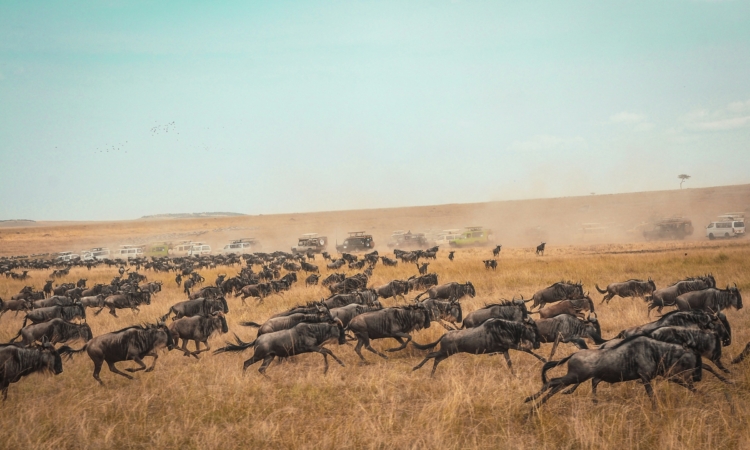
Great wildebeest herd migration
Mara river crossing drama
Masai community culture visit
Traditional dance performance talk
Local cattle herding lifestyle
Expert guide Fredrick knowledge
Solo travel safety comfort
Day by day 7 Days Tanzania big five safari and Wildebeest migration safari
Day 1: Arrival and The Gateway to Adventure
The trip began in Arusha, the main hub for the northern safari circuit. After meeting Fredrick, Joy received a briefing on the local geography and wildlife habitats. As they started this 7 Days Tanzania big five safari and Wildebeest migration safari, they drove from Arusha toward Tarangire National Park. Tarangire is known for large baobab trees and a high number of elephants. Fredrick found a group of elephants near the river, which gave Joy a clear view of the park's wildlife. The afternoon involved driving through the park trails to see animals gathering at water sources. Joy noted the scale of the landscape and the presence of various species. As the sun went down, she had time to prepare for the rest of her journey in the Tanzanian bush.
Day 2: The Giants of Tarangire
The second day focused on exploring the Tarangire wilderness. Fredrick explained how migration patterns bring different animals to this park during the dry months. Joy continued her search for the Big Five, observing buffalo herds near the open plains. In the morning, they found a pride of lions resting under a baobab tree. Fredrick talked about the role of these predators in the local environment. During the afternoon, they travelled toward the Manyara area, which features forest landscapes and views of the lake. The area is home to many bird species, including flamingos along the shore. Throughout the day, Fredrick provided information on Tanzanian ecology, helping Joy identify the various animals they encountered. It was a productive day for wildlife observation, covering a range of species in their natural habitat.
Day 3: Into the Ngorongoro Crater
On the third day, the route led into the Ngorongoro Conservation Area, a location recognized for its volcanic formation. Descending into the crater, Joy saw a contained ecosystem filled with many animals. Fredrick searched the area and located a black rhinoceros, which was a specific target for her 7 Days Tanzania big five safari and Wildebeest migration safari. The crater floor supported many zebras, wildebeest, and hyenas, all visible from the vehicle. Fredrick provided details on the volcanic history and how the crater walls keep the wildlife within the area. The density of animals made it easy to view both predators and herbivores at close range. After leaving the crater, they drove toward the Serengeti, having seen a wide variety of species in one location. This day was key to completing her wildlife checklist.
Day 4: Serengeti – The Endless Plains
Moving into the Serengeti, the landscape changed to the open savannah. Joy had planned this part of the trip specifically to see the vast plains. Fredrick drove toward the central Serengeti, where wildlife is often active. They spent the day navigating the park, seeing lions on rock formations, cheetahs in the grass, and many gazelles. Fredrick’s knowledge of the area helped them find these animals without disturbing their routine. They also managed to spot a leopard, which added to her list of sightings. The Serengeti is central to a 7 Days Tanzania big five safari and Wildebeest migration safari, and the volume of animals they saw during the drive highlighted why this park is important for wildlife conservation. The day was spent moving across the plains, observing how the different species live in this large, open environment.
Day 5: Following the Migration
Day five centered on tracking the Great Migration. Fredrick led the way into the northern Serengeti, where the wildebeest herds were gathering before crossing the river. The plains were full of wildebeest, a scene that provided a clear look at the scale of the movement. Fredrick stayed in contact with other guides to monitor the herd's position. They spent several hours observing the animals as they moved toward the water. Fredrick explained the natural obstacles the herds face, including crocodiles and predators waiting nearby. The focus was on patience, as the herds often gather for long periods before making a move. This day provided a realistic view of how the migration functions during the peak season in July, fitting perfectly into the schedule of her 7 Days Tanzania big five safari and Wildebeest migration safari.
Day 6: The Mara River Crossing and Masai Culture
On day six, they waited along the banks of the Mara River. The wildebeest began crossing the water, and Joy was able to observe this process from a safe distance. This event is a primary reason many travellers book a 7 Days Tanzania big five safari and Wildebeest migration safari. After the crossing, the afternoon was set aside for a visit to a local Masai community. Joy learned about their lifestyle as cattle herders and their historical relationship with the surrounding land. They discussed Masai traditions, their clothing, and the ways they coexist with wildlife. Fredrick acted as a translator and provided context for the cultural practices they witnessed. The combination of seeing the river crossing and learning about the Masai gave Joy a complete picture of both the natural and human history of the Serengeti region.
Day 7: Reflections and Departure
The final day involved a drive back to the airstrip for her flight. The morning light provided a clear view of the Serengeti as they departed. Fredrick reviewed the events of the week with Joy, discussing what she had learned about the environment and the animals. She had successfully completed her 7 Days Tanzania big five safari and Wildebeest migration safari, seeing the Big Five and witnessing the migration. Before leaving, Joy thanked Fredrick for his help throughout the trip. The journey from the park to the airstrip allowed for final wildlife sightings. As she boarded the plane, she had a clear overview of the Tanzanian northern circuit. Her trip was defined by the specific goals she met, from her arrival in Arusha to her final departure from the Serengeti, representing a successful solo tour through Tanzania.
Here are 16 questions regarding Joy’s solo expedition, followed by detailed responses.
1. Why is a private guide like Fredrick essential for a solo traveler?
For a solo visitor, a private guide serves as a navigator, protector, and educator. Navigating Tanzania's national parks requires deep knowledge of terrain and animal behaviour that ensures both safety and high-quality viewing. Fredrick acted as a bridge between the wild environment and Joy, offering insights that a casual visitor might miss. Beyond driving, he monitored wildlife movements and communicated with other guides to locate the best sightings. This partnership provided Joy with a sense of security while allowing her to engage deeply with the surroundings. His presence meant she had someone to discuss observations with, turning a solo experience into a shared journey of discovery. Furthermore, a professional guide understands local culture and protocol, helping solo travelers interact respectfully with communities like the Masai. This level of personalized service is central to the experience of a 7 Days Tanzania big five safari and Wildebeest migration safari.
African Big Cats Safaris+ 1
2. What makes Tarangire the best place to start a safari?
Tarangire National Park is famous for its massive baobab trees and large elephant populations. Starting here allows travelers to adjust to the pace of the bush in an environment that is both visually striking and rich in wildlife. Because the Tarangire River acts as a vital water source during the dry season, large groups of animals gather along its banks. This provides immediate, high-quality sightings, which builds confidence and excitement for the rest of the trip. For someone like Joy, who had specific goals for her 7 Days Tanzania big five safari and Wildebeest migration safari, Tarangire offered a manageable entry point where she could observe complex animal interactions. The park's layout makes it easier to spot diverse species in a shorter timeframe compared to the vast, open plains found elsewhere. It sets a standard for the quality of wildlife viewing that the rest of the tour aims to maintain.
East Africa Gorilla Safaris+ 1
3. How does the Ngorongoro Crater support the Big Five?
The Ngorongoro Crater is a self-contained ecosystem formed by a massive volcanic caldera. Its high walls act as natural barriers, keeping a high density of wildlife within the floor throughout the year. This unique geography makes it one of the most reliable locations to see the Big Five—lion, leopard, elephant, buffalo, and the rare black rhinoceros—in a single day. For a 7 Days Tanzania big five safari and Wildebeest migration safari, the crater is a strategic stop. Because the animals do not migrate out of the crater, they are more accustomed to the presence of vehicles, allowing for closer observations. This consistency ensures that travelers can complete their primary wildlife checklist with more certainty. The combination of lush forests on the rim and open grasslands on the floor creates a varied habitat that supports a wide range of species, making it a natural sanctuary that is rarely replicated elsewhere.
Otter african safaris+ 1
4. What is the significance of the Great Migration timing?
The Great Migration is a year-round movement, but witnessing the river crossings requires specific timing. In July, the herds typically reach the northern Serengeti, positioning themselves to cross the Mara River into Kenya. Planning a 7 Days Tanzania big five safari and Wildebeest migration safari for this period is crucial for those hoping to witness this specific event. Because the movement is driven by weather and grazing, it can be unpredictable, but the northern Serengeti remains the most reliable location in July. The event involves thousands of wildebeest and zebras braving crocodile-infested waters, representing a dramatic struggle for survival. For a traveler like Joy, arriving at the right time was the difference between seeing grazing herds and experiencing the intensity of the crossing. Fredrick’s role in tracking these movements was vital to ensuring they were in the right place at the right moment.
African Trek & Travel+ 1
5. Why is the Mara River crossing considered a safari highlight?
The Mara River crossing is the most intense portion of the Great Migration. It is where the endurance of the herds meets the lethal presence of Nile crocodiles and land predators. Witnessing this is a primary reason visitors book a 7 Days Tanzania big five safari and Wildebeest migration safari. It captures the raw, unfiltered cycle of nature in a way that few other events do. The event is characterized by tension, sudden movement, and survival. Watching the animals navigate the steep banks and the water requires immense patience, often involving hours of waiting before the action begins. For Joy, this was the peak of her expedition, providing an experience that connects the observer to the fundamental realities of the African wilderness. It is an event that leaves a lasting impression, emphasizing the resilience of the species involved and the unforgiving nature of the savannah.
6. What should a solo traveler expect when visiting a Masai community?
Visiting a Masai community is a cultural exchange that requires respect and openness. These communities have preserved their semi-nomadic traditions for centuries, centering their lives around cattle and specific social rituals. During a 7 Days Tanzania big five safari and Wildebeest migration safari, such visits are usually structured to allow guests to learn about daily life, traditional beadwork, and social structures. Visitors should expect to be welcomed with warmth, but it is important to ask for consent before taking photographs or entering private homes. Understanding the role of the elders and the cultural significance of their clothing—like the red shuka—adds depth to the visit. Joy’s experience involved discussions about their pastoralist lifestyle, which provided a human perspective to balance the wildlife-focused days. It is an opportunity to see how indigenous groups coexist with the wild, making the safari a more comprehensive learning experience.
Mango Safaris
7. How does an expert guide manage wildlife safety?
Safety is the foundation of any successful safari. Expert guides like Fredrick are trained to read animal behaviour—such as a lion's posture or an elephant's warning signs—to maintain a safe distance. They know how to position the vehicle so as not to block natural movement or cause unnecessary stress to the animals. This is especially important during a 7 Days Tanzania big five safari and Wildebeest migration safari, where the density of vehicles can sometimes be high. A professional guide will prioritize the welfare of the wildlife, knowing that respectful observation leads to better, more authentic sightings. They are also responsible for the safety of the guests, ensuring that visitors remain inside the vehicle in designated areas. Their calm demeanour during unexpected encounters—such as a large herd moving suddenly—is what allows travelers to observe without fear. This expertise is a critical component of the value provided by our team.
Tanzania Safaris+ 2
8. What does "Big Five" mean in a safari context?
The term "Big Five" originally referred to the animals that were considered the most difficult and dangerous for big-game hunters to track and shoot on foot: the lion, leopard, elephant, buffalo, and rhinoceros. Today, the term is used in the context of conservation and tourism to identify the most iconic and sought-after animals for a 7 Days Tanzania big five safari and Wildebeest migration safari. Seeing all five is a major goal for many visitors because these species are diverse, powerful, and often elusive. Achieving this requires a combination of local knowledge, patience, and a bit of luck. Fredrick, for example, used his experience to locate the more reclusive members, like the black rhino and leopard, which are often the hardest to find. The pursuit of the Big Five provides a structured focus for a safari, turning each day into an exciting scavenger hunt across the varied landscapes of Tanzania.
9. Why is a 7-day duration ideal for this itinerary?
A 7-day trip strikes a balance between covering the essential highlights of northern Tanzania and ensuring a high-quality experience without being overly rushed. It allows enough time to visit the diverse ecosystems of Tarangire, Ngorongoro, and the Serengeti without spending every waking hour in the vehicle. For a 7 Days Tanzania big five safari and Wildebeest migration safari, this length is sufficient to track the migration in the north and dedicate full days to the crater and central plains. It provides a natural rhythm to the trip, moving from the elephant-rich woods of Tarangire to the volcanic wonder of the crater and finally the vast Serengeti. This timeframe also accommodates the travel between parks, allowing for rest and reflection. It is an efficient use of time that ensures a visitor like Joy leaves with a deep understanding of the region's biodiversity, wildlife patterns, and cultural landscape.
Gosheni Safaris
10. How does a guide adapt to a solo traveler's pace?
A private tour offers a level of flexibility that shared group tours cannot. Because Joy was on a solo trip, Fredrick could tailor the timing of game drives and the focus of the day to her preferences. If she wanted to spend more time observing a pride of lions or return to the lodge earlier, the itinerary could be adjusted accordingly. This adaptability is a key feature of a premium 7 Days Tanzania big five safari and Wildebeest migration safari. The guide can shift the focus toward photography, bird-watching, or simply driving slowly to take in the landscape. This personalized approach means the traveler is not constrained by the needs or schedules of other guests. It allows for a deeper, more intimate exploration of the wild, as the guide focuses entirely on the solo traveler's interests and questions, fostering a more engaging and educational experience.
Serengeti Clarity+ 1
11. What is the role of the Tarangire River?
The Tarangire River is the primary water source for the national park and serves as a magnet for wildlife during the dry season. When surrounding water holes and ponds dry up, thousands of animals migrate toward this riverbed. This makes it an essential location for elephant viewing, as groups often gather in large numbers to drink and dig for water beneath the sand. For anyone planning a 7 Days Tanzania big five safari and Wildebeest migration safari, including Tarangire is essential for its reliability. The river not only sustains the large elephant herds but also attracts lions, buffalo, and various antelope species. This concentration of life provides a rich, concentrated wildlife viewing experience. Understanding the importance of the river also teaches travelers about the ecological reliance of the region's biodiversity on key water sources, reinforcing the importance of conservation efforts in the park.
Spazio Safari+ 1
12. Why is Serengeti wildlife viewing unique?
The Serengeti is unique due to its sheer scale and the diversity of its ecosystems, ranging from open grasslands to rocky outcrops known as kopjes and acacia woodlands. It is the stage for the Great Migration, one of the world's most spectacular natural events. A 7 Days Tanzania big five safari and Wildebeest migration safari relies heavily on the Serengeti because the park supports an enormous density of predators—lions, cheetahs, and leopards—who rely on the abundance of herbivores. The park is vast enough that every drive feels different, with new encounters possible at every turn. Its openness allows for long-distance viewing, which is crucial for tracking the migration across the horizon. The Serengeti is not just a destination; it is an active, evolving environment where visitors can witness the cycle of life, death, and renewal on a massive scale, providing a perspective on nature that is difficult to find elsewhere.
13. What precautions ensure safety for solo female travelers?
Solo travelers, regardless of gender, should prioritize booking with reputable, established safari operators. A professional company will provide reliable vehicles, experienced guides, and clear emergency protocols. During a 7 Days Tanzania big five safari and Wildebeest migration safari, safety is maintained by working with local experts who know the routes and have strong communication networks. It is advisable to choose high-quality lodges with established security measures, such as 24/7 security staff and secure storage for belongings. Packing appropriately, dressing modestly when visiting towns, and keeping travel plans shared with family are standard best practices. Using a local SIM card ensures constant connectivity. By choosing a guided tour, the solo traveler is never truly alone in the wild, as the guide acts as a professional support system, handling logistics and safety throughout the journey. This structure allows the traveler to focus entirely on the experience.
East African Safari+ 2
14. How do guides educate guests on conservation?
Safari guides serve as ambassadors for the ecosystems they protect. Through their explanations of animal behaviour, the threats posed by poaching, and the impact of climate change on migration, they educate guests on the importance of conservation. On a 7 Days Tanzania big five safari and Wildebeest migration safari, this education is woven into the daily experience. Fredrick, for example, would explain how the health of the Serengeti depends on the movement of the herds and the role of top predators. This narrative helps guests understand that their visit contributes to the local economy, which in turn supports park management and anti-poaching initiatives. By fostering a connection between the visitor and the land, guides help build a sense of stewardship. This awareness is a powerful outcome of a well-guided trip, as guests leave not just with photos, but with an appreciation for the efforts required to preserve these habitats.
African Big Cats Safaris+ 3
15. What is the geological history of the crater?
The Ngorongoro Crater is a collapsed volcanic caldera that was formed millions of years ago when a massive volcano erupted and then subsided. Today, it stands as the world's largest uninterrupted volcanic caldera. This unique formation created a natural, high-walled sanctuary for wildlife. For a 7 Days Tanzania big five safari and Wildebeest migration safari, the crater is a focal point because its walls reach 600 metres high, isolating the wildlife inside. This geography is not just a scenic wonder; it is a functional ecosystem where predator-prey dynamics are contained within a smaller space. The crater floor is composed of grasslands, swamps, and forests, providing enough variety to support a massive population of animals. The scientific and geological significance of the crater makes it more than just a place for game drives; it is an outdoor laboratory of evolution and ecological survival that is essential to the Tanzanian northern circuit.
Wikipedia+ 2
16. How does this itinerary balance wildlife and culture?
A successful safari involves more than just animal sightings; it is about understanding the land and the people who live on it. This 7 day itinerary balances high-adrenaline wildlife encounters—like the Mara River crossing or tracking the Big Five—with moments of cultural connection, such as the visit to the Masai community. A 7 Days Tanzania big five safari and Wildebeest migration safari is designed to provide this contrast. By shifting from the raw, survival-based scenes of the Serengeti to the structured, traditional lifestyle of the Masai, the traveler gets a full perspective on the region. The cultural portion provides a necessary human context, showing how the local people have lived in balance with these wildlife habitats for generations. This balance ensures that the experience is intellectually stimulating and emotionally fulfilling, offering a deeper insight into Tanzania that a purely wildlife-focused trip might lack.
Booking 7 Days Tanzania big five safari and Wildebeest migration safari with us Roads of Adventure safaris
Book a 7-day Tanzania Big Five and Wildebeest Migration Safari with Roads of Adventure Safaris to experience iconic game drives across the Serengeti, Ngorongoro Crater, and Tarangire. Their customizable packages provide expert local guides and private 4x4 vehicles for a seamless wildlife adventure
