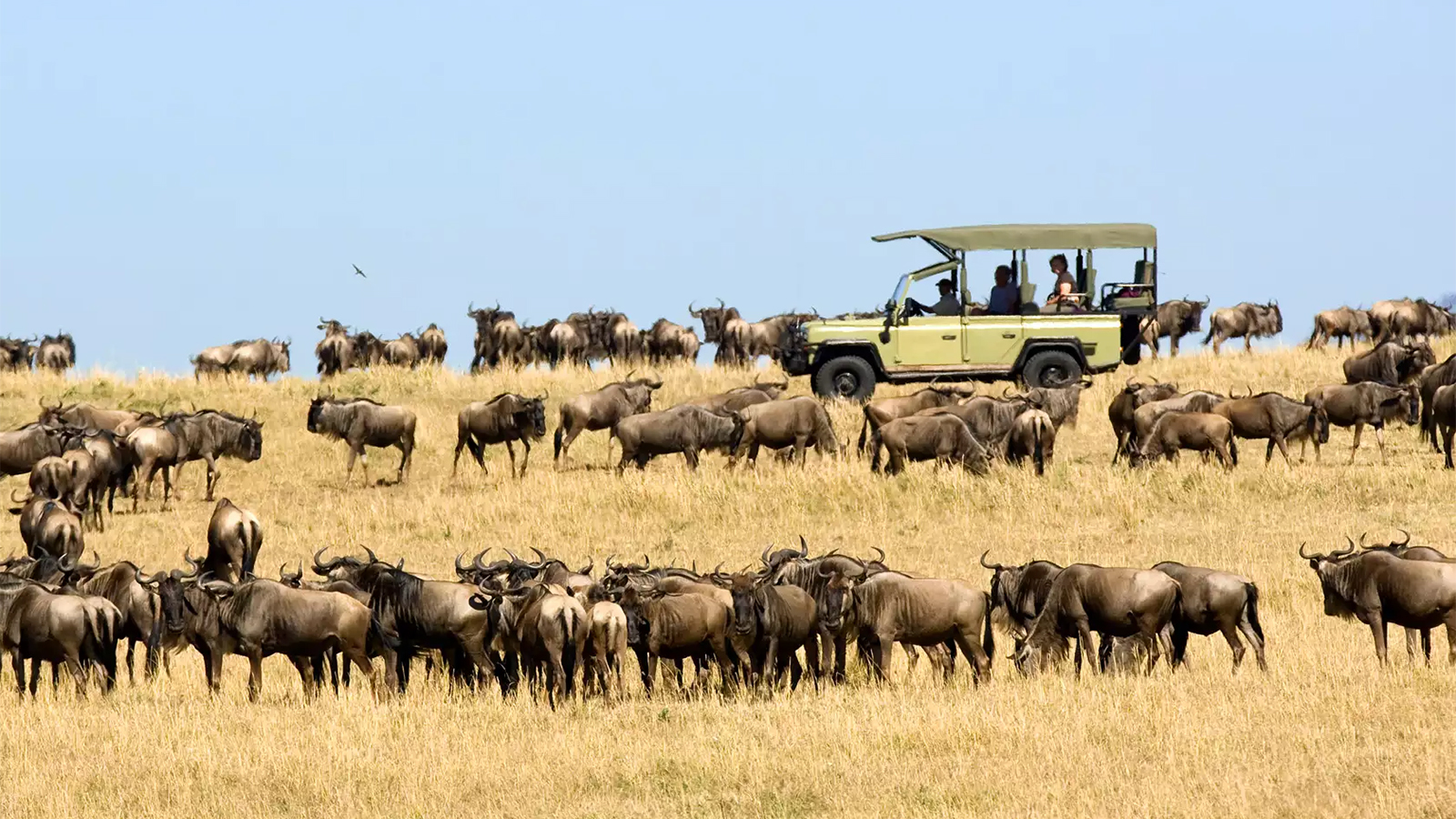
Tanzania’s Northern Safari Circuit is the ultimate destination for first-time travelers. This iconic route seamlessly connects four world-class protected areas, starting from the safari hub of Arusha. First-timers typically begin their journey at Tarangire National Park, famous for its massive elephant herds and ancient baobab trees. Next is Lake Manyara National Park, a scenic gem nesting beneath the Great Rift Valley escarpment, renowned for its diverse birdlife and rare tree-climbing lions. The circuit then leads to the breathtaking Ngorongoro Crater, offering unparalleled wildlife density inside a volcanic caldera. Finally, travelers reach the endless plains of the Serengeti National Park, home to the legendary Great Wildebeest Migration. With short drive times and exceptional year-round game viewing, this circuit provides an accessible, unforgettable introduction to Africa's untamed wilderness.
Best safari itineraries in Tanzania to see the big fives and wildebeest migration
3-days-serengeti-safari-fly-in-ngorongoro-big-five-safari-from-zanzibar-island
3-days-best-tarangire-national-park-tanzania-safari-tour-package
3-days-amazing-serengeti-safari-to-ngorongoro-crater-tanzania-tour
6-days-best-northern-circuit-tanzania-safari-to-best-tanzania-safari-parks
7-days-budget-tanzania-safari-affordable-africa-budget-safari
7-days-epic-africa-big-five-safari-in-tanzania-top-best-parks
7-days-best-great-wildebeest-migration-safari-in-tanzania
8-days-best-tanzania-wildlife-safari-to-zanzibar-beach-holiday-combined
10-days-best-tanzania-safari-tour-and-zanzibar-beach-holiday-itinerary
12-days-budget-tanzania-safari-itinerary-visiting-tanzania-on-budget
Tarangire National Park
Tarangire National Park serves as the dramatic opening act of the northern circuit. It immediately captures your attention with a landscape that feels entirely distinct from its neighbors. The terrain is defined by ridges, river valleys, and thousands of ancient, giant baobab trees that puncture the horizon. This park is famous for sheltering some of Africa’s largest remaining elephant herds. During the peak dry season, you can easily witness groups of up to 300 elephants digging into the dry bed of the Tarangire River to find underground water.
The lifestyle of the wildlife here revolves entirely around this river, which acts as the only permanent water source in the entire region during dry months. This geographic reality creates a natural funnel, drawing thousands of zebras, wildebeests, elands, and buffaloes from the surrounding Maasai Steppe. Following closely behind these herds are healthy populations of lions, leopards, and cheetahs.
Tarangire is also a quiet paradise for bird enthusiasts, hosting over 500 distinct species, which is the highest selection found anywhere in Tanzania. For travelers who want to stretch their legs after long flights, Tarangire is one of the few national parks in the region that permits guided walking safaris and night game drives, offered through specific licensed lodges. Spending two days here allows you to settle into the rhythm of the bush, appreciate the smaller details of the ecosystem, and watch elephant family dynamics unfold against the backdrop of stunning African sunsets.
Lake Manyara National Park
Lake Manyara National Park is a compact, highly scenic gem that offers a complete shift in scenery. Driving into the park feels like entering a tropical rainforest, fed by underground springs and shaded by giant mahogany and wild fig trees. Baboon troops numbering in the hundreds line the roadsides, while blue monkeys leap through the canopy above. As you move through the forest, the trees open up to reveal a massive, shimmering alkaline lake that covers two-thirds of the park's total area.
The shallow waters of the lake provide a temporary home for thousands of lesser flamingos, turning the shoreline into a bright pink ribbon. Lake Manyara is universally famous for its rare tree-climbing lions. While scientists debate whether they climb to escape the heat, avoid biting insects, or get a better view of prey, spotting a pride stretched out across an acacia branch is an unforgettable highlight.
Beyond the lions and birds, the park's diverse habitats support large pods of hippos at the Simba River delta, along with giraffes, buffaloes, and impalas. A newer attraction is the Lake Manyara Treetop Walkway, a 370-meter suspension bridge that lets you walk among the treetops for a unique bird's-eye view of the forest floor. Because of its smaller size and proximity to the main highway, Manyara is an ideal destination for a comprehensive, half-day or full-day game drive on your way toward the highlands.
Ngorongoro Conservation Area
The Ngorongoro Conservation Area delivers one of the most visually stunning moments of any safari. Standing on the rim of the Ngorongoro Crater and looking down into the 600-meter-deep caldera leaves most travelers completely speechless. This intact, unfilled volcanic caldera forms a self-contained ecosystem spanning roughly 260 square kilometers. Descending the steep, forested walls brings you onto a flat crater floor teeming with roughly 25,000 large mammals, creating the highest density of predators and prey in Africa.
The crater floor provides your absolute best chance on the circuit to spot the highly endangered black rhino, completing the famous "Big Five" checklist in a single afternoon. The central Lake Magadi is packed with flamingos, while the Lerai Forest offers shade to old bull elephants with massive tusks. Golden-maned lions lounge in the open grassland, completely accustomed to the presence of safari vehicles, while spotted hyenas patrol the edges of the herds.
What makes Ngorongoro truly unique is its status as a pioneering conservation area rather than a traditional national park. Here, the wild ecosystem coexists with the indigenous Maasai people, who have legal rights to graze their cattle on the outer crater highlands. A single day inside the crater offers dense wildlife viewing that feels almost surreal, though first-timers should expect to share these incredible views with a higher concentration of other safari vehicles.
Serengeti National Park
Serengeti National Park is the grand finale of the circuit, stretching across 14,750 square kilometers of endless savanna. The sheer scale of the landscape is liberating; the horizon expands forever, interrupted only by rocky outcrops called kopjes where lions and leopards love to sunbathe. The Serengeti is globally renowned for hosting the Great Wildebeest Migration, a year-round, circular journey of nearly two million wildebeests, zebras, and gazelles chasing the rains for fresh grass.
Depending on the month you visit, you might witness the synchronized calving season in the southern plains, or the high-stakes, predator-heavy river crossings in the northern Mara region. However, even if your itinerary doesn't align with the mega-herds, the Serengeti offers spectacular resident wildlife viewing at any time of year. The central Seronera Valley is famous for its high concentration of big cats, particularly leopards resting in sausage trees and cheetahs hunting in the open plains.
The sheer abundance of life ensures that every single game drive brings something new, whether it is a pride of lions stalking an eland, a pack of hyenas squabbling over a kill, or a quiet moment watching a giraffe feed on an acacia tree. To truly experience the vastness of the Serengeti, travelers should plan to spend at least three nights split between different regions or mobile camps, allowing the true spirit of the African wild to sink in completely.
Essential First-Timer
Fly or Drive
Choosing between driving and flying shapes your entire safari experience. Driving the circuit with a private guide offers an authentic road trip, letting you see local villages, markets, and shifting landscapes up close. However, the roads can be notoriously bumpy and dusty, leading to travel fatigue. If your budget allows, booking light aircraft bush flights between regional airstrips is a game-changer. Flying saves hours of travel time on the road, protects you from rough terrain, and rewards you with stunning aerial views of the Great Rift Valley, maximizing your actual time out looking for wildlife.
Best Time to Visit
Timing your trip to the dry season from June to October rewards you with the most spectacular wildlife viewing. As the landscape dries up, vegetation thins out completely, making animals much easier to spot against the golden grass. Rivers and waterholes become natural gathering points, forcing massive numbers of prey and predators to congregate in predictable areas. If your dream is to witness the iconic, high-stakes Great Migration River crossings in the northern Serengeti, you should target July through October, when the herds bravely battle crocodiles to cross the Mara and Grumeti rivers.
Ideal Duration
Dedicate 6 to 8 days to this circuit to give yourself the perfect introduction to Africa without feeling rushed. This timeframe ensures you spend less time packed inside a safari vehicle and more time truly absorbing your surroundings. It allows for a natural, relaxed rhythm: two days enjoying Tarangire’s elephants, a day exploring Lake Manyara, a full day inside the Ngorongoro Crater, and three nights immersed in the vast Serengeti. You will have plenty of time for sunrise game drives, tracking elusive predators, and relaxing at camp as the sun sets over the savanna.
Why is Tarangire National Park considered the ideal starting point for a northern circuit safari?
Tarangire National Park sets a magnificent stage for your safari adventure because it looks and feels entirely different from the rest of Tanzania. When you enter, the landscape instantly grabs your attention with its rolling hills, ancient river valleys, and thousands of giant, iconic baobab trees that pierce the horizon. It gives you a dramatic, immediate introduction to Africa's wild side without overwhelming you. Culturally and geographically, starting here helps you ease into the rhythm of the bush. It is also highly accessible from Arusha, making it a smooth first stop after a long international flight. Because it features dense, permanent water sources, you are almost guaranteed massive wildlife sightings right away. Seeing giant elephant families roaming through the baobab forests creates an unforgettable first impression. It sets a very high bar for the rest of your trip while allowing you to get used to long hours of game drives and wildlife tracking.
What makes the elephant population in Tarangire so unique compared to other African parks?
Tarangire is globally famous for protecting some of the largest remaining elephant herds on the planet. Here, elephants are not just background characters; they completely dominate the landscape. During the dry season, the park becomes a mega-sanctuary, hosting thousands of these gentle giants. What makes them unique is their massive family structures and their behavioral adaptation to the local environment. You will frequently see herds of up to 300 individuals traveling together, led by wise old matriarchs. Because water becomes scarce, these elephants have learned to use their trunks and tusks to dig deep into the dry bed of the Tarangire River, tapping into clean underground water streams. Watching an entire multi-generational family—from massive bulls to tiny, fuzzy calves—work together to source water and shield each other from predators is deeply moving. Their relaxed demeanor around safari vehicles also allows for remarkably close, safe, and peaceful wildlife encounters.
Why do the animals in Tarangire gather so densely around the Tarangire River?
The Tarangire River is the absolute lifeblood of this entire ecosystem. During the dry months from June to October, the surrounding Maasai Steppe completely dries up, turning into a harsh, arid landscape. The Tarangire River remains the only permanent source of water for miles around. This geographic reality creates a massive, natural funnel effect. Thousands of animals, including zebras, wildebeests, elands, gazelles, and buffaloes, are forced to migrate from the outer plains back to the riverbanks to survive. This predictable concentration of prey turns the river into a dramatic theater of life and death. Where there are thousands of herbivores, predators follow closely behind. Lions, leopards, and hyenas hide in the thick riverine bush, waiting for the perfect moment to strike when animals drop their guard to drink. For a first-timer, sitting by the river loop is like watching a live nature documentary play out right in front of your eyes.
Can you explain why Lake Manyara National Park feels like an entirely different ecosystem?
Driving into Lake Manyara National Park feels like stepping directly into a lush, tropical paradise, which is a massive contrast to the dry savannas of Tarangire. The park sits snugly at the base of the sheer, 600-meter-high Great Rift Valley escarpment. Because of this unique geography, the area is fed by highly active, continuous underground water springs flowing down from the volcanic highlands. This creates a dense, evergreen groundwater forest packed with massive wild fig trees, giant mahogany trees, and ancient baobabs. The air feels cool, humid, and alive with the sounds of water and birds. The forest floor is constantly damp, supporting a rich canopy where blue monkeys and baboons thrive. As you push deeper through this jungle-like canopy, the dense forest suddenly opens up to reveal a massive, wide-open alkaline lake. Experiencing two completely contrasting biomes—a thick, wet jungle and a wide desert-like Salt Lake—within a few minutes is what makes Manyara so unique.
What is the real story behind Lake Manyara’s famous tree-climbing lions?
Lake Manyara's tree-climbing lions are a legendary phenomenon that puzzles scientists and delights travelers. While lions are typically ground-dwelling cats, the prides in Manyara have developed a highly unusual habit of scaling smooth acacia and sausage trees, lounging on branches high above the ground. There are a few highly practical reasons for this behavior. First, the ground in Manyara can become incredibly damp and muddy due to underground springs, so climbing offers a dry place to rest. Second, the forest floor is notorious for biting insects, especially tsetse flies and ticks; getting high into the breeze keeps these pests away. Lastly, the elevated branches give the lions a massive tactical advantage, providing a cool breeze and an unobstructed view of prey moving through the thick brush. Spotting a 400-pound lion completely relaxed, draped over a tree limb like a house cat, is an unforgettable sight that defies normal wildlife expectations.
Why is Lake Manyara considered a dream destination for bird watching and flamingos?
Lake Manyara is a world-class birding paradise, playing host to well over 500 distinct bird species. The star attraction here is the massive flock of lesser and greater flamingos that gather along the lake's shallow, alkaline edges. These birds are drawn to the lake because its warm, shallow, salty waters are the perfect breeding ground for blue-green algae, which is their primary food source. At peak times, millions of flamingos line the shore, creating a vibrant, shimmering pink ribbon that stretches across the water. Beyond the flamingos, the park's diverse habitats support an incredible variety of avian life. In the groundwater forest, you will hear the loud cries of silvery-cheeked hornbills. Near the water, you will see giant pink-backed pelicans, yellow-billed storks, and elegant grey crowned cranes. Whether you are an experienced birder or a first-timer, the sheer volume, color, and vocalizations of the birds at Manyara add an incredible layer of sensory beauty to your safari.
What is the Lake Manyara Treetop Walkway and what makes it worth experiencing?
The Lake Manyara Treetop Walkway is one of Tanzania’s newest and most exciting adventure features. It is a 370-meter-long skywalk suspended high up in the canopy of the park's groundwater forest. The walkway consists of a series of stable, secure wooden suspension bridges protected by high safety netting, wrapping gracefully around massive, ancient trees. Reaching a height of over 18 meters above the forest floor, it gives you an authentic bird's-eye view of an ecosystem you normally only see from a safari vehicle. Walking through the treetops allows you to look directly into the eyes of playful blue monkeys, nesting hornbills, and vibrant butterflies. It also offers a peaceful, meditative break from sitting in a car. Looking down, you can safely watch baboons foraging on the forest floor and elephants quietly moving through the thick undergrowth below. It is a thrilling, highly immersive nature walk that connects you directly to the jungle canopy.
How did the Ngorongoro Crater form and why is it called a self-contained ecosystem?
The Ngorongoro Crater is a geological masterpiece formed roughly two to three million years ago. Originally, it was a massive volcanic mountain that stood even taller than Mount Kilimanjaro. When the volcano erupted violently, it completely emptied its internal magma chamber, causing the entire peak to collapse inward under its own immense weight. This left behind the world’s largest intact, unfilled volcanic caldera. Today, the crater floor sits 600 meters below the rim, spanning an area of roughly 260 square kilometers. The sheer, steep walls of the caldera create a massive natural barrier that encloses a completely self-contained ecosystem. Inside, you find a perfect microcosm of Africa: open grasslands, fresh water streams, a central soda lake, swamps, and shady acacia forests. Because water and green grass are available year-round on the crater floor, most of the 25,000 large mammals living inside never feel the need to leave, spending their entire lives within these natural walls.
Why does the Ngorongoro Crater offer the absolute best chance to see the endangered black rhino?
The Ngorongoro Crater is a vital, heavily protected stronghold for the highly endangered East African black rhino. Globally, black rhinos have been pushed to the brink of extinction due to illegal poaching for their horns, making them incredibly rare to spot in the wild. However, the unique geography of the crater provides a natural fortress that makes wildlife protection exceptionally effective. Rangers patrol the crater floor around the clock, keeping a watchful eye on the resident population. Because the crater floor is wide open, flat grassland, these massive prehistoric animals have nowhere to hide, making them much easier to locate compared to the thick bush of other parks. The rhinos love to spend their mornings grazing on the nutritious grasses near the Lerai Forest and drinking from Lake Magadi. For safari-goers, descending into the crater offers a golden, high-probability opportunity to witness these majestic, rare creatures in their natural habitat, completing the ultimate "Big Five" checklist.
What should a first-timer expect regarding vehicle crowds inside the Ngorongoro Crater?
Because the Ngorongoro Crater offers some of the most spectacular, high-density wildlife viewing in the world, it is highly sought after by travelers. First-timers must understand that they will not be alone down there. The crater floor is relatively small, and vehicle movement is restricted to designated dirt tracks to protect the fragile environment. When a rare sighting occurs—such as a black rhino or a lion hunt—drivers communicate via radio, and multiple vehicles will quickly gather at the scene. It can sometimes feel a bit congested, with several Land Cruisers lined up along the road. To have the best experience, you should plan to descend into the crater at the earliest possible time, right when the gates open at 6:00 AM. The early morning hours offer mystical mist rising off the floor, highly active predators, and far fewer vehicles, allowing you to enjoy the magic before the main crowds arrive.
How does the Ngorongoro Conservation Area differ from a standard national park?
The Ngorongoro Conservation Area is a pioneering model of sustainable land management and co-existence. Unlike a traditional national park, where human habitation and economic activities are completely banned, Ngorongoro is a multi-use conservation area. This means the wild ecosystem is legally shared between wildlife and the indigenous Maasai people. The Maasai have lived in this region for centuries, practicing traditional pastoralism. You will frequently see Maasai herders dressed in vibrant red shúkàs, walking alongside their cattle, sheep, and goats across the outer crater highlands, completely sharing the landscape with zebras and giraffes. The Maasai are permitted to graze their livestock on the outer plains and bring them down into the crater for water and salt licks, though they do not build permanent villages on the crater floor itself. This unique arrangement preserves an ancient cultural heritage while ensuring wildlife protection, offering travelers a fascinating look at how humans and nature can live in harmony.
What does the word "Serengeti" mean, and how does it describe the physical landscape?
The word "Serengeti" is derived directly from the traditional Maasai word Siringet, which beautifully translates to "the place where the land moves on forever" or "endless plains." This name is a flawless, literal description of the park's mesmerizing physical geography. Stretching across a staggering 14,750 square kilometers, the Serengeti features vast, wide-open savannas that expand all the way to the horizon without a single fence or telephone pole in sight. The landscape is a magnificent product of ancient volcanic activity; millions of years ago, ash from the nearby Ngorongoro highlands blew across the plains, creating a unique, nutrient-rich soil bed that prevents trees from growing deeply but supports highly resilient, fast-growing grasses. This lack of forest cover creates a liberating sense of space. The massive, uninterrupted horizons give you an incredible feeling of wild freedom, where the sky feels larger, the sunsets look grander, and wildlife herds can be seen moving miles away in the distance.
What is the Great Wildebeest Migration and how does it function throughout the year?
The Great Wildebeest Migration is the largest, most spectacular synchronized mammal migration on Earth. It is not a single, one-time event, but a continuous, year-round clockwise journey driven entirely by the search for fresh grass and water. Nearly two million wildebeests, accompanied by hundreds of thousands of zebras and gazelles, travel an arduous 800-kilometer circuit across the Serengeti ecosystem. In January and February, the herds gather in the southern Serengeti plains for a massive calving season. As the southern grass dries up in May, they head northwest toward the central and western corridors. By July through October, the migration reaches the northern Serengeti, facing perilous, high-stakes river crossings into Kenya's Masai Mara. By November, the short rains prompt them to march back south to start the cycle all over again. It is a raw, epic battle for survival shaped entirely by weather patterns, representing the natural heartbeat of the African wilderness.
Why is the central Seronera Valley in the Serengeti famous for big cat sightings?
The Seronera Valley, located right in the heart of the central Serengeti, is universally recognized as one of the best places in Africa to spot large predators, particularly lions, leopards, and cheetahs. This area is a natural wildlife hotspot because it features a reliable network of permanent rivers, such as the Seronera River. These rivers ensure that water and green vegetation are available all year round, attracting a massive, permanent population of resident herbivores like impalas, waterbucks, buffaloes, and giraffes. Because food is always abundant, large numbers of big cats have established permanent territories here. Leopards love the Seronera Valley because the riverbanks are lined with large yellow fever trees and sausage trees, which provide the perfect camouflage and high branches to store kills away from hyenas. Cheetahs utilize the nearby open ridges for high-speed hunts, while massive lion prides can be seen lounging lazily on the smooth granite kopjes that dot the landscape.
What are "kopjes" and what role do they play for predators in the Serengeti?
Kopjes (pronounced koppies) are spectacular, weathered granite rock formations that rise abruptly out of the flat grass plains of the Serengeti like mini-islands in a sea of savanna. These rocks are actually the ancient, exposed tips of underground volcanic formations that have been uncovered by millions of years of wind and rain erosion. While they look like beautiful natural sculptures, they play a vital ecological role for the Serengeti's apex predators. Lions, leopards, and cheetahs use these elevated stone structures as tactical observation posts. The height allows them to scan the flat grasslands for miles, tracking the movement of distant prey herds. The deep cracks, caves, and boulders within the kopjes also provide essential shade from the blistering midday sun and offer a safe, hidden nursery where lionesses and leopards can hide their vulnerable newborn cubs from marauding hyenas. For travelers, a kopje is a thrilling sight, often serving as the perfect backdrop for photographing a lion pride sunbathe.
What are the pros and cons of driving the northern circuit compared to flying?
Choosing whether to fly or drive shapes your entire journey. Driving the circuit with a private guide is a classic, deeply authentic road trip. The pros are significant: you get to see changing rural landscapes, vibrant local markets, and local towns up close. It offers ultimate flexibility, allowing you to stop whenever you want, and builds a great bond with your guide. The major con is physical fatigue; roads can be notoriously bumpy, dusty, and long, a reality locals call the "free African back massage." Conversely, flying via light aircraft bush flights is a major time-saver. The pros are speed, comfort, and breathtaking aerial views of the Great Rift Valley, turning a brutal six-hour drive into a scenic 45-minute flight. This maximizes your actual time spent out on game drives. The cons are financial cost, strict luggage limits (usually 15kg in soft bags), and missing out on the cultural scenery of the overland drive.
What features should a first-timer look for in a high-quality safari vehicle?
Your safari vehicle is your mobile home for hours at a time, so comfort and design are incredibly important. A high-quality, professional safari vehicle in Tanzania should always be a custom-modified 4x4 Land Cruiser. First, ensure it features a large, reliable pop-up roof. This roof pops upward to provide an unobstructed, 360-degree view for photography and wildlife watching while keeping you shielded from the sun. Second, every passenger must have a guaranteed window seat, with vehicles capped at five to six guests max to ensure plenty of personal space. Inside, top-tier vehicles are equipped with an electronic fridge or cooler packed with chilled bottled water, charging ports (both USB and standard plugs) at every seat to keep your camera gear alive, and a long-range two-way radio so your driver can coordinate with other guides to locate rare wildlife. Lastly, heavy-duty suspension and comfortable, clean bucket seats are essential to soften the impact of rough roads.
What does a typical daily schedule look like while out on a lodge safari?
A typical day on safari is beautifully structured around animal behavior, meaning early mornings are essential. Your day begins around 5:30 AM with a warm wake-up call, followed by fresh coffee and a light breakfast at your lodge. You will hop into your 4x4 vehicle by 6:30 AM, just as the sun rises. This early start is crucial because temperatures are cool, and predators like lions and leopards are actively hunting before the heat sets in. Around midday, when the sun is high and animals retreat into the shade to sleep, you will head back to the lodge for a hot lunch and a relaxing siesta, or enjoy a picnic lunch under a shady acacia tree out in the bush. By 3:30 or 4:00 PM, as the air cools down, you will embark on an afternoon game drive. This drive often concludes with a classic "sundowner"—stopping at a scenic viewpoint to watch the African sunset with a cold drink. You will head back to camp by 6:30 PM for a warm shower, campfire stories, and a delicious dinner.
What is the difference between a permanent luxury lodge and a classic mobile tented camp?
Understanding accommodation styles is key to aligning with your personal comfort needs. A permanent luxury lodge is a solid stone or timber structure built on a permanent foundation. These lodges offer high-end, hotel-style amenities: expansive swimming pools, spa facilities, air conditioning, large formal dining rooms, and massive, solid bathrooms. They offer a luxurious, stable, and highly secure environment. On the flip side, a classic mobile tented camp offers an elite, highly immersive wilderness experience. Do not confuse these with basic camping; these are massive, walk-in canvas tents built on raised wooden platforms. They feature plush king-sized beds, fine linens, and en-suite bathrooms with flushing toilets and hot bucket showers. Mobile camps are eco-friendly and move dynamically across the Serengeti twice a year to stay close to the migrating herds. Sleeping under canvas means you hear the nocturnal sounds of the bush—lions roaring in the distance and hyenas laughing—bringing you closer to nature.
How do safari lodges and camps handle safety regarding wild animals walking through camp?
Safety is the absolute number one priority at all safari properties, and camps have highly effective protocols in place. Most mobile tented camps and bush lodges are completely unfenced, meaning wild animals like elephants, zebras, and even lions can and do freely wander through the grounds, especially at night. To ensure safety, camps employ dedicated, highly trained local Maasai warriors and professional security guards known as askaris. During daylight hours, you can walk freely between your tent and the main mess area, though you must always remain alert. Once darkness falls, you are strictly forbidden from walking around the camp alone. When you are ready to move from your tent to dinner, or back to your room at night, you must radio or call for an askari. They will come directly to your tent and escort you safely, using high-powered flashlights to scan the brush for eyes and ensuring you are completely protected from any nearby wildlife.
When is the absolute best time of year to visit the Northern Circuit for wildlife?
The absolute best time of year to experience the Northern Circuit is during the long dry season, which runs smoothly from late June through October. This period offers unparalleled wildlife concentrations for two primary reasons. First, the lack of rainfall causes the dense bush and long grasses to completely wither away, meaning animals have nowhere to hide and are incredibly easy to spot from your vehicle. Second, seasonal waterholes dry up completely, forcing thousands of animals to gather predictably around the remaining permanent water sources like the Tarangire River and Serengeti river valleys. The weather during these months is also fantastic: clear blue skies, virtually no mosquitoes, and comfortable daytime temperatures, though early mornings can be chilly. If your primary goal is to see the maximum volume of wildlife, witness predator action, and stand a chance at seeing the epic Serengeti river crossings, this dry window is the gold standard.
What clothing colors and styles should a first-timer pack to stay safe and comfortable?
Packing the right clothing is highly functional on safari. You should prioritize lightweight, breathable layers in neutral, earthy tones like khaki, tan, olive green, and beige. These colors serve a dual purpose: they blend seamlessly into the natural landscape so you don't spook the animals, and they hide the inevitable safari dust incredibly well. There are two critical color rules you must follow. First, avoid wearing dark blue and black clothing, as these colors are highly attractive to tsetse flies, biting insects found in parts of Tarangire and the Serengeti whose bites can be painful. Second, avoid bright white and neon colors, as they stand out violently in the bush and can cause animals to run away before you get close. Also, remember that early morning game drives are surprisingly cold, so packing a fleece jacket, long pants, a warm beanie, and a light windbreaker that you can layer down as the day warms up is essential.
What are the essential medical preparations and health precautions needed for Tanzania?
Preparing for a healthy safari involves a few essential medical steps. First and foremost, consult with a specialized travel clinic or your doctor at least two months before your departure date. The entire northern circuit is a malaria risk zone, so taking a prescription malaria prophylactic (such as Malarone or Doxycycline) is highly recommended. You should also ensure your routine immunizations are completely up to date, including Hepatitis A, Hepatitis B, Typhoid, and Tetanus. Regarding Yellow Fever, Tanzania requires proof of a Yellow Fever vaccination certificate only if you are arriving from a country where Yellow Fever is endemic (such as Kenya or Ethiopia), even if it was just a long airport transit. While out on safari, protect yourself by applying a high-quality insect repellent containing DEET, drinking strictly bottled or filtered water, and using the mosquito netting provided over your bed every night.
What are the specific passport, visa, and entry requirements for entering Tanzania?
To enjoy a smooth entry into Tanzania, your paperwork must be flawless. Your passport must be legally valid for at least six months beyond your planned date of departure from the country, and it must contain at least two completely blank, consecutive pages for entry and exit stamps. Most international travelers, including citizens from the US, UK, Canada, Australia, and the EU, require a tourist visa to enter. You can easily obtain this visa via two pathways: applying online beforehand through the official Tanzania Electronic Visa website (e-Visa), or purchasing a Visa on Arrival directly at Kilimanjaro International Airport (JRO). The cost for a standard single-entry tourist visa is $50 USD for most nationalities, though it costs $100 USD for US citizens due to a mandatory multiple-entry visa agreement. If you choose Visa on Arrival, ensure you bring clean, crisp, exact cash to pay the immigration fee.
What is the official currency, and what are the strict rules regarding US dollar bills?
The official currency of the country is the Tanzanian Shilling (TZS). However, US Dollars (USD) are incredibly widely accepted at almost all safari lodges, souvenir shops, national parks, and by local tour operators. The single most important rule a first-timer must know is that Tanzania enforces incredibly strict regulations regarding the physical condition of US currency. Banks and businesses will flatly reject any US dollar bills that were printed before the year 2006. They will also reject bills that are torn, heavily creased, stamped, written on, or look excessively worn. This policy is a security measure to prevent the spread of older counterfeit bills. When preparing for your trip, go to your local bank and explicitly request brand-new, pristine, unblemished bills printed from 2021 onward. Bring a mix of small denominations ($1, $5, $10, $20) for tipping and casual purchases, and larger bills ($50, $100) for currency exchange if needed.
What is the customary tipping etiquette for safari guides and camp staff?
Tipping is a deeply ingrained, highly appreciated part of safari culture in Tanzania, serving as a critical income source for the hard-working people who make your trip magical. Because it can be confusing for first-timers, following industry standard guidelines ensures you tip fairly. For your private safari guide, who spends all day driving you and tracking wildlife, it is customary to tip between $20 to $30 USD per vehicle, per day. This total amount is shared among all passengers in the vehicle. For the general lodge or camp staff (including chefs, waiters, housekeepers, and askaris), most properties feature a communal "Staff Tip Box" located at the main reception desk. It is customary to contribute $10 to $20 USD per guest, per day into this box, which is divided equally among the behind-the-scenes team. Tipping is always presented at the very end of your stay at each lodge, using cash.
How can a traveler ensure they are respecting local Maasai culture during their safari?
Engaging with the iconic Maasai culture is a beautiful highlight of the northern circuit, but it requires mindful respect. The absolute golden rule of cultural photography is this: never, under any circumstances, take photos of Maasai people, their children, or their traditional villages (bomas) from the roadside without their explicit permission. Doing so is highly intrusive and disrespectful. If you wish to photograph or interact with the Maasai, arrange an organized, ethical cultural visit through your safari operator. During these visits, a village elder will welcome you, show you their home, explain their traditions, and invite you to take photos freely. Be prepared to pay a modest cultural entry fee, which goes directly toward supporting the village’s water, healthcare, or school funds. Approach these interactions with a humble, open mind, ask questions respectfully, and purchase traditional beadwork directly from the village women to support the local economy.
What photography gear should a beginner bring to capture great wildlife images?
You do not need to be a professional photographer to bring home stunning safari images, but a standard smartphone camera will not be enough for distant wildlife. To capture that leopard high up in a tree or a distant rhino, a camera with a good optical zoom lens is essential. For beginners, a great, cost-effective option is a "bridge camera" with a massive built-in zoom, or an entry-level DSLR/mirrorless camera equipped with a telephoto zoom lens reaching at least 300mm. Because safari vehicles bounce and move, holding a heavy lens steady can be tough, so bringing a simple beanbag or a compact travel monopod to rest your camera on the vehicle's edge is a lifesaver. Don't forget to pack a high-speed memory card with plenty of storage, a protective dust cover or a simple plastic bag to shield your camera from the intense road dust, and at least two spare batteries, as cold safari mornings can drain battery life quickly.
Is it safe to drink the water, and how is the food quality at safari lodges?
First-timers are always thrilled and surprised by the exceptionally high quality of food on safari. Most safari lodges and luxury camps employ incredibly talented, professionally trained local chefs who prepare fresh, three-course meals daily. The menus feature a delicious blend of international cuisine and traditional Tanzanian flavors, utilizing fresh fruits, vegetables, and high-quality meats sourced from local farming communities. Lodges are also highly experienced at accommodating dietary restrictions, including vegan, vegetarian, gluten-free, and halal diets, provided you notify them in advance. When it comes to water, however, you must be careful. Tap water at safari lodges is perfectly fine for showering and washing hands, but it is not safe for drinking. You should always use the complimentary, purified bottled or filtered water provided by your lodge and guide for drinking and brushing your teeth, ensuring you stay completely safe and healthy.
Why is adding a beach extension to Zanzibar the perfect way to end a northern circuit safari?
Pairing a dusty, fast-paced northern circuit safari with a relaxing beach extension to Zanzibar creates the ultimate, well-rounded Tanzanian vacation. A safari is a deeply thrilling but physically demanding adventure that requires early 5:00 AM wake-up calls, long hours sitting in a bumping 4x4 vehicle, and constant focus. Zanzibar offers the perfect, slow-paced antidote. Known as the "Spice Island," Zanzibar is just a short, direct domestic flight away from the Serengeti or Arusha airstrips. Stepping off the plane rewards you with warm tropical air, endless stretches of powdery white sand beaches, and the calm, brilliant turquoise waters of the Indian Ocean. You can spend your days snorkeling in pristine coral reefs, exploring the fascinating, maze-like historic streets of Stone Town, or simply relaxing with a cold drink under a palm tree. It provides a peaceful, romantic space to process your incredible wildlife memories and return home feeling completely refreshed.
Booking your Northern Tanzania safari with us Roads of Adventure safaris
Booking your Northern Tanzania safari with Roads of Adventure Safaris ensures a seamless, deeply authentic journey. We provide custom-built, private 4x4 Land Cruisers equipped with charging ports, refrigerators, and 360-degree pop-up roofs for optimal wildlife viewing. Our professional, local guides intimately know the rhythms of Tarangire, Lake Manyara, Ngorongoro, and the Serengeti, maximizing your chances of seeing the Big Five and the Great Migration. From securing permits to handpicking top-tier camps, we handle every detail.
