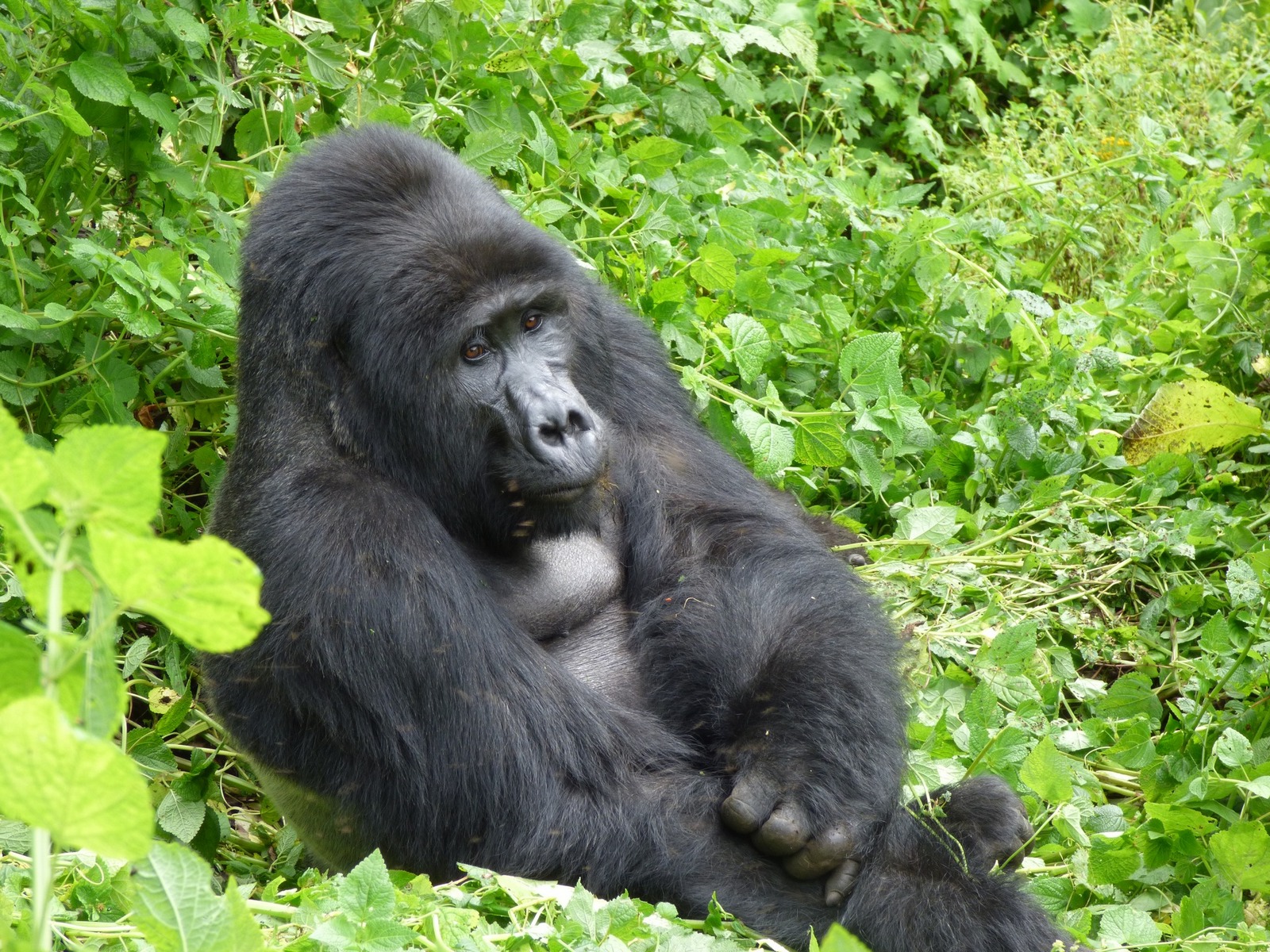
While seeing mountain gorillas is not 100% guaranteed, there is an over 95% chance of successful sightings during a 2-day budget trek in Uganda. Experienced Park trackers locate the families daily, making it extremely rare for tourists to miss out. However, since they are wild animals in dense forests, sightings cannot be legally guaranteed
2-days-best-gorilla-trekking-safari-tour-via-kigali-to-bwindi-impenetrable-forest-park
2-days-quick-escape-to-bwindi-impenetrable-to-trek-mountain-gorilla-from-kigali
2-Day Budget Uganda Gorilla Trekking safari
The 2-Day Budget Uganda Gorilla Trekking safari is a masterfully designed "express" expedition for travelers who prioritize value and efficiency. By utilizing Kigali as your gateway, you take advantage of Rwanda’s superior road infrastructure to reach the southern sectors of Bwindi Impenetrable National Park in just four hours. This logistical shortcut allows you to access Uganda’s significantly more affordable $800 trekking permit, saving you $700 compared to Rwandan permits without sacrificing the quality of the encounter. The journey transitions from the organized, rolling streets of Kigali into the rugged, emerald-green highlands of the Kigezi region. Within 48 hours, you will navigate international borders, climb through ancient, mist-shrouded rainforests, and secure a life-changing connection with the world’s most famous primates. It is the ultimate high-value itinerary, proving that a profound encounter with mountain gorillas can be both time-efficient and budget-conscious while supporting vital community conservation efforts.
Day 1: Kigali to the Bwindi Highlands
Your budget adventure begins with an early morning pickup in Kigali, heading north toward the Ugandan border. The drive is a scenic traverse through Rwanda’s terraced hills, offering a vivid window into rural life in the "Land of a Thousand Hills." After a seamless border crossing at Cyanika—the fastest route to the southern Bwindi sectors—you enter the rugged, high-altitude highlands of Uganda. You’ll check into a budget-friendly eco-camp or community-run lodge in the Rushaga or Nkuringo sector. These lodges offer clean, basic comfort and hearty meals right at the forest's edge, keeping costs low while maximizing the "jungle" atmosphere. The afternoon is yours to rest or take a guided walk through the local village, acclimatizing to the altitude. As night falls, the sounds of the forest set a thrilling stage for tomorrow’s trek.
Day 2: The Gorilla Trek and Return to Kigali
The day starts at 7:00 AM with a mandatory briefing at the park headquarters. Accompanied by expert rangers and trackers, you’ll plunge into the dense, multi-layered rainforest in search of a habituated gorilla family. The hike can be physically demanding, navigating steep ridges and thick vines, but all effort vanishes the moment you lock eyes with a silverback. You spend one "Magic Hour" observing the troop’s human-like social interactions and gentle strength in their natural home. Following the trek, you’ll receive your completion certificate and enjoy a quick lunch before beginning the return journey. Crossing back into Rwanda, you wind down the hills toward the capital, arriving in Kigali by late evening for your flight or hotel drop-off. You leave with an extra stamp in your passport and a soul full of memories.
Logistical and Economic Strategic Factors
High Success Rate: Guaranteed Primate Encounters The most reassuring factor for travelers on a 2-day budget trek is the exceptionally high success rate, which consistently exceeds 95% to 99%. This is not left to chance; the Uganda Wildlife Authority (UWA) employs a sophisticated "pre-tracking" system. Every morning, long before tourists reach the park gates, teams of advanced trackers head into the forest to locate the gorilla families from the spot where they nested the previous evening. They then maintain contact with the troop and radio the precise coordinates back to the lead guides at the briefing point. This ensures that even on a condensed 2-day itinerary, your time in the forest is targeted and productive. While the hike remains a wild adventure through the "impenetrable" terrain, the destination is almost always a certainty, ensuring that your $800 investment translates into a life-changing encounter.
2-Day Logistics: The Kigali Shortcut The feasibility of a 2-day budget tour rests entirely on using Kigali, Rwanda, as the entry and exit point. Starting from Uganda's primary airport in Entebbe would necessitate a 9-to-10-hour drive each way, making a 2-day trip physically exhausting and logistically nearly impossible. In contrast, the drive from Kigali to the southern Bwindi sectors (Rushaga or Nkuringo) or Mgahinga National Park takes only 4 to 5 hours. This "shortcut" utilizes Rwanda’s superior road network to reach the Ugandan border quickly. For the budget traveler, this minimizes fuel costs and vehicle rental days, allowing you to spend only one night in a lodge. It turns a massive cross-country expedition into a manageable weekend trip, providing the most efficient "time-to-gorilla" ratio available in East Africa today.
Key Factors for 2-Day Budget Treks in Uganda
Permits and Regional Specialization
Permit Costs: The Financial Engine As of 2026, the permit remains the most significant fixed cost of the safari. For international tourists, the permit is priced at $800 (though some historical data cites $700, the standard rate for 2024–2026 is $800 for foreign non-residents). Foreign residents living in East Africa benefit from a reduced rate of $700, while East African Community (EAC) citizens pay 300,000 UGX (historically 250,000 UGX). Unlike Rwanda’s flat $1,500 fee, Uganda’s pricing structure is designed to keep the experience accessible to a broader range of travelers. While the UWA no longer offers "low-season" discounts on permits, the $700 saving compared to Rwanda essentially funds the entire rest of your 2-day trip, including transport and lodging, making Uganda the undisputed choice for budget-conscious primate enthusiasts.
Mgahinga vs. Rushaga: Choosing Your Sector For a 2-day trek, the choice between Mgahinga Gorilla National Park and the Rushaga sector of Bwindi is critical. Mgahinga is home to the Nyakagezi family, a group known for their stability and frequent sightings despite their migratory history. Because Mgahinga is the smallest park, the trek can sometimes be shorter and less dense than Bwindi. Conversely, the Rushaga sector in southern Bwindi is the "budget capital" of the region. It hosts the largest number of habituated gorilla groups (currently eight), which means there is higher permit availability and a wider range of competitive budget lodges. Both locations are equidistant from the Cyanika border, making them the most strategic gateways for travelers entering from Rwanda who want to maximize their sighting probability within 48 hours.
Budgeting and Operational Savings
Budgeting: Strategic Lodging and Transport To maintain a "budget" status, the strategy shifts to minimizing peripheral costs without compromising safety. This is achieved by selecting community-run lodges or eco-camps situated directly at the park entrance. By staying in the Rushaga or Nkuringo sectors, you eliminate the need for long, early-morning transfers on rough mountain roads, which would otherwise require a more expensive vehicle and higher fuel consumption. Budget lodges like Rushaga Gorilla Camp (standard rooms) or Nshongi Camp offer clean, basic bandas for $50–$100 per night. Furthermore, joining a group-share tour allows you to split the cost of the 4x4 vehicle and the professional driver-guide. By focusing the budget on the permit and the local community-led accommodation, travelers can experience a high-end wildlife encounter for a total package price that remains competitive and accessible.
Is seeing mountain gorillas guaranteed on a 2-day Uganda trip?
While "guaranteed" is a strong word in the world of wild animal sightings, a 98% to 99% success rate is the reality for Bwindi Impenetrable National Park. This near-certainty is the result of a highly organized tracking system. Long before you finish your morning coffee, "advance trackers" are already deep in the forest. They start at the site where the gorillas nested the night before and follow their fresh trail. By the time you finish your briefing, your guide already has the GPS coordinates of the troop. For a 2-day traveler, this system is a relief; it ensures that your condensed itinerary isn't left to luck, but is backed by professional scouts dedicated to finding the family.
Does a budget 2-day trek have lower success rates than luxury?
Absolutely not. In Uganda, gorilla trekking is a highly regulated, democratic activity. Whether you arrived in a budget safari van and stayed at a community camp, or flew in on a private charter to a $1,000-a-night luxury lodge, you are all part of the same 8-person trekking group. Everyone follows the same rangers and the same advanced scouts. The "budget" aspect only refers to your choice of accommodation and transport; it has zero impact on the quality of the forest experience or the high probability of finding the gorillas. You receive the same world-class expertise from the Uganda Wildlife Authority (UWA) regardless of your trip's price tag.
Will I see gorillas if I trek in Bwindi on a 2-day trip?
Yes. The daily tracking routine of the park rangers is designed to be failsafe. Because habituated gorilla families are comfortable around humans, they don't flee when approached; they simply continue their daily routine of grooming, playing, and feeding. For a 2-day visitor, the primary "variable" isn't if you will see them, but how long it will take to reach them. Depending on where the gorillas moved overnight, your trek could be a 45-minute stroll or a 4-hour climb. Regardless of the duration, the rangers' commitment to bringing you face-to-face with the silverback remains constant throughout the day.
Are sightings guaranteed when trekking from Kigali in 2 days?
The "guarantee" of the 2-day trip from Kigali lies in its logistical efficiency. By flying into Kigali and driving 4–5 hours to the southern Bwindi sectors (Rushaga or Nkuringo), you arrive at the park's doorstep significantly faster than if you drove from Kampala. This speed ensures you are well-rested and on-site for the 7:30 AM briefing. Since you are physically present at the trailhead on time, you are integrated into the daily tracking schedule, which carries the same 99% success rate. The Kigali route simply makes the "logistics of the guarantee" much smoother and more reliable for a short-duration traveler.
Does 2 days leave enough time for trekking?
Yes, a 2-day itinerary is perfectly balanced for a "Gorilla Express." By departing Kigali on Day 1, you reach the Bwindi highlands by mid-afternoon, allowing plenty of time for a briefing on the border crossing and a restful night at a forest-edge lodge. On Day 2, you have the entire morning and early afternoon dedicated to the trek. Even if the gorillas take 6 hours to find, you still have ample time to complete the encounter and drive back to Kigali for a late-night flight. The 4-hour drive from Kigali is the "secret sauce" that makes 2 days feel like a complete, unhurried adventure.
Will I have time to trek if crossing from Kigali for 2 days?
The timing is specifically engineered for success. Most 2-day tours depart Kigali between 8:00 AM and 10:00 AM on Day 1. This ensures you cross the Cyanika or Katuna border well before sunset, avoiding the stress of night driving on mountain roads. You wake up at the park headquarters on Day 2, ready for the 8:00 AM start. This "overnight stay" at the park gate is what makes the trek possible; it eliminates the risk of same-day travel delays. Because you are already "in position" at the trailhead, you have the full day's window to track the gorillas without pressure.
Is the 2-day budget option for gorilla tracking safe?
Safety is a top priority for both the Ugandan and Rwandan governments. Every trekking group is accompanied by at least two armed park rangers and several professional trackers. These rangers are not there because of human threats, but to ensure safety from wild animals (like elephants) and to navigate the dense terrain. Furthermore, the 2-day route from Kigali utilizes some of the safest and best-maintained roads in East Africa. For a budget traveler, the primary safety concern is usually "trail safety"—ensuring you have a sturdy walking stick and a porter to help on slippery slopes—but the overall security of the trip is exceptionally high.
Are all 2-day treks guaranteed for all ages?
No. There is a strict minimum age limit of 15 years for gorilla trekking in both Uganda and Rwanda. This rule is in place for several reasons: the physical demand of the trek, the potential for children to carry common colds (which can be fatal to gorillas), and the unpredictability of a child's reaction when face-to-face with a 400-pound silverback. For travelers in 2026, this age limit is strictly verified using your passport at the briefing point. While there is no upper age limit, seniors should be in moderate physical health, though they can hire "stretcher porters" if they have mobility concerns.
Do I need to be fit for the 2-day gorilla trek?
A moderate level of fitness is highly recommended. Bwindi is at a high altitude (over 2,000 meters), and the "Impenetrable" forest lives up to its name with steep ridges and thick vines. Even a "short" trek involves some climbing. However, you don't need to be an elite athlete. The rangers are excellent at pacing the group to the slowest member. If you are concerned about your fitness, you can hire a porter for $20 to carry your bag and offer a hand on the inclines. This support makes the 2-day trek accessible to anyone who can walk for a few hours on uneven ground.
How much time is spent with gorillas on 2-day treks?
Regardless of how long it takes to find them, your time in the presence of the gorillas is strictly limited to one hour. This is a conservation rule designed to prevent the gorillas from becoming over-stressed or too habituated to human presence. During this "Magic Hour," you can observe them eating, grooming, and interacting. While 60 minutes may sound brief, the intensity of the encounter is profound. Most travelers find that after an hour of staring into the eyes of a silverback, they feel a deep sense of completion. This hour is the same for everyone, whether on a budget or luxury tour.
Is it better to fly to Rwanda but trek in Uganda?
This is the ultimate "budget hack" of 2026. By flying into Kigali but trekking in Uganda, you save $700 per person on the permit alone ($800 in Uganda vs. $1,500 in Rwanda). Additionally, you avoid the 9-hour drive from Entebbe. This combination offers the best of both worlds: the shorter travel times and modern infrastructure of Rwanda, paired with the significantly more affordable conservation pricing of Uganda. For a 2-day trip, this strategy is mathematically and logistically superior, providing a high-value, high-success experience that is easy on both your schedule and your wallet.
Are 2-day treks in 2026 available?
Yes, 2-day "Kigali-to-Uganda" tours are one of the most popular safari products in 2026. Because of the rise in regional tourism and the convenience of the East African Tourist Visa, operators have streamlined these "Express" itineraries. They are readily available for booking through local Ugandan and Rwandan tour operators. However, because permits in the southern Bwindi sectors (Rushaga/Nkuringo) are highly sought after due to this specific 2-day route, it is still recommended to book 3 to 6 months in advance to ensure you secure your spot during the peak dry seasons.
What if I don't see the gorillas in my 2-day itinerary?
While missing the gorillas is extremely rare (less than a 1% chance), it is important to know the policy. Per UWA regulations, permits are generally non-refundable once the trek has commenced. However, if the trackers fail to find the gorillas entirely, the park authorities may offer a second trek the following day for free (if permits are available) or a partial refund of 50%. For a 2-day traveler, a second trek might require extending your trip by a day. In reality, the rangers are so determined to find them—often staying out until dusk if necessary—that travelers almost always get their encounter.
How long does the 2-day trek take? The duration of the actual hike on Day 2 is unpredictable. It can range from 2 to 6 hours. This depends on where the gorilla family spent the night and how far they have moved since dawn. Some groups are found just a 30-minute walk from the park boundary, while others require a significant climb into the higher ridges. For a 2-day trip, it is best to assume a "full day" commitment. Most groups are back at the headquarters by 1:00 PM or 2:00 PM, providing plenty of time for the return drive to Kigali.
Does the 2-day tour include transport from Kigali?
Yes, a standard 2-day budget tour package is "all-inclusive" from the moment you are picked up in Kigali. This includes transport in a 4x4 safari vehicle, a professional driver-guide, fuel, border crossing assistance, one night of budget accommodation, all meals, and the $800 gorilla permit itself. For the budget traveler, this takes the guesswork out of the logistics. Having a dedicated vehicle ensures that you are handled through the Cyanika or Katuna border efficiently and that you arrive at your Bwindi lodge in comfort, ready for your 99%-guaranteed encounter the next morning.
Booking 2 Days Bwindi gorilla trekking with us Roads of Adventure safaris
Book a 2-day Bwindi gorilla trekking tour with Roads of Adventures Safaris for an efficient trip, typically starting in Kigali, Rwanda, to minimize travel time. The package generally includes transport, 4x4 vehicles, meals, and accommodation. Secure your spot 3-6 months in advance due to high demand for permits and accommodation.
